Sunday, February 28, 2010

Don't Make a Scene: Do The Right Thing

For the month of Valentines, scenes from four women we love in the movies.

The Story: In the hub-bub, swelter and melee of "Do the Right Thing," random acts of kindness are jumbled up with the constant beat-down as ever-present as the 80hz thump from a boom-box. In Spike Lee's version of "Our Town: Bed-Stuy" tossed with mixed (and salted) "Peanuts,"* a kind word is the healthy spice in a stew of curses, and a kindness is looked on with suspicion and rarely reciprocated.

Except here.

In the cool, cool, cool of the evening (which will soon get much hotter) two people in their own twilights put aside their differences—he's a man, she's a woman; he's a drunk; she's a lady—and acknowledge some worth. But, it's reserved and Lee keeps the barriers between them intact by never putting them in the same frame. From our vantage point, they are talking AT each other (and to us), but never WITH each other.

And like everything Mr. Lee does, it's theatrical, buoyant, direct, to the point and often in your face. But sweet, and lovely to look at (Ernest Dickerson's manufactured roseate days and velvet nights are the stuff of M-G-M technicolor) I love the street-light that pops on and bathes Da Mayor's face with a (though a couple seconds late) orange glow when Mother Sister gives him his due. And as played by one of theater's great couples—Ossie Davis and Ruby Dee, great artists and great activists—the two actors bring their own history to bear on the proceedings

Davis has moved on. Ruby Dee's still here—still writing, still acting (she was nominated for an Academy Award for her impassioned turn in "American Gangster"), and her every appearance now is An Event.

As it always was.

"I guess I should be a hero more often." Mm-hmm, that's right. So, should we all. At least as much as these two people have been in their lives. As much as Ms. Dee still is.

The Set-Up: The hottest day of the year, and that has brought tempers to a boil in the Bed-stuy neighborhood in Brooklyn (between Flushing and Park Place and Ralph). But it's also caused things to melt, like the chill Mother Sister (Ruby Dee) put up between between Da Mayor (Ossie Davis) and herself. Mother Sister is a woman to herself and Da Mayor only holds court over a bottle. But today, he has kept a child from being run over in the street, and didn't get much gratitude for it. Except here. Except now.

Action!

EXT: MOTHER SISTER'S STOOP--NIGHT
Da Mayor is walking by Mother Sister in her window when she calls him.
CLOSE--MOTHER SISTER
MOTHER SISTER Mister Mayor, I saw what you did.

ANGLE--DA MAYOR
Da Mayor stops and looks at her. A smile comes to his face; after eighteen years has he finally broken down her defenses?

CLOSE--MOTHER SISTER
MOTHER SISTER That was a foolish act,

MOTHER SISTER ...but it was brave.

MOTHER SISTER That chile owes you his life.

CLOSE--DA MAYOR
DA MAYOR I wasn't trying to be a hero. I saw what was about to happen and I reacted, didn't even think. If I did, I might not have done it in second thought.

DA MAYOR Da Mayor is an old man, haven't run that fast in years.

DA MAYOR I went from first to home on a bunt single, scored the winning run,

DA MAYOR the bottom of the ninth, two out, August 1, 1939, Snow Hill, Alabama. (he is warming up now)

DA MAYOR Ole Mudcat Bunchabones was the pitcher now—he hated my guts—DA MAYOR ...he ran back, come down offa that mound and I took off...

DA MAYOR ..like white lightning out a black snake's ass.

DA MAYOR Maybe I should be a hero more often.

CLOSE--MOTHER SISTER
MOTHER SISTER Maybe you shouldn't. Don't get happy. This changes nothing between you and me. You did a good thing and Mother Sister wanted to thank you for it.

ANGLE--STOOP
DA MAYOR I wanna thank you.

MOTHER SISTER You're welcome.

Da Mayor tips his hat.


"Do the Right Thing"

Words by Spike Lee

Pictures by Ernest R. Dickerson and Spike Lee

"Do the Right Thing" is available on DVD through the Criterion Collection.

This scene occurs at 7:17 on the video. The incident that provokes it is at 2:34.

* I'm still working on a piece for "Do the Right Thing" (but I'm watching some Lee films I missed in the meantime to get a better handle on his technique) but the gist of it is that its community feel is a combination of "Our Town" (except everyone thinks they're The Stage Manager) and "Peanuts" because characters are defined by a single attribute, as in Schulz's world—Schroeder's an obsessive musician, Lucy's a fussbudget, Linus the dogmatist, Pig-Pen the one with dirt—they're all children because none of them can grow out of their obsessions to be adults.

Thursday, February 25, 2010

North Face (2008)

"Die-hard Climbers Die Easier Than You Think"

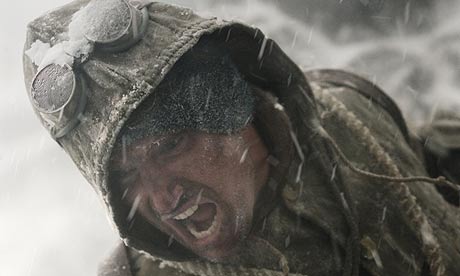
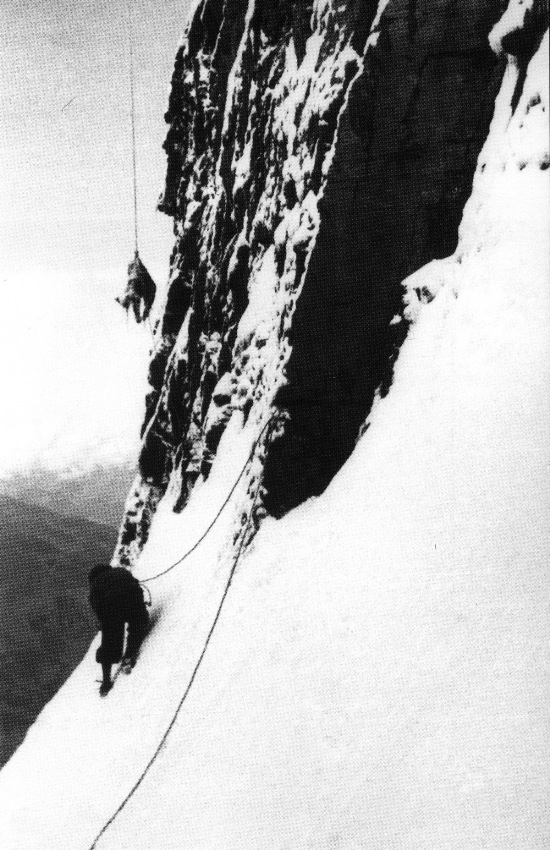
Released in Germany, Switzerland and Austria in 2008 (and only just now making its way to the U.S.), "North Face" (aka "Nordwand") chronicles the 1936 attempt by two teams (one German, one Swiss) to climb the sheer North face of the Eiger ("The Ogre") near Berne, Switzerland. Though the western edge had been summitted since 1858, but the concave bowl on the North slope was considered a particular challenge—"the last problem of the Alps." The deaths of two German climbers in 1935 resulted in a suspension of climbing attempts, but several teams made the trek in 1936 to be the first to attempt that route's first summit.

The film makes it an exercise in politics and career advancement for an assistant at a Berlin publication (
Johanna Wokalek), an amateur alpinist, who persuades her childhood Berchtesgaden chums Toni Kurz (Benno Fürmann) and Andreas Hinterstoisser (Florian Lukas) to make the attempt so that she might cover it for her paper. Kurz is initially reluctant, but his affection for Luise and the challenge of the mountain persuades him to make the attempt in July of 1936. It's watched closely by the German government, as the ascent might make quite a splash for the Nazi Olympics coming up.

The film itself is a marvel,
with the actors doing their own stunts and "really being there" grasping the sides of the mountain. Director Philipp Stölzl creates tense climbing sequences of a type that hasn't been seen before, where every missed opportunity, dropped piece of equipment, and injury is keenly felt in a way that films like "Touching the Void" can't seem to convey. Partially, it's Stölzl's use of time as a factor He doesn't take short-cuts, compress events, and deliberately reminds the audience of the clock and time and daylight passing. His climbers are seen as more altruistic, as well, to the point where one liberty is taken with the story to keep the German boys in a good, audience-identifying light. And there is marked cross-cutting between the struggles on the mountain and the tourists living in the lap of luxury on the ground, while crowding the telescopes to check the climbers' progress.

It's one of the best mountain-climbing films ever made,* with a richly dramatic story keenly conveyed.
That it's, for the most part, true is just frosting.

"North Face" is a Matinee. Dress warm.


* The only down-side is composer Christian Kolonovits' intrusive score which, for some ungodly reason, uses samples of pick-axes for percussion, making you think there are others on the mountain just out of sight. It's distracting and takes away from the drama on the screen.

Wednesday, February 24, 2010

The Messenger (2009)

"The Rules of Dis-Engagement"

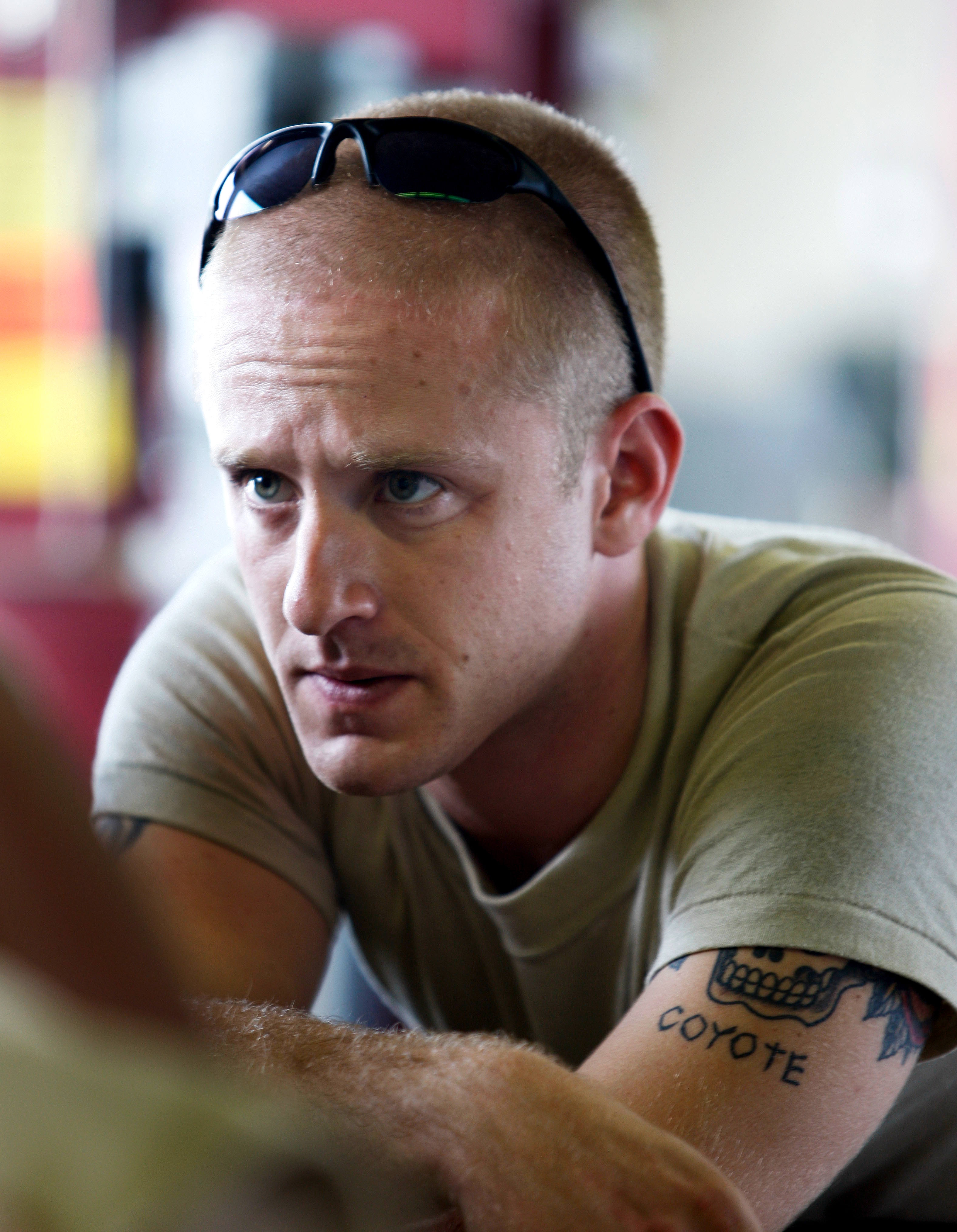
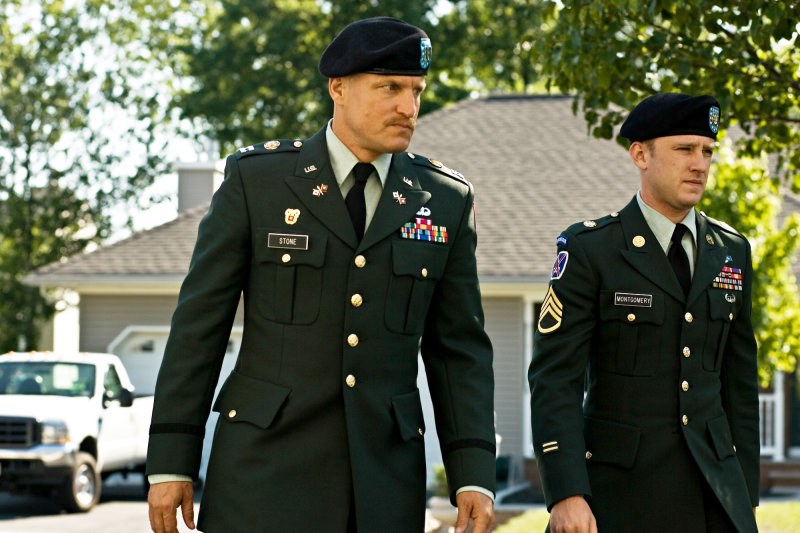
Staff Sergeant Will Montgomery (Ben Foster) has just rotated stateside from Iraq with shrapnel fragments from an IED explosion that have pierced his leg and screwed up his left eye. He comes home to find his girl-friend (Jena Malone) engaged to another man and very few options open, or as he puts it "the world is my f...ing oyster." He is then assigned to the "Casualty Notification Team" for New Jersey under the command of Captain Tony Stone (Woody Harrelson), as he is considered "a soldier of stature," and the job is a "zero defect mission."

"This mission is not just important," he is informed. "It is sacred."

No pressure.


He becomes part of the "Angels of Death" detail—informing the officially designated N.O.K.'s (Next of Kin) that their son, daughter, father, mother, sister or brother has been killed in Iraq, and there are specific rules: no contact, don't park close to the designated house, don't ask for directions ("besides, you're a man and men don't do that" says Stone), inform only the official N.O.K., knock on the door, rather than ring a cheery door-bell, "read the script, stick to the script," if the N.O.K. is not present—leave the premises, do not refer to the dead relative as "the deceased," inform the N.O.K. of the next steps in the process, say specifically that the relative has been identified and the circumstances of their death, do not leave room for hope. Most importantly, get out.

Like being a cop, it's one of those jobs where you mostly see people at their worst and the strain it imposes on the harbingers of death is considerable.
Take Stone, for example. Married three times ("twice to the same woman"), alcoholic and wound pretty tight, Stone is a blustery veteran of the first "brief" Iraq War, and he keeps Montgomery on a very tight leash through his first details (including Steve Buscemi and Samantha Morton) with the inevitable clashes and SNAFU's. Pretty soon, they're depending on each other and Montgomery starts to go off-script.

"The Messenger" is one of those little miracles of a movie, with a good script (by director
Oren Moverman and Allesandro Camon) that says a lot about the human condition and the pressures on the military in times of war and peace. the subject matter is depressing, but the movie has moments of gallows humor that emerge in times of grief, and the actors make the most of all the situations, prompting genuine laughs out of a tough situation. As the two park away from a house, they find themselves across the street from a park full of anxious mothers and children, all staring with a combination of expectancy and dread.

"Wall, it could be worse," drawls Stone. "It could be Christmas."

It's tempting to say that this is a good year for
Woody Harrelson, but it usually is, as he makes the most of his assignments. He was one of the few joys in the nihilistic theme park attraction that was "2012," and his witty work in "Zombieland" was a star-making turn, one that sets a character into archetype. His work in "The Messenger" has won him a deserved Best Supporting Actor nomination, and were it not for Christoph Waltz's definitive work in "Inglourious Basterds" (or Christopher Plummer's one-two punch of being the oldest nominee as well as it being inexplicably his first nomination after a distinguished career), one would be tempted to say he deserves to win. He's matched by Foster, who can be the most iritatingly showy performer—as he was in "3:10 to Yuma"—but here does contained, simmering work that occassionally explodes into self-destruction. Moverman worked with Todd Haynes on the smart, witty script for the Bob Dylan homage "I'm Not There," and now I want to see "Married Life" (his last script) to see just how consistent his work is. His mature, unshowy direction and his ability to mine (and make the most of) entertaining possibilities out of promising material, makes him a name to remember...and seek out.

"The Messenger" (2009) is a superb Matinee.

Tuesday, February 23, 2010

Ernie Pyle's Story of G.I. Joe

"Ernie Pyle's 'Story of G.I.Joe'" (William A. Wellman, 1944) One of 2009's films designated to be preserved by the Library of Congress—and boy, does it need it, the current DVD displaying scratches, bad splices, and scenes truncated in the middle of dialogue—"The Story of G.I. Joe" was an uncommon war movie, especially for one produced in the middle of the conflict it portrayed, showing a less-varnished portrait of war and the soldiers fighting it. Done with the co-operation of the military and advice from an office-load of war correspondents, the film is an unglamorous, non-propagandistic look at the life of the common infantryman. In it, the grunt's are grimey, muddy, ass-scratching, spitting dog-faces, who get exhausted, make mistakes, leave behind fallen comrades, but keep slogging.

But then, it had to be.
Ernie Pyle, a Scripps-Howard correspondent covering the European theater took the tough route with his reportage, staying out of the clean briefing rooms and jumping into the fox-holes with the entrenched common soldiers. Through the course of his work, he became a beloved go-between for the soldiers and the folks back home aching for something other than the Big Picture and the Campaign—there were plenty of other Corona jockeys to do that—but on the soldiers following orders, following dirt roads, punching through entrenched enemy forces—their kids. Pyle's writing was clear-eyed, unsentimental and just discreet enough for the censors, written usually with the help of a bottle. He won the Pulitzer for his correspondent work in 1944, and had a hand in shaping the film.

And he was the one to get
William "Wild Bill" Wellman to direct the film.

Wellman was an inspired choice, as he was the one who insisted on the weather-beaten look of the film. But the director was a fighter pilot in World War I, and was subject to the same inter-corps squabbling of most servicemen, and had a low opinion of the infantry, only stregthened by his run-ins with a recalcitrant Army adviser on his film "Wings." And the film has several instances of "mea culpa's" from the director,* extolling the scrappy courage of the guys with boots on the ground, as opposed to the guys with their heads in the clouds.

Burgess Meredith got a deferment to play the part of Ernie Pyle—he was picked over other actors because he wasn't well known and had an odd home-spun quality and a crusty voice that could make the tough joshing resonate with warmth. Every war film has a cuddly troop mascot, but not every film has someone ask (in humor) "Haven't you eaten this dog yet?" As the Captain in charge of the men, Robert Mitchum plays his role in the manner he used to the end of his days, looking authentic and undramatic, like he shipped in with the other ringers—only a lot taller—and hadn't slept in days, born with the weight of the world on his shoulders, but still balanced on his aching feet. Or maybe it was the mud that was holding him up.

It was the only time he was nominated for an Oscar for his acting.

Pyle never saw the movie. Two weeks before the premiere,
he was killed by a sniper on Ie Island off Okinawa in the Pacific. He was still with the troops, reporting their struggles.

* Besides a couple of on-the-nose comparisons between Army and Air Force—that seem to come out of nowhere—one of the various character arcs is for an infantryman dubbed "Wingless" (played by John R. Reilly), who starts the film depressed that he was drummed out of the Air Corps but soon comes around to a respect for the common foot-soldier.

Sunday, February 21, 2010

Don't Make a Scene: The Lady Eve

For the month of Valentines, scenes from four women we love in the movies.

The Story: Sexual Tens-ion. The best love stories on film have it. And you can tell immediately when the stars don't. There's a frisson on screen that's there whether the stars love or hate each other, or whether the stars are cheek to cheek or across the room from each other.

Indifference just lies there on the screen.

Here, there is a technical problem that needs to be resolved. To keep things properly chaste per The Hays Code , it was required that actors in a reclining position keep three feet on the ground at all times. This was a negotiated point—a kind of "de-militarized zone" that allowed there to be romantic clinches but no suggestions of an affair. The script for "The Lady Eve" had already run afoul of the blue-noses, and the entire idea of the film seems to be a way to have an affair between a man and a woman and still get it past the censors on a technicality.

Writer-director Preston Sturges manages to do that in this scene. It starts with swindler Eugenia attempting to get under the skin of ale scion Charles Pike. He's smitten and she's playing a game with him, but at this point, it's a bit one-sided and nowhere near the point where she says her famous line: "I need him the way an axe needs a turkey." She conspires to get him on the divan of her state-room, and once there, "Hopsie" takes a another of his many "falls" for her, this time conveniently skirting the censors by landing on the floor. The two are then on separate levels, she being, as she will throughout the movie, in the dominant position, and he, always on the defensive. The censors have been served, but it makes the scene no less charged, especially the way Barbara Stanwyck plays it.

Stanwyck could play weak, victimized people, sure (famously in "Sorry, Wrong Number"), but she was never more appealing than when she was the woman in control, for good or ill. For ill, she could be down-right evil, as in "Double Indemnity," and she's still fascinating, and you're secretly rooting for her. She was the woman with the steel spine and the haughty manner, with flashing eyes and a wicked tongue (Joan Crawford could play that part, too, but it always came off as "camp," never with Stanwyck), and she would excel as that type until the day she died in 1990.

Watch her in the video clip. Watch her eyes and where she looks, and how, even with the limited scope of the camera area she could still milk it for all the sexual tension she could muster. Very few women could play the camera as well as Barbara Stanwyck.

The Set-Up: Okay, bear with me here, there's a lot of double entendre to this set-up. Charles "Hopsie" Poncefort Pike (Henry Fonda), heir to a brewing family has been studying snakes "up the Amazon," and is making his way via cruise ship back home. He's the object of much attention among the single women on the trip, none more so than Eugenia Harrington (Barbara Stanwyck), daughter and partner-in-crime with card-cheat Harold Harrington (Charles Coburn). Charles is a plum sucker for the taking and the two cons take different approaches: Harold wants to steal his money, and Eugenia wants to steal his heart.

Then, his money.

But, this is early in the con, when Eugenia is beguiling "Hopsie" with a slinky dress and a seductive manner—one that just might get her into trouble. See, she's already been up to Pike's room, where the sight of his snake—his pet grass snake—has already sent her scurrying back to her state-room in fright, with "Hopsie" right on her heels to make sure she's alright. So, there's already been quite a bit of heavy breathing by the time this scene commences.

Action!


JEAN: Come over here and sit down beside me. Oh.

JEAN: Comfortable?
CHARLES: Yes, very.

JEAN: Oh, sorry.

JEAN: Oh darling, hold me tight! Oh, you don't know what you've done to me.
CHARLES: I'm terribly sorry.
JEAN: Oh, that's all right.

CHARLES: I wouldn't have frightened you for anything in the world. I mean if there's anyone in the world I wouldn't have wanted to (her nuzzling causes exquisite torment and he pauses) - it's you.

JEAN: You're very sweet. Don't let me go.

JEAN: Thank you.

JEAN: {Sighs] How was everything up the Amazon?
CHARLES: A-All right, thank you.
JEAN: What are you thinking about?

CHARLES: Nothing.
JEAN: Are you always going to be interested in snakes?
CHARLES: Snakes are my life, in a way.

JEAN: (thoughtfully) What a life!
CHARLES: I suppose it does sound sorta silly. I mean, I suppose I shoulda married and settled down. I imagine my father always wanted me to. As a matter of fact, he's told me so rather plainly. I just never cared for the brewing business.
JEAN: Oh, you say that's why you've never married?
CHARLES: Oh no. It's just I've never met her. I suppose she's around somewhere in the world.

JEAN: It would be too bad if you never bumped into each other.

CHARLES: Well...
JEAN: I-I suppose you know what she looks like and everything.
CHARLES: I-I think so.

JEAN: I'll bet she looks like Marguerite in Faust.

CHARLES: Oh no, she isn't, I mean, she hasn't, she's not as bulky as an opera singer.

JEAN: Oh. How are her teeth?

CHARLES (startled): Hunh?
JEAN: Well, you should always pick one out with good teeth. It saves expense later.

CHARLES: Oh, now you're kidding me.
JEAN: (tenderly) Not badly. You have a right to have an ideal. Oh, I guess we all have one.

CHARLES: What does yours look like?

JEAN: He's a little short guy with lots of money.
CHARLES: Why short?

JEAN: What does it matter if he's rich? It's so he'll look up to me. So I'll be his ideal.
CHARLES: That's a funny kind of reason.

JEAN: Well, look who's reasoning. And when he takes me out to dinner, he'll never add up the check and he won't smoke greasy cigars or use grease on his hair.

JEAN: And, oh yes, he, he won't do card tricks.
CHARLES: Oh.
JEAN: (sweetly): Oh, it's not that I mind your doing card tricks, Hopsie. It's just that you naturally wouldn't want your ideal to do card tricks.

CHARLES: I shouldn't think that kind of ideal was so difficult to find.
JEAN: Oh he isn't. That's why he's my ideal. What's the sense of having one if you can't ever find him?

JEAN: Mine is a practical ideal you can find two or three of in every barber shop - getting the works.

CHARLES: Why don't you marry one of them?
JEAN (almost indignantly): Why should I marry anybody that looked like that?

JEAN: When I marry, it's gonna be somebody I've never seen before. I mean I won't know what he looks like or where he'll come from of what he'll be. I want him to sort of - take me by surprise.

CHARLES: Like a burglar.
JEAN: That's right.

JEAN: And the night will be heavy with perfume. And I'll hear a step behind me...

JEAN: ...and somebody breathing heavily,

JEAN: and then...

JEAN: (She moans and sighs softly as she stretches back langorously on the chaise) You'd better go to bed, Hopsie. I think I can sleep peacefully now.

CHARLES (tugging his collar out because of the sexual heat that has been generated): I wish I could say the same.

JEAN: Why, Hopsie! (He rises to his feet and goes to the door. She giggles to herself.)


"The Lady Eve"

Words by Preston Sturges

Pictures by Victor Milner
and Preston Sturges

"The Lady Eve" is available on DVD from Universal Home Video.