 "The Boy in the Spastic Bubble"
The latest film by Noah Baumbach, "Greenberg" is a tour de force for actor Ben Stiller, who knows how to marginalize audiences himself (he directed "The Cable Guy" and "Tropic Thunder," after all). Combine him with the writer-director of "The Squid and the Whale" and "Margot at the Wedding" and you have two individuals creating something capable of making you squirm uncomfortably (in your comfortable theater seat) for its entire two hours, waiting for (if it were so formulaic) a reckoning of devastating proportions.
That would be letting you off easy.
Roger Greenberg (Stiller) is recovering from a nervous breakdown, and is house-sitting his brother's place and dog in L.A.—a place where he can relax in the hills above the smog and try to put his life back together. A carpenter by trade, it is his goal to build the dog a dog-house. "I'm really trying to do nothing for awhile," is his stock answer. "That's brave at our age," says an old flame (Jennifer Jason Leigh, who co-wrote the story) that was extinguished long ago. Greenberg tries to connect with old friends from school days, but as he didn't communicate with anybody while he lived in New York, there's not much in common anymore. Greenberg is essentially stifled. Not capable of moving forward and paralyzed at the thought of doing something to change that ("I woke up one morning and literally my legs couldn't move. They said it was psychological."), he exists through the day not calling people, then wondering why nobody talks to him. He's insensitive to other people's needs, wants or emotions—he can't see past his own smog drifting through his mind.
Because there's nothing else to do—he doesn't drive, not terribly convenient in L.A.—he ends up seducing his brother's nanny (Greta Gerwig), herself a fairly directionless person, numbed by a recent break-up and a tendency to be too compliant.
But, the relationship is one way and it all sucks towards Roger. A psycho-narcissist, he is so self-absorbed that any empathy perspective or ambition save for animal imperatives have been consumed and purged. A nanny is perfect for him, as he hasn't grown up. At all. And seems doomed to drive off any kind soul, sympathetic enough to put up with his bullying in-denial bullshit.
Now, let's pause for a second. We've been talking about "Greenberg" this whole time. let's talk about YOU for a moment.
YOU are NOT Greenberg.*
Oh, you might be in your worst moments—everybody can reach their limits of tolerance, have a crisis or a bad hair day and be less than 20%. And "Greenburg" can be a litmus test for anyone the least bit self-absorbed (but not in denial). I've already read a couple of reviews that seem to cast the writer's own issues onto a scenario that don't suggest them. So, yes, you will recognize yourself and others in this movie (all except for you, Mother Theresa), but you are not Greenberg. If you were, you'd already be dealing with it by subsisting on some anti-psychotic, anti-hysteric, anti-depression pharmaceutical to get past it. And understand, this is Greenberg's behavior ON Zoloft.
So, this movie can make you crazy. I had waves of wanting to strangle this 40 year old infant...if he weren't already doing it to himself. Reactions to a movie like this can be healthy; at least, I didn't want to walk out. And there is the least amount of some resolution to this guy who isn't happy unless he can hear himself talk.
Still, this is one to take in stages...at home.
"Greenberg" is a Rental.
* I succumbed to this. I can be insensitive, self-absorbed (I write...duh), and fail to recognize the needs of others. The one that hit me the hardest is that Greenberg occupies his time writing complaining letters to...everyone. And what have I been doing while the Wife is travelling? Writing movie reviews (I blame you, you read them). But, I've been doing other things as well. I have the most finely buffed and polished resume in town. My dog has his waist back (it's been a long Winter), and the taxes were done sooo long ago. I am not Greenberg. You are not Greenberg.
But THAT guy? Oh, man! (*tsk*) Def-initely.
Wednesday, March 31, 2010
Greenberg


Tuesday, March 30, 2010
To Die For
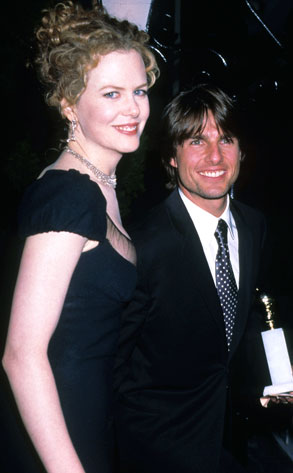
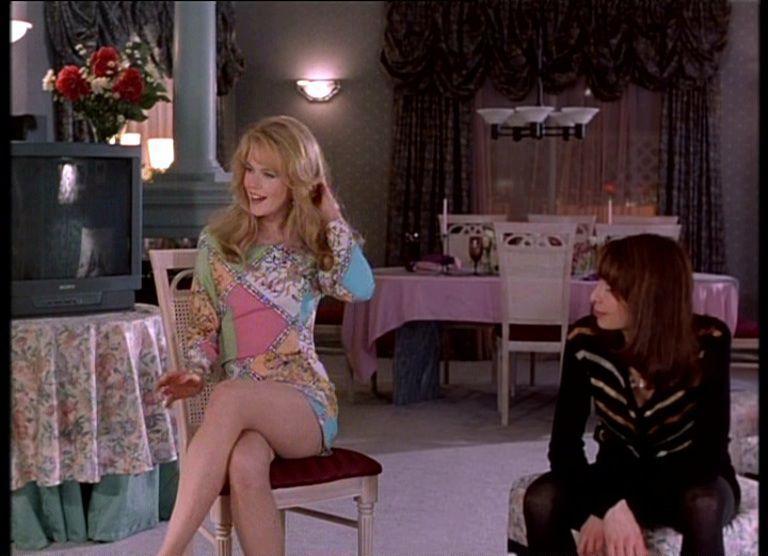
 "To Die For" (Gus Van Sant, 1995) Nicole Kidman plays Suzanne Stone, a local tv weather-girl with a particularly aggressive addiction to celebrity. Her new-found fame conflicts with her ordinary home-life and her marriage to a mechanic. So she plots to murder her husband (Matt Dillon), as his lack of status might hold her back her fortunes. She recruits three teenage misfits (Joaquin Phoenix, Casey Affleck, Alison Folland) to carry out the homicide and when her in-law's attempt to pin the murder on her, she turns on the kids with blackmail.
A black comedy mixed with film-noir (that pairing almost never works as it tends to pile on the ironies) on the sociopathy of celebrity, it was written by Buck Henry (based on a novel by Joyce Maynard, which in turn was inspired by the Pamela Smart case) and directed by Gus Van Sant. Those who had seen her in "BMX Bandits" and "Dead Calm" knew that Kidman was more than "Mrs. Tom Cruise," but it wasn't until "To Die For," that she emerged from her superstar husband's shadow and began creating a separate career. An arch performance just shy of camp, it was the first of many of the actress' forays into aberrant personalities that have subsequently dominated her career, and proved troubling to her audience base.
But as time has moved on and the bar for celebrity has gone as low as a snake's belly, the film looks positively prescient. And Kidman etches an indelible portrait of a femme fatale, hot-blooded in her manipulation and cold-blooded in her abandonment. Making an audition tape, Kidman's Stone looks right into the camera with knowing seductiveness and invites the watcher in on her little dark secrets and fervent desires for tv work. The wileyness of the actress playing the character is matched by the character's own wickedness and the two seem to fuse. Reason enough to watch the film, but Kidman is nearly matched in ferocity by the fine Illeana Douglas, as the Dillon character's sister, who is equally capable of killing for love. It's a movie that will keep you unnerved until the final black comic cold-hearted image.






Sunday, March 28, 2010
Don't Make a Scene: Ikiru
 The Story: It was Akira Kurosawa's 100th birthday last week, and to celebrate, let us present this scene as an example of the obvious discussion of Kurosawa as a universal artist. Here, he dramatizes an event that is all too common throughout the world—taking on City Hall...to little effect.
The film is his brutal, though life-affirming 1952 film, "Ikiru," about the transformation of a "living corpse" into a living breathing, functioning human being. Kanji Watanabe (Takashi Shimura), a government bureaucrat—just a cog in the City Hall machine—but on this day, he's out the office for a doctor's appointment.
A group of neighborhood women storm en mass to bring to City Hall's attention of an open sewer in their neighborhood that could pose a health-risk to their children. They want it cleaned, covered, and (it would be nice) to have the area turned into a playground.
They start on a sunny day on the ground floor, and work their way through and then up the building to higher levels of authority, shuffled by one department to another, until, the sun going down, they're back where they started with nothing accomplished. They snap. Who wouldn't?
Kurosawa makes us feel the indignity these women feel by putting us in their place—the department heads address us as if we were the ladies and we get to see face-to-face the range of apathy displayed by the Powers That Be, from indifference to irritation to just plain laughing in their (your) face. Kurosawa makes each bureaucrat unique—the guy at Pest Control is pre-occupied with swatting flies, for instance—and rather than using hard-edits between scenes (and floors), Kurosawa jokingly employs scene-wipes; like a sliding door, each functionary is whisked away and replaced with another, often the optical slide matching their own hand movements. It's thrilling—and irritating—to watch.
Not that the women's efforts matter. The last frame in the scene—of Watanabe's empty desk, occupied only by the reams of paper-requests hopelessly log-jammed in process—tells the tale of how successful the ladies in this scene would be if he was there. That is, not at all.
The Set-Up: A committee of mothers comes to the government to see about a dangerous cesspool in their neighborhood that's endangering their children. They have a perfectly reasonable request to have it cleaned up and transformed into a park. And the city bureaucrats are perfectly reasonable in hearing their requests and shuffling them to another, more appropriate department. A lot happens in this scene. But nothing gets done.
Action (of a sort)!
 DEPARTMENT OF PUBLIC AFFAIRS: But any proposal for creating a park goes to the Parks Department.

 PARKS DEPARTMENT: This really seems to be a question of hygiene, so you'd better try the Health Department.
 HEALTH DEPARTMENT: Go to the Sanitation Department.
 SANITATION DEPARTMENT: See Environmental Sanitation.
 ENVIRONMENTAL SANITATION: Department of Prevention.
 DEPARTMENT OF PREVENTION: Infectious Diseases.
 DEPARTMENT OF INFECTIOUS DISEASES: That's a job for the division of Pest Control.


 PEST CONTROL: The problem is seeping waste...
 PEST CONTROL: ...which means it's a problem for the Sewage Department at City Hall.


 SEWAGE DEPARTMENT: Originally it was a ditch with a road over it, which means the Roads Department.
 ROADS DEPARTMENT: We're waiting on a decision from City Planning.
 CITY PLANNING: Go to Ward Reorganization.

 WARD REORGANIZATION: The Fire Department objected to draining the cesspool.
 WARD REORGANIZATION: There are water pressure problems in that area.
 FIRE DEPARTMENT: Are you kidding? All we need's a good water supply.
 FIRE DEPARTMENT: There's no reason it has to breed mosquitoes and cause rashes. Think what a time we'd have getting that filth out of our hoses.
  FIRE DEPARTMENT: Of course, we'd love a kiddie pool in that neighborhood.
 FIRE DEPARTMENT: Try the Education Department. They should have a Child Welfare Committee.
 DEPARTMENT OF EDUCATION: But the problem doesn't only affect children. We've had enough trouble just rebuilding all the schools.
 DEPARTMENT OF EDUCATION: A problem this big belongs with your Ward Representative to the City Council.
 CITY COUNCIL REPRESENTATIVE: I'll give you an introduction to the Deputy Mayor.
 CITY COUNCIL REPRESENTATIVE: Show him my card and he'll meet with you immediately.
 (laughs)
 DEPUTY MAYOR: Please, sit down.
 DEPUTY MAYOR: Thank you for all your hard work.
 DEPUTY MAYOR: The truth is that we truly appreciate folks like you...who know to bring such complaints directly to our attention.
 DEPUTY MAYOR: That's precisely what inspired our new Department of Public Affairs. Don't skimp on your complaints.
 DEPUTY MAYOR: Hey, you. Show these folks the Public Affairs desk.
 DEPARTMENT OF PUBLIC AFFAIRS SUBORDINATE CLERK: You'll need to take that up with Engineering.
 DEPARTMENT OF PUBLIC AFFAIRS SUBORDINATE CLERK: Desk 8.

 WOMAN 1: How dare you? Stop giving us the runaround!
 WOMAN 1: What the hell's this poster mean? To help us kill time?
 WOMAN 2: We call people like you time-killers.
 WOMAN 2: All we want is to get that stinking casspool cleaned up.
 WOMAN 2: If it's Engineering, Sewage, Health, Sanitation or the Fire Department, Public Affairs should sort it out!
 WOMAN 3: Forget it! We won't bother you anymore. You're just laughing at us. What a mockery of democracy.
 WOMAN 1: Let's go.

 DEPARTMENT OF PUBLIC AFFAIRS SUBORDINATE CLERK: Um, excuse me.
 DEPARTMENT OF PUBLIC AFFAIRS SUBORDINATE CLERK: Unfortunately, the section chief took the day off, and it'd be easier for us if you'd put this in writing.


"Ikiru"
Words by Shinobu Hashimoto, Hideo Oguni, and Akira Kurosawa (Translation by Linda Hoaglund)
Pictures by Asakazu Nakai and Akira Kurosawa
"Ikiru" in available on DVD from Criterion Collection