Showing posts with label Personal Heroes. Show all posts

Friday, August 6, 2010

Personal Heroes: Jerry Goldsmith

(This one's for Warren...)


This falls under the category of "writing about music is like dancing about architecture." Suffice to say that any attempts will be nothing but empty metaphors and vacuous hyperbole.

Jerry Goldsmith is my favorite composer. He wrote film scores--an odd little art not too different from the usual classical commissioned pieces but also having to fit the limitations of the medium, both mechanical and dramatic. Such was my appreciation that when I heard he was giving a series of concerts for his 70th birthday in Scotland (and realizing that he was getting "up there") I was determined to see Goldsmith in concert before one of us died ("Hey, honey, ya wanna go to Scotland?" was how I approached K.) It's one of the best decisions (for the most trivial of reasons) I've ever made. We spent 10 days in Scotland, primarily Edinburgh, which was absolutely wonderful. Truth to tell, the Goldsmith concert, though terrific, was a bit anti-climactic. Still, it was an opportunity to see Goldsmith conduct, and a symphony orchestra play, his wildly-weird music for the first Planet of the Apes movie -- piano players pounding on the strings, brass players playing with their mouth-pieces reversed, percussionists hammering on metal mixing bowls bought that afternoon at Harrod's. And its also important, in this world of recorded music, to see your favorite music performed live, and FEEL it--feel the power of the orchestra pushing against your body. I had a great time.

It hit me hard when he died. He was still composing up until a few months before his death from cancer (His last film, incongruously being
Looney Tunes: Back in Action--a bizarrely eclectic and technologically challenging score for someone weak from chemotherapy).  I was inspired to make a compilation of some of my favorite music of his, combined with some of his most challenging pieces--and for the booklet, this is, in part, what I wrote:


Notes on Jerry Goldsmith

So, why this? And why these selections?

It came purely as a reflexive move upon hearing of Goldsmith's death, and as sad as that was, came another thought, purely selfish--well, that means no more new music (And with that, the remembrance of the story about the two directors leaving
Ernst Lubitsch's funeral. "Well, no more Lubitsch." said the one. The other--Billy Wilder-- replied: "Worse! No more Lubitsch movies!"). The canon stops right here on this date. No more surprises. No more smiles of recognition. No more new music because the source of that music is no more.

Goldsmith is over.

From the time when I bought my second soundtrack album (with my own money), I have had a great love for the music of
Jerry Goldsmith. I bought the Patton LP just to have a record of the Patton "speech." I played that a few times, but once I went beyond the words, I found the music spoke more eloquently of the man, and more importantly, had a life beyond the subject matter. It spoke of depths of time and emotion, and I was hooked for the rest of Goldsmith's output. I started to seek him out in record stores.  Papillon came out, and upon the first hearing I was disappointed--this wasn't the same music. It was undoubtedly Goldsmith, but he was doing different things. This music was more wistful, and also savage. I didn't know whether I liked it. But upon putting needle to record a second time, this "new" Goldsmith spoke to me. After the shock of the new, the appreciation took over, and each new release had its own shocks and new discoveries.

And that's what made Goldsmith so interesting. It wasn't the same old wine in new bottles ala
Mancini and Horner and, yes, even Bernard Herrmann. This was new wine. As if he went back and re-constructed his career and experience for the sake of the next film. Sometimes, masterpieces would emerge:  The Wind and the Lion;  QBVII;  Islands in the Stream;  Hoosiers. But there would be the failures, also: the  I.Q.'s  and  Mr. Baseball's, and the Mom and Dad Save the World's. Interesting failures, to be sure, but sometimes in the quest for a solution to the film's problems, the music itself would suffer. And for some reason, the essence of film-comedies seemed to elude Goldsmith.

It was fun anticipating new works. What was he going to do for
Logan's Run? He's doing Chinatown? When did that happen? Oh, man! Goldsmith landed Star Trek: the Motion Picture!! The new wine flowed and in amazing quantities, from a seemingly inexhaustible and eclectic vineyard. Sometimes it would be good. Sometimes bad. Sometimes magnificent. He reportedly didn't like science-fiction, and claimed he didn't understand it. Yet he scored seminal science-fiction films. Each had its own signature sound: whooping electronics for Logan's Run; High-flying nautica for Star Trek;  Filigreed textures for Alien. All were different. They were, in fact, worlds apart. Goldsmith did not write for the genre. He wrote for the drama and the story. Rather than overlay a double dose of emotion to tell the audience how it should feel, he wrote inside the story. His music told you how the characters feel.

And he could be counted on to bolster up the infrastructure of the film as well, the perfect example being Planet of the Apes. A cheap-jack story with obvious ape make-up filmed at the Fox Ranch.  But Goldsmith, in the film's first twenty minutes, sets up the crucial mystery and strangeness and other-worldliness. His music distracts us from the Utah locations these "astronauts" are hoofing over, and it's not some cheesy lightning mattes telling us that it's an alien planet. It is Goldsmith's tentative, echoing, uneasy music that takes us off Earth and someplace "not here." All those cooing notes, poinking mixing bowls and cracking balsa wood blocks tell us that despite all the apes speaking English, despite the silly suggestion of a reverse-Darwinism, despite everything on screen and in the story telling us (look, folks...) we're still on Earth.  The ending still comes as a shock. And it's Goldsmith--nothing else--doing that.

There's another example in a later minor film called
Malice. It opens with a girl on a bicycle, and a sweet melody that evokes naive innocence. In fact, it's too sweet, in a morose and saccharine kind of way. It's icky-sweet, and you wonder if Goldsmith has fallen off his rocker. Well, the girl in the bicycle becomes a victim of a serial killer, but the sweetness of the melody stays, now tinged with regret and tragedy; what might have been. And it sets you up for the surprise ending of the film two hours later. The melody returns with its hints of victimization and a cruel world, and it blinds you to the fact that the villain of the piece is, in fact, the female lead. You should have seen it coming a mile off. But Goldsmith musically and intellectually trips you up. These movies needed Goldsmith desperately and he made them better than they were.


Well, that's the films. But, as to the selection of the music for the 2 disc overview, I'll admit to leaving off some standards. The Theme from Star Trek is there in the form of "The Enterprise." There's no Alien to speak of (but you could count the Freud selection which Ridley Scott and his editor chucked into the film's mix). No Papillon. There is none of his essential (and endlessly reused) music for the TV version of "The Twilight Zone." You don't even hear the cascading trumpets of the Patton march.

No. What I was going for was artistry. This is Goldsmith at his characteristic best. His way of taking a melody, adding an off-rhythm and punching up the adrenaline. There are themes that thrill or make you cry - music that may clobber you with its brio or savagery. It's music that bolsters the spirit, or dresses you down. I dare you to listen to "A Game of Pool" from
Studs Lonigan, one of Goldsmith's very early film scores, and not have your eyes widen at the turns, cartwheels and jaunts that the young Goldsmith throws at his orchestra (and mention should be made, too, of the incredible performance of session musician "Johnny" Williams at the piano. I'm surprised Williams and Goldsmith remained friends after the rigors of that cue!). His themes for The Omen aren't here, but the horrors evoked from Goldsmith in "Jadwiga Revisited" from QBVII are more real, and unsettling.

There are very familiar pieces, too:
The Blue Max, Chinatown, Basic Instinct and "The Man from U.N.C.L.E. "But there are some that aren't heard enough--or simply have not received the release they should, for example the amazing action writing from Lonely Are the Brave that features some kinetic writing for percussion--then followed by a similar technique used in his score for Under Fire, with a completely different sound. Goldsmith's plaintive melody for solo-guitar for Rio Lobo is far removed from the celebratory Copland-like Americana the (now) late Elmer Bernstein wrote for John Wayne. His music for the little-seen John Huston romp The List of Adrian Messenger sounds like it was written for Mr. Scratch himself. And a couple of his concert pieces--"Fireworks," "09-11-01," and "Soarin' over California"--are also included. If only there was room for his fanfares for the Academy Awards and for Universal pictures.

But, alas, that's the limitations of CD's. This compilation actually started out as one CD of some of my favorite Goldsmith music, and it was impossible. My first cut included an extra twenty minutes of music. So, a second CD was planned--and it was soon filled to overflowing as well. There are many things I'd wished I could include on this--"The Invaders" from "The Twilight Zone," for instance--but it would've gobbled up twelve precious minutes of CD-time. Time better spent on Goldsmith's masterful Prologue music for
The Agony and the Ecstacy. This is a pretty good overview: Goldsmith at his most celebratory and introspective. Musical moments of high adventure and deep despair.

It's odd, though. There is a curious thing about the sequencing: it goes from a light mood to dark on both discs. Perhaps it's just my sadness at Goldsmith's passing, but it's actually the way I preferred the music to flow. One would wish to end on a note of triumph, but at the end of the day, it's the end of the day. For example, I felt that Goldsmith's triumphal music to
Omen III: The Final Conflict was absolutely necessary, but once it soared announcing the Second Coming, it transitioned back into a dark section, and served as the lynch-pin between the two sections of celebration and darkness. That seemed to work naturally, just as the sad triumph of QBVII's End Titles seemed the perfect way to end Disc 2. And there was no better way to end disc 1 than the Patton coda. All glory is fleeting.

Long after the gold plating on Goldsmith's sole Oscar for The Omen flakes and cracks, the music will remain: constant and eternal.

Bravo, Maestro. Though I understand there'll be no encores, I'll keep applauding anyway.


Some Goldsmith video's: The first, a part of the featurette on the score with interviews with the participants on the creation of the movie Star Trek theme, that would go on to be the signature theme for the movie series.


The second: Goldsmith's cue from The Planet of the Apes—"The Hunt." You think it's frenetic here, you should see an orchestra playing it live!


The third: Goldsmith's devastating work for orchestra and chorus for the End Titles of the "ABC Novel for Television" QB VII.


The fourth: Goldsmith's quick turnaround composing the music for Chinatown belies its complete perfection for mood and nuance. A detective noir involving L.A.'s water supply, Goldsmith makes it drip with heavy romance and interesting tonal waves.


Finally, The Main Titles for Howard Hawks' Rio Lobo. The director must have really liked the music.


Jerry Goldsmith On-Line -a pretty definitive fan-site
Jerry Goldsmith at imdb-Wow! He got nm0000025
Jerry Goldsmith at Wikipedia
Film Score Monthly
FSM's tribute to Goldsmith
Goldsmith on WHYY's Fresh Air
NPR (All Things Considered) report remembering Goldsmith
NPR (Weekend Edition) Aprreciation of Goldsmith
Extended video interview with Goldsmith (ostensibly about "The Sand Pebbles but is fairly wide-ranging)

Friday, July 9, 2010

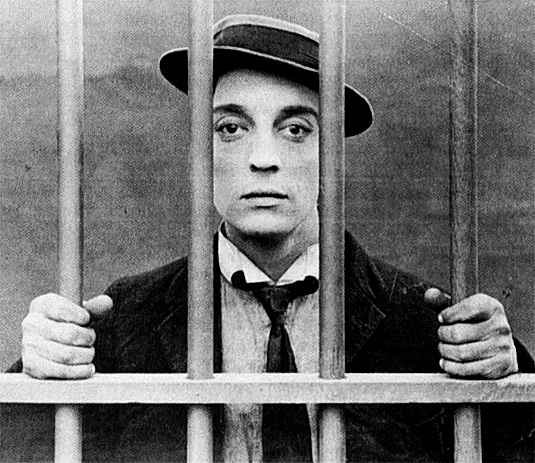
Personal Heroes: Buster Keaton


Buster Keaton

As I negotiate the corridors of the "1's&0's" Ranch, I occasionally have to do a pivot down a hallway or make a lateral move to avoid a wrangler taking a corner too tight. Instinctively, a leg flies up clownishly, unnecessarily. It's a habit, and every once in awhile I notice it, and think about where I got it. It's a Buster Keaton move--one of the simplest things he did. He'd stick out a leg as he was hopping around a corner, or yank it out way too far if he had to change direction fast, sometimes 180°. I started doing this in college after I fell in love with Keaton films. I don't know if I can break myself out of the involuntary jag that I do in tribute. I don't know if I want to, really.

Words fail me when it comes to Keaton, so singular is his art—and his work in "the Silents" never had much use for words.  Actions speak louder than.  And his actions, in a world that seemed specifically designed to kill him, were heroic in determination and amazing in execution.  The best I could do is free verse.

Buster'd

Man alive, look at 'im run so fast, so far, so wide
cart-wheeling, feet-peeling, stop on a dime and take off
Over the fences, under the legs, climb the ladder and tilt
What must it feel like with the Whole World as a prop?

Sputtering, he'd launch, like his body exploded
His feet and hands going as wide as they could
Exaggerated movement. Exaggerated stops. He'd skid.
And hang--like on the edge of a cliff--he'd wobble

And fall?
The very definition of "SPLAT!"
He'd land flatter'n humanly possible
All crumpled up in an angular ball,
an arm and a leg left dangling.
He wouldn't bounce. He'd jump right up.
To start the whole process again.

Bandy-legged sad-sack, the old stone-face takes a fall
The legs cartwheel in a circle--a carousel in the air.
Never in your wildest dreams would you attempt a stunt like that
but he'd had it all planned out--made it look hard, like it hurt.

He never, ever showed a smile
At the most a look of surprise
A smile would've made it look easy
and he worked for every laugh.

He didn't beg for your sympathy like the Tramp
He wasn't a victim of the chase like Lloyd
More often than not he chose to be where he was
He leaped at the chance, he ran full-speed.

He worked best in the Silents with his Old Man's Voice
And think of the commotion he would have made, crashing, thundering,
As it is, the only sound you hear
is your own jaw, dropping.


For More About Buster Keaton:


Friday, July 2, 2010

Personal Heroes: Falling for Chuck Jones

This week, I introduced a distant friend to the cartoons of Chuck Jones, an experience that opened their eyes and made them laugh out loud at the antics displayed in "One Froggy Evening," while simultaneously feeling the melancholy charm of its story of an entrepreneur who discovers a singing frog...but only when he sees it. Everybody else just sees a frog ("Burrup") and think he's a crack-pot. And...again...it made me flash that it was a story about love—nobody sees the frog the way this guy does (Yeah, he wants to profit off him—and there the analogy breaks down—but still, it's there, a cautionary tale), and it is his downfall. Chuck Jones and writer Michael Maltese, there was no greater combination.

Here's a re-post of my Chuck Jones appreciation.

Chuck Jones is a big hero of mine, because I grew up watching cartoons. My favorites were always the Looney Tunes and Merrie Melodies—the products of Termite Terrace, the animated unit at Warner Bros. And of the anarchic geniuses to sync a spitting lisp onto a character,* Charles M. Jones was my favorite. His cartoons had a bit more artistry, a better sense of design. That’s not why I liked them when I first encountered them, sitting on the floor in my ‘jammies, the television looming above me. I liked them because they were meaner.

What I didn’t know at the time was they had a sense of gentleness and tragedy and of doomed inevitability that just tickled me pink--that combination of sweet and sour with a cruel cynicism that delighted me.

I didn’t know how powerful Jones’ influence on me was until I was in college, majoring in communications. In a rather useless assignment for some theory class or other, they were showing one of Jones’ Oscar-winning cartoons “The Dot and the Line,” with the sound off, the challenge for the students being to determine what the cartoon was “communicating.” Easy, right? Except for the fact that the cast for “The Dot and the Line” consisted of…a dot…and…a line. No faces or expressions were painted on either character. They were your basic black India ink dot and line. The film had a narration, but the class was not privy to it. Despite all of that, I was able to suss out exactly what was going on throughout (even though I had never seen it before), and even interpret what emotions the…”dot” and the…”line” were going through. I was the only one in the class to do so.

Now, this had nothing to do with me, but everything to do with Jones’ story-telling style being consistent from cartoon to cartoon. This is the guy who made a cartoon featuring musical notes, for sufferin’ succotash. So, when the dot in a moment of sadness sighed, Jones had a way of animating that…even for just a dot…that was distinctive, and for me, identifiable.

Charles M. Jones Esq. is also the only hero I’ve ever met and had a sit-down discussion with. When I worked at KIRO Newsradio, Jones was selling animation cells and was appearing at a gallery (I believe, at the time, owned by his daughter) downtown, and he’d agreed to appear on the Jim French program. He was in his early 70’s at the time, and my impression of him was that he was just like his cartoons—a short, sweet-looking little man, who was as crusty as all get-out. I had him sign an ad for the video of the Jones compilation movie “The Bugs-Bunny-Road-Runner Movie” (“Where the hell’d you find THAT!?” he rasped.) We had a nice, casual conversation before he went into the studio, and, for some reason, we got into the origins of Marvin the Martian. “Well,” he said, “I based it on Mars, the Roman God of War. I figured with the helmet and the armored toga, I could get away with showing what an angry little guy he was with a minimum of work—so I based it on that.” “So….” I said. “What about the sneakers?” There was a Jonesian pause (approximately 48 frames) while he squinted at me like I was an idiot. “I LIKE sneakers!!” he yelled. I howled, and he chuckled. He was called in to do the interview and that was that. There were a couple of other times I had planned to see him, but at one I was booked to work, and the other—a talk and a showing of his adaptation of his buddy, Dr. Seuss’ How the Grinch Stole Christmas” at the King Cinema, he was too sick to attend. His brilliant background artist, Maurice Noble, came instead.

He died on February 22, 2002, at the age of 89.

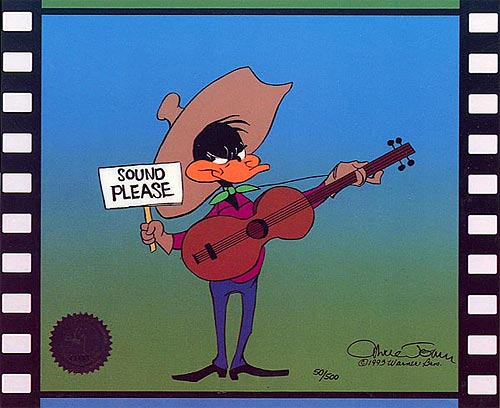
I have an animation cell of his that has Daffy Duck (from “Duck Amuck”) holding up a sign that says “Sound, Please!” that I treasure.


Acme Poem Company

Nature’s Cruel. Chuck Jones is crueler.
Time stops for the revelatory pause.
The realization, the brief reaction.
Hesitations of inviolable laws
The cosmic clockwork has seized its gears
to present your moment of doom.
Then, once you’ve noticed, it’s on with the show.
Now, wait for it...............
...................................boom!


There are quite a few Chuck Jones cartoons hovering around the web (but they disappear like zephyrs once the Warner Brothers get wind of it). My favorite for sheer inventiveness in toying with the cartoon-form and all of its possibilities is "Duck Amuck," one of the simplest ideas for a cartoon in concept, but is dizzying in its timing and the ability to build on and vary what is essentially a "one joke" concept. It's also a nifty little meta-commentary on the realtionship of animator with animatee.*


I can also present, for the time being (as it's been snatched from my clutches before!) "One Froggy Evening." If you’ve never seen it, frankly, I’m amazed—but you’re in for a treat. And, another plus—except for a few songs, it tells its story with no dialog—only visually. Steven Spielberg calls it "The Citizen Kane of cartoons." It, like “Duck Amuck” and Jones’ Wagner parody with Bugs Bunny and Elmer Fudd, “What’s Opera, Doc?,” are part of the National Film Registry, for being "among the most culturally, historically and aesthetically significant films of our time."


Vezi mai multe din Desene animate pe 220.ro


* The lisp was a secret dig at the animator’s boss, Leon Schlesinger, who had a prominent lisp and was loathed by all his employees, and who seemed blissfully unaware of the jokes at his expense.


** The other thing I love about it is that I just know Michael Maltese and Chuck Jones were trying to come up with a concept, and Maltese started with "Daffy comes out and..." and stopped, and they looked at each other blankly, and when they had wracked their brains enough, they just threw out all the rules and went "free-form" with the thing. Desperation and deadlines make you bold as well as crazy.


Friday, December 11, 2009

Personal Heroes: Stanley Kubrick

You sit at the board and suddenly your heart leaps. Your hand trembles to pick up the piece and move it. But what chess teaches you is that you must sit there calmly and think about whether it's really a good idea and whether there are other, better ideas.

What ideas did he have? What did he say?
That war is brutal folly and anyone trying to place rules on it is playing a fool’s game.
That man is of little consequence in the vast scheme of the universe, but is still of consequence, nonetheless.
That a lifetime in pursuit of wealth is a wasted life.
That ego and self-absorption has no place in family.
That free will is a sacred gift, even if it is ill-used.
That any elaborate scheme for good or ill can be undone by Fate.
That love has nothing to do with mystery, but with complete honesty.


"I would not think of quarreling with your interpretation nor offering any other, as I have found it always the best policy to allow the film to speak for itself."

He worked and honed and crafted and planned and plotted each of these stories for years, like elaborate chess-games against any contingency. By the time they reached his audience, he was so many moves ahead, the audience was frequently out of reach. Or out of touch. And it would take years for them to catch up. “People say it’s too bad he made so few films,” Martin Scorsese has said of him. “But there's so much, it’s enough. It’s enough.”

We’ll catch up with each of these little mysteries. Our only common thread to their ultimate meaning—he chose everything deliberately…specifically. There are no red herrings in his films. Everything has a purpose. They’re meant to be there. But you have to make leaps. Like knowing that Kubrick thought his version of "The Shining" was, essentially, a hopeful story. Any movie that proposed an after-life had to be.

Kubrick stayed out of the press, and the vacuum that created was usually filled with speculation about him. That he was phobic. That he was obsessive, certainly, and probably insane. Certainly he was misogynistic, if you look at his films.

But look at the man. Everything in Kubrick's life revolved around work and family. He couldn't make "
Lolita," with its salacious subject matter in America, so he moved to Britain, and remained there, impressed with the British crews, and distrustful of the Hollywood "scene." Everything he could do in Hollywood, he could do there...and on his terms. He wouldn't fly, preferring in his last trips to America, to sail. He said that he distrusted the airlines, but probably he preferred the time it took him to travel the ocean. With "2001," it allowed him to stall..and to edit. He set himself and his family in a perfect world where he didn't need to travel much, where all the tools of his trade were within arm's reach. It must have seemed idyllic. And misogynistic? His family was nothing, but women, whom he apparently doted on and adored. One of the stories his family tells of how he tried to convince one of his daughters not to leave home for the U.S. "But, everything you need is right here!" he would say. But the daughter moved anyway.

And he disliked doing interviews because the press always asked "those" questions. The ones that sound like you have to write a dissertation, or you won't pass the exam.

He was always getting tapes from his sister in New York with football games and tv shows from the States. He was quietly talking to his team of professionals (lawyers, accountants) with the thought of moving to Vancouver B.C. On the editing of "Eyes Wide Shut," which he'd been planning to film for decades, he pushed himself to working 18 hours or more a day, and he was found slumped, dead, during a night, working.

Kubrick's family took great pains to be available to the press and to use the Internet to dispel the stories that had accumulated over the years. His step-daughter Katherine used to respond regularly to questions on alt.movies.kubrick, and the picture one gets of her father was someone who would worry problems until he had the right answer, or at least the best answer for the moment. That he was a hopeless animal-lover, surrounding himself with spoiled dogs and cats. And rather than being reclusive, he just needed a good-enough excuse to leave home, like a play a friend was in, or a good party. He preferred to entertain at home.

He could drive people nuts with long phone-calls, and persistent questions over a wide range of topics. Persnickety questions. Too-much-detailed questions. And when you signed a contract to work for Kubrick, he expected you to be on-call at any time. You were his, mind, body and soul. In the field of movie-making, he demanded loyalty where most expect back-stabbing and that can be crazy-making. People came out of working on Kubrick movies, changed. More disciplined. Tougher. Kubrick's crews were spare. He spent less in a day than any other major film director, and with that he bought the luxury of time. Time to experiment, to try it again. And again. Most shoots try to get something in "the can" as quickly as possible. But for him, to do a hundred takes of a scene wasn't a failure, it was a luxury...to work on it, to experiment, 'til you got what you wanted: something fresh, something unusual, something useful. Kubrick wouldn't "settle."

You checkmate. You don't "draw."

Well, he did once. Here is Kubrick's acceptance speech for the D.W. Griffith Lifetime Achievement award from the
Director's Guild of America. It shows an uncomfortable Kubrick graciously, but very stiffly, giving his speech. According to his wife, he hated doing it. He was always blowing lines, and messing up. Then, he wouldn't be satisfied with his delivery. Finally, he just gave up--the man who thought nothing of a hundred takes with a proper actor--finally conceded that that was the best he could do, given the talent he was working with. He probably felt like he was tipping over his king.


After his death, his family made a documentary in tribute and celebration--the first few minutes of which play like an Overture and is a brilliant encapsulation of the many facets of Stanley Kubrick, warts and all. Here are the first few minutes of "Stanley Kubrick: A Life in Pictures"


One more video--about the time "A Life In Pictures" was released, Charlie Rose had Kubrick's widow, Christiane, and her brother, who made the film, along with Martin Scorsese to talk about Kubrick for an entire hour. Here's that quite special show:


Stanley Kubrick taught me that there was more to a film than cameras and actors. He taught me that somebody was telling a story, and how that person used the camera, and the things forever framed by it, were as much a part of telling the story, as the words in the script. He taught me about the "language" of film. And once you learn that, every theater becomes a classroom. And you never stop learning. And that is truly a gift that keeps on giving. Of all the heroes in this series, he was the one I always wanted to thank the most.


“The most terrifying thing about the universe is not that it is hostile but that it is indifferent; but if we can come to terms with this indifference and accept the challenges of life within the boundaries of death--however mutable man may be able to make them--our existence as a species can have genuine meaning and fulfillment. However vast the darkness, we must supply our own light.”

Stanley Kubrick


There's a man lives in London town,
Makes movies, he's world-renowned
Yes, he's really got the fame,
Stanley Kubrick is his name.
He does it all, he does it all,
Stanley does it all

He's a man who looks ahead
To make you think he raised the dead
And he cuts all his flicks,
He's a genius with his tricks.
He does it all, he does it all.
I'm tellin' y'all, Stanley does it all.

Scatman Crothers (who'd never heard of Kubrick when he was cast in "The Shining")


Stanley Kubrick: The Master FilmMaker – Early Web Site

Stanley Kubrick at the IMDB

Official Site

The Kubrick Site

Kubrick Multimedia Film Guide

Archivio Kubrick - Italian site that's quite comprehensive

Christiane Kubrick’s web-site - art site of Mrs. Kubrick

Peter Bogdanovich’s wonderful profile of Kubrick in New York Times Magazine

Kubrick authored article in Sight and Sound

Kubrick "Rolling Stone" interview

Large Association of Movie Blogs

Friday, October 16, 2009

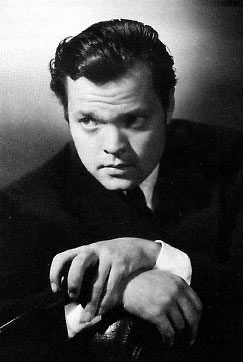
Personal Heroes: This is Orson Welles

"I discovered at the age of six that everything was a phony, worked with mirrors. Since then, I've always wanted to be a magician."

I had a lot to say about Orson Welles. I wrote a long dissertation about genius and discipline. About magic and illusion. But a lot of what I had to say was said in “Anytime Movies Reloaded: Citizen Kane”—I just said it differently.

Suffice it to say that, for me, every new Welles film opened up the world to a new, more wondrous interpretation. I would, literally, walk out of a new (to me) Welles film with "new" eyes. But…there are damned few Welles films. We will never see his unexpurgated version of “
The Magnificent Ambersons.” Nor his modern dress version of “Don Quixote."* Nor his suspense film "The Deep" (taken from the same source novel as Philip Noyce’sDead Calm”) which starred Laurence Harvey, Jeanne Moreau and Welles). There are tantalizing glimpses of his London documentary in the DVD of “F for Fake.” Then there’s the film he was working on when he died “The Other Side of the Wind”—Peter Bogdanovich is trying to get it finished for cable. But it won’t be the same. Every so often, bits and pieces of these projects appear to tantalize and disappoint. I guess the way I feel about Welles is like the diner who is promised a sumptuous meal but gets a maddeningly small portion.—there’s never enough. It’s frustrating.

Like this story.

I was going on vacation once when I was working at
KIRO radio, and it was a much-needed vacation. A couple of days before it would begin one of the sales-sharks approached me. “Are you really going on vacation?” she asked. “What!” I said, suspecting a trap. “Are you going somewhere?” “Why do you ask?” “Well, I was wondering...if you wanted to record Orson Welles…” I would! Would I! Apparently, Welles was booked to appear with the Seattle Symphony to read
Ogden Nash’s “Carnival of the Animals” to the specific Saint-Saëns piece. He was going to phone in a promotional commercial, and I’d have the chance to record him. Well, being that I idolized Welles, it didn’t matter if he was in the studio or I was recording him down the phone-line…it was Orson Welles! And, as a bonus, they’d give me a ticket to the concert. Yes!! Any nebulous plans I had for traveling someplace to relax went away—I was going to have a chance to record….Orson Welles! I made sure that I would be home all day and available at a moment’s notice to head down to the studio when the call came in that he was ready.

"The enemy of art is the absence of limitations."

That call came on Tuesday. Great! I’d get to record Orson (I was calling him “Orson”) AND have the bulk of my vacation. I went down to Broadcast House and met the Symphony folks there—extraordinarily nice people who I subsequently had a long relationship doing ads promoting the Symphony (through them, I got some free passes to performances like the one where I saw the perfect version of the “New World Symphony” my favorite piece of “classical” music. Welles was supposed to call at a designated time, and I showed up early—so excited was I to record my hero.

We had a speaker-phone arrangement in the studio, so there was no way to record the conversation when it was off. The way it’d work was we’d set up the call, put Orson on the speaker-phone and through that, then and only then, record him. Remember that. It’ll be important later.

The appointed time came and Orson hadn’t called. We checked with the switchboard and no, if Orson Welles had called, they’d know it—plus, he had the direct line to the studio. But he hadn’t called. An hour and a half later, the symphony rep called the number she had** and talked to someone at his house who said that Orson was “out” and he was supposed to be back two hours ago, and no, she didn’t know when he’d be back.

Okay, it wasn’t going to happen that day. We’d regroup, set up another time and get it done then. The Symphony ad wasn’t supposed to start airing until that Saturday, so we had time.

"The director is simply the audience. So the terrible burden of the director is to take the place of that yawning vacuum, to be the audience and to select from what happens during the day which movement shall be a disaster and which a gala night. His job is to preside over accidents."

Well, let me telescope this story and just say that we had a scheduled time almost every day that week, and I trudged down to the studio to record each time, and, each time, the same scenario played out, including the phone call to Orson’s house and the excuses—and the apologies. Still, I thought it was worth it if I could get him on tape and the Symphony folks, though wearying of it all, still were enthusiastic about the prospect.

As was I.

Friday was our “make or break” day. We had to record something—anything--to air over the weekend to promote the concert. All the usual suspects joined in the studio for the appointed time. True to form, the time passed with no phone call. He was supposed to call us. We’d been assured he’d be home. Nothing was going to interfere. An hour went by, a phone call was made, and we were assured he’d be home by 3pm. Okay, we said, we’ll call him at 3.

By this time, I was skeptical, so I started writing an alternative in case we couldn’t record Orson. I dashed it off and it was approved by the Symphony crew on the spot. 3pm rolled around. We all looked at each other—give him ten minutes, then call. As I remember, nobody spoke. We just sort of watched the clock.
3:05
. This was going to be our last shot at recording Orson. 3:06. I checked the equipment to make sure everything was working, because after all, (3:07), it’d be really embarrassing to finally get him after al this time, and then (3:08) have something fall apart on us. Everything was fine. Tape was ready to roll. 3:09. We called. The Symphony rep dialed Orson’s number and we waited. She and I exchanged glances every time the phone buzzed down the line. I couldn’t hear anything, and I wouldn’t until the speaker-phone was engaged.

Then her eyes widened. A huge smile spread across her face. “Mr. Welles…” she started. But that’s all she said. The smile disappeared and turned into an expression of shock. I couldn’t hear any of it, but she blinked a couple of times and made the impression she was going to start to speak, but she never got the chance. After about 30 seconds, her mouth closed, never managing to say another word.

“What happened?”

“He yelled at me!”

“Wha…?!”

“He said to stop calling and bothering him”

“But…was it really him?”

“He called me a pest!”

“Yeah, that was Orson, all right,” I said. That was a particularly memorable word he used in the out-takes from a commercial session that had been floating around studios around the country (and which you can hear below).


Damn! Orson in a tirade and because of that damned speaker-phone, I didn’t get to hear it, let alone record it.

Well, I set about to get my alternative recorded, and the symphony folks went back to headquarters to lick their wounds and wait for my phone-call to play the advertisement down the line.

Ultimately, I was told that Orson stewed about the “pests” and in the evening, figured out that it wasn’t a French interviewer who had been hounding him, but it was actually the Symphony, and he called and profusely apologized—it was a huge misunderstanding, please forgive him.

Yeah, yeah. But it was too late to record the commercial. I made the best I could of a nice weekend to try to turn it into a vacation, and returned to work Monday morning, having learned a lesson to never do anything like that again. At least, there was still the concert to look forward to.

A little while later. A phone call. “Orson’s not coming!” “Oh? What’s the matter?” “Doctor’s orders. He’s too ill to travel. We have to go with a substitute.” That would turn out to be Seattle actor John Gilbert, who did a superb job (if feeling somewhat out of his depth standing in for Orson Welles). And the program was great—witty and energetic and expertly played. A wonderful show.

But it wasn’t Orson Welles. But then again, it was all too much like Orson Welles. The potential for great things. The magic. And the frustration when things fall short. The disappontment. The lost chances. That is also Orson Welles. So much was out of his control. But quite a bit of it was.
***

"I think I made essentially a mistake in staying in movies, because I--but it's a mistake I can't regret, because it's like saying ''I shouldn't have stayed married to that woman, but I did because I love her.'' I would have been more successful if I'd left movies immediately, stayed in the theater, gone into politics, written, anything. I have--I have wasted the greater part of my life looking for money and trying to get along, trying to make my work from this terribly expensive paint-box, which is a movie. And I've spent too much energy on things that have nothing to do with making a movie. It's about two percent moviemaking and ninety-eight percent hustling. It's no way to spend a life."

ORSON WELLES: [1982]


Orson Welles is a poet
through his violence
and through his grace.
Never does he tumble
from the tightrope
on which he crosses cities
and their dramas.


He is a poet too in the
Loyal friendship he bears
our dreams and our struggles.

��

Others will know better than I
how to praise his work


I content myself with sending him
my fraternal greeting.

��

His handshake is as firm as he is
and I think of it each time my work
obliges me to leap over an obstacle.


Jean Cocteau

"If you want a happy ending, that depends, of course, on where you stop your story."

Orson Welles....here, at his best.


"The movie director must always remain a slightly ambiguous figure, after all, because so much of what he signs his name to came from elsewhere, so many of his best things are merely accidents over which he presides. Or the good fortune he recieves. Or the grace."
"This is Orson Welles" p. 259 Orson Welles and Peter Bogdanovich; ©1998 Da Capo Press

Wellesnet - an Orson Welles blog
Orson Welles at IMDB
Orson Welles at Wikipedia
The Estate of Orson Welles - a tribute site
Orson Welles: a Man and his Genius - another tribute site
An interesting article about Welles
An article on "The War of the Worlds" broadcast
A rather definitive site on "The Mercury Theater"
Welles FBI Files
The infamous Orson Welles "outtakes"

* Well, we get to see some of it: a segment of Welles' "Don Quichotte" (backed by a bizarre version of The Doors' "The End") but you can see where Welles was going with taking the Don's visions into the modern era. This is a haunting piece of film, soundtrack or no.

** I made a note of the number and wrote it down into my phone-ledger. I found that ledger the other day, and inside it was Orson Welles' home phone number.

*** Post-script: Reading this, you'd think I had the opinion that Orson Welles was a failure. Far from it. If anything, Welles can only be said to have not lived up to his potential, which seemed limitless. He could make amazing films and images out of limited resources and binding constraints—an escape-artist film-maker. As it stands, he is merely more human, more approachable. For all his foibles and falterings, his accomplishments, as they stand (and we are privy to so few of them!), are (to be annoyingly alliterative) formidable. We should all aspire to be such "failures."


Thursday, October 1, 2009

Personal Heroes: Falling for Chuck Jones

Chuck Jones is a big hero of mine, because I grew up watching cartoons. My favorites were always the Looney Tunes and Merrie Melodies—the products of Termite Terrace, the animated unit at Warner Bros. And of the anarchic geniuses to sync a spitting lisp onto a character,* Charles M. Jones was my favorite. His cartoons had a bit more artistry, a better sense of design. That’s not why I liked them when I first encountered them, sitting on the floor in my ‘jammies, the television looming above me. I liked them because they were meaner.

What I didn’t know at the time was they had a sense of gentleness and tragedy and of doomed inevitability that just tickled me pink--that combination of sweet and sour with a cruel cynicism that delighted me. I didn’t know how powerful Jones’ influence on me was until I was in college, majoring in communications. In a rather useless assignment for some theory class or other, they were showing one of Jones’ Oscar-winning cartoonsThe Dot and the Line,” with the sound off, the challenge for the students being to determine what the cartoon was “communicating.” Easy, right? Except for the fact that the cast for “The Dot and the Line” consisted of…a dot…and…a line. No faces or expressions were painted on either character. They were your basic black India ink dot and line. The film had a narration, but the class was not privy to it. Despite all of that, I was able to suss out exactly what was going on throughout (even though I had never seen it before), and even interpret what emotions the…”dot” and the…”line” were going through. I was the only one in the class to do so.

Now, this had nothing to do with me, but everything to do with Jones’ story-telling style being consistent from cartoon to cartoon. This is the guy who made a cartoon featuring musical notes, for sufferin’ succotash. So, when the dot in a moment of sadness sighed, Jones had a way of animating that…even for just a dot…that was distinctive, and for me, identifiable.

Charles M. Jones Esq. is also the only hero I’ve ever met and had a sit-down discussion with. When I worked at KIRO Newsradio, Jones was selling animation cells and was appearing at a gallery (I believe, at the time, owned by his daughter) downtown, and he’d agreed to appear on the Jim French program. He was in his early 70’s at the time, and my impression of him was that he was just like his cartoons—a short, sweet-looking little man, who was as crusty as all get-out. I had him sign an ad for the video of the Jones compilation movie “The
Bugs-Bunny-Road-Runner Movie” (“Where the hell’d you find THAT!?” he rasped.) We had a nice, casual conversation before he went into the studio, and, for some reason, we got into the origins of Marvin the Martian. “Well,” he said, “I based it on Mars, the Roman God of War. I figured with the helmet and the armored toga, I could get away with showing what an angry little guy he was with a minimum of work—so I based it on that.” “So….” I said. “What about the sneakers?” There was a Jonesian pause (approximately 48 frames) while he squinted at me like I was an idiot. “I LIKE sneakers!!” he yelled. I howled, and he chuckled. He was called in to do the interview and that was that. There were a couple of other times I had planned to see him, but at one I was booked to work, and the other—a talk and a showing of his adaptation of his buddy, Dr. Seuss’ How the Grinch Stole Christmas” at the King Cinema, he was too sick to attend. His brilliant background artist, Maurice Noble, came instead.

He died on February 22, 2002, at the age of 89.

I have an animation cell of his that has Daffy Duck (fromDuck Amuck”) holding up a sign that says “Sound, Please!” that I treasure.


Acme Poem Company

Nature’s Cruel. Chuck Jones is crueler.
Time stops for the revelatory pause.
The realization, the brief reaction
Hesitations of inviolable laws
The cosmic clockwork has seized its gears
to present your moment of doom.
Then, once you’ve noticed, it’s on with the show.
Now, wait for it...............
..............................boom!


There are quite a few Chuck Jones cartoons hovering around the web (but they disappear like zephyrs once the Warner Brothers get wind of it). My favorite for sheer inventiveness in toying with the cartoon-form and all of its possibilities is "Duck Amuck," one of the simplest ideas for a cartoon in concept, but is dizzying in its timing and the ability to build on and vary what is essentially a "one joke" concept. It's also a nifty little meta-commentary on the realtionship of animator with animatee*


I can also present, for the time being (as it's been snatched from my clutches before!) "One Froggy Evening." If you’ve never seen it, frankly, I’m amazed—but you’re in for a treat. And, another plus—except for a few songs, it tells its story with no dialog—only visually. Steven Spielberg calls it "The Citizen Kane of cartoons." It, like “Duck Amuck” and Jones’ Wagner parody with Bugs Bunny and Elmer Fudd, “What’s Opera, Doc?,” are part of the National Film Registry, as being "among the most culturally, historically and aesthetically significant films of our time."


* The lisp was a secret dig at the animator’s boss, Leon Schlesinger, who had a prominent lisp and was loathed by all his employees, and who seemed blissfully unaware of the jokes at his expense.

** The other thing I love about it is that I just know Michael Maltese and Chuck Jones were trying to come up with a concept, and Maltese started with "Daffy comes out and..." and stopped, and they looked at each other blankly, and when they had wracked their brains enough, they just threw out all the rules and went "free-form" with the thing. Desperation and deadlines make you bold as well as crazy.


Chuck Jones’ Official Web Page
The Chuck Jones Center for Creativity
Chuck Jones on Toonopedia
A Chuck Jones Fan Site
Chuck Jones at IMDB
Chuck Jones’ Wikipedia entry
Roger Ebert on Chuck Jones
Chuck Jones section of the “Academy of Achievement”
PBS’ Great Performances: “Chuck Jones-Extremes and In-Betweens”
A comprehensive List of Jones’ cartoons

An essay on Jones from “Senses of Cinema”

Tuesday, January 15, 2008

Walter Murch

Walter Murch

Who?

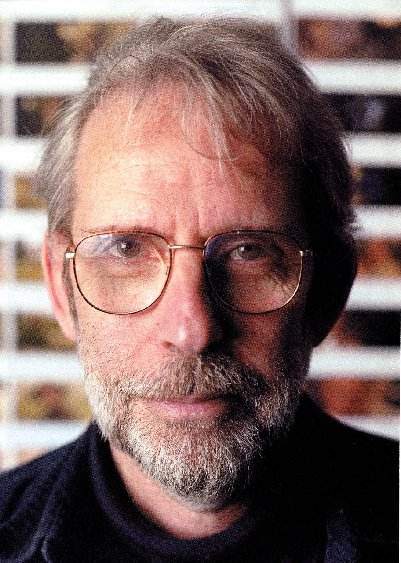
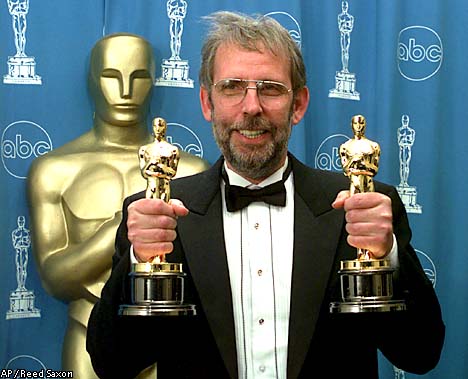
Walter Murch is a film editor, sound editor, film historian and renaissance man. He is part of the "young turks" class of students at USC who changed movies forever--Coppola, Lucas, Milius. Murch directed one movie (the opportunity provided to him by the clout of his class-mates) the weird and wonderful "Return to Oz," which followed L. Frank Baum's version of Oz, rather than the MGM Musical Department's (which is probably why few went to see it, and the ones that did were confused and disoriented by it--"Toto, we're really not in Kansas anymore!"). The rest of his career he's been support-staff, but a major supporter whose influence and technique determines the shape and feel of each film he works on.

When I caught up to Murch, he had already done one significant thing--he had coined the phrase that now pervades the sound-editing field, that being "
Sound Designer." Briefly, the story of that phrase originates with Murch not being a member of the sound editor's union at the time he was working on Coppola's "The Rain People." Coppola asked him how he wanted to be listed in the credits, since they were prohibited from using the "Sound Editor" designation. "Sound Designer" was Murch's reply* And a new aspect and depth to the field was coined. The credit on his next film, George Lucas' "THX-1138" had his work classified, not him. "Sound Montage by Walter Murch" (he also co-wrote the screenplay) was how the credits (rolling from the top of the screen against the norm) read. Murch filled the spaces of "THX" with echoing yelps, bizarre clusters of sounds and cheap Muzak. His motorcycles emitted flangeing screams and in plexiglas confessionals deep, sonorous voices gave comfort. His sounds were not only accurate (in that they sounded appropriate to the visuals) but also displayed wit and satire.

His next film for Lucas, "
American Graffiti," was more sophisticated and tougher to pull off in its more recognizable world. Lucas had strung together a continuous soundtrack of golden oldies and Wolfman Jack patter to serve as a constant back-drop and Greek chorus, and Murch re-recorded the entire track using a method he dubbed "world-izing" (a technique he later found had been used by Orson Welles to authenticate sound). He took the track, played it in a large empty space and recorded the result, moving the speakers at key times to muffle the sound, delay it by a few frames, attenuate it to a thin squeal, or layer on vast coat of echo. He inserted recorded kids' conversations and shrieks to enliven the background, making the empty midnight world of the cruisers full of activity and fun. For Coppola's "The Godfather," Murch kept the soundtrack real, but everyone remembers the roar of the el' train as Michael Corleone hesitates in the bathroom of an Italian restaurant before he sets out to "make his bones." There's another favorite sound moment of mine in "The Godfather" as Michael Corleone walks the deserted echoing halls of the hospital on a visit to see his father. He finds a Christmas party halted in mid-revelry, including a Johnny Fontaine record stuck in a groove and playing one chilling word--"toniiiiihght/toniiiiight." It's unnerving, and the moment we can distinguish what the words are, Michael snaps into action to save his father from a "hit." Murch expanded his role during Coppola's "The Conversation," editing the picture as well as the sound, and was responsible for all the sonic permutations that "the conversation" take on. And his other-worldly sound design for "Apocalypse Now," took us into the madness and surreal beauty of Viet Nam. Or Coppola's Viet Nam, anyway.

Over the years he's cherry-picked the movies he's supervised:
Fred Zinnemann's "Julia;" three films with Anthony Minghella ("The English Patient," "The Talented Mr.Ripley," and "Cold Mountain")"K-19: The Widowmaker," "The Unbearable Lightness of Being," "Ghost," "Jarhead" for Sam Mendes, "Youth without Youth," Francis Coppola's first film in ages.

He's written one book, "
In the Blink of an Eye," a practical and philosophical guide to film editing, done numerous interviews and essays (links below) and had two books written about him--"The Conversations" by the author of "The English Patient," Michael Ondaatje and "Behind the Seen
," which talks about Murch's efforts to edit "Cold Mountain" using Final Cut Pro, a consumer editing system--and which became a book about Murch, himself. Plus, he's tackled personal assignments, like taking Orson Welles' detailed memo of the steps that could be taken to get "Touch of Evil" back to his original intentions, and then doing just that. Or syncing pioneer film maker W.K.L. Dickson's first attempt at a film-audio hybrid by finally marrying the sound found on a tinfoil cylinder to the original film "reel" both done in 1895. The historic results are here:


When I saw (and heard) "THX-1138" on the lower-end of a "Sci-Fi" double bill (with the egregiously pedestrian "Soylent Green") at the Crossroads Theater with my brother John, it was a "thunderbolt" moment. No other film I'd seen looked like it, or, more importantly, sounded like it. It was right then that I, more than anything, wanted to be doing that kind of work with sound like that--a "creative" way to bring reality to the screen and color it with a certain sensibility. Not many people get to live their dream. I have. And I'm grateful to Walter Murch for inspiring me--and for continuing to teach me new things with every new film he does.

* Back in my "Bad Animals" studio days, there was a time when "sound designer" was being put on our business cards instead of the usual "engineer." I thought that was a little pretentious, so, being a "smart-ass," I asked that the term "Audio Architect" be put on mine. I've also used the term "Sound-Wave Landscaper," and these days I've boiled it down to "Chief Noisemaker." Now, I'm working at a place where the guy across the hall works on various compression schemes to make mp3's sound good at lower band-widths (so you can stuff more songs into your Ipod) His title? "Audio Architect."

Funny old world, innit?

Murch articles at FilmSound.Org
Murch articles at Transom. org
Murch interviewed on "Fresh Air"
Murch story on "All Things Considered"
Murch as guest on "Studio 360"


Murch's incredible work sorting out the chaos in "Apocalypse Now"


An interesting little piece on those initial helicopter sounds in "Apocalypse" and a nifty little graphic showing how Murch made it spin through your head.


And finally, Murch explains "Worldizing" far better than I ever could