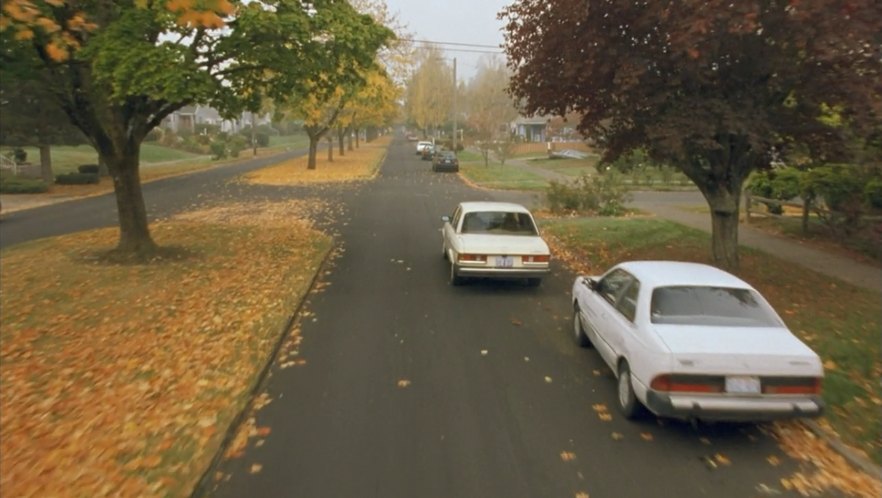
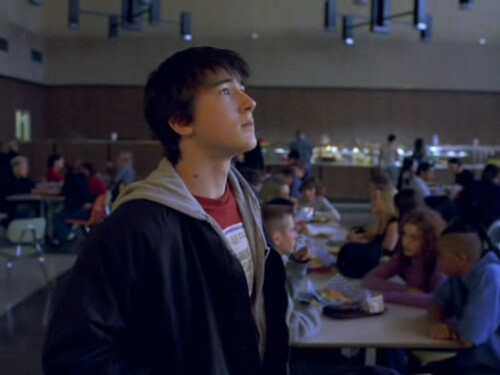
 "Elephant" (Gus Van Sant, 2003) "Columbine from the Trenches." The film starts with a car out of slow-motion control smashing into garbage cans along the street. John McFarland (John Robinson) has to take the keys away from his father (Timothy Bottoms), who is driving his son—drunk—to school. Already we're given a sense of life out of control as we spend a weirdly typical day at a High School in suburban Portland, following the criss-crossing paths of several strata of students in long floating camera tracks down the long corridors of lockers and linoleum. The shots follow the gaze of the walkers extending to vanishing-points down the halls, leading inexorably...to what? Usually, another hall-way. After many minutes of this you begin to feel trapped in a maze, and Van Sant's doing enough obscure things with his mumbling non-actors (most of the film was improvised) to keep an audience-member on-edge. It's "The Shining," all "Greased" up and nowhere to go. Around each corner, there may be the photo class guy who wants to take your picture, or it might be the last thing you ever see.
The film is an homage of sorts to Danny Boyle and Alan Clarke's experimental film about an IRA shooter, using long tracking shots and a chilly minimalist approach. But Van Sant (and his producer Diane Keaton) have changed the "elephant in the room" to school violence and the 1999 Columbine Massacre, which the carnage from "Elephant" somewhat resembles. The film plays out dispassionately without any answers and no questions asked. The Act simply is. Kids get pissed. Kids arm up. Kids get revenge. The shooters aren't glorified. They have little on the ball, get abused by the jocks, play first-person shooter video games, experiment with gay sex, and build bombs that don't work. Their assault is shooting fish in a barrel, with no rules and no thought. What could explain it? And nothing could justify it. In the end, you're left drained and hopeless and questioning why you wanted to see it in the first place.
But Van Sant excels in draining feeling out of his movies. Oh, emotions are there, but there's a chilly null-void surrounding the actors as they float through the landscapes. The kids in the school are chirpily distracted, turning drama from the trivia. They're not even thinking, so much as using brain-energy and you can feel the complacency in their hall-walkabouts—("This is where I'm supposed to be, and okay, I get to do things I like to do, so no problem") They're innocent cows in a field, ill-prepared for armed assault, and death unfathomable given their age. They're the slowest of targets.
The shooters have that same null-void cocoon around them and through them. They shoot, sometimes watch the results, but mostly just randomly pick off kids they encounter by chance. All the earlier intersections we've seen (and re-seen from other perspectives) come to an abrupt ending, the wanderings stopped with a bloody, crumping jolt. This is death by violence, but it's not a crime of passion. These kids feel nothing, not even satisfaction, wandering through their little cloud of atrocity, while the other kids wander in theirs of complacency. The gun-shots are the lightning that form when they meet.
It's a disturbing film for its utter lack of feeling, remorse or empathy. As such, it provides a bit more insight to a senseless killing than any speculation of its cause might serve.
What could explain such an act?
Nothing.
Showing posts with label 2003. Show all posts
Showing posts with label 2003. Show all posts
Thursday, April 9, 2009
Elephant




Monday, April 21, 2008
Thirty Two Short Films About Glenn Gould
"Thirty Two Short Films About Glenn Gould" (François Girard, 2003) One of the little hallmarks in Canadian Cinema, despite being only a few years old.  Girard's exercise in using separate short films to encapsulate a biography (rather than finding some artificial--and usually false--element to bridge incidents in a life) uses Gould's particularly particular performances as a back-drop for an examination of the man and his ideas--the music being part and parcel of those. Gould abandoned a career as a concert pianist in 1964, for philosophical and political reasons, and turned to the studio for the pursuit of his conquering--creating definitive interpretations--of pieces, composing experimental works, and doing research into the sound of concrete music, natural sound and producing radio plays--soundscapes--exploring a theme. Girard slights none of it, and while he's at it, explores various ways of presenting filmed music, whether it's background--
 as mood-setter--or as filmed foreground--as inspiration, rationalization, or realization. Music is as much a character in the film as Gould (portrayed by Colm Feore), and it is its mad muse that creates the pace and even the filming style of many, many of the pieces. You begin to look at music differently--and film-making in general. "Thirty Two Films about Glenn Gould" is as much an experiment in form and interpretation as "Fantasia," and zeroes in on its biographical subject as well. You may not know all there is to know about Glenn Gould's life, but you get to know the man, and the interests he pursued. You'll also begin to think about what he thought. And you'll stop counting at "4."
What more could you ask from a film?
 Girard's exercise in using separate short films to encapsulate a biography (rather than finding some artificial--and usually false--element to bridge incidents in a life) uses Gould's particularly particular performances as a back-drop for an examination of the man and his ideas--the music being part and parcel of those. Gould abandoned a career as a concert pianist in 1964, for philosophical and political reasons, and turned to the studio for the pursuit of his conquering--creating definitive interpretations--of pieces, composing experimental works, and doing research into the sound of concrete music, natural sound and producing radio plays--soundscapes--exploring a theme. Girard slights none of it, and while he's at it, explores various ways of presenting filmed music, whether it's background--
 as mood-setter--or as filmed foreground--as inspiration, rationalization, or realization. Music is as much a character in the film as Gould (portrayed by Colm Feore), and it is its mad muse that creates the pace and even the filming style of many, many of the pieces. You begin to look at music differently--and film-making in general. "Thirty Two Films about Glenn Gould" is as much an experiment in form and interpretation as "Fantasia," and zeroes in on its biographical subject as well. You may not know all there is to know about Glenn Gould's life, but you get to know the man, and the interests he pursued. You'll also begin to think about what he thought. And you'll stop counting at "4."
What more could you ask from a film?
Saturday, April 12, 2008
American Splendor
"American Splendor " (Shari Springer Berman, Robert Pulcini, 2003) There's a lot of debate among graphic connoisseurs (comic-book fans) about which of the glut of "spandex movies" have captured the "essence" of its three-color source.
It's a puzzler, because the media communicate differently. Comics create a story-telling flow through still images--the reader must fill in the gaps* and that covers a lot of story-telling problems and physical impossibilities that films, if they are to represent reality, have to compromise. The geeks argue the "Spider-man" films are a good representative of the comic, but it takes more than re-creating iconic poses. There are those in my circle who consider the first "Hellboy" film to closely follow its graphic predecessor, and it does to a degree, though the insertion of an unlikely "Beauty and the Beast" romance is more in line with Hollywood sensibilities than Mike Mignola's. For a more literal translation of a comic source Robert Rodriguez took Frank Miller's "Sin City" black and white minimalist post-card approach and used it as a storyboard for his film--which exposed the heavy-breathing hyper-silliness of the source material.
The movie I'd vote for? Well, obviously "American Splendor" --the story of schlubby guy Harvey Pekar who chronicles his sorry-ass life in a comic book that he writes and is drawn by various illustrators, achieving something like a mosaic effect, much as the movie does. It (the movie) is, mostly dramatized--Paul Giamatti plays Pekar, and it was his break-out role--but sometimes illustrated, animated, and the real Harvey even pops on to give a dose of reality. In form and content, the film becomes the comic while not straying away from movie "fundamentals" of pace and movement, while also incorporating graphic techniques to give a sense of the book's "style." Of every "comic" movie I've seen, "American Splendor" gives you a sense of the worth of its source, while not compromising it. It may even, like any good film adaptation, inspire you to seek out the source material.
" (Shari Springer Berman, Robert Pulcini, 2003) There's a lot of debate among graphic connoisseurs (comic-book fans) about which of the glut of "spandex movies" have captured the "essence" of its three-color source. It's a puzzler, because the media communicate differently. Comics create a story-telling flow through still images--the reader must fill in the gaps* and that covers a lot of story-telling problems and physical impossibilities that films, if they are to represent reality, have to compromise. The geeks argue the "Spider-man" films are a good representative of the comic, but it takes more than re-creating iconic poses. There are those in my circle who consider the first "Hellboy" film to closely follow its graphic predecessor, and it does to a degree, though the insertion of an unlikely "Beauty and the Beast" romance is more in line with Hollywood sensibilities than Mike Mignola's. For a more literal translation of a comic source Robert Rodriguez took Frank Miller's "Sin City" black and white minimalist post-card approach and used it as a storyboard for his film--which exposed the heavy-breathing hyper-silliness of the source material.
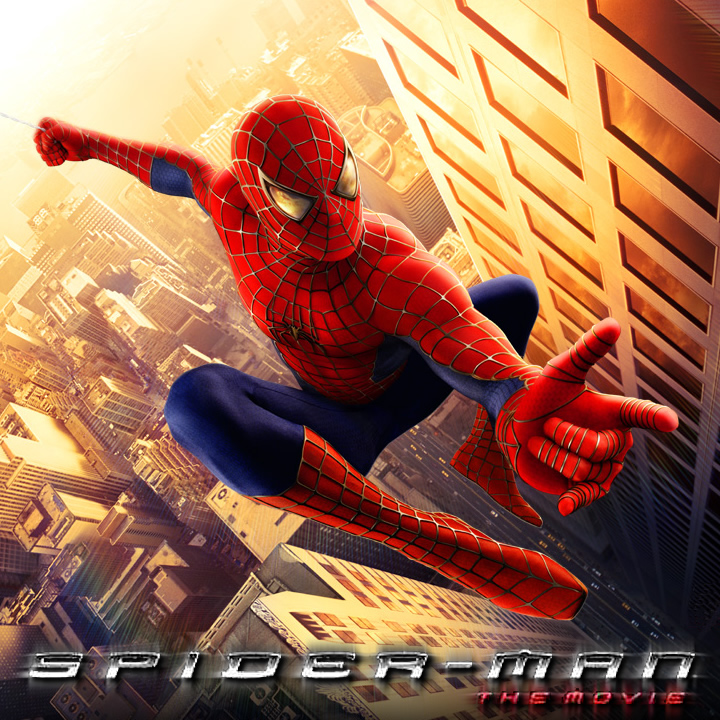
The movie I'd vote for? Well, obviously "American Splendor" --the story of schlubby guy Harvey Pekar who chronicles his sorry-ass life in a comic book that he writes and is drawn by various illustrators, achieving something like a mosaic effect, much as the movie does. It (the movie) is, mostly dramatized--Paul Giamatti plays Pekar, and it was his break-out role--but sometimes illustrated, animated, and the real Harvey even pops on to give a dose of reality. In form and content, the film becomes the comic while not straying away from movie "fundamentals" of pace and movement, while also incorporating graphic techniques to give a sense of the book's "style." Of every "comic" movie I've seen, "American Splendor" gives you a sense of the worth of its source, while not compromising it. It may even, like any good film adaptation, inspire you to seek out the source material.
Tuesday, January 22, 2008
The Wild Parrots of Telegraph Hill
The Wild Parrots of Telegraph Hill (Judy Irving, 2003)
A documentary not so much about the birds themselves, but how people, particularly one man, relate to them. I suppose it has to be this way because the parrots can't speak for themselves and relate their own stories, so they need an advocate. That the filmmaker entered into a romantic relationship with the guy is, I guess, inevitable. I don't know many documentarians who don't keep up contact with their subjects if they're at all accessible.
As for the parrots, they are now just a fact of Nature, whatever their origins. Their continued existence depends on the charity of the Telegraph Hill residents. If there's a parrot-poop problem, it's for sure that some of them will want them gassed (as with the migrating geese in Seattle), or will just decimate the population as happened with the "abandoned bunny" colony in Redmond, which was bulldozed to make way for REI headquarters. Living on "The Rock" has taught me that, no matter how we romanticize the critters and anthropomorphize them, "Nature is red in tooth and claw" still, and it extends even to us, as these species survive merely on our whim. As upbeat as the movie tries to be about this lovely little miracle, it cannot ignore the predators among us.

A documentary not so much about the birds themselves, but how people, particularly one man, relate to them. I suppose it has to be this way because the parrots can't speak for themselves and relate their own stories, so they need an advocate. That the filmmaker entered into a romantic relationship with the guy is, I guess, inevitable. I don't know many documentarians who don't keep up contact with their subjects if they're at all accessible.
As for the parrots, they are now just a fact of Nature, whatever their origins. Their continued existence depends on the charity of the Telegraph Hill residents. If there's a parrot-poop problem, it's for sure that some of them will want them gassed (as with the migrating geese in Seattle), or will just decimate the population as happened with the "abandoned bunny" colony in Redmond, which was bulldozed to make way for REI headquarters. Living on "The Rock" has taught me that, no matter how we romanticize the critters and anthropomorphize them, "Nature is red in tooth and claw" still, and it extends even to us, as these species survive merely on our whim. As upbeat as the movie tries to be about this lovely little miracle, it cannot ignore the predators among us.
Subscribe to:
Posts (Atom)