Showing posts with label E. Show all posts

Saturday, November 9, 2013

Enough Said

Yadda, Yadda, Yadda....
or
Ex-Men and Women: Daze of Futures Past

It's refreshing to see a rom-com where the entangled are not "zygotes in love," young puppy-lovers with their whole lives in front of them as they go walking off into the sunset, or walking along the sandy-beach, or kissing in front of fireworks while the music swells and we head for the exits.  That's about the time where the "They Lived happily Ever After" credit of "The End," sometimes with the cutesy "(?)," burns itself into the acetate, and I give a guttural chuckle while the thought of there being a sequel where everything goes to shit burns itself into my grey matter.

Most rom-coms, even the most cynical ones, are first acts, where the lessons learned and the hurdles tripped over only get us to the threshold of commitment and then leave us with the unasked question: "So, how's THAT working out?"

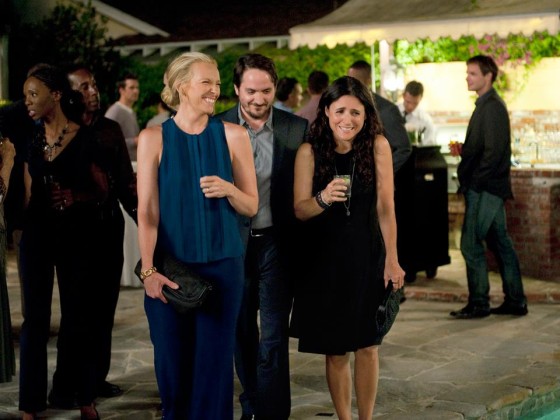
But, when you're dealing with adult rom-com's there's always that bittersweet quality where flirtations are recognized to be temporary sparks, and that work is involved and sometimes relationships need to be tailored like clothes as people change and grow either too comfortable or not comfortable enough.  If nothing fits, then it's time to do some spring cleaning and donate stuff to somebody else.  That's the situation with people in Enough Said, the latest film by Nicole Holofcener, who's doing her best to off-set the male-centric movie landscape in the States.  This one centers around Eva (Julia Louis-Dreyfuss) a single mother, once divorced, working as an in-home masseuse, who's dreading the departure of her daughter (Tracey Fairaway) for college, and feeling needy, probably because it's one thing to be a married "empty nester," but a single one?  Misery loves company.

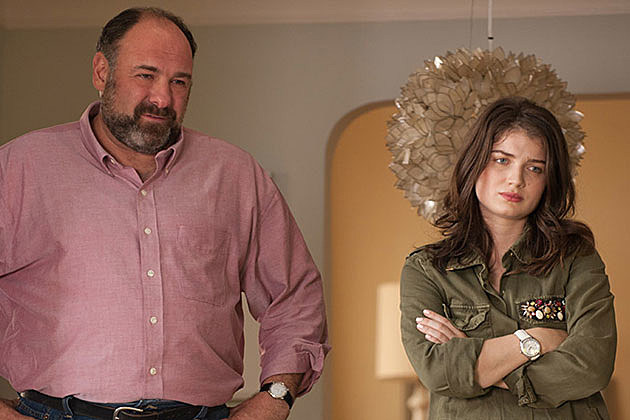
That's why her meeting Albert (James Gandolfini) at a party is such a lucky break. Divorced, nebbish-y, his daughter (Eve Hewson) is also going away to college. There's no real attraction at the beginning, and there's really nothing there, but a casual date is fun, and she finds herself relaxing with him.  Her therapist-friend (Toni Collette) is supportive, as is her daughter, such as she can be.  Even one of her clients she's bonded with, Marianne (Catherine Keener), thinks it's a great idea.

It's going great...just great...great.  Yeah.  Then, she starts to notice that the things that irritated Marianne about her ex, are things that Albert does all the time.  It's not that they are particularly irritating, but...she never noticed them before, and now that she's noticing them...yeah, they are pretty irritating things.  And, considering that those things broke up Marianne's marriage to him, Eva decides that maybe she'd better fire a couple of shots across Albert's considerable bow to see if she can change him before things get any more serious.  For Albert, it starts to sour their relationship because (as he says) "it's like I'm with my ex-wife..."

This is kinda sit-commie.  A little too convenient (story-wise) that everybody should be in such proximity that they get caught up in each other's orbits (minor quibble), and you want to apply some malicious reiki to Eva's neck—if it weren't for the fact that this is a kinder, gentler version of Louis-Dreyfuss' Elaine Benes from "Seinfeld.," so wrapped up in herself that she's quite unaware that she's an emotional black hole, starting to suck the energy out of people to fulfill her needs, and is so in pursuit of "the new" that she tends to shaft the familiar (a not uncommon trait). The wonderful thing about Louis-Dreyfuss (besides being able to channel her dark side in her sleep) is how she is still able to make Eva engaging.  She has to be, for the attraction to work. And Gandolfini is superb in this, vacillating between shy comfort and wariness, constantly looking at people out of the corner of his eye as if looking at them directly will reveal too much or put his vulnerability out there to be skewered. Good cast all around and they do make the most of the material, of adults who are still in need of love and finding that available hugging arms are in increasingly short supply.  

Enough Said is a Matinee.


He talks during movies and rattles his popcorn, so I couldn't date him.
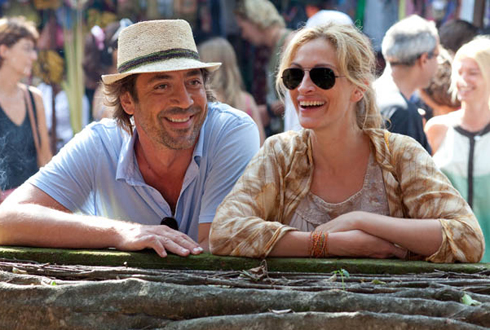
Louis-Dreyfuss and Gandofini in Enough Said.

Tuesday, October 8, 2013

Each Dawn I Die

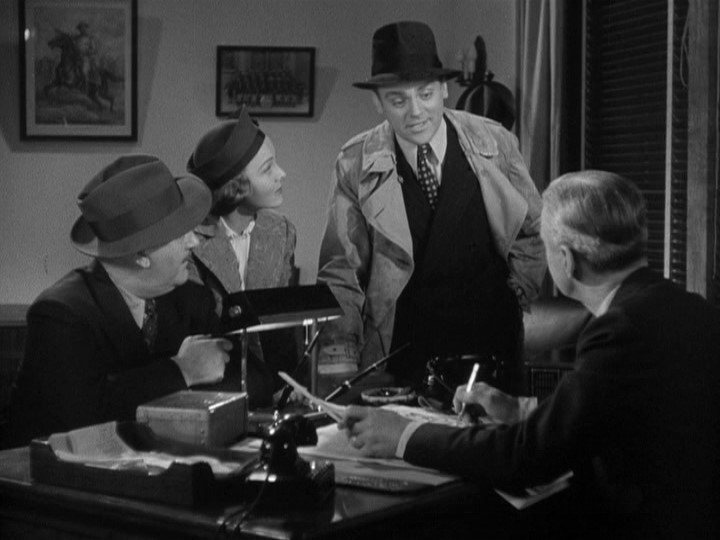
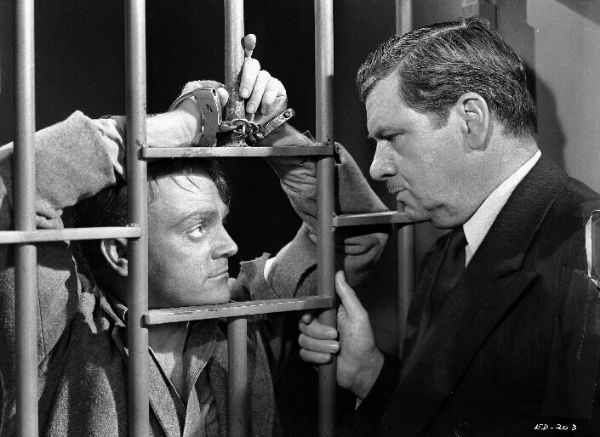
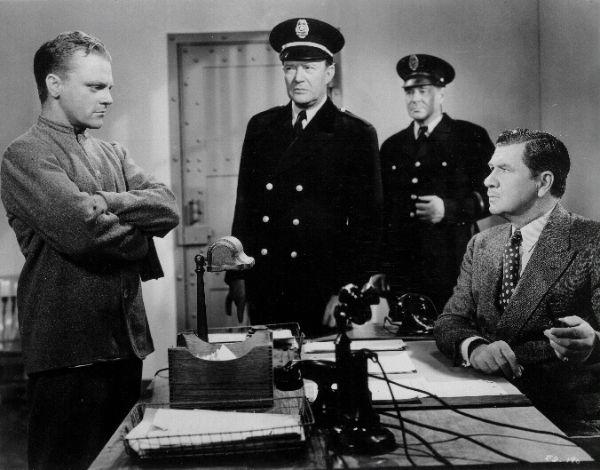
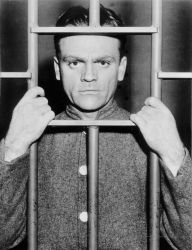
Each Dawn I Die (William Keighley, 1939) Edgy newspaper reporter Frank Ross (James Cagney) has a hot news lead, but it gets buried when the crooked assistant D.A. he's trying to get the goods on, knocks him cold, douses him in whiskey, and puts him behind the wheel of a car and sends it caroming down a city street, ultimately killing three innocents.  Ross is convicted of vehicular manslaughter and thrown in jail, his campaign against the crooked DA (who is trying to run for governor) quashed.  
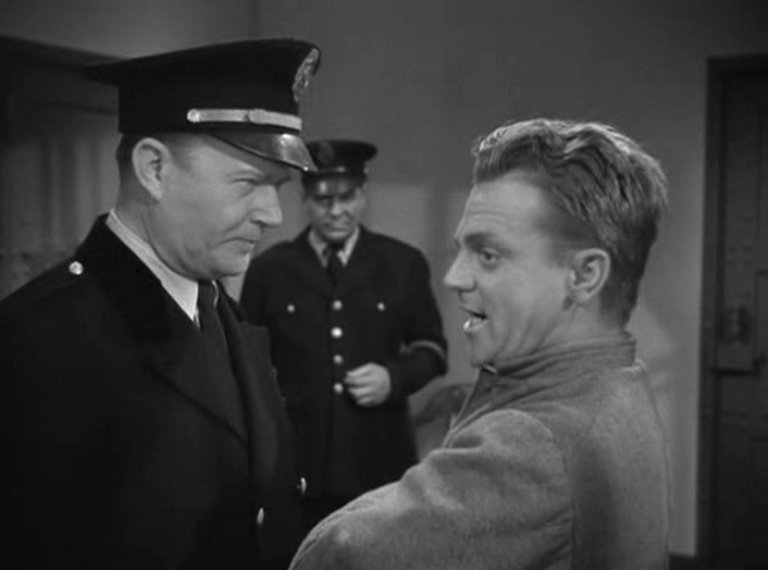
On the outside the folks in the newsroom his reporting partner (Jane Bryan) and his editor are trying to dig deep to find out how to get around the lawyers, and inside Frank tries to stay alive, getting information from fellow prisoners in the sweat-shops, and even saving the life of "Hood" Stacey (George Raft), who, to repay the debt, cooks up a hair-brain scheme to find  who framed Ross.  When another inmate is killed, Ross names Stacey, in order for the gangster to be tried, and make it easier for him to escape.


Not very likely.  Stacey does escape, however, but reneges on his plan, making one more set-back for Ross, who is slowly going crazy with his prison-term, and the impossibility of finding out who's responsible while stuck behind bars.


No, it's not very credible, but the points of interest in the story are Cagney, who pushes the boundaries of what "good guy" behavior can entail and Raft, who's smooth, wry, likable, and utterly corrupt.  This makes him completely different from the crooked DA who isn't witty, isn't smooth, and is dully cruel, but is also utterly corrupt.  So, the difference between good and evil (in its shades of gray) in the audience's affection is that "bad" must also be personally bad, and incapable of entertaining us.  If you can entertain us, obviously you can't be that bad a guy, even capable of reforming.  But, what separates this from other Warner Bros. efforts of the period is that the authorities, although personifications of fear and threat, are also completely fallible and downright evil.  The "good guys" are the "bad guys" and that's something a little different in a post-"Code" gangster movie.


Thursday, September 19, 2013

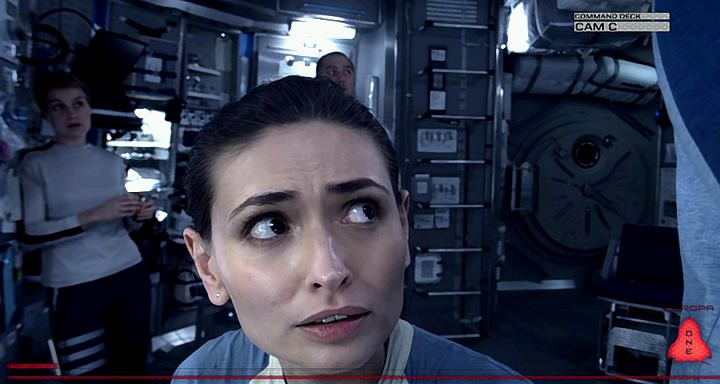
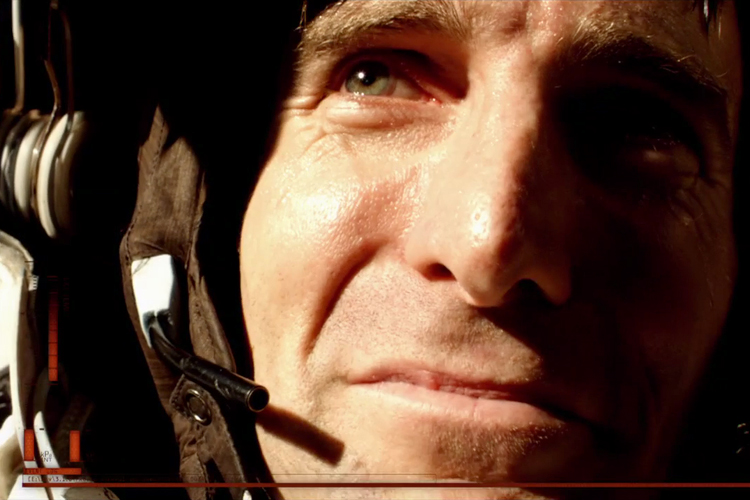
Europa Report

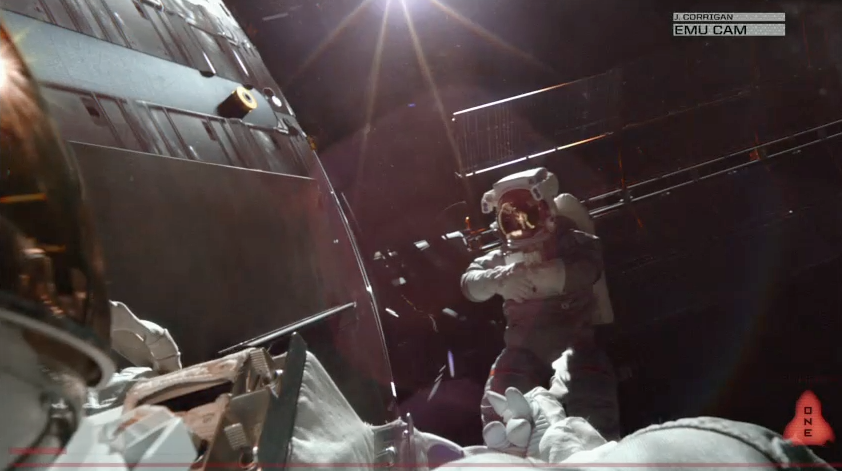
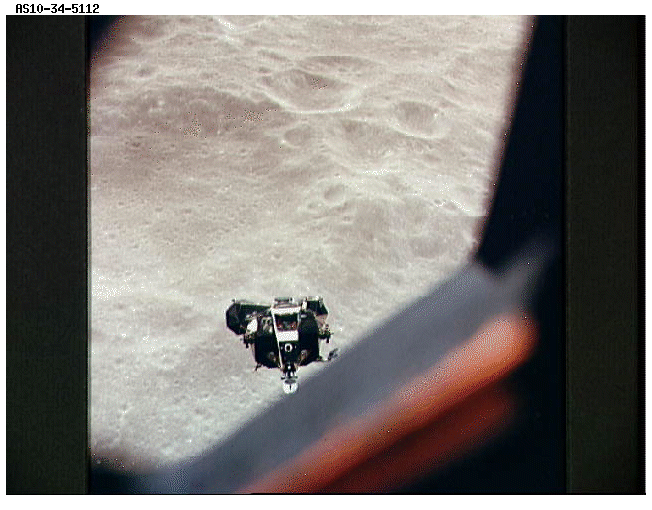
Europa Report (Sebastian Cordero, 2013)  Sci-fi/adventure film crossing several styles of film-making done in a faux-documentary/found footage style about a long-range NASA flight to the Jupiter moon of Europa, which, it has been speculated, is the most likely of our neighborhood system's bodies that could support life.

The whole thing is staged like a documentary.  There are pre-flight press conference archives\, post-event footage of interviews (giving us a nice sense of complacency), some scrambled interference to give us the "fallible narrator" idea, and lots and lots of "normalcy" footage.  

The other thing that's neat about it, is that NASA advisers worked with the film-makers to give it a sense of verisimilitude.  The gear is "lowest-contract-bidder" looking, we get a sense of the routine (just so we can tell when
it gets broken), and we become acquainted with the various camera set-ups that record what's going on automatically.  It looks very authentic, much more so than misfires like that lousy Apollo 18 movie a couple years back, or even the clever Ridley Scott "transmission" footage used to hide the scale models and flaws in its "planet-side" footage in Alien

The film is cast well and game, maybe a little too game, as you don't get the sense that these guys are astronauts or pilots or physicists or ice geologists or whatever they're supposed to be.  But, any more casual "reading you five-by-five, Houston" and you wouldn't have been able to distinguish one from the other at all, and that wouldn't do well with what the film wants to do, which one will become aware of fairly early on in the proceedings.  It does cast a couple of fairly well known "anonymous" actors—in other words, it's not George Clooney, Sandra Bullock or Brad Pitt—but it is Michael Nyqvist (from the first versions of the "The Girl with the Dragon Tattoo" series) and Sharlto Copley (of District 9, The A-Team, and Elysium) Embeth Davidtz (of Schindler's List, Army of Darkness and "Mad Men"), and Karolina Wydra (she was briefly Mrs. House on "House, M.D."), all very good international actors that few would recognize.  A good strategy, that, if it does make it it a little hard to keep track of everybody.

And that's the main problem, here.  The story is pretty standard stuff in the murder/horror realm, as we lose crew-members one by one.  But by how or by what, we have no idea in a world of possibilities (other than the age-old problem of everybody ignoring the transmission to "get back in").  Ultimately, this is what limits Europa Report, despite the fact that its intention is to expand our horizons and conceptions.  We know what's going to happen.  We know how it's going to end.  And whatever great discovery and what it might mean to our ideas of the Universe as put out by the film are overshadowed by the rote way in which its conveyed.  Any uniqueness is swallowed by convention.

Which makes you wonder:  if we do find life in the Universe besides us, is our reaction going to be: "Uh-huh, so what else is new?"

Tuesday, September 3, 2013

Elysium

Zero Tolerance for Citizens
or
Spinning That Ol' Wheel of Fortune

I expect nearly everybody was looking forward to Neill Blomkomp's next film, after the gooey splash District 9 made.  His new one, Elysium, has the same kind of life-lesson—"what have you done for someone else lately?" and how one's perspective changes when you walk around in someone else's downtrodden shoes.  

The approach is slightly different, though, even if the futuristic milieu is still glum.  In this future, the current economic climate hasn't changed, only the locations have.  Earth, after years of neglect, is one big slum, there is no distinction between urban and rural anymore, the green spaces are dead, and there is a space-age version of urban flight—the "one percenters" have moved on up to an orbiting oasis called Elysiumand it is, as in Greek Myth, the isle of the Fortunate, a paradise, with estates and luxury homes perched inside it's rotating ring. It's the ultimate gated community.  A large star in the sky, it is out of reach but never out of the sight or the minds of the stragglers of Earth who hope to get there by fortune or by smuggling themselves by shuttles, which Elysium's defensive perimeter either discourages or destroys.


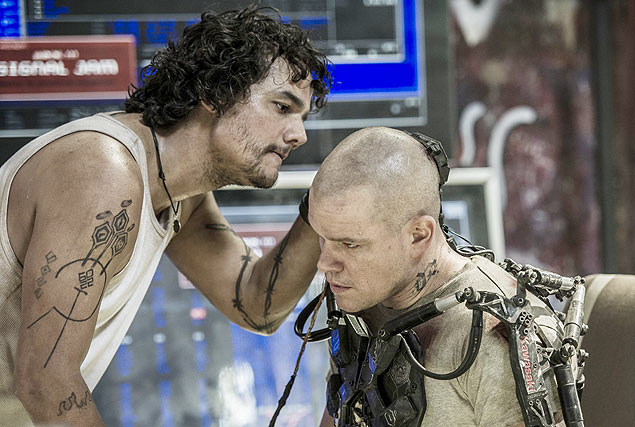
The parallels to today's refugee and immigrant desperation is baldly presented, and obvious to anyone whose world-view isn't in spec-fic but down here on Earth, much as apartheid was morphed into xenophobia in D-9. Add to that that the penthouse in space also seems to have access to the ultimate in universal health-care, a medi-bed that scans you and...simply cures you (it seems).  Other than those fanciful details, everything's played a little straighter, no doubt because you have big stars like Matt Damon and Jodie Foster, rather than just Sharlto Copley (although he's here too, bless him), so the financial risks are slightly more, so they make the stakes in the film a little higher, too.  Higher in that the government (naturally) is up there in Elysium, in the form of President Patel, who has a rather prickly defense secretary (Foster, channelling Angela Lansbury from The Manchurian Candidate), who has a unique sense of how to protect The Ring, supplementing the force of robot-police with soldiers of fortune, like a particularly nasty one named Kruger (Copley), who would probably kill for a hobby if he wasn't being paid for it.


Down on Earth, it's dog-eat-dog, and former car-thief Max Da Costa (Damon) is trying to go straight, working towards the dream of going to Elysium by working in one of the factories mass-producing the robo-cops that keep the populace under their teflon thumbs.  But an industrial accident leaves Da Costa dying, with only five days to live.  His only chance is to somehow get up to Elysium and one of those miracle-med-things, so, with a few super-drugs pumping through his system, he signs up to do some dirty work for a former employer, which involves stealing industrial secrets—which just happen to be Elysium's security codes—that will unlock the station's defenses and allow a mass exodus from Earth to Elysium.


Da Costa allows himself to be merged with a powerful exo-skeleton and neural-net to download the codes, then, once there—well, let's just say things get personal, as these things are wont to do, but not selfish, as that flies against the "hero" sense that movies must have, so there has to be some deflection of need for Da Costa to some other....blah-blah-blah.  Face it, the exo-skeleton could be a crucifix motif, so Da Costa has to do some sacrificing because...well, that's the way they do it in movies these days.  There can't be any motivation of "self" because apparently that would make you as "bad" as the Elysium-buyers.  So, ultimately, Da Costa has to do all the fighting and scraping for somebody else, and, as per usual, it's an acquaintance's sick child.  Again.


And that's the main thing that makes Elysium less than thrilling: for all the "neat" visuals, for the interesting "take" on today's events, for all the good intentions and the perversions of such, it feels like every other sci-fi Christ allegory and leaves you feeling a little hollow while its trying to make you feel noble and unselfish while watching it.  Well, I've seen that before, and I thought the intention of sci-fi was to show you something different.  It is a noble effort, but ultimately, it suffers from story-sameness, and recycled ideas from the cookie-cutter school of script-writing.  It's too bad because Elysium has a lot going for it.


Elysium is a Rental. 


Gotta say that Elysium has some pretty cool concepts for its pleasure-wheel

Friday, June 14, 2013

Emperor

The Supremes
or
Doing Our Duty While Losing Our Humanity

Like his 2003 film The Girl with the Pearl Earring, Peter Webber's Emperor is the long and involved story behind a single image—a photograph of the U.S.'s General Douglas MacArthur and Japan's Emperor Hirohito in July of 1946.  The image is normal-looking, pedestrian even, if one does not know the back-story, which is extraordinary, without precedent at the time, and represented a brave new world shattering a history of 2,000 years.

Japan had surrendered to the U.S. soon after what  one character describes as turning Japan "into the largest crematorium the world has ever known."  General Douglas MacArthur had been established the "Supreme Commander" of the occupied territory, a role one author has described as making him "an American Caesar."  One of his first tasks is the establishment of blame and war-crimes tribunals, and uppermost in his mind is what "to do" with the Emperor, Japan's supreme leader held to be almost a deity for his people, not to be looked at directly, not to be photographed, not to be touched.  America is calling for his head, but MacArthur, wily politico that he is, ponders what will become of a Japan without its Emperor, if tried, found guilty and hung by the American conquerors.  The "Supreme Commander" sees only chaos and revolt in such a future.  


So, he assigns the task to someone else.


Emperor is the story of that investigation, as carried out by General Bonner Fellers at MacArthur's behest.  In the film, Fellers is conflicted: America is calling for the Emperor's head, but the reality of controlling a defeated nation hinges on his fate; Fellers is a Japan-ophile, and yet the iron bureaucracy surrounding the Emperor makes his job difficult getting answers, and the 2,000 year old traditions are part and parcel of what keeps the shattered country together; he is also looking for a girl that he befriended in the States during college, but her parents demanded she return to Japan, and now he's looking for her in the ashes of the city she was last in; other Army officers are  questioning Fellers credentials to do an unbiased investigation despite his history with Japan, and are pushing for his demotion in their own biased fashion.


The story is based on a novel by Shiro Okamoto, and might be playing with the character of Fellers a bit.  In fact, Fellers was an extreme conservative and a member of the John Birch Society post-war.  He had also been involved in a disastrous tenure in the European front when his reports were intercepted by Axis powers, and the intelligence influenced the outcomes of battles in Northern Africa (entirely due to the Army's insistence that Fellers NOT use coded encryptions to send his reports).  The man portrayed in the film may not be the one doing his duty in Japan, but the outcomes are the same, and that's where the fascination lies.


What Fellers learns in his frustrating investigation does lead to an ultimate decision, and is tied to the character of Emperor Hirohito.  But the layers of protection keep him from learning about the man and his actions in the final perilous days of the war, delaying any decision about the Emperor's implications in war-crimes.  And its wrapped up entirely in tradition, reflected in the protocol id one should ever come face to face (highly unlikely) with the Emperor.  He cannot leave the Imperial palace.  You cannot look him in the eye.  He cannot be touched.  He cannot be photographed. 

And yet, there's that picture, taken in MacArthur's office as the men have their first meeting after Japan's surrender.  And that, to use the old phrase, is worth more than the traditional thousand words, about Japan's supreme leader.

The story is fascinating, but the film telling that story drains a bit of that fascination out of it.  Perhaps, the twists and turns in Fellers investigation are designed to "open up" the movie in terms of post-war conditions, but the "Romeo and Juliet" sub-plot feels forced and a bit "traditional" in movie terms.  In the performances, Jones' MacArthur feels more like reflections of the actor's personality than the public persona the general showed (itself a carefully controlled performance), and as much effort as Fox puts into his role of Fellers, the character comes off as not very interesting, constrained as it is by duty, protocol, and sub-plots.

Still, the movie feels like one of those stories that need to be told, but one wonders if it could be done with a touch more flair, without damaging the content of the truth.

Emperor is a Rental. 


The Supremes

Tuesday, October 16, 2012

End of Watch

Cops, the Home Movie
or
"...More Capers in One Deployment Than Most Cops Will See Their Entire Career."

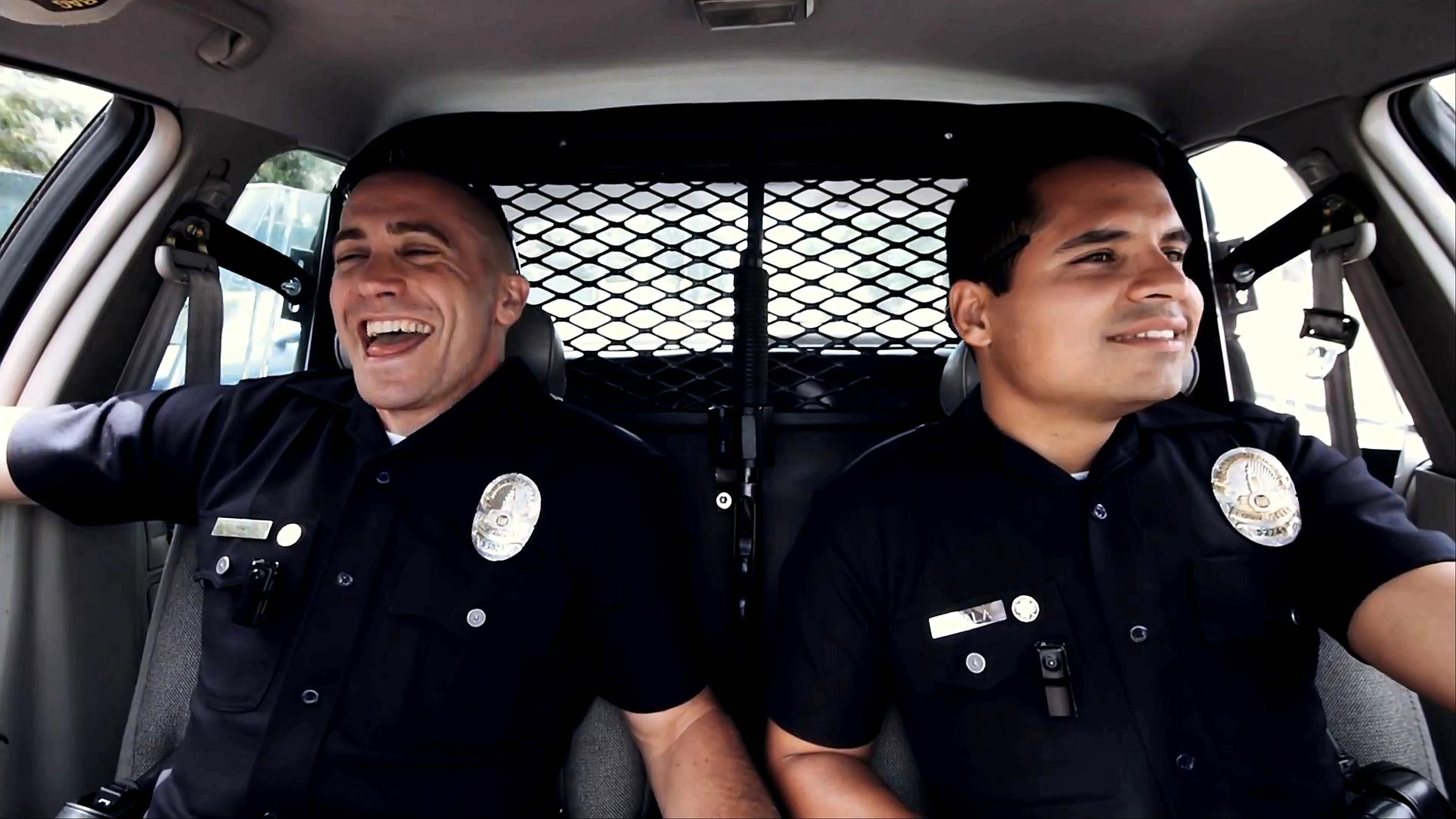
It's a war out there "once upon a time in South Central."  And Officer Brian Taylor (Jake Gyllenhaal) is the front-line reporter documenting the whole thing "for a project."  He's carrying a camera—not that he really needs it, the dashboard cam will pick up everything needed for an investigation.  But that camera can only look forward—it's myopic.  It can't see around you, it can't check the perimeter.  And it can't look into your soul.  It can look at your back, but it can't have it.

It starts with one of those dash-cam chases, so familiar to "reality" chase shows.  No overlayed sound, save for Gyllenhall's narration, said in a monotone as if he was giving you your Miranda.  


I am the police and I am here to arrest you.  You have broken the law.  I did not write the law.  I may even disagree with the law.  But I will enforce it.  No matter how you plead, cajole, beg or attempt to stir my sympathy, nothing you do will stop me from putting you in a steel cage with gray bars.  If you run away, I will chase you.  If you fight me, I will fight back.  If you shoot at me, I will shoot back.  By law I am unable to walk away.  I am a consequence.  I am the unpaid bill.  I am fate with a badge and a gun.  Behind my badge is a heart like yours. I bleed, I think, I love, and yes, I can be killed. And although I am but one man, I have thousands of brothers and sisters who would die for me and I for them.  We stand watch together.  The thin-blue-line, protecting the prey from the predators, the good from the bad. We are the police.

And with that, the law of the film is layed down.  The dash-cam goes away and the camera goes into cinema verité, the camera pointing from inside Taylor's locker as he goes through basic introductions—himself, his partner Mike Zavalla (Michael Peña, never better), his equipment (and a conversation from Rio Bravo pops into one's head: "That all you got?"  "That's what I got."), and the beginning of the look inside—the harsh joshing, the tensions, the coolness and coldness and camaraderie of the corps. Joseph Wambaugh had an apt phrase for them in his book (and subsequent film), "The New Centurions."  But Rome was never like this.

The turf in South Central is tough and hard-scrabble.  Poverty is on display on every street corner, and behind the boarded-up windows of the houses in various states of disrepute are secrets for the outside world not to know, but will see the light of day once the front door is kicked in.  The war is in the streets, but inside cook the warning signs that something is about to explode, the stakes rising, the limits of human degradation dropping, the calibers of the weapons increasing, the risks increasing and the only good side of it being that they're not increasing exponentially.


It's a tough film, directed and written by the guy who wrote Training Day and the original The Fast and the Furious, David Ayer, who has a knack for keeping things on the down-trodden path no matter who's behind the camera or what the subject matter is.  It's not a film for continuity buffs, who will be driven crazy if they think "Okay, who's taking that shot?" with every change of perspective.  Very quickly, the strictures of the snatch-and-grabbed shot are forgotten to gain perspective.  The film would have been a pretentious (and claustrophobic) confusion if the conceit was maintained throughout, (I can see the review headline now: "The Blair Watch Project"), but as it is, breathes enough air into it while maintaining a feeling of impromptu recording—keeping the spirit of the law, rather than the letter of it.  That, along with the ad-libbed spark of the dialogue gives it an edgy immediacy that, again, "seems" right, while never fully escaping the feeling of planned manipulation (not that it ever could).  Game try, though.  And manages to show the life—long stretches of tedium punctuated by moments of terror—that one imagines the life to be, even though blown up with steroids to fulfill the needs for melodrama and tension.

End of Watch is a Matinee.


Wednesday, February 15, 2012

Extremely Loud and Incredibly Close

The Schell Game
or
An Irrational Fear of the Irrational

Not sure what the problem with young Oskar Schell (Thomas Horn) is: it could be borderline autism, or as is brought up, Asperger Syndrome ("the tests were inconclusive," he deadpans).  It could be "mean world syndrome" or "fusion paranoia," or something as simple as shock or grief, maybe even survivor's guilt.  But, coached by his father (Tom Hanks) who died in the Twin Towers on 9/11, he is on a mission to find answers by the same empirical methods Dad used to create scavengers' hunts throughout the city of New York.

To the young Schell, the events that took his father, literally before his eyes, yet in an abstract undefinable way (he literally vanishes, but there is no body to bury), it is all horrifyingly absurd, and the only way to wrap his mind around it is a quest, in the same way that his father distracted him from his fears, which are plentiful (closed spaces, crowded places, tubes and tunnels, things that fly, things that are loud, bridges that could collapse) all things that keep his logical, compartmentalized fact-file of a mind focussed on the task at hand, to the rhythm of the tamborine that he shakes to keep his own mind from being rattled by anything else.

One day, after visiting the shrine he's constructed for his father, he confronts for the first time his father's room and closet kept undisturbed since the Al Qaida attacks, smelling his clothes, trying to recall the sense-memory of him, when by happenstance, he finds an envelope (marked "Black") containing a single key.  Thinking it to be the ultimate of one of his father's challenges, he embarks to find the one lock in all of New York mated to that key.

It's a tortured, torturing metaphor.  What he's really looking for is something...anything...that might give him solace for his loss, an answer to why his beloved, obliquely protecting father might vanish so completely, without even the cold reality of a corpse to ground him to reality.  In the process, he neglects his mother (Sandra Bullock), his schooling, his life...for the ultimate answer of purpose, and thereby complete the education cut short by the death of his father.  It's a risky premise, one that, ultimately, can have no real resolution, but only absolve him of any complicity in the events of his father's death. 

What Oskar is actually looking for is his own penance.

Movies come in cycles, not only because of the economic consequences of box-office (nothing in Hollywood succeeds like excess), but also with the nation's zeitgeist.  Is it any coincidence that Extremely Loud and Incredibly Close is a modern day version of New York film-maker Martin Scorsese's Hugo...about another boy's father-quest involving a key and finding something else more than himself?  Hard to say...anymore than that Hugo and The Artist are both explorations and celebrations of the era of visual story-telling displayed by the dawn of moving pictures.  But, EL&IC has the disadvantage of being a little too close to the theme without the benefit of artistic distance, while being a little too obvious about what it's trying to say...which, as it turns out, isn't much...other than "what are you worried about, kid, when you might be hit by a bus tomorrow."  Or dharma works, when runaway karma runs over your dogma.   Thanks, but I'd rather have Méliès be a cure for my malaise.

But, what a cast...Hanks, Bullock (basically in the background for most of the movie but allowed to shine at the film's resolution), John Goodman, Viola Davis, Jeffrey Wright and a steady stream of fine character actors as Oskar's many encounters and tough-stones on his journey.  But, the finest of the bunch is Max von Sydow as the Campbellian "helper by the side of the road" that he plays mutely without a word of dialog.  Again, the part is a little obvious and a little tortured, but von Sydow once again provides an actor's master class in taking a role os lightness and making it breathe with life and truth.

Extremely Loud and Incredibly Close is a Matinee.


Does Max Vo Sydow stand a chance of taking the "Best Supporting Actor" Oscar from Christopher Plummer?

Wednesday, May 18, 2011

Everything Must Go

"Priced To Move"
and
"'Bye-Bye' Says the Junk in the Yard"

Job had it easy.

After being fired from his job for some sexual malfeasance that he was too drunk to remember, Nick Halsey (Will Ferrell) drives home—stopping on the way to get a case and a half of PBR—and finds that all of his belongings are on the front lawn, strewn about, the flotsam and jetsam of a life that's hit a reef.  The house locks have been changed.  The garage code is different.  There's a note on his door from his wife saying she's leaving him and "Don't Call." His credit cards don't work.  His bank account has been frozen.  His cell-phone is disconnected. 

That solves the "don't call" problem.

Then, his company car gets repossessed.

What else can happen?  Well, his next-door neighbor (Stephen Root) can pass by and say "...saw this coming a mile off."

"Thanks for warning me..." says Nick, simmering.

There's a nice tone-shift to Everything Must Go.  It stars Ferrell, who goes dramatic here, but the doofus-slob-schtick that he has honed over the years serves him well as he goes through humiliation after humiliation—as a performer, he's never steered clear of making himself appear foolish.  He has, in fact, embraced it.  The physical comedy looks nicely unplanned, but still has a chortling superior sting to it.  Ferrell can be a cruel comedian but it's mostly self-imposed, the barbs on the wires facing inward like a crown of thorns.  And he has a nice explosive quality that makes you wonder when he's going to go offThe fuse between comedy and drama is enticingly short.  There's a bit of Peter Sellers to Ferrell at his best that makes you want to laugh almost defensively.  That's in good play here.

Everything Must Go is based on Raymond Carver's short story "Why Don't You Dance?"* (you can read the whole thing here—go ahead, it'll only take five minutes) and writer-director Dan Rush has done yeoman's work taking the author's slice of a story and expanding it to feature length.  In fact, the couple that dominate the story don't even appear.  Rush has taken the bare-bones carcass of the story and reconstructed it, focussing on the pain—and the emotional journey—of the man with the rummage sale of a life, laid bare for all the world to see...and eventually, pick over.

I love Carver's writing.  He makes kernels of story that feel emotionally real, of lives tipped over and spilling, the contents of privacy exposed to the air and either flowering or rotting.  A little push and we could all go there, his situations just a happenstance, a coin-toss, away.  Would we act that way?  Do we recognize ourselves in such circumstances?  And Rush takes the premise and goes back in time and forward, filling the gaps, creating the world of the man who, at first, drunkenly, defiantly lays his past bare...and then, lets it go.

Most of Everything Must Go works.  There is a logical progression to what Rush has put together to get to the point of the Carver story, although it may seem a little bottled up with some contrivance—a side-track to a story involving Laura Dern probably wasn't necessary, but it opens the movie up a bit and it's always nice to see Dern.

But it's all Ferrell, with some nice work by Michael Peña, Rebecca Hall, and Christopher Jordan Wallace, who has the most to do (besides Ferrell), as the kid who hangs around and gets sucked in to the situation, and like others, manages to gain something from the deconstruction of a marriage.  One wonders if the comedian, fearing that he might be found out by going sentimental, doesn't hold back some effort, thereby bringing more of a sense of peace...or closure...to the character by the film's end.  But, then, maybe that hesitancy is the punch-line he wanted, walking away leaving the audience wanting more.  It's a far cry from Land of the Lost.  And admirable.

Everything Must Go is a Matinee.


Yeah.  No.  It doesn't feel like this chirpy trailer at all.


* Since writing this, I've discovered there is a short Australian film based on the story, and following Carver's story far more closely called Everything Goes. It stars Hugo Weaving and Abbie Cornish.
You can find it on the web.

Thursday, March 17, 2011

Exit Through The Gift Shop


Exit Through the Gift Shop (Banksy, 2010) Brilliant little nested doll of a documentary from acclaimed (and anonymous) "street artist" Banksy, making a film about the guy who was making a film about him...and, frankly, coming up with a more compelling—and cautionary—story...done with a rueful humor and wise self-examination.


But, it doesn't start out that way. One man's vandalism is another man's "art." And as Banksy spins the tale, fully acknowledging that the genre falls in "the legal gray area," one sees graffiti artists risking life and limb to express themselves on somebody else's canvas, then having to beat feet before the cops show up. It is art under pressure, having to be done as quickly as possible—pre-designed and its application created as quick as possible under duress. The motivations of these spray-can Picasso's are never questioned, their results never examined. They simply exist as a phenomenon and something of worth.
Enter the guy making a film about Banksy. He's Thierry Guetta, French emigre, living in L.A. who runs a vintage clothes shop, where he charges outrageous prices for people's castaways—there's a theme her already. A traumatic event in his childhood makes Guetta fixate on documenting everything in his life the moment he first puts a video camera in his hand. He becomes obsessed documenting his family, his journeys, everything...amassing a considerable amount of tape, but, like a drawer full of snap-shots, never categorizing it. Filming a cousin who's a street artist imprints another in a series of obsessions onto Guetta: filming street-artists at work, combining their art with the drama of getting caught in the act. He becomes compelled to document the work, with the hope to make a film, but never really getting around to it. What Guetta is good at getting raw data, not turning it into something, and it is at this point, he meets Bristol's famous street artist, Banksy.
What emerges is a cautionary tale of encouraging someone who is constantly
"becoming" into finding an end-point, especially someone with delusions of grandeur and a con-artists' soul in a milieu in which hype is the gold standard and "value" is on a sliding scale determined by the gullible. Especially "value" in an art-form that its practitioners admit is only temporary.

One begins questioning the values espoused, only to feel a certain amount of amused regret when the espousers are made aware that their fashion may be "The Emperor's New Clothes." As one of the artist reps says at one point, "I'm not sure who the joke's on. I'm not sure there is a joke."

One thing is certain: Exit Through the Gift Shop is a great documentary, whether, as some have accused (to the consternation of the producers), it is "staged" or not. It manages to make its points abundantly clear, while not really condemning the participants. It's smart, frequently funny, sometimes painful and ultimately, very wise.


File it in your video collection next to Welles' F for Fake under "W" for "Worth."


Banksy's tough-love opening for "The Simpsons"


Wednesday, March 16, 2011

Eat Pray Love


Eat Pray Love (Ryan Murphy, 2010) Eat Pray Love wants to be unconventional—it practically begs to be seen as revolutionary in its philosophy and presentation—but it is so thoroughly conventional that one wonders why they didn't just bother re-running another chick-travel film, about "finding oneself" only to turn the idea on its ear and make it about finding "the right man."  Three Coins in the Fountain, anyone?

I need another one of those like a fish needs a bicycle.

Don't get me wrong.  I'm glad author Elizabeth Gilbert (played here by Julia Roberts) had her little adventure after a divorce from her peacock of a husband (Billy Crudup) and an affair with an actor (James Franco...gee, both good life-choices picking the self-absorbed—Does that say anything?).  It's tough to work up any real sympathy for her as she has the funds, the time and the wherewithal to spend a year in Italy ("Eat"), India ("Pray"), and Bali ("Loooove").  Good on ya, Liz.  Hope you do a lot of charity work.  Because a lot of the folks who took care of your needs during the trip couldn't afford a journey like that, and, frankly, don't have the time and luxury to "find oneself, " they're too busy just trying to "deal."

I know; bad attitude.  I should go in "open" and "ready to receive."  Fact is, I'd be buying it if the author were trying to go from self-absorbed to self-actualizing, but she can't seem to construct a sentence (when she thinks long enough to not just "pop off") that doesn't have the word "I" in it.*  I suppose I should be happy that she goes to these places, rather than just having the world revolve around her to get there.

But the damned thing is such a cheat.  She escapes two failed relationships only to plunge into one at the end (Ooooh...big "spoiler" alert!), as if that is what is needed in her life, and it doesn't occur to her observing the arranged marriages and the servile populaces that her ability to have a choice is the best thing she has going for her, and that the ability to say "no"—to high calorie meals, to collective brain-washing, to pushy men—does "no" good unless it is actually utilized, rather than ignored for indulgence.  All she lost was a year of her time.  What she found...well, that's a good question.

Murphy also does some indulging—in over-editing this travelogue—you can't pick up a menu and order without unnecessarily seeing the food being prepared in the next shot, item by item—although Robert Richardson's photography manages to make it all blend seamlessly together despite the various styles he uses.  And the performances are heart-felt, especially Franco and Richard Jenkins and Javier Bardemfunny, that she doesn't get romantically involved with Jenkins' brashly wise Texan (who is the most moving person in the piece), could it be that he isn't attractive enough?  It's one of the things that makes you suspect how facile this movie is,** and that the protagonist only swims in the shallow end of the pool.

Ultimately, it's a movie that makes you go "how nice for you," while thinking that it's wasted two hours of your own valuable life.  That's right.  The world doesn't revolve around her.  It revolves around me.


Elizabeth Gilbert, enjoying her residuals.  Lesson learned.


* At a "Thanksgiving Dinner" in Italy, the table goes 'round counting their blessings, which involve other people and they are nice and heart-felt, then it goes to Liz, who thanks that she's surrounded by a table full of wonderful people (Good start, Liz), then finishes by saying "she's the luckiest girl in the world."  It's all about her.


** Other things that annoyed me: the Theme from "Last Tango in Paris" is a signature theme for Italy.  Really?  In fact, the whole soundtrack is chock-a-block with songs of western culture that nullify any depth of feeling for the places.