Showing posts with label Romantic Comedy. Show all posts

Saturday, November 9, 2013

Enough Said

Yadda, Yadda, Yadda....
or
Ex-Men and Women: Daze of Futures Past

It's refreshing to see a rom-com where the entangled are not "zygotes in love," young puppy-lovers with their whole lives in front of them as they go walking off into the sunset, or walking along the sandy-beach, or kissing in front of fireworks while the music swells and we head for the exits.  That's about the time where the "They Lived happily Ever After" credit of "The End," sometimes with the cutesy "(?)," burns itself into the acetate, and I give a guttural chuckle while the thought of there being a sequel where everything goes to shit burns itself into my grey matter.

Most rom-coms, even the most cynical ones, are first acts, where the lessons learned and the hurdles tripped over only get us to the threshold of commitment and then leave us with the unasked question: "So, how's THAT working out?"

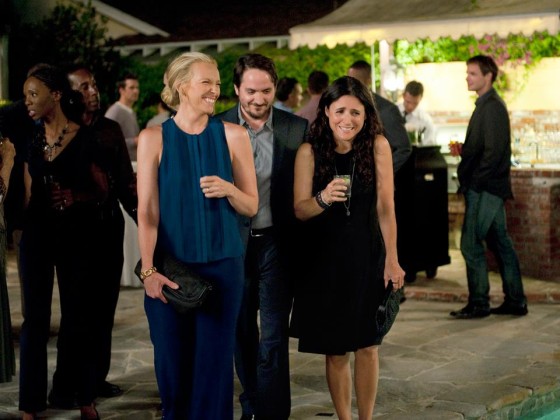
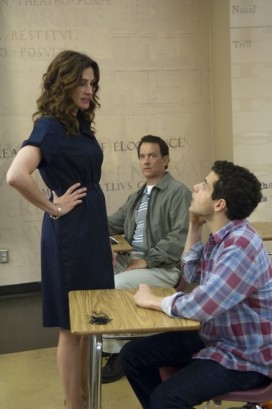
But, when you're dealing with adult rom-com's there's always that bittersweet quality where flirtations are recognized to be temporary sparks, and that work is involved and sometimes relationships need to be tailored like clothes as people change and grow either too comfortable or not comfortable enough.  If nothing fits, then it's time to do some spring cleaning and donate stuff to somebody else.  That's the situation with people in Enough Said, the latest film by Nicole Holofcener, who's doing her best to off-set the male-centric movie landscape in the States.  This one centers around Eva (Julia Louis-Dreyfuss) a single mother, once divorced, working as an in-home masseuse, who's dreading the departure of her daughter (Tracey Fairaway) for college, and feeling needy, probably because it's one thing to be a married "empty nester," but a single one?  Misery loves company.

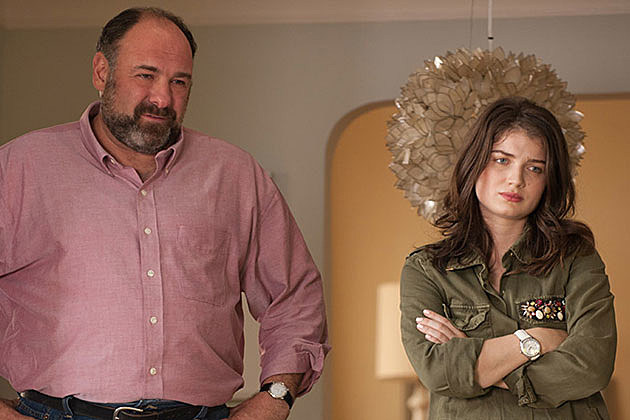
That's why her meeting Albert (James Gandolfini) at a party is such a lucky break. Divorced, nebbish-y, his daughter (Eve Hewson) is also going away to college. There's no real attraction at the beginning, and there's really nothing there, but a casual date is fun, and she finds herself relaxing with him.  Her therapist-friend (Toni Collette) is supportive, as is her daughter, such as she can be.  Even one of her clients she's bonded with, Marianne (Catherine Keener), thinks it's a great idea.

It's going great...just great...great.  Yeah.  Then, she starts to notice that the things that irritated Marianne about her ex, are things that Albert does all the time.  It's not that they are particularly irritating, but...she never noticed them before, and now that she's noticing them...yeah, they are pretty irritating things.  And, considering that those things broke up Marianne's marriage to him, Eva decides that maybe she'd better fire a couple of shots across Albert's considerable bow to see if she can change him before things get any more serious.  For Albert, it starts to sour their relationship because (as he says) "it's like I'm with my ex-wife..."

This is kinda sit-commie.  A little too convenient (story-wise) that everybody should be in such proximity that they get caught up in each other's orbits (minor quibble), and you want to apply some malicious reiki to Eva's neck—if it weren't for the fact that this is a kinder, gentler version of Louis-Dreyfuss' Elaine Benes from "Seinfeld.," so wrapped up in herself that she's quite unaware that she's an emotional black hole, starting to suck the energy out of people to fulfill her needs, and is so in pursuit of "the new" that she tends to shaft the familiar (a not uncommon trait). The wonderful thing about Louis-Dreyfuss (besides being able to channel her dark side in her sleep) is how she is still able to make Eva engaging.  She has to be, for the attraction to work. And Gandolfini is superb in this, vacillating between shy comfort and wariness, constantly looking at people out of the corner of his eye as if looking at them directly will reveal too much or put his vulnerability out there to be skewered. Good cast all around and they do make the most of the material, of adults who are still in need of love and finding that available hugging arms are in increasingly short supply.  

Enough Said is a Matinee.


He talks during movies and rattles his popcorn, so I couldn't date him.
Louis-Dreyfuss and Gandofini in Enough Said.

Friday, October 4, 2013

Don Jon

Know Thyself
or
The Tissue of Lies in Fantasy-land

Don Jon is going to piss so many people off and throw a wedge into so many relationships it's not even funny.  Don Jon is, fortunately (funny, that is), and that's what makes its nasty streak in saying "There ain't no Santa Claus" to movie audiences palatable.

Written, directed and starring Joseph Gordon-Levitt (guess Lake Bell's In a World isn't a lock for The Orson Welles Award for over-achievement), it's about all sorts of things, but we'll let the show's protagonist, Jon Martello explain the crux of it.

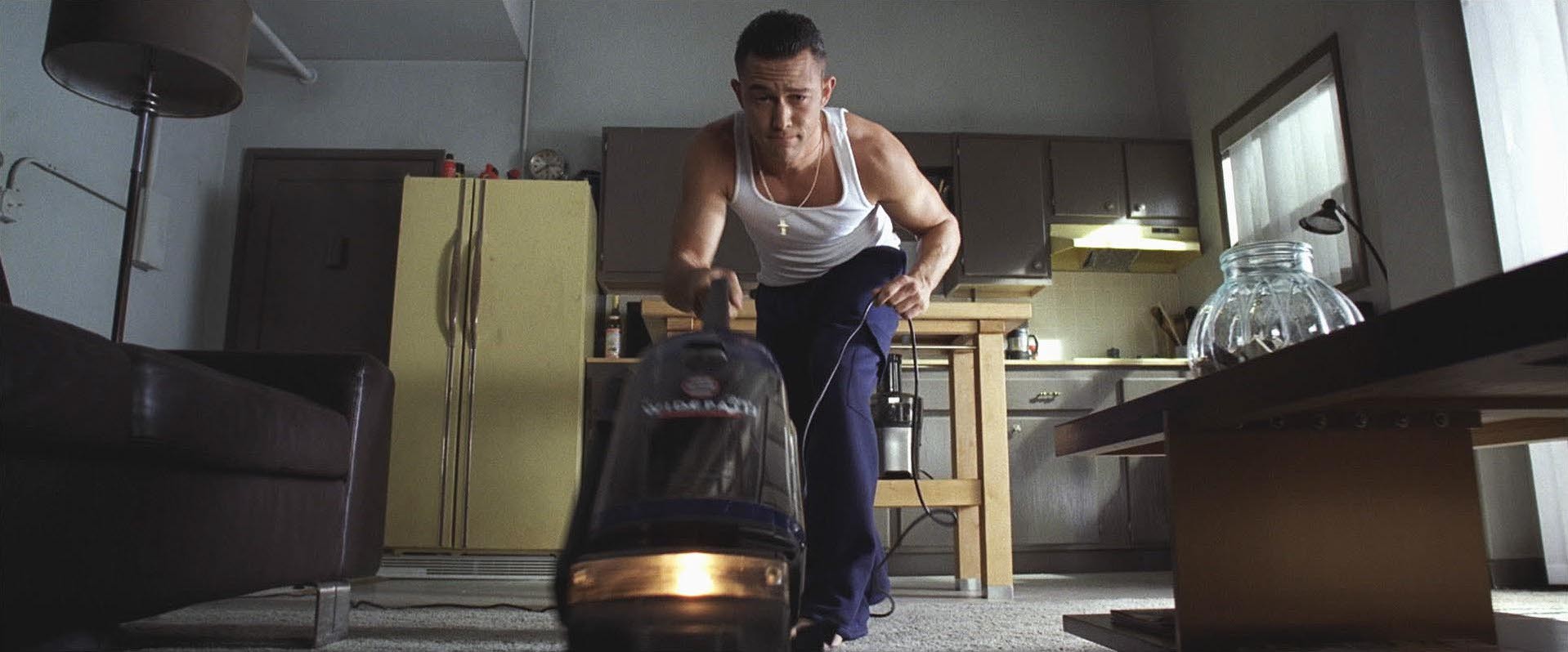
Very early on in the movie he explains himself by voice-over: "There's only a few things I really care about in life. My body. My pad. My ride. My family. My church. My boys. My girls. My porn."

Okay, I know, but hold on, despite the elephant in the room—that last one—look at that description. "My" is the word repeated most often.  How do you spell "narcissism" in New Jersey?  Same way you spell it in the rest of the world, but Jon has nothing to do with the rest of the world, as his sphere is finite.  His work-life is devoted to two shots.  Everything else—the workouts, the church—they're all shot the same, with the same set-up, different clothes, the implication being a comic sameness.  There's not an awful lot of growth here (and the film is just that much more economical by having all the different time-frames throughout the film being covered by the same camera set-up—nice).


His family is a Jersey comic stereotype.  Father and son sit around the table in wife-beaters, Mom flutters around the table, Sister only has I's for her I-phone.  Everybody shouts a lot, and the feeling is you're watching a "Nature" documentary on pecking order and dominance rituals.  His "boys" (who give him the "Don" moniker), are club syncophants or beards or plovers to pick up The Don's rejects.  The club prospects are on the traditional 10 scale, with the unattainable perfect being "a dime," but he'll settle for an 8 or 9 and it's a matter of some cursory chatting up, pre-lim making out and then catching a cab home.

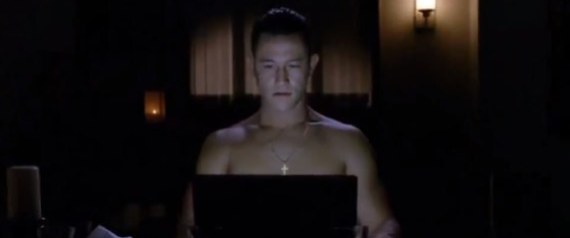
Now, here's where it gets sticky.  Jon's hook-ups are always temporary, and the sex is never satisfying.  Why?  Because it's nothing like what he can find on the Internet on the porn-sites.  For him, that's ultimate, and, just like his lap-top, all it takes for him to turn on is to hear the Apple "chime."  He's hooked, and there's no one in real life who can live up to the fantasy bimbos he can watch on his lap-top. Of course, the odds are stacked here—porn performers are going off script and we're all just winging it, but Jon is waiting for "the one" who is everything he could want in the...flash...in the flesh.


Really, this is just to increase my Internet "hits."
And then he meets Barbara Sugarman (Scarlett Johannson), gum-chewing, Joysey-speakin' "dime" who doesn't roll over as fast as other girls do, and, in fact, can't believe that Jon would think that she would...evah...evah...go home with him from the club.  So, Jon changes the plan of attack.  Meet for coffee, go out a couple times, yadda-yadda....  But, no.  Barbara keeps him on a very tight leash.  Always tell her "the trooth," go back to school, maybe, learn a trade, get a better job than his bar-tending, and maybe...

Jon is going insane over this.  He's made Barbara a project that he wants to conquer, but there is so much "pro quo" before getting to the "quid" and the penance at the confessional he goes to every week is really starting to add up.  But, it's here that Don Jon (the movie, not the guy) gets interesting rather than just prurient.  Barbara likes to go to the movies...

When you're ready...*


End scene.

"Everybody knows it's fake but they watch it like it's real f@#&ing life."  See what Gordon-Levitt is doing there?  He's drawing a parallel between porn and romance movies, and he's right (even if he fails miserably at making a completely "anti-movie" movie).  They're both nearly perfect fantasy-worlds (because you only achieve "perfection" in commercials) in which the dreams and desires of the audience so captivated are achieved and their expectations of real life are fulfilled, while also subsequently raising said expectations impossibly high to the point of nearly science-fiction levels.  I mean, "Bachelorette"-high (after all, that movie they watched—"Someone Special"—stars Channing Tatum and Anne Hathaway**) How can anything (within this economy) match those romantic expectations of "perfect situational love?" And what woman, outside of monetary gain, would ever run the gauntlet of porn?  (One does, after all, have to be able to walk, eventually).  There's got to be a morning after, and nothing can be sustained over time, and may grow tiresome and old with enough rapidity.  With porn and romance movies, you switch partners and the quest for fulfillment and innovation (if we can call it that) begins anew.


Really, this is just to increase my Internet "hits."

Where the humor, sad as it is, comes in Don Jon*** is that he is so insular he sees that quality right off the bat in everybody else, but it takes forever to see it in himself.  And that brings us right to the problem of Don Jon, entertaining as it might be.  Gordon-Levitt spends an awful lot of screen-time presenting the problem (not that the title character ever sees it as anything but a sometimes annoying irritant), but the fairly standard relationship the character has with Julianne Moore's normally neurotic character, Esther**** is barely explored at all.  One can speculate until next Friday why, but the relationship between Jon and Esther is given short shrift, making it feel sketchy and a little desperate to resolve the movie.  It may have something to do with the broad theme of objectification in the fantasy-world, or it illustrates that a relationship should be easier to achieve than the Jon/Barbara example (but that seems rather unnecessary given that we've seen lots of very easy relationships that last one night and that's it) but by JG-L's "hurry-up-and-let's-get-through-with-this" approach, it undercuts the point somewhat.  If there's that point to be made.  And if the film-maker is adept enough to to know that he might be sending mixed signals between form and content.

I don't know.  Maybe he just had to edit in a hurry to get the movie out.

So, as much as one might want to gush about Gordon-Levitt's hat-trick here, and how he's being edgy and honest, one has to wonder if he really knows what he's doing, and if he'll improve the next film out.

Don Jon is a Matinee.


* NSFW!

** Personally, I'd have gone with Ashley Judd or Katherine Heigl.  And I would have used a familiar rock-song title for the movie's title, but hey, it's close enough to the truth....

*** Ya know something?  I gave up on everything sounding like a dirty joke about five paragraphs ago.

**** Am I spoiling this here?  I think not, because for all Gordon-Levitt's honesty about the crock of romantic movies, he still is privy to following the "happily-ever-after" arc, as the film's poster is quick to reveal.

Saturday, January 5, 2013

The Iron Petticoat

The Iron Petticoat (Ralph Thomas, 1956) There are many reasons a film can be withdrawn from circulation.  In some cases, like Frank Sinatra's withdrawal of Suddenly and The Manchurian Candidate, it is the fear that the influence of the film might have had on current events, in much the same way as Stanley Kubrick withdrew A Clockwork Orange for many years in England, due to what seemed to be several copycat crimes related to it.

Bob "I probably should have done this with Phyllis Diller" Hope and his estate kept The Iron Petticoat out of America after its initial release until...November, 2012...when TCM showed it for the first time in this country since its release, (with the exceptions of a couple of private screenings).  It's been available in Europe and throughout the rest of the world, but not in the States, owing to a disagreement between Hope and the film's original author, the esteemed Ben Hecht, who wrote the thing for Katherine Hepburn, with an eye toward re-teaming her with Cary Grant.  But, Grant was still on his on-again-off-again retirement at the time and passed, Hope sashayed in, and proceeded to hand it to his gag-writers who refashioned the script more to Hope's style than Hepburn's...or Hecht's.  To be fair, stars do this all the time, re-writing scripts to their liking and their strengths, but Hecht took the issue public in the Hollywood press, leading to a Hope-ful response.  For whatever reasons, Hope, who had the distribution rights in the U.S., kept it out of circulation after its initial run, making it a curiosity. 


Would that the unearthing of this film, with the unlikely match-up of Hope and Hepburn, the first movie producing credit of Bond producer Harry Saltzman, be anything more than that.   But, like Schrödinger's cat, once seen, there is certainty, and in this timeline, it ain't good.  The story of a Russian aviatrix (Hepburn) who defects to Europe and is squired by an American Air Force Major (Hope) under orders to keep her on our side is a few notches shy of Ninotchka, and is almost entirely charmless.  No one's at the top of their game here, with the exception of some of the character actors (Robert Helpmann, James Robertson Justice).  Hope seems to have that hapless "I'm bombing here" look on his face without the curl to his lip that inspired confidence.  And Hepburn?  There's a distinctive overabundance of iron, as if she were trying to be her own Berlin Wall to hold her own in the project.  And where Garbo played Ninotchka with a stiff world-wary calm ("like a Vulcan" I compared it to), Hepburn is loud and forceful, projecting her words to the top of "the house" (more like a Klingon).  And if Melvin Douglas' ardent suitor in the earlier Lubitsch film softens his Moscovite's demeanor, Hope's stand-offishness—keeping her at golf-club's length—does nothing towards making this one either romantic or comedic.

No film should be locked away in a vault, but for this one, the only joy in it is  its seeing the light of day again. It is only when it sees the light of the projector that the disappointment starts.


Thursday, August 30, 2012

Ruby Sparks

Hearts and Minds
or
"The Situation is Crazy.  I Am Not."

Stephen King will see this one and slap his forehead for an opportunity missed for a seven hundred page novel.  I've known enough authors of fiction that have mentioned a scary thing: they'll start writing, fleshing out the skeleton of an idea, the characters take shape, become three-dimensional, and then suddenly, they live. In fact (and fiction), they become so alive they'll start doing things and going in directions that the author never intended or had even planned for. The figments of the author's imagination take on a life of their own, rebel and...rather than the author changing them, they change the author, or at least his intentions for them.

Eerie.  And the basis for Ruby Sparks, the latest film from Jonathan Dayton and Valerie Faris, the folks who directed Little Miss Sunshine.  That film I wasn't too crazy about, as it seemed to scream "Indie Sensibilities" from every tortured writerly "quirk" that was tossed in.  Ruby Sparks, however, is different—a nicely buttoned-up movie that reverberates with all sorts of echoes that ripple through the film and cross over in a concentric series of folded back references, self- and otherwise. 

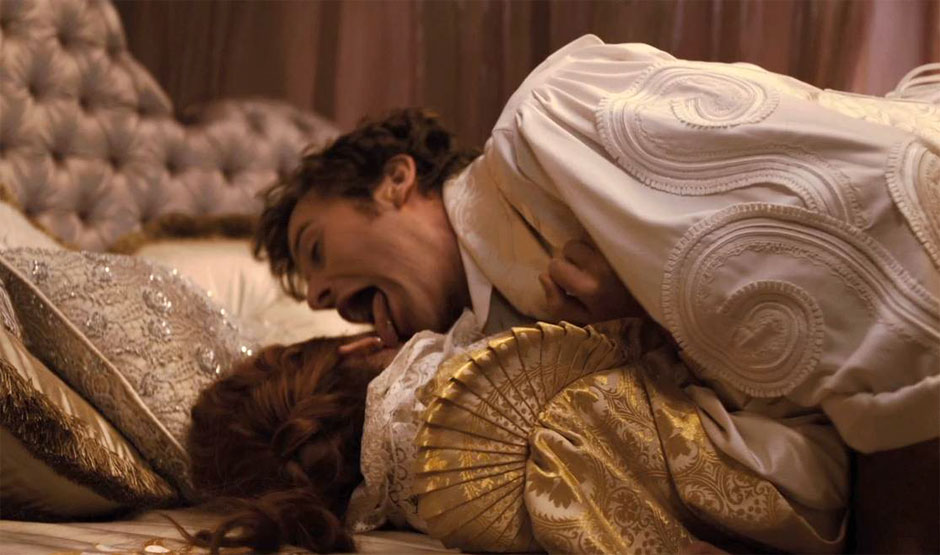
Author Calvin Weir-Fields (Paul Dano) is struggling with a follow-up novel after an initial success—struggling for 10 years, in fact.  His shrink (Elliott Gould) gives him an assignment to take the pressure off, and Calvin is inspired, writing about an idealized, neurotic woman named Ruby Sparks.  But, he's not just inspired, he's energized, so much so he can't wait to get back to his typewriter (it's this old piece of technology before a PC, or what was known in the Pleistocene era as a "word processor") to continue the work, spend more time with her, creating her.  So much so that he starts to fear that he's falling in love with her.  His brother reads the pages and his criticism is harsh: "You haven't written a person.  You've written a girl.  Geeky, messy girls are not what people want."  He remains undeterred, writing all night and into the morning.  Imagine his horror when he wakes up from his QWERTY keyboard, runs downstairs and finds Ruby (Zoe Kazan) in one of his shirts, eating cereal.

He freaks, naturally, much to her consternation, and then is shocked to discover that everybody can see her, too.  She's just not a figment of his imagination; his imagination walks amongst us.

This is the stuff of male fantasy rom-com's.  But, Ruby Sparks takes it into some dark places, ala Hitchcock, in the realms of identity, manipulation, male wish-fulfillments, and the odd idealization and expectations that love creates and blinds us to.  We all create an object of affection (on both sides, sending and receiving), but whether that object has anything to do with reality depends on both parties and how much they want to compromise to achieve that...whatever it is..."more perfect union," let's say.

The script (by Kazan herself) explores some uncomfortable territory in that regard and Kazan has a knack for writing dialogue that is spot-on, but containing deep echoes that weight them further.  It's one of the better rom-com/fantasy scripts to come along in awhile—at least it has a thought in its head—and the performers, while still showing an abundance of the too-eager "cutes," its not enough to keep you wondering how it all could end.  Yes, the film has its moments of coy cloyness—for example, when Ruby goes to a family dinner with Calvin's hippy-dippy step-parents (Annette Benning and Antonio Banderas), that amounts to a side-bar, and just lets us know what we already know, that Calvin is a bit of stick-in-the-mud and a buzz-kill, and (surprise, surprise) less capable of change than his own creation, which, if he wanted to, he could correct with a new sentence, or some Liquid Paper.

It doesn't go there (and only for revelation purposes, any more and it might be a good vehicle for Adam Sandler), nor does it end "Happily Ever After" as rom-com's do (but only because they choose to).  Ruby Sparks chooses another way, fully committed to not committing and finding the fine balance of compromise.

Ruby Sparks is a Matinee


Thursday, April 26, 2012

Love in the Afternoon

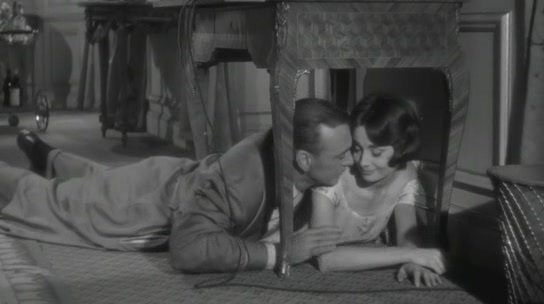
Love in the Afternoon (Billy Wilder, 1957) Light Billy Wilder film from the effervescent days when he was directing Audrey Hepburn at the start of her career.

This one had me smiling immediately with Maurice Chevalier's opening narration—"Zis is the city, Paris France"—echoing Jack Webb's "Dragnet" opening.  Chevalier plays a private detective, Claude Chavasse, specializing in "matrimonial work," and lately the case-work has been dominated by one subject, American millionaire Frank Flannagan (Gary Cooper), who is cutting a wide swath through the world's female population, both married and unmarried divisions.  The work has turned Chavasse into a cynic about the paths of love—he's gumshoed too many of them—in marked contrast to his daughter, Ariane (Hepburn), a cello player (hold that image in your head for a moment), still wide-eyed at the prospect of romance, and fascinated with her father's work, something he does his utmost to discourage.

When she gets wind that a cuckolded husband (John McGiver, hyperventilating amusingly in fine comic fashion) plans on breaking in on his wife's tryst to ventilate Flannagan, she steps in from the balcony to insert herself into the situation.  This inevitably (in the movies, at least) to an affair between the elder lothario and the young ingenue, one that she manipulates by trying to talk a competitive game in conquests.  The situation is ripe with comic possibilities, which Wilder exploits every chance he gets, even using Flannagan's moving musical accompaniment (the final assault is preceded by a four piece rendition of "Fascination").

Much has been made of Cooper's age in the film, and it is an issue.   Cary Grant was supposed to be Flannagan (Wilder had been trying to entice Grant into one of his films for years) but when a deal wasn't reached,* Cooper, who at 56 was Grant's senior by three years, was hired.  Cooper is an odd fit, as opposed to younger men like, say, Gregory Peck (as in Roman Holiday) or William Holden (in Sabrina), but Wilder works around it, initially, keeping Coop' in shadow to emphasize his "mystery man" status, and Cooper's early performance is, interestingly, boyish and somewhat immature.

And that's the point.  Flannagan is a man-child, used to getting everything he wants.  And Ariane has her choice between younger men—immature and unsophisticated—and Flannagan—sophisticated but immature.  All it takes for him to grow up is a level of commitment, something he's avoided his whole life by having a train to catch.  Both character arcs feel complete and satisfying, even though it is the "7-10 split" of May-December romances, and one feels a little creepy watching them make out.

And a little guilty, in the same way that it was tough to watch the denouement of Sabrina.  Okay, it's charming that she likes the old guy, but if he really was thinking this through, with all this new-found maturity, wouldn't he be thinking about her, and what she has to look forward to in a life with him (which can be summed up in one word..."short")?

And then, one considers Wilder, and the blithe, darkly cavalier sensibility that he brought to the movies, moral though his stand-point might be.  One can imagine Wilder, the guy who ended Some Like It Hot with "Nobody's perfect," with a similar tag for this movie: "Aren't you concerned about the age difference?"  "If she dies, she dies..."

 At this point, Grant was getting concerned about his age and being paired with young actresses ("robbing the cradle, again" is how James Stewart summarized the situation late in his career), but his misgivings must have subsided enough to co-star with Hepburn in Charade for Stanley Donen six years later.

Wednesday, April 4, 2012

Mirror Mirror

Don't Trust Anyone Over Four Feet
or
"No, Snow!  Don't Mess with Traditional Story-Telling!  It's Been Focus-Grouped, and It Works!!"

I approached Mirror Mirror with some trepidation.  It's the sort of movie that curdles my gray matter—taking a traditional fairy-tale and updating it for modern audiences, with anachronisms, modern slang and catch-phrases, a fractured fairy-tale denying its origins and playing "hip."  Also, it's a  Julia Roberts vehicle and I don't "buy" Roberts in anything but comedic roles (which this one is).

But the other choice was to see Wrath of the Titans, for which I had no desire (Really? They're trying to make a franchise out of that one?) and so it was the "Snow White" knock-off, even though the prospect seemed rather Grimm.

It did have one thing going for it, however.  Even though produced by Brett Ratner, it was being directed by an inspired choice—Tarsem, who vaulted from R.E.M. music videos to The Cell,* then rebounded with a fine film no one bothered to see, The Fall.  I'd passed on his Immortals last year (though I plan to watch it on video sometime soon, now that it's out), but, as Tarsem can do some visionary work, he just might be able to pull it off.

It might well have been lame in any other hands, but the director's spectacular design sense, not only for sets and costumes, but also how to frame them for maximum effect is combined with a breezy comedy style that is never idle, and never hangs for a laugh, so that not only is the frame full, but the soundtrack as well, with one overhanging punch-line that crowds through before each cut.

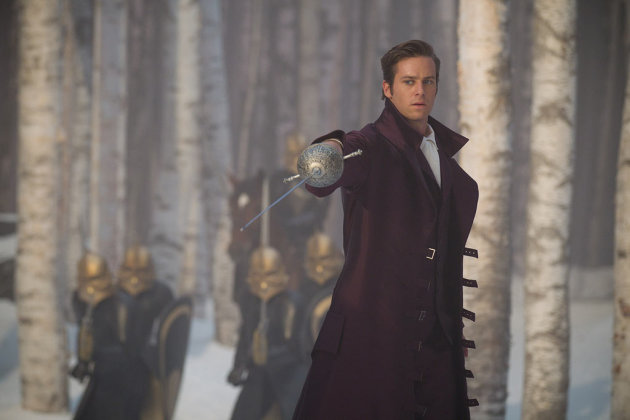
And yes, it's anachronistic, with such a polyglot of styles that it goes beyond, say, Terry Gilliam-madness into a Moulin Rouge!-ish goofy slap-dashery in which nothing is sacred except the movie's own internal rules of play, stopping just short of the Python-line of anarchy.  There is no single accent in place to latch onto geographically, except for some Anglo-Saxonisms—indeed, Arnie Hammer's Prince Alcott of Valencia, is pure American, but does it with such Ivy-League bravado that you accept he's a prince.

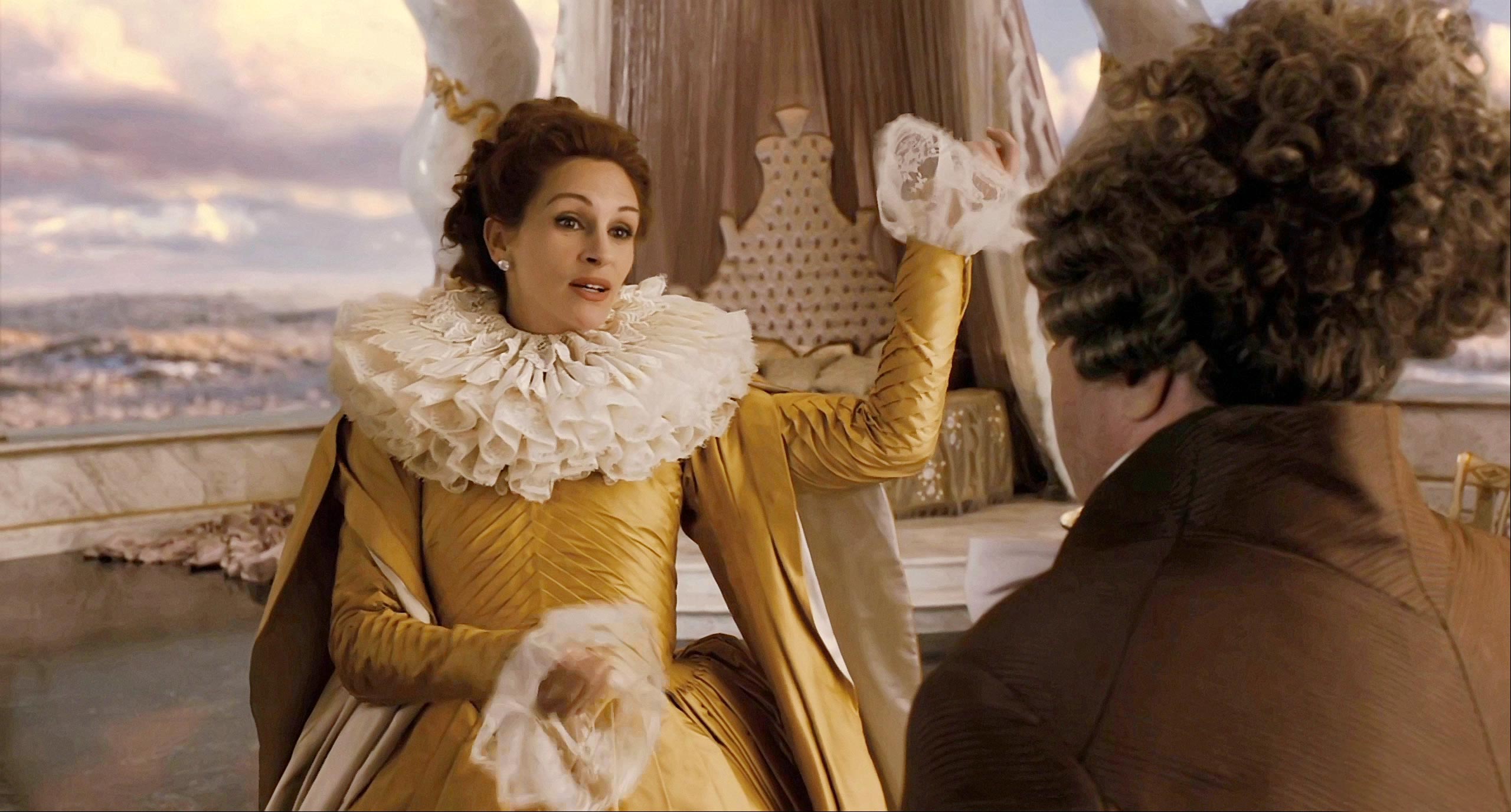
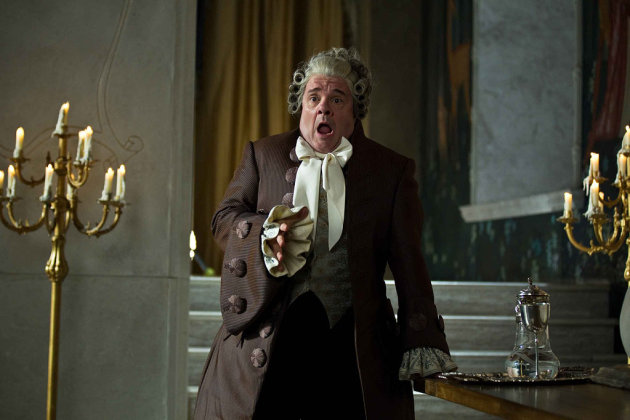
And this variation of the story has just enough "Hamlet" mixed in—Ms. White (an Audrey Hepburn-esque Lily Collins) is the daughter of The King, who is murdered (unbeknownst to all) by his new step-wife The Queen (Roberts), who then rules the Kingdom into the ground, while White awaits taking the throne on her 18th birthday (that is, if the Queen ever permits it).  Instead, she spends it going out to see what's become of her Father's legacy and is distressed to learn there's no singing and dancing in the streets (as she remembers) but begging and poverty instead.  This causes a political debate in the family, leading to Snow being banished by The Queen to be dispatched by her lackey Brighton (played with Costello-ish consternation by Nathan Lane).

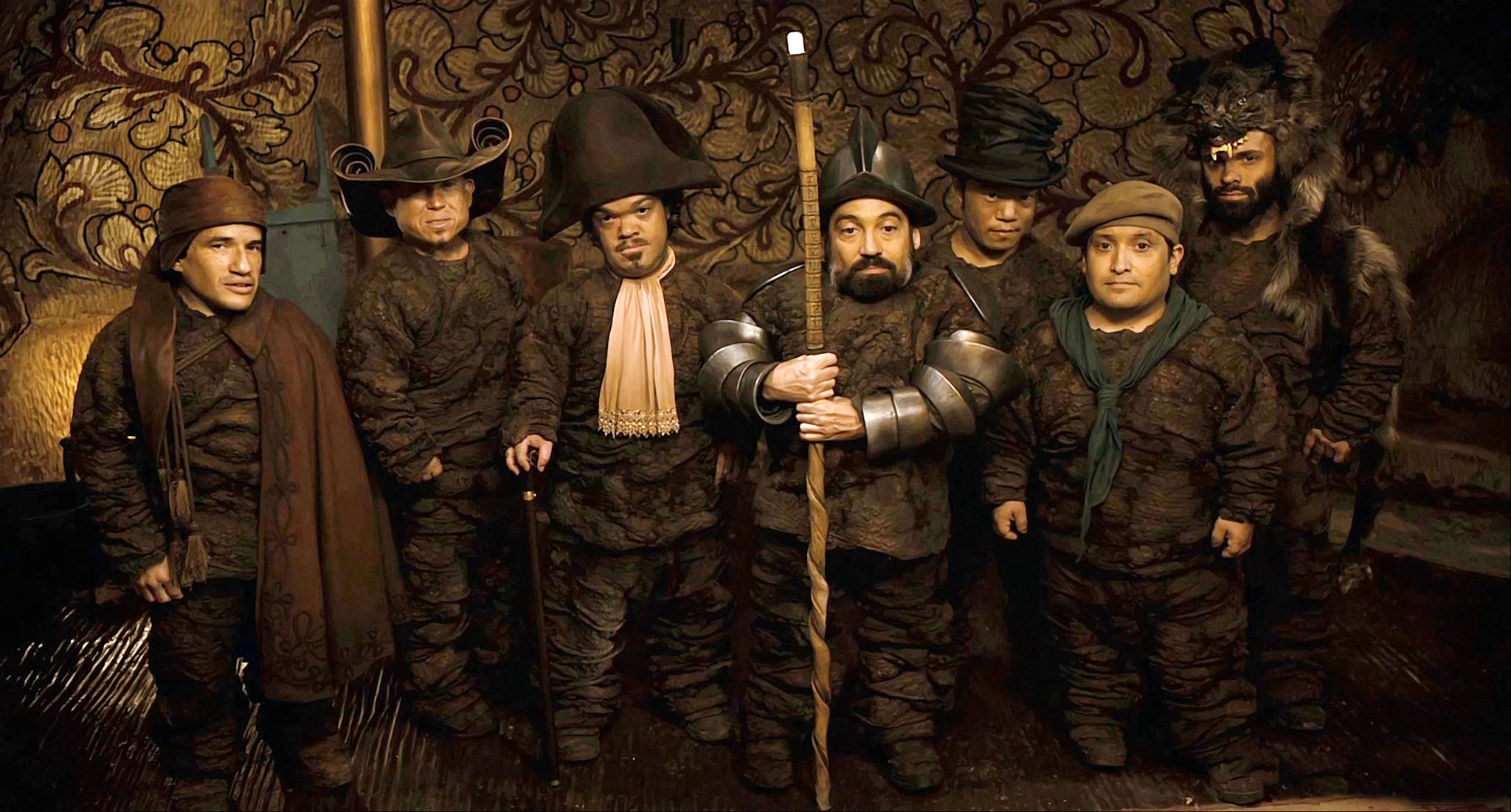
Along the way, we meet the handsome Prince (Hammer, who is aggressively great here, better than his Winklevoss twins in The Social Network, and decidedly better than being cocooned in make-up for J. Edgar, one thinks though that he is doomed to play scions), who is accosted by highwaymen...who just happen to be The Seven Dwarves (Napoleon, Half-pint, Grub, Grimm, Wolf, Butcher, and...Chuck, played with gruff zeal distinctively, by Jordan Prentice,Mark Povinelli, Joe Gnoffo, Danny Woodburn, Sebastian Saraceno, Martin Klebba,and...Ronald Lee Clark, all threatening to steal the show, as well—"beats workin' in a mine," as one of them says).  Before long, everybody's path is crossed once or twice, along with swords and stars in lovers' eyes.

Thing is, in its cartoonish way, it works in live-action, as well as when Disney goes sassy these days with classic tales, and, given the edge by Tarsem's crack sense of timing and way of knowing no bounds in design and camera moves (and Alan Menken's Mickey-Mousing** score doesn't hurt in that regard, either) the effect is somewhat the same.

Walked in loathing the idea and walked out kinda lovin' it.  Pretty happy about that, given the Grimm prospects.  Seems fair, if not the fairest of them all.


Mirror Mirror is a Matinee.


The music video in the End Credits, which shows how Tarsem throws things in from left field, as in this "Bollywood" style sequence.


*
Another example of Tarsem's work—a cheeky gladiator themed Pepsi commercial, featuring Enrique Eglesias, Beyonce, Britney Spears and Pink, with the music of Queen.


** © Disney Corporation.  I use this in the musical definition of the term (not in its "common, inferior" usage) where the music follows the action on-screen precisely, as in notes that follow foot-steps, say.

Tuesday, August 23, 2011

Crazy, Stupid, Love

"Love Sucks (A Cautionary Tale)"
or
"It Takes a Village (To Make a Divorce)"

The sad thing about romantic-comedies, circa the 21st Century, is their dependence on formula: Boy Meets Girl/Boy Loses Girl/Complications Ensue/Boy Wises Up/Happy Ending; or Girl Meets Boy/Girl Loses Boy/Girl's Self-Worth Depends on Boy/Romantic Rival Meets Terrible Demise/Happy Ending (of a sorts).  The last few I've seen of the genre have depended on hitting these plot-points, no matter what city, what occupation, or what sex the film centers around.  Even Bridesmaids, for all its wit and wildness, still ended with the assumption that everything will be alright if "the girl" gets "a man." The "by-the numbers" dance steps that most rom-coms boogie to have the ability to regress me back to the five-year old boy I was who hated "kissing scenes;" the final rosy fade-out inevitably spoils the most romantic of comedies for me, failing to warm my the cockles of my heart or make me feel all-gooey-fuzzy.  Instead, I walk away cheerlessly cynical.  Been there.  Done that.  A fish needs a bicycle.


So, it's a nice surprise, bordering on the revolutionary, when a romantic-comedy turns the formula on its ear enough that I enjoy it.  Don't get me wrong, Crazy, Stupid, Love* has a "happy ending," but there is also a nice glowing lack of resolution.  This is a movie that dares to say that Love is hard work, and, yeah, it sucks, but it could be worth it, because, like Life, it beats the alternative.

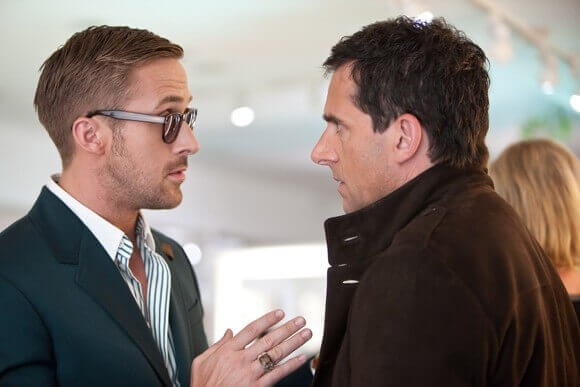
This is not where it starts, but where it starts to get interesting: Chick-magnet Jacob (Ryan Gosling,** he has a nicely subtle double-take for comedy) is in a bar in mid-closer with his latest fling when he takes the time to call over a half-stewed Cal Weaver (Steve Carell, showing exactly why he deserves to be out of TV and in films, something that doesn't happen nearly enough).  The reason?  Cal's moaning is throwing off Jacob's technique.  Cal's been doing that a lot lately (at the office he's told: "Amy heard you crying in the bathroom - we all thought it was cancer.") No, it's not cancer.  After 25 years of marriage, Cal's wife (Julianne Mooreshe's great) has revealed she wants a divorce AND she's slept with another man (Kevin Bacon, he's also great).  This offends Jacob's self-absorbed sensibilities: "Seriously, I don't know whether to help you or euthanize you."

So, Jacob helps Cal to "man up"a younger "Obi-Wan" to the elder's bowl-cut Luke with credit cards as lightsabers, and this, if not turning Cal's life around, at least making it busierAnd complicated.

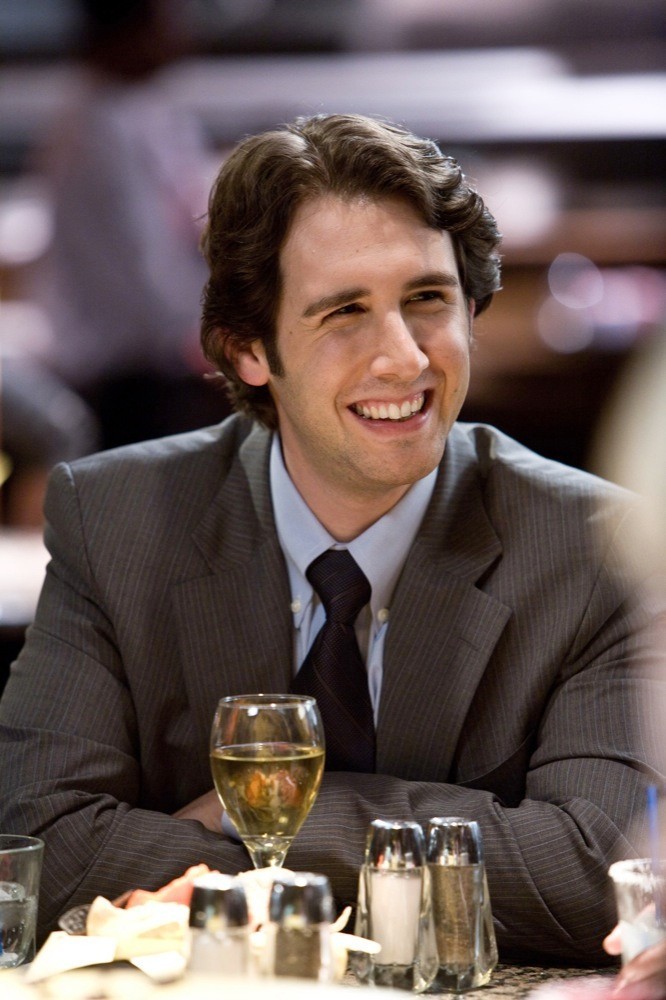
Running parallel to the story is Hannah's (Emma Stone, big-eyed waif) relationship problems ("You're life is so PG-13!" says her token-Asian friend, Liz).  That's because she wants to be engaged to office co-worker Richard (Josh Grobanrather risky of him to look so bad in this movie) and is focused on that, so much so that she plays ignorant to Jacob's innuendos when he approaches her while trolling in a bar.

And, at this point, to say anything more would be saying too much, spoiling the fun and sending the whole Jenga-construction of the film crashing to the rec-room floor (In fact, I've probably said too much already).  Just when you think everything is going as smooth as satin sheets, the film-makers throw you an extra wrinkle, and it's been a log, long while since a rom-com has done that.  The dialogue is fresh though the situations seem familiar—everyone's conceptions of Love and Romance seem to be based on The Movies and directors Glenn Ficarra and John Requa *** and writer Dan Fogelman **** are only too happy to skewer them, while paying some respect—the complications teetering on the sit-comish, then resolving with the most graceless of dismounts.  Applaud anyway because if they're not the best of executions (the performances help here), there are extra points for "artistic" and "difficulty."

Adding to the fray are the effects all this confusion have on "the kids" (Jonah Bobo, Joey King) and the friends (John Carroll Lynchhe's becoming one of my favorite character actors—and Analeigh Tipton).  It, after all, takes a village to make a divorce...very uncomfortable.  And special mention should be made to the movies' best utility player, Marisa Tomei, who surprises with just about every performance these days (Okay, okay, Marisa, you DESERVED that Oscar, okay?).

Highly enjoyable.  Bravo.

Stupid, Crazy, Love is a Full-Price Ticket.

* Yes, it has the superfluous comma, you English Majors, but if you see the title as a list rather than "adverb, adjective, subject," it makes a bit of sense, and the film actually earns the charity for considering the possibility. 

** Gosling is an odd bird.  It's taken awhile for me to warm to him (I'm one of the few people to have seen his awful work in Fracture, but he has a nice laid-back dead-pan style of comedy—as displayed in Lars and the Real Girl—that hews closely to his dramatic work.  Just a nudge, either way determines comedy or tragedy.  He's dangerously good.

*** Okay, this is scary, but hear me out: Ficarra and Requa have written such films as the remake of Bad News Bears, Cats & Dogs, Bad Santa (a bit raw, but actually rather sweet) and...wrote and directed the little seen gay romance, I Love You Phillip Morris—as subversive and weirdly sweet movies to be seen in a long time.  Forgive the early credits—these guys are good.

**** Okay, now REALLY hear me out: Fogelman wrote the screenplay for Cars and the screen-story for Cars 2, wrote Fred Claus...but did fine work on both Bolt and Tangled for Disney.  Seems he can write for real people, too, and not just 'toons.

Tuesday, July 12, 2011

Larry Crowne


T. Hanks for the Mediocrity
or
My Big Fat Career Mistake

I'm sure the intentions were better (aren't they always?), possibly saying something about the displacement of late baby-boomers in the job market, and how "it's never too late to learn" belying the "old dogs/new tricks" canard.  Maybe Hanks just wanted to make something hopeful and sunny in bad economic times...a flare in the night-sky...the proverbial single candle rather than curse the darkness.

Well, it's more like a candle in the wind, and this blows.  Formulaic, with an implied "wah-wah" comedy goose at the end of every scene, Larry Crowne has a "made-for-TV" movie feel that gets under your skin like intravenous sand-paper.  Larry (Tom Hanks) is in his early fifties, divorced, a twenty-year Navy vet working at a box-store, where he's received "Employee of the Month" fetes nine times.  He's one of those guys who owns everything he does, taking a certain pride in all aspects of his job, even picking up and disposing the stray trash he finds in the parking lot.  The implication is already there: while the rest of the world goes on its self-absorbed way, Larry "cares."  And that can't come to any good.

Called in for what he thinks is his tenth EOTM award, he is fired instead; corporate has crunched the numbers and sees him, as never having gone to college, as not being "advancement" material—he's already been passed over for promotions by duller, but degreed, employees.  Adrift, Larry finds no work, and so goes to community college in his '50's, with similar outcasts (though dissimilar aspects) most younger, but without the team-player skills that Larry has acquired.

Teaching one of those classes—Speech 217—is Mercedes Tainot (Julia Roberts), bored, tired, unmotivated, with a dead-beat author-husband (the wonderful Bryan Cranston), who, like Larry at the beginning of the film, doesn't know she's in the process of transitioning, so cynical is her world-view.  Her students are an odd collection of rabbits, that she's just trying to keep awake and inspire the one thing she can't seem to muster up—giving a rip.  And Crowne is the oddest rabbit in the bunch.  She glowers, as she sees him slowly change under the influence of younger students—particularly women, and particularly one student who has it in mind to completely "make-over" Larry to his puzzlement and the vexation of her boyfriendThis area of the movie has more than its share of "wah-wah" moments, and as much fun as Roberts' slow-burn is (and she's great at it), they have the feel of sit-com situations that might be fun for the matinee crowd.  It's there that the writing hand of Nia Vardalos, she of My Big Fat Greek Wedding, is the most evident.  Hanks and his wife, Rita Wilson (who is also in this with a small, rather frightening part) were the ones who took Vardalos' one-woman show and shepherded the development of it into a Big Fat Success.  The demographic for Larry Crowne skews a little bit to the same age, with the same toothless observational satire that never offends, even when it tries to be a little "naughty."  It's all for naught.

And yet.  And yet...

"Take it from an 'old guy:' never regret being delightful," I told a clerk who thought she was being "too forward" approaching me in a store aisle.  Twenty-four hours after "grumping" my way through Larry Crowne, the sugar had dissolved in my mind and the "good stuff" remained...Larry's unexpected, all-inclusive, concise and perfect final project in class that nicely ties a bow around the movie, a cast of great people getting to be charming (Cedric the Entertainer, Taraji P. Henson—a favorite of mine, Wilmer Valderrama—!!, George Takei!!!, a little spitfire named Gugu Mbatha-Raw—late of "Dr. Who," "MI-5", and "Undercovers"—that you just want to hug, and...almost too good to be true...the always-welcome, never-failing Pam Grier).  The thing is for as saccharine as the movie feels going down, it leaves a pretty good after-taste.  One forgets just how much one is suffering through it, and how unsufferable it can be, and is left remembering the good parts.  Meaning that Larry Crowne is a similar experience to childbirth.

Not a ringing endorsement...but it could be worse.  It could have had The Fockers, guest starring Kevin James.  

Larry Crowne is a Rental.

Wednesday, April 27, 2011

Miss Pettigrew Lives for a Day (Take Two)

Miss Pettigrew Lives for a Day (Bharat Nalluri, 2008) A bon-bon.  A truffle.  A "ladies' pic" with just enough naughtiness to raise the blood pressure a little and maybe bring some color into the cheeks and the blue hair.  Done to a fine "fare-thee-well" and all, but at the heart of the confection is a little piece of grit that could chip a tooth if you're not careful—"careful" being the operative word here.

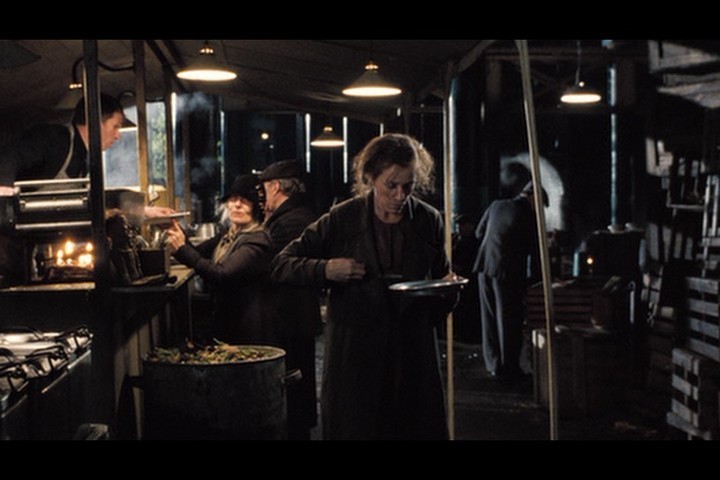
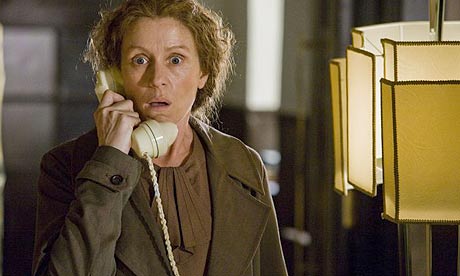
Miss Guinevere Pettigrew (Frances McDormand—what a treasure) has just been given the sack in the days before England is going to war with the Germans; the headlines are bold and the Wellingtons are flying eastward.  But Miss Pettigrew is without situation and penniless, cast adrift like the leaves scattering in the wind (which the Main Titles are animated to resemble).  She is desperate, so when she applies for another position and is roundly given the brush-off, she steals a business card and arrives unannounced at the residence of Miss Delysia Lafosse (Amy Adams)—nee Sarah Grubb "of the Pittsburgh Grubbs"—actress, semi-songstress, floozy and ditherer.

She couldn't have arrived at a better time.

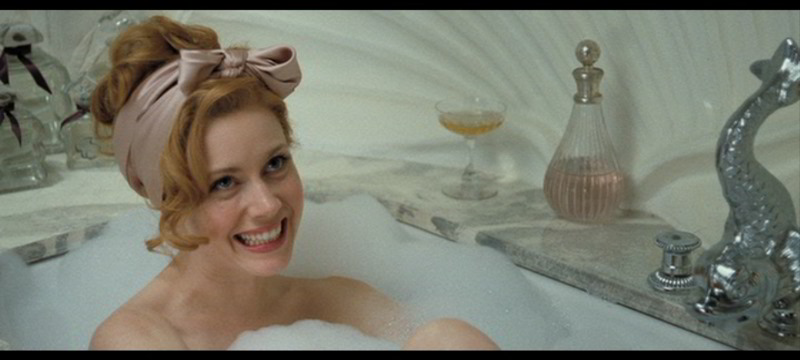
Delysia is only dressed in a flimsy robe after entertaining a boy-producer (Tom Payne) in order to gain the lead in his new production, and she's doing so in the lavish love-nest of her boyfriend Nick (Mark Strong), who should be returning at any minute.  As should her other boyfriend, Michael (Lee Pace), who has just been released from prison after trying to nick a diamond for Delysia's engagement ring (the occurrence of which left Guinevere with only the clothes on her back—"small world").

It becomes immediately apparent that Miss LaFosse should not be acting but juggling and she needs a third hand to do so. 

And that's where Miss Pettigrew comes in, and quite literally.

Over the course of the day, everyone is in everyone's "business" if not in the very same room and the various conflicts conspire to creates "scenes" in glamorous settings and scandals if the back-biting and sniping become less passive and more aggressive.  The surface glitter, though, is shadowed by the twin horsemen of war and poverty and Pettigrew, who has known both, manages to be the voice of priority and reason, without completely throwing cold water on everybody's hot jazz.

It's a smart, funny screenplay, played well by an expert cast, even if the the direction gets a little swoopy and frenetic sometimes, and the music soundtrack is selected meticulously to given the film a rhythm and momentum that it desperately needs, even if some of the music chosen isn't precise to the period.

So, what's the "grit" that threatens to tarnish the gold that seems to permeate every one of Adams' costumes in this thing?  The unmistakable whiff of safety that wafts every so often.  That sentiment that everything will be alright, as long as "the right man" comes along.  Sure, the movie toys with "wrong" men, just as surely as Delysia does, but the flirting with "danger" is always casual, the consequences never showing themselves.  There are valid points that "love is not a game," and "you must not waste a second of this precious life," and particularly "there are times when decisions just have to be made, or you certainly will miss out."  All too true.

But, the insistence that all will be well with the subjectively agreed-upon "right" pairing between male and female?  Would it have been so sinful to have the ladies of the story be a little more independent as a solution as opposed to it seeming like a problem that needs to be cured?  As delightful as a movie may be, if those thoughts crop up, it has the tendency to spoil the party.