Showing posts with label Steve Carell. Show all posts

Saturday, August 31, 2013

The Way, Way Back

The Summer of Our Discontent
or
"Little Mr. Sunshine"

The summer "coming of age" movie is such a staple that it might be worthy of its own genre label, rather than merely being relegated to a sub-category. It's a natural, really. The timing seems right and appropriate for the subject of change. Summer always seems to be a time of transitions: from one school year to the next; from bring a graduate to a freshman, walking out of one door and into (and hopefully through) another one. And while the rest of the year is taken up by schooling, the ample three months of idle time gives one plenty of opportunity for other extracurricular learning—life-lessons from the school of hard knocks.

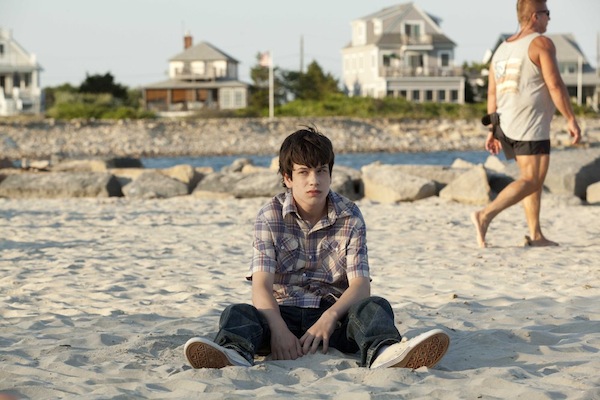
Take Duncan (Liam James), for instance (please, someone has to...) in the new film by Jim Rash and Nat Faxon (they won an Oscar for their superb script for The Descendants).  Fourteen, a 'tweener, his parents are divorced and Mom (Toni Collette) has taken up with another man. Trent (Steve Carrell), who has a daughter Steph (Zoe Levin).  It is clear as this pint-sized Brady Bunch goes to an ocean beach house that it is not going to be anything resembling a beach-home.  Duncan doesn't want to be there; he'd rather be with his Dad this Summer.  Whether that preference has driven a previous wedge between Trent and Duncan is not know.  What is known is that Trent is something of a jerk to Duncan.  "One a scale of 1 to 10, what do you think you are?" he asks Duncan sequestered to the back of the station wagon on the ride to.  "Six," says Duncan, noncommittally.


"I think you're a 3," says Trent imperiously.  "I just don't see you putting yourself out there..."


If Trent wanted to see Duncan put out, that remark was a good start.


Duncan (Liam James) has a "thousand mile stare"
Duncan settles into the teen routine of being a hot-house plant in a dark room, grunting monosyllabically at anyone over 30.  He can't relate to Trent's friends and neighbors, like the barely-together Betty (Allison Janney)—she has two kids, Susanna (AnnaSophia Robb) and Peter (River Alexander) and Kip (Rob Cordrry) and Joan (Amanda Peet).  And Mom, trying to heal after a divorce, is there for Trent.  Duncan tries to be invisible and stay out of the way, and is emotionally unavailable.

It isn't until he finds Steph's abandoned pink bike (with tassles on the handlebars) that things begin to pick up speed and he feels like less of a trapped and pacing animal.  The bike gives him some mobility, some freedom, and it only has one seat, which is fine by him.  He starts to explore the beach-town and runs into Owen (Sam Rockwell at his loose best) who runs the local water-slide park, Water Wizz.  Duncan gravitates there and that's when his Summer starts to get fun.  Owen takes him under his crooked wing, adding Duncan as park-help, and introducing him to what will be his new family, including Caitlin (Maya Rudolph), the responsible to Owen's irresponsible, and concessioners Roddy (Faxon) and Lewis (Rash).  Pretty soon he's in a routine, interacting with sort-of adults and fitting in.

But, it causes conflicts within families; his long hours at the park causes concerns at home and puts him in further conflict with Trent, who has his own disappearing act issues.

It is no great shakes as a film, but it is a good movie, a movie you might enjoy.  It is merely competent, well-written, extraordinarily cast and acted (the standouts being Rockwell and Steve Carell who works against type and proves himself capable of playing a deliberate jerk, instead of just a clueless one.  And Rash and Faxon prove themselves as adept at directing as they are at screenwriting.  In a disappointing Summer, this counts for a lot.  And like Duncan's situation at Water Wizz, this little wayward breath of fresh air from the usual carnage perpetrated on screens is a welcome relief.

The Way, Way Back is a Matinee. 


The only explosion in The Way, Way Back


Saturday, June 1, 2013

The Incredible Burt Wonderstone

"Sometimes the Magic Works...."
or 
"Wanna See it Again?"

Repetition, repetition, repetition.  It is the secret to prestidigitation.  Do it over and over and over again, honing the skill, making it more fluid, perfecting the illusion, increasing the speed, so you leave the audience dazzled by the pixie dust of distraction.  Then, once perfected, you do it again and again and again in performance, producing a jaded hardening of the artistry, the audience becoming s revolving series of marks you hit over and over again.  You lose respect of the audience and the skills and the gig.  The magic goes away.

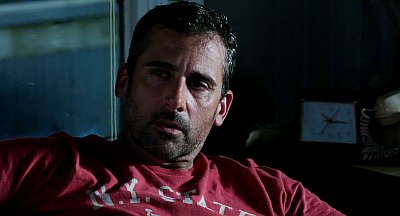
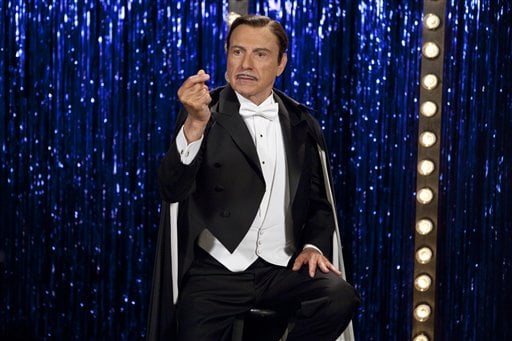
Repetition is the key to The Incredible Burt Wonderstone, too.  One of its major themes is the drudgery of performing the same tricks over and over and over again, a process that turns the titular magician (Steve Carell) into a zombie with a spray-tan, barely able to speak to his partner Anton Marvelton (Steve Buscemi) as they perform the umpteenth repetition of their standard Vegas act.  Not even the addition of a new assistant, Jane (Olivia Wilde) can stop the ennui, as the self-absorbed Wonderstone keeps calling her "Nicole" for some reason.  Probably because he can, she looks more like a "Nicole" than a "Jane," and he doesn't care.  At all.  So, he always calls her "Nicole."  "Jane" she immediately corrects, but he doesn't get it.

Repetition is also the key to Burt Wonderstone's comedy.  They throw out that "Nicole"/"Jane" joke a half-dozen times throughout the movie, and a good many others, too, usually to expose the shallowness and perpetual myopia of the characters as well as the flatness of their learning curves.


That flatness, that lethargy or lack of magic, is the starting point of the character arcs.  Burt is at the top of his game, successful, bored, settled into the day-to-day—the romantic encounters he engineers (if you can call them romantic) are one-night stands he pulls from the audience, provides a quick tour of his pad, a complimentary memento arranged for the evening, the signing of a non-disclosure agreement, and it all ends when he pulls a disappearing act.  Whatever happens in Vegas, stays in Vegas.  Except the magic.  It left a long time ago. 


Burt (Carell) and Anton (Buscemi)—Pure Magic

Because success isn't very funny, Burt and Anton stagnate, especially when there are newer, edgier, geekier magicians with reality shows—like the masochistic, egotistic Steve Gray (Jim Carrey) who bills himself as "the brain rapist." The owner of Bally's (James Gandolfini), where the two have performed to sell-out crowds for years, sees the attendance softening, and demands something more "street" than his regulars can provide, and so they get canned, split up, try to rebuild, crack up, and then the story can actually begin.  

As typical romantic comedies go, this one is by the numbers: Burt's career set-back is completely unprepared for, and he finds that without the safety net of Anton, and the routine of their act, that he can't start over, or reclaim his former glory, so before long he finds himself sinking to rock bottom (performing magic at an old folks home), where, by the prestidigitation of convenient screen-writing, he finds his magic mojo again in the form of Rance Holloway (Alan Arkin), mentor and Obi-Wan Kenobi-figure who critiques Burt's work and attitude ("What, magic makes you feel 80 again?" cracks Burt).  Anybody knows, if they've taken a screenwriting class, or seen any Tom Cruise movie from the '70's-'80's knows how it will run in its course (success kills your soul, there's a rival/villain, and one must have a sage elder to find the proper path), but at least the thing maintains an entertainment value throughout and right up to the end.  Thanks to the mixture of the personalities—Carell, Buscemi, Wilde, Arkin (I'll see anything with him in it), and especially Carrey, who makes the most of his small screen-time—there's always a sprinkling of surprise, a detail, a quirk to appreciate among the over-arching familiarity of it.  There's something magical about that.

The Incredible Burt Wonderstone is a rental.


Tuesday, August 21, 2012

Hope Springs

Breathe 
or 
Breaking Noses and the Fourth Wall

When Tommy Lee Jones was interviewed on "Inside the Actors Studio" and they got to the point where James Lipton asks "those" questions, and he was asked "What word do you hate?" Jones curled his lip and said "Cute."

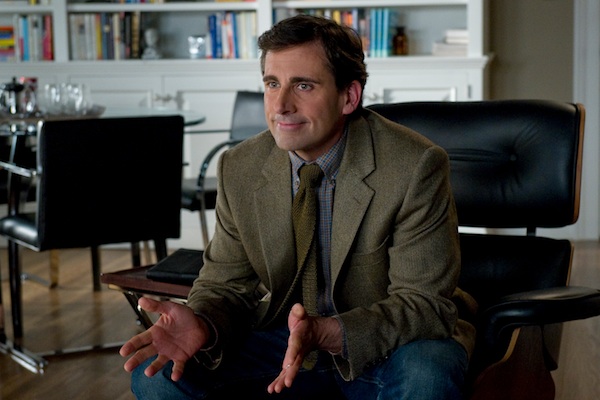
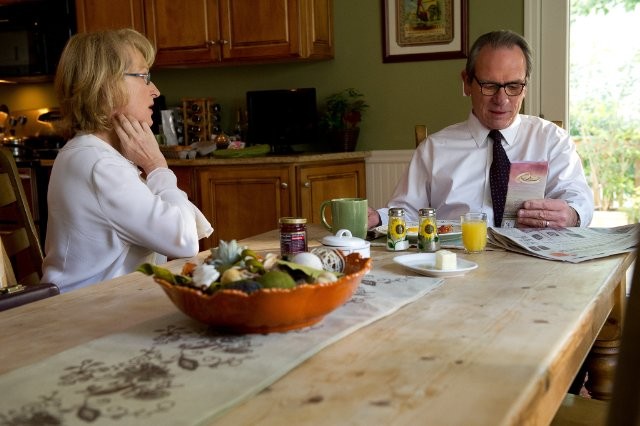
Fortunately, he's in Hope Springs, which, unfortunately, is the very definition of "cute," and manages to take some of the smirk out of it and put in the sting.  The tale of a pair of "empty-nesters" trying to rekindle the pilot light of their marriage and claw out of their rut, it is merely saved by the stalwart efforts of Jones and Meryl Streep, who say more with their body language—his trudging walk and her nervous, frustrated sighs—than any blunt dialogue could convey.  The script by Vanessa Taylor (she's written for "Everwood," "Alias," "Game of Thrones" and created the short-lived but well-regarded "Jack & Bobby"—quite the gamut, there) is long on touchy-feely aphorisms about metaphors, commitment and getting outside your comfort zone, dispensed by marriage counselor Steve Carell, who cuts out the dangerous aspects of his comedy potential and replaces it with wan smiles and scrutinizing eyes.  David Frankel's direction (he directed Streep in The Devil Wears Prada, directed Marley and Me and last year's The Big Year) is safe, but sound (which makes you wonder why he's not directing for The Weinsteins, and he's much more adventurous when working in TV) and keeps things from getting too treacly.

The pressure, then, is on Streep and Jones to bring everything to the table and they're an interesting study in contrasts.  She's all invention, imaginatively communicating with extraneous gestures of agitation and nuance, that burst out of her in spurts.  Jones is instinctive, making the text real with superb line readings with a minimum of fuss—funny as Jones' character is the fussy one, complaining constantly, passively aggressive, and not offering much in the way of support.  Both have issues and neither is entirely blameless—it takes two to make a bad marriage—but the sympathies throughout are with Streep's character, which is hammered home by the director and actress in moments of her satisfaction, by having her look directing at the camera for some sort of conspiratorial communal support from the audience ("Ladies...").

A little of that goes a long, long way,* and exposes that the film is geared to a female audience of a certain age and like-minded sympathies.  Such pandering mars the film, taking it out of the situation, and, by acknowledging the intended audience, shatters the illusion of reality, making it a staged presentation.  They might as well break into song, if this film about commitment isn't going to commit to anything.

Hope Springs is a blue-haired Rental.

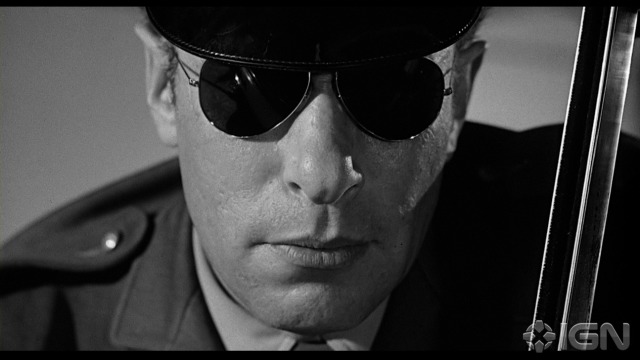
* Too far actually, and in the days after watching the film, the feeling that it recalled for me in a previous film experience is Anthony Perkins smiling directly at the camera at the end of Psycho (There are other straight-on shots in the film—Marion driving, the patrolman, Arbogast—but they're usually looking past the audience, eyes unfocused, not directly at the audience).

Thursday, July 5, 2012

Seeking a Friend for the End of the World

I Got Stoned and I Missed It
or
"As Well as All Your Favorite Classic Hits..."

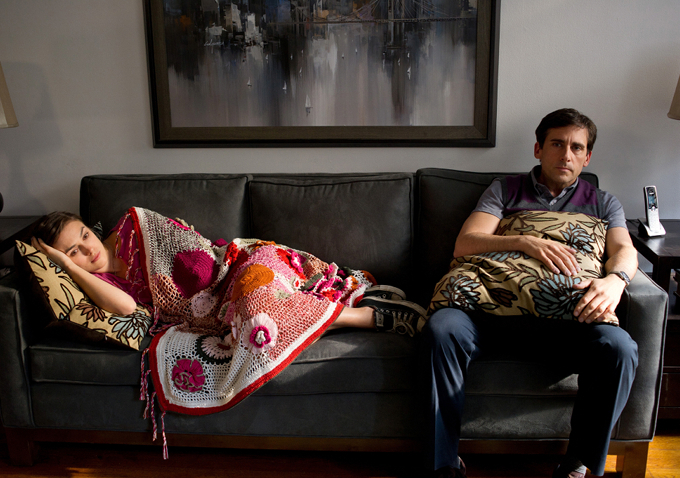
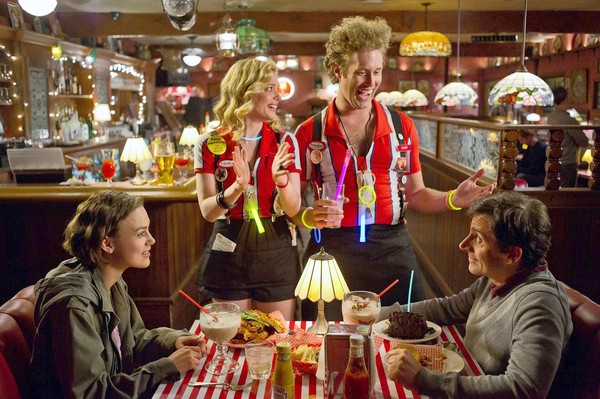
Right off the bat, Seeking a Friend for the End of the World, starts with a great joke.  Dodge (Steve Carell) and his wife Linda (Nancy Carell-heh—how "inside") are sitting in the car, listening to the news on the radio.  It's not good.  The space shuttle Deliverance has not been able to destroy or even divert the asteroid "Matilda" that is headed for Earth and will bring all life to an end.  "Stay tuned for all the latest developments on this ongoing story, as well as all your favorite classic hits."

There's silence in the car.  Then, husband and wife look at each other.  Wife opens the car door.  And runs as fast as she can...away, into the night, leaving husband gaping.  "What just happened?"

That's the tenor of the humor of SAFFEOW—a kind of horrific slapstick that feels frightening, as well as inevitable, like a Blake Edwards comedy.  You know a radio station would end a horrific story...even of Armaggeddon...with a reassuring tag-line.  And the wife's reaction?  Without a word of explanation, escaping?  Eh, that one feels real, too.

Dodge is the calm of the storm for all this chaos.  Where his friends are freaking out along with the rest of society, he is quietly considering his fate and deciding what he can do with his time, rather than quickly self-destructing.  The first part of the film is full of dark humor as Dodge goes to work as an insurance broker ("No, sir, it isn't covered in your policy"), botches a suicide attempt that only garners more responsibility, and everything and everybody systematically shuts down.  The skein of traffic comes unraveled, TV reporters freak out ("We're f@&%ed, Bob...") and the lack of consequence—or a future—bring out the worst in people.

Dodge reflects, and as circumstances happen, he decides to seek out "the girl who got away," along with "the girl along for the ride" (Keira Knightley) who has a similar quest—finding a plane to get her back to her parents in England.  She's got a car.  He says he knows somebody with a plane, so the two contract to maneuver through the chaos to achieve their very short-term goals.

It turns into a road-trip movie, without "the light at the end of the tunnel" and the two may be the last two sane people on Earth.  Just when you think someone along the way is normal...or at last coping...there's a surprise.  It all plays out in the way that you think it might—circumstances soften the resolve and their zeal for their goals and their attitudes towards each other.  Even if the world has an expiration date, there's still enough room to change your mind (in much the same way that Dodge's wife does at the beginning).

Knightley's fine in this, still determined to not let her looks get in the way of an idiosyncratic performance.  She is one odd goose, as long as she's not standing still on a runway.  Carell's just the opposite here—an internalized performance that maintains a simmering calm.  The face changes expression constantly, but the brow is always furrowed, like it's reflecting the first shockwave that hits Earth.  He wouldn't betray any unnecessary emotion, even if the world IS coming to an end, and there are nice turns by William Petersen and Martin Sheen, and bombastic ones by Rob Corddry and Patton Oswalt (and  though it might not be fair) acting the way I think they'd act if they knew the world was coming to an end.

It's a neat trick Lorene Scafaria (she made Nick and Nora's infinite Playlist) pulls off here: the idea couldn't be more "high-concept" and in the hands of, say, Mike Bay, or Mimi Leder, or Roland Emmerich it would be more parts spectacle and surviving than anything having to do with as universal a thing as "coping."  The only "high ground" to be found in those films is the one everybody's running to, while the pixel-people to the rear are never seen or heard from again (and never really mattered enough to be portrayed by actors, anyway). Scafaria provides no high ground of safety, but only the artistic high ground of keeping the scale human, the emotions raw, and running the risk of turning sentimental or, worse, encouraging the audience's wrath (being hit with an asteroid would be more humane).  She doesn't cheat, keeps it edgy, and allows things to play out...tidily.

And her musical taste?  Spending the last night of your life before the power goes out listening to The Walker Brothers?  Brilliant.


Seeking a Friend for the End of the World is a Matinee.


Tuesday, August 23, 2011

Crazy, Stupid, Love

"Love Sucks (A Cautionary Tale)"
or
"It Takes a Village (To Make a Divorce)"

The sad thing about romantic-comedies, circa the 21st Century, is their dependence on formula: Boy Meets Girl/Boy Loses Girl/Complications Ensue/Boy Wises Up/Happy Ending; or Girl Meets Boy/Girl Loses Boy/Girl's Self-Worth Depends on Boy/Romantic Rival Meets Terrible Demise/Happy Ending (of a sorts).  The last few I've seen of the genre have depended on hitting these plot-points, no matter what city, what occupation, or what sex the film centers around.  Even Bridesmaids, for all its wit and wildness, still ended with the assumption that everything will be alright if "the girl" gets "a man." The "by-the numbers" dance steps that most rom-coms boogie to have the ability to regress me back to the five-year old boy I was who hated "kissing scenes;" the final rosy fade-out inevitably spoils the most romantic of comedies for me, failing to warm my the cockles of my heart or make me feel all-gooey-fuzzy.  Instead, I walk away cheerlessly cynical.  Been there.  Done that.  A fish needs a bicycle.


So, it's a nice surprise, bordering on the revolutionary, when a romantic-comedy turns the formula on its ear enough that I enjoy it.  Don't get me wrong, Crazy, Stupid, Love* has a "happy ending," but there is also a nice glowing lack of resolution.  This is a movie that dares to say that Love is hard work, and, yeah, it sucks, but it could be worth it, because, like Life, it beats the alternative.

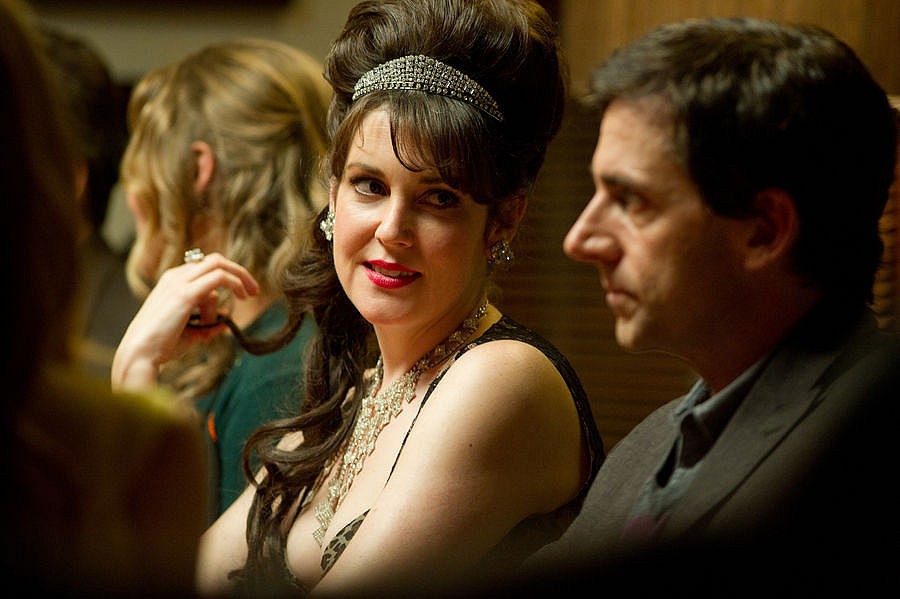
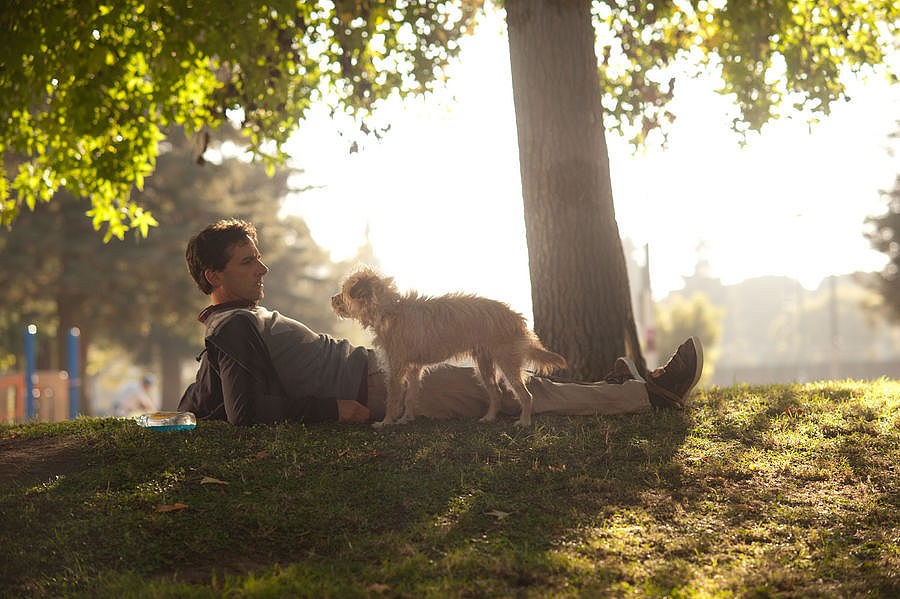
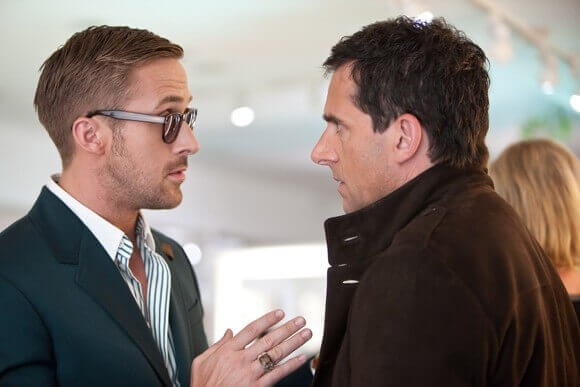
This is not where it starts, but where it starts to get interesting: Chick-magnet Jacob (Ryan Gosling,** he has a nicely subtle double-take for comedy) is in a bar in mid-closer with his latest fling when he takes the time to call over a half-stewed Cal Weaver (Steve Carell, showing exactly why he deserves to be out of TV and in films, something that doesn't happen nearly enough).  The reason?  Cal's moaning is throwing off Jacob's technique.  Cal's been doing that a lot lately (at the office he's told: "Amy heard you crying in the bathroom - we all thought it was cancer.") No, it's not cancer.  After 25 years of marriage, Cal's wife (Julianne Mooreshe's great) has revealed she wants a divorce AND she's slept with another man (Kevin Bacon, he's also great).  This offends Jacob's self-absorbed sensibilities: "Seriously, I don't know whether to help you or euthanize you."

So, Jacob helps Cal to "man up"a younger "Obi-Wan" to the elder's bowl-cut Luke with credit cards as lightsabers, and this, if not turning Cal's life around, at least making it busierAnd complicated.

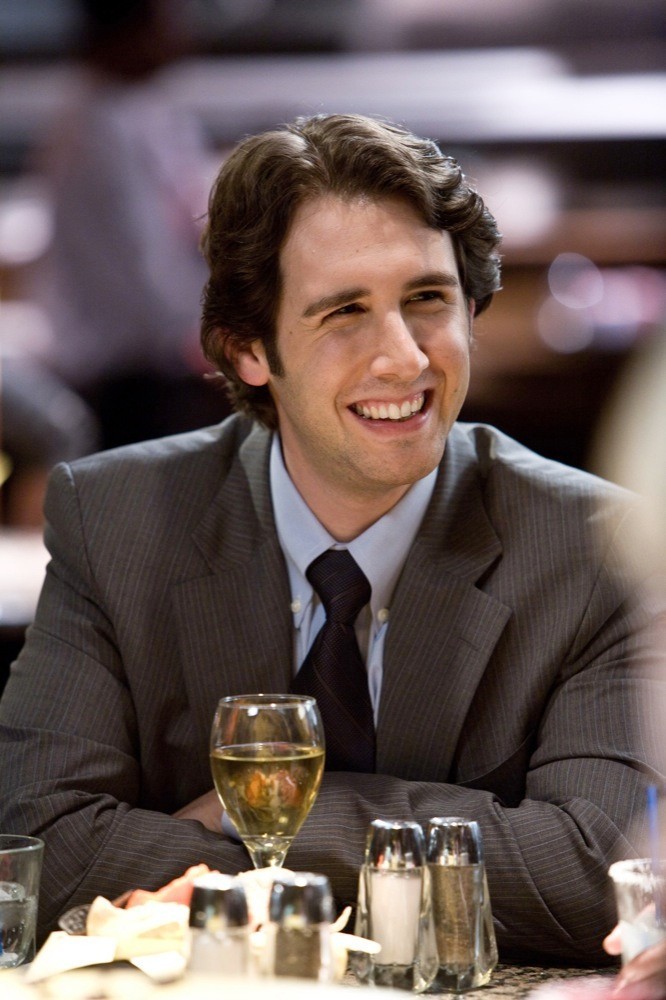
Running parallel to the story is Hannah's (Emma Stone, big-eyed waif) relationship problems ("You're life is so PG-13!" says her token-Asian friend, Liz).  That's because she wants to be engaged to office co-worker Richard (Josh Grobanrather risky of him to look so bad in this movie) and is focused on that, so much so that she plays ignorant to Jacob's innuendos when he approaches her while trolling in a bar.

And, at this point, to say anything more would be saying too much, spoiling the fun and sending the whole Jenga-construction of the film crashing to the rec-room floor (In fact, I've probably said too much already).  Just when you think everything is going as smooth as satin sheets, the film-makers throw you an extra wrinkle, and it's been a log, long while since a rom-com has done that.  The dialogue is fresh though the situations seem familiar—everyone's conceptions of Love and Romance seem to be based on The Movies and directors Glenn Ficarra and John Requa *** and writer Dan Fogelman **** are only too happy to skewer them, while paying some respect—the complications teetering on the sit-comish, then resolving with the most graceless of dismounts.  Applaud anyway because if they're not the best of executions (the performances help here), there are extra points for "artistic" and "difficulty."

Adding to the fray are the effects all this confusion have on "the kids" (Jonah Bobo, Joey King) and the friends (John Carroll Lynchhe's becoming one of my favorite character actors—and Analeigh Tipton).  It, after all, takes a village to make a divorce...very uncomfortable.  And special mention should be made to the movies' best utility player, Marisa Tomei, who surprises with just about every performance these days (Okay, okay, Marisa, you DESERVED that Oscar, okay?).

Highly enjoyable.  Bravo.

Stupid, Crazy, Love is a Full-Price Ticket.

* Yes, it has the superfluous comma, you English Majors, but if you see the title as a list rather than "adverb, adjective, subject," it makes a bit of sense, and the film actually earns the charity for considering the possibility. 

** Gosling is an odd bird.  It's taken awhile for me to warm to him (I'm one of the few people to have seen his awful work in Fracture, but he has a nice laid-back dead-pan style of comedy—as displayed in Lars and the Real Girl—that hews closely to his dramatic work.  Just a nudge, either way determines comedy or tragedy.  He's dangerously good.

*** Okay, this is scary, but hear me out: Ficarra and Requa have written such films as the remake of Bad News Bears, Cats & Dogs, Bad Santa (a bit raw, but actually rather sweet) and...wrote and directed the little seen gay romance, I Love You Phillip Morris—as subversive and weirdly sweet movies to be seen in a long time.  Forgive the early credits—these guys are good.

**** Okay, now REALLY hear me out: Fogelman wrote the screenplay for Cars and the screen-story for Cars 2, wrote Fred Claus...but did fine work on both Bolt and Tangled for Disney.  Seems he can write for real people, too, and not just 'toons.

Saturday, October 9, 2010

Bewitched


"Bewitched" (Nora Ephron, 2005) The all-star movie version of the TV classic "Bewitched" left me bothered and bewildered.

Yeah, yeah. Cute line and all that, but essentially true; How on God's green Earth could Ephron and her sister-conspirator in this crime have screwed up a sure thing like "Bewitched?"

The show, which debuted on ABC in the early 60's was fairly inspired for the first four years, then ran on auto-broom for the rest of its run, largely on the spell of star Elizabeth Montgomery's spunkiness, and an ever-decreasing number (due to age and death) of eccentric co-stars.  It may seem like stretching the social point a bit, but "Bewitched" was a flighty, goofy examination of the trials of a "mixed" marriage...without risking the wrath of any of the Southern States!*  And on top of that, despite piggish (more like ape-ish) husband Darrin's constant attempts to repress her heritage, house-witch Samantha Stevens always managed to display female empowerment, while being blithely supportive of her wage-slave husband.  Like she couldn't "twitch" herself a mink coat whenever she wanted.  I know an awful lot of women, who, as little girls, looked up to Samantha as a symbol of power under wise restraint, superior in all things man-world, and only able to be "super-mom" because she had what all mom's have...a touch of magic.  These girls wanted to be Samantha: charming, but flinty, capable of holding all the power in the world, but only when necessary—holding the Power, but dispensing it with Wisdom.

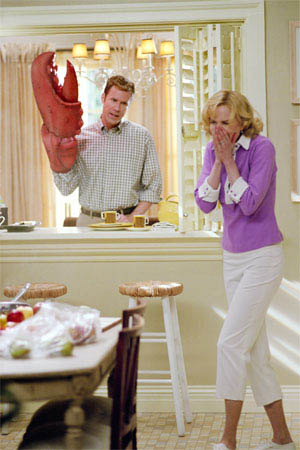
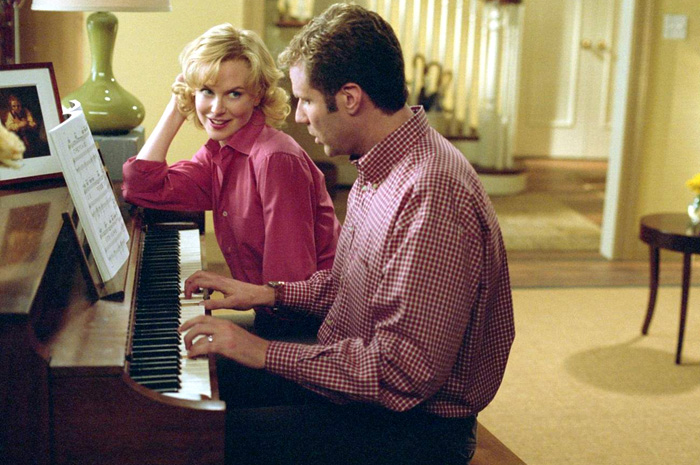
So, with all that going for it, why did the Ephron sisters have the effrontery to completely ignore what worked about "Bewitched," and toss it in favor of a complicated scenario in which a real-live witch (Nicole Kidman, playing her second witch after "Practical Magic") wants to live in the "muggle" world, free of witchcraft (rebelling, in other words), and, despite this, manages to get herself cast in a real-life return to television of a "Bewitched" TV show (live action, with an audience?  With all those effects?!!), which stars two perfectly awful co-stars (Will Farrell and Shirley MacLaine, playing, respectively, "the guy who plays Darrin" and "the old bat who plays Endora"), with conjured-up egos who are stark contrasts to Kidman's magical neophyte actress.  Of course, the lead actors are fire and brimstone, but somehow manage to "fall in deep" with each other, thus scraping the edge off Ferrell's blow-hard, and completely nullifying any respect the audience might have been feeling for Kidman's good little witch.  The scenario, frankly, makes her look like a moron, nose-twitch or no.**

The movie is off-balanced anyway, with more attention payed to Ferrell's actor than to Kidman's character.***  And the revelations about certain characters are too easy and too pat.  Some hipster-cred is afforded by the casting of "The Daily Show's" two Steve's: Stephen Colbert as a too-full-of-himself tv scripter, and Steve Carell as a hyper-intense Uncle Arthur (played on the series by Paul Lynde)—a part that feels like a desperation-move.

It is only at the end, when art-imitating-life-imitating art comes full-circle and begins chomping on it's own lizard-tail, and witch and human settle in for wedded bliss in the backlot house from the series, that the potential nears the target, aided immeasurably by the casting of Richard Kind and Amy Sedaris as the prying neighbors, the Kravitz's, that the movie seems comfortably familiar...and funny.  You know, like, if you're going to remake a TV show, why not actually re-make the TV show—only better?  This movie is such a mis-fire one wonders if bumbling Aunt Clara (played by the perpetually befuddled Marion Lorne) had a hand in conjuring.

Rather than being released, this one should have been torched in the village square.


"Sam, is there some sorta hex you can put on that movie?"
"We-ell..."

*Actually, it did.  ABC was wary of how elements of the "occult" would go down in the Bible Belt.  Fortunately, they had on their side the very religiously conservative Agnes Moorehead, who had no problems playing a satanic mother-in-law of a witch...to the hilt of her broom-handle.

** Kidman practiced the Samantha nose-twitch until she was expert at it.  The secret?  Montgomery never twitched her nose—she twitched her upper lip.

*** Why?  The script was extensively re-written to court the actor considered to be a natural Darrin, Jim Carrey.  But despite beefing up the character's worth, and providing a transformative character arc from man-child to human adult—the only substantial character arc in the movie—Carrey passed.  Smart move on his part.  Bad move on the producer's part, then, to keep the Carrey part as written and shoe-horn Farrell into it.  They should have just rewritten the script and returned the focus to witchcraft rather than the making of a television show.  Total mis-calculation.

Wednesday, August 25, 2010

Dinner for Schmucks


"It is Such a Pleasure to Laugh at the Mis-Fortunes of Others"

Comedy is such a subjective thing.  I don't know how many times I've quoted Mel Brooks' line that "Tragedy is when I cut my finger; Comedy is when you fall down a man-hole and die."  And, as we are all individuals, one person's "Bringing Up Baby"* is another's "Dumb and Dumber."**  I know lots of fine folks who loved "Date Night"  (Steve Carell's previous live-action movie), but I wasn't among them.

My tastes in comedy are not sophisticated; a good spit-take or prat-fall will make me howl with laughter.  I like Jerry Lewis, as his movies will be gauaranteed to contain at least one instance where I laugh 'til tears come out of my eyes.  And I like good word-play, as my love for all things Marxian and Woody will attest.  What I don't laugh at is regurgitation—recycled humor that is expected to be laughed at because, hey, it was funny the last time.  Thus, the charm of Mike Myers frequently eludes me.

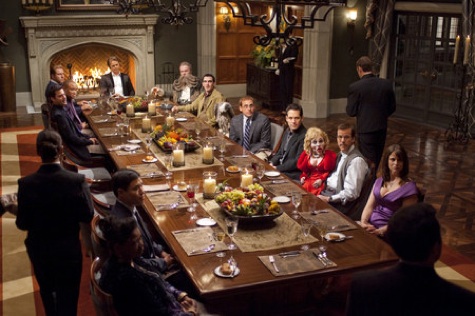
Now, "Dinner for Schmucks," the latest film by the "Focker" and "Austin Powers" franchiser Jay Roach—he also directed the very fine HBO film "Recount"—is based on the French film "Le Diner des Cons," so there is a French charm to it spoken with a flat American accent.  An up-and-coming executive Tim Conrad (Paul Rudd) is welcomed into the higher echelon of the investment firm that employs him (run by Bruce Greenwood) by being invited to an executive dinner in which the firm's hoi-polloi bring along "idiots"—persons of a certain unique, and frequently inept, "talent" for the ridiculing entertainment of the host ("No mimes.  It's a cliche").  Whoever has the best idiot is guaranteed a certain prestige position in the company, complete with corner-window office.

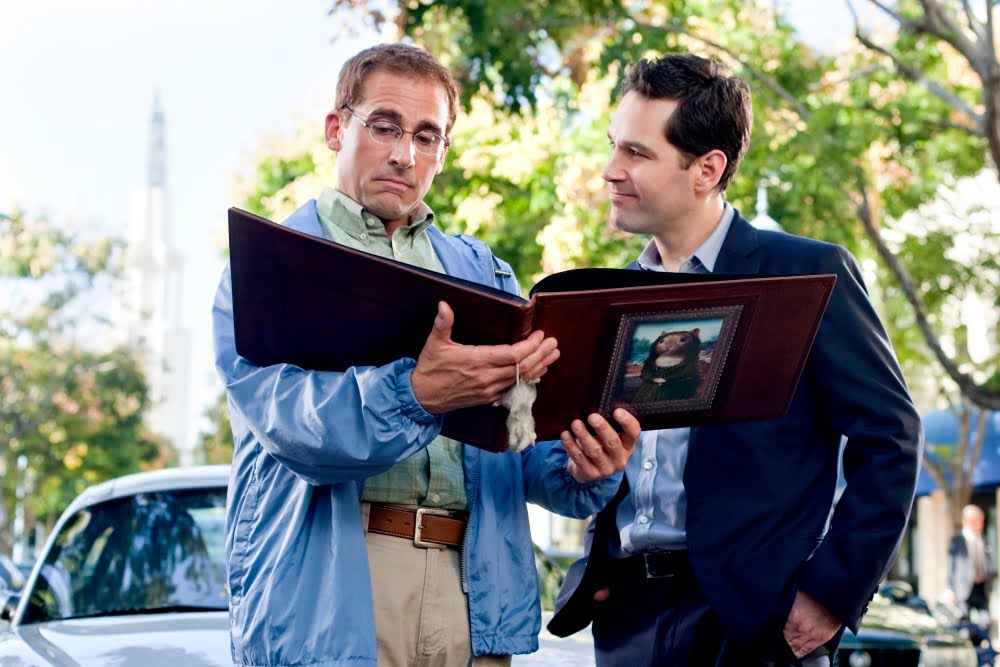
The idea horrifies his gallery contractor girlfriend (Stephanie Szostak) and only reinforces her instinct to refuse Tim's frequent marriage proposals.  He's just about to sacrifice his career and opt out of the dinner when Fate steps in front of his Porsche in the nerdly form of Barry Speck (Steve Carrell), an IRS drone whose hobby is to make bucolic fantasy dioramas using stuffed mouse road-kill, which he calls his "Mouse-terpieces." ***

Tim's destiny seems set, but the acquisition of the bone-head Speck turns his life upside-down in a series of "Incredible Mess" scenarios that seem to nullify everything he might gain from winning the dinner game.  The film is a self-defeating trap that could have used a more harried leading man than Rudd (or more dead-pan, in which case, hey, Ron Livingston's in the cast!) that might have had more of a comedic pay-off, or at least have produced more dramatic risk out of the situations.  As it is, everything feels a little safe, nowhere near creating the sort of comedic frisson this film so deperately needs.

For a movie specializing in cruel humor, it lobs only soft-balls, whether it's at the clutch of crazies at the dinner, a nastily predatory ex-girlfriend of Tim's (Lucy Punch), or the what-comes-around come-uppance of the stuffy execs.  Everything should be more manic, more crazy, and have a few more bit-mnarks that actually draw blood.

Points, though, for filling the cast with an array of good comedic talent including Kristen Schaal and Jemaine Clement of "Flight of the Conchords" (series and group, respectively), Zach Galifianakis, the afore-mentioned Livingston, and Larry Willmore.  The improvisational power of the cast is formidable, and (like "Date Night") it feels a little too improvised at times as there are so many scenes that are barely gelled.  However, a business lunch that is the definition of "awkward" is a highlight, as is a conversation between Speck and Clement's self-absorbed satyr-like artiste ("There are only two things that matter in life: wonderful, visceral sexy sex...and Death"), that benefits from the two comedians' off-kilter rhythms to big pay-offs.  Such moments are few and far between.

"Dinner for Schmucks" is a Rental.  


* ...which I love.

** ...at which I didn't crack a smile.

*** The most charming part of the film is the title sequence, set to The Beatles' "The Fool on the Hill," of Speck putting the finishing touches on an out-sized version of his hobby.

Wednesday, July 14, 2010

Despicable Me

"Assemble the Minions!"

You can't swing a pixelated bug-eyed cat in a multi-plex these days without hitting a new digi-toon, being ground out like so many linked sausages, but with different degrees of quality.  The technology is now such that the makers no longer have to worry about working around the complexities of the images; such strides have been made in the field over the last 15 years that the work approaches photo-realism, if that is the intention of the pixel-wranglers.  What is exciting now, with the constraints no longer a factor, is seeing what the various creators around the world DO with it, and the visions that they create, whether their source be in the world or the mind.  Now that reality is no longer a problem, the makers of these visions can effectively throw it away.

So, here's "Despicable Me."  You've been seeing the trailers for months, and for me, the impression has been a little "meh."  Oh, the comic timing has been crack and the sensibility behind them a little twisted.  But, whether that translated to a 90 minute feature is always the $20 million dollar question.

And "Despicable Me" is terrific.  Frequently laugh out-loud funny, with breathless timing and a constant willingness to push the envelope in technology and story-telling.  Sure, it has the obvious arc of a children's story, and you know how things will turn out, but the journey is the fun thing.

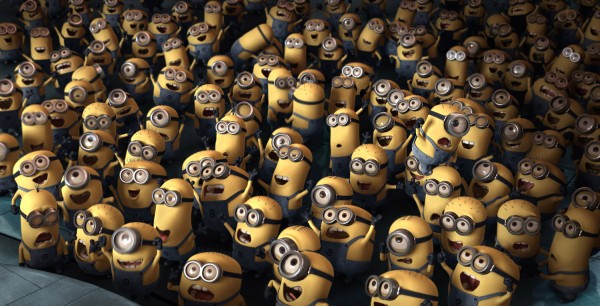
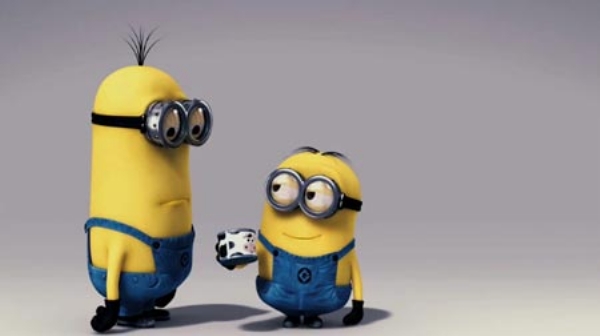
Gru (Steve Carell) is a "Fester-ish" super-villain on hard times.  Oh, sure, he's not exactly hiding out in some super-secret headquarters somewherehe only drives vehicles that pollute outrageously with a maximum of sparks and smoke, his is the only house in the neighborhood painted in dark, dingy colors and furnitured with Bondian uber-tech and stuffed animal corpses.  Underneath is a vast gleaming complex linked by pneumatic tubes and what look like habi-trails, kept running by what appear to be thousands of animated twinkies.*  He may seem like a villain who has everything (and what he doesn't have, he can obtain by ice-shackling the person who does with his "freeze-ray"), but there's a new villain named Vector (Jason Segel, voicing a character who's equal parts Bill Gates and Phil Silvers) who's just topped everybody by stealing one of the Pyramids.  Good score.  And the Bank of Evil ("formerly Lehman Brothers") likes the reaching entrepreneur with enough gall to think big when it comes to crime (call it "professional courtesy"), so they'll only dispense loans to those baddies with outlandish schemes.  There's no greater "out-land" than The Moon, and so Gru sets his sights on it—a dream he's held since it was first pa-shawed by his crank of a Mum (Julie Andrews, wickedly unrecognizable).

But, you need a plan.  And his involves orphans ("We got adopted by a bald guy...I thought it would be more like 'Annie'"), a "Spy vs. Spy"-style industrial espionage plot, and...cookie-robots.

The thing is witty in look and happenstance: the people are bulbously malleable as in "The Incredibles," and the sets have a Burtonesque retro-engineering feel to them, but because the animation is done in France, the flow and pace, and attention to detail, is quite unlike things state-side, making it intriguing and refreshing.  The voice-actors are spot-on by being nearly impenetrably unidentifiable...you won't recognize Will Arnett, or Kristen Wiig (two of my favorite comic actors of the moment) or Russell Brand, and Steve Carell's Gru is an amazing comic performance featuring crack timing, muttered asides and a nicely Slavic accent that tortures its way through idioms. 

And I love the buried movie references, little echoes of the past that tweak the unconscious, be they from "It's a Wonderful Life," "The Wrath of Khan," "The Empire Strikes Back," or "The Godfather" (the last is so wickedly placed, I couldn't believe the writers were so sick to think of it).  But, it's all done with its heart in the right place and a warmth of spirit tough to find in movies these days.  It'll yank your heart strings to a ridiculously cartoonish length and never let them go.  This is one for the whole family, even though the parents will need to do a bit of explaining along the way (some of the jokes will just sail past the heads of kids, which is always a sign of a good cartoon).

I saw "Despicable Me" in 2-D, but it might actually benefit a 3-D screening, especially for the end-title sequence where the Minions attempt to bridge the gap between the screen and the audience—a hilarious concept that's a bit mind-blowing when you think of it (and evidently there's a phone app that allows you to translate what they're saying during it—will wonders never cease?).

"Despicable Me" is a Highly Recommended Matinee.


* Called "Minions," they have all sorts of uses and are voiced by the co-directors and "Flight of the Conchords" Jemaine Clement.  Yee-es.

Thursday, April 22, 2010

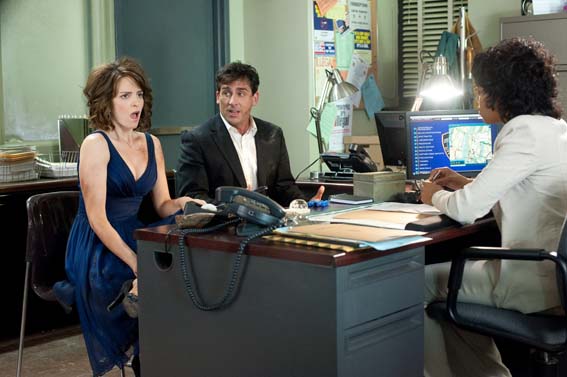
Date Night

"2007 Must-See TV > 2010 Musty Movie"

Want to know how to ruin your date night?

Go see this movie. But don't be surprised if your date walks out faster than
Cybill Shepherd did in "Taxi Driver." Boasting a superb cast and wasting them, "Date Night" is a rough assemblage of ad-libbed scenes (the writer is credited as Josh Klausner, who was no doubt at the premiere hoping to recognize one of his lines) in a comedy of the "Incredible Mess" genre—the one where no matter what the characters do, it always comes out worse. Think "The Out of Towners" (any version).

Meet the Fosters. Phil (
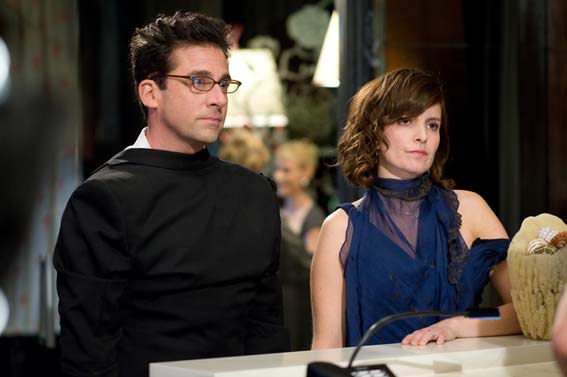
Steve Carell) is a tax accountant and Claire (Tina Fey) is an insurance agent. They have careers, two kids, and a marriage where the spark has been doused. One night a week, the sitter stays with the kids so they can have a "date night," but it's usually a dinner and a show, turn in early, avoid sex, and transition from quiet desperation to quiet unconsciousness. Get up. Work. Eat. Sleep. Get up. Work. Rinse and Repeat. Their "Get Up and Go"....already divorced them.

At the weekly meeting of the book-club, their friends Haley and Brad (
Kristen Wiig and Mark Ruffalo, both criminally under-utilized) confide that they're separating, inspiring the Fosters to try to put a little more zing into their marriage, which translates to going to New York for the evening to a snooty seafood restaurant impossible to get into.

Hilarity ensues.

One wishes. Look,
Carell and Fey are incredible performers and superb writers...given time. But to ask them to go off-the-cuff and improvise through their scenes is asking a bit much. Everything feels a little half-baked and tentative, like we're not even getting the rehearsals but the blocking meeting. There is nothing here that matches what each of them can do on "The Office" and "30 Rock." Carell looks a little desperate (and plays scenes the way Steve Carell the comedian would, but not a tax preparer) and Fey's unfocused, like she's waiting for inspiration. When they connect, they do well, but there's not much they can do besides mug through car-chases and while being chased by Bad Men With Guns. They, too, are under-utilized and they're in the entire movie.

But, no one is used well. I'll see any movie with
Taraji P. Henson in it and she tries to liven up her role as a police detective, but it's an underwritten role, that's mostly filler. Also, poorly served are...fine character actors like Ray Liotta and William Fichtner. There's a half-way funny scene featuring James Franco and Mila Kunis (!!) as bickering scum-bags, but even that goes nowhere. Mark Wahlberg is also on-hand—Wahlberg can be terrific, I thought he was the best thing in "The Departed"—but there's nothing for him to do but wander through his scenes with his shirt off. Lauren Weedman and G4's Olivia Munn have cameos, but blink and they're gone.

It is a shame that the major networks felt the pressure of cable and DVD output and cancelled of all their slots for, say, "NBC Wednesday Night at the Movies," because this type of lack-luster show-case for Network Stars to "do something different" would have been far more appropriate there, rather than as a feature film release.

At least, then, you wouldn't have to pay to see it.

"Date Night" is a Cable-Watcher.