Showing posts with label H. Show all posts

Wednesday, December 18, 2013

The Hobbit: The Desolation of Smaug

Maintaining Good Working Hobbits
or
A Dense Overlay of Smaug

The second of Peter Jackson's three "Hobbit" films, The Hobbit: The Desolation of Smaug is, predictably, more of the same.  It's a three hour ramble, a complication and a darkening of the tone of the first film—as usually happens with the second of a trilogy, so that we, the audience, can climb out of our emotional valley in time for the resolution of conflicts in the third.  Standard Operating Procedure.  We are given a quick recap of the first film—going back in time to when Gandalf the Gray (Ian McKellan) first put the idea into the head of Thorin Oakenshield (Richard Armitage) and getting the dwarf crusade rolling.  Once the summary is done (in brief: Gold, Mountain, Dragon, Dead King, Arkenstone, New King, No Elves Allowed), they skip over An Unexpected Journey and head back to the Gandalf, Bilbo and the dwarves on the path to Lonely Mountain (Sindarin Erebor), orcs still snapping at their behinds and making their way to the entrance of Mirkwood.

A quick visit to the skin-changer Beorn (Mikael Persbrandt), who usually appears in the form of a bear—not much is made of him, even though he got his own poster with Gandalf last time—and they get to Mirkwood (by pony), at which point Gandalf goes "walkabout"—he does this every movie and they probably split the story to accommodate a "Gandalf disappearance"—so the wee folk must enter the spooky forest alone, with a promise from the wizard that he'll meet them at "the Lookout."
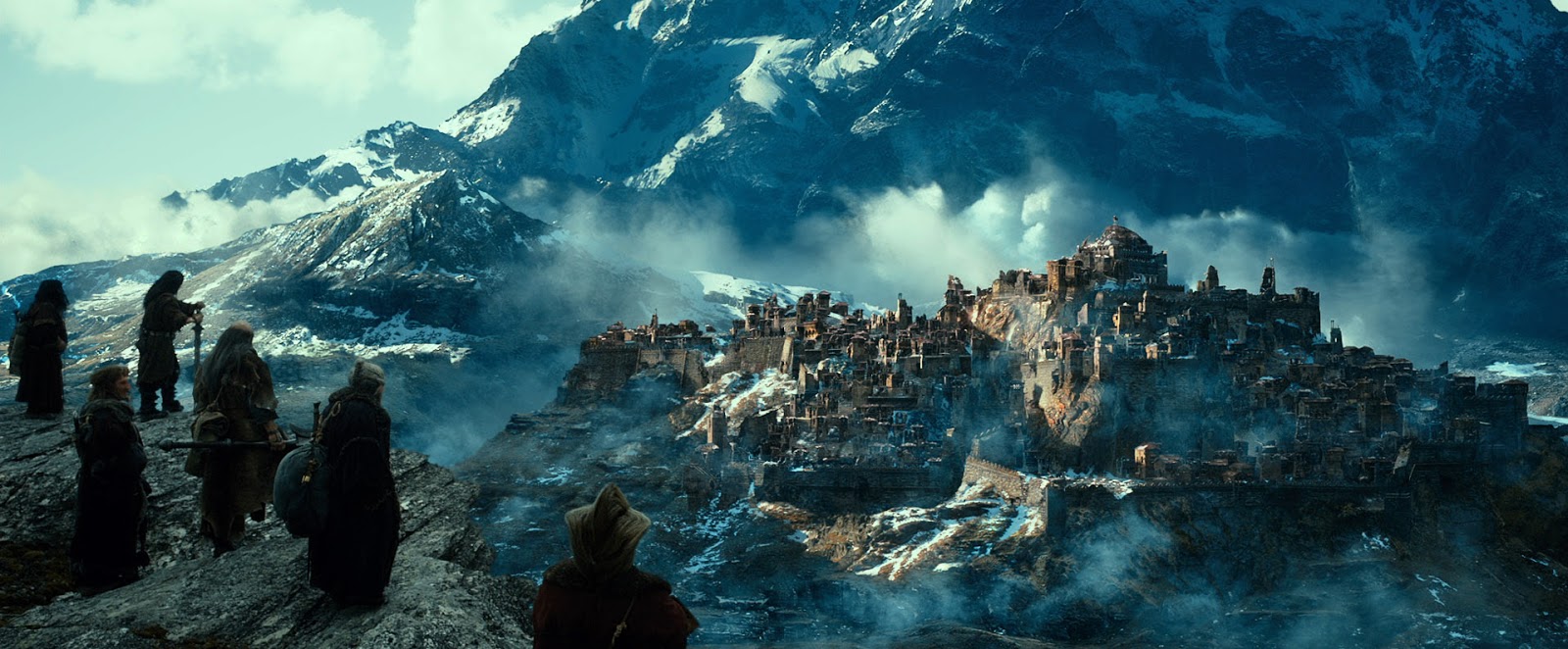

"The Lookout"—he said he'd meet us; he should be easy to find...

Anyone familiar with the book knows that you don't find out where G.theG. goes until the last chapter, and that was after Tolkien had written "The Lord of the Rings" and got continuity-conscious.  But, here, we do get to see where (hint: he went there LAST movie), and Jackson's The Lord of the Rings gets set up all good and proper (except Benedict Cumberbatch is voicing the character now—wonder if Jackson will Lucasize everything to make it all match up).   The dwarves and hobbit are concerned with icky things and splendors that one would associate with a place called Mirkwood, and the ring that Bilbo snatched from Gollum is starting to exert its unholy influence turning the peaceful little guy into a berserker bad-ass.  Travel packages with unruly companions and nasty accommodations with large pests and diffident natives will do that to anyone.  But, Bilbo proves his worth on more than one occasion and eventually they do make it to the Halls of Lonely Mountain, a few shy of a full dwarve-deck and make their way to a meeting with the titular character that's been hoarding all the gold and keeping it for himself—the ultimate one percenter of Middle Earth.

Bilbo above the canopy of Mirkwood
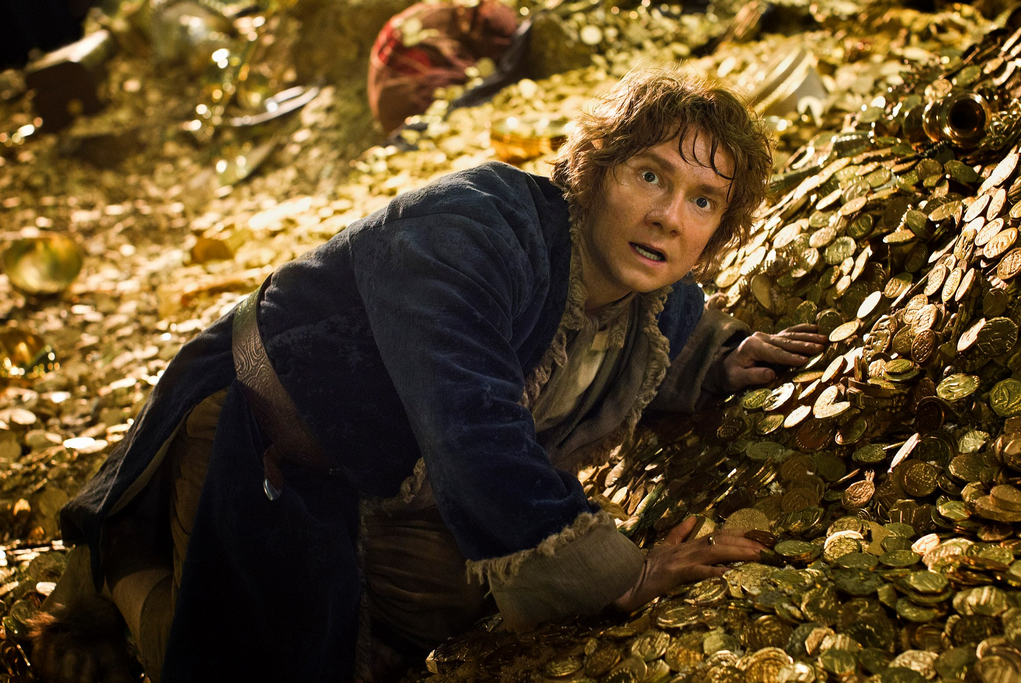
Smaug is the dragon, living in the massive storage caves of the Mountain, and he spends his time, far from desolate, sleeping among the gold and treasures of the dwarves like a big scaled, fire-breathing Scrooge McDuck. When Bilbo's attempts to find the Arkenstone awaken him, there is quite an extensive cat-and-mouse game as the small hobbit scurries around the cumbersome dragon.  Or I should say Cumberbatch, as the ubiquitous actor provides a nicely arch resonant voice to Smaug, which is accompanied by a lip-curling animation to enhance it.  This is where the film shines, as the territory is new, the imagineering of the dragon is fresh, and the surprises are many.  After the previous two hours, that's a bit refreshing.

For if there's a problem with Peter Jackson's version of The Hobbit, it's that, by now, we are so familiar with the way he does things that nothing much really resonates anymore.  The heavily belabored ripostes by the actors seem a bit too predictable—when Bilbo changes his story to gandalf that he found his courage in the goblin caves last movie (rather than The Ring), there's a close-up of Gandalf as he says what half the audience is expecting: "You'll need it." Really, that one and "You should be" are certain candidates for Screenwriting 101 "easy irony" along with "You just don't get it, do you?" and "They're standing behind me, aren't they?"  

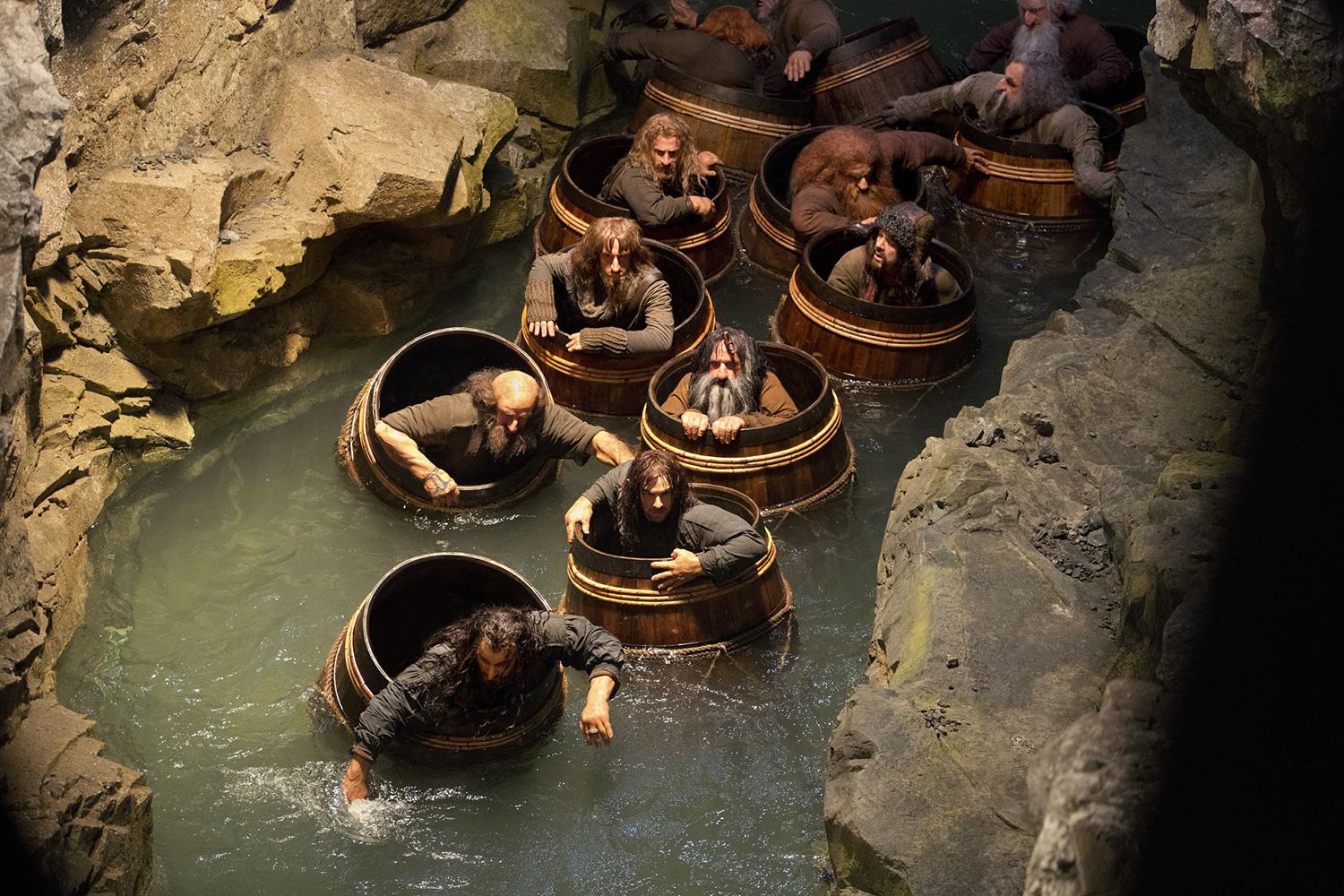
And the action sequences, this time assistant-directed by actor Andy Serkis. go on and on, in ever-increasing silliness.  If last movie set a more rollicking, silly tone than The Lord of the Rings (in part by the influence of Guillermo del Toro), now the joke's wearing a little thin.  Extended fights between orcs and elves are no longer thrilling, they're a demonstration of every possible way you can kill something with an arrow.  An extended rush down a rapids in barrels is accompanied by additional orc-elf fighting, where the barrels are used for any other purpose besides transport, as every tree-limb and branch over-hanging is used as a foot-hold.  Some of this criticism isn't fair, because if this had been the first film in a trilogy of Tolkien adaptations, the marvels of the film would send people off a CGI cliff in amazement.  It might take at least forty-five minutes to tumble down it, though.


One should, however, point out that the "we've been down this glade before" problem didn't occur with Jackson's earlier Tolkien trilogy, where there was enough material to keep things seeming fresh each film, and Jackson and his screenwriters did enough juggling of the narrative to keep things seeming new from film to film.  Their attempts here amount to trying to add a romantic element between the elf warrior Tauriel (Evangeline Lily) and the dwarf Kili (Aidan Turner), much to the consternation of Legolas (Orlando Bloom, back in action).  And while it provides a reprieve from tumbling and shooting and other too-frantic sequences, it does take away from the basic focus on the titular Bilbo Baggins (Martin Freeman) whose story this is.  Freeman's performance is, again, terrific, bringing all sorts of fretting elements to play, and making the transformation of his hobbit into a killer more than a little disturbing.

The vistas are staggeringly rendered, but some short-changing has been done with the characters in action sequences—Orlando Bloom seems to be the chief character robbed of some pixels, here and there, and the attempt to de-age him to a younger self doesn't really work (I've never seen it done convincingly, so far).  the only real surprises come in snatches of casting with Lee Pace, disappearing into the role of the elf Thronduil, Lily's elven warrior, and Stephen Fry's Master of Laketown.   Be on the lookout for some Laketown spies and you might even find Stephen Colbert for a brief second.  Oh, and Jackson gets his own "Hitchcock moment" out of the way very quickly.

Oh.  And SPOILER ALERT there's another movie coming, so this one ends at a rather inopportune time.  You only have to wait another year.

The Hobbit: the Desolation of Smaug is a Matinee.

"Conversations with Smaug" drawn by J.R.R. Tolkien
"Conversations with Smaug" drawn by WETA

Tuesday, October 22, 2013

The Hurricane (1937)

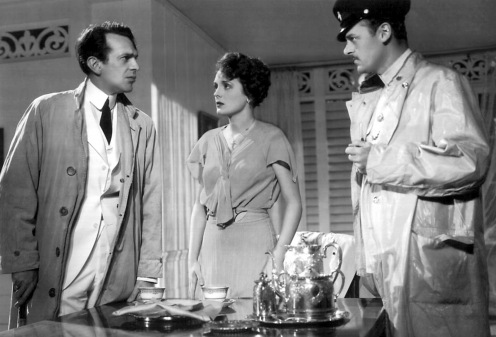
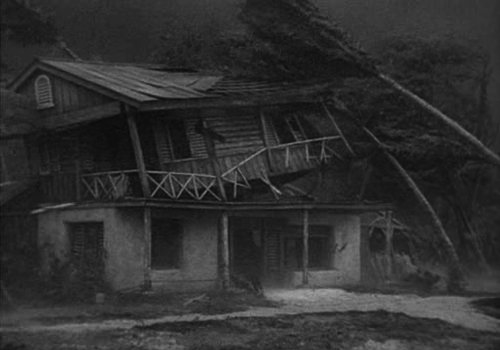
The Hurricane (John Ford, Stuart Heisler, 1937) On a ship sailing through the South Seas, Dr. Kersaint (Thomas Mitchell) waxes nostalgic on the submerged ruins of a building the ship passes, blows it a kiss, and informs a fellow passenger that it was what remains of the island of Manukura, where he lived as a doctor in Paradise, in a time when the Governor was the stuffy bureaucrat DeLaage (Raymond Massey), who was in total contrast to the freer native people.  

Among them is Terangi (Jon Hall), newlywed to Marama (Dorothy Lamour), and who works as first mate of the tradeship Katopua, making a regular run to Tahiti.  On one of those trips Terangi is ordered to leave a bar by a drunk Frenchman and the resulting fight lands him in jail for six months, unable to return to his new family.  The unyielding French governor refuses to pardon him, and Turangi makes one unsuccessful escape attempt after another, only increasing his sentence and his exile.

It's a cautionary tale of race prejudice and imperialism that can only be rectified by an Act of God, and at that point second unit director Stuart Heisler takes over with a sequence of live-action, studio-bound mayhem that's horrific to watch, and head-rattlingly impressive.  It's also acres above the usual "disaster movie" formula in that Ford and screenwriter Dudley Nichols take the time to actually have the audience familiar with the characters in danger, and place them in the absolute worse situation for their survival, given their traits and prejudices.  It's one thing to be wary of an arbitrary natural disaster, but one should always avoid one with a sense of irony (and a sense of reckoning, as well).

Kudos to Ford for actually casting Polynesians as the natives (with the exception of Lamour—who was anything but—and Hall, who was, splitting heirs, half-Tahitian), but the rest of the cast is top-notch with Ford regular John Carradine as a sadistic guard, and an early role for the soon-to-be ubiquitous Thomas Mitchell, who makes an impression with every role.  It's not Ford at his most artistic—nor, frankly, did he need to be, but he manages to make the drama on both sides of the cultural divide matter—and letting God sort it out.

Sunday, December 16, 2012

Hitchcock

Hack-job
or 
Making Everyone a little Psycho

Making a movie is a boring enterprise.  Boring and thrilling at the same time.  Lots of sitting around, wasting time, waiting for the crew to be ready for that moment when you can't waste any time, the adrenaline is pumping, and things have to go right...over and over and over again until they do.

For Alfred Hitchcock, the thrill of movies wasn't in the filming (which lots of directors like because it's so social and a "rush"), or in the editing (where so many directors "find" their films), it was in the planning, the story-writing and the story-boarding—making the blueprint for the film that could be followed easily and by-the-numbers.  The best parts of his movies were not in performances (although they could be great*), but in the ideas that shape the film and make it worth watching...and worth watching again.  Watching that process, however, would probably not make a very compelling movie.

The trials and tribulations of the making of his landmark horror film Psycho was detailed in Steven Rebello's fun little read "Alfred Hitchcock and the Making of Psycho," and are now derailed in Hitchcock, a fictional adaptation of the book, which has as much to do with the events of making Psycho, as the film Psycho has to do with the book it was based on, which, truth to tell, Hitchcock never read.**

Well, few people have read Rebello's book, either (which is a shame, really) and so the chief "scenarist" James McLaughlin (who wrote Man of the House and co-wrote Black Swan...hmmm) and director Sacha Gervasi (who co-wrote The Terminal for Spielberg and whose only previous film was the documentary Anvil! The Story of Anvil!) have "written to silence"—as so may of the actual participants are dead—relying on "conventional wisdom" rather than facts to make their odd little combination of docu-fantasy.  Partially, this is because when it comes to movie-making (as opposed to life) truth is duller than fiction, but it is also more complicated and takes longer to explain and so we depend on a futzy short-hand to get to the point faster.  "Conventional Wisdom" in Hollywood is the same as "Based on a True Story."

Oh, don't get me wrong.  There are instances where the facts are there: Hitchcock's wife and collaborator Alma Reville did spot the "blink" (actually it was a throat swallow) in the pull-out from Janet Leigh's face after the murder (requiring a cut to the shower-head) and the "nudity" (which was solved with a black bar at the bottom of the screen); resistance was high to Psycho which Hitchcock chose to fulfill his contract for Paramount Studios—they did want something like North By Northwest, which made a lot of money for M-G-M—but not so much when Hitchcock revealed he was going to do it "for cheap" with his television crew—it's always about return for investment; he did come up with the brilliant advertising campaign for the film (like he'd previously done with his other films); much is made of the financial failure of Vertigo*** (ironic as it's—this year—considered "the greatest film ever made") as well as Hitchcock's insecurities and frailties (which were legion and they're all up there on the screen in his movies) and there are dribs and drabs of trivia sprinkled throughout the film.  But, they are far out-weighed by what is wrong.

What's wrong with this picture?  Oh, where to start?
What it gets wrong would fill another book by Rebello.  The film's obsession with Ed Gein—that is more attributable to author Robert Bloch than Hitchcock—feels wrong and wrong-headed, more to do with the screenwriter's issues than the subject's (I doubt that Hitchcock had the elaborate Gein fantasies that are imagined here).  The emphasis of Alma's collaboration with writer Whitfield Cook (Danny Huston)—who contributed to one good Hitchcock adaptation, Strangers on a Train, and one bad one, Stage Fright—is blown completely out of proportion from a mere consulting gig.  And the twist of the knife is the Hitchcock pathology, especially his treatment of women (the "Hitchcock Blondes," the grey suits, the make-overs, the favorites—Kelly and Bergman) despite the fact that Hitchcock always gave the more interesting parts and special attention to his actresses ("Hitch always threw the picture towards the girls" was Cary Grant's summation), not only for himself...but also his audience.

But what Hitchcock valued was loyalty. So he'd work with the same craftsmen over and over again out of loyalty, out of trust, out of convenience—past collaborators were one less complication to worry about.  And if they failed to deliver, he wouldn't work with them again, without a word of explanation as he hated confrontation.  "He was a coward," as Suzanne Pleshette opined.  Of course, he was.  His movies are naked displays of his phobias, foibles and fantasies.


And the films endure, because his frailties are just like ours.


Hitch is no longer alive to defend himself, but quite a few collaborators are. One wonders why Pat Hitchcock, Alfred and Alma's daughter, who usually runs defense for the Hitchcock Family Legacy, is silent while so many the current gaggle of films—this one and HBO's "The Girl"—are starting to piss on his grave.  But, then, the evil that men do lives after them, the good is oft interred with their bones.  So, let it be with Hitchcock.  His films are a testament to both good and evil, and our ability to rise above.  The films have lived on, decades after the man, and show no signs of falling out of fashion.  That's his lasting legacy.

 
For fans of the director, there is no such thing as bad news, but this movie truly is.  The performances are winning, though, as Scarlett Johansson occasionally convinces you she's studied up on Janet Leigh's mannerisms, although James D'Arcy plays Anthony Perkins as if he was playing Norman Bates and there was more to the man than that (reflecting the film's focus on rumor and gossip, rather than facts), we don't know what Alma Reville was like, as she stayed mostly behind the camera, but Helen Mirren's performance is fun and winning.  Anthony Hopkins' Hitchcock, however, is problematic—although it's not entirely his fault.  Hopkins is a brilliant mimic, and his own rich voice disappears in the deliberate cadence and sibilance of Hitchcock's own.  But (like much of the film), the portrayal is a bit too dependent on Hitchcock's public persona as a droll dead-pan.  This Hitchcock never smiles—perhaps it would have cracked the elaborate make-up Hopkins must wear to even resemble the director—and is entirely too mordant and lines up with "conventional wisdom" about the man, a view that, as Hitchcock himself cultivated it, he's a little responsible for.  As such, the portrayal comes across as a bit one dimensional, and one-sided.


One could get exercised about these things (and I obviously have), but as Hitchcock himself would say, "...it's only a mooo-vie."


Just not a very good one.  The best that can be said about Hitchcock (the movie) is that Alma's influence and great work is now a part of conventional wisdom, instead of the director's best-kept secret.


Hitchcock is a Cable-Watcher.


Yeah, that Hitchcock could be a tyrant on the set, alright...
Hitchcock's Best-Kept Secret: the incomparable Alma Reville


 * Hitchcock was often misquoted as saying "Actors were cattle" as if they were just a commodity to be "herded," when what he SAYS he said was that actors "should be treated like cattle."  Friend and Hollywood cut-up Carole Lombard responded by setting up two bovine pens on the set of Mr. and Mrs. Smith (1941), one for her and another for her co-star Robert Montgomery.

** In his near-definitive interview book "Hitchcock/Truffaut," Francois Truffaut spends a lot of time—too much time, really—going on about how lousy Robert Bloch's novel, "Psycho," is, and Hitchcock dismisses his comments by saying "I never read it.  I read the studio synopsis (the plot summary by studio "readers"), and the only thing I was interested in was the shower sequence and killing off the star half-way through the movie..."  

*** Funny thing.  Tippi Hedren has made what my father used to call "a big stink" about Hitchcock destroying her career after the financial failure of Marnie—never working with her again—and supposedly bad-mouthing her to other directors, producers, and all of Hollywood.  But, after Vertigo "tanked" at the box-office, Hitchcock never worked with James Stewart again, feeling like it was partially Stewart's presence in the film that caused the poor turn-out.  Stewart very much wanted to work on North By Northwest, but Hitchcock made every effort to lure his old collaborator Cary Grant out of his on again/off-again retirement to star in the film.  It was all part of Hitchcock's own ambivalence about hiring "name" actors for "his" projects, as often the dictates of producers and studios did not match the needs of the part.  But, again, that takes a long time to explain...and so we get stuck with "conventional wisdom."

Tuesday, October 23, 2012

Mad Love (1935)/The Hands of Orlac (1928)

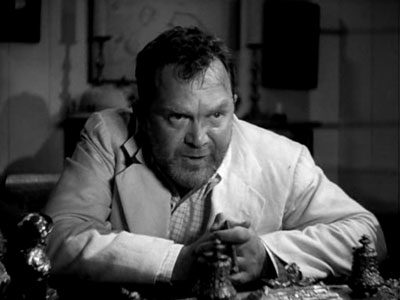
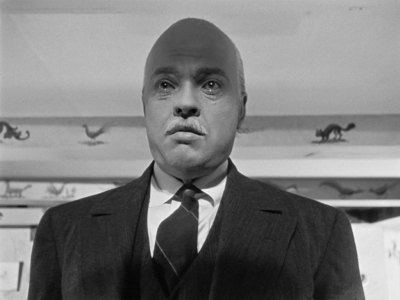
Mad Love (Karl Freund, 1935) It's been filmed many times since the silent era—most recently in 1958 starring Mel Ferrer and Christopher Lee, and another in 1962 as The Hands of a Stranger—but the most famous version of the 1920 French novel (by Maurice Renard) "The Hands of Orlac" is this 1935 version by German director Karl Freund.*  Well, "most famous" is a relative term—this one was pretty much forgotten until Pauline Kael exhumed it in her essay "Raising Kane" as an example of what she considered Orson Welles' derivative direction of Citizen Kane.  There are similarities, but vague ones—Peter Lorre's mad doctor bears a very slight resemblance to the elderly Charles Foster Kane, and his maid carries a pet cockatiel on her shoulder.**

Big deal, that.  Oh, and, of course, it's a deep-shadowed black-and-white film with deep-focus—a bit standard when dealing with low light levels in black-and-white (especially when the cinematographer is Gregg Toland, who worked on both films).  Beyond that, Mad Love is a completely different proposition than Citizen Kane and comparisons between the two are desperate and tortured, (as the writer could be at times).

But, that madness aside, Mad Love is a late version of German Expressionism from the silent era of film, and a direct descendant of:


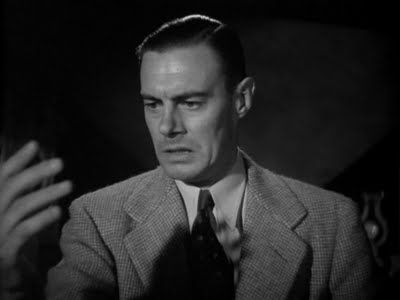
The Hands of Orlac (Robert Weine, 1928) the silent version, re-teaming the director and star of The Cabinet of Dr. Caligari, Weine and Conrad Veidt.  Both stories involve the maiming of a brilliant concert pianist in a train wreck.  His fiance, in a desperate attempt to save his career—emplores a surgeon to perform a radical double-hand transplant that has unforseen circumstances.  The difference between the two is motivational—in the latter version, the surgeon performs the surgery, not just for the sake of music, but also for his desperate love of the fiancee, an actress in a theater macabre that he devotedly attends every night, going so far as to buy the waxwork figure of her in the lobby as an object of adoration.

The operation is a success, but on the other hand, it isn't.  There's just one hitch, the same one that befell Dr. Frankenstein (coincidentally, the pianist in Freund's version is played by Colin Clive, the doctor in James Whale's version)—be careful where you shop for spare parts.  In this case, Orlac's hands are replaced by those of a murderer—a strangler in the silent version, a master knife-thrower in Freund's.  Before long, the composer is struggling to do his five finger exercises, and working on other handiwork, as well.  Before long, he is implicated in a murder, and beset by nightmares that his hands are out of his control (they are, after all, the devil's playground).


The two diverge at this point, with Mad Love concentrating on the insane machinations (literally in one instance) of Lorre's insane Dr. Gogol—in the silent version, the surgeon's role diminishes significantly at this point—and Orlac's new talents become even more literally "handy."

Both versions weigh heavily on the psychological, as Orlac and his new hands lose their grip on reality, but the first one is quite satisfied with takinbg the macabre elements so far.  The later version, post-Frankenstein and Dracula relishes the more twisted elements of the subject, going places that the original finds fanciful and, frankly, superstitious.  Mad Love embraces the possibility that the murderer's hands will, actually, assert their sense memory allowing Orlac to throw pointy things very, very accurately...and the difference between the two films is only a span of seven years.  Interesting how an audience's capacity for the weird and supernatural—and Hollywood's willingness to deliver it—could become so prevalent. 


* Freund was the German director/cinematographer whose most enduring influence came in the early days of television production when his 3-camera recording technique revolutionized filmed comedy shows (before a live audience)—a concept that started during his days with "I Love Lucy" but continues to be used today.

** Welles used a super-imposed shot of a cockatiel during what he considered a "rough transition" that didn't have enough dramatic impact, and later joked that he did it "just to wake people up."

Tuesday, August 21, 2012

Hope Springs

Breathe 
or 
Breaking Noses and the Fourth Wall

When Tommy Lee Jones was interviewed on "Inside the Actors Studio" and they got to the point where James Lipton asks "those" questions, and he was asked "What word do you hate?" Jones curled his lip and said "Cute."

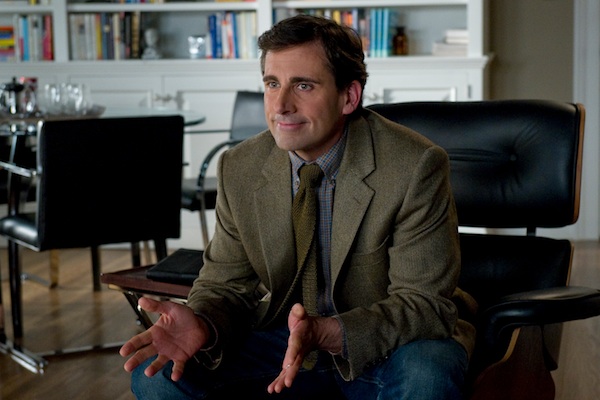
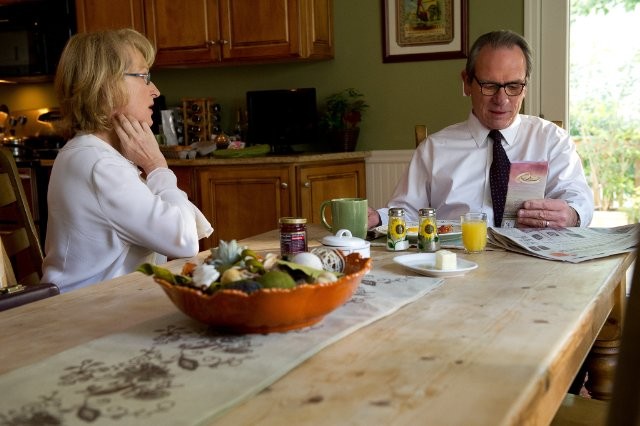
Fortunately, he's in Hope Springs, which, unfortunately, is the very definition of "cute," and manages to take some of the smirk out of it and put in the sting.  The tale of a pair of "empty-nesters" trying to rekindle the pilot light of their marriage and claw out of their rut, it is merely saved by the stalwart efforts of Jones and Meryl Streep, who say more with their body language—his trudging walk and her nervous, frustrated sighs—than any blunt dialogue could convey.  The script by Vanessa Taylor (she's written for "Everwood," "Alias," "Game of Thrones" and created the short-lived but well-regarded "Jack & Bobby"—quite the gamut, there) is long on touchy-feely aphorisms about metaphors, commitment and getting outside your comfort zone, dispensed by marriage counselor Steve Carell, who cuts out the dangerous aspects of his comedy potential and replaces it with wan smiles and scrutinizing eyes.  David Frankel's direction (he directed Streep in The Devil Wears Prada, directed Marley and Me and last year's The Big Year) is safe, but sound (which makes you wonder why he's not directing for The Weinsteins, and he's much more adventurous when working in TV) and keeps things from getting too treacly.

The pressure, then, is on Streep and Jones to bring everything to the table and they're an interesting study in contrasts.  She's all invention, imaginatively communicating with extraneous gestures of agitation and nuance, that burst out of her in spurts.  Jones is instinctive, making the text real with superb line readings with a minimum of fuss—funny as Jones' character is the fussy one, complaining constantly, passively aggressive, and not offering much in the way of support.  Both have issues and neither is entirely blameless—it takes two to make a bad marriage—but the sympathies throughout are with Streep's character, which is hammered home by the director and actress in moments of her satisfaction, by having her look directing at the camera for some sort of conspiratorial communal support from the audience ("Ladies...").

A little of that goes a long, long way,* and exposes that the film is geared to a female audience of a certain age and like-minded sympathies.  Such pandering mars the film, taking it out of the situation, and, by acknowledging the intended audience, shatters the illusion of reality, making it a staged presentation.  They might as well break into song, if this film about commitment isn't going to commit to anything.

Hope Springs is a blue-haired Rental.

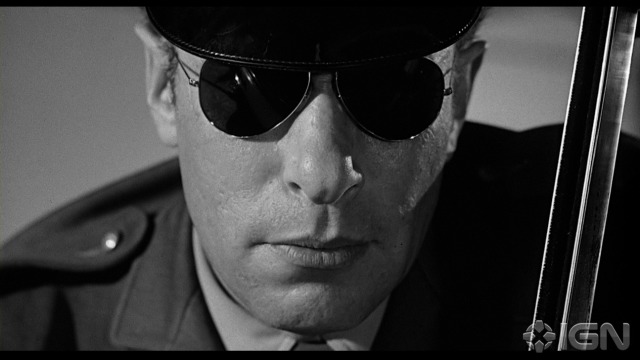
* Too far actually, and in the days after watching the film, the feeling that it recalled for me in a previous film experience is Anthony Perkins smiling directly at the camera at the end of Psycho (There are other straight-on shots in the film—Marion driving, the patrolman, Arbogast—but they're usually looking past the audience, eyes unfocused, not directly at the audience).

Thursday, July 26, 2012

Genre/Gender-Bending with Mr. Soderbergh

Haywire (Steve Soderbergh, 2011) Fairly standard actioner about a wet-ops unit for hire, and one particular freelancer who's beginning to suspect harmful links between gigs, directed by Soderbergh (written by past collaborator Lem Dobbs), with some unusual qualities of note.  For one, the director stages his fights like they were dance sequences from an M-G-M musical—full-frame/full-figure (but without the Lion Studio's "stage" angle on the axis of the central figures).  There are no tight shots, tight editing, it's all composed of mis-en-scene, rather than montage, just an angle/reverse angle one-two parrying between perspectives.  It's tough, athletic, and the only real reason to cut away is if something goes wrong—a fluffed punch, or bad timing that creates a lull in the fight or a disconnect with "reality."  There's no "lull" between hits because the way the altercations are staged you never see the connections, and there's no simulation of connection, because they're composed mostly of gymnastics, wrestling and fast action—the opposite of The Bourne Identity style of rapid cutting and implication of "hits." Soderbergh does something different with this style, while accomplishing the same intensity of the edit-dependent fisticuffs of the last few years.  The most critical part, however, is who's doing the fighting, and that's where Haywire is really different and utterly dependent on its athletic lead.

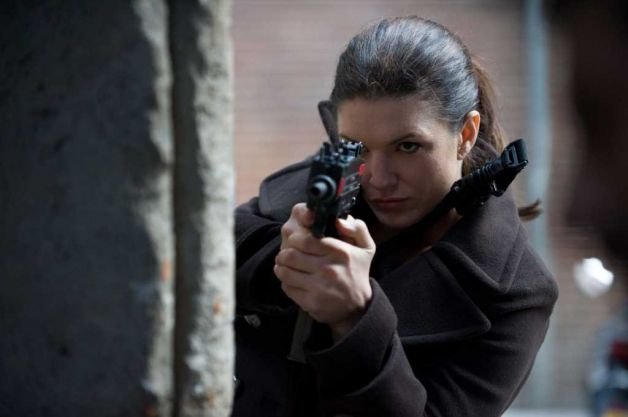
Gina Carano, mixed martial artist—and frequent participant in "American Gladiator"—plays Mallory Kane, and she is disciplined enough to pull off the fight sequences with a savage speed.  Any actress can train to look convincing, but Carano has the moves down for her character who is supposed to be a berserker weapon of mass-destruction, so there's rarely a cut-away or an insert shot to betray the use of stunt-doubles.  There aren't any.  So, Soderbergh (who also shot the film) keeps his camera out of the way and keeps everything and everybody in frame as best he can.  We've seen women in fights before—fights with men (Tarantino loves to do that)—but it's slightly unnerving to see these, knowing full well that everything was done in-camera, with few editing tricks.  The speed makes it a bit more visual—there's no 1/4 second adjustment/orientation lag between cuts—and more upsetting initially, but one does, as the fighting continues for minutes unabated, used to it (except for the question of what kind of make-up she uses to hide the bruising).

Because Carano is largely unknown except for her MMA career—she's fine in her dramatic scenes, just not great (but then, have I ever complained about Jet Li or Jason Statham's acting?)—the cast is a little top-heavy with big-name victims...Ewan McGregor, Michael Douglas, Channing Tatum, Michael Fassbender (the latter doing a fine riff on Bond coolness—of course, he gets his ass kicked in the film's best fight), Bill Paxton and Antonio Banderas.  Nobody is required to do anything beyond displaying detached coolness.  But the internal logic is there, so at least this one is a better example for the experiment than, say, Salt.


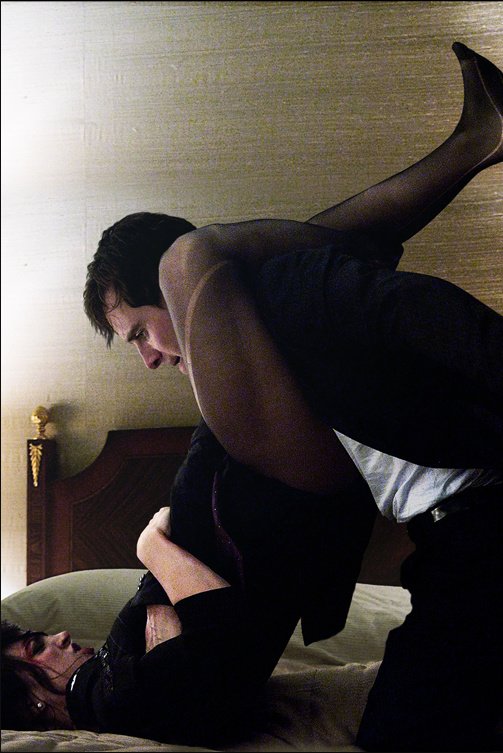
The girl breaks bones and furniture.


Welcome to the Crazy Club!
or
The Moon's Just a Cheap Shot Away


And what's good for the goose...

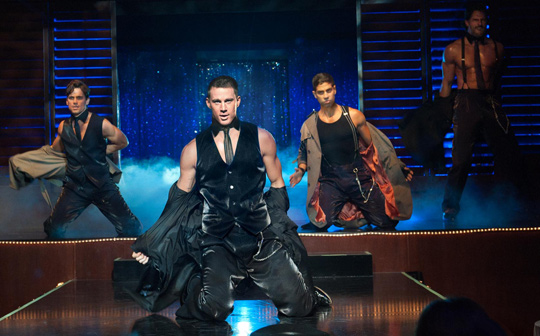
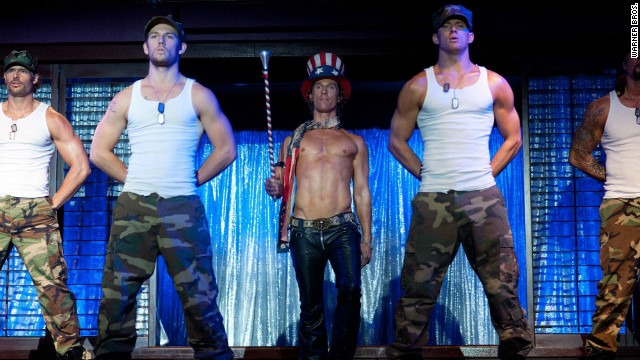
Soderbergh's next film after Haywire (if we don't count his second-unit work for The Hunger Games), also goes against the grain in the traditional genre/gender roles that we come to expect in movies—a dance/backstage drama movie, but with male leads.  Magic Mike is Flashdance with testosterone, the only thing missing is the "if you give up your dreams, you die" line.  Here, the basic dream is moving out of Tampa, Florida...to a bigger venue, or a better life.   The clutch of male strippers each have their own motivations—mostly money—and for them, the gig is a better alternative than slogging through a 9 to 5 job, wearing a tie.  So, at night, they dance, flirt, tease, and as club owner Dallas (Matthew McConaughey) "pry the cash out of their purses."

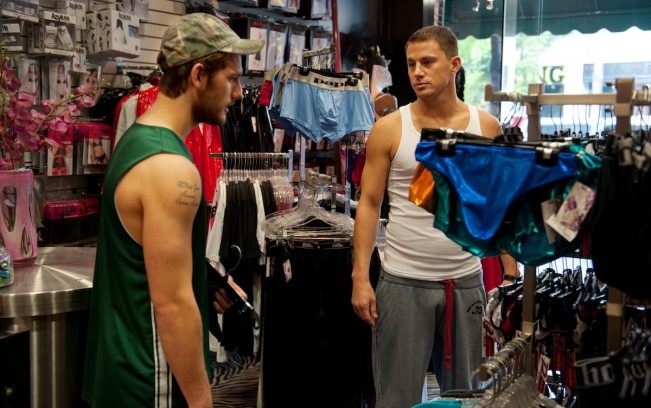
We're introduced to the skin-trade by Adam (Alex Pettyfer) irresponsible brother of Brooke (Cody Horn), who makes a good enough living for him to sponge off by having a steady job dealing with medical claims.  At a construction job that he's ill-equipped for, he runs into Mike Lane (Channing Tatum), who, despite seeing Adam as a loser, takes him under his wing, giving him a job as a "gopher" for the Xquisite dance club, where Mike, he finds to his surprise, is a featured dancer.  Well, you know how these backstage stories go: one of the performers can't go on-stage—he's passed out from a growth hormone overdose, and so Adam must make his stripper debut.  Dallas and Mike watch from the wings and simultaneously offer an opinion: "Can't dance worth shit." "But..that..can..be..taught," replies Dallas.

Wish the rest of it could be.  It'd save us all a bunch of time.  Mike's the hero of the tale, the veteran, "the guy most-together," but Adam is the neophyte and must go through the unfulfilling one-nighters, the drug problems, the crack-ho relationship, the debts to the hood-pushers, the spiral down to the bottom.  Mike just goes home to a brewsky and a night of uncrinkling his Benjamins on the edge of his self-designed furnishings (the establishment of such a business is his dream).  He's the cleverest of the bunch—Tatum developed the story based on his own experiences dancing in Tampa, so naturally he's the cleverest—and he's the most romantic of the bunch, mooning over a past-patron (Olivia Munn*) and very interested in Adam's sister.  He probably stays around being The Kid's Obi-Wan just to keep her in the picture, because there's only so many times you can say "You don't want that in your life, bro'" before it gets tiresome.

It does, but it could be a lot worse.  It could be "Showboys," and in outline form it resembles it, but it avoids the smarmy camp quality of that film by having a sense of humor about itself** and what it is (and what it doesn't aspire to, which is anything with an overt message) and it stresses the economic times that drop the unskilled (but ripped) into such night-work (day-jobs being rather scarce, especially when you party until 4 am) without having any pretensions about suffering for your art.  And the performances are fine, especially Tatum and McConaughey, who clearly relishes playing an out-and-out bad-boy with no shame.  But, all the men throw themselves into the roles of buck-a-throw sex-objects, with a brio and swagger that's fun to watch—as long as nobody takes it for anything more.  

It's the old "show-biz is a rough road, kids" movie, but with a "y" chromosome in the script of its DNA, a morality tale with enough immorality to make it worth watching.  And it's a healthy thing for Soderbergh (or anybody) to be turning the tables on these themes with their built-in sexism—even if the tables have some dancing on them.

Magic Mike is an immodestly modest Rental.


The boys break rules (but not twenties)


* Interesting role for her.  She plays a woman who plays with Mike like a boy-toy for jollies, but he finds, much to his dismay, that she does not consider him someone to bring home to meet Mom and Dad.  Dude...(if I can use the language of the film) Why do you think you never went over to her place??  As they might say in Showgirls "Denial's not just a river in Egypt, honey..."

** Reviews and synopses are saying it's a comedy-drama, though.  No.  No, it's not.  It's a light drama (with sprinkles of heaviness) and some clever writing here and there.  Maybe that hyphenate was there to attract the ladies (as if all the beef-cake and pretty boys wasn't enough).

Wednesday, June 27, 2012

Hot Coffee

A Tort is a Tort (in Court, in Court)
Without It, You Have No Recourse (Of Course)
Your Legal Rights were Bought By Force
By the Corporate Life We've Led

or

"Warning: Do Not Throw Out Baby With Bath-water."


Just because you're paranoid doesn't mean they're not out to get you.  And even if you poo-poo "conspiricism," doesn't mean there aren't organized efforts to circumvent government statutes and foundations.

Like "inalienable" rights.  Or the right to confront your accuser.

Hot Coffee is a fascinating, if scalding, little documentary that got sold to HBO, and slowly, but surely, is making its way around to theaters.  It's something of a "must-see," not only for how it dispels the simplified myths we're being sold by playing on our emotions (and pocketbooks), but also how that short-term presentation (dare I call it a "fiscal" view?) is crumbling our basic rights for "the bottom line."  It's about the corporately structured efforts by our business leaders to quash an individual's rights to sue corporations in court for harmful practices that affect lives.  The title derives from the case of Stella Liebeck, whom you might not have heard of, but you certainly know her court case.  It's the poster-child for the tort reform movement and Liebeck has been villified by the corporate world after having the temerity to sue McDonald's Corporation for damages after spilling hot coffee in her lap.*

Just the mention of it probably creates judgments in your mind: "Well, she bought the coffee;" "Of course, it's going to be hot;" "what's she drinking coffee in a car for?"  All legitimate questions and all answered in the movie.  But, like any court-case, decisions should be based on facts, and not the impressions given in a 10 second news-"blurb."  And the evidence is there, in the court records, the hospital procedures, the photographic evidence (which is appalling), and the corporations' own history (700 previous complaints of scalding and burns).  It's why a jury of Liebeck's (and your) peers awarded her 2.75 millions dollars.  She didn't ask for it.  She asked for McDonald's to pay for her skin graft procedures (yes, the burns were that severe).  The jury awarded her that sum by taking a minute percentage of McDonald's coffee sales profits and giving her that.  It just so happens McDonald's sells a LOT of coffee.  The courts further reduced that amount to 1.25 million, and eventually Liebeck and McDonald's reached their own agreement—never revealed—but the damage on all sides was done; the clown at McDonald's had to pay up and the old lady got burned in the court of public opinion—through no fault of her own.

But, it set up an endless potful of corporations (and the politicians funded by them) to call for tort reform limiting the damages a plaintiff can win in such lawsuits.  It was one of the rallying cries of George W. Bush's political career (with the help of political weasel, Karl Rove) while first running for Governor of Texas, then President.  It set up an all-out assault on the checks and balances of the court system, in which courts were stacked in favor of corporate interests (courtesy of Rove and his cronies flooding out-of-state monies to local judicial campaigns) and the instigation of corporations to fill their legal contracts with stipulations for settling issues through "mandatory arbitrations," rather than the courts—the "arbitrator" hired by the corporation, thus making them a client looking for return business.  Good luck with that process.

Scattered throughout the doc are man-on-the-street interviews, there mostly to show everyday folk's ignorance of the situation ("A tort?  It's a pastry, right?"), and it's understandable.  Everyone hears about frivolous lawsuits, and few—except those addicted to playing the lottery—like them, thinking that the costs get pushed onto them, by rising costs due to crippling judgments.  It does.  But it will, anyway.  If the corporations don't dish out the funds to cover their negligence, it inevitably turns into a Medicaid case—Medicaid, being paid by you, the taxpayer.  You pay either way.  And claims about tort reform stopping, and even the decreasing the costs of medical insurance hasn't been born out in practice; the state of Texas which, under George Bush, rushed to tort reform and damage caps, has had just as many rate increases and is on a par with non-reform states.  You pay either way.

Nobody's saving money here.  Nobody benefits except the corporations who pocket the savings garnered by tort reform, and still raise rates.  Nice little business you got there.

And the public still buys what the corps are selling.  As I said, nobody likes the dumb law-suits.  Until they're the ones who get caught in the gears.  One of the interviewees ruefully admits to voting for tort reform in his state, only to find out that it affected him when he was in crisis.  And we're all affected by it: next time you get a contract for your cell phone, read—actually read—the terms and conditions, or look at your next job application to see if there is a mandatory arbitration clause.  More likely than not, it's there.

So, be careful with that coffee.  One way or another, you'll get burned.

Hot Coffee is a Full-Price Ticket (but in the interest of "full disclosure, your honor, I saw it for Free).


* The tort reformers might have been better off using the guy who sued McDonald's because eating their stuff made him fat.  Some good came of it—you'd've had to pry caloric information out of restaurants from their cold, dead, grease-encrusted fingers if he hadn't—but I think the whole thing would've been solved if the judge just told the guy "Why don't you keep your mouth shut?"  (Or go to another restaurant, since he always had one thing corporations would LOVE to take away from us—choice).

Tuesday, April 3, 2012

Hi, Mom!

Hi, Mom! (Brian De Palma, 1970) Second full-length film (although it seems more a comedy pastiche in final form, like the Zucker Brothers were making at the time) that De  Palma and his producing buddy Charles Hirsch cooked up as a sequel of sorts to Greetings (retaining Robert De Niro and his "character" John Rubin), while having absolutely nothing to do with the first film.  Ostensibly about a young film-maker who wants to make "peep-show art" out of filming the real lives of his neighbors in the co-op across the street—shades (opened, naturally) of Rear Windowit meanders into Rubin's plotting a relationship with one of his subjects (Jennifer Salt), while at the same time becoming involved in an experimental theater group, staging a radical audience participation vehicle called "Be Black, Baby!"

Mean-spirited (but in a smart way), with that stagey kind of improv quality to it that only works 40% of the time, it feels like De Palma taking off the gloves, cracking his knuckles and using his camera like a fist against complacency. It also has that bi-partisan cynicism to it that's very refreshing—for instance, "Be Black, Baby!" is shown being presented (in grainy black and white on a rounded edge square screen) over a parody of NET,* now called NIT—National Intellectual Television.  It's a chortling, vicious piece of satire done in multi-parts (with the Rubin segments interrupting and becoming more and more inconsequential, the "peep-art-show" concept having long been abandoned**), starting with citizens being accosted on the street about their failure to know what it means "to be black in America," then more segments that are less cinema verite, but have a good improv feel, and then the actual presentation of the play in which privileged whites are challenged, force-fed "soul" food, beaten, robbed and arrested (with one attempted rape thrown in for good measure), before being released to the outside world again—"Hope you enjoyed the show!"—at which point, they're interviewed about their experience (the best line in the whole thing is "Clive Barnes was right!").  In one swell foop, art, pretentiousness, and "touchy-feely" moccassin-walking are given the mau-mau, and come up wanting.

It's "bad-kid movie-making" with a smart-alecky breeziness ("Hi, Mom!") that beats any number of elaborately formal set-pieces that De Palma has subsequently staged.  One misses this "turk" De Palma***—the one that would do things that upset audiences, and sit back, cigar in his teeth, saying "Wait'll you see the next one!"  Maybe it's not De Palma's fault.  Maybe we've just become insensitive enough that nothing he can produce shocks us anymore.

If that's true, imagine how miserable Hitchcock would be.


* The percursor to PBS.

** The best segment in the Rubin sandwiching sequences is one where he meticulously plans a seduction of Betty Shaefer—Salt's character—in order for him to film it—yes, a sick idea, but quaint in these days.  But, things go awry when he arrives at the apartment and she tries to pull him into bed immediately, while he does his best to keep anything from happening, a lovely little turn on sexual roles, expectations, and how much power a director "actually" has.  De Niro does his best work here, hemming and hawing and making excuses, constantly glancing at his watch and re-buttoning every shirt-button she's unbuttoned,  and trying to use any of his by-now useless preparations in order to delay, delay, delay (you might say "the worst laid plans")


*** And he might, too.  In an interview, the director has said that the "Be Black, Baby" segments of Hi, Mom! are the best thing he's ever done.  Sad to think that, after all his successes, the elder De Palma looks back and sees this edgy, slap-dash sequence as the epitome of his career.  But...if one is dissatisfied with one is doing, with all the compromises and concessions to getting a picture made and marketed, it's easy to look back on the brash days and say "That's when I had the freedom to do anything I wanted!"  After the bludgeoning De Palma's films of The Bonfire of the Vanities and Redacted took, one can see that a bit more clearly.  He could make that kind of film today.  But, the market...and the critical elite...will bash it down.