Showing posts with label Comedy. Show all posts

Thursday, December 12, 2013

The Talk of the Town

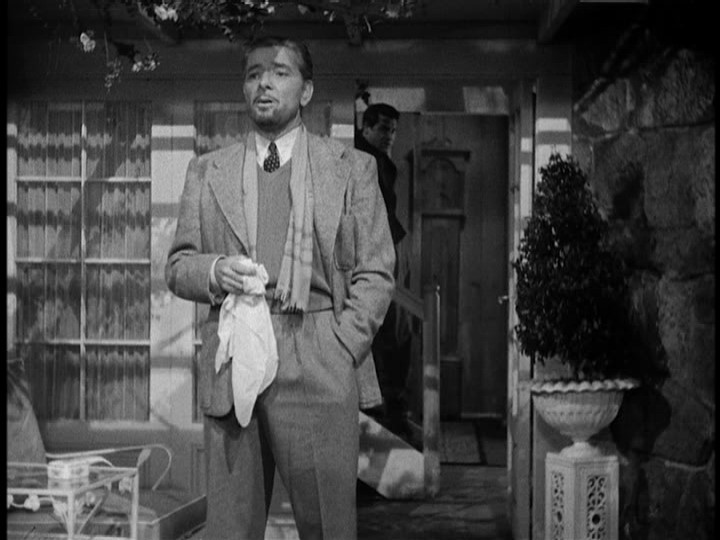
The Talk of the Town (George Stevens, 1942) One could almost look at The Talk of the Town as being a sequel of sorts to Mr. Smith Goes to Washington, focusing on the judicial branch, rather than the legislative, and with more of a divided heart as to what kind of movie it should be.  

Part of that may be the number of screenwriters involved. Not only is Mr. Smith's scripter Sidney Buchman present, but also Irwin Shaw (both men would feel the lash of the blacklist in the 1950's) and Dale Van Every for story adaptation.  That many cooks typing away may explain the sometimes lurching tone from comedy to romance to high-mindedness to, uh, the underlying plot-line that once-in-awhile gets attended to.


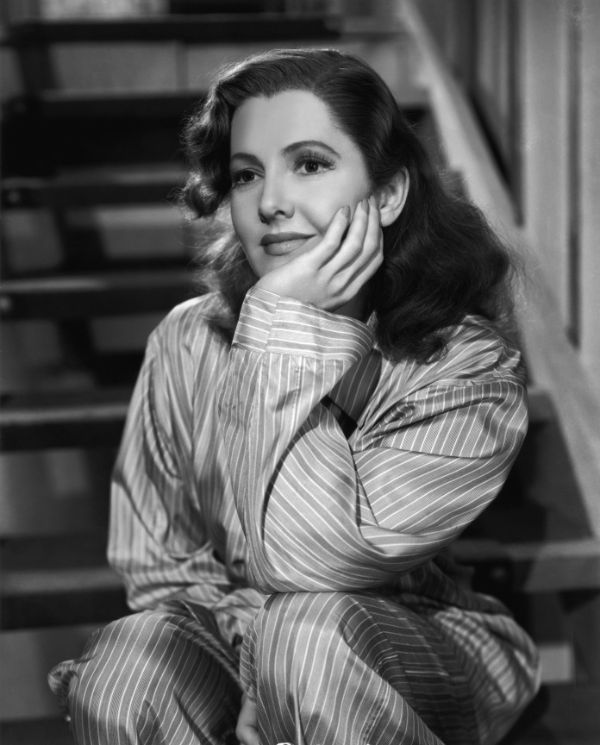
The "main" interest is: who will Nora Shelley (Jean Arthur) end up with, romantically?  Stevens shot two endings and let preview audiences decide. Case closed.


It's the least material aspect to the film in the first place.  The plot involves the burning of a local mill and the framing of mill worker and "activist" (one assumes a unionist) Leopold Dilg (Cary Grant) for arson and the murder of the plant foreman.  Everything is stacked against Dilg from the mill owner calling for his blood in the sympathetic press, to the trial judge being in Holmes' hip-pocket.  Dilg escapes from prison (in a dramatic opening sequence that's a bit out of sync with the rest of the movie) and hides out in "Sweetbrook," the rental house run by his high-school acquaintance Nora, who's trying to get the place in shape for the impending arrival of a temporary lodger, law dean Michael Lightcap (Ronald Colman) who's taking the Summer off to write a book.  This being a comedy, Lightcap arrives early—the night Dilg has stumbled his way in—and Nora has to hide the runaway in the attic, while the police comb the area looking for him.


"Hilarity ensues"
After a restless first night for all—nervous Nora has spent the night in another room and Dilg snores in his attic roost leading Lightcap to advise Nora she needs to do something about her adenoids—the complications begin: Dilg is too restless a spirit and cranky an agitator to to stay cooped in the attic; Lightcap needs a secretary and to keep Dilg under wraps and separated from Lightcap, Nora takes the job; and then, to raise the stakes, a local Senator stops by to tell Lightcap he's being nominated for the Supreme Court.  So, politics being what they are (the same as always), if there's any hint of scandal, oh, like, say, harboring a wanted fugitive in your house, it could hurt the professor's chances of being one of the Supremes (depending on who's in The White House, of course).

Dilg being Dilg, he can't stay under wraps for long, and he's soon hiding in plain sight as "the gardener," and his views of the law leads to some sparring over the letter of the law and how it can conflict with the intent, especially when those intentions are not honorable to the spirit of the law, and Lightcap finds himself embroiled in a conflict of interest, where his cloistered view from his ivory tower looks pretty good in theory, but bares only a conversational similarity to its practical applications in the world of dog-eat-dog. 

That's the meat of The Talk of the Town, but the screenwriters and Stevens must gild it with a "who gets the girl" storyline that will satisfy the jury of the audience.  Stevens let the answer to the question be decided by a preview audience of peers—with nothing decided until the very last second.  With Colman as a sophisticated book-smart professional with a lot of learning to do, and Grant as am earnest dreamer, it's hard to choose, but Arthur is, as always, a delight, finding ways to make the quick-witted Nora flustered, but with the best of intentions and the most charming of choices.   Like the movie, she's a bit of a mess, but an enjoyable one.


Thursday, November 28, 2013

Upstream

Upstream (John Ford, 1927) Somewhere in New Zealand, there was a film archive that contained a spate of nitrate films that were not returned to the United States after their initial showings in the 20's. They sat there, waiting to either disintegrate or explode in flames, until they were discovered in 2009.  Among the treasures were one of the first films ever to be worked on by Alfred Hitchcock, as well as one trailer and one feature directed by John Ford for the Fox Corporation (before their merger with 20th) that up 'til then had thought to be lost.

Early Ford is still deeply Ford country.  This backstage drama takes place in a players' boarding house, where touring performers could rent lodgings for their seasons in vaudeville houses.  The current residents are a motley troupe: a mother-daughter "sister act," Irish vaudevillians Callahan and Callahan (Ted McNamara and Sammy Cohen—yes, you read that right, it's part of the gag), the faded Shakesperean (Emile Chautard), the medicine show jugglers (and distillers), the "Star Boarder" (Raymond Hitchcock)—his reputation gained by inserting himself into every situation, the least talented member of a famous acting family, the Brashinghams (Earle Foxe), and a knife-throwing act with the Castillian expert Juan Rodriguez—real name Jack La Velle (Grant Withers)—and his lovely target Gertie Ryan (Nancy Nash).  

Any community in a Ford film is complicated and this one is tangled like a cat's cradle.  Jack's in love with Gertie, but Brashingham is on the make as well.  Everybody is in everybody's business, but when one word comes from London that a Brashingham (even a lousy one) must be booked to play "Hamlet," it throws the whole household in an uproar.  The vain Brashingham couldn't act his way out of a wet paper sack, but the experienced thesp' gives him lessons that seem to bring out the best in him as an actor, while bringing out the worst in him as a human being.  There are the various tactics to avoid paying rent with the Landlady, the torn loyalties of Gertie, and the "Star Boarder's" proclivity to flirt with anything in a skirt—it's Ford affectionately poking fun at the phoniness and the keeping up of appearances of show folk, but also of how a disparate group of individuals can still mutually raise each other up.  The performances are remarkably restrained for a silent film (and one about a bunch of hams), and Ford pulls a couple of tricks with a smoothly moving camera that impresses, considering how bulky the things were back then.

Made three years after his landmark The Iron Horse and a year before his first talking picture, Upstream is worth seeing for an atypical prototype of what Ford would produce later in his career.


Emile Chautard, Earle Foxe, and Nancy Nash all have things
that need to be discussed Upstream


Tuesday, November 19, 2013

Go West (1925)

Go West (Buster Keaton, 1925) There have been a couple features with the title, but this is the one written, directed and starring Keaton as a woe-begone dweller of a podunk town who sells everything he owns at the Fade From Black, only to find (after buying food and buying back the family photo he'd forgotten in a drawer) that he's a completely free man (freedom being just another word for nothing left to lose).  Deterred and detoured, he hoboes a freight train and accidentally (not exactly the right word as Keaton's "accidents" are always complicated) finds himself on a working ranch out west.  A discraded set of chaps is all the references he needs to start working on the ranch and working the herd, starting from the ground up.  Removing a stone from a heifer's hoof gains him a friend and a constant companion in the work-a-day world, as the un-broco'd Buster and bovine look out for the other.  

It's a classic fish-on-the-prairie story as Keaton's tenderfoot and his tender-footed cow-friend find ways to get things done while not doing things in the normal cowboy fashion, and any mentioning of the lessons learned in milking, lassoing and branding a cow will only spoil the surprise.  Let's just say that PETA would be proud.

The way most silent comedies work is with a long series of short bits and then an extended sequence in the final couple reels, and that was Keaton's standard blue-print, as well.  The final complication involves getting the herd to market so that the ranch can pay its bills, while at the same time, saving the one cow that Keaton has become the guardian cowboy to.  It involves a train-trip (a Keaton specialty) as well as one logistical movie-making nightmare—a cow stampede through the streets of roaring '20's Los Angeles, but done at a pace with a tangential series of complications that amaze.

As always seems to be the case with silent comedies, especially those of Keaton, the fewer words the better.  Just seek it out and enjoy.


The first "Mexican stand-off" in movies is instantly defused with a pinkie finger.


Friday, October 25, 2013

The Addams Family

First, came the macabre series of Charles Addams one-panel cartoons in The New Yorker (where the ghoulish family were only periodic characters).

Then came the TV series—the characters' names provided by Addams himself.


A quarter century later, given the trend to recycle old television into new movies, The Addams Family came to the big screen.


The Addams Family (Barry Sonnenfeld, 1991) The first directing job by cinematographer Barry Sonnenfeld, who came out of a short, boisterous career that started in the Coen Brothers/Sam Raimi early years of hyper-activity, something that he has maintained throughout his own films. Sonnenfeld's movies careen between dead-pan humor and break-neck agitation—you could see it in some of his camera moves for the Coen's and you can certainly see it in the pell-mell caroming of the first big-screen version of The Addams Family.  The casting is truly inspired and may, in fact, be perfect, with Anjelica Huston as Morticia, Raul Julia as Gomez, Chris Lloyd as Fester, and Carel Struyken as Lurch.*  

But the breakout performance is by 11 year old Christina Ricci as daughter Wednesday, who manages to make her lines all laughers with a bland expression and a direct unironic reading of her lines.  She found the secret to making the script work, because it isn't very good, (a collaboration between Beetlejuice author Larry Wilson and Edward Scissorhands scripter Caroline Thompson) not doing anything really unique with the characters, basically amping up the character traits of the TV versions while creating a plot in which Uncle Fester has been missing for 25 years (presumably lost in the Bermuda Triangle).  Gomez's crooked accountant (played by Dan Hedaya) attempts to bring an impostor in to take over the Addams fortune.  For awhile, it looks like the plan succeeds, but it doesn't, and it's soon revealed that the impostor really IS Fester, and blah, blah, blah. 


One of the jokes that works-Pugsley's collection of "Stop" signs

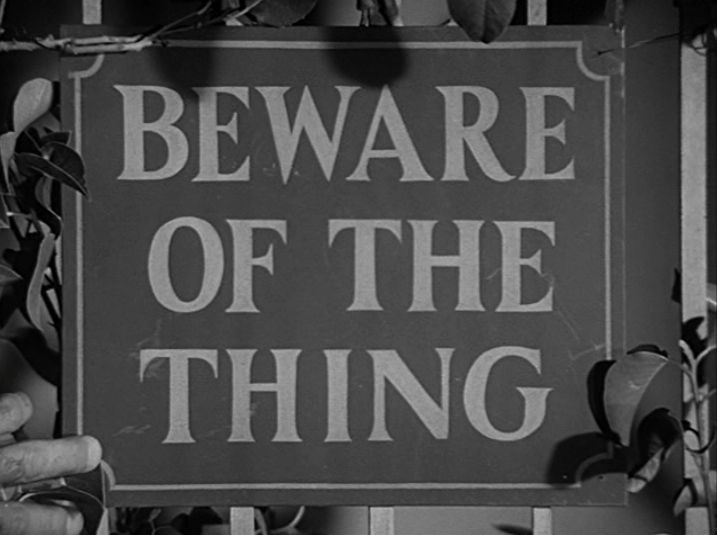
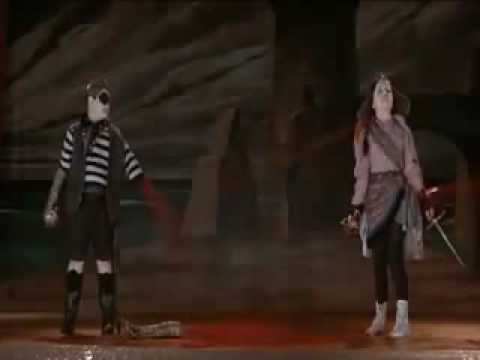
Sonnenfeld ramps up the film for all it's worth, making a lot—in fact, too much—of the character of "Thing," the disembodied hand-servant to the Addams, but the only time the film gets lively is when children Pugsley and Wednesday are forced to participate in a school version of "Hamlet" which involves a sword-fight that they make look decidedly real.  Sonnenfeld had the help of two legendary craftspeople Owen Roizman (who shot The French Connection and The Exorcist**) and master editor Dede Allen (who edited Bonnie and Clyde, Slaughterhouse-Five and Reds), but even played well, the material is stale, and was a major disappointment.  When it was announced that a sequel was being prepared, one could only think "...why?"


One of the Addams cartoons used in the film—this one
before the credits!  Frankly the film could have used
more of this and less of what they did use, which was
watered down sit-com material.


Addams Family Values (Barry Sonnenfeld, 1993) As much of a fan as I was of the "Addams" television show—I liked them, far more than the bland television families usually presented—I didn't even go see Addams Family Values in the theater (I was working—a lot).  

Big mistake.  Sonnenfeld was back, having completed a slightly tamer Michael J. Fox comedy in the interim.  Dede Allen was gone.  Owen Roizman was replaced by Don Peterman (who'd DP'd Star Trek IV, Splash, and Flashdance) and Ken Adam, legendary Art Director came on-board.


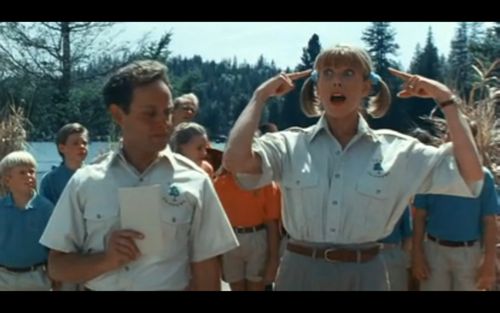
But the most important element was the script...written by Paul Rudnick*** with what must have been a poison pen from an inkwell filled with snark and maliciousness.  It is an extraordinarily funny movie, despite an unpromising premise: the Addams welcome a new child to the family, a boy, Pubert (the original name Charles Addams gave to Pugsley, rejected by the network censors). This creates enormous tension in the family, as Pugsley and Wednesday exhibit jealously and make many plans to kill the child, who manages to thwart their every efforts.  Concerned, Morticia and Gomez hire a series of nannies for the kids, all of whom are frightened away by the children, except for Debbie Jilinsky (Joan Cusack, never funnier), who attracts the attentions of Uncle Fester.  When the children become suspicious of her behavior, she convinces Gomez and Morticia to send them to Camp Chippewa, run by the extraordinarily wasp-y and perky Gary and Becky Granger (Peter McNichol and Christine Baranski), who make no secret of their disgust with these "weird" children who don't fit in.


Indoctrination in Addams Family Values


Now, that is truly creepy.  And funny.  The "Camp Chippewa" segments are the best of the film's sub-plots, indicating that if someone wants to do another film with the Addamses they need to 1) get them out of the house and 2) hire Rudnick (This iteration's Gomez, Raul Julia, sadly, passed away a year after Addams Family Values was released).  But, the entire film has more zest, more life (or what passes for it, given the subjects) and genuinely twisted humor than the original exhumation.****  It's always a pleasure to run into on the tube, no matter at which point one comes in.  


* I love doing this if only to share finds: like Carel Struyken's 360 photography site, which you can find here.

** Roizman left the production after a month.  Sonnenfeld ended up finishing the film himself.

*** Rudnick did some dialogue touch-up on the first film.

**** I've spared a lot of the quotable lines (they're peppered all over the Inter-spider-web anyway), but one little joke I love is the lighting of Mortiicia in Values-taking the "Kirk-lighting effect" used a little in the first film, and in the second, bending lightwaves backwards in order to achieve the same effect in every. single. shot.

Finally, this is my favorite Charles Addams cartoon....


Wednesday, October 16, 2013

Jour de Fête

Jour de Fête (Jacques Tati, 1949) Tati's first feature length film, featuring the protagonist, François the rural postman (played by Tati), and many of the jokes re-bicycled from his 1947 short The School for Postmen.  Tati expands it with the story of a town's preparations for a big festival, and all the dangers for mayhem that accompany a feature of fun.  

Francois is on his daily rounds, done at their usual leisurely pace, but even more so for all the trouble the slightly officious fâcheux of a mailman can find to distract himself. But, the next day, inspired by an newsreel of how Americans are improving the speed of their mail delivery, he endeavors to increase the tempo of his route.

That's it in a nutshell, but the details, as with most silent comedies (although Jour de Fête isn't silent), are where the enjoyable bits are.  François is a more manic character than Tati's laid-back Mr. Hulot, and has a puppy-like fascination with just about everything and a cat-killing curiosity that gets him into both hot and cold water.  He is everybody's dork with a title, sure of himself and the only one in the room who is.  But his intentions are good.  His results are variable.

Tati filmed Jour de Fête twice, one version in black and white, and another using a color process called Thomson-color, a dicey system and lab that, unfortunately, went out of business before the film could be processed.  The black and white version was released to success, but Tati's dissatisfaction.  In 1962, he re-released it with a sub-plot about a sketch artist making pictures of the festival, and as the artist added colors to his black and white drawings, the colors would appear in the film, hand-tinted onto the film (this is the version of it I saw).  Increasingly, as the day wears on, more and more parts of the fair are tinted, sometimes surprising in what the choices are. 

Thirteen years after Tati's death, his daughter Sophie and French cinematographer Françoise Ede (who'd made a documentary about Tati's Playtime) managed to find the color elements and restore the Thomson-color version for the 1995 DVD release in France. 

It has yet to be released in the U.S.


The Three Lives of Jour de Fête


Black and White
Tinted

Color


Thursday, October 10, 2013

The Last of Mrs. Cheyney (1937)

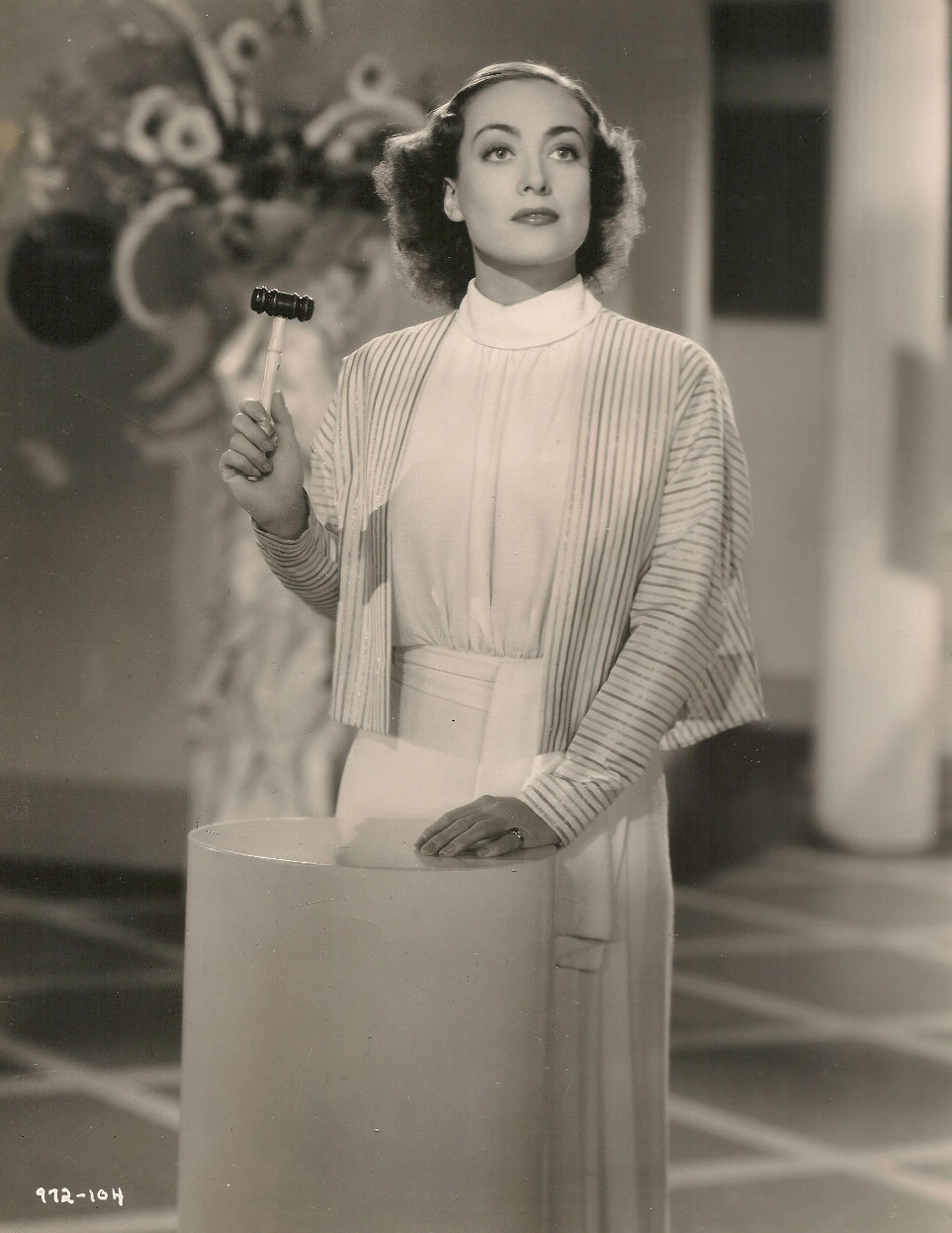
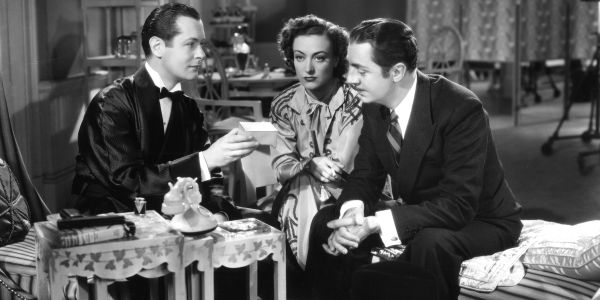
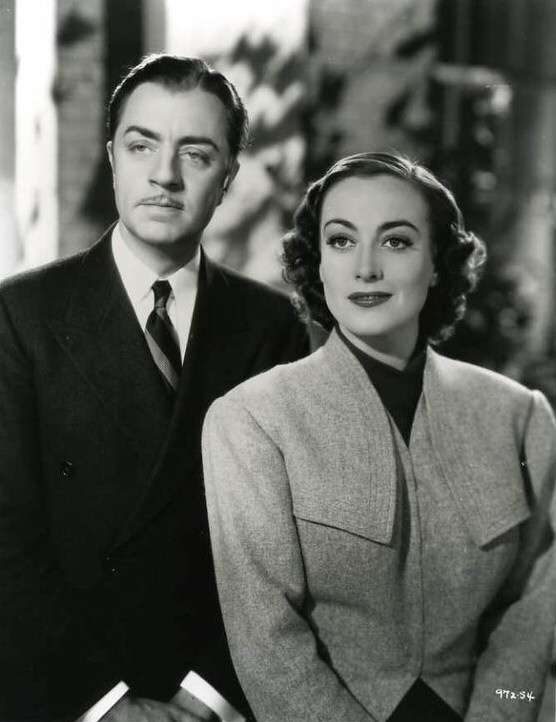
The Last of Mrs. Cheyney (Richard Boleslawksi and Dorothy Arzner, 1937) Remake of the 1928 stage adaptation with Norma Shearer and Basil Rathbone, this one has a little bit more of the star-wattage of M-G-M behind it with Joan Crawford (rarely better) as well as William Powell, Robert Montgomery, Frank Morgan, Nigel Bruce and Jessie Ralph. 

The movie starts stodgily with Montgomery's Lord Arthur Dilling meeting and becoming entranced with widower Mrs. Fay Cheyney (Crawford) on a transatlantic sail.  He's intrigued that she takes a fancy to the equally rich, more elderly (and more susceptible) Lord Francis Kelton (Morgan), and keeps an eye on her when they disembark, for though he's smitten, he's curious to see if she might be a gold-digger.

She's not.  She's an international jewel-thief in cahoots with Charles (William Powell), the man posing as her butler.  

It's hard to pin-point, but around the time the cast all gets together at the estate of Lady Embley (Ralph) after a charity event, the tone suddenly lightens and everybody, especially Montgomery, get several notches better. Now, at some point, the original assigned director Richard Boleslawski died of a heart attack, to be replaced by Hollywood's only working female director at the time, Dorothy Arzner, and while one is hesitant to say this is entirely due to a change in directors, it is unarguable that the film starts to take off, whereas before it has a strained and stuffy feeling to it.  Maybe, it's the presence of Powell—though it's doubtful because Crawford starts to light up, too—maybe because the entire cast is pinging off each other, there's more cross-talk between them and more energy zapping between each and every player.  Maybe it's the script because the last half is where the change-up's, turn-around's and surprises in character and situations are clustered, a perfect case of the tail wagging the dog (without a chase, explosion or clinch to be seen).  But it makes one want to check out Dorothy Arzner, the lone woman in the field (besides Leni Riefenstahl) to be making films at the time.  Not to be sexist or anything, but it does make a difference.  

Thursday, September 26, 2013

Safety Last! (1923)

Safety Last! (Fred C. Newmeyer, Sam Taylor, 1923) Boy (Harold Lloyd) leaves home to achieve fame and fortune in the Big City, so that he can then call for his girl (Mildred Davies) so they can marry and make a life together.  She should know better.  He almost misses the train in his zeal, first stealing a child instead of grabbing his luggage, then, realizing his mistake, he grabs the first thing in his path—a passing car—instead of the train.

The film starts playing with expectations (and morbid ones, at that) from the first shot, as we see Lloyd behind a bars, his mother and a clergyman bidding him good-bye, as a policeman looks at his watch while a noose hangs in the background.   No, he's not about to die.  He's leaving home, the bars to keep people from crossing over onto the tracks and the noose a delivery system for pass-by messaging. But the camera trickery and stunt-work—at about 50% Keaton speed—is very much in evidence right from the beginning, and does not flag throughout the film for its 70 minute running time, up to and including a sequence so iconic—with effects trickery so effective—that it stands as one of the great representations of the silent era.


Lloyd's "Boy" (his pay-checks come to him as Harold Lloyd, however) after weeks of making do and hiding from his landlady, manages to land a job at the fancy-schmancy DeVore department Store as a counter boy.  His letters home paint a different picture, saying he's a successful manager, and though he keeps trying, it always seems that something—including the snooty floorwalker of the store, Mr. Stubbs (Westcott Clarke)—gets in his way.


Then, disaster strikes.  His girl comes to visit and he has to work overtime trying to impress that he's "big" at the store, then he overhears the general manager wracking his brain how he can get more bodies to the store (which doesn't appear to be a problem as the counters are always over-crowded with fighting customers).  Harold says he'll climb the side of the building like a human fly for enough money to stake a wedding, and puts his room-mate—a high-rise construction worker—up to the task.

Last minute complications set in, as the room-mate is trying to run from the law, so it's up to Harold to climb the building, but only for one floor until they can switch clothes and his buddy can take it the rest of the way.

Doesn't happen that way.  It's still an impressive sequence, no matter how—and there is still some conjecture about that—they did it.  But between Lloyd and stunt man Robert Golden the sequence is hilariously nerve-wracking, constantly inventive, and keeps building complication upon complication.  it is deservedly one of the most remembered films of the silent era (and not just for the last twenty minutes), and made it into the National Film Registry in 1994, five years after they started making the selections. 


Wednesday, September 18, 2013

In a World

The Cult of Non-celebrity
or
Lies, Damn Lies, Statistics...and Marketing

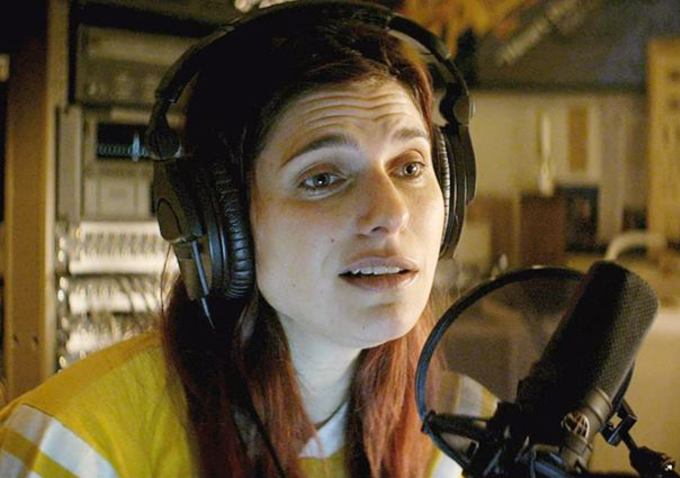
Lake Bell's new comedy In a World (she wrote, directed, stars in, and wins The Welles Award for over-achievement this year) is a funny, funny look at the L.A. studio scene, or at least the LA studio scene of a few years ago.* She gets the nuances right of the bubble-verse that a lot of folks get into, and the sexist nature of the industry—female voice-overs for commercials have broken the glass recording booth ceiling, but movie trailers are still reliant on the paternalistic "Voice of God" to "sell" the image the studios want.

Bell stars as Carol Solomon, a periphery actress, semi-content to act as a vocal coach to other artists (like Eva Longoria because her cockney accent makes her sound "like a retarded pirate."), carrying around a mini-recorder to capture any vocal inflections to add to her collection (a habit that has more than one irritation and complication in the film) and do the California Hang Out, professionally waiting for the big break to happen.

That big break translates to not telling others how to do voice-work, but doing it herself, whether voicing commercials, or, even better, trailers, the toughest nut in voice-over work to crack. The reason?  Women don't "do" voice-overs for trailers.  How does she know?  Her father (Fred Melamed) does voice-overs for movie trailers, and is only too happy to tell her that it's a man's market, and that she can't possibly break into it because 1) women don't do voice-overs and 2) she can't do voice-overs because she's not as talented as he is and he does voice-overs. 

In any industry there are out-sized egos, and the voice-over field is no different.** Most have a healthy sense of perspective and a genuine gratitude for being paid to (as one voice-over guy described it) "talk out loud for a living."  But, there are those (and sadly, you don't know who you are) who see it as "art" and their every syllable is "golden."  Carol's dad is one of them, and despite his extraordinary ego, he still sees himself following in the wavelengths of the King of Trailers, the late Don LaFontaine, who, "legend" has it (or at least Don had it), "created" the "in the world" tag-line, and who, in his honor, the line has been retired since his death.***  

However, there's a new chic-lit-based "quadrilogy" movie series coming out, and they just might be using that "In a world..." line for their trailers.  Carol's father, in his largesse, bequeaths it to up-and-comer Gustav Warner (Ken Marino), who's lost a couple of gigs to "some chick" over a throat ailment, and the two chortle about how they can screw her over—not realizing that "some chick" is his own daughter.

At about this time, anybody with a few movies under their eye-lids is going "Oh, he'll find out it's her, feel remorse, and turn over a new leaf..."  Bell's movie isn't that easy. In fact when he hears that she might get the gig, he decides that he'll audition for it himself ("Auditioning," oh, the humiliation. Don't they know who he is?), in a fit of ego and competitive envy.  That's surprising.  But...I gotta say, not out of the realm of reality.  


If the movie were all that, it would be a thin script, indeed.  But Bell complicates this world, with others in the fringe—Carol's sister, Dani (played by Michaela Watkins) a concierge, whom Carol has to crash with when her Dad tosses her out so his 30-something girlfriend (Alexandra Holden) can move in with him, thus messing up the lives of her sister and her husband (Rob Corddry, proving he can play a normal guy, for once), a reality television editor.  Then there are the studio crew, including her engineer-friend (Demetri Martin) who promotes her work, enabling him to keep burning the torch he has for her.  The repartee among these players is refreshingly spontaneous-sounding, with half-finished sentences, colliding overlaps and repetitions, stray asides, floating exiting explanations, and general discomfiture, making great use of actor/comedians for improv/mumblecore cred—the difference being that it's actually funny here, and not just awkweird.


There's a line from In a World... that does raise a point, despite it coming from one of the most insufferable characters: "a great voice isn't just a blessing, it's a choice."  Bell takes it somewhat seriously, she was/portrays a vocal coach, and makes it a point several times to decry the up-inflected "sexy baby voice" that seems to be "the rage" these days, after it's been perpetuated by reality-show denizens and nondescript and untrained readers, like the kind that fill up "This American Life."  She has a point, but a narrow one.  The commercial world reflects the real world, but not very far, and certainly without any degree of real innovation, as it's always art by committee. And once the mad men discover a trend, they do it "to death," until it passes into the cliche mode and stops making short-term money.  But, I found it a little disingenuous for Bell to be on her soap-box about how people talk, because, as the line implies, we can't all be blessed, nor can we all afford vocal coaches.   We work with what we have, whether it fits into an "acceptable" niche or not.  In a World does a good job of turning its eye on the chauvinism in the marketplace, but it's blind to it in its own little bubble-verse.

Easy for her to talk.  

In a World in a Matinee. 

A compilation of movie trailer cliches as voiced by Hal Douglas, Peter Thomas, 
Dom Morrow and (three or four times) Don LaFontaine


Hal Douglas can't say 'In a World...'


A rare female voice on a trailer...Melissa Disney (featured in In a World) for Gone in 60 Seconds

* "In a world" of DSL lines, fiber-optics transmission, satellite feeds and home studios, the voice-over business is not quite as concentrated in Los Angeles as it used to be.  It's where a lot of production is done, but a lot of the voice-over artists now do things from their own home and "travel" when the technology demands it (or the egos of the producers do).

** During one session in my memory, one well-known national voice-over talent was told by the writer-producer that he'd "fluffed" a line and the response was "Fluffed?!  FUCK YOU!"  And then there are those famous out-takes by Orson Welles and William Shatner.

** This is bull-shit.  The line has certainly been used (and probably too much in the past few years since LaFontaine's death) as a pop culture cliche—an easy go-to  laugh  among the most dull of hipsters.  And it's also bull-shit because LaFontaine was only one of the voice actors who did that style of "read" (the most prominent probably being Hal Douglas), but spent the last year of his life (sadly) promoting himself as the "In a World..." guy.  THE "In a world..." guy.  And the only way he got away with it (and the man was dying, so the industry let him) is because so many people have a tin ear and can't tell the difference between LaFontaine and the other dozen or so voice-actors who "do" trailers. One wonders, besides marketing, why he did it.  The ones who did the news stories and puff-pieces did it because...well, they didn't know any better and bought the hype for a good story.  LaFontaine had great pipes.  

But he was no Ken Nordine.

Saturday, September 14, 2013

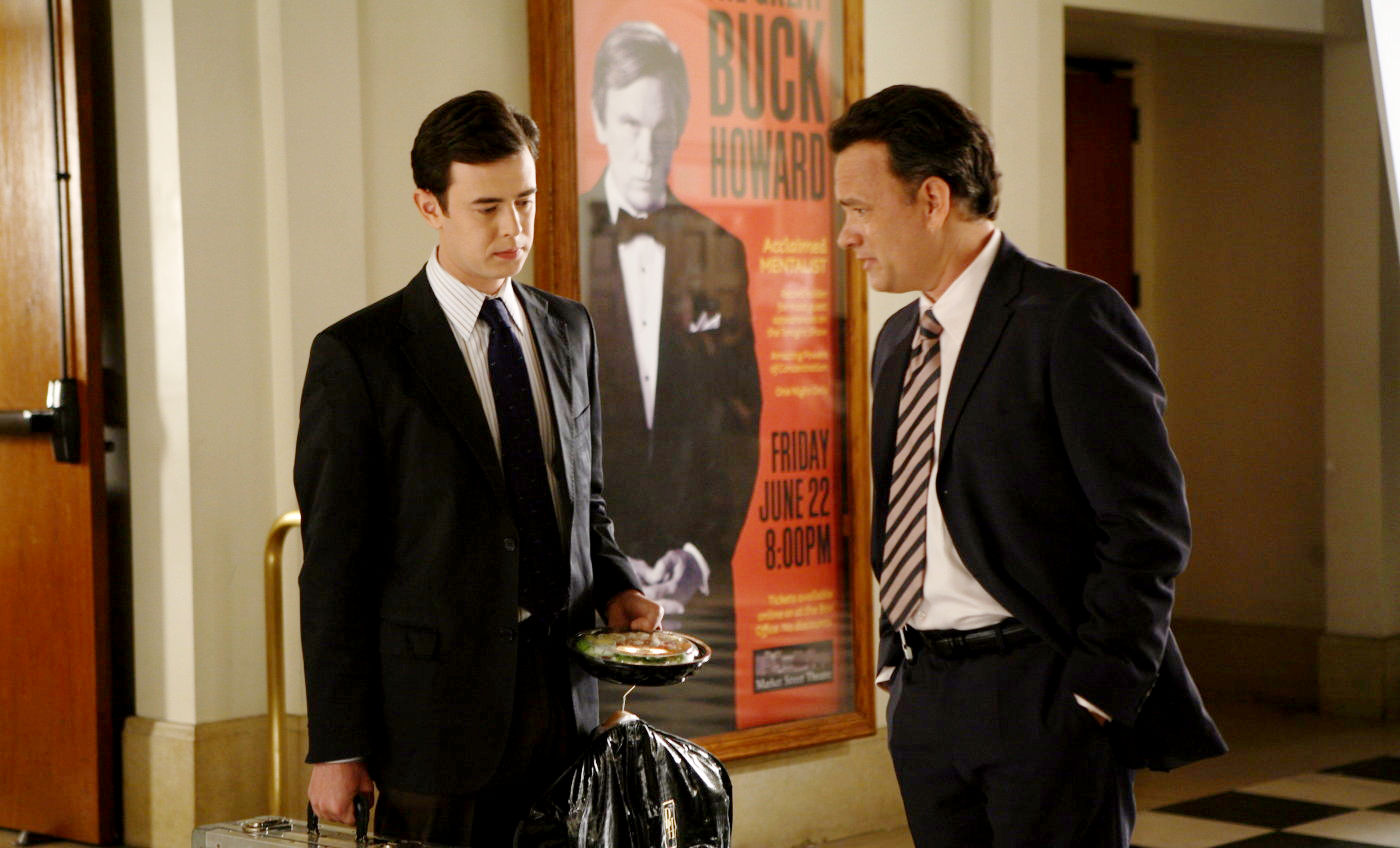
The Great Buck Howard

The Great Buck Howard (Sean McGinley, 2008) Writer-director McGinley spent some time as the road-manager to The Amazing Kreskin and that formed the basis for his script for this, a production of Tom Hanks' Playtone Pictures.

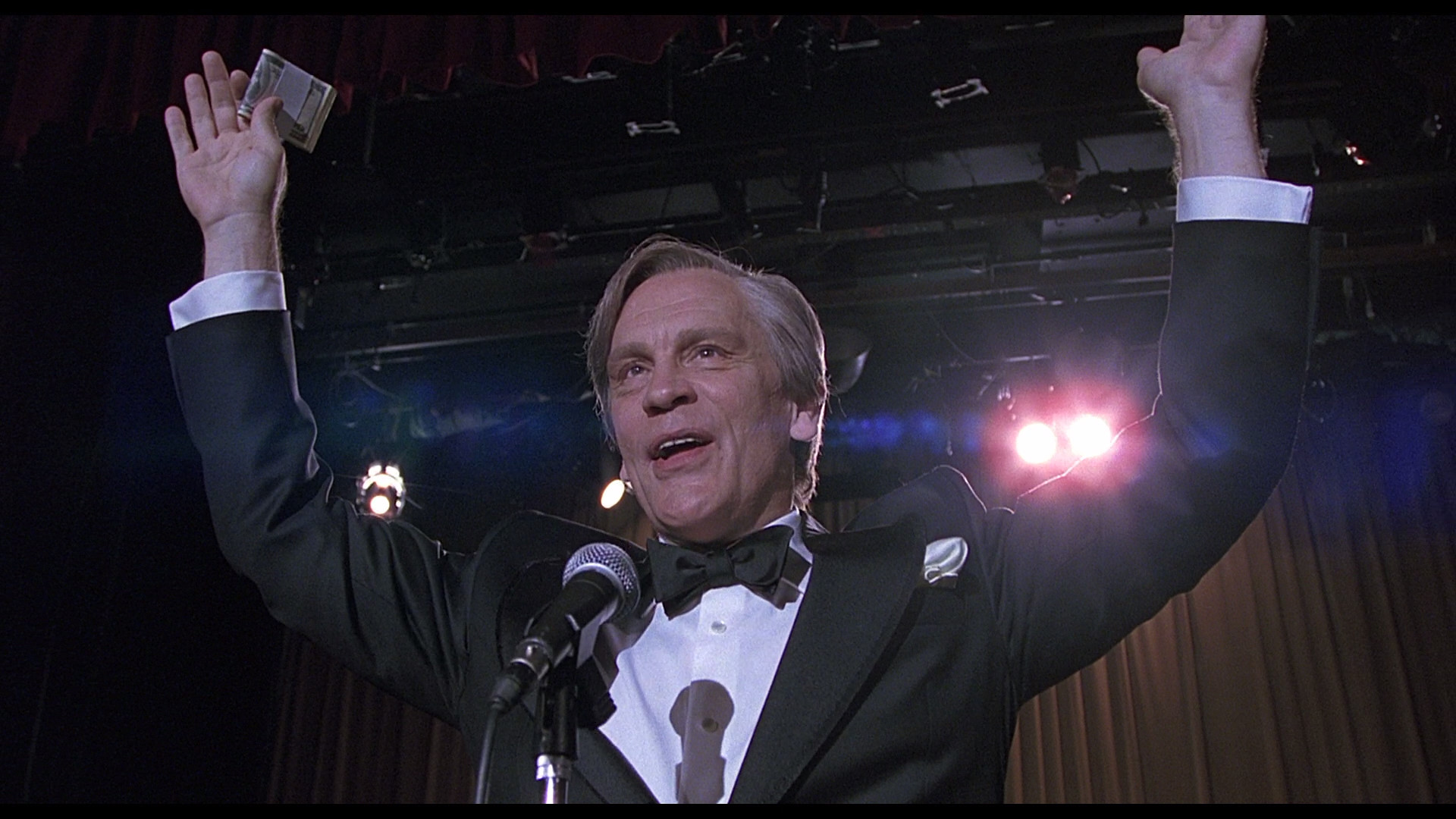
Looking at the promotional videos associated with the DVD, it would appear that Kreskin is fine with this, even though, in details, McGinley strikes rather close to the psychic bone here—yes, Kreskin in his hey-day appeared 61 times on "The Tonight Show with Johnny Carson."  Yes, he would close his shows by guessing where an audience member had hidden his pay-check (and he always got paid). That's all duly served up as quirks of "The Great Buck Howard," played somewhat petulantly by John Malkovich.  But are the other things in the movie like this—the grandiose ego, the out-sized self-importance, the schticky "I love this town" facile platitudes, the dismissive photo distribution, the intolerance for deviation from formula, and the truculence that borders on vengefulness.  Oh, Buck can be a good guy...on occasion...but mostly he's in one big perpetual snit that you don't need a mentalist to see coming.  Which makes one wonder why someone would take the job in the first place.


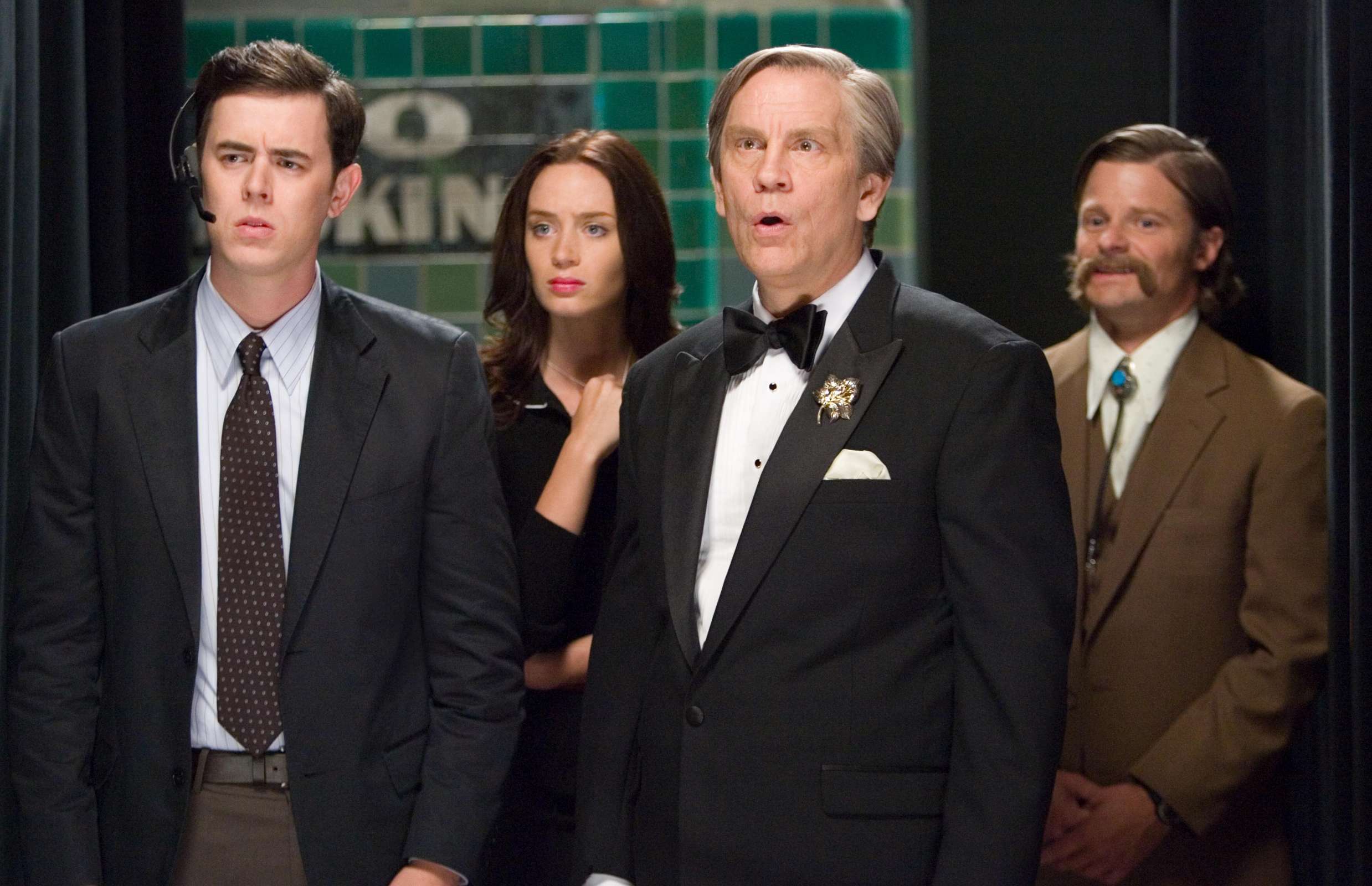
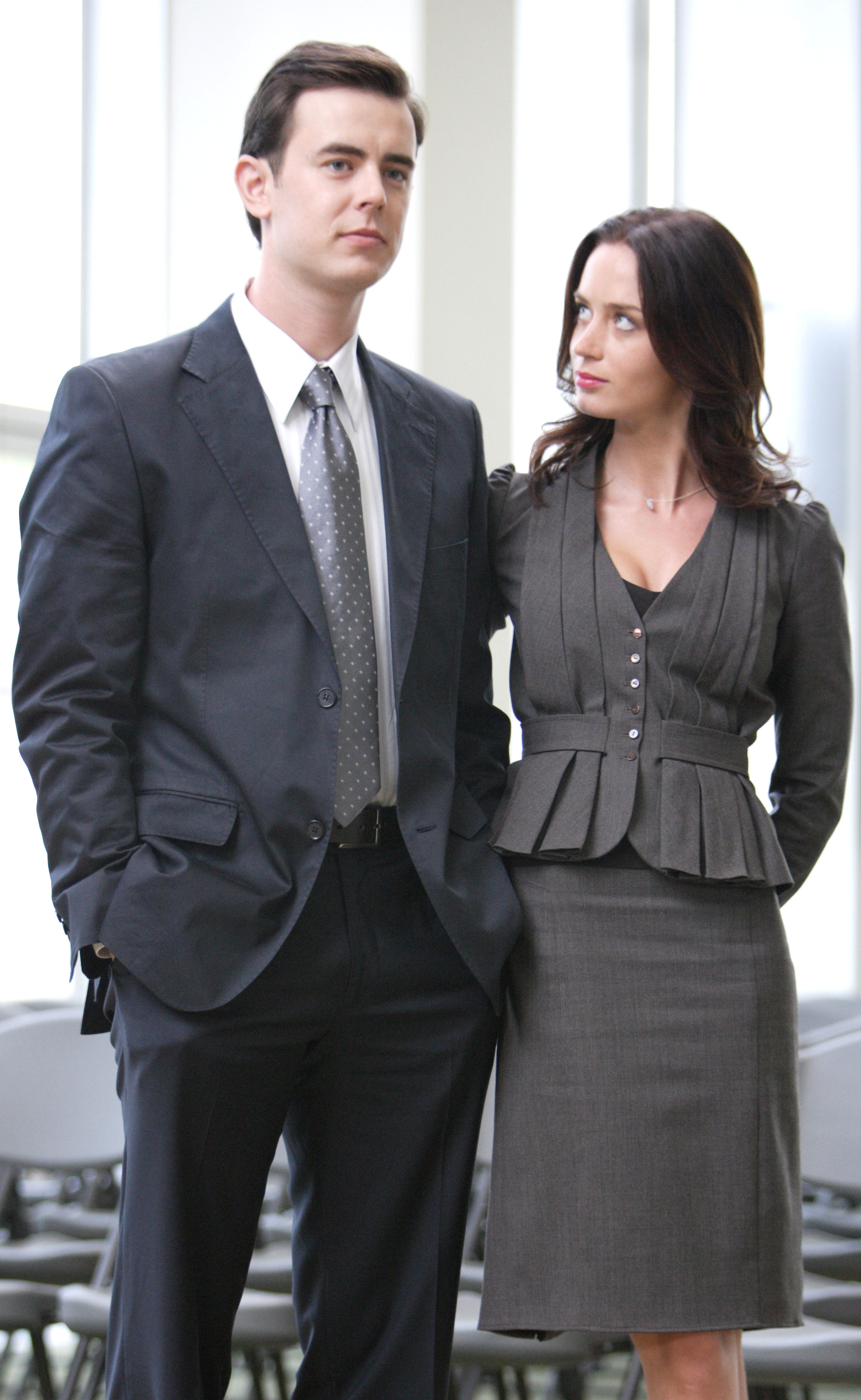
Troy Gable (Colin Hanks) drops out of law-school to be the personal assistant for "The Great Buck Howard," who is doing a cross-country tour of small town America, hoping to re-kindle some of the old magic of his mentalist show, when he was more famous...or famous at all.  A publicity agent (Emily Blunt) is hired as point-person for interviews and "events" that tend to fizzle out, but she's only as effective as her sorcerous subject and he works best in a controlled environment, one under his control and can anticipate, and any deviation might throw him off.


The film has its charms for a one-sided coming-of-age story, mostly in the casting with Hanks the younger (Hanks the older plays his skeptical father in a nicely subdued and flinty cameo) as a fine, callow presence (most of his performance has to be done in the eyes in the course of observing the shenanigans, and, appropriately, Troy never takes his eyes off Howard, when the job might more appropriately call for his attention to be elsewhere.  Blunt is great, as always, even if she isn't doing much more than 'love interest," and Malkovich does a tender walk between comedy and psychosis, cruel and entertaining in one flow.  There's also some nice touches by Steve Zahn (a favorite of mine) and Ricky Jay, as bumps on the road-trip.


Still, the Kreskin connection bothers me, especially as the movie's mentalist is a bit of a jerk, never himself coming of age.  I remember the film coming out and listening to Hanks (the younger) and McGinley do "press" and never once mentioning Kreskin.  Nor did I hear anything else about the man through the film's admittedly short run.  To see him come up so specifically and directly on the DVD was a bit of a surprise.

In fact, I don't remember him ever mentioning it, before I saw that supplemental feature.

Hmmm.  Perhaps he is a clairvoyant, after all.


Saturday, August 31, 2013

The Way, Way Back

The Summer of Our Discontent
or
"Little Mr. Sunshine"

The summer "coming of age" movie is such a staple that it might be worthy of its own genre label, rather than merely being relegated to a sub-category. It's a natural, really. The timing seems right and appropriate for the subject of change. Summer always seems to be a time of transitions: from one school year to the next; from bring a graduate to a freshman, walking out of one door and into (and hopefully through) another one. And while the rest of the year is taken up by schooling, the ample three months of idle time gives one plenty of opportunity for other extracurricular learning—life-lessons from the school of hard knocks.

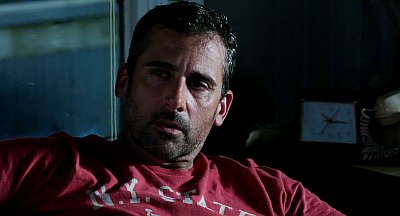
Take Duncan (Liam James), for instance (please, someone has to...) in the new film by Jim Rash and Nat Faxon (they won an Oscar for their superb script for The Descendants).  Fourteen, a 'tweener, his parents are divorced and Mom (Toni Collette) has taken up with another man. Trent (Steve Carrell), who has a daughter Steph (Zoe Levin).  It is clear as this pint-sized Brady Bunch goes to an ocean beach house that it is not going to be anything resembling a beach-home.  Duncan doesn't want to be there; he'd rather be with his Dad this Summer.  Whether that preference has driven a previous wedge between Trent and Duncan is not know.  What is known is that Trent is something of a jerk to Duncan.  "One a scale of 1 to 10, what do you think you are?" he asks Duncan sequestered to the back of the station wagon on the ride to.  "Six," says Duncan, noncommittally.


"I think you're a 3," says Trent imperiously.  "I just don't see you putting yourself out there..."


If Trent wanted to see Duncan put out, that remark was a good start.


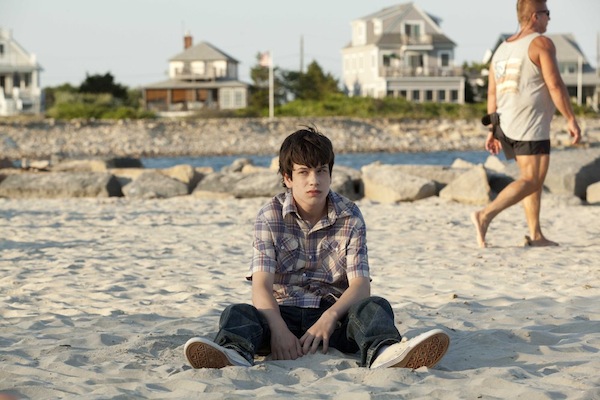
Duncan (Liam James) has a "thousand mile stare"
Duncan settles into the teen routine of being a hot-house plant in a dark room, grunting monosyllabically at anyone over 30.  He can't relate to Trent's friends and neighbors, like the barely-together Betty (Allison Janney)—she has two kids, Susanna (AnnaSophia Robb) and Peter (River Alexander) and Kip (Rob Cordrry) and Joan (Amanda Peet).  And Mom, trying to heal after a divorce, is there for Trent.  Duncan tries to be invisible and stay out of the way, and is emotionally unavailable.

It isn't until he finds Steph's abandoned pink bike (with tassles on the handlebars) that things begin to pick up speed and he feels like less of a trapped and pacing animal.  The bike gives him some mobility, some freedom, and it only has one seat, which is fine by him.  He starts to explore the beach-town and runs into Owen (Sam Rockwell at his loose best) who runs the local water-slide park, Water Wizz.  Duncan gravitates there and that's when his Summer starts to get fun.  Owen takes him under his crooked wing, adding Duncan as park-help, and introducing him to what will be his new family, including Caitlin (Maya Rudolph), the responsible to Owen's irresponsible, and concessioners Roddy (Faxon) and Lewis (Rash).  Pretty soon he's in a routine, interacting with sort-of adults and fitting in.

But, it causes conflicts within families; his long hours at the park causes concerns at home and puts him in further conflict with Trent, who has his own disappearing act issues.

It is no great shakes as a film, but it is a good movie, a movie you might enjoy.  It is merely competent, well-written, extraordinarily cast and acted (the standouts being Rockwell and Steve Carell who works against type and proves himself capable of playing a deliberate jerk, instead of just a clueless one.  And Rash and Faxon prove themselves as adept at directing as they are at screenwriting.  In a disappointing Summer, this counts for a lot.  And like Duncan's situation at Water Wizz, this little wayward breath of fresh air from the usual carnage perpetrated on screens is a welcome relief.

The Way, Way Back is a Matinee. 


The only explosion in The Way, Way Back