Showing posts with label G. Show all posts

Tuesday, November 19, 2013

Go West (1925)

Go West (Buster Keaton, 1925) There have been a couple features with the title, but this is the one written, directed and starring Keaton as a woe-begone dweller of a podunk town who sells everything he owns at the Fade From Black, only to find (after buying food and buying back the family photo he'd forgotten in a drawer) that he's a completely free man (freedom being just another word for nothing left to lose).  Deterred and detoured, he hoboes a freight train and accidentally (not exactly the right word as Keaton's "accidents" are always complicated) finds himself on a working ranch out west.  A discraded set of chaps is all the references he needs to start working on the ranch and working the herd, starting from the ground up.  Removing a stone from a heifer's hoof gains him a friend and a constant companion in the work-a-day world, as the un-broco'd Buster and bovine look out for the other.  

It's a classic fish-on-the-prairie story as Keaton's tenderfoot and his tender-footed cow-friend find ways to get things done while not doing things in the normal cowboy fashion, and any mentioning of the lessons learned in milking, lassoing and branding a cow will only spoil the surprise.  Let's just say that PETA would be proud.

The way most silent comedies work is with a long series of short bits and then an extended sequence in the final couple reels, and that was Keaton's standard blue-print, as well.  The final complication involves getting the herd to market so that the ranch can pay its bills, while at the same time, saving the one cow that Keaton has become the guardian cowboy to.  It involves a train-trip (a Keaton specialty) as well as one logistical movie-making nightmare—a cow stampede through the streets of roaring '20's Los Angeles, but done at a pace with a tangential series of complications that amaze.

As always seems to be the case with silent comedies, especially those of Keaton, the fewer words the better.  Just seek it out and enjoy.


The first "Mexican stand-off" in movies is instantly defused with a pinkie finger.


Tuesday, October 1, 2013

The Grandmaster

Two Words.  Vertical.  Horizontal.
or
Once Upon a Time in Forshan

Let's get one thing out of the way first.  The version I saw of Wong Kar-wai's The Grandmaster (aka "Yi Dai Zong Shi" aka 一代宗師)  is the Weinstein Company release, which runs 108 minutes.  The original Chinese version runs 130.  That's about 20 minutes of footage missing.  So, I don't know whether I'm reviewing Wong Kar-wai's latest film, or a long, long trailer for it.

Normally, I wouldn't be doing much kvetching about this, but I've seen enough of the man's movies to know that The Grandmaster is something very, very different from what he's done in the past (In the Mood for Love, Chungking Express, 2046): more formal, less dialog-driven, more image-conscious and more experimental (and Wong has pushed all sorts of boundaries already in his career).  Usually, when a distribution company does this much hatchet-work on a film (Ironically, this film is "presented by Martin Scorsese," who's also had a couple films filleted by the Weinstein's), the most interesting character-driven parts get left behind as "fat," leaving the parts with the most action.  

Well, in this case Wong might have already done that for us, for in telling the life-story of Ip Man—one that's been in the process for ten years—he's hit the highlights and the high fights and other than some discussions of philosophy and technique, that's it.  It's simultaneously illuminating and frustrating: frustrating because the movie plays like a bio along the lines of DeVito's (and Mamet's) Hoffa or Mann's Ali, all life-highlights and nothing to connect the dots;  illuminating because it appears to be a dramatic choice, making Ip Man's life segmented between life and work and philosophy and not much else—there is no historical context other than the scripted titles telling you what is going on in the rest of the world.*


It begins with a fight in the rain between Ip (Tony Leung Chiu Wai) and several combatants, staged as a brutal ballet in various speeds, escalates through the number and various tactics of the opponents, and ends with the defeat of the strongest combatant.  Ip then flashes back on his life starting with his marriage to Cheung Wing-sing (the incredibly beautiful Hye-Kyo Song), and the news that the master of Northern China, Gong Yutian (Wang Quixiang) has retired and bequeaths the role of master to Ma San (Jin Zhang), with the caveat that the South should have their own master.  It is decided that Ip should challenge Gong for the right, and he is put to the test by three Southern masters before the match with Gong.  

That match is anything but typical, has nothing to do with the training of the Southern masters, and Gong declares Ip his heir in Southern China.  That does not sit well with Gong's daughter Gong Er (Ziyi Zhang), who challenges Ip for the sake of family honor.  Their meeting and subsequent fight is an amusing affair of restraint and dexterity, and the fight concludes to Gong's satisfaction. Ip can only smile and say "I want a rematch."

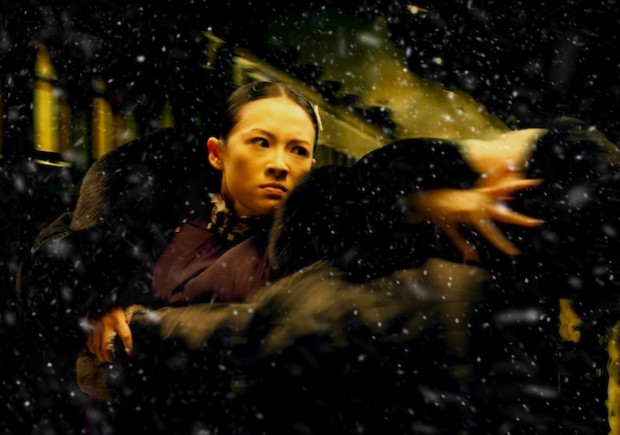
Gong Er's moment of triumph.  You can see it in her face.

Now, despite this country-wide grudge match, and the Sino-Japanese War, which plunges the country into a depression and, as a result, sends Ip to Hong Kong to provide for his family, the film could not be more personal, keeping its eye on Ip, while, in the meantime, Gong, who has been only secretly trained in kung fu by her father, seeks revenge against Ma San, in a totally focused, life-sacrificing mission to the death.  The two are poles apart in purpose and drive and yet they are drawn together, players on opposite sides.  The film is a series of fights, the important ones, punctuated by a series of beautifully photographed scenes of domesticity and meditation, broken up into chapters of title cards, as from the silent film days.

Wong's approach to this is very formal, the photography sumptuously lit, golden light betraying dark spaces and staged sometimes as formal portraits of a time and place, emotions run high, but not betrayed by the faces of the principals, the most expressive being Ip Man's wife, who disappears from the film very early on.  I'd be hard-pressed to find a more beautiful film to see this year, even if the beauty comes at a certain static quality that pushes the audience away, albeit gently.  And the fights are balletic brawls, filmed with depth and in tight close-ups, but at a pace that allows for position and space to be registered without sacrificing pace.  In fact, it's quite invigorating to see a slow-motion concentration edited quickly as the fights are done here, as it is during the first fight in the rain.  But, befitting the styles and other situations—the Gong Er/Ma San fight has its own bizarre energy-forceWong gives each confrontation a different presentation that makes each one different, and mesmerizing.

There is one odd, touching thing that brings up the ghosts of the past just as the title cards harken back to the silents, Wong brings to bear Sergio Leone as a touchstone by making sure that he gives Gong Er a borrowed theme from Once Upon a Time in America to communicate the regret she cannot express herself.  It produces goose-bumps, and not just from recognizing the source of the haunting cue, but for being so solidly apt and instantly evocative (Ennio Morricone can do that).  It's a beautiful, odd, off-kilter film.  I only wish to see more of it.

The Grandmaster is a shortened Matinee.


Portrait of the Artist as a Portrait-Artist:
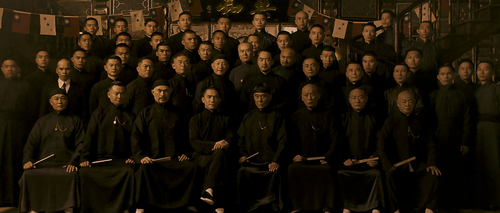
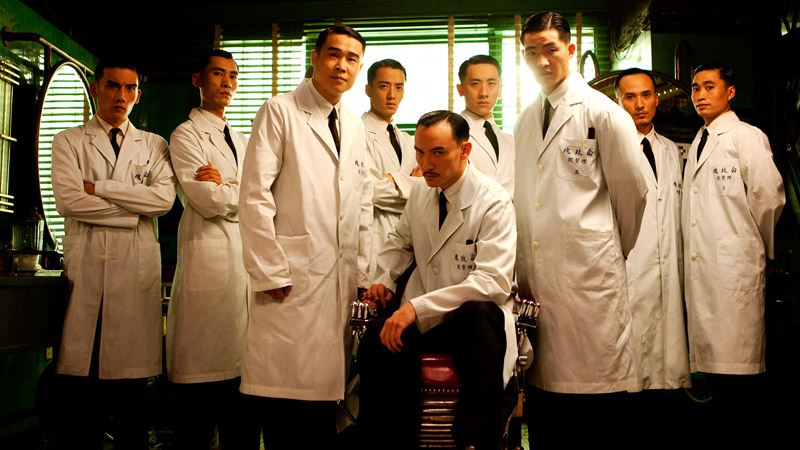
Wong Kar Wai book-ends chapters in Ip Man's story with staged sittings

* There have been three other films, heavily fictionalized, on the same subject in the time that Wong was working on this film, as well as a couple television films about him.

Saturday, September 14, 2013

The Great Buck Howard

The Great Buck Howard (Sean McGinley, 2008) Writer-director McGinley spent some time as the road-manager to The Amazing Kreskin and that formed the basis for his script for this, a production of Tom Hanks' Playtone Pictures.
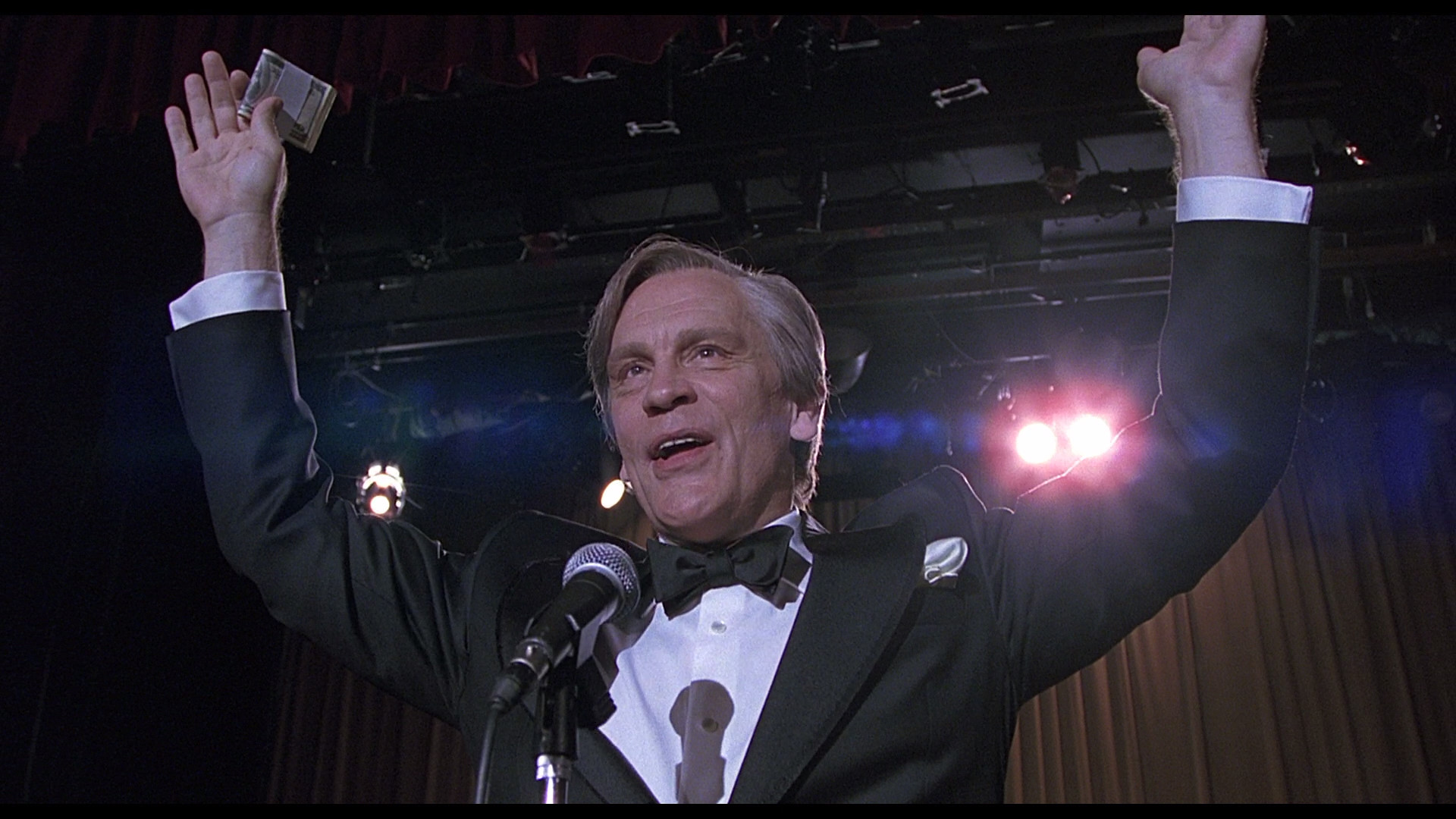
Looking at the promotional videos associated with the DVD, it would appear that Kreskin is fine with this, even though, in details, McGinley strikes rather close to the psychic bone here—yes, Kreskin in his hey-day appeared 61 times on "The Tonight Show with Johnny Carson."  Yes, he would close his shows by guessing where an audience member had hidden his pay-check (and he always got paid). That's all duly served up as quirks of "The Great Buck Howard," played somewhat petulantly by John Malkovich.  But are the other things in the movie like this—the grandiose ego, the out-sized self-importance, the schticky "I love this town" facile platitudes, the dismissive photo distribution, the intolerance for deviation from formula, and the truculence that borders on vengefulness.  Oh, Buck can be a good guy...on occasion...but mostly he's in one big perpetual snit that you don't need a mentalist to see coming.  Which makes one wonder why someone would take the job in the first place.


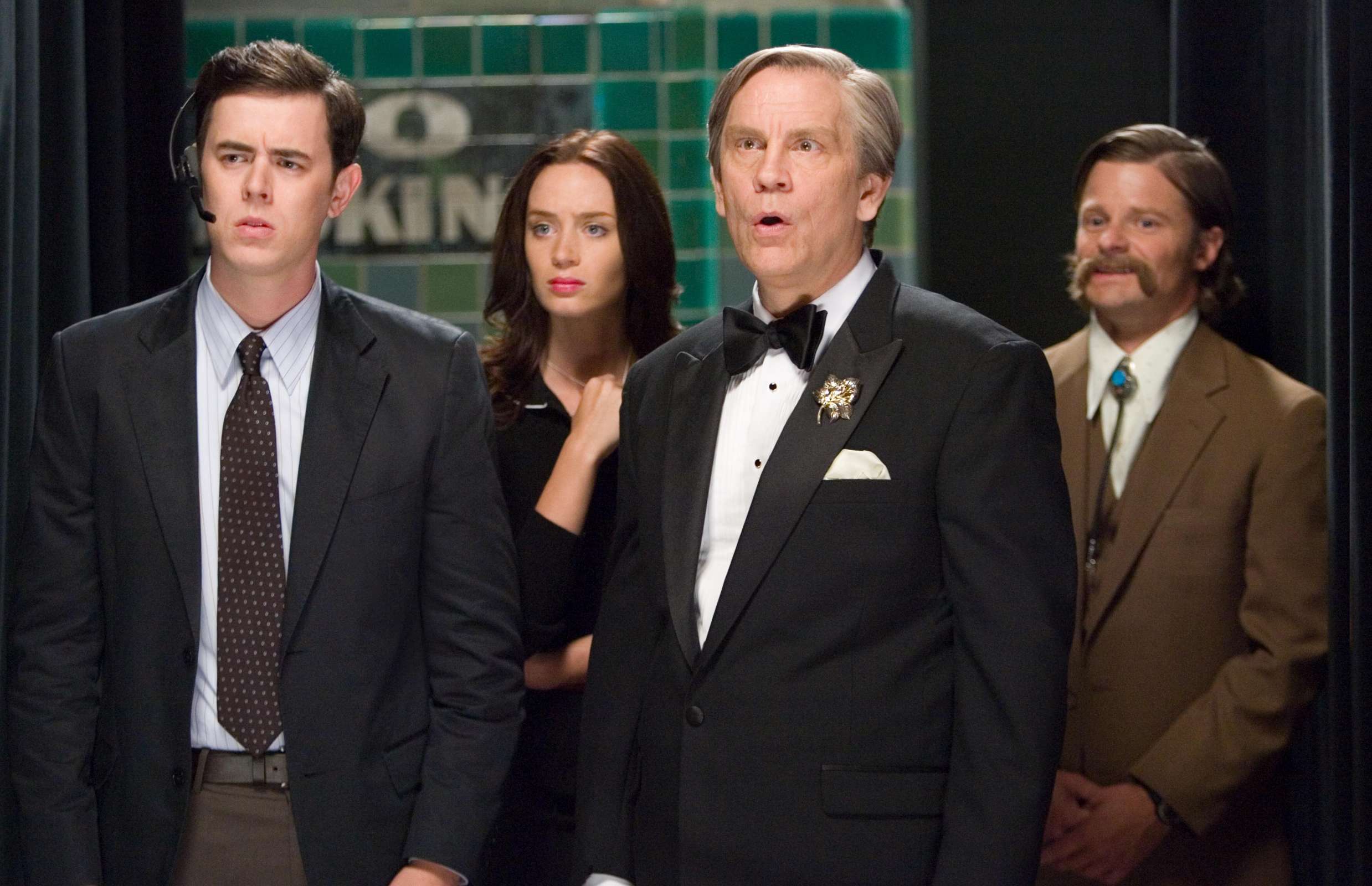
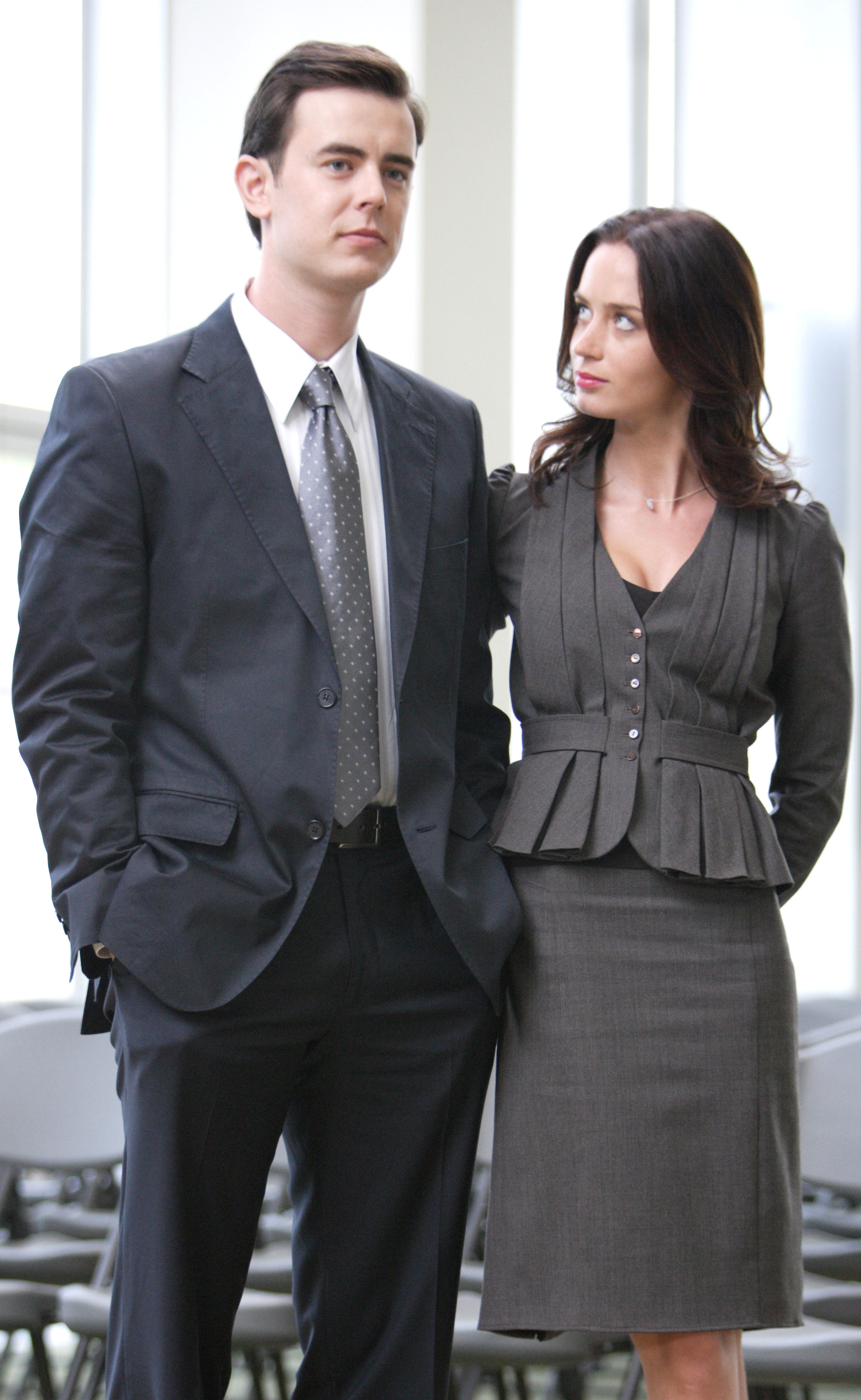
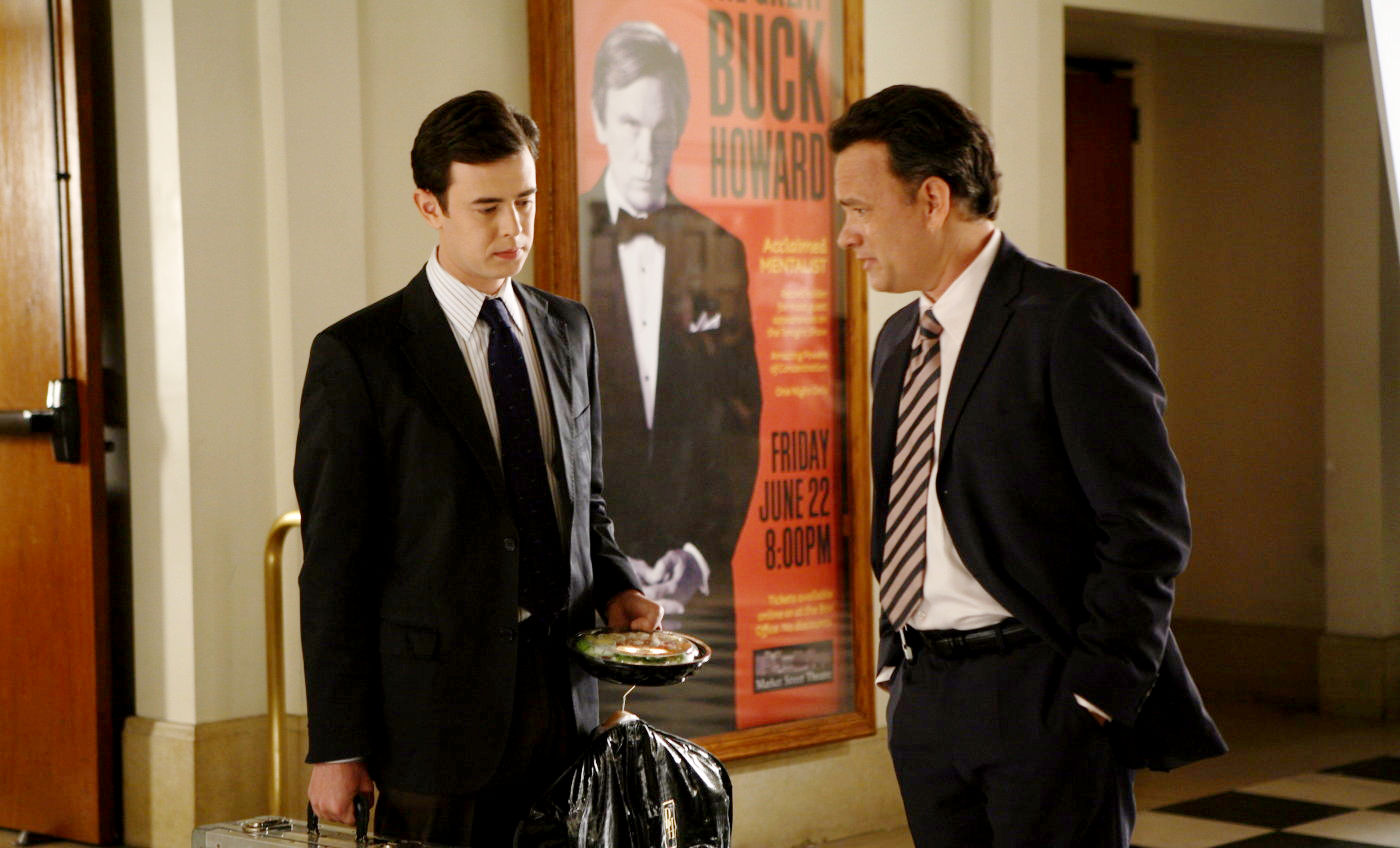
Troy Gable (Colin Hanks) drops out of law-school to be the personal assistant for "The Great Buck Howard," who is doing a cross-country tour of small town America, hoping to re-kindle some of the old magic of his mentalist show, when he was more famous...or famous at all.  A publicity agent (Emily Blunt) is hired as point-person for interviews and "events" that tend to fizzle out, but she's only as effective as her sorcerous subject and he works best in a controlled environment, one under his control and can anticipate, and any deviation might throw him off.


The film has its charms for a one-sided coming-of-age story, mostly in the casting with Hanks the younger (Hanks the older plays his skeptical father in a nicely subdued and flinty cameo) as a fine, callow presence (most of his performance has to be done in the eyes in the course of observing the shenanigans, and, appropriately, Troy never takes his eyes off Howard, when the job might more appropriately call for his attention to be elsewhere.  Blunt is great, as always, even if she isn't doing much more than 'love interest," and Malkovich does a tender walk between comedy and psychosis, cruel and entertaining in one flow.  There's also some nice touches by Steve Zahn (a favorite of mine) and Ricky Jay, as bumps on the road-trip.


Still, the Kreskin connection bothers me, especially as the movie's mentalist is a bit of a jerk, never himself coming of age.  I remember the film coming out and listening to Hanks (the younger) and McGinley do "press" and never once mentioning Kreskin.  Nor did I hear anything else about the man through the film's admittedly short run.  To see him come up so specifically and directly on the DVD was a bit of a surprise.

In fact, I don't remember him ever mentioning it, before I saw that supplemental feature.

Hmmm.  Perhaps he is a clairvoyant, after all.


Saturday, June 15, 2013

Gangster Story

Gangster Story (Walter Matthau, 1959) An odd one, this.  And not a very good one, but still an oddity.  A capital "B" B-movie, directed by Walter Matthau, and the only movie he ever directed (someday I want to see the one Cagney directed, too), done very early in his career.  At the time, Matthau was a stage actor, but since 1950 he'd been doing small parts in TV series, and didn't make his first film until 1955's The Kentuckian (starring Burt Lancaster and, as we're on a theme here, directed by him, as well) and would start becoming a fixture in films with Elia Kazan's A Face in the Crowd.   

It's not known whether it was done on a dare, or out of desperation. The script wasn't much, but Matthau took the job, starring in and directing, because he had gambling debts.  His co-star was his wife, Carol Grace, and instead of New York, it was filmed in sunny Los Angeles, mostly during the day, unusual for a supposed film-noir, and where the most shadows are seen in, of all places, a library.


Matthau is fine, his performance, at least, is professional, but loose and schlumpy, and plays well, even in scenes that are patently absurd...like the one where his con character Jack Martin stages a bank-vault robbery by posing as a movie director rehearsing a scene—distracting the guards to "stay in character" and convincing the bank president to open the vault. (Really?  It's that easy?  Everyone is that dumb and star-struck, not even asking for a filming permit and with no cameras, no crew, nothing?), while most of the other performers range from merely amateurish to a painfully charitable "at least they remembered their lines."  Wouldn't have mattered if they didn't.  The entire movie is post-dubbed, the dialogue replaced in the studio after the fact—whether because they had no sound recordist during filming (it was a five-man crew...and edited by future porn director Radley Metzger) or background sounds are so pervasive.  It does create a rather unnerving sequence, late in the movie (when nobody was paying attention?) where dialogue is punctuated a few times by the sound of the timing "beep" that alerts the actor when to talk—no one bothered to take them out...it wasn't in the critical first or last reels, and maybe it was just overlooked. 


Professionalism aside, what this movie most resembles is the 1973 film Matthau made with director Don Siegel, Charley Varrick, about "the last of the independents" (criminal division).  Both Martin and Varrick are bank-robbers, who get caught up in a situation they're not accustomed to: not only avoiding the police, but also the organized crime lord attached to the last institution Matthau's perp robbed.  Both involve a good amount of time on the lam and hiding out, although Martin capitulates and, to settle differences, joins the organized bad guys to save his neck.  The quirky, nastily-funny Siegel film is full of invention and colorful characters; everything about Gangster Story is pure black-and-white, and is really worth watching only for the curiosity factor.  Matthau moved on, and when this vampire of a movie rose from the dead in conversation he'd crack wise in interviews saying the film "premiered at Loew's in Newark and never crossed the Hudson."  He never was tempted to direct again.


Thursday, January 24, 2013

Gangster Squad

Manifest Density
or
The War for the Soul of Los Angeles (such as it is)

Ruben Fleischer's third film (after the very good Zombieland and the excremental 30 Minutes or Less) is Gangster Squad, a Hollywoodized version of the efforts by the LAPD to take down the efforts of Mickey Cohen, the lieutenant of Bugsy Siegel's Jewish mafia, who took over Siegel's interests when the mob kingpin was murdered in 1947.

If one is looking for a history lesson, one should look elsewhere.  This is a glamorized, fictionalized version of the events set in some art-deco post-war version of Los Angeles that doesn't seem to have existed anywhere except the Warner Brothers gangster films and Brian de Palma's The Untouchables, to which this film owes a great debt.  The gangsters all wear dark clothes with long coats (the better to identify them) and are all greasy and ugly, while the police are all good-looking guys in nice suits who bend the rules a bit (with the possible exception of Chief Parker, played with a gruff somnambulance by Nick Nolte, who headed up the similar "Hat Squad" in Lee Tamahori's Mulholland Falls).*

It all feels very false, from how the gangsters rarely hit anything despite the thousands of rounds shot from tommy guns, and the Gangster Squad "hit" ratio usually fares better.  The Squad (hand-picked by the leader's wife, played by Mireille Anos, for being rough-necks and not promotion-headed top-of-their-classers) consists of boss John O'Mara (who did exist, but did not run the unit) as played by Josh Brolin, Jerry Wooters (played by Ryan Gosling), Max Kennard (Robert Patrick)—a sharpshooter, Conway Keeler (Giovanni Ribisi) a surveillance/electronics expert, as well as two PC members for the 21st century audience—Anthony Mackie (so good in The Adjustment Bureau) and Michael Peña.   Their target is Mickey Cohen (Sean Penn in a make-up that makes him look like he walked out of Warren Beatty's Dick Tracy), who's reputation is movie-inflated to make him seem like he's an empire-building Al Capone, rather than the cheap hood with star connections he ultimately was.

Fleischer is more interested in flash than being true to the source.  His fights are surprisingly well-staged, one shot per flying fist, but not Bourne-edited so one can easily follow it—an early fight in an elevator borrows heavily from a similar scene in a James Bond movie but actually goes places the 007 film merely used for suspense.  Once in awhile, he'll go for a Matrix-y slo-sloo-slooo-mo effect (rather than a fleeting Peckinpah image) just to make a point of something, like cartridges flying out of a machine gun, or a Christmas ornament exploding due to gunfire, but it's just slowing things down as opposed to telling a story.  Brolin's fine, nuanced even, but Gosling's McQueen-ish hipster act is wearing a little thin, and the chemistry exhibited between he and Emma Stone from Crazy, Stupid Love is completely missing here.  Mackie, Peña, and Patrick are far more engaging probably because they don't fit the established mold. 

It's entertaining, to a certain extent, but one gets the feeling, after patterns have been set that bring to mind other films, that one is being sold a bill of goods, and we are.  

The real-life Cohen was convicted of tax evasion (not murder) in 1950, serving four years.  Upon his release, he established several businesses (the ones portrayed in the film) and was again convicted of tax evasion in 1961 and released (again) in 1972.  Cohen died in his sleep in 1976.


Gangster Squad is a Rental.


The real Mickey Cohen, photographed in 1950
The real "Gangster Squad"


* Amusingly, his driver is Officer Darryl Gates (played by Josh Pence) who would be Chief from 1978 to 1992.

Friday, October 12, 2012

Garbo the Spy

Garbo the Spy (Edmon Roch, 2010) Back to reality, but still dealing with spies, so "reality" is relative.  And the time-frame is similar—just as James Bond's creator, Ian Fleming, drew inspiration from his work with the OSS during the second World War, so, too comes this documentary—a true account of the work of Juan Pujol Garcia, a real-world double agent, who worked for the Nazis first, then after establishing credibility with them as a British-based spy (although he was actually living in Lisbon), offered his services to the Allies "for the good of humanity," and with the help of the OSS, creating for the Germans a funded network of 27 agents—all fictional.  To the Reich, he was known as "Arabel." To the West, he was "Garbo."  

His accomplishments were many.  First, he siphoned off considerable German funds to pay for his "network"—even establishing a pension for one of his phantom agents who had "died."  He was also able to send duplicate messages to both sides, allowing the British cyphers at Bletchley Park to have a "Rosetta stone" with which to check their round-the-clock de-coding efforts—an almost impossible task as the German changed their codes daily—and Garbo's writing style was so formal and distinct, his messages were easily identifiable.

But his coup was in spreading disinformation, the most successful instance being a big one—he managed to convince the Nazi's, particularly the CIC, Field Marshall von Runstedt, that the invasion of Europe would take place at the Pas de Calais under the command of the disgraced General Patton, rather than its actual location of Normandy—a ruse that was so successful, it was still believed in August of 1944, two months after D-Day, delaying an increased resistance to the Allied advancement to Berlin.  That's some trust.

The documentary is a potpourri of information—not unlike the hodge-podge of sources "Arabel" would cook up in his work—talking head interviews, vintage war-time footage, and recreations from such films as The Longest Day, Patton—big theater results of Garbo's deceptions.  The tone is slightly cheeky, with an emphasis on pulled quotes, especially from films like Our Man in Havana, Mata Hari, and an obscure Leslie Howard film called Pimpernel Smith, Howard being an impetus to the counter-intelligence efforts—his death in the war effort was both a cautionary tale and an exposure of Allied spy efforts.  Garbo is entertaining, as long as one can enjoy the breezy tone without darkening it with thoughts of the wholesale slaughter going on at the time.  But it is interesting in its tale of how world events can be shaped by one man with a lie and the razor's edge that is walked in times of conflict.


Juan Pujol Garcia or "Arabel," as he was known to the Germans

Friday, June 15, 2012

Gentleman Jim

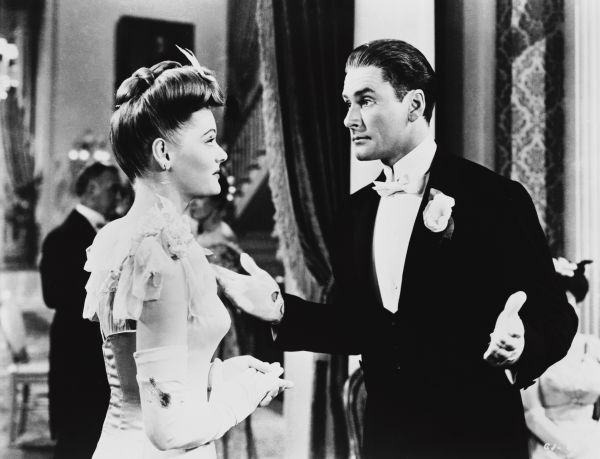
Gentleman Jim (Raoul Walsh, 1942) It's all background in this Errol Flynn vehicle, as the audience focuses on Flynn portraying boxer "Gentleman" Jim Corbett as he serves as point-man (chin variety) for the gentrification of the pugilistic sport.  As we fade in the first rule  of the fight game is "nobody talks about the fight game." Not in polite society anyway.  As it is, floating boxing matches are staged hectically before the police can find out and they regularly end, not with the sound of a bell, but the sound of a gavel in a courtroom.  Once "Johnny Law" gets wind of the fight (or hears the sound of one, they're fairly rambunctious affairs), they descend, the crowd scattering as they round up fighters and fans alike.  It's all strictly word-of-mouth, grudge matches, really, the only civility being those of the Marquis of Queensbury—and anybody who's seen Wilde knows what a toad he was.

But Corbett brings some civility to the hammering blows, even to the point of impressing heavyweight champion John L. Sullivan (Ward Bond), who goes so far as to meet up with Corbett at a post-match soiree to congratulate him for being the man who took him down.  

Walsh contrasts the match fighting (which takes up relatively little screen-time) with Corbett's efforts to rise in the ranks of Society, as well as in the ring standings, learning to exploit his victories to promote himself to the hoi polloi as well as fight promoters.  It's the burgeoning of the age of sports figures as superstars, and not thugs, rising above gutter tactics and championing their skills as valuable commodities to the elite, giving the rich a taste of the hard-scrabble competition they've left behind.

It's a natural extension of Flynn's persona as a cavalier, being the winking bad boy who's naughty to all the right people, but especially to the really bad ones—the jaunty trickster with a gleam in his eye, who'll find a way to get ahead...by left hook or by crook, the competent high-wire artist in marked contrast to buddy Walter Lowrie (Jack Carson, one of my favorite character actors), the lovable schlub who plays pilot-fish to Corbett's shark, never ablt to achieve success, but omnipresent to enjoy it for him.


Tuesday, December 27, 2011

The Girl With the Dragon Tattoo


"The Girl With the Dragon, Take Two"
or
"Once More...with Feeling"

"We come from the land of the ice and snow
from the midnight sun where the hot springs FLOW

How soft your fields so green,
can whisper tales of gore,
Of how we calmed the tides of war.

We are your overlords.
On we sweep with threshing oar,

Our only goal will be the western shore."

"Immigrant Song"  Led Zeppelin


The American production of The Girl with the Dragon Tattoo advertised itself (amusingly) with the tag-line "The Feel Bad Movie for Christmas."  Compared to the Swedish-TV version (with Michael Nyqvist and Noomi Rapace), it's actually, if one can believe it given the subject matter, a "kinder, gentler" version.

So, what's different?  For those familiar with the first version, many of the locations reveal themselves to be the same.  Resolutions are slightly different. The casting certainly is (and more on that later).  Editors Kirk Baxter and Angus Wall keep things moving very fast, sometimes abruptly, and scripter Steven Zaillian delivers punchy dialogue dripping with icyclic irony, while keeping the circumstances equally savage and shocking (what else can you expect from from a murder mystery involving in-bred families crusty with krona, corruption, Nazi affiliations, serial killers, sexual violence and "men who hate women"—the original title of the book when published in Sweden?).  It's how director David Fincher (Se7en, Zodiac, The Social Network) approaches the tone that's slightly different, and though still mordantly frigid, this version is a bit more clever in presentation, adding a darkly humorous slant.  Sure, the violence is still sickening, but blunted, even handled at times more discretely, making the impact contrarily even more squeamy, while, at the same time, counter-pointing with sly musical choices.*

But, it's the casting where the main differences occur.  Daniel Craig, no less intense, but muted and reduced to human scale with a world-weary familiarity, plays Mikael Blomqvist, co-publisher and chief reporter for an investigative magazine, MillenniumDisgraced by a libel suit gone against him and to shake off the publicity and the hit to his reputation and bank account, he takes on a murder investigation for the patriarch of the industrialist Wanger family (Christopher Plummer)—a literal cold case of the forty year old disappearance of the elder Wanger's granddaughter, although distinctive clues point to her either being alive, or the killer is cleverly taunting the old man.

It's soon clear that Blomqvist may be over his head and he calls on an "assistent"the same background investigator who cleared him for the job for the Wangers.  She's the titular "girl with the dragon tattoo"—Elisabeth Salander and "she's different."  "In what way?" asks Wanger's lawyer, Frode (Steven Berkoff).

"In every way," says her employer.

Too true, not only in terms of Society, but also from the actress who previously took the role (Noomi Rapace, currently starring in Sherlock Holmes: A Game of Shadows).  She's still the same Salander, the goth-punk, vegan, pierced, bi-sexual hacker-savant who becomes the focus of the series, zipping around the bleak Swedish countryside on her black-on-black motorcycle, but this movies version, in the form of Rooney Mara, is slight (she had to be starring opposite the 5'10" Craig), tiny and even more startling in appearance than Rapace.  There's still the same shock of hair, but with her elfin face, shaved eyebrows and eyes sunk deep into her face, she has the appearance of the walking dead, her head looking often like a skull, and speaking in a dull, listless monotone.  Rapace looked like she could kick serious ass (and did in the Swedish productions), but Mara is deceptively tiny, even looking sickly frail, so when she goes on the attack, it's doubly alarming. 

We learn more about the little spit-fire in the second and third books of the series (hopefully they'll have their own versions with this cast—as with the Swedish films—because this cast is too good to waste, but the film's poor box-office showing—"The Feel-Bad Movie of Christmas," remember?—may make that unlikely), but Mara's dead-inside interpretation, that only slightly blossoms through the film, is an interesting take, doubly tragic, keenly felt and puts both her character and Blomqvist's into an interesting perspective.

I actually like this version better than the first.

The Girl with the Dragon Tattoo is a Full-Price Ticket.


Not the actual main title, but the video of the Trent Reznor/Karen O version of the Led Zep song.
It's somewhat in the same visual style, and might consist of "outtakes.".


* The best being what was used in the initial trailers—Led Zeppelin's "Immigrant Song," subtly adapted by producer-composer Trent Reznor (the perfect guy to score this film) for female vocal, while keeping the brutal orchestrations of the original intact.  The Main Title sequence accompanying it, is visually arresting, suggestive and creepy, almost a mission statement in tone—black and white, reflecting the film's dark muted color scheme—while suggesting minds, trapped, tortured and squirming like toads. 

Wednesday, September 14, 2011

Green Zone

This week, we're re-publishing some reviews of the films from the post 9-11 environment.

"Weapons of Myth Destruction"

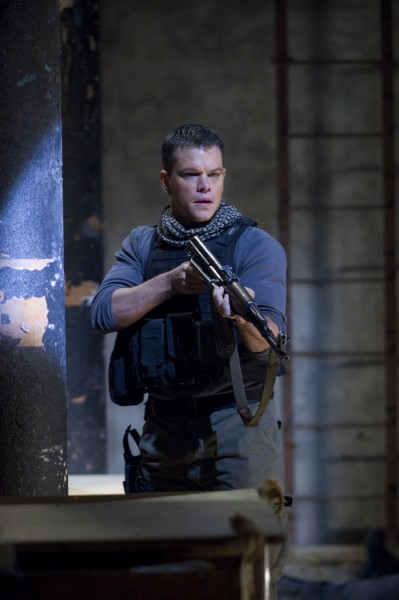
The team that brought you the more popular of the "Bourne" movies (Paul Greengrass, stunt coordinator Dan Bradley and star Matt Damon) basically take the same "run-and-shoot" scenario into the Iraq War in Green Zone—a government operative goes rogue and takes on the higher-ups with something to hide, who are willing to kill him in order to silence him. And just as The Bourne Ultimatum felt like a re-tread of The Bourne SupremacyGreen Zone has the same worn been-there, fragged-that quality, owing more to tracts like  Body of Lies (which this one closely resembles, despite having an "original" screenplay by Brian Helgeland) and the earlier collaborations of this particular action troika. It's the Iraq War, but without the "shock-and-awe," unless the awe comes from a stifled yawn.
The same issues—the manufacture of intelligence to promote a "sellable" war scenario—are at play in both the Greengrass and Ridley Scott films. The main difference being that this one lands square in the middle of the early "dazed and confused" days of the Iraq War (having just passed its seventh Anniversary) with the first crews of Army inspectors coming up trumps in their search for the legendary Weapons of Mass-Destruction, the Holy Grail of this Crusade. Adapted freely—very freely—from the book "Imperial Life in the Emerald City" (which reads like a book version of the documentary No End in Sight), the screenplay posits American efforts to steam-roll a provisional government into Iraq by propping up their own Iraq partisan (based on Ahmed Chalabi) who hadn't set foot in Iraq for thirty years and was of dubious integrity, and the double-blind of an Iraqi general (played by Yigal Naor), whose reports of destroyed WMD's are falsified by the White House, and the promised assurances of participation in any new government for cooperating are ignored in the process of "De-Ba'athification."* Helgeland took the strategic failings of the Coalition Provisional Authority and used them as background for the cut-and-paste screenplay, constructing an "Army rebel" scenario in which Damon's "Roy Miller" is disgruntled with how his squad is continually sent on bogus WMD searches, chasing wild geese rather than chemical weapons. It becomes clear to the acronym-spewing MOP'd op that something is SNAFU, as the sites they fight to raid appear free of ordinance of any kind...and haven't for a very long time. Miller's investigation with the help of a frustrated CIA agent (Brendan Gleeson) becomes an effort to keep the SNAFU's from becoming FUBAR before he goes Tango Unicorn. Besides the angry and destabilized citizenry, they also have to fight a CPA op hard-wired to the White House (represented reprehensibly by Greg Kinnear) and the Special Forces commander who doesn't ask and doesn't tell, but merely re-loads (the terrific Jason Isaacs, nearly unrecognizable, looking like Bono in fatigues). You can't swing an HD camera (in simulated field-documentary fashion) without coming into conflict with somebody. **

It's one of those trope-heavy screenplays heavy on the "table-turning" dialogue ironically bantered back-and-forth during different stages of the screenplay—the big ones (delivered with the required dripping sarcasm) are "don't be naive," and "you didn't ask to confirm?" Ho-ho! Gotcha. You are so "occupied." These are the small PR victories lost in the cluster of the Iraq War.

It's not that Green Zone is bad. It is quite competent. But it is tired, and tired at its reckless pace feels silly and unnecessary...and a waste of time. Still, far more people will see Green Zone than
No End in Sight, so if the message has to be "Damonized" at least it's doing some good, though in 20/20 hindsight.

Now...about the next one...


Green Zone is a Rental.


* Although the process is a matter of public record as is the Coalition Provisional Authority's dissolving of the Iraqi Army, the "playing" of the general is more akin to President Bush's tactics in dealing with Democratic senators while he was governor of Texas—he'd make promises to get a crucial vote and renege on those promises.

** Like the "Bourne" films and Greengrass' United 93, the film doesn't have a still shot in it, or a held shot of more than four seconds, making Kathryn Bigelow's The Hurt Locker look serene by comparison, but it's not as bad as second-unit director Dan Bradley's work on. Quantum of Solace, which looked like it was filmed from the POV of a Mixmaster set to "discombobulate." The guy's who's turned this sort of stuff into a science is J.J. Abrams, who's designed a personal system for hitting the camera—actually whacking it—in a certain rhythm to give it a "shaky-cam" stutter while letting you follow the action and still identify the participants.


Saturday, June 18, 2011

Green Lantern

"In Dullest Day, the Weakest Light..."
or
"Oa, the Humanity!"

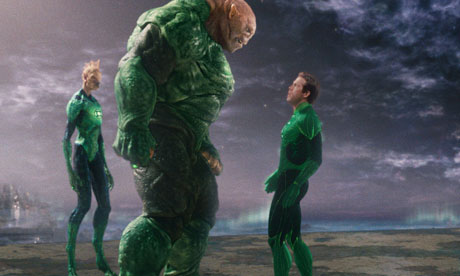
When the silver-age of comics began in the late 1950's, the '40's age of super-heroes were being replaced with westerns, horror and science-fiction tales.  So, those earlier mystery-men were re-incarnated with sciency origins that no longer depended on mystic powers and a sense of right-and-wrong.  Befitting the times, the original Green Lantern was a railroad engineer, who happened upon a mystic rune that gave him extraordinary powers.  The modern GL was a test-pilot, bequeathed a magic ring by a dying alien who'd crash-landed his spacecraft while on patrol.  As the story progressed, the pilot Hal Jordan, found he had been made a part of an intergalactic police corps (based in no small part on E.E. Smith's "Lensmen" series and its "Galactic Patrol") led by a clutch of identical blue-skinned big-headed "Guardians of the Universe," who supervised the Corps on a planet in the middle of the Universe, Oa, where was built the Corps central battery from where all green power originated.  There are a lot of Green Lanterns, patrolling every corner of the Galaxy.  And they had two weaknesses: you had to recharge the ring or it would run out of juice after 24 hours, and it didn't work on anything yellow.

That's a lot of back-story.  Probably too much for one movie, and it pushes the credibility envelope that science-fiction movies can push before leaving general audiences in an anti-matter cloud of skepticism, if not downright derision.*  And the movie version of Green Lantern, written by a bullpen of the comics' writers crams enough emerald exposition to make any viewer green around the gills.  I know there are a lot of fan-boys out there who will probably cry crocodile tears if their favorite Lantern isn't in the movie (where's Ch'p?  And G'nort?), but it's only a two hour flick—you can't put the whole Universe (and Mogo) in it, though this one tries (Me, I just wanted to see that staple of Hal Jordan tricks—he can create anything he wants, and the thing he uses the most is a boxing-glove—I was not disappointed).


It took the rest of the movie to do that.  TMI is the least of this movie's problems.  As much as it pains me to say it, Green Lantern just isn't very good.  Casting is fine: Ryan Reynolds makes a great Hal Jordan, Blake Lively is merely okay as over-dependent on-again/off-again g-f Carol Ferris, and Peter Sarsgaard has a fun time screwing around with arch-villain Hector Hammond, affecting a John Malkovich whine before he turns into an über-brained cross between Joseph Merrick and Truman CapoteMark Strong does nice work as the devilish looking "bad" Lantern Sinestro.  And with that, it's a kick to see some of these characters brought to life.

But...it needs a bit of a power battery charge.  The pace is a little sluggish**—with all the global and galactic goings-on, there's a little too much Carol Ferris interaction for the movie's own good—she's not as integral as, say, Lois Lane is to Superman, and she never really came into her own as a character until she became a super-hero, too (don't ask), and it's not as if Blake Lively was demanding that she had more to do.  Fact is, the scenes between Reynolds and Lively are the worst of the picture, as they're stuck with Screenwriter 101 dialog*** and little chemistry between them to make it in any way interesting.****  The tone is just a little too proud of itself—the Corps is taken VERY seriously, even though that's the part that should have been the most fun, and although Hal Jordan has the most wise-cracks with his "fish-out-of-water" learning curve, this is the latter-day mythos Jordan, suffering from "The Marvel Curse" of being angst-ridden over some lack in his life, in this case "absent-father" syndrome.

And The Guardians are even worse useless ideologues than they are in the comics, their pretentious dithering and superiority making their scenes sound like they were transcripts from the U.N.

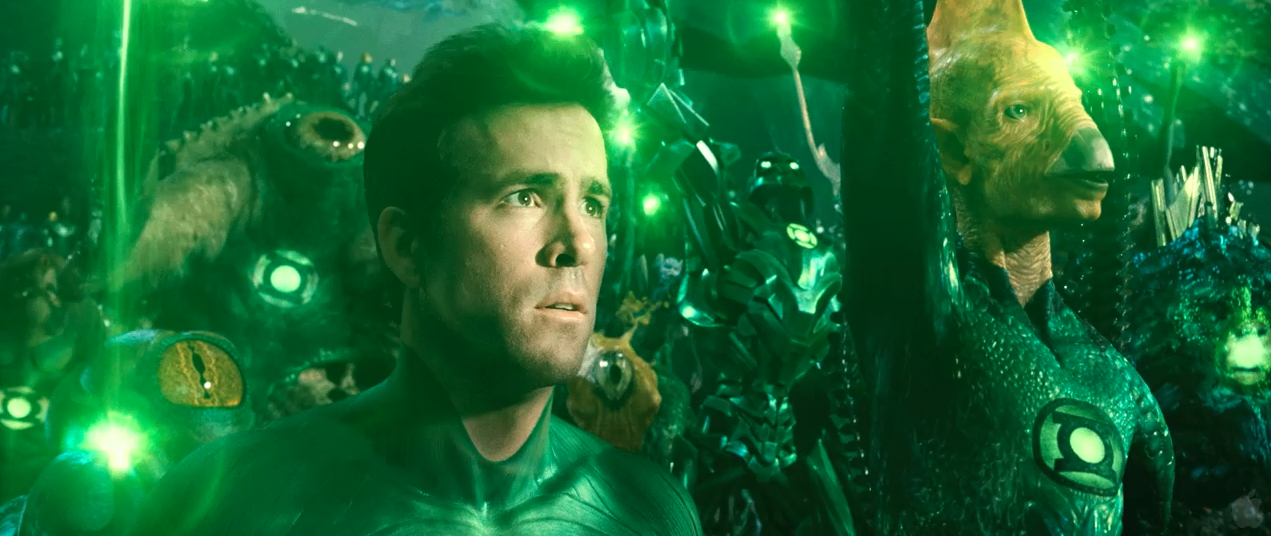
But, there's something else about The Guardians that solved the riddle of what bothered me about the movie from the start.  It's one of the darkest movies I've ever seen, as if it was a 100 watt movie projected with a 20 watt bulb (I saw it flat, so I can't imagine what the 3-D version, which is always less bright, must be like).  There is just no "brightest day" in Green Lantern. It's when The Guardians show up on their too-high-seats (that should give you a clue about them) and you can barely make them out—they look plasticine and animatronic, less life-like than the Lincoln at Disneyland.  But that's not the worst of it, the sight of the entire Corps must surely be impressive, but you get the sense that the crowd scenes are merely composed of randomly moving blobs, and the design of the main bad-thing, Parallax—a Guardian possessed of the essence of fear—looks like a particularly gnarly piece of Brillo-pad that's been set on fire, with a blocky Mt. Rushmore face in the middle of it.  It all points to one thing—the FX shots are substandard enough that the film-makers—partcularly director Martin Campbell, who directed (and invigorated) the two best Bond movies of the past 20 years had so little confidence in so many of these shots that the entire film has been desaturated to keep the bad shots from standing out from the goodIt's not all bad.  The FX-wizards did impressive work with the GL costumes (completely CGI) and the couple of Lanterns that we see wellTomar-Re (voiced by Geoffrey Rush) and D.I. Kilowog (Michael Clarke Duncan)—some of the flying works, but the landings are a little rocky.  But the ring-constructs are kinda dull (that's the scripters' fault)...lasso's and jets and guns and...Hot-Wheels tracks???  If we're doing product placement how about beating people over the head with a bottle of Coke (label out)?  "The only limits are what you can imagine."  Earth is in trouble.  But the retailers should do fine.

But, I think the worst thing about Green Lantern is that nothing resonates, nothing inspires, nothing evokes a sense of wonder or service.  Nothing even made me crack a smile—except that the green energy coming from the most powerful accessory in the world is apparently painful (as well it should be).  As a fan of the comics who wanted it to be good, watching the movie was painful for me.

Now, if you would, please repeat after me Yojimbo's empowering adaptation of the Green Lantern oath:


"In dullest day, the weakest light,
the SFX might look all right.
To cure the need to see the sight
of comic-flicks...
Green Lantern might."

Because it's just a Cable-Watcher.


"Green Lantern ponders the Universal Question: "why is there so much yellow paint in the world?"


* The secret is to couch your sci-fi in legend or familiar genres—so Star Wars gets a pass because it borrows liberally from westerns, samurai movies and old sci-fi, but A.I. Artificial Intelligence featuring robot-mother-love, melted ice-caps and "the mechas will inherit the Earth" provokes superior chortling.
** But then, so's Hal.  A couple of times during battle scenes I was thinking, "This guy can jet across the Galaxy.  Shouldn't he be showing up now, before anybody gets killed?"

*** "Nice." "Impressive, isn't it?"  "I was talking about your dress."  Really?  Is that a line they use at Comic-con's?

**** The only interesting aspect to her is that she sees GL is Jordan almost immediately: "I've seen you naked, you think I wouldn't recognize you by hiding your cheek-bones?"  Good point.  Although he DOES lower his voice as is par for the course in superhero movies.