Showing posts with label Film Noir. Show all posts

Thursday, October 3, 2013

Suddenly, Last Summer

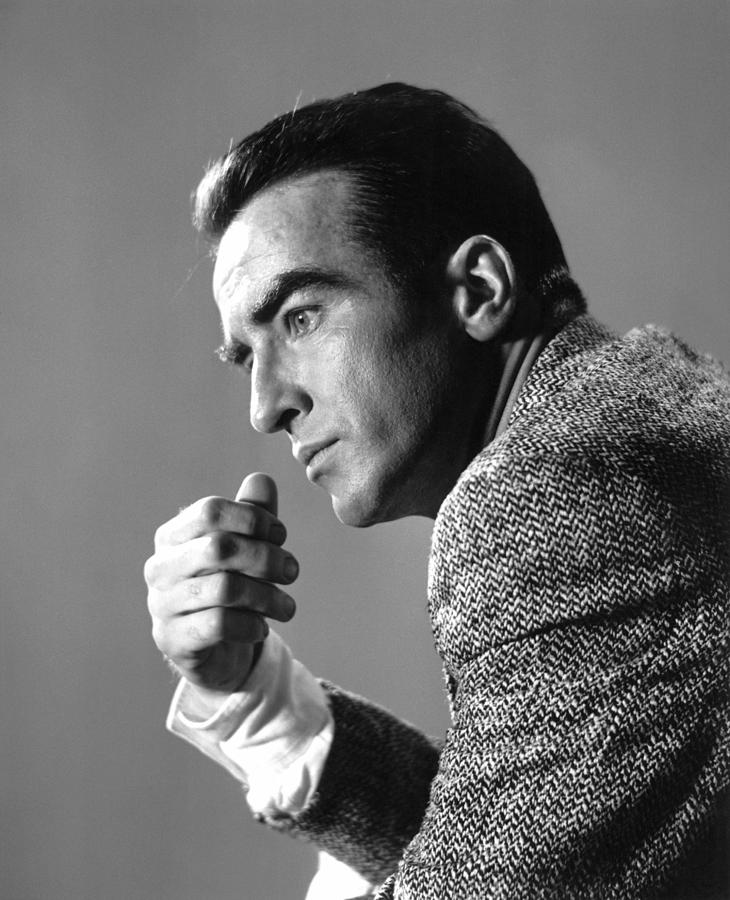
Suddenly, Last Summer (Joseph L. Mankiewicz, 1957) Tawdry gothic-noir that was so compromised by concessions to the moral powers-that-be that nobody associated with its production ended up liking it, not the original author of the play, Tennessee Williams, not his co-screenwriter Gore Vidal, nor the director Joe Mankiewicz.  Pity, as its an example of how Mankiewicz could juice up material directorially in a truly unsettling way when given the chance.  And he had a great cast in Katherine Hepburn, Montgomery Clift (even in the semi-drug-addled condition he was in), Elizabeth Taylor and Mercedes McCambridge.

What's missing is the person everyone talks about—the late Sebastian Venable, (poet and narcissist) who died (suddenly) last summer, ostensibly of a heart attack, as the whispers state, but has nothing to do with the truth, which is damaging enough that his doting mother Violet (Hepburn) will do anything to keep it secret, even if it means lobotomizing her niece Catherine Holt (Taylor) who witnessed his death and has blanked it from her memory. Mother Violet entreats the local psychiatric hospital and its brilliant lobotomist Dr. Cukrowicz (Clift) to see if Catherine is a suitable case for treatment, with the promise of a large endowment if she can be "cured."  "Cured" of the memory stuck in her head, and if not cured, silenced, whether institutionally or medically.


But what those memories are of that led to Sebastian's death "suddenly, last Summer" are only implied for the first 3/4 of the movie.  In the first couple of movements battle lines are drawn as Cukrowicz first gets Vi's version of things (as he investigates why she wants to donate so much money to his institute), then, once questions are raised, tries to coax it out of the mostly comatose Catherine without success.  The gist of it is that Catherine, at Sebastian's request, had replaced his mother as his travelling companion on his world-travelling jaunts from which he would produce his yearly published book of poems.  That Summer, in the town of Cabeza De Lobo, Sebastian died, leaving no book and no issue.


Except for Catherine.  The play's third scene is the explanation in the drawing room scene if this were a detective novel, where Catherine, under the influence of sodium pentathol reveals all (from her point of view), and Mankiewicz goes to directorial town (his point of view) in a weird silent flashback that threatens to crowd out Taylor from the frame, and that veers wildly from realism to German expressionism to surrealism within the course of its run, containing some of the most bizarre imagery just outside the horror realm (or Salvadore Dali's dream sequence from Spellbound).


To tell you what it all means ruins the ending, except that the movie itself doesn't come right out and say anything, owing to the tenor of the times (meaning you couldn't be) and to the so-called community standards that this particular era of film-making was challenging.  This was before ratings systems—G, PG-13, M, R, X and NC-17—but there was The Legion of Decency, over-run by the Catholic Church, that crossed itself, said five "Hail Mary's" and then banned your movie from being advertised.  You couldn't talk about homosexuality, procurement, prostitution, drug use, pedophilia, and cannibalism except in closeted code, and the "Truth Serum" sequence obfuscates with what's going on to the point of obtuseness.  Williams wasn't entirely guilt-free of this; he was just as capable of pulling the shade over a naked light-bulb or turning pleurosis into "blue roses"—he made an art of it.  But here, the mother-love perversity at the heart of so many of his plays runs on the hysterical side, and try as he might Mankiewicz can't make more of the empty book of poems than he can. All he can do is try and push Hepburn over the brink of sanity, after she's been doing wheelies near the edge the entire movie (Vivien Leigh nearly played the part; can you imagine?)

How far we have come since then—except, of course, for the cannibalism part (unless you were voted to the House of Representatives in 2010).

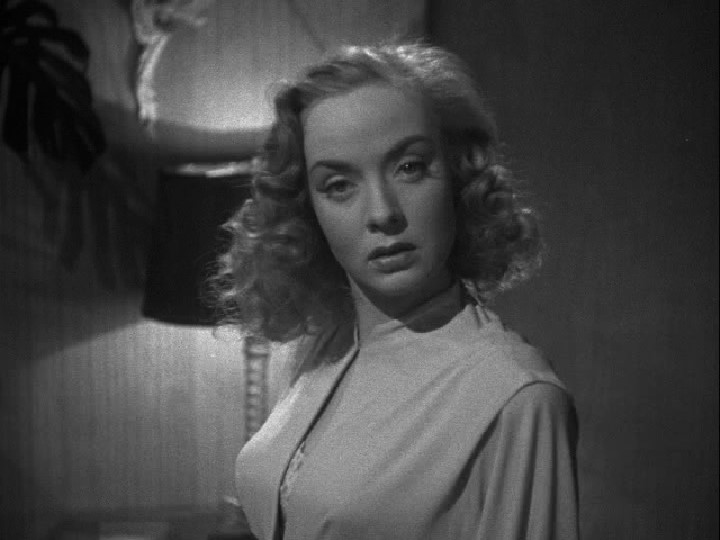
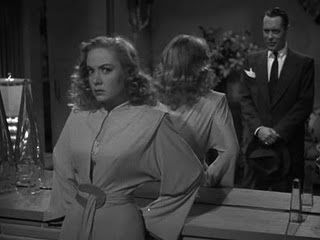
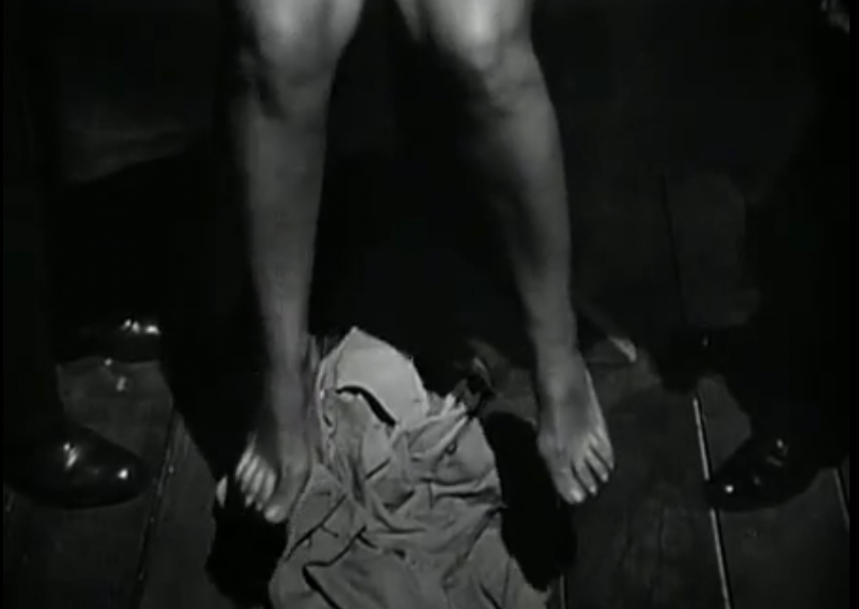
P.S. there's an excellent breakdown of the film, courtesy of The Last Drive-In, that did an excellent job of pulling screen-caps-two of which I cribbed above.

Liz Taylor glamour shot draped over the rail of an asylum


Saturday, June 22, 2013

Satan Met a Lady

Satan Met a Lady (William Dieterle, 1937) Warners' second adaptation of Dashiell Hammett's "The Maltese Falcoln" done with a much freer hand and less devotion to the source novel.

When confronted with the Hays Office crackdown on lascivious content in movies, Warner Bros. found a lot of their catalog unreleasable for re-issues.  In the short term, they solved the problem by judicious cuts in audience favorites and by creating revamped versions of past product.  A new "Maltese Falcon" was put in production a scant five years after the first's release.  In the interim, another Hammett property had scored big at the box office; The Thin Man with William Powell and Myrna Loy had proven a sensation, and since nothings exceeds like success, "The Maltese Falcon" was freely adapted to be more in line with what worked with The Thin Man, more comedy and an emphasis on glamour and the high life.  So, Sam Spade became detective Ted Shane, as played by Warren William, a stetson-wearing rake, seen at the start of the film as being run out of town by some city-fathers and returning to his old haunts and old job at a detective agency in San Francisco.  Among his first clients is Valerie Purvis (Bette Davis) who warns of being tracked by a dangerous man, and before long, Shane's detective-partner (Porter Hall) is killed and the story begins anew.


Same story but, like Hammett's detective, the characters are significantly altered, if the track of story-line still stays basically the same.  Take, for example, Joel Cairo who is transformed into a stuffy Brit played by Arthur Treacher (rather than fisticuffs, Shane and the character do some jolly breakage in Shane's apartment); Kaspar Gutman is Madame—note that—Madame Barabbas (Alison Skipworth), and Wilmer is a thick gunman named Kenneth (Maynard Holmes), whom she dotes on, and Effie Perrine, the Spade and Archer receptionist is Miss Murgatroyd (Marie Wilson), the epitome of a dumb blonde.  And the falcon?  It's now the legendary horn of Roland.  The whole debacle is treated as farce, with more interest in having a good time than actually acquiring the MacGuffin.


The film is directed by William Dieterle, one of Warners' prestige directors, having already directed their all-star version of A Midsummer's Night's Dream in 1935, and who would go on to direct the multi-Oscar winner The Life of Emile Zola, The Devil and Daniel Webster, and projects for David O. Selznick.  He keeps everything moving breezily for awhile, but the movie stops dead at the end with an exposition scene that makes up for lost dialogue and movie-time (the Huston version, four years later—the only one where the male lead is top-billed—has the same issue, but it's part and parcel of the drama).  Davis was so dismissive of the script that she stayed away from filming for three days, hoping to be taken off the job, in favor of the more serious, prestigious roles which she favored.


Satan Met a Lady probably did not need a falcon, as, by itself, it is one strange bird.  With its detective that is anything but private and sticks out like a sore thumb, its eccentric cross-gendering to appease the Catholics, and its game of "Who's got the horn," it does no justice to the source novel or the other Hammett adaptation its trying to ape.  Five years later, John Huston, hot from his scripting duties for Warners (including Dieterle's Dr. Ehrlich's Magic Bullet) would take the property with another Warners B-player in the lead, and stay true to the novel by scratching awy at the layers of lacquer demanded by the studio, to find the gold underneath. 


William and Davis not seeing eye to eye

Thursday, June 20, 2013

The Maltese Falcon (1931)

The Maltese Falcon (Roy Del Ruth, 1931) One of the "other" "Maltese Falcon" adaptations (the other is the Falcon-less Satan Met a Lady starring Bette Davis, which we'll look at tomorrow), before John Huston got it right and turned the Hammett story into a classic of the detective genre in 1941.

This one follows the story-line well enough—Brigid O'Shaunessy, the death of detective partner Miles Archer, rumors of a legendary jewel-encrusted black bird statue, and the motley trio of swindlers, Cairo and Guttman and Wilmer, a shade more flamboyant in this version. The story runs its course.

Where it differs—and all the "Falcon" versions differ—is in the character of Sam Spade, of Spade and Archer Detective Agency, soon to be "Sam Spade, Detective." The Bogart persona is familiar: tough guy, cynical, has the image of disrepute, but a resolute moral compass—like the Falcon itself, you have to scrape away layers of hardened lacquer before you get to the stuff that's valuable. That's Bogart, imprinting Spade and the image of detectives—but movie detectives—with the same template ever since.  

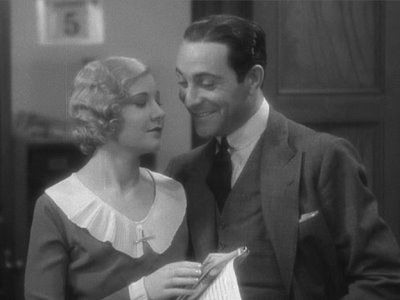
But, the first version of The Maltese Falcon was this pre-Code version starring Ricardo Cortez, and the top-billed Bebe Daniels as client "Ruth Wonderly." Don't let Cortez's latin name fool you; he was born Jacob Krantz, raised in the Bronx, but his name was changed to attract audiences during the "Rudolph Vaentino" phase of leading men. His Sam Spade is openly a lothario, a charmer and ladies' man, quick with a leering smile and altogether too happy in his work. You have no sense of Spade actually thinking, but going through false motions among other finaglers. He's unreadable to the audience except he's the guy "in charge," and enjoying himself.

There's much more sexuality to this one, featuring a scene with Bebe Daniels talking on the phone in the bath, and when a thousand dollar bill goes missing in the exchange scene, Daniels is forced to strip-search before Spade concludes that Caspar Guttman might have withheld it. This Sam Spade, one has the impression of making her do it just for the "fun" of it.

And the trio of con-men/murderers after the black bird?  When Spade's secretary, Effie, introduces a new walk-in as "gorgeous," Spade assumes it's a woman, but it's "Dr." Joel Cairo (Otto Matieson) in the first allusion to the veiled homosexuality of Cairo, Guttman and Wilmer.  The latter is openly referred to as Guttman's "boyfriend" and is played by Dwight Frye, the manic character actor from so many of the Universal horror films, including Frankenstein and Dracula. 

The film includes a coda of Spade visiting O'Shaunessy, making it known that Spade has gone "legit," working for the D.A.'s office which, although it may be intended to show Spade more in a "good guy" role, it paints a rather poor picture of the San Francisco district attorney (especially considering the police's earlier suspicions about Spade).

The steamy elements forced Warners to shelve this Maltese Falcon once the Hays Office opened its doors. The studio then made another version, Satan Met a Lady, played with a lighter tone, but which met the newly-imposed standards of the Motion Picture "Code." That's tomorrow.
Ricardo Cortez as the first Sam Spade

Saturday, June 15, 2013

Gangster Story

Gangster Story (Walter Matthau, 1959) An odd one, this.  And not a very good one, but still an oddity.  A capital "B" B-movie, directed by Walter Matthau, and the only movie he ever directed (someday I want to see the one Cagney directed, too), done very early in his career.  At the time, Matthau was a stage actor, but since 1950 he'd been doing small parts in TV series, and didn't make his first film until 1955's The Kentuckian (starring Burt Lancaster and, as we're on a theme here, directed by him, as well) and would start becoming a fixture in films with Elia Kazan's A Face in the Crowd.   

It's not known whether it was done on a dare, or out of desperation. The script wasn't much, but Matthau took the job, starring in and directing, because he had gambling debts.  His co-star was his wife, Carol Grace, and instead of New York, it was filmed in sunny Los Angeles, mostly during the day, unusual for a supposed film-noir, and where the most shadows are seen in, of all places, a library.


Matthau is fine, his performance, at least, is professional, but loose and schlumpy, and plays well, even in scenes that are patently absurd...like the one where his con character Jack Martin stages a bank-vault robbery by posing as a movie director rehearsing a scene—distracting the guards to "stay in character" and convincing the bank president to open the vault. (Really?  It's that easy?  Everyone is that dumb and star-struck, not even asking for a filming permit and with no cameras, no crew, nothing?), while most of the other performers range from merely amateurish to a painfully charitable "at least they remembered their lines."  Wouldn't have mattered if they didn't.  The entire movie is post-dubbed, the dialogue replaced in the studio after the fact—whether because they had no sound recordist during filming (it was a five-man crew...and edited by future porn director Radley Metzger) or background sounds are so pervasive.  It does create a rather unnerving sequence, late in the movie (when nobody was paying attention?) where dialogue is punctuated a few times by the sound of the timing "beep" that alerts the actor when to talk—no one bothered to take them out...it wasn't in the critical first or last reels, and maybe it was just overlooked. 


Professionalism aside, what this movie most resembles is the 1973 film Matthau made with director Don Siegel, Charley Varrick, about "the last of the independents" (criminal division).  Both Martin and Varrick are bank-robbers, who get caught up in a situation they're not accustomed to: not only avoiding the police, but also the organized crime lord attached to the last institution Matthau's perp robbed.  Both involve a good amount of time on the lam and hiding out, although Martin capitulates and, to settle differences, joins the organized bad guys to save his neck.  The quirky, nastily-funny Siegel film is full of invention and colorful characters; everything about Gangster Story is pure black-and-white, and is really worth watching only for the curiosity factor.  Matthau moved on, and when this vampire of a movie rose from the dead in conversation he'd crack wise in interviews saying the film "premiered at Loew's in Newark and never crossed the Hudson."  He never was tempted to direct again.


Wednesday, May 29, 2013

Kiss of Death (1947)

Kiss of Death (Henry Hathaway, 1947) Another of Henry Hathaway's neo-realist film noir's that aped the post-war Italian film penchant for shooting dark themes in real locations without glamour and emphasizing the grit.  This one, about the rise and fall and rise of heist-criminal Nick Bianco (Victor Mature), starts out in the sky-scrapers, jail-houses, and police offices that reverberate with the realistic sound that you can't acquire in a sound-baffled soundstage, but once the mayhem starts, the film scurries back to the safety of studio sets.  It's rough in the mean streets of noir.  Safer to make your own.

Bianco is an ex-con who can't find a job, and with a wife and two kids to support, he decides to make his own work—robbing a jewelry business in downtown Manhattan.  The job goes South and he ends up on the street with a police bullet in his leg and a stretch awaiting him at the gray-bar hotel.  He's offered a chance by assistant D.A. Louis D'Angelo (Brian Donlevy) to supply evidence on his cronies, but Bianco sticks to the criminal code—he won't squeal, sing, or rat, even when D'Angelo offers him an early parole so he can see his kids.  But Bianco won't bend.  His family is being "taken care of" by his sheister of a lawyer (Taylor Holmes), who visits him in prison to keep tabs on Bianco's loyalty.

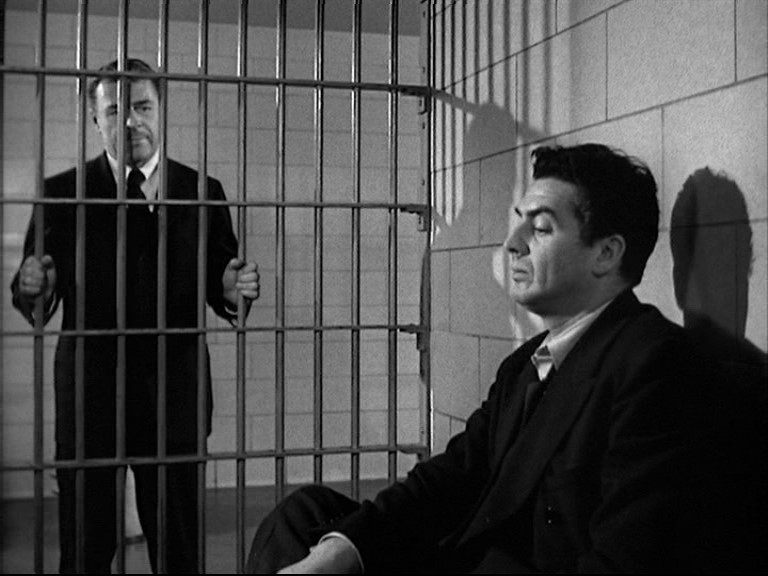
But, in prison, Bianco gets wind that things aren't going so well.  And a visit to the prison library newspaper galleys tells him his wife has committed suicide, his kids are now orphans, and his silence has bought him nothing.

Hathaway's direction is no-nonsense throughout, but stylistic, anyway, and the scenes in the initial robbery, in the D.A.'s office and the lock-up have a drab, utilitarian look to them—the robbery has a nice touch in it, as the crooks' target is on the 44th floor of a Manhattan skyscraper, and the post stick-up elevator ride (with plenty of stops) provides a particularly teasing kind of tension.  Mature is fine, Donlevy's abilities aren't taken advantage of, and there are bit parts by Karl Malden and one of my character actors, the short-lived Millard Mitchell (who played Gene Kelly's producer buddy in Singin' in the Rain).

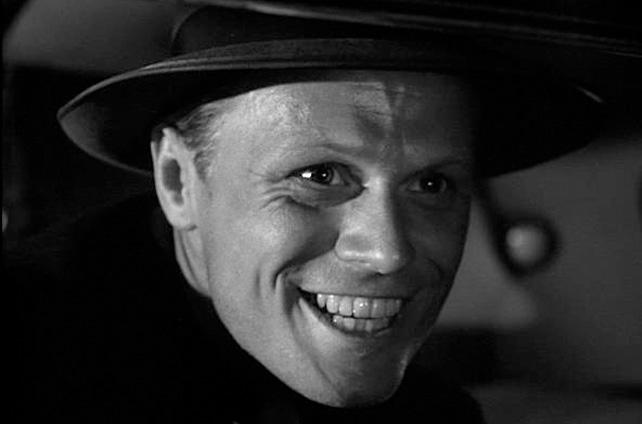
But Kiss of Death is also the feature debut of Richard Widmark, who plays the cheap gangster killer Tommy Udo.  You don't see him kill too many people, but one of them is indelible in its cruelty and vicious enthusiasm.  Widmark's performance is amazing, looking like a wire-thin Dan Duryea, with Cagney's ability to hold the eye in every scene he's in.  His dialogue isn't the greatest (even though the script is by Ben Hecht and Charles Lederer) and limited, and repeated over and over, but Widmark punctuates it with a goonish laugh that implies a sarcastic inner amusement that he knows he's stringing you along.  Hathaway, knowing what he was getting from the young actor, pulled out all the stops for his performance.  There's one scene where someone's waiting for udo, who's holding court in a curtained-off restaurant back-room.  Hathaway holds on the curtain, elongating the wait, then cuts to a close shot of the part in the curtains, where all you can see is the glint in Udo's eye before he gets up and makes his way to the camera,  It's an amazing shot and one that shows the director's confidence in his young actor's ability to hold an audience's attention, even when he isn't actually seen.


It's curtains for Widmark's Tommy Udo


Wednesday, May 22, 2013

Trance

Post-Modern-Femi-Noir
or
I See London, I See Trance

Danny Boyle has been on something of a tear lately.  His last couple films have been popular show-cases of how diverse and direct his story-telling skills can be now, and resonant with audiences.  And yet none of his recent films should have "worked:"  Oscar-winning Slumdog Millionaire's combination of pop culture, Bollywood, gangsterism and classic literature; 127 Hours' brutal and claustrophobic story about a man  who cuts off his own arm, which still manages to be uplifting and even inspiring.  Boyle is now a household name and an A-list director thanks to Slumdog.  His previous film, the sardonic sci-fi film Sunshine did not attract an audience, nor did his kids' film Millions (despite being delightful, both for kids and adults).  His new prestige made him the natural choice to become the creative director for last year's London Olympics.

It was while working on them that the opportunity came to take a break, and he rushed this film, Trance, into production—not that you could tell, it's full of his multi-media eclecticism that at times can run out of control.  The script had already been directed (by its writer Joe Aherne) as a TV movie in 2001.  It's a heist film with several twists, and, as Doyle has said in interviews, it was a dark tonic to the celebratory work he was doing for the Games.

We are introduced to the movie by Simon (James McAvoy) who gives us a brief art history lesson on particular paintings and their peculiarities.  But one thing about this ersatz collection sets them apart; "You haven't seen them because they've been stolen."  Simon works as an art auctioneer and walks us through a brief summary of audacious art thefts, and the precautions that auction houses take to protect their commodities.  "Lesson number one," though, is "don't be a hero.  No work of art is worth a human life." 


"Rule No. 1: Don't Be a Hero."
It's a lesson he should take to heart.  A robbery does take place, and true to instructions, Simon isn't a hero--he's in on it, the job's "inside man.'  But, in the shell-game of keeping up appearances, he is given a severe head trauma, and (isn't this a pretty picture?) can't remember what he did with the painting.    This is, of course, quite upsetting to the ringleader, Franck (Vincent Cassell), who tries to extract the information in the typical gangster fashion (old fashioned threats of death, disfigurement, and the actual pulling out of  fingernails).  Nothing breaks through Simon's personal pentimento.

Go to Plan B.  They send Simon to hypnotherapist Elizabeth Lamb (Rosario Dawson), who's had quite a success breaking addictions, changing lives and messing with heads.  It's the latter skill that comes in good stead as she quickly realizes that Simon is not just a guy in need of finding his car-keys, but may be in league with the devil.  Finding his memory might make him a memory.


Doyle's good at messing with heads, as well, as Trance proves fairly quickly. 

Under his hypnotherapy, loyalties are tested (particularly the audience's), and no matter what subject matter on screen, whether grisly or enticing, it's tough to take your eyes off the screen.  Pretty soon you're not sure what's real, what's illusion...or (finally) what's going on.  Some neat tricks are played, expectations are shattered, but all to the service of a script that isn't all that great.  One can appreciate the twists and turns and diversions, and the slightly feminist slant that the movie tilts the traditional role of the femme fatale in film noir.  But, ultimately the biggest trick that's pulled is the illusion that a better movie is happening.  For all the visual pyrotechnics and the reality warping manipulation of the audience, Trance isn't that good a movie, and unconsciously or consciously, a trifle.

Trance is a Rental.


Goya's Witches in the Air—the "MacGuffin" of the movie

Wednesday, August 29, 2012

Rififi

Rififi (aka "Du Rififi Chez Les Hommes") (Jules Dassin, 1955)


It's not a word that people use/
Among the "swells" and "Who's Who"/
Rififi
It's the lingo of the streetwise/
The battle cry of real tough guys/
So don't try your brain and grumble/
All it means is "rough and tumble"
Rififi

A vital missing piece (in my viewing, anyway) in the career of Jules Dassin (of Middleton Connecticut, Harlem and the Bronx—it's pronounced "Dass'-in,") is this second European film of his exile from America and the Hollywood Black List.  "Rififi" is not well regarded as literature (Francois Truffaut said at the time of its release "Out of the worst crime novels I ever read, Jules Dassin has made the best crime film I've ever seen."), and Dassin was not the first choice as director (that was Jean-Pierre Melville-I'll have to look at Le Samouraï one of these days), but he needed a job, and managed to turn the book (which he also didn't like) into a cracklingly dark caper movie about a motley crew of thieves knocking over a jewelry store.  The leader, Tony le Stéphanois (Jean Servais in a nicely played, tubercular performance that recalls Humphrey Bogart) isn't interested, having just served a stretch in prison for a previous crime, but relents after finding his girl having taken up with a local gangster.  Rather than the fast snatch-and-grab proposed to him, though, he ups the ante, going all in only if, rather than just grabbing some jewels, the group steals the entire contents of the store's safe, the latest in security.

The scheme is elaborate, involving casing the joint for police walk-by's, then doing a home-invasion of the apartment above it, and drilling through the floor/ceiling to gain access in order to disarm the high-tech, high-sensitivity alarm system.  This sequence, which works out to nearly half an hour of screen-time is unscored, reliant on natural sound...and as the heist occurs in the middle of the night, every screeching, tearing, hammering sound could betray the enire operation.  It's a nail-biter, one of the better crimes in film history, and the model for every highly planned knock-over since.

The robbery is the big set-piece, but it's merely the middle of the film.  It's buttressed by the set-up and subsequent fall-out resulting in a rival gang's extortion, a kidnapping, and the gradual dissolution of the gang, a section that, after the tension of the robbery, becomes more and more free-wheeling, taking off, playing on the relationships established in the film's first third, the audience's complicity in the robbery, by itself, becoming a tour de force.  At the same time, it makes an interesting change-up from the rest of the film as "le Stéphanois" becomes a one-man wrecking crew, balefully upholding his criminal code while also trying to "do the right thing," culminating in a desperate drive through Paris that has a thrilling manic intensity with nary a car crash nor explosion (why, they don't even crash through a fruit-stand).

Rififi is a showcase for Dassin's talents as an adapter and director, taking the noir film back to the place where the phrase was first coined, by one of "da guys" who created and perfected the dark mysteries of the form, no matter which city streets are drenched with rain.  


Friday, June 8, 2012

Lady in the Lake

Lady in the Lake (Robert Montgomery, 1947) Call it an experiment that fails—but a noble try.  Bob Montgomery took his opportunity to make a low-budget pot-boiler of Raymond Chandler's Philip Marlowe mystery and take it as close to the source as he could...in spirit, anyway.  Taking Chandler's first-person narration-style and translating it into cinematic terms.  Instead of reading inside Marlowe's head, we're seeing out of his eye-sockets—I didn't know Marlowe was monocular.  Nor did I know he was borderline schizophrenic—with cooing voices in the background, passing for a dramatic score (at least it's organic).

Chandler hated this one.  He'd written his own screenplay adaptation (that wasn't used) and thought the POV work...didn't work.  It doesn't, really.  In fact, it's creepy.  We, the audience, are constantly being talked to directly, with Marlowe's replies in voice-over—but because we don't see him, those replies are so "on-the-nose" as to be bluntly obvious.  In a way, this direct method robs us of actually seeing Marlowe's thoughts, playing across the face of the actor portraying him.  No, Marlowe has to say everything on his mind, making him the lamest of detectives—he's always telling people of his suspicions of them.  Nice detective work, shamus.

But, it does follow the story...in the same way a stage play might follow it.  We're kinda "stuck" inside Marlowe's head, and any investigation—the thing that distinguishes this story in the Marlowe canon is that it takes him out of L.A.  But, we never get out of rooms.  We lose some characters, and the bigger shocks (the discovery of "the lady in the lake," for instance, which they probably couldn't show as it's pretty gruesome in the book) are talked about happening off-camera.  Nope.  Everybody's standing around talking too each other...actually they're standing around talking to us.

Like I said, creepy.

It also kills any momentum.  Because the camera is the only thing that has any action to it.  We see what he sees, following babes—rather obviously—every door-knob that is reached for (how exciting!), and only see our hero in the mirror.  It doesn't help the actors, either.  Montgomery might have been a great Marlowe—we just don't see it.  And poor Audrey Totter—her character doesn't even make any sense.  She whip-saws between emotions in a bi-polar performance, that when Marlowe's supposed to trust her, you just don't buy it...or buy him for doing it.  The technique works against everything here.  The only one who adapts well to it is Lloyd Nolan, but he'd already done an adaptation of Chandler's "The High Window" as the Marlowe stand-in, and already had the "cracking wise" patter down cold.

The thing is, POV can work.  It works to a certain extent in Dark Passage, and  Jonathan Demme  employed it amazingly well—and sparingly—in The Silence of the Lambs, where audience identification is only enhanced by our seeing the direct play of emotions across faces.  Montgomery was an actor, and a good one, so it's amazing that he would choose to do this experiment rather than trust his own craft; it's a hard lesson to learn, but an easy one when you think about it—you can tell an audience anything you like, but to use the medium of movies to its best extent—you should show them.

Robert Montgomery as Phillip Marlowe in the only way we see him
(except when addressing the audience)—in a mirror. 


Thursday, August 18, 2011

The Brightest Noir or the Anti-Life Equation

Kiss Me Deadly (Robert Aldrich, 1955) Kiss Me Deadly might be the greatest film noir film of all time.  You know the genre—"When the streets are dark with something more than night"—implying that the lack of light goes far beyond foot-candles and is radiated by a void in the soul...or the permeating Evil in the World.  Oh, there'd always been detective movies—but, they were usually played in a cocktail party environment, gussied up and prettified for the ladies...and there always had to be a pet.  But, in the late 30's, with Hitler bringing real evil to our headlines and minds, that world changed, became darker, the booze cheaper, and the dames less dependable.  After the war, we'd lost our innocence enough that the tarnished golden age of noir happened, its authors became legit, movie deals followed, and the resulting rougher, because we could take it.  Combined with what Hollywood saw coming out of the European neo-realist movement, things got grittier, less polished and the gangsters came out of the dark cracks of the wood-work to walk amongst us and make the lives of decent folk miserable, while in the mind's eye loomed the existence of mushroom clouds that could turn all of us, any of us, into ash and dust.  By the time the 50's sneaked up on us, promising a better life (if we followed the rules), paranoia walked the streets, the board-rooms and halls of government, setting the stage for Robert Aldrich's über-noir. 

Mickey Spillane, author of "Kiss Me Deadly" in all its popular crudeness, didn't like the film version.  It slapped his book around for its tough-guy attitude that puffed up its chest in the face of truly nihilistic forces that could wipe the sneer off its mug and dared to question the sexist-macho attitude of its protagonist.  The script is by one of the better novelist-scriptwriter vagabonds, A.I. Bezzerides (whose novels were turned into the films They Drive By Night and Thieves' Highway).  "I was having fun!" Bezzerides said of his adaptation of Kiss Me Deadly, and, indeed, it is a lot of fun in a savage, even cruel way, that has no truck with the merits of its source-book, and boils it down into a Maltese Falcon-ish quest of thugs for a "great whats-it," that, as is ultimately revealed is not riches, but power—at the time the most dangerous form of power extant.

Our savior—the point-man walking down these mean streets—is a private dick in all senses of the term, the not-subtly named Mike Hammer (Ralph Meeker), the bluntest of instruments, and where that other tool of the trade, Sam Spade, beat up bad-guys and gunsels, Hammer makes no character distinctions, he's as indiscriminate as a force of Nature, turning people, places and prized possessions into disaster areas so he can sort through the rubble.


The caper doesn't start very subtley—it doesn't come to him, knocking politely on the door of his offices—he nearly runs it over on the highway.  A damsel in distress (Cloris Leachman—yes, her—in her film debut) is running down the street in a panic and only a trench-coat.  She might have escaped from a mental institution, but Hammer, at her request, tries to take her to the nearest bus stop.  

"Get me to that bus stop and forget you ever saw me. If we don't make that bus stop…"  "We will," says Hammer dismissively, confidently.  "If we don’t," she pointedly says, "Remember me."

They never make it. 

Details aside, Hammer wakes up in a hospital bed, remembering—the girl is dead, tortured, and he has two motivations: revenge and to find the people who tried to kill him and succeeded with her.  Hammer strikes out, becoming the bull with Los Angeles as his personal china shop, getting closer to the responsible parties but not many answers.  A detective without a clue, things usually have to be spelled out for him with a constant litany of "you just don't get it, do you's."  His informants and victims dance around the answers, talking circumspectly, while Hammer just scowls, wondering if there's a way to beat the answers out of them.

It's the way things have to be, because almost everyone is corrupt, no matter what their position of the intelligence scale, and that includes the guy behind the whole operation, Dr. G.E. Soberin (Albert Dekker), the type of character Sydney Greenstreet might play in earlier mysteries: brilliant, erudite, but not smart enough to be brought down by baser instincts than his own.  And, once he's gone, any hope of containing the evil about to be unleashed goes with him.


The opening of "The Great 'Whats-it:" a "Pandora's Box" that would "inspire"
filmmakers Alex Cox, Steven Spielberg and Quentin Tarantino.

There are two endings to the film: in the first, Hammer and his sexy secretary Velda (Maxine Cooper) manage to escape from the traditionally burning building (burning quite nontraditionally) and seek refuge in the surf.  But, somewhere along the way, the film was streamlined, so their fate is undecided and, indeed, the film screams "The End" in the middle of a growing apocalyptic nuclear conflagration.  Does it ever end, or does Los Angeles go up with it, the match being struck the sociopath who sold her soul for power.

It's the ending I first saw when I encountered the film and it's the ending I prefer: Kiss Me Deadly presents a world so far done the jungle path that even a thug like Mike Hammer can be considered a hero.  Man has de-evolved so far but still managed to harness the power of God, that the inevitable happens.  The film asks nihilistically, given how bad the world is, why not let the whole rotten system crash (sound familiar?).  The quest for power has gone nuclear.  Let 'em get what they deserve. 

Given the view of the film Kiss Me Deadly, if the world is so corrupt, maybe the justice should be dealt in an uncontained fusion, where the shadows are permanently burned into the landscape.  And so the world ends—not with a bang, but a high keening shriek, echoing the many screams that have occurred throughout the film.

Even in the glare of nuclear light, you can't get more dark than that.

Saturday, May 21, 2011

Dylan Dog: Dead of Night

"Stirring Up Old Ghosts"
or
"The Maltese Vampire"


"When a man's partner is killed, he's supposed to do something about it. It doesn't make any difference what you thought of him. He was your partner and you're supposed to do something about it. And it happens we're in the detective business. Well, when one of your organization gets killed, it's bad business to let the killer get away with it, bad all around, bad for every detective everywhere."*


I like Brandon Routh.  I think he was given a lot of unfair criticism from Superman Returns because he was picked to be reminiscent of Christopher Reeve—director Bryan Singer wanted a continuation of the first two late-model Superman films and when he thought of "Superman," he was thinking of Reeve's version.  So, Routh, who looked and sounded—with a touch of Tom Cruise's vocal qualities—so much like Reeve was the man to be The Man of Steel.  But, his problem was...he wasn't Reeve, and he especially wasn't our idealized image of Reeve.  But, he's a pretty good actor, with a casual gravitas and a likeable quality.  He just doesn't know how to be a star yet, still underplaying his lines, trying not to get caught "acting," and so robbing himself of any chance to grab a movie or audience and make them his.

Dylan Dog: Dead of Night might be a good vehicle for him.  Also based on a comic-book—Italian of origin this time—he looks sufficiently like the titular hero and the matter-of-factness of his playing serves as a fine counter-point to the ghastly ghouly happenings going on.  That's the whole joke of Dylan Dog, though it wears thin very quickly.  While everybody else is over-emoting, spitting spray through oversized canines (the two primary examples being Taye Diggs and Peter Stormare), Routh gets to be a normal human being, slightly bemused about the war between the vampires and the werewolves (there are zombies, too, but they appear to be playing the role of Sweden, they don't take sides and nobody cares about them). 

DD is a private investigator in New Orleans, and used to specialize in the occult, kind of a niche market.  He carried cards that just had his number and the catchy phrase "No Pulse?  No Problem!"  But, like Matt Damon's character in Hereafter, he spends a lot of screen-time saying "Yeah, I don't do that anymore.."

Sure, he doesn't.  But a mysterious death of an art collector reported by a pretty blond puts him back behind the wheel of his vintage VW bug (which also shows signs of being undead) to investigate. Getting involved could make things very squishy between The Tooths and the Claws, dredging up some bad blood, so he says "no."

Sure, he won't.  Then his partner, Marcus (Sam Huntington, who was Jimmy Olsen to Routh's Clark Kent) gets killed.  And...well, you know. 

But, this is Dylan Dog: Dead of Night, so when we say his partner gets killed—he only gets a little killed.  Going to the morgue to retrieve him, Dylan has to break the news to his friend gently. "The bad news is you're dead," he says blandly.  "The good news is...it's manageable."

Cute.  But, we're talking werewolves, vampires and zombies ('oh, my!"), so cute doesn't exactly cut the artery, if you know what I mean.  It should be rip-roaringly funny to off-set the gore and horror, and it just isn't.  It's...functional.  Huntington is great for a laugh or two, as he plays Jerry Lewis to Routh's Dean Martin, but it's not enough to make Dylan Dog more than just a little silly.  And for all the frothing that the ghoulies do, you never really think anyone's in danger, even though the script makes sure a couple of the main characters get dispatched.  It all leads to a crisis of apocalyptic proportions.**  The ideas are there, but the presentation is as clumsy as a zombie with no head.  The blame must go to writer-producer Kevin Munroe, whose previous film was the 2007 CGI version of Teenage Mutant Ninja Turtles, entitled TMNT.  This guy knows games and short films, but sustaining even a genre film that follows The Dots of Dashiell seems to be beyond him.  This one has its moments, but like the undead, they're mostly recycled...and could stand a bit of rejuvenation therapy.

Dylan Dog: Dead of Night is a Cable-Watcher.


* Yeah, that's from The Maltese Falcon.

** By the way, wasn't the world supposed to end today?  Looks like I'd better have a "Don't Make a Scene" for tomorrow.  Wonder if I've got a copy of The Rapture...