Showing posts with label Katherine Hepburn. Show all posts

Thursday, October 3, 2013

Suddenly, Last Summer

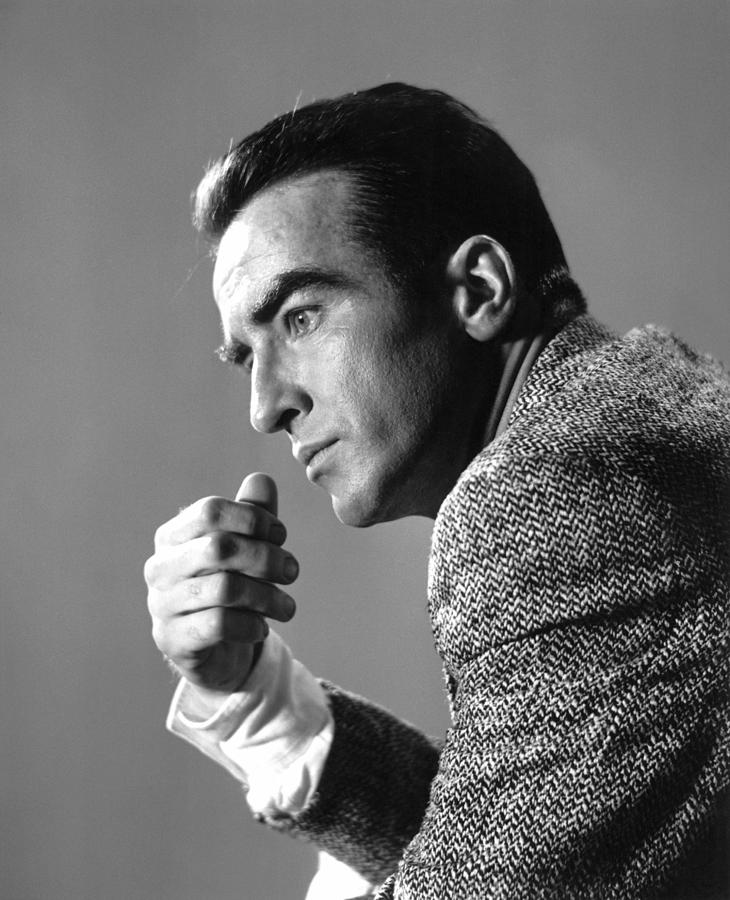
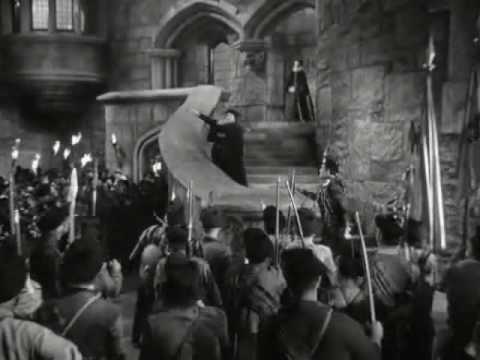
Suddenly, Last Summer (Joseph L. Mankiewicz, 1957) Tawdry gothic-noir that was so compromised by concessions to the moral powers-that-be that nobody associated with its production ended up liking it, not the original author of the play, Tennessee Williams, not his co-screenwriter Gore Vidal, nor the director Joe Mankiewicz.  Pity, as its an example of how Mankiewicz could juice up material directorially in a truly unsettling way when given the chance.  And he had a great cast in Katherine Hepburn, Montgomery Clift (even in the semi-drug-addled condition he was in), Elizabeth Taylor and Mercedes McCambridge.

What's missing is the person everyone talks about—the late Sebastian Venable, (poet and narcissist) who died (suddenly) last summer, ostensibly of a heart attack, as the whispers state, but has nothing to do with the truth, which is damaging enough that his doting mother Violet (Hepburn) will do anything to keep it secret, even if it means lobotomizing her niece Catherine Holt (Taylor) who witnessed his death and has blanked it from her memory. Mother Violet entreats the local psychiatric hospital and its brilliant lobotomist Dr. Cukrowicz (Clift) to see if Catherine is a suitable case for treatment, with the promise of a large endowment if she can be "cured."  "Cured" of the memory stuck in her head, and if not cured, silenced, whether institutionally or medically.


But what those memories are of that led to Sebastian's death "suddenly, last Summer" are only implied for the first 3/4 of the movie.  In the first couple of movements battle lines are drawn as Cukrowicz first gets Vi's version of things (as he investigates why she wants to donate so much money to his institute), then, once questions are raised, tries to coax it out of the mostly comatose Catherine without success.  The gist of it is that Catherine, at Sebastian's request, had replaced his mother as his travelling companion on his world-travelling jaunts from which he would produce his yearly published book of poems.  That Summer, in the town of Cabeza De Lobo, Sebastian died, leaving no book and no issue.


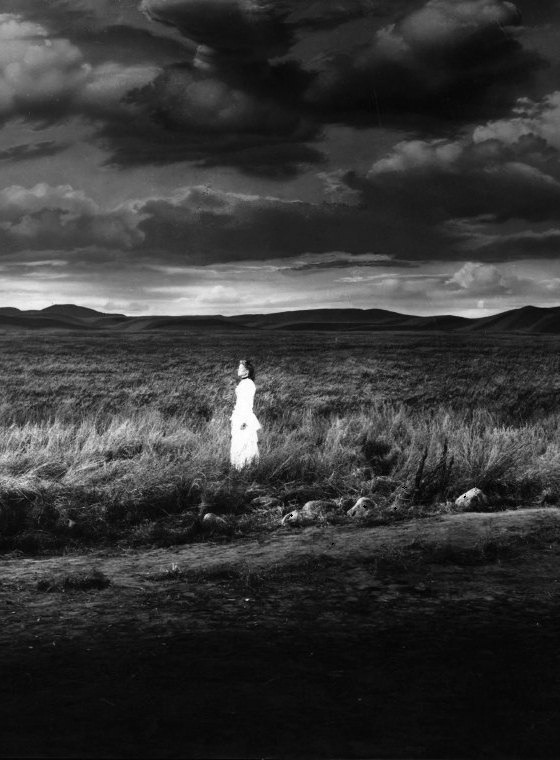
Except for Catherine.  The play's third scene is the explanation in the drawing room scene if this were a detective novel, where Catherine, under the influence of sodium pentathol reveals all (from her point of view), and Mankiewicz goes to directorial town (his point of view) in a weird silent flashback that threatens to crowd out Taylor from the frame, and that veers wildly from realism to German expressionism to surrealism within the course of its run, containing some of the most bizarre imagery just outside the horror realm (or Salvadore Dali's dream sequence from Spellbound).


To tell you what it all means ruins the ending, except that the movie itself doesn't come right out and say anything, owing to the tenor of the times (meaning you couldn't be) and to the so-called community standards that this particular era of film-making was challenging.  This was before ratings systems—G, PG-13, M, R, X and NC-17—but there was The Legion of Decency, over-run by the Catholic Church, that crossed itself, said five "Hail Mary's" and then banned your movie from being advertised.  You couldn't talk about homosexuality, procurement, prostitution, drug use, pedophilia, and cannibalism except in closeted code, and the "Truth Serum" sequence obfuscates with what's going on to the point of obtuseness.  Williams wasn't entirely guilt-free of this; he was just as capable of pulling the shade over a naked light-bulb or turning pleurosis into "blue roses"—he made an art of it.  But here, the mother-love perversity at the heart of so many of his plays runs on the hysterical side, and try as he might Mankiewicz can't make more of the empty book of poems than he can. All he can do is try and push Hepburn over the brink of sanity, after she's been doing wheelies near the edge the entire movie (Vivien Leigh nearly played the part; can you imagine?)

How far we have come since then—except, of course, for the cannibalism part (unless you were voted to the House of Representatives in 2010).

P.S. there's an excellent breakdown of the film, courtesy of The Last Drive-In, that did an excellent job of pulling screen-caps-two of which I cribbed above.

Liz Taylor glamour shot draped over the rail of an asylum


Saturday, January 5, 2013

The Iron Petticoat

The Iron Petticoat (Ralph Thomas, 1956) There are many reasons a film can be withdrawn from circulation.  In some cases, like Frank Sinatra's withdrawal of Suddenly and The Manchurian Candidate, it is the fear that the influence of the film might have had on current events, in much the same way as Stanley Kubrick withdrew A Clockwork Orange for many years in England, due to what seemed to be several copycat crimes related to it.

Bob "I probably should have done this with Phyllis Diller" Hope and his estate kept The Iron Petticoat out of America after its initial release until...November, 2012...when TCM showed it for the first time in this country since its release, (with the exceptions of a couple of private screenings).  It's been available in Europe and throughout the rest of the world, but not in the States, owing to a disagreement between Hope and the film's original author, the esteemed Ben Hecht, who wrote the thing for Katherine Hepburn, with an eye toward re-teaming her with Cary Grant.  But, Grant was still on his on-again-off-again retirement at the time and passed, Hope sashayed in, and proceeded to hand it to his gag-writers who refashioned the script more to Hope's style than Hepburn's...or Hecht's.  To be fair, stars do this all the time, re-writing scripts to their liking and their strengths, but Hecht took the issue public in the Hollywood press, leading to a Hope-ful response.  For whatever reasons, Hope, who had the distribution rights in the U.S., kept it out of circulation after its initial run, making it a curiosity. 


Would that the unearthing of this film, with the unlikely match-up of Hope and Hepburn, the first movie producing credit of Bond producer Harry Saltzman, be anything more than that.   But, like Schrödinger's cat, once seen, there is certainty, and in this timeline, it ain't good.  The story of a Russian aviatrix (Hepburn) who defects to Europe and is squired by an American Air Force Major (Hope) under orders to keep her on our side is a few notches shy of Ninotchka, and is almost entirely charmless.  No one's at the top of their game here, with the exception of some of the character actors (Robert Helpmann, James Robertson Justice).  Hope seems to have that hapless "I'm bombing here" look on his face without the curl to his lip that inspired confidence.  And Hepburn?  There's a distinctive overabundance of iron, as if she were trying to be her own Berlin Wall to hold her own in the project.  And where Garbo played Ninotchka with a stiff world-wary calm ("like a Vulcan" I compared it to), Hepburn is loud and forceful, projecting her words to the top of "the house" (more like a Klingon).  And if Melvin Douglas' ardent suitor in the earlier Lubitsch film softens his Moscovite's demeanor, Hope's stand-offishness—keeping her at golf-club's length—does nothing towards making this one either romantic or comedic.

No film should be locked away in a vault, but for this one, the only joy in it is  its seeing the light of day again. It is only when it sees the light of the projector that the disappointment starts.


Tuesday, July 17, 2012

The Sea of Grass

The Sea of Grass (Elia Kazan, 1943) It's Kazan's third feature as a director, playing in Louis B. Mayer's sandbox (literally—the film is shot in-studio at M-G-M, making use of stock-footage of rolling fields already in the can, with some location back-projection), and the founding member of The Actor's Studio has a cast of anybody but—Spencer Tracy and Katherine Hepburn (in their third film together), Melvyn Douglas, Harry Carey Sr. and Edgar Buchanan, all pro movie actors who'd already figured out the best way to project on film, without having to rely on sense-memory for it.

Kazan hated this film and discouraged anybody who'd listen from seeing it.  But, despite its soap-ish tendencies as a romance, it has an underlying ecological message.  Colonel Jim Brewton (Tracy) is a very well-landed cattle baron and resists any efforts by the "guv'mint" towards granting homesteading rights or development on the open range.  For him, its a matter of keeping it unspoiled.  "God's work," as he calls it.  That's his purpose, but he's a might surly, mulish and uncommunicative.  Along comes city-girl Lutie (Hepburn) into his life, and he bends slightly, like the trees she insists be planted at the entrance to their estate, as they sway in the harsh prairie winds. He'll bend with a "wait-and-see" attitude, as in "Wait—you'll see."  He yields to Lutie on her friends's homesteading near his property.  But, a clash is inevitable.  "Fences are a curse word in these parts, he informs her.

There are other complications.  She's a city girl on the prairie and distances between people are daunting.  Then, there's the town lawyer, Chamberlain (Douglas) who has two strikes against him in Brewton's suspicious eyes—he wants the land open to homesteading, and he has his own eyes for Lutie, waiting to pounce whenever there's a crack in the Brewton marriage, which is inevitable.  What his motivations are in both areas are suspect—Brewton Chamberlain are bitter enemies, politically and socially.  Chamberlain just might be making the fight personal and can't help himself.  With both the open fields and Lutie, he can't leave well enough alone.

The rise in Chamberlain's political career (becoming a judge in the district) dooms Brewton's ecological dreams, and soon the prairie becomes home to sodbusters, dependent on weather for their success, and when the rains stop, the crops fail and the farmers leave, the countryside becoming a barren dust-bowl.  It's a hollow, dry victory for Brewton—he's proven right (which no one will admit) and the land goes to waste.  And, in the meantime, Lutie has left, leaving Brewton and cook Jeff (Buchanan) to raise the kids: loyal but neglected Sara Beth (Phyllis Thaxter), and black sheep son Brock (Robert Walker), who it is more than suggested may be Chambelain's child.

One can see why Kazan, Tracy and Hepburn were attracted to the material.  The ecology theme (even if espoused by a bull-headed "protect-what's-mine" cattle rancher) should have been close to the sod of anybody who'd come out of the depression, and the "unbranded scarlet letter" theme must have been attractive to Hepburn who enjoyed tilting at societal windmills.  At this point, Tracy and Hepburn knew each other's tricks on-set.  And it's interesting to see that their personal back-and-forth's in this film are much the same as they are in Guess Who's Coming to Dinner decades later.  She's adoringly passive with a steel spine, and he's remote until his face collapses with emotion.  Kazan would come out of this film feeling compromised—and, indeed, this film about the vastness of open land and the prairie feels like it was filmed inside a glass ball—and would explore other ways to make movies, as opposed to being stuck on the sound-stage.  He'd start insisting on location work and even filming with a documentarian's eye.  His search for authenticity in artifice could not be held behind stage-doors and artificial light.

Tuesday, July 10, 2012

Directed by John Ford

Directed by John Ford (Peter Bogdanovich, 1971, 2006) Bogdanovich's primer is a "viewer's digest" of some big things that that made John Ford such a powerful director not only in individual films, but also across a career of experience.  Generous clips from throughout his acreer illustrate points, punctuated by talking head clips from the '71 version including Ford himself (who is not very helpful, to say the least—by saying the least*—and is deliberately dismissive of the doing the whole critical analysis thing, much like a comedian hates to explain a joke, or a magician a trick), John Wayne, Henry Fonda, and James Stewart.  The 2006 update folds in Harry Carey, Jr., Maureen O'Hara, and analysis from Clint Eastwood, Martin Scorsese, Walter Hill, and Steven Spielberg, as well as Bogdanovich.  

The update has everything from the original re-jiggered to add more points, but there's more of a "legacy" feel to the thing, now, as the casts Ford depended on have dwindled—Ford was still alive during the first version—and so the next generation who grew up and learned their craft sitting in the theater watching Ford's images talk about "what John Ford means to me."  Also, as the man is gone now, there's a bit more psychological analysis and more delving into the man's irascible personality, already on full display in his interview.


But there is one troubling aspect to this "new" version, something that stuck in my craw when I saw it (and no doubt would result in Ford caning Bogdanovich if he got wind of it).  There is a brief (very brief) examination of Mary of Scotland, Ford's only film with Katherine Hepburn, and the subject of much speculation over what their relationship was.  A sound clip is played of Hepburn's visit to Ford days before his death.  The tape was allowed to run continuously, and their parting words to each other are played, words that they had no way of knowing were being recorded, and words that might not have been said if known they'd been overheard (Ford specifically asks her "Are they gone?").  It's nothing scandalous or huge.  Ford merely says "I love you," and Hepburn says "it's mutual."  But it feels like a violation of the departed by the parties that recorded it and who have re-presented it.  And far too much is made of it (Really?  It was the inspiration for the names of O'Hara's and Wayne's characters in The Quiet Man?) in a gossipy, speculative fashion. These were, after all, words from people who must have known they'd never see each other again, and it's nice and it's lovely. But it's beneath the film, beneath Bogdanovich, and undercuts whatever scholarly impact the film might otherwise enjoy to make anything more of than the sweet parting gesture it is.  The worst part is...there's no one to rebut, no one to protest, no one to defend...or even better yet, to correct the speculation. Even Ford's maxim of "When the legend becomes fact, print the legend" doesn't cover this.

That aside (and it's my quibble, really), it's an invaluable first toe-dip into the films of Ford, and enriches the experience and appreciation of every film of his seen afterwards.  One thing Bogdanovich did right (besides getting Turner Classic Movies to bank-roll it, so more people would see it, the various clips from many sources being very expensive) is he kept the original's essential narration by Orson Welles, Ford fan and student.   The voices and faces and memories out of the past have as much weight and bearing as the films do, reverberating throughout history and time, feeling immortal and universal.


*

Friday, April 13, 2012

Mary of Scotland

When Orson Welles was asked what movies he studied before embarking on directing Citizen Kane he replied, "I studied the Old Masters, by which I mean John Ford, John Ford, and John Ford." This week, we're looking at little-seen films from The Old Master, each different in tone, temperament and subject matter, but all unmistakably the work of America's storied film-maker, the irascible, painterly, domineering, sentimental puzzle that was John Ford, John Ford, and John Ford.

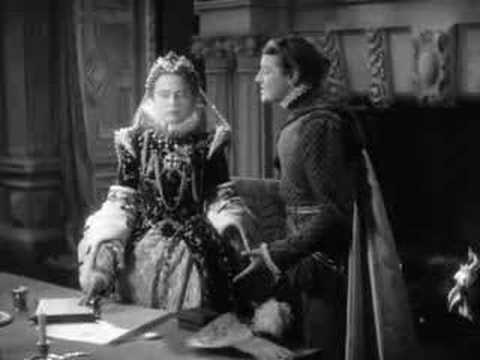
Mary of Scotland (John Ford, 1936) The film, written by Dudley Nichols from Maxwell Anderson's play, begins with an odd preamble, giving an overview of the whole Mary, Queen of Scots/Elizabeth R situation, and ending with the hopeful suggestion that they are "all equal now," buried close to each other in Westminster Abbey.  Cheery thought, and, despite what the play and movie say, the only time that Elizabeth and Mary were in the same room together.

It's a problematic film. betraying its stage roots (the speeches are very formal, stylized, and performed theatrically, with no overlap and AT THE TOP OF EVERYBODY'S LUNGS, as if trying to reach the last row of the balcony) although Ford works overtime to find interesting angles to shoot from.  So much Hollywood gossip swirls around this film—part of Hepburn's "box-office poison" cycle—that one is hesitant to bring it up as sources for the film's problems, which are many. But the main fault lies with Anderson's play, which lionizes Mary (Katherine Hepburn) while demonizing Elizabeth, and the production goes right along with it—Mary's first lines are a prayer to God for returning safely to Scottish shores, while Elizabeth's is ordering people around and played (by Florence Eldridge) as if she were Edward G. Robinson.  It would have been nice if this subject were a little more nuanced, as it involves two strong women in positions of power with men as being subjective, if constant irritants. One wishes that the two could have gotten together and agreed that all the men surrounding them were jerks and done something about that, rather than engaging in power plays for England's throne.

But, that's not how history went, and the play plays fast and loose enough with the facts as it is.  And this is Mary's movie, to the point where Hepburn is the only cast member with close-ups—jarring close-ups that have the feel of insert shots as the lighting changes dramatically from the establishing shots—Elizabeth is only seen in full shots that emphasize costume over performance.

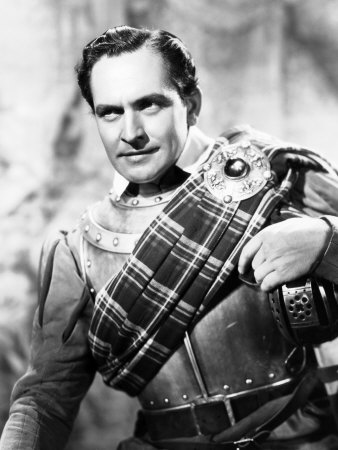
There are joys to be had, though.  Ford's penchant to use unruly horses is much in evidence, and the animals are particularly out of control on the sound-stages that dominate the film.  And Frederic March is something of a revelation, boisterous and accented, his is the best performance in the film.  And Ford's presentation is never less than spectacular, as has been mentioned, giving the film a scope that it wouldn't have had in other's hands.

A not-altogether successful film, but interesting to see.


Tuesday, August 24, 2010

The African Queen

"The African Queen" (John Huston, 1951) An anomaly among John Huston's movies—an unambiguously happy ending (and with the same cameraderie and laughter of his less heroic finishes). Originally set up as a vehicle for Charles Laughton and Elsa Lanchester, then for Bette Davis and David Niven, by the time it crossed Huston's path it became an excuse for Huston to visit Africa (which had just made a cinematic splash in "King Solomon's Mines") and get in some hunting, in a Hemingwayesque quest to conquer new territory. *

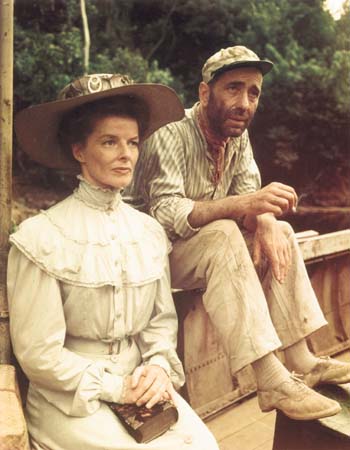
Along for the ride were Huston's favorite actor, Humphrey Bogart (with his new bride Lauren Bacall), and the spunky, patrician Katherine Hepburn, who had never worked with Huston before, but was always up for an adventure. **

That always came working with the much-storied Huston.

But, "The African Queen" is a love story, one of those about the transforming nature of love, and the trip down the treacherous rapids on a craft not suited for the purpose is a metaphor for the new experience of love among the ruins—two mature people set in their ways, and for whom love has never been a part of the path.  Love is an adventure, exciting but dangerous, making one vulnerable—but whatever doesn't kill you makes you stronger, and at the end of the coasting, carousing, exploding journey, the couple are adrift but floating, no boat underneath them, but operating on their own power, swimming to an unseen shore, laughing, without a care.  What might have seemed peril before is just one more momentary inconvenience, for the most important thing is the life, the love, and reveling in it.  They start out, bound in dogma and disposition, but in the course of the movie the stick-up-their-butts bend like the high reeds that they must plow through to reach their destination.  Change and accomodating change is all.  At the end, the stodgy individuals are a very zen couple.

Rose Sayer (Katherine Hepburn) is an African missionary when World War I breaks out, and the mission maintained by her and her brother (Robert Morley) comes under attack by German troops.  The mission burned, her brother dead, Rose is taken transit by Candian riverboat captain Charlie Allnut (Humphrey Bogart), who soon finds himself at odds with his passenger.  She is disgusted by his boorish behavior and his drinking, and he is horrified at her stubborn suggestion of using his "African Queen" as a weapon in the war effort.  It's a small skirmish in the world-wide conflict, but the battle of wills softens once the gin is gone and the thrill of the journey kicks in.  The drama comes in the conflict and the crisis, the comedy comes in the duo's new-found dependency on each other and courtliness.  They're an "odd couple," (even the Germans think so!), and the movie veers on a course from drama to high adventure to comedy to horror and even despair, before veering back to its satisfying conclusion.  It's not "The Love Boat," but you'll feel like you've been through the rapids, as well.

I have never seen a version of this movie that wasn't scratched, patched, discolored or broken up.  I've sat through many screenings, horrified, that such a classic (containing Bogart's only Oscar-winning performance) would be allowed to fall into such a state of disrepair.  So, I am pleased to say that, finally, "The African Queen," newly digitized and cleaned up, is available on DVD and Blu-Ray.


* In her book about the filming of "The Red Badge of Courage," ("Picture") Lillian Ross talks about the distraction of "The African Queen" leading Huston to abandoning the Civil War film before it was finished editing, leading to M-G-M (and Louis B. Mayer) cutting the film down from two hours to 69 minutes.

** Two books on the subject of the movie's filming are out there: Hepburn's remembrance of the episode "The Making of 'The African Queen,' or How I Went to Africa with Bogie, Bacall and Huston and Almost Lost My Mind," and "White Hunter, Black Heart" by "Queen's" script doctor Peter Viertel, a roman à clef about the circumstances, much fictionalized—the names have been changed to protect the elephants.

Saturday, August 2, 2008

Olde Review: Rooster Cogburn

Written October, 27, 1975

"Rooster Cogburn" (Stuart Millar, 1975) Stopped by the Renton* to see Stuart Millar's "Rooster Cogburn." It was...pleasant. Not particularly exciting, but...pleasant. When I think of all the possibilities of a script involving John Wayne building on an earlier role and Katherine Hepburn....

I can even think of the possibilities of direction within the limitations imposed by the script....


Well, anyway, with the talent showcased there, let's just say the glass could have been cleaned a little better. The "Rooster Cogburn" character is described as "having gone to seed." I must agree. Cogburn is but a shadow of the characterization Wayne created in 1969, and as if to off-set it, Wayne overplays it, especially in the opening sequences, but his efforts come out looking like amateurish mugging.

Hepburn fares much better in her role but then why shouldn't she? She played the same type of character in "The African Queen." The action sequences lack the punch that a more seasoned director like Howard Hawks or Henry Hathaway might've delivered. For example, the shoot-out at the Goodnight mission where a number of Indians and Eula Goodnight's father are murdered by a gang of desperadoes--the scene should have been frightening, a horrible thing to watch, as it must have been to the Hepburn character.. But after a well-used slow zoom into the growing commotion, Millar shows us the massacre from high overhead at least 30 feet away, showing all the action encompassed in the frame, keeping us at a safe and unparticipatory distance.

Another sequence that had great had great potential was the character "Breed's" (
Anthony Zerbe) showdown with Hawk (Richard Jordan), as he is exposed for being a traitor to him. After a very lengthy series of shots between the two characters as Breed hesitates in handing over his gun, Hawk kicks him and he slides down the slope. Then, there's a shot of Breed's hat sliding down the slope (nice try, but it just doesn't work, symbolically or otherwise), and ALL OF A SUDDEN ** there is a shot of Breed falling over a cliff (I remember thinking to myself "Was there a cliff there?" Yes, but we didn't know that until the character fell off it!) There was no suspense in this scene, but there certainly would have been if Millar had told us, somehow, that there was a cliff behind him. We would have been able to think ahead even further than we had when "Hawk" asked to see "Breed's" gun. We would have seen what was coming and squirmed a bit for the character. this way, nothing. A momentary shock and it's over.***

"Rooster Cogburn" is full of missed chances like this, and it really is too bad.

It really was. I remember reading about the trials and tribulations director Millar had with his iconic, and feisty and flinty stars out on location. How they'd do a scene, and not do a re-take if they thought it was good. Wayne wasn't in the best of health, but felt he had to do his own horse-riding in front of Hepburn--the male-pride thing. And though Wayne and Hepburn got along like a house afire, it was just an unpleasant shoot. And Millar was more of a producer than a director. He was 44 when he directed "Rooster Cogburn" but his "legacy" stars treated him like a kid.

It is too bad. This is the only movie that Wayne and Hepburn did together--at this time, she was starting to go the rounds of veteran actors with whom she hadn't sparred before, like Fonda, Wayne, Olivier--and it would have been nice to have a good, decent script instead of this hashed-together combination of "The African Queen" and warmed-over "True Grit." And whatever talents Millar had, he didn't know how to gather enough material to make a film that could be cut together smoothly, or build anything approaching dramatic tension. Sometimes projects are brought together on a whim and star-power, but without the good foundation of a solid script, and a director who can find gold in a coal-mine, it'd be like building a cardboard house on the sea-shore. The whole thing collapses before there's any equity. It usually happens when a screen-couple are re-united after a big hit. Anybody remember John Travolta and Olivia Newton-John's second pairing after "Grease?" Me, neither.****

* The Renton Cinema, demolished in the 80's, is now the AMC Renton Village 8. Same location, though.

** Emphasis, mine.

*** This is the basic "Hitchcock Rule:" A scene is much more exciting if you give the audience more information. If a bomb goes off on a train *BOOM* it's over, a little disorientation and shock and it's done. But tell the audience there's a bomb..show them where it is and what time's it's going to go off...and show all the people who might see it but don't, with the clock ticking down and you have a long period of suspense where people know the situation and are helpless to do anything about it. It's a much more effective scene.

**** Okay, I lied. "Two of a Kind."

Saturday, May 17, 2008

Olde Review: Stage Door

The following was part of a series reviewing the ASUW film series at the University of Washington that were broadcast on KCMU-FM in 1976--I found the old scripts and thought it might be interesting to post them here--with no editorial alteration or comment. I have no doubt that my attitude to some of these films has changed over the years--ageing does that--but to just erase my opinions from back then and tack on my new-found objections would do a disservice to the reviewer who was just a "stinky kid" back then. It'd be like making Greedo shoot first.

"Stage Door" (Gregory LaCava, 1937) It's hard to say what I like best about "Stagedoor"--not the story, it's pretty much the "tough-road-on-the-way-to-success" trope. But the dialogue is original--snappy and delivered at a break-neck pace, sometimes overlapping (and you don't see that very often in modern movies)* It all tends to make watching old-time movies invigorating.

Maybe it's the acting, delivered by an all-star cast headed by Ginger Rogers (again), Gail Patrick as a primary sufferer, Lucille Ball as a wicked-tongued Seattle-ite (but don't hold it against me), (and) Eve Arden as an aspiring actress who is permanently attached to a cat. All live together in verious stages of animosity when Katherine Hepburn makes another of her grand entrances and proceeds to steal the movie as easily as candy from a bunch of talented babies. Her role is somewhat autobiographical--rich society girl trying to make it into acting because it's a thrill and it's different. To see newcomer Hepburn--a small strap of a girl squaring off against a star-since-silent-days Adolphe Menjou and run acting rings around him is a certifiable thrill. It's Hepburn that is best about this movie, but then Hepburn has always been one of the best things about the movies.
----------------------------------------------------------------------------------------------
* Well, you did if you saw any Robert Altman movies at the time, and I'm sure I did--at least "Nashville" and "California Split" and "M*A*S*H" and "The Long Goodbye!" But the last movie I saw where the movie was seriously over-lapping and going at this pace was Clooney's "Leatherheads" (I think I was the only one...)

I notice I neglected to mention such stars of the future as Ann Miller and Jack Carson (one of my favorites). Well, these things could only be two minutes long...and it should be noted that this is the film where the Hepburn trademark line "The calla lilies are in bloom a-gain!" came from. Any actress or comedian who wanted to do a quick impression of Katherine Hepburn (in the days before Martin Short) would just say that line and people would immediately get the connection.