Showing posts with label Martin Scorsese. Show all posts

Tuesday, July 10, 2012

Directed by John Ford

Directed by John Ford (Peter Bogdanovich, 1971, 2006) Bogdanovich's primer is a "viewer's digest" of some big things that that made John Ford such a powerful director not only in individual films, but also across a career of experience.  Generous clips from throughout his acreer illustrate points, punctuated by talking head clips from the '71 version including Ford himself (who is not very helpful, to say the least—by saying the least*—and is deliberately dismissive of the doing the whole critical analysis thing, much like a comedian hates to explain a joke, or a magician a trick), John Wayne, Henry Fonda, and James Stewart.  The 2006 update folds in Harry Carey, Jr., Maureen O'Hara, and analysis from Clint Eastwood, Martin Scorsese, Walter Hill, and Steven Spielberg, as well as Bogdanovich.  

The update has everything from the original re-jiggered to add more points, but there's more of a "legacy" feel to the thing, now, as the casts Ford depended on have dwindled—Ford was still alive during the first version—and so the next generation who grew up and learned their craft sitting in the theater watching Ford's images talk about "what John Ford means to me."  Also, as the man is gone now, there's a bit more psychological analysis and more delving into the man's irascible personality, already on full display in his interview.


But there is one troubling aspect to this "new" version, something that stuck in my craw when I saw it (and no doubt would result in Ford caning Bogdanovich if he got wind of it).  There is a brief (very brief) examination of Mary of Scotland, Ford's only film with Katherine Hepburn, and the subject of much speculation over what their relationship was.  A sound clip is played of Hepburn's visit to Ford days before his death.  The tape was allowed to run continuously, and their parting words to each other are played, words that they had no way of knowing were being recorded, and words that might not have been said if known they'd been overheard (Ford specifically asks her "Are they gone?").  It's nothing scandalous or huge.  Ford merely says "I love you," and Hepburn says "it's mutual."  But it feels like a violation of the departed by the parties that recorded it and who have re-presented it.  And far too much is made of it (Really?  It was the inspiration for the names of O'Hara's and Wayne's characters in The Quiet Man?) in a gossipy, speculative fashion. These were, after all, words from people who must have known they'd never see each other again, and it's nice and it's lovely. But it's beneath the film, beneath Bogdanovich, and undercuts whatever scholarly impact the film might otherwise enjoy to make anything more of than the sweet parting gesture it is.  The worst part is...there's no one to rebut, no one to protest, no one to defend...or even better yet, to correct the speculation. Even Ford's maxim of "When the legend becomes fact, print the legend" doesn't cover this.

That aside (and it's my quibble, really), it's an invaluable first toe-dip into the films of Ford, and enriches the experience and appreciation of every film of his seen afterwards.  One thing Bogdanovich did right (besides getting Turner Classic Movies to bank-roll it, so more people would see it, the various clips from many sources being very expensive) is he kept the original's essential narration by Orson Welles, Ford fan and student.   The voices and faces and memories out of the past have as much weight and bearing as the films do, reverberating throughout history and time, feeling immortal and universal.


*

Thursday, December 1, 2011

Hugo

"One for the Kid"
or
"The Secret in the Clockworks"

Okay, okay.  Let me get this straight...a Martin Scorsese "Kid's Picture?"  In 3-D?

Honestly, I laughed when I saw the preview.  What could be more incongruous than the director of Mean Streets, Taxi Driver, Raging Bull, and Goodfellas making a film for the kiddies.*  I mean, face it, if Scorsese made a baseball film half the players would be killed by line drives. What's next? Spielberg making a snuff film? Kevin Smith making a good one?

Well, will wonders never cease?

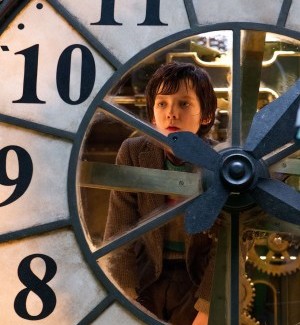
Hugo, the film that Scorsese made for the youngsters runs about 2 hours 8 minutes but feels longer, probably because it has so much on its plate.  A period piece—set post-WWI—about a young orphan, Hugo Cabret (Asa Butterfield, possessing the most angelic urchin face since Elijah Wood) who caretakes the extended clockworks inside Paris' Montparnasse station, it also contains a brief history of the birth of the film era, an extended history of the career of French film pioneer Georges Méliès (Ben Kingsley) as well as being a feature-length advocacy piece for one of Scorsese's pet projects, film restoration.  But, lest one imagine a long lecture on the subject, it is so imbedded in the film's story as to seem nearly invisible—a message hidden in a film of glass-sugar, so as to make the medicine go down.

Hugo ekes out a mouse-like existence, away from the orphanges, maintaining, unseen, the intricate, but elaborate clockworks that the trains run and the people depend on.  From the crystal clock-faces he can see life passing by and through, the scraps of left-over food that can provide a meal, and across the way the toy-maker's shop (with the very cranky proprietor) from whom he steals the tools and odd-parts to try and repair the last link to his late father (Jude Law, briefly), an amateur watch-maker, who took it upon himself to repair a mechanical automaton, discovered at the museum where he worked—the mechanical man's purpose no one knows.  From his vantage-point, Hugo is at the hub of the station's bustling activity and many side-stories, but when the need or the hunger arises, he'll make time to enter that world through any number of vents, passageways and access-doors, usually one step ahead of the persistent Station Inspector, who is trying to maintain his own kind of order in the depot.

It may be a PG rated kids movie, but it is still Scorsese, so there are dark elements running all the way through, like Dickens. And Scorsese is never one for a light touch, no matter what the rating is or to whom the demographic is targeted. Still, it is Scorsese's breeziest project in years, recalling the set-bound, intricate work he did on New York, New York all those years ago. But, with the tools of CGI, the scope is huge and the director swoops and swings through corridors and tunnels and crawlspaces with a verve he's never displayed before. It's Scorsese unleashed, not unlike the doberman pinscher partner of the station garde (Sacha Baron Cohen, who displays a fine depth for physical comedy, as well as a Sellers-like ability to plumb perverseness from the lightest subjects), who scampers like a hell-hound through the station's ornately vast spaces (the most elaborate set-piece is a nearly wordless pre-title sequence that is its own CGI 3-D hurdle-fest, that is also a tribute to the silent film era.** 

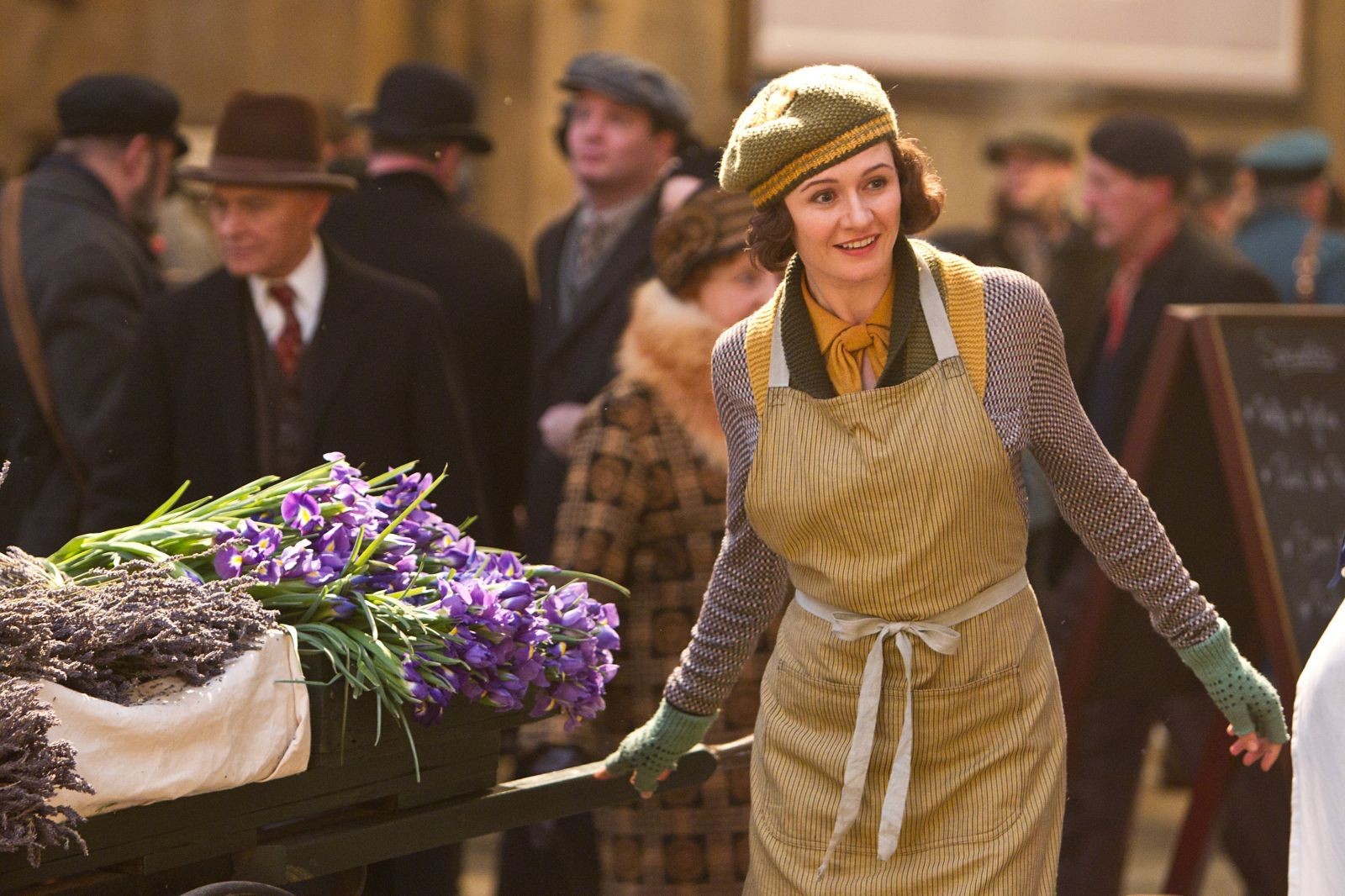
Yeah, it's a kid movie, but it's also a relentless love letter to cinema, with craning shots the old masters would have busted Union rules for, emulations of the arty interpretive shots from the silent era—things the neo-realist Scorsese has never attempted before—while at the same time taking a toymaker/magician/film-makers' fascination with capturing what James Stewart (in an interview with Peter Bogdanovich) called "little pieces of time."  It is all a bit of magic, a bit of technology, a bit of art, presented with a stylists' eye for the dramatic.  And Scorsese, with an army of the best at their cinematic craft—Robert Richardson, Thelma Schoonmaker, Dante Ferretti, Sandy Powell and Howard Shore (Shore's score is wonderfully soaring and French-laced)—including such fine actors as Kingsley, Law, Richard Griffiths, Emily Mortimer, Ray Winstone, Christopher Lee, Kick-Ass' "Hit-Girl" Chloë Grace Moretz and A Serious Man's Michael Stuhlbarg, have taken John Logan's intricately geared script-work and constructed a well-oiled entertainment machine taking today's technology to recreate an ephemeral past.

Wonders will never cease. Not with directors like Scorsese. Thank God!

Hugo is a Full-Price Ticket (and I can't wait to see it in 3-D!)


Méliès accompanying himself on banjo in one of his films.


* This brings up one of those stories—the ones you repeat over and over again at Family Gatherings—of my Mother's side of the family, when she and her fellow Bannick sisters went to see Scorsese's Casino...because they thought it might be a musical? (!!!!) Casino. The one that begins with De Niro being blown up in a car, and later, a man's head in put in a vise until his eyes pop out, and Joe Pesci is bludgeoned to a pulpy death with a baseball bat—this, after an even more grisly scene where he has sex with Sharon Stone?

I've often wondered at what point in the film did they figure out there wouldn't be any dancing?

** It reminded me of the kids toy-box of Paris opening of Moulin Rouge!, Baz Luhrmann's zest-fest mash-up of period piece and slash and dash modern culture.

Friday, February 19, 2010

Shutter Island

"What's yer Next Move, Boss?"
or
"Tag! You're It!"

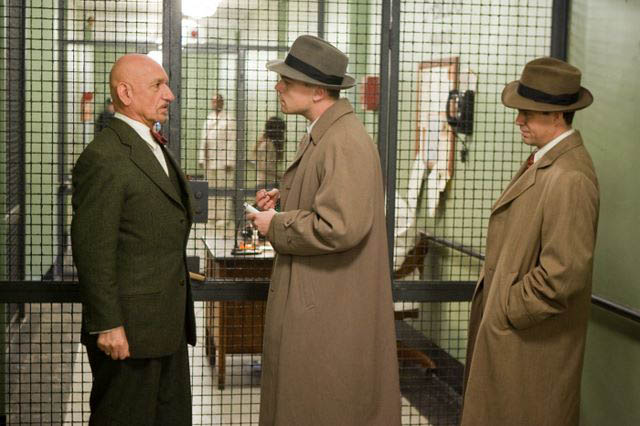
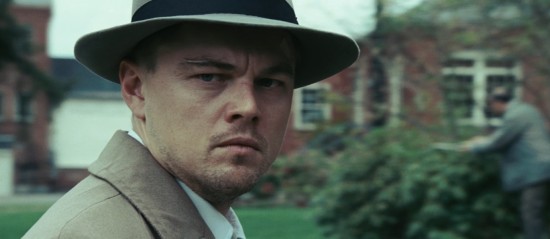
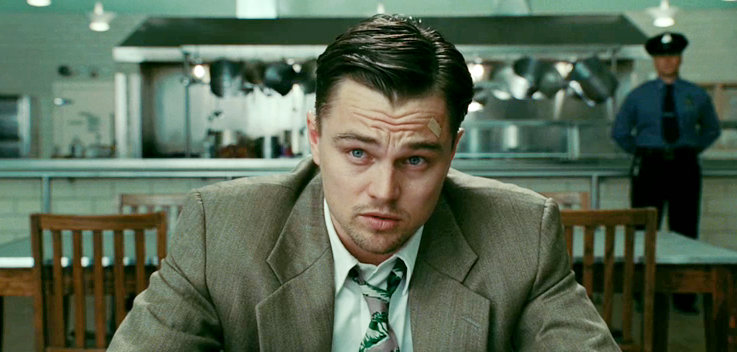
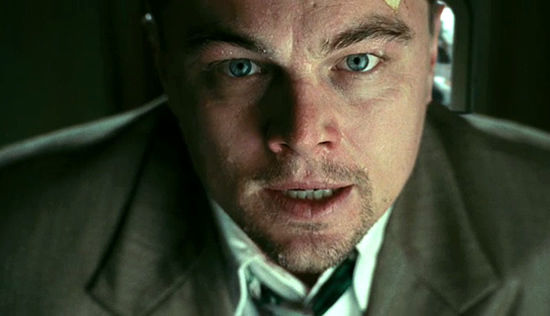
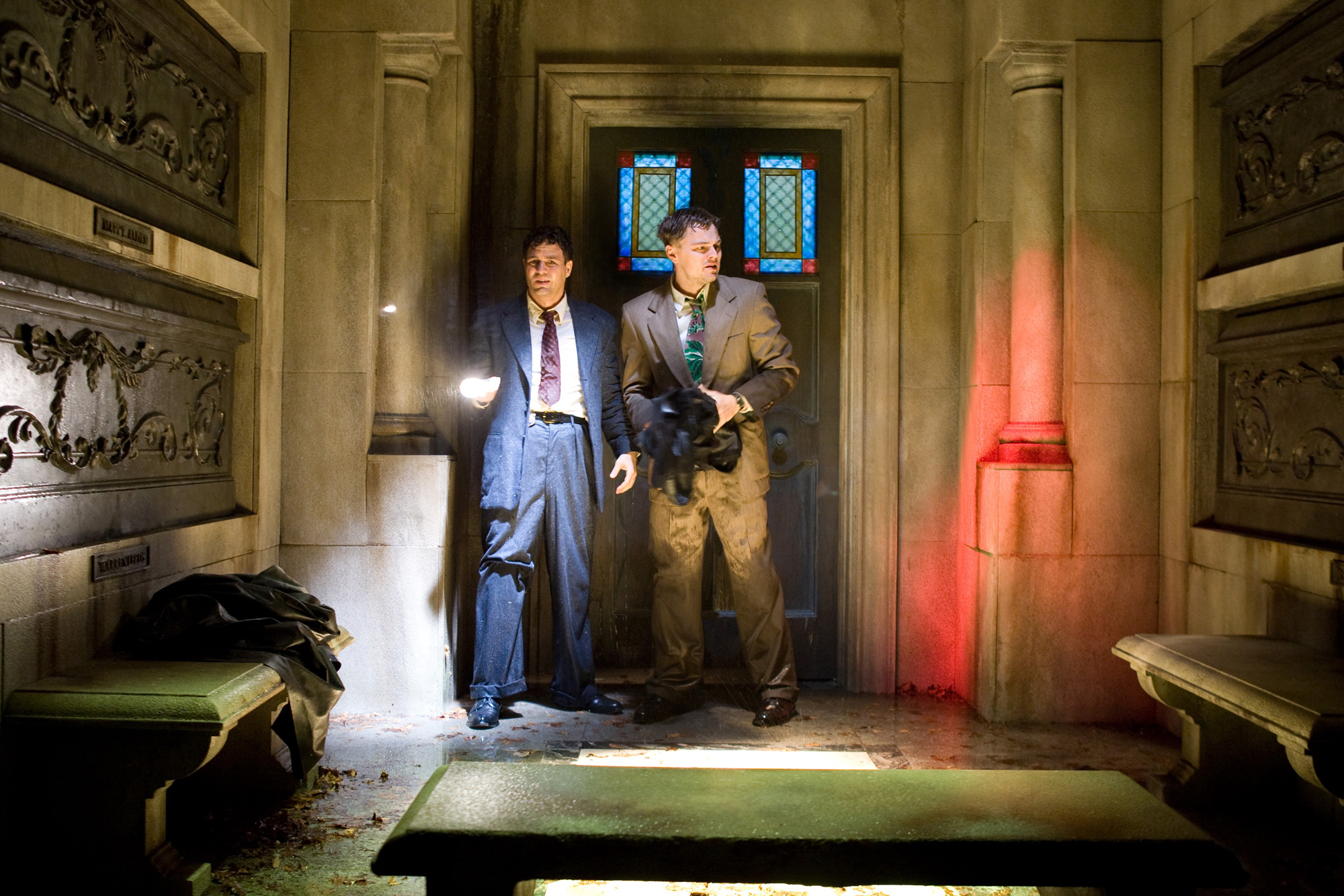
It is 1954, and out of the fog comes a ferry boat carrying two U.S. Marshalls, heading for "Shutter Island", where squats, in various stages of dis-repair, Ashecliffe, an asylum for the criminally insane. In the "head," sea-sick,* is Marshall Teddy Daniels (Leonardo DiCaprio), "the legend" as his partner from Seattle Chuck Aule (Mark Ruffalo, who has a rather thick Massachusetts accent for it) calls him. The two are investigating the disappearance of an inmate from Ward B, the women's section, and right from the get-go, the two are at a disadvantage.

Upon crossing the electrified fence, their weapons are confiscated, security being what it is. "What?" Teddy smirks at the guard "You act like insanity is catching." The guard only smirks back. That should have been his first clue.

The doctors (
Ben Kingsley and Max von Sydow) are helpful to a point, but then they become somewhat diffident and challenging, even obstructing, protective of their "advanced" techniques—"a moral fusion between law and order and clinical care." The missing woman, Rachel Solendo (Emily Mortimer), drowned her kids after her husband was killed during the Normandy invasion and has never acknowledged the act. But she somehow managed to escape from a cell, locked from the outside, and with a guard on duty. Investigating, Daniels finds a cryptic note "The Law of 4. Who is 67?"

But that's all surface.
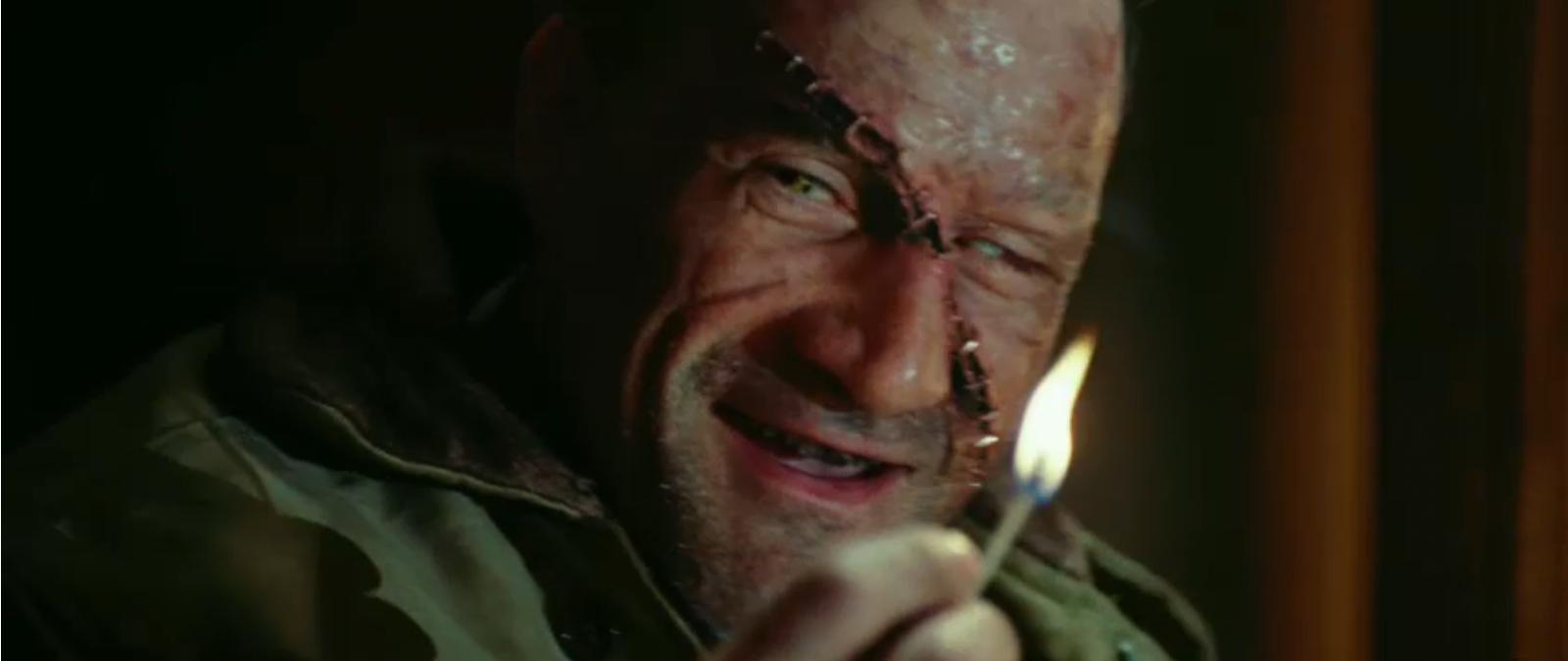
Daniels volunteered for this case because he wanted to get to Shutter Island for some personal business. He's still haunted by the death of his wife, Dolores (Michelle Williams), who died in a fire that was set by an insane fire-bug named Andrew Laeddis (Elias Koteas**), presently incarcerated in Ashecliffe's Ward C—for the most dangerous criminals. Daniels has done some investigating of the facility, and what he's turned up indicates that radical techniques, from experimental drugs to lobotomies, are being practiced, and as funds are being channelled there from the House Un-American Activities Committee, he thinks the government is working on a secret brainwashing program to infiltrate radicals as double agents. Teddy wants to blow the lid off the place.

That is, if Nature doesn't get the chance first. A hurricane is barrelling down on Shutter Island ("It's like f...ing Kansas out there!"), threatening to cut off power to the electrical systems keeping the prisoners locked up and backed off. If the power goes, there's no back-up generator to kick in.

All of this concerns his partner, Marshall Chuck Aule; Teddy's been doing all this investigating of Ashecliffe, the doctors are resisting co-operating, they have no guns, the facility controls the ferry that's their only way out, and there's a storm coming.
They're stuck on an island with a bunch of crazy convicts and an administrative staff who doesn't like them much, and wouldn't mind if they just...oh, had an accident or something. And Teddy's starting to get sick—plagued by migraines that Dr. Cawley (Ben Kingsley) diagnoses only too quickly with some handy aspirin nearby. Then, there's the German Doctor Naehring (Max von Sydow) who's the co-director of Ashcliffe and chief diagnostician. Teddy was one of the soldiers who liberated Dachau, so he's immediately suspicious of him. "Do you believe in God, Marshall?" Naehring challenges him. "Ever seen a death-camp, doctor?" Teddy sneers back.

There's a lot of story-point to juggle,*** but director
Martin Scorsese focuses on the atmospherics, which is laid down with a heavy hand in the same manner as he directed "Cape Fear." When it comes to working on genre features, Scorsese is never subtle, and the film is filled with dark spaces (with things that go KA-BOOM in the night), blinding lightning strikes, dripping facades and the most suggestive of dream-sequences. Before too much has happened, you begin to question everything you see, and at that point the director throws the continuity girl off the cliff and does whatever he wants, reality having little to do with the movie. The secret to this kind of film-making is keeping audiences guessing and Scorsese stretches it out as far as he can (to the point where some audience members will still be questioning it after they leave the theater).

Which is unfortunate. Because the most important thing about this movie (and story) is another of author
Dennis Lehane's moral quagmires. That is what one should be discussing, as opposed to "What just happened?"

So, call this another in a series of "minor Scorsese films" (but not so minor that it might win a mercy "Best Picture" Oscar), and we hope (again) that we'll see another film from him with more substance than mere style. One wonders how much Scorsese is sacrificing by hitching his film-making wagon to star Leonardo DiCaprio. DiCaprio is a bankable star so studios are only too happy to finance a Scorsese film starring him and this allows Scorsese to keep working in a youth-oriented market in the most profit-based center of film-making, Hollywood. But DiCaprio the baby-faced star (no matter how much he scowls) is the water to Scorsese's boiling oil. There is a sense, and it may only be mine, that DiCaprio is shoe-horned into Scorsese projects for which he is not suited, and perhaps the two should have a trial separation to see what kind of film the mature film-maker will produce without his too-young star. In the first part of his career, Scorsese's non-Robert DeNiro films were "Alice Doesn't Live Here Anymore," and "After Hours," two distinctive films that, even without the director's frequent collaborator, said something about our lives and times prismed through Scorsese's kinetic view-finder. After his tampered-with version of "Gangs of New York," he has produced "The Aviator," "The Departed," and this film, all with DiCaprio, and they are films more like "New York, New York," that accentuate style over substance. Great cinematic rides they may be, but they're flashes in a film-can, that leave you still hungry to see a great movie.

"Shutter Island" is a Matinee.

Post-script: I've changed my rating of "Shutter Island" to a matinee and I'm not so sure it is a minor Scorsese film, as it's stayed with me for more than a week, and the images and intricacies keep popping into my brain to slap me upside the head. "Missed it!" I think the "Decaprio" element still brings the movie down a bit, but a second viewing of "Shutter Island" shows intricacies that in the first viewing one doesn't know they don't know. That's subtle film-making that doesn't wave red flags at the audience, and the film slots into Scorsese's body of work quite smoothly. Trouble is, I can't go into details about it, or I might spoil the movie for anybody else.

Well, we'll just leave that for a piece down the road.

* Teddy is another Mass. cop who has the shakes about water. In "Jaws," Chief Brody's wife tries to be helpful: "There's a technical name for it..." "Drowning" is his quick reply.

** No, it's not Robert DeNiro, although it looks like him in the trailer. It's Elias Koteas...with a really big scar.

*** The script is by "Avatar" adapter Laeta Kalogridis, who Lehane thought did a masterful job with a difficult assignment. It is.


Thursday, June 12, 2008

Olde Review: Alice Doesn't Live Here Anymore

This was part of a series of reviews of the ASUW Film series back in the '70's. Except for some punctuation, I haven't changed anything from the way it was presented, giving the kid I was back in the '70's a break. Any stray thoughts and updates I've included with the inevitable asterisked post-scripts.
"Alice Doesn't Live Here Anymore
" (Martin Scorsese, 1974) is Scorsese's most sedate film as far as camera movement. It lacks the restless aimlessness of "Mean Streets," or the paranoid powerfulness of "Taxi Driver's" tracking shots--but that does not keep it from being dynamic. The power of Scorsese's camera is very much in evidence whether tracking confidently accelerating circles around Ellen Burstyn as she auditions in a bar, or as it takes on a home-movie-ish, jittery energy in a family squabble, the jitteriness due not to a home-movie-maker's inexperience, but seemingly shaken by the ferocious energies thrown out by the domestic combatants.
Scorsese is a director you should watch in the next few years, for, sooner than you think, Scorsese will direct a superb film (his next film, if you can believe this, is a post WWII musical called "New York, New York--the main Scorsese stamping ground--which stars Liza Minnelli and Robert DeNiro?). It's sure to be the first musical in a long time that has an energy to itself, instead of the re-heated left-overs we've been getting from Broadway lately. Scorsese will give it that energy--a bizarre, scary energy that is an essence of the man himself. For the cameo appearances he assigns himeslf to--the punk-assassin who firs the last life/hope-shattering shot in "Mean Streets," and that particular taxi-rider who directs Travis Bickle to a house and to a female silhouette in the window and asks him what he thinks a .38 will do to her head, are bizarre self-roles to be sure.

But enough of Scorsese. There is another creator to "Alice...," its star,
Ellen Burstyn, who had the tenacity to get what the producers scornfully refer to as a "women's picture" into production. And when she was in Seattle last year, she made it painfully clear that, without her, the film would have gone woefully wrong-headed in its intentions. The original ending had newly-widowed Alice Hyatt settling down to another life of house-wifely drudgery, instead of letting her continue with an uncertain, but certainly more adventurous future. Thank Ellen Burstyn for that, and thank her for the humanity she imbued in this film, not glossing it over, and bringing out very real performances from the vast majority of the cast. Her humanity, and Scorsese's power combined to make " Alice Doesn't Live Here Anymore a film that not only excites, but also leads to the lesser shocks of every-day recognition.
Yeah, one of these days this Scorsese kid's gonna make a superb film (that would be "Raging Bull" (1980)...and another...and another...and then "Taxi Driver's" going to start looking like the classic that it is, and the guy won't be awarded by the Academy until he does a star-heavy re-make of a Chinese film that was inspired by one of his own films--that being "The Departed," not that great a Scorsese film, but a better than average thriller.

No prescience here, Scorsese was always exciting, and bull-headed enough to stick to his aggressive kind of movie-making and not compromise even during the lean times. Scorsese films never "direct themselves." You're always aware of his hand on your shoulder directing your field of view, not unlike Hitchcock. And the man keeps re-writing the film language which keeps everybody on their toes, and keeps the art fresh and new. If he isn't our Great Director right now, he's One of the Two, and both men eye each other's work, influencing each other's creations, like Ford and Hawks, or The Beatles and The Byrds.

Now, if Scorsese could just lose that DeCaprio kid...

Monday, January 14, 2008

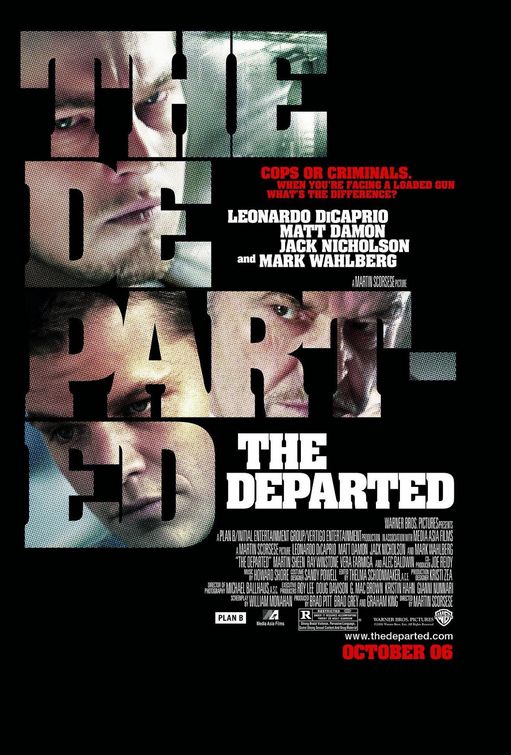
The Departed

Institutionalized Ball-Busting

Call it the Scorsese Thesis: First a guy tells you what he's gonna tell ya, then Marty shows ya, then you're on your own.

In the case of "The Departed" "the Guy" is Jack Nicholson's Frank Costello, a seedy Boston crime-lord from "some years ago." "I don't want to be a product of my environment," says the shadowy Frank (Scorsese's way of showing Frank as a younger man). "I want my environment to be a product of me."

Nicholson's Costello makes good on that promise on two fronts--in the scenario of "The Departed," and the movie, itself. Costello's control over his Boston turf (or, using the accent Martin Sheen employs here, "too-urf")is so absolute, his reach extends from his surly band of criminals to the police department, culminating in one of his own crew (Matt Damon) infiltrating the very task force investigating his activities. Simultaneously, the player on the other side, Captain Queenan (Sheen) has trolled the new recruits to find his own mole (Leonardo deCaprio) to infiltrate Costello's crew. It turns into a complicated Spy Vs. Spy with both moles straddling the moral fence, while completely unsure of their footing on either side. And while trying to rat out their suspected counter-part while not drawing attention to their own treacheries. They're mutually duplicitous. As Costello says in the Thesis: "When I was growing up, they would say you could become cops or criminals. But what I'm saying is this. When you're facing a loaded gun, what's the difference?"

It's a complicated game of Jack's Straws...set in a house of mirrors. Drop Nicholson's weight into the middle of it, and the whole thing threatens to pancake...much like the movie. This first colaboration with Scorsese is similar to Marlon Brando's eccentric performance in "The Missouri Breaks," where an actor so drapes himself in business that he attracts the eye in the same way as a car-wreck--you wonder what in Hell this crime-clown (it is much like Nicholson's Joker in "Batman" without the make-up)is going to do next. Damon and DeCaprio were not clued into his on-set antics and so their scenes are played with the right touch of paranoid hesitancy. There's a strained wariness behind their eyes and they've rarely been better.

As good as they are (and excessive as Nicholson is) best among the cast is Alec Baldwin as a fast-talking divison head, but the real revelation here is Mark Wahlberg. Marky-Mark walks away with the picture and dominates every scene he is in, no matter who's in it with him. In fact, in the one scene Baldwin and Wahlberg share, Scorsese throws in a couple of "Raging Bull" camera moves for a verbal feint and parry between the two. It's a director's nod to two extraordinary actors doing solid work, free of gimmicks.

As for Scorsese, if you're looking for a return to his greatest efforts, this isn't it. It makes you wonder what he's up to. This story is nothing new, and is in fact based on a Chinese film (and its two sequels, actually) that owes more to the early personal style that he fails to deliver on here. What's the fascination? We've seen the cop/criminal discotomy, as well as the conflicts of working undercover in better films. He's doing program work, not personal work. This isn't "Raging Bull" or "Mean Streets" or "KunDun" or "Goodfellas." This is "Alice Doesn't Live Here Anymore." Or "New York New York." Or "The Aviator." One senses he's pacing himself, keeping his hand in the game doing agency "package" movies until the next inspiration comes along. Perhaps he should ditch DeCaprio, and find that last, good DeNiro project. He's too good a film-maker to waste on remakes and empty biographies. Maybe after the struggles he went through to bring his last personal project to the screen he's asking himself at this point in his career "What's the difference?"

"The Departed" is a Rental-You gotta problem wid 'at?