
"Cynicism is Sanity"
or
"The Uncertainty Principles"
James L. Brooks finds salve in a cynical world. That he is The Godfather of "The Simpsons" and is responsible for investing that rancid cartoon with so much heart and soul is testament to the fact.
But, that is Brooks' great charm as a writer-director—finding the grace in bad situations, and charting a course through it, providing evidence that, even with no destination in sight, life is a process. The journey is all, and you might as well enjoy it, every bump, every neglect, every inequity, every injury...or else you won't know the good times to be (or not to be) if you tripped over them at night. The light that emanates from the projector of his films is his own candle in the darkness.
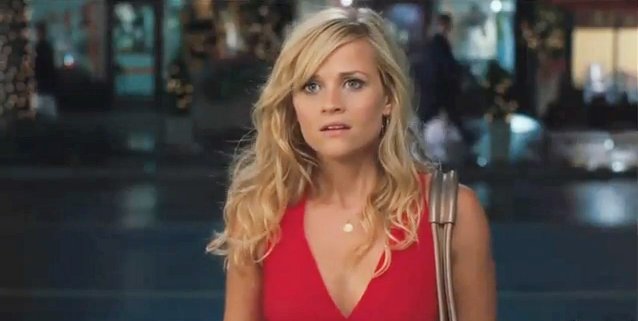
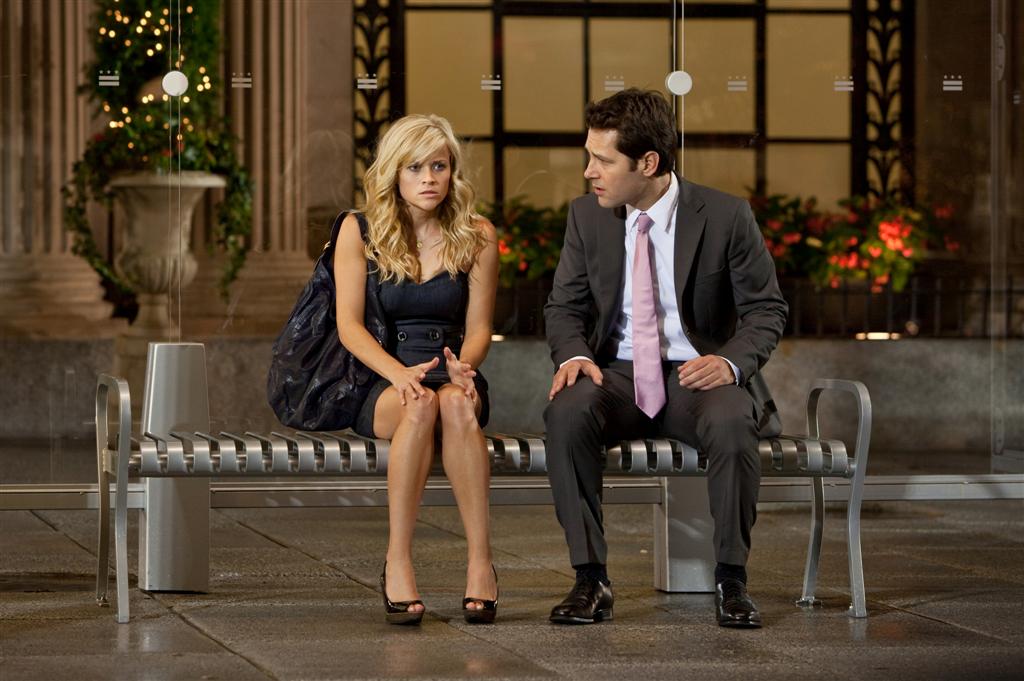
How Do You Know presents two professionals in life-changing positions (something we are all too liable to identify with in the country's state of affairs). Lisa (Reese Witherspoon) is a disciplined, principled professional softball player, who also manages to be the soul of her team. When she gets cut from the roster, she's devastated—the game is all she knows, and she finds herself adrift...hell, not even in left-field! All of the life-strategy post-it notes on all the refrigerators in all the world can't help her through this. On the other side of the financial spectrum, George (Paul Rudd) is an investments broker, working for the firm of his Dad (Jack Nicholson), and everything is just fine, thank you, until the subpoena shows up, and he must go through the process of being disengaged from his company, fiancee, friends, apartment, belongings, essentially becoming a "non-person." As his father's lawyer informs him, "Accept the inevitable. Accept that you will never again be the person you are."
And he's being nice.
George goes into a tail-spin. Luckily, he gets a "hook-up" date with Lisa, but he's in no shape for it, unloading his angst in a vitriolic stream. Appalled, she upbraids him: "Jesus! Do you know I don't know you?"
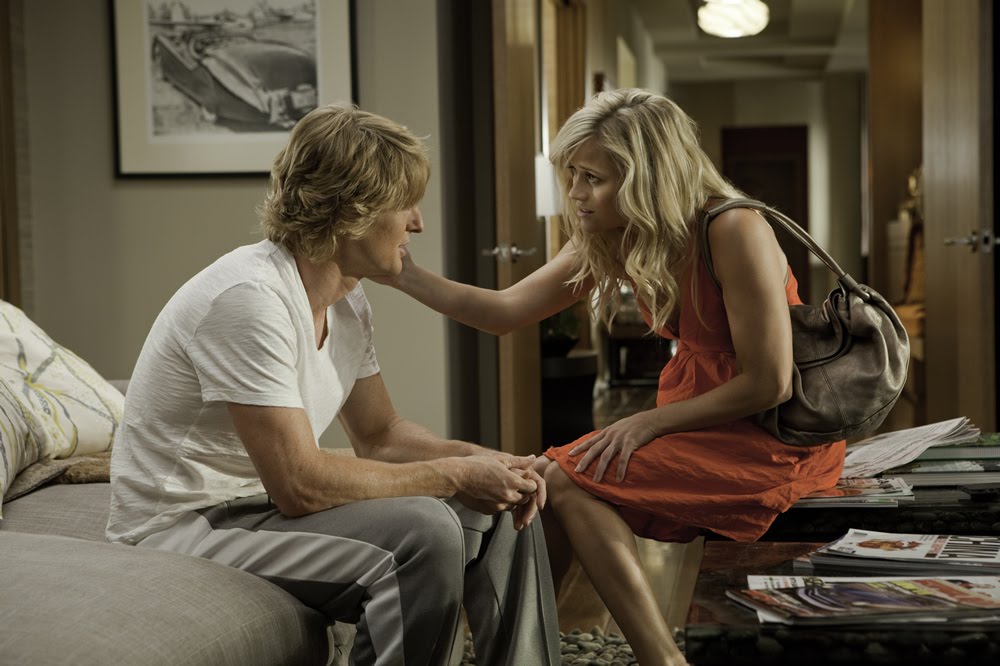
And that's how it starts: George's stock is falling, and Lisa's struck out. But in the great balancing act of the Universe, they might be lucky in love. Maybe. But, the course never goes smooth, as Lisa has started a relationship with a pro-ball player Matty (Owen Wilson), who's self-absorbed and a bit dim. And with his troubles, George isn't exactly "a real chick-magnet," as Lisa sarcastically characterizes him. Sounds like a typical romantic-comedy, the type in which Witherspoon has specialized the past few years.
But, at its heart, it's a bit more complicated than that, and thus, may not fill the rom-com comfort food quotient. Lisa and George are two people with no prospects who have fallen off a cliff—additionally, falling in love may only serve to create more momentum to leave a bigger crater when they hit bottom. There's a psychiatrist who says that the only people who think they control their Universe are psychotics...or bullies (temporarily, anyway)...or deluded. Lisa and George are surrounded by them, no doubt wondering how such manage to survive. Are they folks who can float on the tides of fate, or just an anchor.
Probably its all too much heaviness to attribute to this film, as slight as it is, never achieving the weight of Broadcast News, or the heart of Spanglish, but considering what has passed for romantic comedy the past few years, How Do You Know could pass for Noel Coward. It, at least, tries to do something with the genre, placing the situation in a less sure framework—How Do You Know by its very title attempts to define the undefinable, and take this type of film out of the realm of the assured, even going so far as to remove the staple of the form: the clinch at fade-out. Instead, we are left with a negative image that informs without giving much information, providing possibilities, but no definitive answers.
I like that.
How Do You Know is a Matinee.
Thursday, December 23, 2010
How Do You Know




Saturday, April 3, 2010
The Bucket List
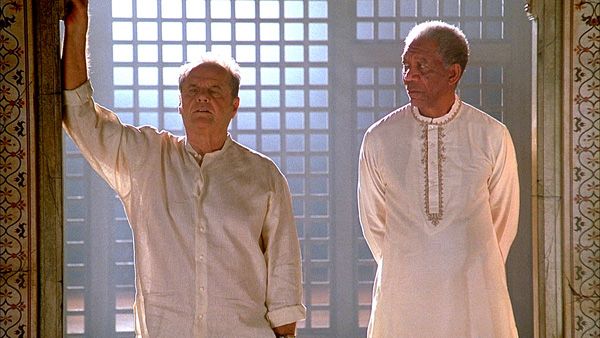
 "The Bucket List" (Rob Reiner, 2007) Movies about cancer patients don't do well at the box-office, by and large, but this one seemed to linger in theaters for quite a while. The reason could be the chemistry of the two stars, Nicholson and Freeman, who wanted to work together, and, here, fit as a team like comedy and tragedy. Nicholson lays it on a little thick to compensate for the considerable Freeman gravitas, but in moments of quiet they're evenly matched.
This one was savaged by the critics for its kumbaya—live-'til-ya-die saccharine quality, but armed with that fore-knowledge leavens the sugar-shock. Two cancer patients—one, ironically, the head of the no-frills hospital system he's being treated at—pull each other through their treatments and surgeries, with definite expiration dates and decide to fulfill a hastily cobbled together "bucket list" of things to do before they die. It includes the "Grumpy Old Men" comedy fodder of sky-diving and race-car driving, but also it doesn't shirk from the ravages of cancer treatment or the mood-swings accompanying the Kubler-Ross stages of death. And it's tough on the effects of a family when the figurehead, dying of cancer, decides he needs some quality time to eat, drink, be merry and see a handful of the seven wonders in a selfish act of squeezing as much experience into an ever-shrinking amount of time.
If there is anything that holds the movie back (besides its commitment to be a feel-good movie) it is Rob Reiner's direction, which never rises above the perfunctory. It's something that's plagued all his films, but is most noticeable when he tries to do something bigger than a two-hander romantic comedy—it's why his "The Princess Bride" never quite rises in presentation to meet its ingenious material. Reiner perpetually films like he was aiming for television movies (but even now, TV directors are getting better at using wide screen compositions for HD). True, he had to worry about his actors looking convincing over stock footage (predominately used during the travel sequences), but there must have been a way to do it with more panache and sense of style. "No frills" makes for a dispriting experience...in hospitals and movies.



Saturday, October 3, 2009
The Two Jakes
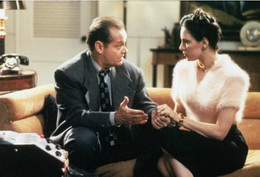
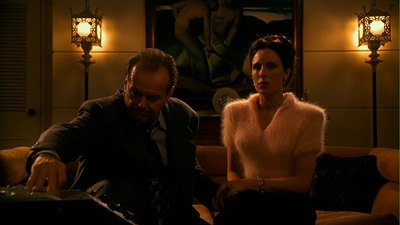
 "The Two Jakes" (Jack Nicholson, 1990) The second part of a planned "Jake Gittes" L.A. trilogy (that had started with "Chinatown") was snake-bit almost from the start. Centered around the three great California swindles (water, oil, and transportation), the second film, to be entitled "The Two Jakes"—involving real estate and related oil grab—was set in the post-war 40's. Robert Towne, who wrote the original "Chinatown," was set to direct his old friend Jack Nicholson for the sequel, and for the real estate baron Jake Berman, it was agreed to cast executive producer Robert Evans, who hadn't appeared in a movie since 1959.
Something happened. The particulars are hazy, but the story is that Towne was unhappy with Evans' performance, and Evans being the executive producer was unhappy with that (his autobiography is, of course, "The Kid Stays in the Picture"). The production was shelved until 1989 when Nicholson himself took the director's chair, Harvey Keitel in Evans' spot and a new production began, with a script that wasn't done to Nicholson's satisfaction and was being re-written while shooting.
What emerged was something of a mess. "Chinatown" was a complicated film, but "The Two Jakes" had the added burdens of a complicated plot and a carry-over theme from the previous film. Some sections seem well thought out and designed, and others rushed to the point of obtuseness. To patch the bare spots and try and salvage the dramatic flow, Nicholson wrote and recorded a narration—not an unusual thing to find in a detective movie—that had more to do with character points than clarity.
The other thing is casting: Meg Tilly was a bit too young to be playing Berman's philandering wife, her acting makes her character something of a blank spot, and her motivations are never hinted at—and she's absolutely critical to the story. On top of that, her presence makes Gittes appear to be pretty stupid for not spotting what is revealed in the story, and the plot-machinations a bit contrived. This is apparent if you've seen "Chinatown." If you haven't, 'The Two Jakes" leaves you high and dry, it's plot about the diversion of water to the city an integral part of the information needed to get anything out of the film. It tries to do too much, introduce too many incidental characters, and ultimately fails to congeal as a coherent movie rather than a roughly assembled series of scenes and ideas. If Towne had been around to tighten the script, it might have been different. If he had directed it, rather than Nicholson, it might have been more cohesive as Towne is a fairly strict director. But the important part is that the three essentials for the project—Nicholson, Towne and Evans could not compromise, and so "The Two Jakes" was compromised, taking the third film in the trilogy—the much-rumored "Cloverleaf"—along with it. It's what happens when hubris replaces professionalism.




Tuesday, May 19, 2009
Anytime Movies Reloaded: Chinatown
It's Spring-Break for me. Times are busy. The Summer Movie Season is already begun (and I'll be writing about the new ones) and the Film Festivals are grinding away like creaky mills separating wheat from chaff. It's as good a time as any to re-boot a feature I started years ago, when it was suggested I do a "Top Ten" List.
I don't like those: they're rather arbitrary; they pit films against each other, and there's always one or two that should be on the list that aren't because something better shoved it down the trash-bin.
So, I came up with this: "Anytime" Movies.
Anytime Movies are the movies I can watch anytime, anywhere. If I see a second of it, I can identify it. If it shows up on television, my attention is focused on it until the conclusion. Sometimes it’s the direction, sometimes it’s the writing, sometimes it’s the acting, sometimes it’s just the idea behind it, but these are the movies I can watch again and again (and again!) and never tire of them. There are ten (kinda). They're not in any particular order, but the #1 movie IS the #1 movie. This is the one of the “Anytime Movies” that falls into the category of “Lost Causes and the Futility of Good Intentions,” but lest anyone think these films are depressing, they’re not.
Well, okay, this one is.
It’s also perfect. Given the nature of the trio of men who oversaw its creation—screenwriter Robert Towne, director Roman Polanski, and producer Robert Evans—the thing could have self-destructed like a fragment grenade. And, in fact, the planned trilogy of films featuring detective JJ “Jake” Gittes investigating three big California crimes (water, land, and nuclear) stopped after the personality clashes that derailed the first attempt at filming “The Two Jakes.” Polanski couldn’t set foot on American soil due to rape charges, and Evans (who was producing and co-starring) and Towne (writing and directing) clashed on the set. The combination of expanded roles and ego following the first film’s success shut down production, and it was only the efforts of star Jack Nicholson, who took over directing, that allowed the film to be made. They say that great films need a miracle – “Chinatown” had it, but “The Two Jakes” didn’t have a prayer.
“Middle of a drought and the water commissioner drown. Only in L.A., huh?”
Based loosely on the construction of the William Mulholland designed aqueduct, and the real estate swindles it engendered, “Chinatown” starts out as a mystery even more steeped in the locale of L.A. than Chandler’s Marlowe stories. Here, the very city is a part of the crime and corruption is steeped in its soil and water. Water is the heart of “Chinatown.” Its ebbs and flows are constantly monitored –the original object of investigation is the city’s head of the Department of Water and Power who then becomes the victim of a grisly murder. Water is never too far from the surface of the story. Even Jerry Goldsmith’s shimmering score suggests water in its low harp trills, and the sighing of, yes, water phones.
“Chinatown” gets all its details right—the language, the costumes—Richard Sylbert’s period work is amazing, and a perfect cast makes the most of Robert Towne’s wise-acre dialog. A perfect cast? Right down to the smallest part. There’s a favorite moment of mine when Gittes, after badgering the secretary of the new head of Water and Power, is distracted by an odd squeaking noise. He, of course, has to investigate, and opens the outside door on the two work-men who are scraping the dead man’s name off the door. The one guy looks irritated—the other guy smiles, nods, and as the door is closing shakes his head ruefully—“Happens every time.” It’s a tiny little moment that feels so authentic, so much more than a mere movie might provide, it provides a moment of truth in a continuous string of truths.
But, that is a moment you can appreciate as it happens. “Chinatown” lives on in the memory. After the mystery is solved, moments come back, as the pieces come together and the journey to the conclusion coalesces. They haunt. On repeat viewings, “Chinatown” is a treasure trove of call-backs and foreshadowing’s.* Little things, like the odd cadence of a name, mispronunciations that can be traced back, a birth-mark—lead you downstream to a resolution that you should, in retrospect, have seen all along. Like Gittes, its only at the end that you get the full story. Of course, like him, you follow the most obvious things that seem out of place or arouse suspicions. ** But the world is a more complicated place and long after the film is finished does it strike you that the two most suspicious people while watching the film are actually the most decent and altruistic ones acting with the best of intentions. Of course, in this world they come to a bad end.
“Do you know how long I've been in this business?”
And here’s where that mix of personalities comes in. Towne’s screenplay is very grey—Jake Gittes at the beginning of the film—the very beginning—gets angry and abusive with his moaning client, Curly (In the film, there’s only an impatient irritation). Later dialog casts a sympathetic spin on water magnate Noah Cross. The original screenplay ends with, if not a happy ending, then a triumphant one. Evans loved the screenplay (though he didn’t quite get it), but in one of those odd bursts of inspiration that sustained him throughout an eccentric career as a producer, decided that the film needed a European sensibility, and so, brought in Polanski, who had left the country and Los Angeles following the murder of his wife Sharon Tate by the Manson family. His perverse take on the city and the material focused it, and made a stronger delineation between good that is good and evil that is truly evil—and provided the ending that doomed those most in need of rescuing. “Chinatown” ends in shock, and with a sense of tragic inevitability. That Jake, in a moment of selfishness and hubris, sets up a series of events that ends up completely bollixing up his good intentions, completes a circle and a character arc that had been percolating below the surface the entire time. He ends up ignoring the lessons he learned in Chinatown (the district, not the film), and paying the same consequences. The final words are ironic--“Forget it, Jake. It’s Chinatown.” Forgetting isn’t his problem. Remembering is. Towne would hammer the point home with the last line of “The Two Jakes”—“Kitty! You never get over it.”
But by that time it wasn’t necessary to say.
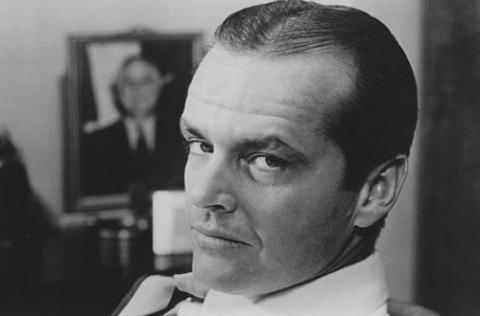




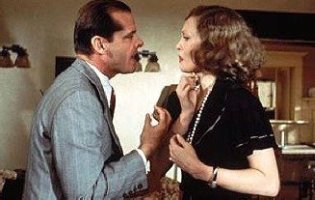
Jake wants the truth.
He can't handle the truth.
** Towne’s screenplay is so fully formed that, unlike Chandler’s Marlowe stories, a first person narrative isn’t necessary. We are always aware of what Gittes is doing, and thanks to Nicholson’s performance, what he’s thinking.
Chinatown
Mr. Smith Goes to Washington
American Graffiti
To Kill a Mockingbird
Goldfinger
Bonus: Edge of Darkness
Wednesday, August 13, 2008
Olde Review: Chinatown
"Chinatown" (Roman Polanski, 1974)

As opposed to the whimsy of "The Third Man," "Chinatown" is a film of deadly earnest, a perfect example of what is termed "film noir"-which means, in melodramatic terms "when the streets are dark with something more than night," usually the feeling of purveying evil. That is certainly there in "Chinatown," although it would be hard to pin that evil on the influence of the film's all-encompassing villain, or the influence of its director, Roman Polanski, who incidentally played that strangely accented "midget" with a knife you heard in that tape segment.* Polanski shaped this film into a first-rate thriller, even more, into the best film coming out of a major studio in 1974, deserving of every Oscar that "The Godfather Part II" won that year.** As with most of these films, each and every performance is perfectly played from the starring performances of Jack Nicholson, Faye Dunaway, John Huston and John Hillerman, down to a lowly sign painter.***Gittes: Hello Claude. Where'dja get the midget?
Midget: Yer a nosey fellow, kitty-kat, huh? Ya know what happens to nosey fellas, huh? No? Wanna guess? Huh? No? (slices Gittes' nose). Next time you lose the whole thing. Cut it off and feed it to my goldfish. Understand? Understand?!
Mulvehill: Tell 'im you understand, Gittes.
Gittes: I unnerstand!

Chinatown--a section of Los Angeles inhabited mostly by Asian-Americans due to a suppression of their people.
Chinatown--the former beat of two L.A. patrolmen, J.J. Gittes and Lou Escobar; a beat they think in "bad luck" for "you can't always tell what's going on."
Chinatown--the symbol of all evil to Jake Gittes, private detective, for it reminds him of his own tragic failures.
Jake Gittes is hired by a Mrs. Mul'-wray to investigate her "philandering" husband. But as Jake investigates, he realizes that Mr. Mul-wray' is not what he seems, Mrs. Mul'-wray is not what she seems, and Jake finds himself investigating a larger scandal, one encompassing city-wide fraud and personal tragedy. Jake knows all the moves he is supposed to make while investigating--tailing, picking up clues, following them to the next step--and the whole way, he thinks he has the whole case going smoothly. But he doesn't. It is much too big for him to stop. He ignores those little details that he, and we, only can remember later. And Jake Gittes, when the case is over, relives a tragic part of his past, and can only take consolation in the caring words of an associate--"Forget it, Jake. It's Chinatown."


The ending of "Chinatown" is a complete reversal of what the film had, supposedly, been leading up to. It will undoubtedly shock and disappoint you. Some critics have said it is ill-considered and "tacked on." But it isn't. It is perfect for the film that Roman Polanski made, and it makes the experience of viewing "Chinatown" that much more resonant.
Broadcast on KCMU-FM November 11th and 12th, 1975.
Some revisions should be made to this (if I were making revisions). I was being too much of a "nanny" critic, telling people how they should feel. And I kind of blew any surprise that ending SHOULD have by telling an audience to expect it.
And "Chinatown" isn't "the symbol of all evil" for Gittes. That's giving him too much thought of the place. It's just a place to be avoided. Bad luck. Fool me once, shame on you. Fool me twice--
And Walsh's words to Gittes aren't "caring," he says it because there's nothing more to say. "Get over it. What'd you expect?"
I've written about "Chinatown" more extensively here. But there's more to say. Reading a nearly final script by Towne of this film tells you that Polanski brought more sense of moral rage to the film (interesting, for Polanski). Evil is evil. Good is good. I've always "gotten" the sense that Hollis Mulwray is not only a good man, but practically a saint. There are things implied in Polanski's direction that point even further in that thought. But, in Towne's screenplay, more sympathy is ascribed to the villain. He is not pure evil as the film would have him appear. He is merely weak, and anything can happen in a moment of weakness. Evelyn Mulwray is also less of a victim in that screenplay, though her actions are seen to be a trifle hysterical. There are no easy answers in Towne's early screenplay. Things are not black and white, merely shades of gray. And given Polanski's history--the concentration camps, and his wife, Sharon Tate's grisly murder at the hands of the Manson gang, and his own past films, one would see why he'd tilt it to the side of the devils.
In 1991, "Chinatown" became a part of the National Film Registry.
* Yeah--you don't get the taped segment. Sorry. The transcript will have to do. I've always loved the way Nicholson drawled out "Hello, Claude. Where'dja git the midgit?" It runs a close second to my favorite Nicholson line, from "Five Easy Pieces:" "Don't tell me 'bout the GOOD life, Eldon, 'cuz it makes me PUKE!"
** Although "The Godfather, Part II" also deserved every Oscar it won. Except maybe score. And I don't think that's hyperbole saying the best film coming out of a major studio that year. That's also due to its Executive Producer, the extremely savvy producer Robert Evans. Say what you will about Evans, but under his stewardship, Paramount could not be topped as the dominant movie studio in Hollywood. Look at 'em now, folks.
*** Actually, "Chinatown" is one of the few films where every performance is perfect. And that sign painter--it's one of my favorite bits in movies, because it rings so true. The guy's watching his assistant scrape the name off a door, and that scrape gets detective Gittes to investigate, opening the door. The painters look up at Gittes, who realizing what it is, shuts the door...and AS IT'S CLOSING, the guy in charge replaces his nodding greeting with a rueful shake of his head "Happens every time." Of course it does. But it's the sort of detail "Chinatown" is full of, as so few movies are.
Monday, January 14, 2008
Chinatown
This is the first of “Anytime Movies” that falls into the category of “Lost Causes and the Futility of Good Intentions,” but lest anyone think these films are depressing, they’re not.Well, okay, this one is.
It’s also perfect. Given the nature of the trio of men who oversaw its creation—screenwriter Robert Towne, director Roman Polanski, and producer Robert Evans—the thing could have self-destructed like a fragment grenade. And, in fact, the planned trilogy of films featuring detective JJ “Jake” Gittes investigating three big California crimes (water, land, and nuclear) stopped after the personality clashes that derailed the first attempt at filming “The Two Jakes.” Polanski couldn’t set foot on American soil due to rape charges, and Evans (who was producing and co-starring) and Towne (writing and directing) clashed on the set. The combination of expanded roles and ego following the first film’s success shut down production, and it was only the efforts of star Jack Nicholson, who took over directing, that allowed the film to be made. They say that great films need a miracle – “Chinatown” had it, but “The Two Jakes” didn’t have a prayer.
“Middle of a drought and the water commissioner drown. Only in L.A., huh?”
Based loosely on the construction of the William Mulholland designed aqueduct, and the real estate swindles it engendered, “Chinatown” starts out as a mystery even more steeped in the locale of L.A. than Chandler’s Marlowe stories. Here, the very city is a part of the crime and corruption is steeped in its soil and water. Water is the heart of “Chinatown.” Its ebbs and flows are constantly monitored –the original object of investigation is the city’s head of the Department of Water and Power who then becomes the victim of a grisly murder. Water is never too far from the surface of the story. Even Jerry Goldsmith’s shimmering score suggests water in its low harp trills, and the sighing of, yes, water phones.
“Chinatown” gets all its details right—the language, the costumes—Richard Sylbert’s period work is amazing, and a perfect cast makes the most of Robert Towne’s wise-acre dialog. A perfect cast? Right down to the smallest part. There’s a favorite moment of mine when Gittes, after badgering the secretary of the new head of Water and Power, is distracted by an odd squeaking noise. He, of course, has to investigate, and opens the outside door on the two work-men who are scraping the dead man’s name off the door. The one guy looks irritated—the other guy smiles, nods, and as the door is closing shakes his head ruefully—“Happens every time.” It’s a tiny little moment that feels so authentic, so much more than a mere movie might provide, it provides a moment of truth in a continuous string of truths.
But, that is a moment you can appreciate as it happens. “Chinatown” lives on in the memory. After the mystery is solved, moments come back, as the pieces come together and the journey to the conclusion coalesces. They haunt. On repeat viewings, “Chinatown” is a treasure trove of call-backs and foreshadowing’s.* Little things, like the odd cadence of a name, mispronunciations that can be traced back, a birth-mark—lead you downstream to a resolution that you should, in retrospect, have seen all along. Like Gittes, its only at the end that you get the full story. Of course, like him, you follow the most obvious things that seem out of place or arouse suspicions. ** But the world is a more complicated place and long after the film is finished does it strike you that the two most suspicious people while watching the film are actually the most decent and altruistic ones acting with the best of intentions. Of course, in this world they come to a bad end.
“Do you know how long I've been in this business?”
And here’s where that mix of personalities comes in. Towne’s screenplay is very grey—Jake Gittes at the beginning of the film—the very beginning—gets angry and abusive with his moaning client, Curly (In the film, there’s only an impatient irritation). Later dialog casts a sympathetic spin on water magnate Noah Cross. The original screenplay ends with, if not a happy ending, then a triumphant one. Evans loved the screenplay (though he didn’t quite get it), but in one of those odd bursts of inspiration that sustained him throughout an eccentric career as a producer, decided that the film needed a European sensibility, and so, brought in Polanski, who had left the country and Los Angeles following the murder of his wife Sharon Tate by the Manson family. His perverse take on the city and the material focused it, and made a stronger delineation between good that is good and evil that is truly evil—and provided the ending that doomed those most in need of rescuing. “Chinatown” ends in shock, and with a sense of tragic inevitability. That Jake, in a moment of selfishness and hubris, sets up a series of events that ends up completely bollixing up his good intentions, completes a circle and a character arc that had been percolating below the surface the entire time. He ends up ignoring the lessons he learned in Chinatown (the district, not the film), and paying the same consequences. The final words are ironic--“Forget it, Jake. It’s Chinatown.” Forgetting isn’t his problem. Remembering is. Towne would hammer the point home with the last line of “The Two Jakes”—“Kitty! You never get over it.”
But by that time it wasn’t necessary to say.
Jake wants the truth.
He can't handle the truth.
* On my most recent viewing, I noticed a moment that shocked me. After Jake and Evelyn flee a scene in her car amidst a hail of gunfire, the superbly coiffed Evelyn touches her left eye—as if she has something in it. Whether it was Polanski’s or Dunaway’s choice, it’s a brilliantly sick one.
** Towne’s screenplay is so fully formed that, unlike Chandler’s Marlowe stories, a first person narrative isn’t necessary. We are always aware of what Gittes is doing, and thanks to Nicholson’s performance, what he’s thinking.
Anytime Movies are movies I can watch anytime, anywhere. If I see a second of it, I can identify it. If it shows up on television, my attention is focused on it until the conclusion. Sometimes it's the direction, sometimes it's the writing, sometimes it's the acting, sometimes it's just the idea behind it, but these are the movies I can watch again and again and never tire of them. There are ten. This is Number 7.
IV: -Only Angels Have Wings
V: The Searchers
VII: Chinatown
VIII: American Graffiti
X: Goldfinger
The Departed
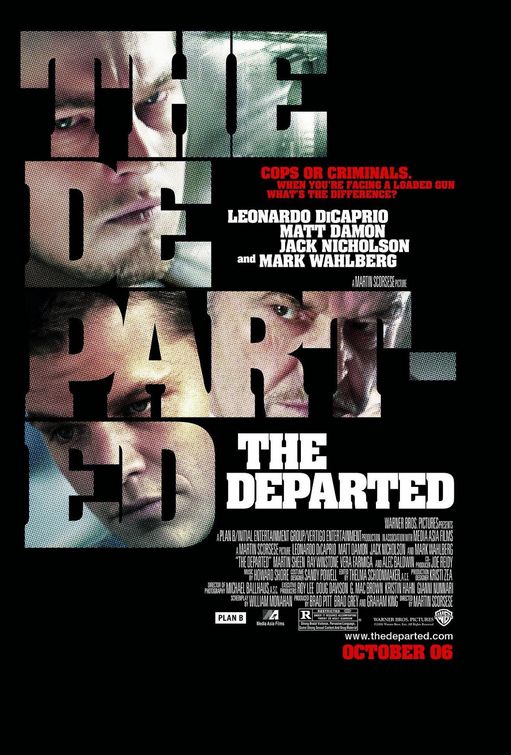 Institutionalized Ball-Busting
Call it the Scorsese Thesis: First a guy tells you what he's gonna tell ya, then Marty shows ya, then you're on your own.
In the case of "The Departed" "the Guy" is Jack Nicholson's Frank Costello, a seedy Boston crime-lord from "some years ago." "I don't want to be a product of my environment," says the shadowy Frank (Scorsese's way of showing Frank as a younger man). "I want my environment to be a product of me."
Nicholson's Costello makes good on that promise on two fronts--in the scenario of "The Departed," and the movie, itself. Costello's control over his Boston turf (or, using the accent Martin Sheen employs here, "too-urf")is so absolute, his reach extends from his surly band of criminals to the police department, culminating in one of his own crew (Matt Damon) infiltrating the very task force investigating his activities. Simultaneously, the player on the other side, Captain Queenan (Sheen) has trolled the new recruits to find his own mole (Leonardo deCaprio) to infiltrate Costello's crew. It turns into a complicated Spy Vs. Spy with both moles straddling the moral fence, while completely unsure of their footing on either side. And while trying to rat out their suspected counter-part while not drawing attention to their own treacheries. They're mutually duplicitous. As Costello says in the Thesis: "When I was growing up, they would say you could become cops or criminals. But what I'm saying is this. When you're facing a loaded gun, what's the difference?"
It's a complicated game of Jack's Straws...set in a house of mirrors. Drop Nicholson's weight into the middle of it, and the whole thing threatens to pancake...much like the movie. This first colaboration with Scorsese is similar to Marlon Brando's eccentric performance in "The Missouri Breaks," where an actor so drapes himself in business that he attracts the eye in the same way as a car-wreck--you wonder what in Hell this crime-clown (it is much like Nicholson's Joker in "Batman" without the make-up)is going to do next. Damon and DeCaprio were not clued into his on-set antics and so their scenes are played with the right touch of paranoid hesitancy. There's a strained wariness behind their eyes and they've rarely been better.
As good as they are (and excessive as Nicholson is) best among the cast is Alec Baldwin as a fast-talking divison head, but the real revelation here is Mark Wahlberg. Marky-Mark walks away with the picture and dominates every scene he is in, no matter who's in it with him. In fact, in the one scene Baldwin and Wahlberg share, Scorsese throws in a couple of "Raging Bull" camera moves for a verbal feint and parry between the two. It's a director's nod to two extraordinary actors doing solid work, free of gimmicks.
As for Scorsese, if you're looking for a return to his greatest efforts, this isn't it. It makes you wonder what he's up to. This story is nothing new, and is in fact based on a Chinese film (and its two sequels, actually) that owes more to the early personal style that he fails to deliver on here. What's the fascination? We've seen the cop/criminal discotomy, as well as the conflicts of working undercover in better films. He's doing program work, not personal work. This isn't "Raging Bull" or "Mean Streets" or "KunDun" or "Goodfellas." This is "Alice Doesn't Live Here Anymore." Or "New York New York." Or "The Aviator." One senses he's pacing himself, keeping his hand in the game doing agency "package" movies until the next inspiration comes along. Perhaps he should ditch DeCaprio, and find that last, good DeNiro project. He's too good a film-maker to waste on remakes and empty biographies. Maybe after the struggles he went through to bring his last personal project to the screen he's asking himself at this point in his career "What's the difference?"
"The Departed" is a Rental-You gotta problem wid 'at?