Showing posts with label T. Show all posts

Thursday, December 12, 2013

The Talk of the Town

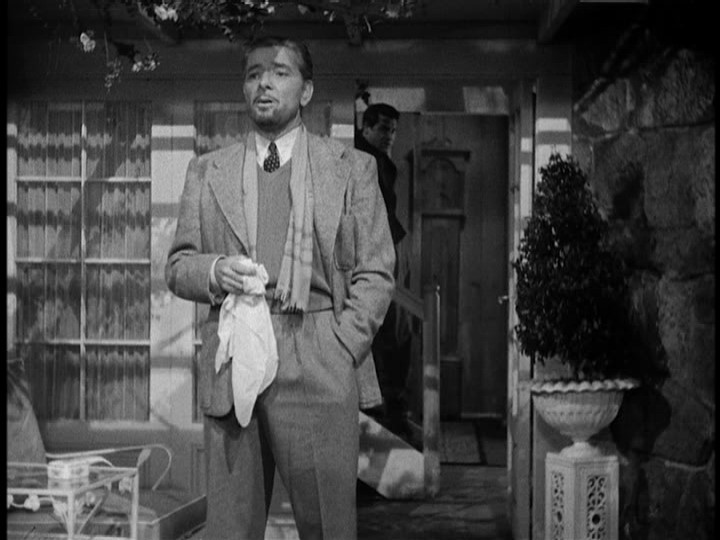
The Talk of the Town (George Stevens, 1942) One could almost look at The Talk of the Town as being a sequel of sorts to Mr. Smith Goes to Washington, focusing on the judicial branch, rather than the legislative, and with more of a divided heart as to what kind of movie it should be.  

Part of that may be the number of screenwriters involved. Not only is Mr. Smith's scripter Sidney Buchman present, but also Irwin Shaw (both men would feel the lash of the blacklist in the 1950's) and Dale Van Every for story adaptation.  That many cooks typing away may explain the sometimes lurching tone from comedy to romance to high-mindedness to, uh, the underlying plot-line that once-in-awhile gets attended to.


The "main" interest is: who will Nora Shelley (Jean Arthur) end up with, romantically?  Stevens shot two endings and let preview audiences decide. Case closed.


It's the least material aspect to the film in the first place.  The plot involves the burning of a local mill and the framing of mill worker and "activist" (one assumes a unionist) Leopold Dilg (Cary Grant) for arson and the murder of the plant foreman.  Everything is stacked against Dilg from the mill owner calling for his blood in the sympathetic press, to the trial judge being in Holmes' hip-pocket.  Dilg escapes from prison (in a dramatic opening sequence that's a bit out of sync with the rest of the movie) and hides out in "Sweetbrook," the rental house run by his high-school acquaintance Nora, who's trying to get the place in shape for the impending arrival of a temporary lodger, law dean Michael Lightcap (Ronald Colman) who's taking the Summer off to write a book.  This being a comedy, Lightcap arrives early—the night Dilg has stumbled his way in—and Nora has to hide the runaway in the attic, while the police comb the area looking for him.


"Hilarity ensues"
After a restless first night for all—nervous Nora has spent the night in another room and Dilg snores in his attic roost leading Lightcap to advise Nora she needs to do something about her adenoids—the complications begin: Dilg is too restless a spirit and cranky an agitator to to stay cooped in the attic; Lightcap needs a secretary and to keep Dilg under wraps and separated from Lightcap, Nora takes the job; and then, to raise the stakes, a local Senator stops by to tell Lightcap he's being nominated for the Supreme Court.  So, politics being what they are (the same as always), if there's any hint of scandal, oh, like, say, harboring a wanted fugitive in your house, it could hurt the professor's chances of being one of the Supremes (depending on who's in The White House, of course).

Dilg being Dilg, he can't stay under wraps for long, and he's soon hiding in plain sight as "the gardener," and his views of the law leads to some sparring over the letter of the law and how it can conflict with the intent, especially when those intentions are not honorable to the spirit of the law, and Lightcap finds himself embroiled in a conflict of interest, where his cloistered view from his ivory tower looks pretty good in theory, but bares only a conversational similarity to its practical applications in the world of dog-eat-dog. 

That's the meat of The Talk of the Town, but the screenwriters and Stevens must gild it with a "who gets the girl" storyline that will satisfy the jury of the audience.  Stevens let the answer to the question be decided by a preview audience of peers—with nothing decided until the very last second.  With Colman as a sophisticated book-smart professional with a lot of learning to do, and Grant as am earnest dreamer, it's hard to choose, but Arthur is, as always, a delight, finding ways to make the quick-witted Nora flustered, but with the best of intentions and the most charming of choices.   Like the movie, she's a bit of a mess, but an enjoyable one.


Wednesday, November 20, 2013

Thor: the Dark World (and the Comic-Book Movie Matrix)

"I Really Don't Understand What All the Fuss is About"
or
"Is There a Point to All This, Because There Needs to be a Point!"

Marvel's Thor was a necessary part of The Avengers puzzle—the Norse God is a little minor-ish when compared to A-listers like "Spider-man" or "Captain America" (in the comic world, anyway, where the same could be said for Iron Man) and is usually relegated to second row in group shots.   That first movie was a bit "iffy" despite a Shakesperean director (Kenneth Branagh) and a rather breath-taking conceptualization of Vanaheim.  It took Joss Whedon, though, to throw a couple of good lines into Thor's mouth (without him turning into a jokey punster) and making a grand villain out of Tom Hiddleston's Loki—so grand, in fact, that they brought him back for the second Thor movie, Thor: the Dark World.

This film is part of the "Marvel: Phase Two," which I translate to "We take advantage of The Avengers success by trying to make hay on individual characters until The Avengers 2 comes along."  Good strategy, that.  But there's the danger of watering down anticipation of that next film if they don't show some promise in the second installments, which already showed signs of rust in Iron Man 3.  Even if you're Thor, lightning doesn't always strike twice in the same franchise.

Thor 2 (if we can call it that) is quite a bit lighter in tone than the first film, the first one being rather stuffy, as if there was any humor it would blow the Norse mythology segments away in a puff of whimsy.  No, it was taking its playbook from Jackson's The Lord of the Rings trilogy where the heroes are rustic and the villains are really vile looking and the violence is over-the-top, but not so over the top as to risk an "R" rating.


In lieu of a program, clip and save this
 handy diagram of the Thor Universe
It also compares to TLOTR by sharing the propensity for using the first six minutes or so of the film to shoe-horn as much detailed exposition intoned with doomed gravitas as can be wedged in before the title card.  "Long before the birth of Light," Anthony Hopkins' Odin informs us, "there was darkness. From the darkness, came the dark elves."  That's quite a jump, but then, we have to find out about the Aether (everything in the Marvel Universe seems to be a common term spelled wrong), the Kursed on Svartalfheim, and the 5,000 year configuration of the nine Realms, at which point evil with a capital "E" can take out all nine of them with having to make it a bank-shot.  Malekith (because everybody needs to have a name that sounds like a lisp) and who is played by an unrecognizable Christopher Ecclestonis the leader of the Dark Elves and wants the Aether all for himself, so that he can destroy the nine Realms because...well, I don't know why, it seems like a really dumb thing to do, akin to crapping where you eat.

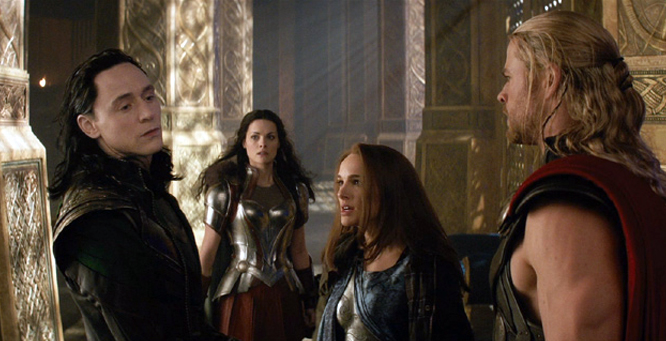
And at that point, I didn't care.  I just wanted something familiar so that I could stand any chance of following the movie.  Now, the last time I saw Thor, he was in The Avengers movie, and some mention is made of "New York," especially by gal-pal Jane Foster (Natalie Portman), who uses it 1) as part of a "why didn't you write me for two years?" hectoring of Thor (Chris Hemsworth, not so stodgy this time) and 2) a chance to lash out at Loki (Hiddleston) as if he personally took out her favorite pizza cart on Fifth (and he gets a chance to do his version of the line from The Dark Knight: "[She's got some fight in her]. I like that.").  Plus, Dr. Erik Selvig (Stellan Skarsgaard) has been acting strangely—making international news by stripping naked with some sort of stick-devices at Stonehenge that are supposed to do some sort of astral plane alignment or something, or maybe nothing as he's a bit of a raving lunatic at this point (His excuse: "I've had a God in my head.  I don't recommend it" Geez, Doc have you watched TBN lately?).


Meantime, the already-mentioned Loki is imprisoned in As-Gitmo, where, when he isn't using his quick-change ability, he's sulking and throwing illusory daggers at people, babbling contradictory dialogue ("You know, I've always loved our little talks because...actually I haven't").  That's some trickster. As with Hensworth's Thor, Hiddleston's Loki actually had become an interesting character in The Avengers movie, and although he's still a little devil, you begin to think that his motivations, if not his brains, are a little scrambled. He does provide a couple of little quick-changes in a walk-and-talk out of Asgard, one of which might be considered a cameo appearance.  He also provides the big "question mark" of the film, that is one of those things that the film-makers will either resolve, or, if they have bigger flounder to fry, will just dismiss with a line somewhere down the road.

Speaking of which, there could be considered three "stingers"—the convention of mid and post-credit "tags" in the Marvel super-hero films—in Thor: the Dark World that have decreasing importance, but increasing complexity (how many of these things are they going to have, not that Brian Tyler's score isn't rather fun to listen to, but sometimes I have better things to do than watch all the credits).  There is the "stinger" that ends the film, and confuses the issue of what was going on; there is the second "stinger," after Blur Studio's main credits, that serves as a preview for another Marvel production**—in this case, Guardians of the Galaxy with a look at Benicio del Toro's "Collector" (and we'll just say two words: "tonal shift"); finally, a third stinger at the very end of the movie that's purely for "shippers" and has an "after-thought" joke, much like the "shawarma" scene from The Avengers.  There's nothing essential to wait for, if you have a ride waiting.


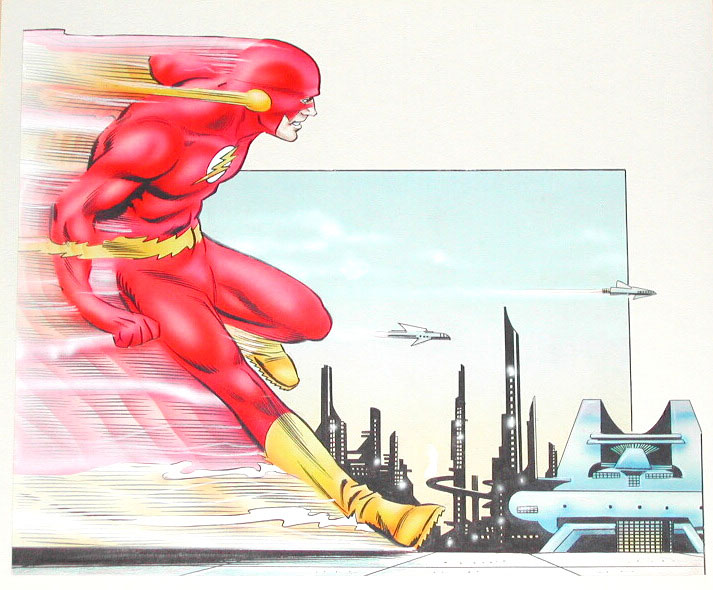
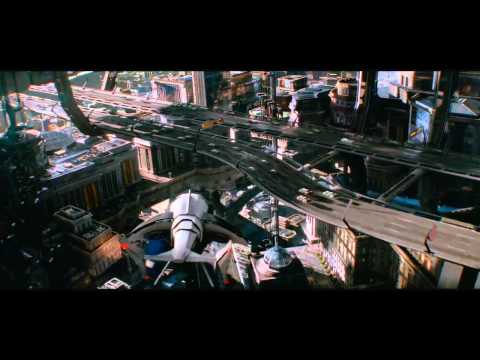
Throw in some ramps and Asgard could look like one of Carmine Infantino's futuristic cities.

So, summing up, Thor: the Dark World is generally more entertaining than the last one, but not entertaining, realm-changing, or artistic enough to make it rise above the Rental category.  Characters are born, characters die, and the Universe is returned to the same point it was at in the beginning of the movie, not unlike episodic TV.  Nothing major is going to happen until somebody's contract runs out.  In the meantime, it looks good, fulfills the action quotient, without going over the line (Hello, Man of Steel) to the point where you think it might be better not to have superheroes "saving the day" but destroying the infrastructure.  It does suffers from the Marvel "I-don't-know-but-it-sure-is-big" syndrome, where there are no rules, and merely randomness in phenomena that just show up, make a big noise and then *poof* go away, leaving us to mull over our shawarma or bowl of "Shreddies." There is no order to the Marvel Universe (as much as the tick-tock clockwork of the art direction says there is), and it's easier to take a page from "The X-Files" and just leave it unexplained.  Or come up with a convenient new super-power like "amnesia kiss" to take care of it.   Sometimes, rather than thinking through a problem, it's just better to hit it with a hammer to make you think it's getting better.

Thor: the Dark World is a Rental. 

"I've won an Oscar; why am I in this Moooo-viiiiie?"

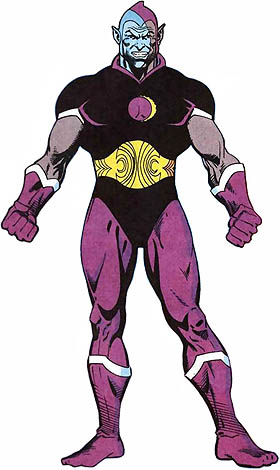
The comics Malekith


* Actually, I recognized him as Eclipso, a character from the DC Universe.  And you'd never recognize him as the Ninth Doctor. "Doctor who?" you ask.  "Exactly," I say.

** Although that's completely arbitrary, nothing is set in celluloid stone, and the solar wind is more stable than the tides of movie marketing—the cosmic villain Thanos appeared in The Avengers, may appear in Guardians in the Galaxy and definitely won't be in Avengers 2.


----------------------------------------------------------------------------------------------------
Now that that's done, one is worried about how to write about super-hero movies in the future.  There is a sameness to them that creeps from film to film—the mythos, the "givens" of selfless good and illogical (and often impractical) evil, the unquestioning quest for revenge, the brooding sky-scapes, the heavy air of portent, and the elaborate CGI.  One feels like they're in the process of grading different brands of chocolate.  They may be bitter or sweet, but they're all chocolate.

So, in the future, as the tent-poles of the franchise circus increase in number, we're going to do reviews of super-hero movies with a basic form—a Comic-Book Movie Matrix, that should distill what the movie's about, where it fits in its own little universe, and how successful it is—as a movie-movie, and maybe as a representative of that character.

Take a look at the list, and if you have any suggestions for what might be a critical consideration, drop a comment.


1) Is the movie version of the character recognizable from the graphic/comics version?

2) Is the plot something that someone who doesn't know the comic can come in and still understand?

3) If not, how complicated is the back-story that is provided in the movie?

4) What's wrong this time, plot-wise?

5) Is the story important enough to deserve its own movie, or is this one just "marking time?"

6) In relation to 5): Major villain or minor villain?

7) Is the back-story and motivation the same as in the graphic/comics version?

8) How radically different is the setting of the movie version to the graphic/comics version?

9) What compromises have been made to the comics version to make it "play" on-screen?

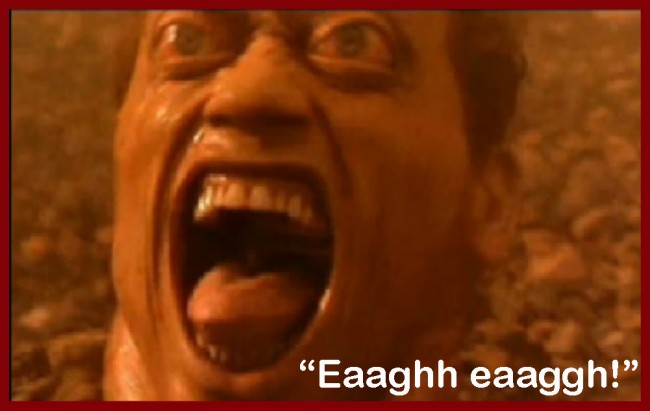
10) Is there a "Noooooooo!" moment? Yes? No?

11) Any easter-eggs for the true fans?

12) Is there a stinger? Is it worth waiting for?  Where does it occur?


Really, this is just to increase my Internet "hits"
Jaimie Alexander as Sif in Thor: The Dark World

Saturday, October 19, 2013

They Might Be Giants (1971)

They Might Be Giants (Anthony Harvey, 1971) It's the same writer/director/composer team as The Lion in Winter, but a decidedly off-kilter product is this out-of-circulation curiosity from the era immediately following George C. Scott's Oscar win for Patton.  Set in the "modern" age, which might be quite a few years too late for it, They Might Be Giants—yes, it did inspire the band's name—tells the story of Justin Playfair (Scott), a retired judge, and in whose grief after the death of his wife, now thinks he's Sherlock Holmes.
That might be useful, actually, but Playfair is now convinced that everything wrong with the world (and there's a lot in New York around 1970) is the work of the infamous Professor Moriarty.  That includes the blackmail being played against Playfair's brother Blevin, who wants to pay up and be done with it, but the Judge, forbids it—and he's the one with all the money—so the brother decides to have him committed.  He picks the worst person in the world to examine the Judge in order to declare him insane, a psychiatrist named Watson (Joanne Woodward).

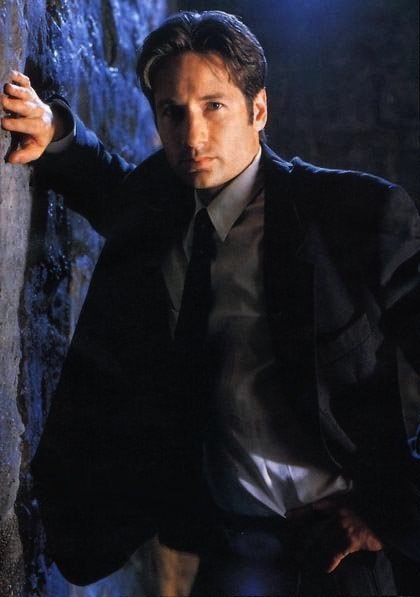
In the course of her examination, Playfair leads her on the wildest of goose-chases, trying to track down Moriarty, finding random clues in the detritus of the city, and introducing her to his own version of The Irregulars, the niche-dwellers all but abandoned by the hustle-bustling population and see nothing wrong in Playfair's behavior.  In fact, they marvel at it, admire it, and wish to emulate it.  Meanwhile, Holmes and Watson run the gamut of scenes of crimes displaying apathy, greed, gracelessness, and rampant consumerism in Society while Playfair rails against Moriarty's presence behind it.  Watson serves as the Doubting Thomas (Scully to Scott's Mulder?), but eventually succumbs to Playfair's way of thinking.

The writer is James Goldman, brother of William (The Princess Bride, Butch Cassidy and the Sundance Kid, The Marathon Man), writer of the afore-mentioned The Lion in Winter, as well as Robin and Marian, Nicholas and Alexandra, and...White Nights.  And the problems with the movie is in James' screenplay, full of wonderful detail and dialog, but precious (to the point of cloying) in scene concepts relating to the larger point.  The mystery's good, but the clues suck.  Fortunately, he's got actors like Scott, Woodward, Jack Gilford, Rue McClanahan, F. Murray Abraham, Al Lewis, Gene Roche, Paul Benedict, and Emmet Walsh, all of whom can spin gold from cotton candy, but can only go so far to improve the material.

The film is as twee as twee can be, more in keeping with—Vincent Canby had a good idea in his negative review—the time of You Can't Take it With You and Arsenic and Old Lace and the sunny-side-up attitude (despite eyes being open to the negative) of Frank Capra.  But it's not Capra, it's Anthony Harvey, terrific editor and Hepburn-favorite director.  Harvey's really good at designing a film, its ambience and lighting, but he's not the best at forming image to idea, which the best directors can do merely by having empathy with the material.  Harvey doesn't judge in his projects, but he also rarely comments at all, good at staging, but not at direction...that is, direction of you, the audience to a feeling the material should provoke.  For a former editor, his weakness as a director is editorial. Odd.

The analyst in me cringes at the movie in its romantic notion of insanity—I've long wanted to do an "out there" version of "Harvey" where Elwood P. Dowd self-medicates in all sorts of ways besides booze—but, the wide eyed moon-calf who first saw this film (probably to hear the score, as I am a Barry fan and will see anything with Scott in it), still has an affection for it, guarded though it has become, and probably for its ending, which drives audience members looking for answers crazy and let down, but for me, is a perfect little nugget of an ending whose power (the acting,** the lighting effects, the music?) one can't explain away.  I'd put a spoiler alert here, but, really, this ending spoils nothing—it only enhances.


Sadly, John Barry's score for this film (conducted by Ken Thorne) has never been released.


* Here's two examples, both out of the mouth of Playfair:
"Because, you see, we live in Eden. Genesis has got it all wrong — we never left the Garden. Look about you. This is paradise. It's hard to find, I'll grant you, but it is here. Under our feet, beneath the surface, all around us is everything we want. The earth is shining under the soot. We are all fools."
and
 "Well [Don Quixote] had a point. Of course, he carried it a bit too far. He thought that every windmill was a giant. That's insane. But, thinking that they might be... well… all the best minds used to think the world was flat. — But, what if it isn't? — It might be round — and bread mold might be medicine. If we never looked at things and thought of what they might be, why, we'd all still be out there in the tall grass with the apes."
** Scott's feral growl and playing of "Now!  Do you see him now?" always gives me chills.

Wednesday, May 22, 2013

Trance

Post-Modern-Femi-Noir
or
I See London, I See Trance

Danny Boyle has been on something of a tear lately.  His last couple films have been popular show-cases of how diverse and direct his story-telling skills can be now, and resonant with audiences.  And yet none of his recent films should have "worked:"  Oscar-winning Slumdog Millionaire's combination of pop culture, Bollywood, gangsterism and classic literature; 127 Hours' brutal and claustrophobic story about a man  who cuts off his own arm, which still manages to be uplifting and even inspiring.  Boyle is now a household name and an A-list director thanks to Slumdog.  His previous film, the sardonic sci-fi film Sunshine did not attract an audience, nor did his kids' film Millions (despite being delightful, both for kids and adults).  His new prestige made him the natural choice to become the creative director for last year's London Olympics.

It was while working on them that the opportunity came to take a break, and he rushed this film, Trance, into production—not that you could tell, it's full of his multi-media eclecticism that at times can run out of control.  The script had already been directed (by its writer Joe Aherne) as a TV movie in 2001.  It's a heist film with several twists, and, as Doyle has said in interviews, it was a dark tonic to the celebratory work he was doing for the Games.

We are introduced to the movie by Simon (James McAvoy) who gives us a brief art history lesson on particular paintings and their peculiarities.  But one thing about this ersatz collection sets them apart; "You haven't seen them because they've been stolen."  Simon works as an art auctioneer and walks us through a brief summary of audacious art thefts, and the precautions that auction houses take to protect their commodities.  "Lesson number one," though, is "don't be a hero.  No work of art is worth a human life." 


"Rule No. 1: Don't Be a Hero."
It's a lesson he should take to heart.  A robbery does take place, and true to instructions, Simon isn't a hero--he's in on it, the job's "inside man.'  But, in the shell-game of keeping up appearances, he is given a severe head trauma, and (isn't this a pretty picture?) can't remember what he did with the painting.    This is, of course, quite upsetting to the ringleader, Franck (Vincent Cassell), who tries to extract the information in the typical gangster fashion (old fashioned threats of death, disfigurement, and the actual pulling out of  fingernails).  Nothing breaks through Simon's personal pentimento.

Go to Plan B.  They send Simon to hypnotherapist Elizabeth Lamb (Rosario Dawson), who's had quite a success breaking addictions, changing lives and messing with heads.  It's the latter skill that comes in good stead as she quickly realizes that Simon is not just a guy in need of finding his car-keys, but may be in league with the devil.  Finding his memory might make him a memory.


Doyle's good at messing with heads, as well, as Trance proves fairly quickly. 

Under his hypnotherapy, loyalties are tested (particularly the audience's), and no matter what subject matter on screen, whether grisly or enticing, it's tough to take your eyes off the screen.  Pretty soon you're not sure what's real, what's illusion...or (finally) what's going on.  Some neat tricks are played, expectations are shattered, but all to the service of a script that isn't all that great.  One can appreciate the twists and turns and diversions, and the slightly feminist slant that the movie tilts the traditional role of the femme fatale in film noir.  But, ultimately the biggest trick that's pulled is the illusion that a better movie is happening.  For all the visual pyrotechnics and the reality warping manipulation of the audience, Trance isn't that good a movie, and unconsciously or consciously, a trifle.

Trance is a Rental.


Goya's Witches in the Air—the "MacGuffin" of the movie

Thursday, October 18, 2012

Targets

Targets (Peter Bogdanovich, 1968) The day after the insane shootings at the midnight showing of The Dark Knight Rises in Aurora, Colorado, Glenn Kenny, in his fine blog Some Came Running, made a comment on it, without making a comment.  He simply took frame-grabs from Peter Bogdanovich's directorial debut, Targets.  One could only nod one's head in acknowledgement of the aptness.

The project started out as the most bizarre of industry favor-granting. Bogdanovich had done some work for B-movie king Roger Corman, and the AIP producer emeritus granted the writer an opportunity to direct his first project—with some stipulations: he had some work due from Boris Karloff by contract, and the aging horror star had to be worked into the storyline, and there were some left-over scenes from a past Karloff movie The Terror (featuring as well, a pre-star Jack Nicholson) that Bogdanovich could avail himself of.  Other than that, Bogdanovich could do whatever he wanted, as long as he stayed on-time and under budget—about $125,000.  With then-wife Polly Platt, who also served as production designer, Bogdanovich came up with a twisted storyline that followed two storylines that would come together at a drive-in theater, the favored venue of most AIP releases.  In his commentary for the film, Bogdanovich goes out of his way to acknowledge the considerable help he had in fashioning the script from director-writer Samuel Fuller, who fleshed out and added resonances to the story.


One of the stories follows Bobby Thompson (Tim O'Kelly), as typical a young American as can be.  He's sells insurance after having toured in Vietnam, wife's a nurse, and the young couple lives with the Thompson parents, where they have a normal domestic life of communal dinners (with grace said beforehand), and a family evening of television.  Son and Dad have a hobby of target practice, in which the son takes great pride in his accuracy, no matter the caliber, no matter the weapon.  Before the day is out, he'll grow weary of stationary targets.

Meanwhile, across town Byron Orlok (Karloff) is souring on the movie business.  He's just screened his latest low budget horror flick, directed by a kid, Sammy Michaels (played by Bogdanovich), who's pressuring him to star in his next film, while the studio is assuming that the star will keep churning the  stuff out.  But Orlok announces he's retiring—oh, he'll do publicity for this one, but, really, with the very real horrors going on in the world meted out by tin-gods and commonsters, what relevance is the costume theatrics he's appearing in.  He feels old, quaint, and antiquated, pretending horror when the world shows a proclivity for it with no bounds.

The two, Bobby and Byron, cross paths twice in the film, one completely unbeknownst the older star, and the other at a moment of destiny, when the two meet again at the world premiere of Orlok's new picture.  Both reveal their true selves at the drive-in, and the film ends, as Bogdanovich is wont to do, on a note of ambivalence.

The film was so good that Corman was able to sell it (at a profit) to Paramount Studios for release.  Bogdanovich fills it with telling cold-blooded details, especially in the planning and fulfillment of Bobby's activities, which become more and more erratic as things go astray from his plans, and those touches, some ironic, some despairing, are rich and feel like a tribute to the director the film is most in the style of—Alfred Hitchcock.  Hitchcock is always a good primer for film-makers starting out in the low-budget fields, as his films are like blueprints in basic film-making techniques—direct, bald, and effective.  But Hitchcock's subtleties—the stuff that fills the frame of the cutting scheme—are tougher to match.  And it takes a better breed of film-maker—like Spielberg, Bogdanovich, and DePalma—to take the Master's schematics and improvise with the form.  One can do all the planning one wants, but it's in the finishing touches that make a house a home, and a movie a film.


Wednesday, September 26, 2012

Trouble with the Curve

I Am, I Said/To No One There
or
Becoming Eastwood

Amy Adams is amazing, really.  Clint Eastwood has had many female co-stars, from Shirley MacLaine to Meryl Streep, and directed a bevy of others, some of whom have given great performances—Laura Linney, Marcia Gay Harden, Hilary Swank, Angelina Jolie, two of them to Oscars—all have studied at the Eastwood school.  The results have been a combination of actress' gifts and Eastwood guile.  But, none of them have taken to heart that state of naturalness, the implacable restraint and mandarin ironic humor that the actor has demonstrated in the past like Adams does in Trouble with the Curve, Eastwood's latest project (produced but not directed—that job going to Eastwood's assistant director Robert Lorenz) about the relationship between an aged baseball scout and his estranged-but-not-fallen-far-from-the-tree daughter.  Linney has played Eastwood's screen-daughter in the past, and she was terrific, but Adams imbues so much of Eastwood's game that one actually believes in the symbiosis, and their scenes together crackle with a lived-in familiarity, a mutual passive-aggressiveness, and a sense of shared past and unspoken tensions.  

Eastwood is the top-liner but it's the daughter's story.  Mickey Lobell (Adams) is on track to partner at a law firm (nice line up of of Bob Gunton, George Wyner and Jack Gilpin—in fact, the film is top-loaded with good character actors, not only in the firm, but also in the Braves organization—Robert Patrick—and among the veteran scoutsEd Lauter, Raymond Anthony Thomas, and Chelcie Ross) when she gets wind from family friend, Atlanta Braves scouting coach Pete Klein (John Goodman) that her scout father (Eastwood) is about to be brushed back in the organization—he's old, his eyes are going, and there's a new scout (Mathew Lillard) who's more into stats and remote-controlling his decisions than doing the leg-work of seeing and hearing what the talent can do (this one would make a fine double-bill with Moneyball if double-bills still existed).  Lobell is given one last chance—check out a kid with a killer swing (Joe Massingill) who looks to be a high draft pick.  Lobell's job is on the line, and Klein recruits Mickey to follow the old man on-deck and pinch-hit for him if necessary as a seeing-eye daughter.  Against her better instincts, she heads to North Carolina to dog her father by day and work on her client-presentation at night (the film sends mixed messages on the thesis of remote-working, as it seems to be fine for her), the father and daughter trading mutual scowls and muted growls, trying to "get closer" while they couldn't seem more like each other.

That's a lot of scenario for a deceptively simple story about relationships and the importance of "being there" in them.  It is also complicated by the mutual interaction between a fellow scout (Justin Timberlake) that the older Lobell has a past with, and the younger might have a future with—Timberlake does fine, relaxed...even charming...work here, not so strong on the dramatics, but hitting solidly on the humor (best line: "Poor Bruce..."), finding a nice line between Eastwood and Adams and making the most of a convenience role to show growth between the two characters.

It works and works solidly if you, like Eastwood's character, don't look too well at it.  And there's some late inning contrivances that come out of left field that tie everything up a little too conveniently and nicely, managing to retire the side and take care of every issue in only three pitches.  I smelled a rigged game—we really didn't need a Grand Slam on the last pitch to put up a "W" for this one, and, to my mind, took away from the good things that had come before.

Maybe I was feeling that way, anyway.  Personally, I'd've been happy if Clint Eastwood had stuck to his lack of guns and retired from acting (as he said he was doing) with Gran Torino.  The grace-note of that particular character's last act served as a "period" to the syntax of Eastwood's career, full of so many unrealistic face-offs with clusters of opponents throughout the years.  It was the perfect bow and the perfect statement.  But, he had to do a friend a favor—get his buddy a director card—and so he came back.  I found it a little disappointing to find out that even Eastwood didn't know when the quitting was good.  But, his work here is good, even if the eyes are squinting down to a lack of expressiveness (he does a wink here that is probably only visible in HD), and the voice has been reduced to a burned-out husk.  The gravitas and irony are still there, though, enough for Adams to latch onto and take advantage of.  And it makes for a pretty good show, while it lasts.

Trouble with the Curve is a Rental.  


Saturday, September 8, 2012

Tobacco Road

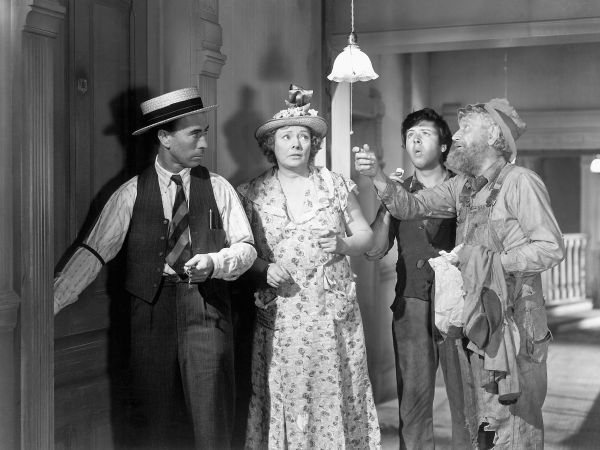
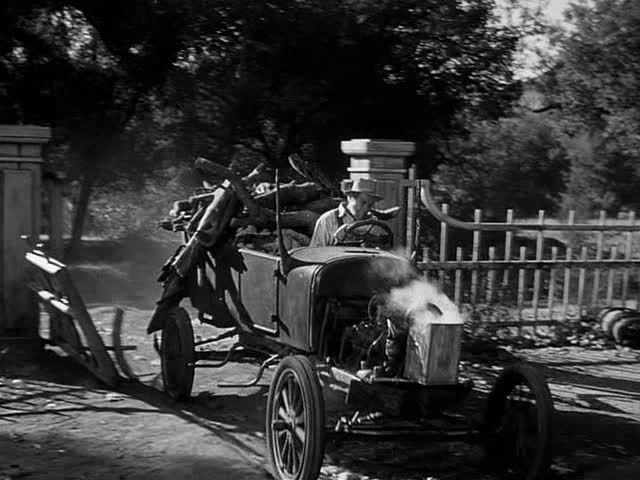
Tobacco Road (John Ford, 1941) The same year that Ford made the magnificent How Green Was My Valley (which won the Best Picture Oscar over Citizen Kane, a decision I'm still surprisingly ambivalent about) and after he'd made The Long Voyage Home, he made this oddity, an adaptation of the hit play that, itself, was an adaptation of Erskine Caldwell's scandalously bleak novel about the (to put it mildly) dysfunction among the Georgia poor.  I'm not familiar with either, but the material is so venal and hard-scrabble that with each level of the airing of its dirty laundry, compromises had to be made to reach the stage and the screen.  By the time producer Darryl Zanuck and Ford got hold of it, it was a bizzarro version of their collaborative effort on The Grapes of Wrath, an out-and-out comedy of the "Kettle" variety, with much slapstick and hee-hawing, the novel's displays of greed, selfishness, shiftlessness and hypocrisy and (let's call it what it is) its animalistic depiction of rural poor life, neutered by low comedy and high over-acting.  And to pass the censors and the Board of Review (not to mention the Catholic Legion of Decency), Caldwell's malicious intentions with its 13 year old brides, dead grammas, and apocalyptic "Wrath of God" fire (and no one would think of Gene Tierney possessing a cleft palate) is left by the way-side for lunk-headed males, religious loons, and the wholesale destruction of property.  The effect is to take Caldwell's metaphorical screed...and turn it into "L'il Abner."

It's a little dispiriting.  The material is so compromised as to be toothless, with no bite at all (although one might fear rabies), but any more mean-spirited and one couldn't see Ford—who could have trouble tackling tough subject matter head on—directing it.  It's a bit like how Ford started handling the production of Mister Roberts as a service comedy, rather than a barnacled "rust-and-all" look at the war-Navy.  But here, the strategy was sanctioned by Zanuck and the powers that be, not only at Fox, but at the Breen Office, just to get a hot property on the screen.

Compromise is not new to the movies, it's an integral part, actually (unless you're ideologically fundamentalist on the auteur theory).  But, as it was, the only reason to make this version of the film was to make hay, cashing in on the notoriety it had generated, while still getting away with it, something that must have appealed to the huckster-showman in Zanuck.  The producer loved a good story, liked to push the envelope, but also knew what chances he could take, before bringing down the ire of the blue noses.  And Ford could do comedy—he was better at it when it provided a relief from drama, or as texture inside of it—but he could do it, and economically, in a minimum of footage.

So Tobacco Road was made a comedy, curdled and dusty, and if some of Caldwell's malice got into it, so much the better, better than none at all.  Such compromise brought Maugham to the screen and Faulkner and Hemingway and Fitzgerald.  Not unadulterated, but some of it. 

One could make a case for Ford trying to desanctify his image of "the people," away from the respectful, earnest portrayals of The Grapes of Wrath, but Ford never painted with a wide brush and not all of his "po' folk" were saints.  Far from it, in fact.  So, there has to be some back-story to this one, some vital piece of information, but for now, the "get-it-on-the-screen-any-way-you-can" theory fits Occam's razor.

However, it has had one effect on me.  It's going to be tough to watch Ford's westerns with their solemn funerals with ragged voices singing "Shall We Gather at the River" after seeing what's done with it in this film.

Like I said, "compromise."


Ford still makes it look gorgeous, though.


Thursday, August 9, 2012

Total Recall (2012)

You Don't Know Dick (Philip K.)
or
I Can Misremember It For Your Wholesale

The reviews that I've seen for the new version of Total Recall have not been kind.  Rotten Tomatoes, that fine aggregator/cuisinart of opinion, put it on "puree" when it said "While it boasts some impressive action sequences, Total Recall lacks the intricate plotting, wry humor, and fleshed out characters that made the original a sci-fi classic."

Huh?  What the wha...?

Maybe I'm in Rekall right now and this is all some elaborate alternate reality, but my vivid memories of the Schwarzenegger Total Recall (made 22 years ago by that "master" of intricate plotting, wry humor and sub-tle human interactions*, Paul Verhoeven) was of an R-rated Sci-Fi gore-fest, light on "Gee-Whiz" and heavy with Cheese-Whiz, that seemed to mark the limit to how much Arnold could contort his face.**  The one thing I remember being amusing was Sharon Stone as Doug Quaid's wife, in an arch performance that basically made her a star.***


This "re-imagining" (if you will) has Colin Farrell as Quaid,**** working on an assembly line for synthetic security forces—robo-cops (although they more resemble—and collapse just like—the battle-droids in the Star Wars prequels).    The elaborate set-up has the world decimated by chemical weapons making the world inhabitable on only two islands, Britain and Australia.  The most precious commodity, thus, is living space, and the commute from one to the other is a tough one, a high-speed transport through the Earth's core—the shortest distance between two points being a straight line (would really have hated to be a construction worker on that project!).  

Anyway, Quaid is beset by dreams of running, chasing, shooting and loss, waking up in a cold sweat to find himself sleeping next to Lori (Kate Beckinsale, a fine actress—remember her in Branagh's Much Ado About Nothing—who is going to be stuck in kick-ass roles as long as Keira Knightley, Michelle Williams, and Carey Mulligan are alive), who works for security for the United Federation of Britain, and its leader Cohaagen (Bryan Cranston), which begs the question: Where's the Queen?  And begs the question: she's married to a factory worker?

But if we start picking nits we'll be here until the time the movie's set in. Leave it that there are plot-holes larger and deeper than the one running through the planet, and it all begins when Quaid decides to go to the Rekall facility in his local city (which I believe is Great Britain, but owes a lot to Ridley Scott's Los Angeles in Blade Runner...and Spielberg's D.C. in his own version of Dick's Minority Report), a divey section of town with a yen for Chinese decor.  Basically, he wants a spy fantasy, where there are double identities, secret plots and no one can be trusted.  He gets it, but whether it's reality or a drug-induced fantasy he has no way of knowing.  Something goes horribly (horribly) wrong, and by the end of his session, all the Rekall technicians are dead, as well as a dozen security forces, who burst in (pretty quickly, too) and whom Quaid overcomes in a single-shot, digitally-tracked shot that resembles a first-person shooter game.

Which is what this movies is, essentially—game scenarios, one after the other, trying to get to the next level.  It's not that this Total Recall is anything less than competent.  It truly is, and the cast is fine and all.  But, it's never anything more than that, there's nothing very inspired...except from other sources, movies and video-games, mostly,***** and tangential stuff at that.  But, although attempts have been made to make it sleeker and faster-paced, there is no attempt to make it better or develop themes that the first film dropped for kinetic thrills.  When you're dealing with alternate realities, why leave it at one?  Why not keep the audience on edge on what's true?  Why not make the stakes a little bit higher, so there are more consequences (like what this movie hints at in an early scene) for Rekall users, so there's more at risk than physical pain?  This is Inception-material, but on only one level, and it's a sub-level at that.  The potential was there to do more, but, instead, it's more of the same.

And Len Wiseman, the director of this, and the "Underworld" films (and "Die Hard 4")?  It's a few films in now, and one can say that he's not aspiring to much, other than keeping both the budget and the pace high.  It's not so much directed, as art-directed, full of detail to distract from the lack of depth—highly finished, but with a sub-standard foundation.  There was so much that anyone could do with this material to make it rise above the first one, rather than just make it worse.

Total Recall (2012) is a Total Cable-Watcher.


"But, I don't WANT to be in a bad Schwarzenegger movie!"
"Which one: Jingle All the Way or Last Action Hero?"


* ...usually involving fists, but in this case involving anything that could penetrate a human torso or face.  This one was a particularly nasty exercise in excess, and I remember Schwarzenegger shilling it on Entertainment Tonight: "Yah, It's a GREAT FAMILY moo-vie, Bring the KIDS!"  I was horrified to see that some idiot-parents actually did, and those kids have probably been in therapy for a couple years now.

** ...without  special effects, anyway.

*** It put her on the path, anyway, as Verhoeven was so impressed with her that he cast her in Basic Instinct, then she was a star in a flash.

**** A better match, I think, than Schwarzenegger.  Farrell is more relatable, and you could see him as a factory worker, which makes the concept—which is telegraphed and anticipated to the Nth degree in both films—work a bit better.  Schwarzenegger can't be believed as a factory worker—he's too much of a "800-pound gorilla in the room" to be hiding in such plain sight.  The original concept...and casting...had someone like Richard Dreyfuss in the role.  Now, THAT would have been fun, and surprising.

***** A lot from the first film, of course, but it's weird stuff—the plaid pattern that Quaid wears at some point, the woman in the transport station—there to fake out only the audience that had seen the first film—and the triple-breasted prostitute (probably because it's what the geeks remember...and want).  All of which will bring me to an up-coming point...