Showing posts with label Colin Farrell. Show all posts

Tuesday, December 31, 2013

Saving Mr. Banks

"Just Because It's Fiction Doesn't Make it a Lie"*
or
"Cavorting, Twinkling, and Prancing to a Happy Ending Like a Kamikaze"

Mary Poppins was a bitch.  That's been my joke for a long time, especially given the reputation that Disney's film of Mary Poppins (this year voted to the National Film Registry) has of being just as sugar-gooey as cotton candy in an Orange County heat wave.  It isn't.  And I've gotten several startled looks from adults who then see the film and, yes, they do see that aspect of it, despite the step-in-timing chimney-sweeps, the dancing penguins, and the moments of larkiness. It's not all a jolly 'oliday with Mary. In the end, it's a little bittersweet, and she ascends into a Peter Ellenshaw matte painting of London that isn't dabbled in sunlight, but is a melancholy smearing of smoke and darkening skies.

That's probably due more to Travers' own stipulations to the Disney crew than to anything.  Disney could be dark—dinosaurs died and there was "Night on Bald Mountain" in Fantasia, Pinocchio had its moments jack-assery and Monstro swallowing, Bambi's mother died, and 101 Dalmations almost got skinned—and provided moments of terror and threat in its films, as long as everything turned out all right as the final song paraded people up the aisles. But, Mary Poppins would have been a slightly different movie if it hadn't been for Travers' nannying the scripters and Disney with her chalk-lines drawn in the sand.  For that, we should be grateful.


Maybe less so for Saving Mr. Banks, the Disneyfication of the Disneyfication of "Mary Poppins."  It's "based on a true story," which means (as Blake Edwards coined the phrase) it's "true except for a lie or two," and in the western parlance of John Ford, "when the truth becomes legend, print the legend."  They couldn't have made this movie without Disney and "the Disney version," so, obviously the filmmakers are going to take a charitable stand on the studio's side of things (for example, Richard Sherman, who's played by Jason Schwartzman in the film, says that, rather than, as in the film, taking a personal approach when Travers came to work with the film-makers, Disney took off for Palm Springs and didn't come back until she left).  But, the more you find out about P.L. Travers (her nom de plume), the more you realize that they're taking the edges off her, as well.  Travers was a fantasist, and her largest work was the construction of her life, ever-changing, malleable, inconsistent and to her specifications as the mood and the myth suited her. "Mary Poppins" suited her just fine, and her demands for what was and was not acceptable are well documented in the many scripts versions filled with the word "No" in the margins, and the audio tape of the back-and-forth's between her and the scripters and song-writing team (which she insisted on, and which is played as coda over the end-credits).  Emma Thompson, who listened to them all in her preparation for the role, called her "vile."**


"Two artists at the height of their powers-like two gorillas fighting:"*** 
A study in contrasts between Disney (Hanks) and Travers (Thompson)
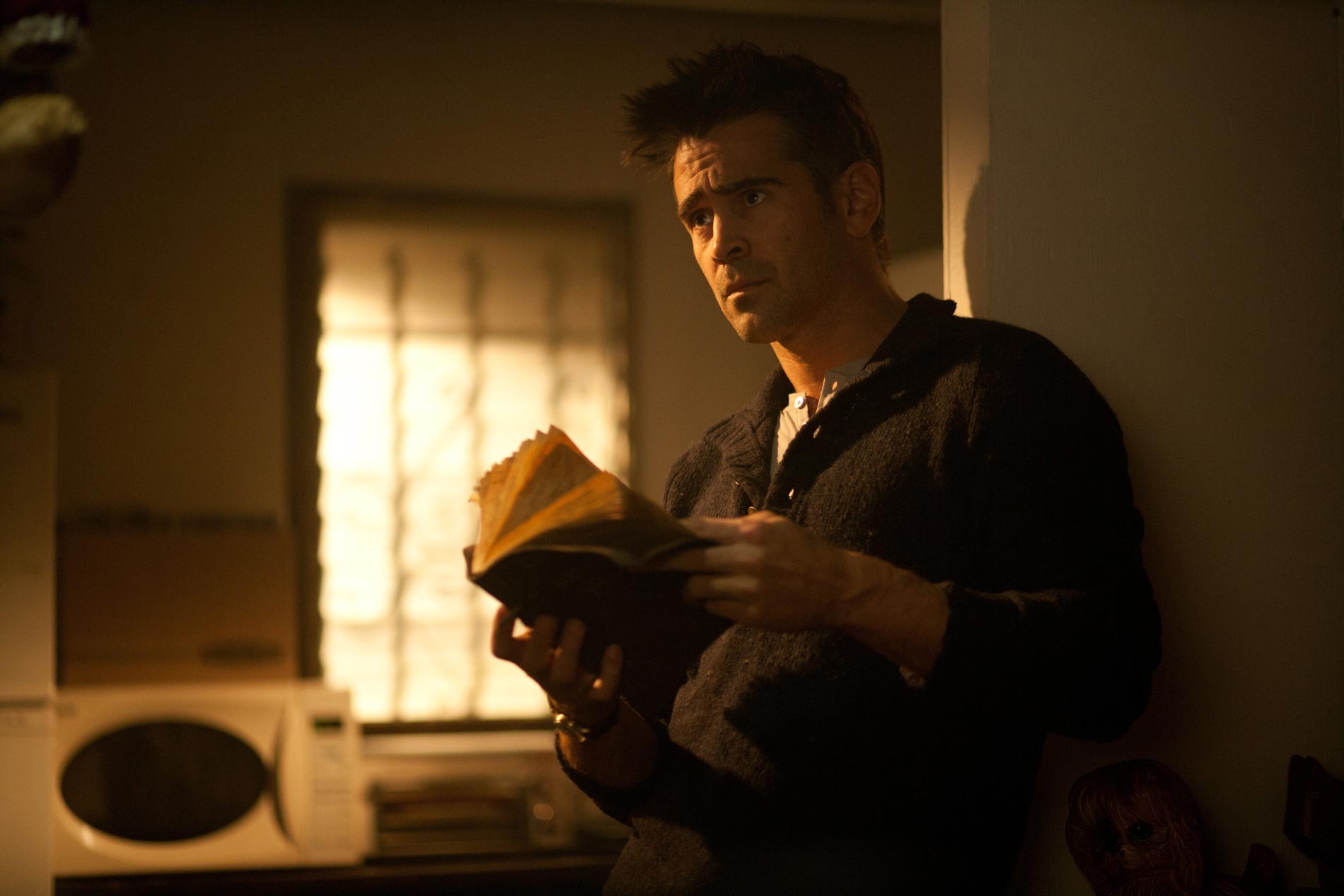
Fascinating, complicated, but vile in the instance.  And understandable in her concerns for what she considered "family," and that is where the film is at its most charitable and lovely.  Where Saving Mr. Banks shines is in the film's presentation of Travers' carefully hidden back-story, of her growing up in Australia to a charming, but erratic alcoholic father (played by Colin Farrell...think about that, Colin Farrell in a Disney movie), a frail mother (Ruth Wilson), and a precariousness to the family that, until her father is demoted from his bank managership, she had not previously known existed.  The movie goes back and forth between the disappointing assaults on her stipulations at Disney and her memories, some of which inspired the work she fights so egregiously to defend.  Meanwhile, Disney (Tom Hanks, who pushes "folksy" mighty hard to play a role almost too familiar to play), with theme parks to build and other movies in the pipeline, is left vexed and perplexed that the "Disney magic" isn't working at all well on "Pamela."

How could it?  I remember one writer describing the movie adaptation business for one of his works as "holding the coat for the man who's assaulting your child."  Disdainful of animation and films in general and Disney's work in particular, the movie's Travers reluctantly comes to Hollywood, where she is inundated by welcoming gifts in the form of "all things Mickey" in her hotel room to the point where she feels under siege. Any pleasantries are seen with suspicion for agendas, hidden.  And for the Disney dwarves, the task is mining anthracite because they're playing to a vision of Travers from her books, but not from her history and will always come up short until they know the origin story...which she'll never tell.  

The process, by which the movie-makers back-and-forth to keep the starched corners of the character, and the tone from being perpetually giddy, would be long and tedious to sit in a movie, and so compromises have to be made. Let's just say things didn't happen the way they happen in the movie—there was no meeting of the minds and no sharing of histories; Disney was a businessman and entrepreneur who knew a good thing when his daughters saw it and Travers wanted to keep her house.  Battles were chosen; compromises were made...in Mary Poppins and Saving Mr. Banks.  That same give and take, that same grace under fire, to produce the best work regardless of the truth, permeates both films in their way.  The truth is just one more hurdle to a good story.

So, one can gripe—although Thompson is the very definition of "practically perfect in every way" here and should cause no consternation—but if one does, they're being a little bit intransigent and dealing with their own "issues," reflecting, again, the issues of the film.  It's a film that ultimately charms.  Anyone immune to it can, as everyone on both sides of the conundrum seemed to agree, "go fly a kite."

Saving Mr. Banks is a Matinee.  I'm not so sure I'd take the kids.


Julie Andrews, Uncle Walt, and Dr. Travers on best behavior

* P.L. Travers

** In one of those perfect symmetry moments, Thompson, in her satiric acceptance speech winning the Golden Globe for her adaptation of Jane Austen's "Sense and Sensibility" imagined Austen's own disregard for her just-awarded work: "P.S. Managed to avoid the hoiden, Emily Thompkinson, who has purloined my creation and added things of her own. Nefarious creature."

*** Thompson, in an interview, describing why she was drawn to the script and the story.  

Wednesday, November 7, 2012

Seven Psychopaths

The Spanish Have Bull-fights
The French have Cheese
The Irish have Alcoholics
What Do Americans Have...?
or 
Write What You Know

Martin McDonagh, the Irish playwright turned filmmaker, made one of my favorite movies of the last few years, the nastily violent yet good-hearted In Bruges, the story of two hit-men who hide out in the Danish tourist-trap after a botched kill.  One shouldn't anticipate when going to the movies, but this one was such a surprise, one couldn't help thinking about what else he might have up his sleeve.

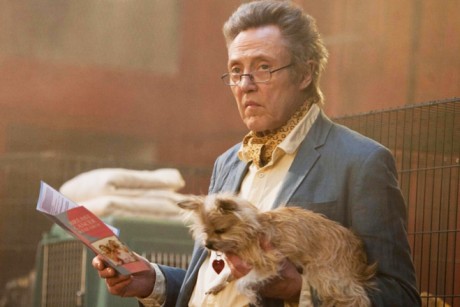
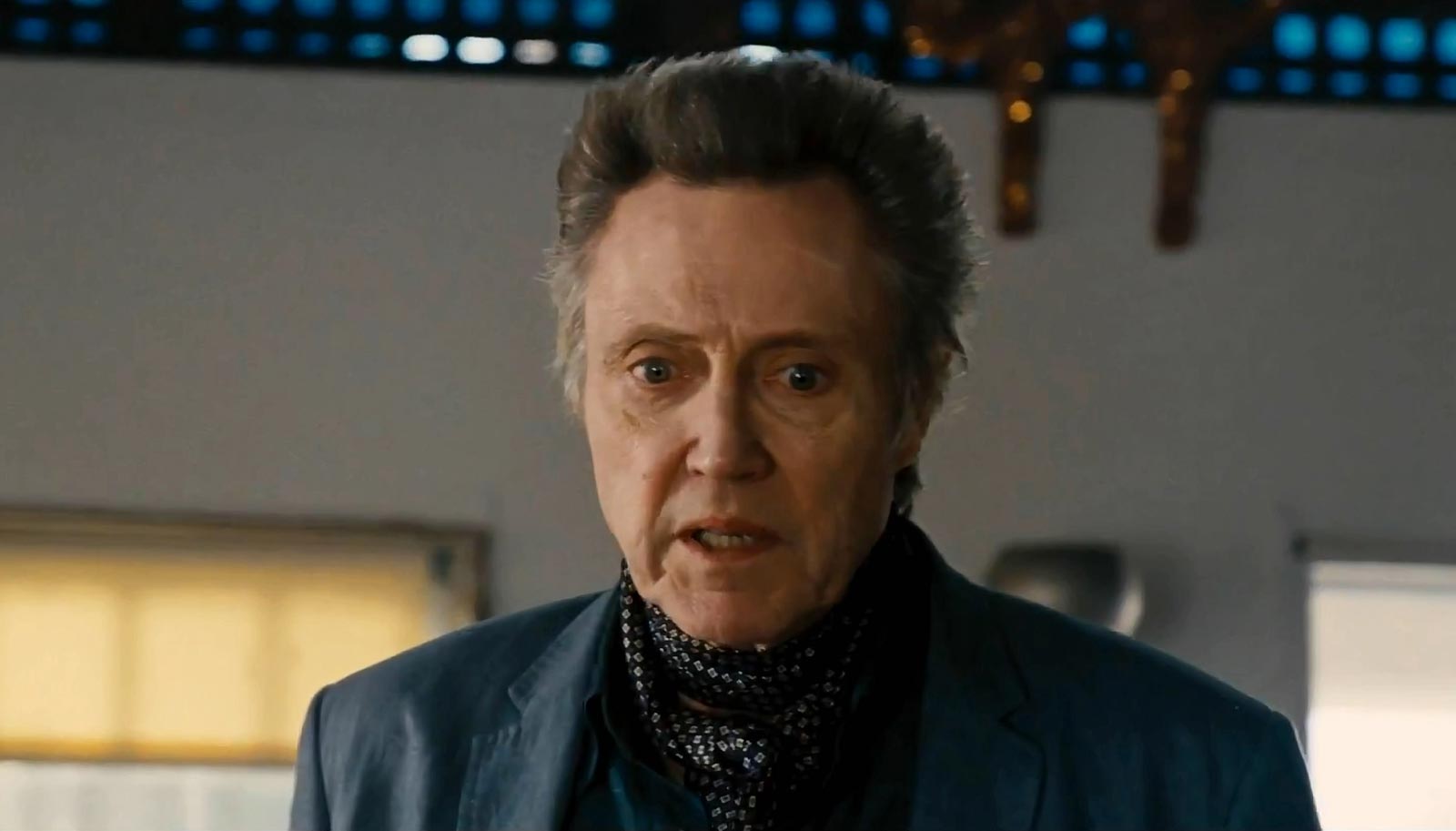
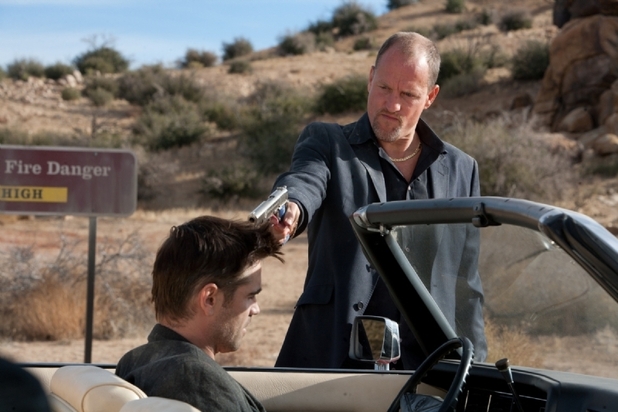
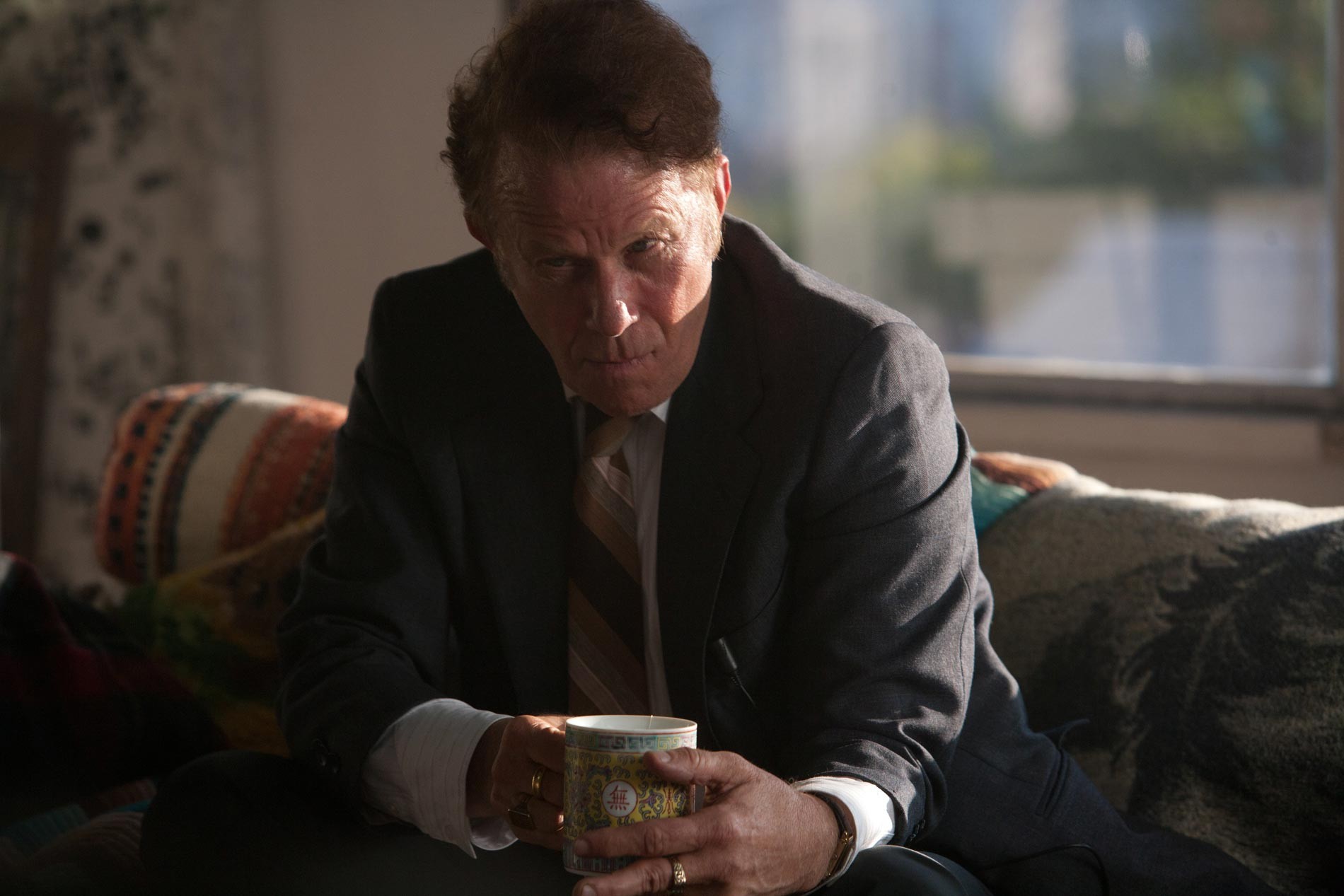
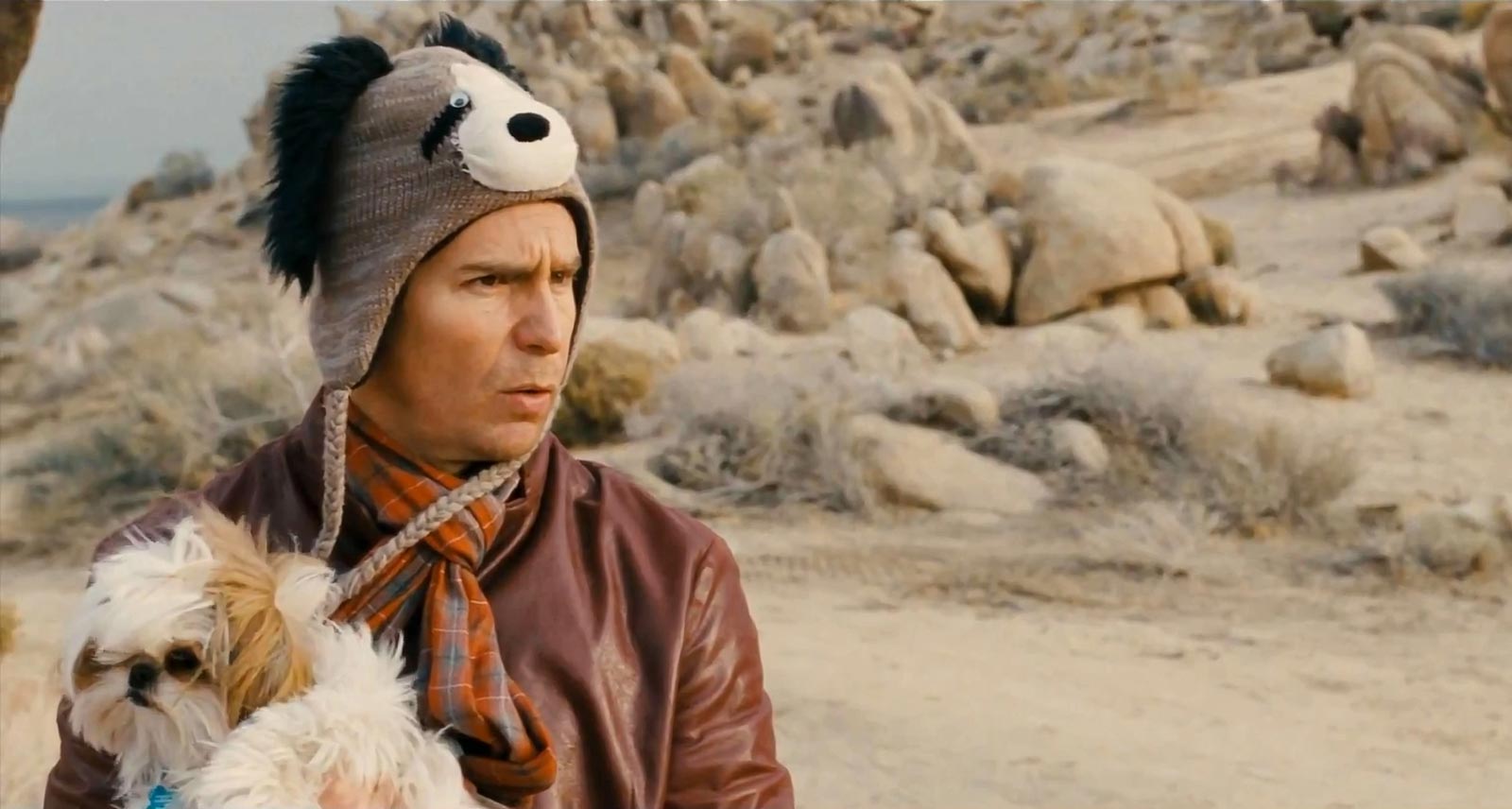
Well, he must have seen Adaptation., because this one is playing the same trick, but with better results, I think.  Seven Psychopaths is about Marty (Colin Farrell), who's a struggling screenwriter (aren't they all?).  His friend Billy (Sam Rockwell) is an aspiring actor (aren't they all?) who may or may not have the weirdest "day-job" of any thespian—he's a dog-napper, in partnership with Hans (Christopher Walken—there's no one like Christopher Walken).  Billy is trying to help Marty with his screenplay entitled "Seven Psychopaths," with mixed results.  Marty should take the advice of Ernest Hemingway who said "Write what you know."  He has enough psychopathy in his life to fill up ninety minutes of screen-time.  And if the dog-napping ring wasn't enough, Marty could take some pointers from Charlie (Woody Harrelson), whose shih tzu has just been the latest target of the canine-caper ring and is hell-bent to get his dog back and wreak havoc on the pooch-nappers.

Bizarre.  But, it gets even more bizarre when the stories start coming.  The newspaper is full of headlines of the "Jack of Diamonds" vigilante, who kills criminals and leaves that particular card on the bodies.  Marty has a few kernels of ideas for his screenplay, which make sidebars in the film but nothing coalesces into a fleshed out screenplay.  And then there's the contributions of the folks who answer an ad Billy puts in the paper to help Marty find inspiration, which produces a genuine fiend find in Zachariah (Tom Waits), who recounts a tale of serial vigilante justice in an effort to find his lost love, who inspired the killings.

What is going on here?  It's an interesting mix of truth and fiction, of apocrypha and legend that morphs with the story that the real life director Marty Martin McDonagh is weaving like a tapestry of varying skeins.  The story of writing a screenplay is not the most interesting of movie ideas (although that didn't stop Sullivan's Travels, Barton Fink and others from being great movies).  But, sometimes the gathering of material can be interesting—the Coen Brothers put a good spin on it by making Fink about an author who chooses to ignore what's happening around him—as it fills the requirements of a quest movie. 

And McDonagh is doing something interesting here (benefiting from a superb cast—with only the top-billed girls Abbie Cornish and Olga Kurylenko going to waste—and quick appearances by Michael Stuhlbarg, Harry Dean Stanton, Gabourey Sibide, Crispin Glover (I swear I saw him), and look for a great performance by Linda Bright Clay) in a way that Adaptation. only touched on with the Robert McKee script-tutorial segments: making a comment for what passes as a screenplay these days.  Movies have changed as subsequent generations have indulged in the art-form—where films were written and directed from other sources, now movies, by and large, are created by students of film, creating a reflexive diluted (and deluded) quality that does not so much reflect reality, as the movie-realities we're used to.  From Leone to Tarantino, Lean to Spielberg, Hawks to Carpenter, Powell to Scorsese, Hitchcock to DePalma, we now see films refracted through the prism of other movies, and what inspired the makers about movies in the first place.  With Seven Psychopaths' emphasis on revenge and revenge fantasies, it's squarely where movies sit right now with both the action genres and its current focus on superhero properties.  And the character of Billy (Rockwell is brilliant in this) is an actor completely out of touch with reality, staging his life as if it was following a movie-script ("This is supposed to be the Final Shoot-Out") with the internal logic of a movie—but only a current formula-film, created by people who've learned about life from watching movies (as opposed to..ya know...living a life).  Life is messier in real life than what's up on the screen (even one with the violence of Seven Psychopaths)...guns jam, mistakes happen, we forget our promises, and the wrong people die.  It's part of why we go to the movies in the first place—to escape the randomness of life, and let artifice try to paint it in such a way to give us perspective...the way dreams are supposed to work.

This is quite a heavy burden to be laying on a quirky film that's frequently laugh out loud funny, and stomach-turning violent in parts.  But McDonagh continues to be a fresh voice with an odd perspective that manages to entertain while making one think, simultaneously.  Quite unique, that.

Seven Psychopaths is a Matinee.


Thursday, August 9, 2012

Total Recall (2012)

You Don't Know Dick (Philip K.)
or
I Can Misremember It For Your Wholesale

The reviews that I've seen for the new version of Total Recall have not been kind.  Rotten Tomatoes, that fine aggregator/cuisinart of opinion, put it on "puree" when it said "While it boasts some impressive action sequences, Total Recall lacks the intricate plotting, wry humor, and fleshed out characters that made the original a sci-fi classic."

Huh?  What the wha...?

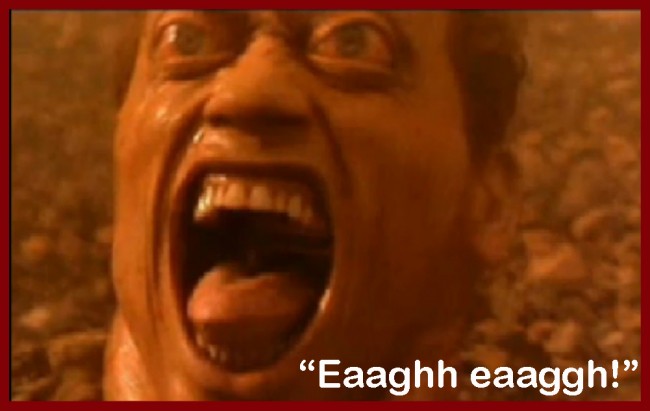
Maybe I'm in Rekall right now and this is all some elaborate alternate reality, but my vivid memories of the Schwarzenegger Total Recall (made 22 years ago by that "master" of intricate plotting, wry humor and sub-tle human interactions*, Paul Verhoeven) was of an R-rated Sci-Fi gore-fest, light on "Gee-Whiz" and heavy with Cheese-Whiz, that seemed to mark the limit to how much Arnold could contort his face.**  The one thing I remember being amusing was Sharon Stone as Doug Quaid's wife, in an arch performance that basically made her a star.***


This "re-imagining" (if you will) has Colin Farrell as Quaid,**** working on an assembly line for synthetic security forces—robo-cops (although they more resemble—and collapse just like—the battle-droids in the Star Wars prequels).    The elaborate set-up has the world decimated by chemical weapons making the world inhabitable on only two islands, Britain and Australia.  The most precious commodity, thus, is living space, and the commute from one to the other is a tough one, a high-speed transport through the Earth's core—the shortest distance between two points being a straight line (would really have hated to be a construction worker on that project!).  

Anyway, Quaid is beset by dreams of running, chasing, shooting and loss, waking up in a cold sweat to find himself sleeping next to Lori (Kate Beckinsale, a fine actress—remember her in Branagh's Much Ado About Nothing—who is going to be stuck in kick-ass roles as long as Keira Knightley, Michelle Williams, and Carey Mulligan are alive), who works for security for the United Federation of Britain, and its leader Cohaagen (Bryan Cranston), which begs the question: Where's the Queen?  And begs the question: she's married to a factory worker?

But if we start picking nits we'll be here until the time the movie's set in. Leave it that there are plot-holes larger and deeper than the one running through the planet, and it all begins when Quaid decides to go to the Rekall facility in his local city (which I believe is Great Britain, but owes a lot to Ridley Scott's Los Angeles in Blade Runner...and Spielberg's D.C. in his own version of Dick's Minority Report), a divey section of town with a yen for Chinese decor.  Basically, he wants a spy fantasy, where there are double identities, secret plots and no one can be trusted.  He gets it, but whether it's reality or a drug-induced fantasy he has no way of knowing.  Something goes horribly (horribly) wrong, and by the end of his session, all the Rekall technicians are dead, as well as a dozen security forces, who burst in (pretty quickly, too) and whom Quaid overcomes in a single-shot, digitally-tracked shot that resembles a first-person shooter game.

Which is what this movies is, essentially—game scenarios, one after the other, trying to get to the next level.  It's not that this Total Recall is anything less than competent.  It truly is, and the cast is fine and all.  But, it's never anything more than that, there's nothing very inspired...except from other sources, movies and video-games, mostly,***** and tangential stuff at that.  But, although attempts have been made to make it sleeker and faster-paced, there is no attempt to make it better or develop themes that the first film dropped for kinetic thrills.  When you're dealing with alternate realities, why leave it at one?  Why not keep the audience on edge on what's true?  Why not make the stakes a little bit higher, so there are more consequences (like what this movie hints at in an early scene) for Rekall users, so there's more at risk than physical pain?  This is Inception-material, but on only one level, and it's a sub-level at that.  The potential was there to do more, but, instead, it's more of the same.

And Len Wiseman, the director of this, and the "Underworld" films (and "Die Hard 4")?  It's a few films in now, and one can say that he's not aspiring to much, other than keeping both the budget and the pace high.  It's not so much directed, as art-directed, full of detail to distract from the lack of depth—highly finished, but with a sub-standard foundation.  There was so much that anyone could do with this material to make it rise above the first one, rather than just make it worse.

Total Recall (2012) is a Total Cable-Watcher.


"But, I don't WANT to be in a bad Schwarzenegger movie!"
"Which one: Jingle All the Way or Last Action Hero?"


* ...usually involving fists, but in this case involving anything that could penetrate a human torso or face.  This one was a particularly nasty exercise in excess, and I remember Schwarzenegger shilling it on Entertainment Tonight: "Yah, It's a GREAT FAMILY moo-vie, Bring the KIDS!"  I was horrified to see that some idiot-parents actually did, and those kids have probably been in therapy for a couple years now.

** ...without  special effects, anyway.

*** It put her on the path, anyway, as Verhoeven was so impressed with her that he cast her in Basic Instinct, then she was a star in a flash.

**** A better match, I think, than Schwarzenegger.  Farrell is more relatable, and you could see him as a factory worker, which makes the concept—which is telegraphed and anticipated to the Nth degree in both films—work a bit better.  Schwarzenegger can't be believed as a factory worker—he's too much of a "800-pound gorilla in the room" to be hiding in such plain sight.  The original concept...and casting...had someone like Richard Dreyfuss in the role.  Now, THAT would have been fun, and surprising.

***** A lot from the first film, of course, but it's weird stuff—the plaid pattern that Quaid wears at some point, the woman in the transport station—there to fake out only the audience that had seen the first film—and the triple-breasted prostitute (probably because it's what the geeks remember...and want).  All of which will bring me to an up-coming point...

Saturday, August 6, 2011

Horrible Bosses

"That 'Strangers on a Train' Shit"
or
"It's Like a Douchebag Museum...!"

Office politics can get mean.  Office politics can make you crazy.  Office politics can get very, very messy (now, we have a movie that has all three!)However, I don't know many offices (outside the Post Office) where the politics can make you homicidal.  Not even Congress.But that's the situation in Horrible Bosses, which given the tough economic times, the high unemployment rates, and the relative lack of power suffered by your disappearing middle class, almost seems plausible.  Documentarian/director Seth Gordon (The King of Kong: A Fistful of Quarters) has made a film that follows three rather hapless worker-buddies (who seem competent at their jobs, the events of the movie notwithstanding), as their job situations drive them to considering murdering their higher-ups.  All three are unmarried (although Charlie Day's dental technician is engaged), so we're talking some arrested development here, especially considering Jason Bateman is one of the three and SNL's Jason Sudeikis is the third).  Bateman's Nick is up for a promotion, so he's been tolerating some abusive grooming tactics by his boss Dave Harken (Kevin Spacey, recycling his role in Swimming with Sharks), but doesn't get it when Harken takes the position himself; Sudeikis' Kurt is also expecting advancement as an account manager at the chemical factory run by Donald Sutherland, when Sutherland's character dies, and the company is taken over by his "Dipshit Cokehead Son", played by Colin Farrell (in a nicely over-the-top skeezeball performance, which seems to have been cut a bit—he's not in it much; And Day's Dale is a tech for an extremely aggressive cougar of a dentist (Jennifer Aniston, bless her) who is determined to seduce him (for some reason), and is incapable of anything more complicated than single entendres.

They decide that, rather than "Best Practices," going to "H.R.," or finding another situation, they'll merely cut through the red tape and go straight to the yellow—they're going to kill their bosses.  So much for negotiating skills and being a "people person."  This is what commiserating in a bar can lead to.  The next bar leads them to Dean Jones (Jamie Foxx—playing it straight and dead-pan), an ex-con who goes by a common vulgarism, because "Dean Jones" reminds too many people of The Love Bug.  No wonder they want this guy to plan the executions.  Jones' suggestion is that each of the guys does the murder of someone else's boss (and dutifully, Alfred Hitchcock's Strangers on a Train is mentioned, as is Throw Momma From the Train, which is the red-headed step-child of the Hitchcock film...which reminds me that today is recycling day).

This cannot go well, and despite some laugh-out-loud moments, it does not, succumbing to "easy answers," and a "Deus ex machina."  God's gotta be watching these guys, because they're so incompetent, they can't do anything right*...which leads us back to the recycling bin.  Rummaging through, it is not too hard to see that this is The Hangover which itself is a new version of a Three Stooges movie, especially in the psychology of the three leads.  Bateman plays Moe the strong one, Day is Larry the weak whiner, and Sudeikis is so meat-headed he can only be Curly.  And while no eye-poking or face-slapping occurs, you just know that the insults and slow burns between the three are the passive-aggressive equivalent.  And a lot less fun.

There are good moments—Aniston and Farrell are clearly having fun playing broad—and one of my favorite actor-characters shows up at the end (a little too briefly), but all in all, the face I wanted to slap was my own.

Though not completely horrible, Horrible Bosses is a Cable Watcher.

* This shoots down the premise of the movie: if these guys are so ham-fisted doing...everything...maybe they don't deserve the promotions they think they've been cheated out of. 

Tuesday, January 25, 2011

The Way Back


"Strangers in a Strange Land"
or
"Every Journey Begins with the First Steppe"

A new Peter Weir film is something of an event.  The Aussie director of Picnic at Hanging Rock, The Year of Living Dangerously, Gallipoli, The Truman Show, Witness, and Master and Commander makes meticulous, thoughtful films of ambiguity and great beauty, throwing civilized men and women into clashes of culture (frequently more primitive) exploring the impact, with an eye towards the rough, otherworldly beauty of this world.  Along the way, you learn a lot even if the movie does not draw to a dramatic or philosophical conclusion.

So, with little fanfare, here is The Way Back, Weir's latest film, one that has been optioned many times since its source book, Slavomir Rawicz's "The Long Walk: The True Story of a Trek to Freedom," was published in 1956.  The veracity of the tale has been questioned a lot in that time, but the evidence is clear: four emaciated men walked into an Indian village, saying that they had walked from a Communist gulag in Siberia across the Gobi Desert and the Himalayas to freedom, a journey on-foot of 4,000 miles.  One could speculate—for the length of such a journey—why it had never come to the screen before:  too depressing—but think what it would do for soda and popcorn sales!; Elvis wasn't interested, indeed, what star would take on such a rugged movie, Burt Lancaster's brief interest notwithstanding; the movie has a lot of explaining to do about socio-political situations; the Russian market might not be too pleased with the film, and on and on.  Weir made it (reportedly for less than $30 million, which seems incredible), but so few studios were interested in it that it almost went straight to video...which would have been a shame, as this is one of those movies demanding to be seen on a big screen.

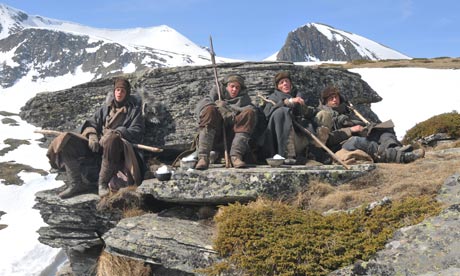
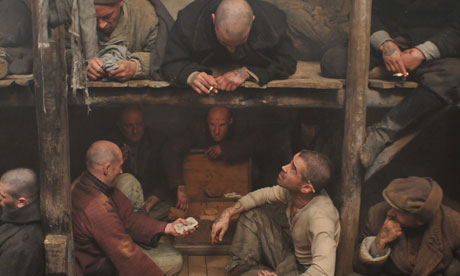
Janusz (Jim Sturgess) begins the film under interrogation in occupied Poland.  The year is 1940.  He has been turned in (reluctantly) by his wife under torture, and he is sent to a Soviet gulag in the mountainous regions of Siberia.  After a period of learning the ropes (and the whips of the guards and the barbed wire of the camp), he becomes a part of a loose group of prisoners of differing skills and supplies to make a fast surgical escape from the gulag and make their way to Mongolia.  Based on a loose plan of prisoner Khabarov (Mark Strong), they plan to make it to Lake Baikal, following it to the Sino-Russian railway.  Their supplies will run out in mere days, but Janusz is convinced they can live off the land, walking the entire way.  Among the group of escaping stragglers are "Mr. Smith" (Ed Harris)—"First name: Mister"—a particularly mysterious American (he tells Janusz, "you have a weakness I can use: kindness"), and, as it seems all movie escape attempts must have, a plays-by-his-own-rules maybe-criminal named Valka (Colin Farrell).  The group begins suspicious of each other, but soon forms a close-knit, surprisingly democratic structure, sharing ideas and resources, voting when they're at a crossroads—despite the occasional individual insurrection.

Watching the movie is a slog.  At 2 hours, 20 minutes, with the principal characters pushed to their endurance, the film feels longer than its running time, but one is never tempted to do a watch-check.  The Way Back is one of those films that keeps you guessing, intrigued and involved every minute, like you were involved in the long walk, craning to see what is around every corner.  Weir keeps the pace moving quickly, cutting scenes briskly from one episode to the next, so the film develops a natural rhythm.

But, it's the director's eye for detail—as always—that is striking, with scenes of stark, natural beauty that astonish: taking refuge in ancient caves, the camera pans up, following a bedraggled Mr. Smith's gaze, to two large holes in the ceiling, like the angry eyes of God; walking up a scrabble hill, Weir directs our view up and over the weary travelers to a screen-stretching shot of the expansive Gobi desert; at one point, they find a single solitary structure—a gate with no walls—absurdly marking their goal, while announcing another set-back.

It is a grueling adventure story with fine performances all around, interpreted through Weir's talent for keeping things real, even when they turn startlingly surreal.  Go prepared for a tough movie, but a satisfying one, that, like all escapes, becomes a journey of the individual will and spirit, covering all manner of obstacles in physical space, mental discipline, and the longest journey...of time.

The Way Back is a Full-Price Ticket. 


Tuesday, May 4, 2010

In Bruges

"In Bruges" (Martin McDonagh, 2008) First off, the title may be mis-leading as it's missing a word. By rights, and by its constant usage in the film, the movie should be called "In Fooking Bruges," as that's the way the picturesque "fairy-tale town" in Belgium is usually adjectived in the film. "In (implied Fooking) Bruges" is rated "R" for "Strong Bloody Violence, Pervasive Language and Drug Use." Not much of the latter, but large quantities of beer are consumed. The language is pervasive (love that term), but it is also numbing in that, after awhile, it stops being shocking and the repetitiveness becomes part of the joke.* And the violence is strong and upsetting—blood flies in large gouts, and there is a lot of perforation going on, followed by blood spatter. I mention all this as a warning for the faint-of-heart going in, because I'm going to be saying this is a great, funny film with a lot of heart—bloody, throbbing and gooey—and cold-bloodiness, and anybody thinking they're going to be seeing, say, "Dr. Strangelove," are going to be upset at the carnage. But that blood-letting is necessary for the very reason that "In Bruges" is making note of how fragile we all are. We break. We bleed. We suffer. We sacrifice. We put ourselves through Hell on Earth. Which on bad days, and bad vacations, can look like fooking Bruges.

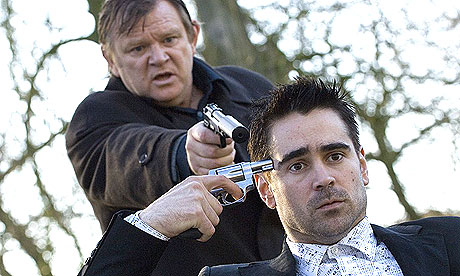
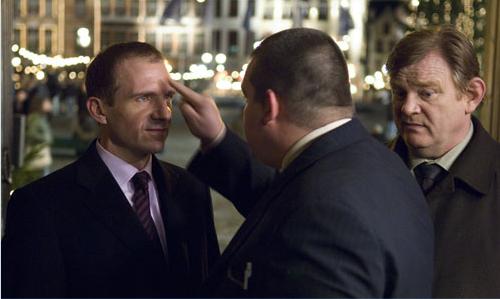
Ray and Kenny (Colin Farrell, Brendan Gleeson) are two Irish hit-men who are on holiday, of a sorts. Actually, they're laying low after Ray's first "hit"—the assassination of a priest (Ciarán Hinds in a cameo)—also manages to kill a child. It's Ray's first job for Harry Waters (Ralph Fiennes) and he's botched it. Badly. The best for them is to get out of town for two weeks until the furor dies down. So, they're sent to Belgium, specifically to Bruges—"the most preserved city in Europe"—to get lost in the Christmas tourist season. "It's a shit-hole," says Ray, still reeling guiltily. He hates it. In fact, he'd probably hate any place on Earth in his state of mind, except the one place he cannot go. For Ray, Bruges is worse than Hell. Kenny is enjoying the sight-seeing and fascinated by the antiquity of the place and keeps trying to interest Ray in the city, calling him the "worst tourist in the world." "Ken," replies Ray. "I grew up in Dublin. I love Dublin. If I grew up on a farm, and was retarded, Bruges might impress me but I didn't, so it doesn't.."

And that, there, is why I fell in love with this film. The rough language that has a rhythm and groove, and feels like it's falling out of the minds of
Farrell and Gleeson and Fiennes in unfiltered stanzas. It's Mamet with a lilt (especially in Farrell's hands). It's a comic flow that when these three ace actors toss in their syncopated pauses it maximizes the laugh factor exponentially. Sentences build and explode in beated punch-lines that flow naturally from the material. It's coarse and brutal, but behind the words are human feelings of desperate men.

Ray is badly shaken up by the death of that child. It haunts him, keeps him awake at night and makes him fear for his soul. He drinks to deaden the pain. Ken, the veteran, has been at it awhile, owing a debt to Harry Waters from the past and is loyal to a fault. And Harry is a vicious gangster who loves his family and lives unswervingly by a precise code of honor. These are bad men with silver linings of virtue tucked away where no one can hurt them. In their own ways, they are romantics. Homicidal romantics, maybe. But, then, that's the work.

Steeped in quirky characters, and nearly prat-falling over itself with implied comedy, "In Bruges" manages to do something unique in the post-Tarantino action revolution of stylization, and pervasive...everything—it manages to have soul, a caring one, at that, where actions have consequences that don't get lost in the final reel amidst the carnage and wise-cracks.

* And, as in the film "Once," there is something about the word spoken with an Irish accent that makes it less harsh and far more charming, like the name of a seaside Gaelic town.

Tuesday, January 12, 2010

The Imaginarium of Dr. Parnassus

"Ladies and Gentlemen, This World is Full of Wonderment for Those with Eyes to See it."

One must consider the momentum of publicity when one talks about James Cameron's "Avatar." The tsunami of NewsCorps force-fed publicity and societal group-think has done its job on the populace and the majority are of one mind. At this point, I've heard too many smart people saying that nobody will ever make movies the same way again, that it's ground-breaking, and (okay) the story isn't much, but the visuals are so spectacular it compensates for the stunning more-of-the-sameness of the blah-blah-blah.

You don't know what you're missing.
There is more imagination, thought and, gosh, genuine wit going on in the "mirror" sequences of "The Imaginarium of Dr. Parnassus" than in anything in "Avatar." Hell, even the non-CGI "live" sequences are amazing to look at.

But...nobody's lining up to see "
Imaginarium." And that's a shame. For, if you want a fantasy film brimming with ideas, some of them quite provocative, it is this one, directed by that most snake-bit of directors, Terry Gilliam.

It has been abundantly documented ad nauseum the tragic story of this film:
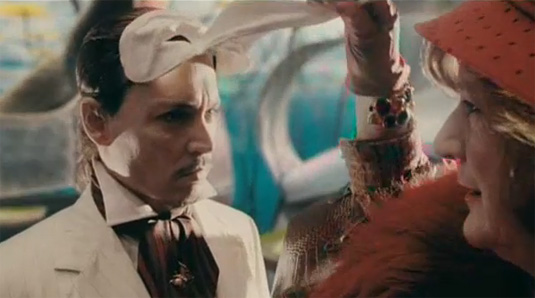
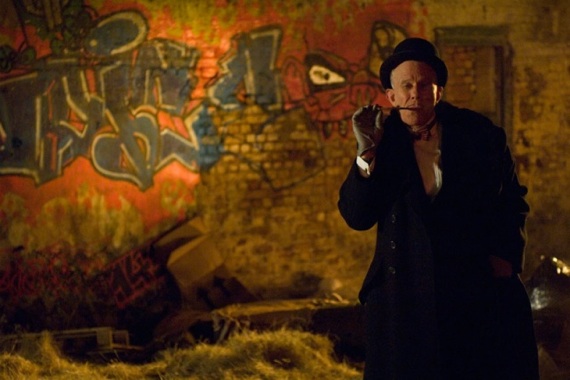
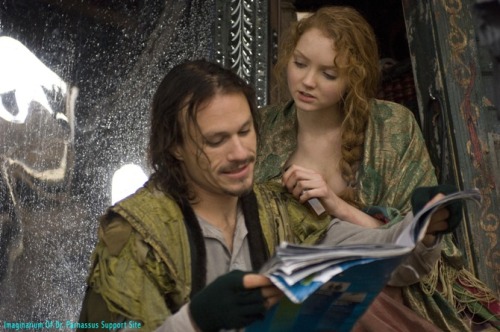
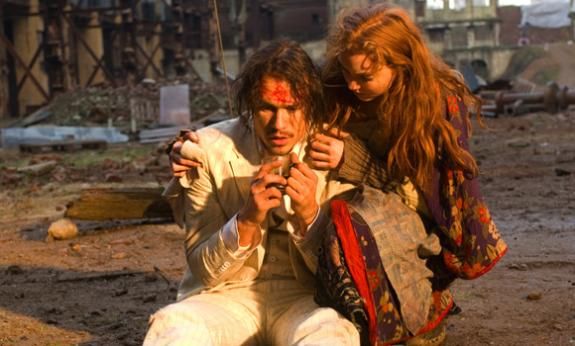
how star Heath Ledger died in the middle of filming, and how a corps of Ledger-Gilliam supporters—Johnny Depp, Jude Law, and Colin Farrell—stepped up to play the visages of Ledger in the "Imaginarium" sequences (actually it seems perfectly natural the way Gilliam does it), but what isn't reported is that Gilliam was hit by a bus and broke his back during the filming.* Despite these alarming developments that would halt anyone other than a crazy "Monty Python" alum, the film is rich in detail, bursting with context, and doesn't have that "scrimping" footage-stretching feel that so many films-in-trouble give off.

It's basically a fairy-story set in our world (or
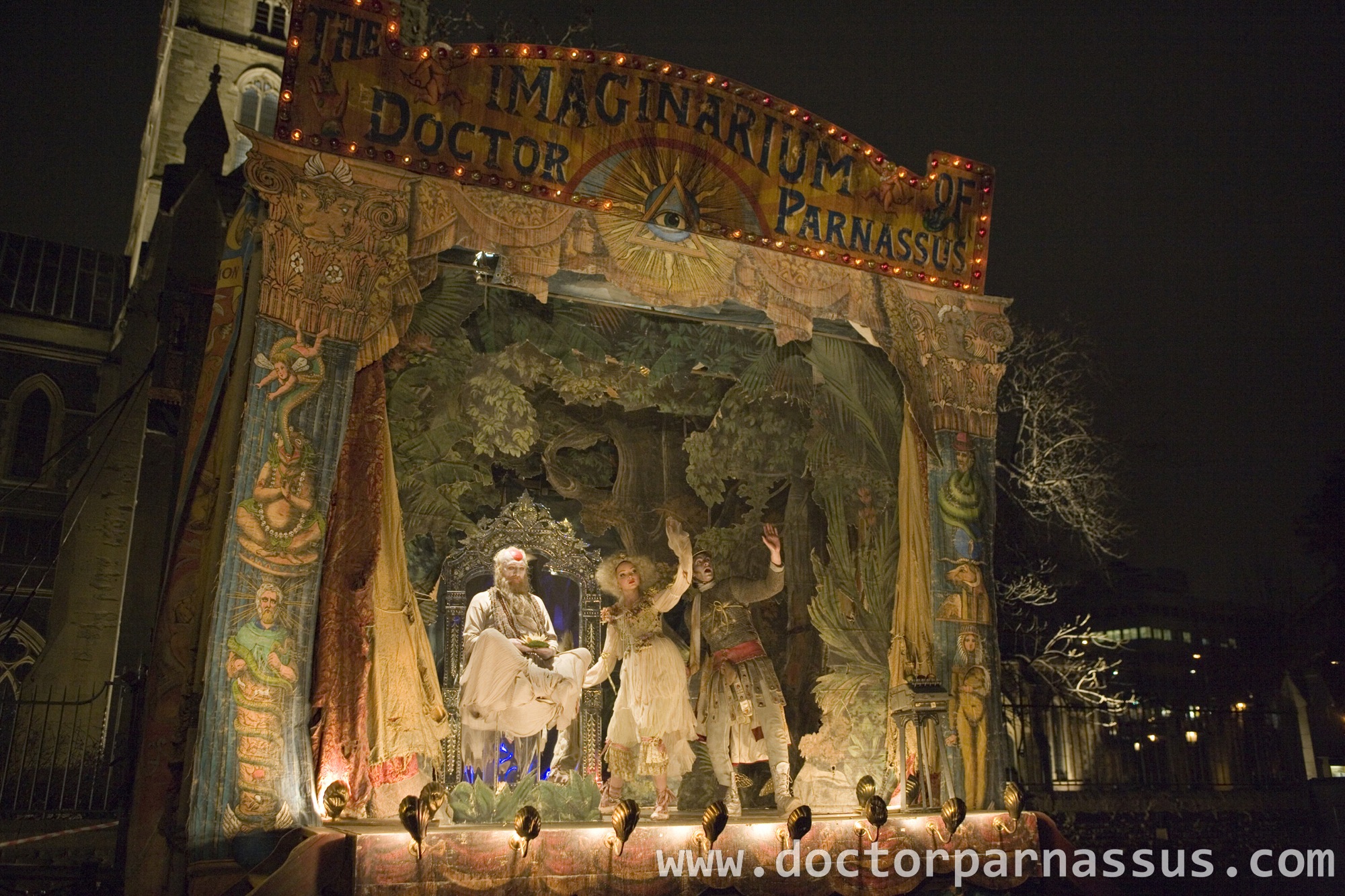
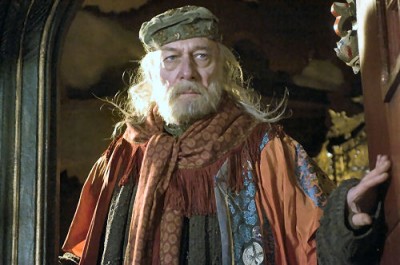
a delirium dream, not sure) where Dr. Parnassus (Christopher Plummer) is an immortal, who, with his rag-tag theater troupe—assistant Percey (Verne Troyer), barker Anton (Andrew Garfield) and daughter Valentina (model Lily Cole, whose alarming face is that of an alabaster porcelain doll)—travels in an out-sized Bergman-crossed-with-Joad horse-drawn wagon/convertible stage, enticing marks to enter his "Imaginarium," a mirror that sucks the hapless into Parnassus' bizarre mind-scapes, where they either live...or die. Parnassus, you see, has made a deal with the Devil. Inhabiting the old man's mind, as he does most of ours, is Mr. Nick (Tom Waits...of course), who has his own lures to the impure of heart. Enter one of Nick's speak-easy's or one-night-stand motels that stick out like sore toad-stools in the landscape and BOOM! the Devil takes your soul. And the bottom line of the Devil's deal is a certain number of souls before Valentina's sweet 16th birthday ("The age of consent" she trills) or her day of freedom becomes her day of imprisonment, as the Devil claims her for her own. A situation as Grimm...and familiar...as can be.

But Gilliam's Devil is in the details.
The little band are aided in their quest by an amnesiac named Tony (Heath Ledger) whom they save and who, in turn, tries to save them, but whose past comes back to haunt and threaten them. Ledger is at his quick-silver best here, his accent wavering through several dialects, his eyes darting (all qualities picked up by his capable alter-ego's), for Tony is a chameleon, a huckster, the trickster of Myth—which Gilliam uses to savage satiric effect—and is a devil of his own, capable of destroying what he seeks to save. The battle between Good and Evil, Duty and Temptation turns complicated, and Parnassus must bargain again, at great sacrifice, to save that which he loves most, whether it's wished for or no.

The Devil's in the details for the look of the film, too. The "real-world" that the "
Imaginarium" wagon trundles through is our world, but it's a world of extremes: back-alley garbage-lands with trash-fires that litter the scene (where the rag-tag group seems to fit most) and vast temples of commerce-malls, where Tony, with a marketer's zeal attempts to bring new customers. Each of these victims have their own "Imaginarium" realms: a wealthy dowager emerges into a vision of giant fashion-shoes, another a 2-D pop-up book forest. At one point, a falling "Imaginarium" customer takes an incredible fall, and Gilliam cuts to an improbable "Python" joke—a giant thumb-tack—sitting in the middle of nothingness (Gilliam mercifully, for the moment, has the hapless mark miss the point). And even outside the mirror, there are wonders of movie-making brio. In a scene where Percey walks away from Parnassus with his usual bluster, Gilliam shoots the diminutive Troyer at a heroic looking-up angle—the camera had to be scraping the street.

Now, a confession. It may sound like I'm gushing about Gilliam here, but I've always had a problem with his films: I fall asleep through them. It's not that I'm bored, but there's something about the richness of detail, the constant flow of new things to look at, and the murky lighting that induces narcolepsy in me. Before seeing a Gilliam film, I try to load up on coffee and sugar to get through it. I have no idea why this occurs (maybe it's
Rapid Eye Movement caused from the orbs darting about the screen), but it is inevitable—it occurred here through the Jude Law sequences—but I managed to keep my eyes open throughout the whole thing this time.

If the film is flawed, it is that it tries to do too much. Even with a simple story, derived from old fairy-tale tropes, Gilliam again attempts to fit 10 pounds of story into a 5 pound film. Complications begin to pile up, revelations are delayed, little troubling details are revealed—there's a convenient pitch-pipe here—and everything becomes resolved in an ambiguous and hasty manner. Like most Gilliam films, a second viewing may make murky matters clearer. Plus, the overall story has a premise open to interpretation...
is it a "God versus Devil" story, or merely a fairy tale? The Christian Science Monitor's Peter Rainer thinks it may even be autobiographical with Parnassus a mask for Gilliam, "a mad dreamer forever riven between his imagination and the necessity to sell it."** And like his "Python" fraternity, there's a streak of dark running through this, as with all Gilliam films (remember how Kevin's parents are killed at the end of "Time Bandits?"), that may be off-putting for some viewers. Fans of Gilliam's films should expect it, but those who prefer their fantasy milkier may not like the taste of the dark stuff. "Avatar" is far less subtle, more a punch "on the nose," and although dark, gives the impression of a happy-ish ending.

So, it is doubly appropriate that "Imaginarium" brings me back to "
Avatar." For what is Gilliam's film but a re-working of the caution "You can fool some of the people all the time, and all the people some of the time," and that includes the Devil, but the Devil gets his own.

What's Gilliam's next movie? Well, he's determined to go back and film his
Don Quixote movie, come hell or high water. It is only appropriate for this most quixotic of film-makers, forever charging against the impossible odds at realizing the incredible visions wind-milling in his head.

"The Imaginarium of "Dr. Parnassus" is a Matinee.

* Here, the endlessly inventive also Gilliam made lemonade—convincing the bus company to provide transport rather than face a law-suit, thus saving lots of production money. And, if all of this wasn't enough, producer William Vince died right after filming. The film is dedicated to Ledger and Vince, and credited as "A Film by Heath Ledger & Friends."

** Nice observation, that. But Rainer also thinks Ledger looks "dispirited" in the film--well, yeah, the character's just gone through a painful transition, but Ledger's performance of it is never less than audacious and energetic. I'm guilty of it, too, but critics shouldn't try to read actor's minds--they're chameleons, after all, when they're doing it right, and we should speculate cautiously when ascribing motivations to surface appearances on film.