Showing posts with label Olga Kurylenko. Show all posts

Saturday, May 4, 2013

Oblivion

Finding Oneself in the Future
or
Scavenging the Sci-Fi Landscape

The new Tom Cruise vehicle Oblivion (written and directed by Joseph Kosinski from his "unpublished" graphic novel* and whose previous film was Tron: Legacy) is a science fiction tale that borrows very liberally from the last 30 years of movie sci-fi to the point where you swear you've seen the movie before.  

You have, but which one depends on the reel of the film you're watching.  

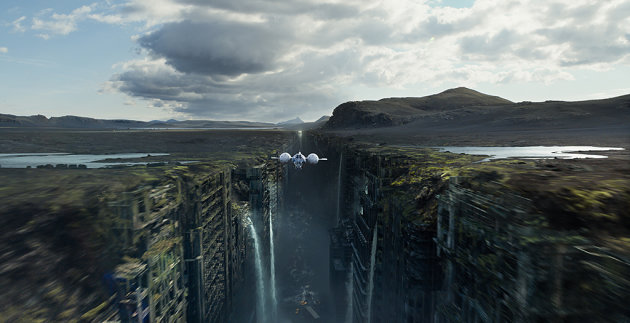
The year is 2077.** Earth has just survived a long, devastating war with an alien race that, in its final act to "poison the well" destroyed Earth's moon, creating dire ecological conditions for the planet, wiping out civilization and leaving its coasts under hundreds of feet of silt from tsunamis and tidal devastation.  Folks have moved to the moon Titan, off the rings of Saturn, the last remaining humans being Jack Harper (Cruise) and Vicca (Andrea Riseborough), a mated team of tech-mechanic and monitor whose job it is to keep the giant moisture evaporators running Titanville or wherever and keep them up and running from complications, both natural and unnatural.  The natural being wear and tear and the unnatural the last vestiges of the die-hard combatants—Scavengers—who are still trying to tear apart the fragile mining of Earth's resources to defeat the human race.  Jack monkey-wrenches and Vicca runs data, all under the watchful work-schedule of Sally (Melissa Leo) who oversees their efforts from a large rectangular control station in orbit around Earth, called the Tet.***

So far, so hum-drum.  Yes, there's a lot of background that Cruise has to spew  in the first ten minutes, but basically he's playing another working class stiff doing a dirty job in the future.

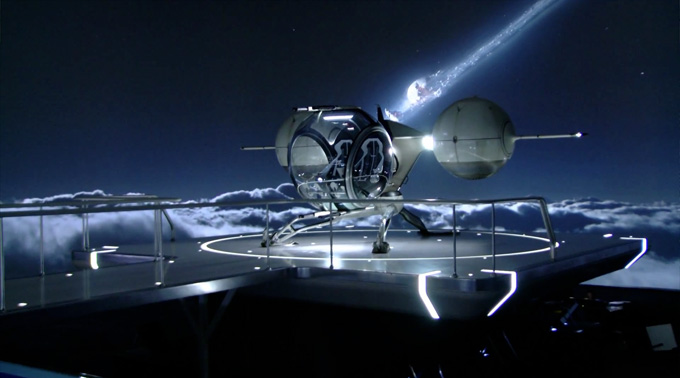
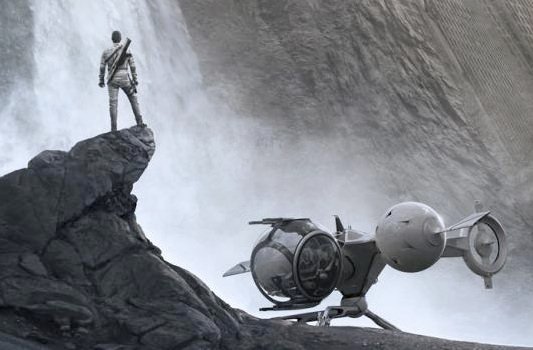
Jack and Vicca are a happy-in-love working team, awaiting the day when they can get off this rock and join civilization on Titan.  Jack, bothered by dreams of the observation deck on the Empire State Building and a smiling beauty (Olga Kurylenko) in the New York crowd, gets in his dragonfly of a jetcraft, repairing busted defender drones, and keeping a wary eye on "scav's."  


Cruise's futuristic mechanic keeps an eye on those moisture-vaporators
That's just the set-up.  Things, as they are wont to do, "get complicated" and to say how would start a cascading spoiler effect that will ruin the movie.  I can't even talk about influences without giving away key pieces of information that will kill the "reveals" (even if one does see some of this stuff coming from light-years away), so let's just say that you'll spend the same amount of time playing "name that reference" in post-screening mode, as you do actually watching the movie.  (Would one call that deja-viewing?  And shouldn't a science fiction movie be looking forward, rather than backwards?****

One key sequence echoes Planet of the Apes. Jack's patrol sector is the former northeast coast of the U.S. (and we get a respectful nod at the decimated Statue of Liberty), but only that section, as there's a radioactive "border" he can't cross.  He is told at one point to go explore beyond his limitations and into the radiation zone if he wants answers.  One could easily hear Dr. Zaius echo the words "You won't like what you find..." in the background. This leads to the biggest revelation of the film, but, instead opf answers, it just leads to more questions, which the film goes into warp-drive trying to explain, not very successfully, as plot-holes and logic disconnects begin to eat away at the movie like nano-viruses.

And science-fiction movies usually have a message for us livers-in-the-now, either cautionary or revelatory.  Oblivion fails there by having as its message that we are replaceable cogs in the wheel of society's meat-grinder.  That message was delivered by Fritz Lang's Metropolis way back in the silent era of movies in 1927.  Here we are in the 21st Century (when we should all be wearing jet-packs) and that's all we get...besides the obligatory shoot-outs and chase sequences?  If there's a message there it's along the lines of "Take out the recycling."

Oblivion is a re-treaded Rental made up of spare parts.

*—"well, then, it doesn't really count, does it?"—

** The film is extraordinarily exposition-heavy in the beginning in a long narration spoken by Cruise.  So much so, that one wonders why they didn't just make a movie of the events spoken of in the exposition.  The reason why makes up the plot of the movie and reveals the Cruise character to be the most unreliable of narrators.

*** Amusingly, the first sign we get of the orbiting Tet is a glimpse of it, traversing the globe on the new logo for Universal Studios at the film's beginning.

**** And, appropriately, into the future.  One of the previews preceding Oblivion is for Elysium, the new film by District 9's Neil Blomkamp, where the 1%ers have moved to an idyllic space station, while the rest including cyborg-ish freedom fighter Matt Damon robo-cops attitude against the machinery of the uber-klass.  The two movies could be book-ends for each other.  Think of the double-bill (and the headline): "Oblivion /Elysium/ Expatriatic/ Tedium"

Wednesday, November 7, 2012

Seven Psychopaths

The Spanish Have Bull-fights
The French have Cheese
The Irish have Alcoholics
What Do Americans Have...?
or 
Write What You Know

Martin McDonagh, the Irish playwright turned filmmaker, made one of my favorite movies of the last few years, the nastily violent yet good-hearted In Bruges, the story of two hit-men who hide out in the Danish tourist-trap after a botched kill.  One shouldn't anticipate when going to the movies, but this one was such a surprise, one couldn't help thinking about what else he might have up his sleeve.

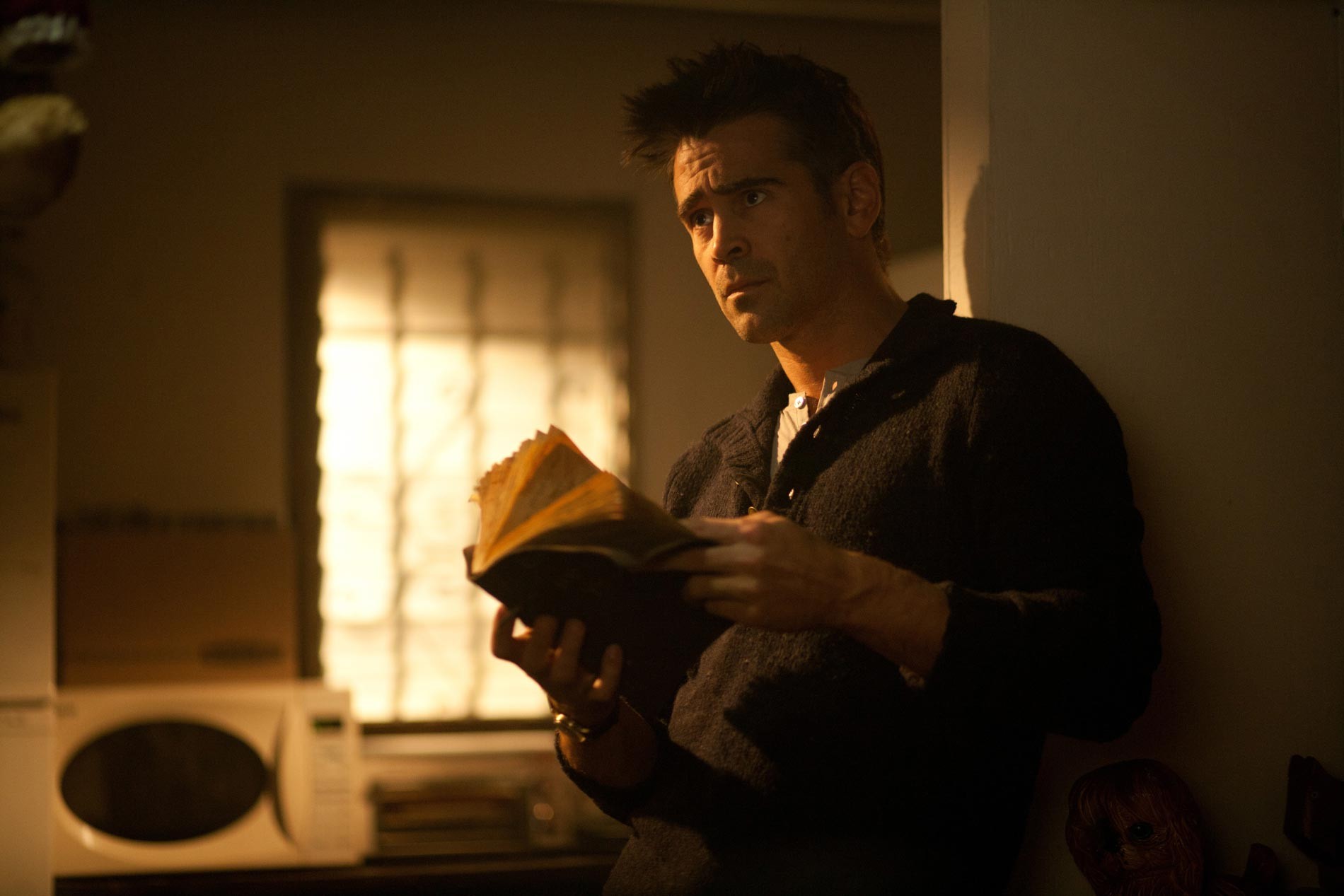
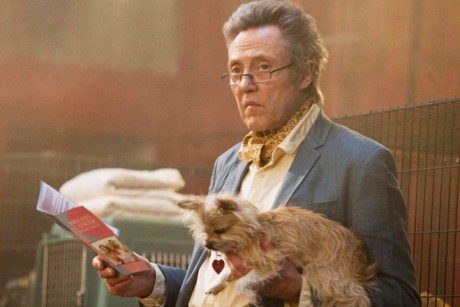
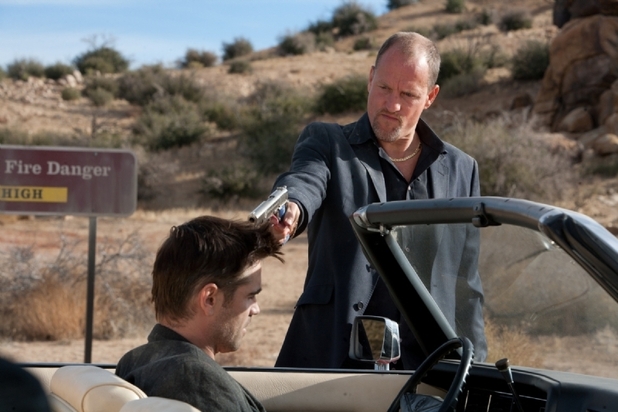
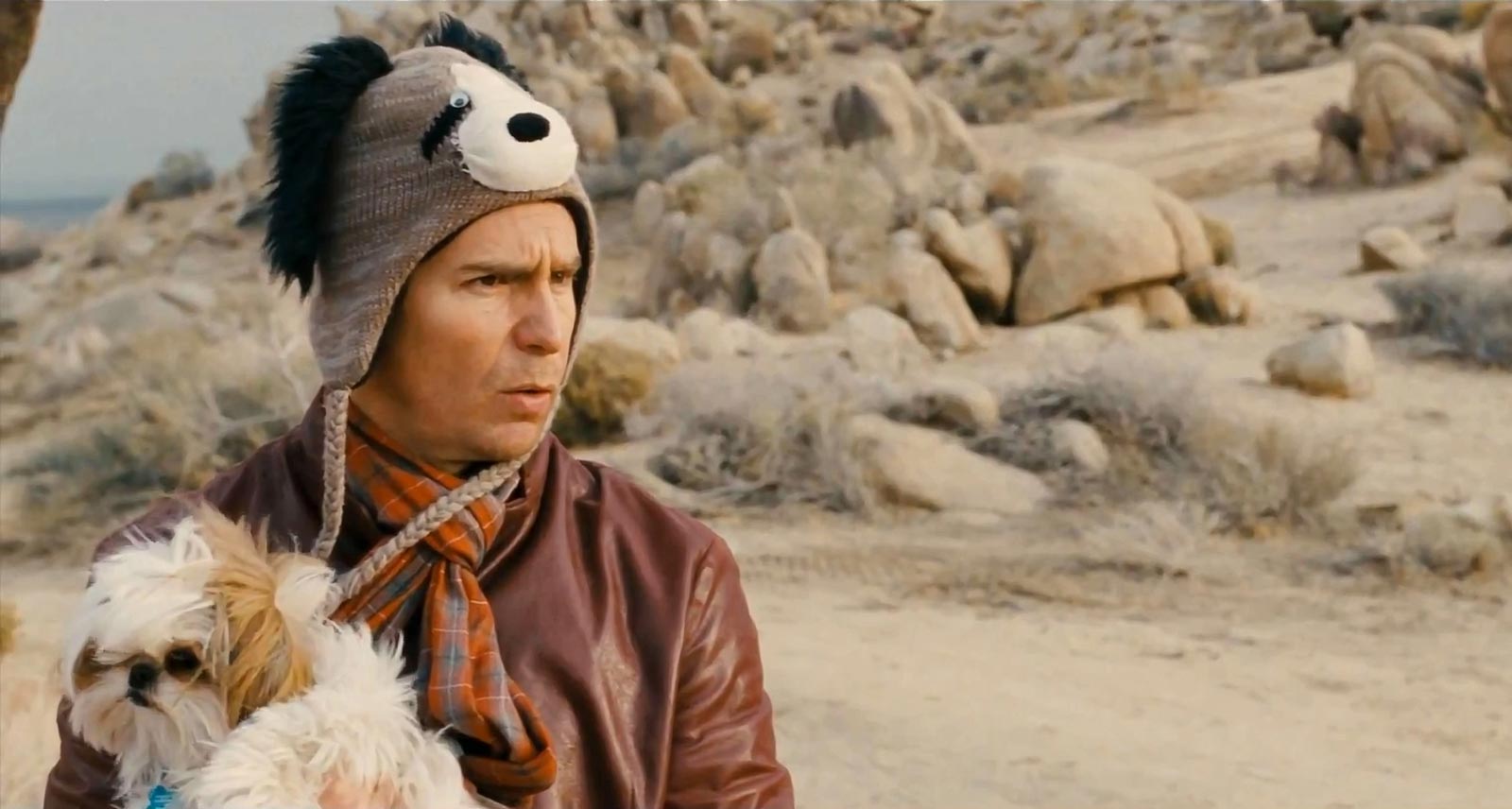
Well, he must have seen Adaptation., because this one is playing the same trick, but with better results, I think.  Seven Psychopaths is about Marty (Colin Farrell), who's a struggling screenwriter (aren't they all?).  His friend Billy (Sam Rockwell) is an aspiring actor (aren't they all?) who may or may not have the weirdest "day-job" of any thespian—he's a dog-napper, in partnership with Hans (Christopher Walkenthere's no one like Christopher Walken).  Billy is trying to help Marty with his screenplay entitled "Seven Psychopaths," with mixed results.  Marty should take the advice of Ernest Hemingway who said "Write what you know."  He has enough psychopathy in his life to fill up ninety minutes of screen-time.  And if the dog-napping ring wasn't enough, Marty could take some pointers from Charlie (Woody Harrelson), whose shih tzu has just been the latest target of the canine-caper ring and is hell-bent to get his dog back and wreak havoc on the pooch-nappers.

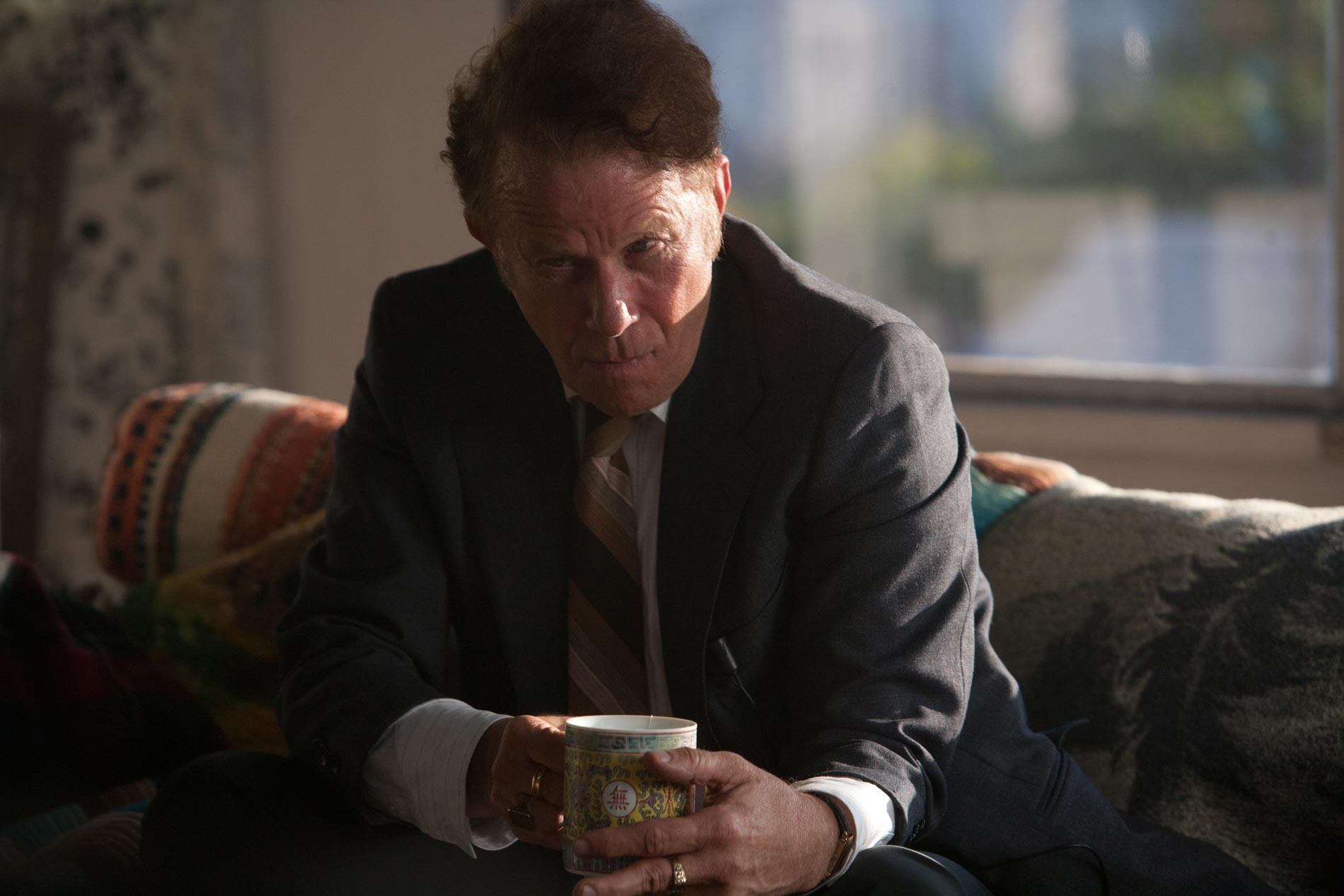
Bizarre.  But, it gets even more bizarre when the stories start coming.  The newspaper is full of headlines of the "Jack of Diamonds" vigilante, who kills criminals and leaves that particular card on the bodies.  Marty has a few kernels of ideas for his screenplay, which make sidebars in the film but nothing coalesces into a fleshed out screenplay.  And then there's the contributions of the folks who answer an ad Billy puts in the paper to help Marty find inspiration, which produces a genuine fiend find in Zachariah (Tom Waits), who recounts a tale of serial vigilante justice in an effort to find his lost love, who inspired the killings.

What is going on here?  It's an interesting mix of truth and fiction, of apocrypha and legend that morphs with the story that the real life director Marty Martin McDonagh is weaving like a tapestry of varying skeins.  The story of writing a screenplay is not the most interesting of movie ideas (although that didn't stop Sullivan's Travels, Barton Fink and others from being great movies).  But, sometimes the gathering of material can be interesting—the Coen Brothers put a good spin on it by making Fink about an author who chooses to ignore what's happening around him—as it fills the requirements of a quest movie. 

And McDonagh is doing something interesting here (benefiting from a superb cast—with only the top-billed girls Abbie Cornish and Olga Kurylenko going to waste—and quick appearances by Michael Stuhlbarg, Harry Dean Stanton, Gabourey SibideCrispin Glover (I swear I saw him), and look for a great performance by Linda Bright Clay) in a way that Adaptation. only touched on with the Robert McKee script-tutorial segments: making a comment for what passes as a screenplay these days.  Movies have changed as subsequent generations have indulged in the art-form—where films were written and directed from other sources, now movies, by and large, are created by students of film, creating a reflexive diluted (and deluded) quality that does not so much reflect reality, as the movie-realities we're used to.  From Leone to Tarantino, Lean to Spielberg, Hawks to Carpenter, Powell to Scorsese, Hitchcock to DePalma, we now see films refracted through the prism of other movies, and what inspired the makers about movies in the first place.  With Seven Psychopaths' emphasis on revenge and revenge fantasies, it's squarely where movies sit right now with both the action genres and its current focus on superhero properties.  And the character of Billy (Rockwell is brilliant in this) is an actor completely out of touch with reality, staging his life as if it was following a movie-script ("This is supposed to be the Final Shoot-Out") with the internal logic of a movie—but only a current formula-film, created by people who've learned about life from watching movies (as opposed to..ya know...living a life).  Life is messier in real life than what's up on the screen (even one with the violence of Seven Psychopaths)...guns jam, mistakes happen, we forget our promises, and the wrong people die.  It's part of why we go to the movies in the first place—to escape the randomness of life, and let artifice try to paint it in such a way to give us perspective...the way dreams are supposed to work.

This is quite a heavy burden to be laying on a quirky film that's frequently laugh out loud funny, and stomach-turning violent in parts.  But McDonagh continues to be a fresh voice with an odd perspective that manages to entertain while making one think, simultaneously.  Quite unique, that.

Seven Psychopaths is a Matinee.


Wednesday, October 10, 2012

Quantum of Solace Revisited

Cutting to the Chase
or
"Once More into the Cuisinart, Dear Friends"


When last we left James Bond, newly double-0'd agent On Her Majesty's Secret Service, he was nursing a broken heart and the betrayal by his lover, by the one way that he knew to ease the pain--shooting someone in the leg with an assault rifle.

After the success of
Casino Royale, the last complete James Bond novel not to be given an "official" film version, and the revival of the franchise with the casting of Daniel Craig, one had to wonder what the producers would do for an encore.


Or a sequel.
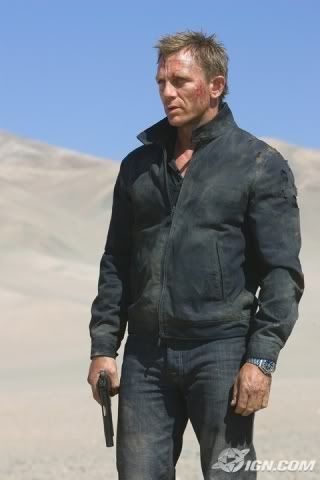
Quantum of Solace* takes place 30 minutes after the ending of Casino Royale, (in mid-car-chase) with Bond going "rogue" and seeking revenge.**
It's the first "true" sequel in the Bond series--all of them previously being stand-alone stories, where for budgetary or scheduling reasons, the secondary characters --like CIA agent Felix Leiter--would be played by different people from movie to movie.

Here, things are consistent: Jeffrey Wright again plays Leiter, Giancarlo Giannini returns as Rene Mathis as does Judi Dench as "M." And the mysterious Mr. White (Jesper Christensen), behind so much of Bond's troubles last film is in the rather bumpy custody of MI6, where he drops the news that there's a world-wide criminal organization that the Brits aren't even aware of, presumably the one financing the bombing of the Skyway jet, the funding of "freedom fighters," and high stakes poker games from the last film. Apparently these activities are so "under the radar" that the world's network of spies--and in this film even Bolivia has a Secret Service--hasn't noticed. But that is just a wild goose chase to Bond achieving that quantum of solace about the events of Casino Royale.

One could go on and on with the trivial aspects of QOS, but in broad strokes, one can answer the entreaties of those who couldn't wait for the next installment last time. No, it isn't as good as the last one;  Casino Royale was one of the best film in the series (this is No. 22 of the "official" Bond films), even after the perspective of a couple years.

Does Bond find out the answers to the questions he's seeking? Yeah, for all the good it does us. We spend 95% going down a blind alley--at 90 miles an hour, with a shaking camera pointed aimlessly and an average edit length of half a second. More on that in a moment.


Does Daniel Craig take off his shirt? Yes, all too briefly for some, I'm sure.

The dialog is crisp and also very, very brief. The acting is uniformly good, with particular mention of Craig,
Dench, and Giannini. Even the "Bond girls," traditionally where the Bond films fall down in the presentation category, can act: former model Olga Kurylenko is quite good, using a cat-walk scowl as the basis of her performance; and Gemma Arterton is pert, spunky...and sadly disposable. Mathieu Amalric--so good in The Diving Bell and the Butterfly--makes the most of his reptilian looks, as a sort of bug-eyed Roman Polanski.***


All well and good. The film feels like a less goofy version of the Roger Moore Bonds where outlandishness is the order of the day, but without the obvious winking. There are some lighter moments (and Craig makes the most of them) but most of it is played with deadly earnest. One expects to get lost in some details along the way by the orange light of the explosions. Indeed, two of the major players in this film are brought up and never mentioned again.****

But there is a major problem with Quantum... which dims the viewing experience, that being the slap-dash way that director Marc Forster and his second unit director Dan Bradley (who stunt coordinated the "Bourne" and last couple "Spiderman" movies) have staged and assembled the action sequences--and there are a lot of them--on land, sea, air, and fire, by foot and all manner of motorized vehicles. These sequences are nearly incomprehensible, with a rapid pace that does not allow the distinguishing of any participant or the context in which they're being done. A good action director allows the time to register surroundings and environment, and provides the context of relationship--who's doing what to whom and where. It's that information that provides suspense. Without that information, it's just fleeting images that don't add up—in other words, a trailer. What Forster and Bradley may be trying to do is put the audience in the same dizzying, disoriented position as Bond, but even then, there are times when there isn't enough context to inspire alarm. At one point, in one of the hand to hand fights it becomes apparent that, suddenly, one of the combatants has acquired an axe. There was just enough time for me to register that perhaps the film would be better if it were edited with that. The shame is that a lot of work went into these sequences--QOS is the most expensive Bond film while simultaneously being the shortest--and a couple of marvelous shots that literally tumble along with Bond merely disorient, rather than thrill, as you're not allowed to see the original position from where these shots start. At the end of it all, you're left with a battered Bond but absolutely no idea how he got that way.

This is a major mis-step. These are suspense films, after all. But in pushing the envelope of how fast to take these action sequences, post-Bourne, the film-makers have reached the point where they are no longer telling a story, no longer communicating with the audience, at which point they've failed in their own mission.

I'm not even sure what is to be gained by seeing Quantum of Solace in a theater, even in the back row. The best way to get anything out of the action is to watch it at a slower speed on DVD.


Hence, "Quantum of Solace" is a Rental.


Two of examples of the subliminal editing style of Quantum of Solace.


* The name is taken from a Fleming Bond short story in which Bond merely sits and listens to a tale of a marriage turned ruinous, and a "quantum of solace" is the smallest particle of comfort one can derive to keep it going. The only Bond titles left to be used are "Risico," "The Property of a Lady," "The Hildebrand Rarity," and "James Bond in New York," none of which is a "grabber" of a title, or would make a good song. But then, who thought you could do anything with Thunderball? Passing a reader-board for another theater en route to the Cinerama, it read simply "007."

** "What, he's gone 'rogue' again?" is what a friend said after seeing the trailer. Bond had already done something similar in the Timothy Dalton-starring Licence To Kill, which combined equal parts "Miami Vice," Yojimbo, and elements of the Fleming novel, "Live and Let Die."'


*** Director Marc Forster used directors Guillermo del Toro and Robert Rodriguez as voice-actors on this film, and the "director" connection applies to a henchman called "Elvis" who reminds one of Quentin Tarentino. What with the "colorful" names of the villains, ala Resevoir Dogs and the producers' history with QT--he famously announced that he wanted to make "Casino Royale" with Pierce Brosnan and griped about not getting the chance--it wouldn't be too far afield to think he was being tweaked.


**** I've since been told by one of the "Opening Night Regulars" I see the Bond's with, that a sequence resolving their stories (all one minute of it) was left on the cutting room floor, giving the producers a chance to start afresh next film, rather than continue with yet another sequel
.


Saturday, November 15, 2008

Quantum of Solace

"Cutting to the Chase,"
or
"Once More into the Cuisinart, Dear Friends"


When last we left James Bond, newly double-0'd agent On Her Majesty's Secret Service, he was nursing a broken heart and the betrayal by his lover, by the one way that he knew to ease the pain--shooting someone in the leg with an assault rifle.

After the success of "
Casino Royale," the last complete James Bond novel not to be given an "official" film version, and the revival of the franchise with the casting of Daniel Craig, one had to wonder what the producers would do for an encore.
Or a sequel. "Quantum of Solace"* takes place 30 minutes after the ending of "Casino Royale," (in mid-car-chase) with Bond going "rogue" and seeking revenge.**
It's the first "true" sequel in the Bond series--all of them previously being stand-alone stories, where for budgetary or scheduling the secondary characters --like CIA agent Felix Leiter--would be played by different people from movie to movie.
Here, things are consistent: Jeffrey Wright again plays Leiter, Giancarlo Giannini returns as Rene Mathis as does Judi Dench as "M." And the mysterious Mr. White (Jesper Christensen), behind so much of Bond's troubles last film is in the rather bumpy custody of MI6, where he drops the news that there's a world-wide criminal organization that the Brits aren't even aware of, presumably the one financing the bombing of the Skyway jet, the funding of "freedom fighters," and high stakes poker games. Apparently these activities are so "under the radar" that the world's network of spies--and in this film even Bolivia has a Secret Service--hasn't noticed. But that is just a wild goose chase to Bond achieving that quantum of solace about the events of "Casino Royale."

One could go on and on with the trivial aspects of "QOS," but in broad strokes, one can answer the entreaties of those who couldn't wait for the next installment last time. No, it isn't as good as the last one; "Casino Royale" was one of the best film in the series (this is No. 22 of the "official" Bond films), even after the perspective of a couple years.

Does Bond find out the answers to the questions he's seeking? Yeah, for all the good it does us. We spend 95% going down a blind alley--at 90 miles an hour, with a shaking camera pointed aimlessly and an average edit length of half a second. More on that in a moment.
Does Daniel Craig take off his shirt? Yes, all too briefly for some, I'm sure.

The dialog is crisp and also brief. The acting is uniformly good, with particular mention of Craig,
Dench, and Giannini. Even the "Bond girls," traditionally where the Bond films fall down in the presentation category, can act: former model Olga Kurylenko is quite good, using a cat-walk scowl as the basis of her performance; and Gemma Arterton is pert, spunky...and sadly disposable. Mathieu Amalric--so good in "The Diving Bell and the Butterfly"--makes the most of his reptilian looks, as a sort of bug-eyed Roman Polanski.***

All well and good. The film feels like a less goofy version of the Roger Moore Bonds where outlandishness is the order of the day, but without the obvious winking. There are some lighter moments (and Craig makes the most of them) but most of it is played with deadly earnest. One expects to get lost in some details along the way by the orange light of the explosions. Indeed, two of the major players in this film are brought up and never mentioned again.****


But there is a major problem with "Quantum..." which dims the viewing experience, that being the slap-dash way that Marc Forster and his second unit director Dan Bradley (who stunt coordinated the "Bourne" and last couple "Spiderman" movies) have staged and assembled the action sequences--and there are a lot of them--on land, sea, air, and fire, by foot and all manner of motorized vehicles. These sequences are nearly incomprehensible, with a rapid pace that does not allow the distinguishing of any participant or the context in which they're being done. A good action director allows the time to register surroundings and environment, and provides the context of relationship--who's doing what to whom and where. It's that information that provides suspense. Without that information, it's just fleeting images that don't add up. What Forster and Bradley may be trying to do is put the audience in the same dizzying, disoriented position as Bond, but even then, there are times when there isn't enough context to inspire alarm. At one point, in one of the hand to hand fights it becomes apparent that, suddenly, one of the combatants has acquired an axe. There was just enough time for me to register that perhaps the film would be better if it were edited with that. The shame is that a lot of work went into these sequences--QOS is the most expensive Bond film while also being the shortest--and a couple of marvelous shots that literally tumble along with Bond merely disorient, rather than thrill, as you're not allowed to see the original position from where these shots start. At the end of it all, you're left with a battered Bond but absolutely no idea how he got that way.

This is a major mis-step. These are suspense films, after all. But in pushing the envelope of how fast to take these action sequences, post-Bourne, the film-makers have reached the point where they are no longer telling a story, no longer communicating with the audience, at which point they've failed in their own mission.

I'm not even sure what is to be gained by seeing "Quantum of Solace" in a theater, even in the back row. The best way to get anything out of the action is to watch it at a slower speed on DVD.


Hence, "Quantum of Solace" is a rental.
* The name is taken from a Fleming Bond short story in which Bond merely sits and listens to a tale of a marriage turned ruinous, and a "quantum of solace" is the smallest particle of comfort one can derive to keep it going. The only Bond titles left to be used are "Risico," "The Property of a Lady," "The Hildebrand Rarity," and "James Bond in New York," none of which is a "grabber" of a title, or would make a good song. But then, who thought you could do anything with "Thunderball?" Passing a reader-board for another theater en route to the Cinerama, it read simply "007."

** "What, he's gone 'rogue' again?" is what a friend said after seeing the trailer. Bond had already done something similar in the Timothy Dalton-starring "Licence To Kill," which combined equal parts "Miami Vice," "Yojimbo," and elements of the Fleming novel, "Live and Let Die."
*** Director Marc Forster used directors Guillermo del Toro and Robert Rodriguez as voice-actors on this film, and the "director" connection applies to a henchman called "Elvis" who reminds one of Quentin Tarentino. What with the "colorful" names of the villains, ala "Resevoir Dogs" and the producers' history with QT--he famously announced that he wanted to make "Casino Royale" with Pierce Brosnan and griped about not getting the chance--it wouldn't be too far afield to think he was being tweaked.
**** I've since been told by one of the "Opening Night Regulars" I see the Bond's with, that a sequence resolving their stories (all one minute of it) was left on the cutting room floor, giving the producers a chance to start afresh next film, rather than continue with yet another sequel
.