Showing posts with label S. Show all posts

Tuesday, December 31, 2013

Saving Mr. Banks

"Just Because It's Fiction Doesn't Make it a Lie"*
or
"Cavorting, Twinkling, and Prancing to a Happy Ending Like a Kamikaze"

Mary Poppins was a bitch.  That's been my joke for a long time, especially given the reputation that Disney's film of Mary Poppins (this year voted to the National Film Registry) has of being just as sugar-gooey as cotton candy in an Orange County heat wave.  It isn't.  And I've gotten several startled looks from adults who then see the film and, yes, they do see that aspect of it, despite the step-in-timing chimney-sweeps, the dancing penguins, and the moments of larkiness. It's not all a jolly 'oliday with Mary. In the end, it's a little bittersweet, and she ascends into a Peter Ellenshaw matte painting of London that isn't dabbled in sunlight, but is a melancholy smearing of smoke and darkening skies.

That's probably due more to Travers' own stipulations to the Disney crew than to anything.  Disney could be dark—dinosaurs died and there was "Night on Bald Mountain" in Fantasia, Pinocchio had its moments jack-assery and Monstro swallowing, Bambi's mother died, and 101 Dalmations almost got skinned—and provided moments of terror and threat in its films, as long as everything turned out all right as the final song paraded people up the aisles. But, Mary Poppins would have been a slightly different movie if it hadn't been for Travers' nannying the scripters and Disney with her chalk-lines drawn in the sand.  For that, we should be grateful.


Maybe less so for Saving Mr. Banks, the Disneyfication of the Disneyfication of "Mary Poppins."  It's "based on a true story," which means (as Blake Edwards coined the phrase) it's "true except for a lie or two," and in the western parlance of John Ford, "when the truth becomes legend, print the legend."  They couldn't have made this movie without Disney and "the Disney version," so, obviously the filmmakers are going to take a charitable stand on the studio's side of things (for example, Richard Sherman, who's played by Jason Schwartzman in the film, says that, rather than, as in the film, taking a personal approach when Travers came to work with the film-makers, Disney took off for Palm Springs and didn't come back until she left).  But, the more you find out about P.L. Travers (her nom de plume), the more you realize that they're taking the edges off her, as well.  Travers was a fantasist, and her largest work was the construction of her life, ever-changing, malleable, inconsistent and to her specifications as the mood and the myth suited her. "Mary Poppins" suited her just fine, and her demands for what was and was not acceptable are well documented in the many scripts versions filled with the word "No" in the margins, and the audio tape of the back-and-forth's between her and the scripters and song-writing team (which she insisted on, and which is played as coda over the end-credits).  Emma Thompson, who listened to them all in her preparation for the role, called her "vile."**


"Two artists at the height of their powers-like two gorillas fighting:"*** 
A study in contrasts between Disney (Hanks) and Travers (Thompson)
Fascinating, complicated, but vile in the instance.  And understandable in her concerns for what she considered "family," and that is where the film is at its most charitable and lovely.  Where Saving Mr. Banks shines is in the film's presentation of Travers' carefully hidden back-story, of her growing up in Australia to a charming, but erratic alcoholic father (played by Colin Farrell...think about that, Colin Farrell in a Disney movie), a frail mother (Ruth Wilson), and a precariousness to the family that, until her father is demoted from his bank managership, she had not previously known existed.  The movie goes back and forth between the disappointing assaults on her stipulations at Disney and her memories, some of which inspired the work she fights so egregiously to defend.  Meanwhile, Disney (Tom Hanks, who pushes "folksy" mighty hard to play a role almost too familiar to play), with theme parks to build and other movies in the pipeline, is left vexed and perplexed that the "Disney magic" isn't working at all well on "Pamela."

How could it?  I remember one writer describing the movie adaptation business for one of his works as "holding the coat for the man who's assaulting your child."  Disdainful of animation and films in general and Disney's work in particular, the movie's Travers reluctantly comes to Hollywood, where she is inundated by welcoming gifts in the form of "all things Mickey" in her hotel room to the point where she feels under siege. Any pleasantries are seen with suspicion for agendas, hidden.  And for the Disney dwarves, the task is mining anthracite because they're playing to a vision of Travers from her books, but not from her history and will always come up short until they know the origin story...which she'll never tell.  

The process, by which the movie-makers back-and-forth to keep the starched corners of the character, and the tone from being perpetually giddy, would be long and tedious to sit in a movie, and so compromises have to be made. Let's just say things didn't happen the way they happen in the movie—there was no meeting of the minds and no sharing of histories; Disney was a businessman and entrepreneur who knew a good thing when his daughters saw it and Travers wanted to keep her house.  Battles were chosen; compromises were made...in Mary Poppins and Saving Mr. Banks.  That same give and take, that same grace under fire, to produce the best work regardless of the truth, permeates both films in their way.  The truth is just one more hurdle to a good story.

So, one can gripe—although Thompson is the very definition of "practically perfect in every way" here and should cause no consternation—but if one does, they're being a little bit intransigent and dealing with their own "issues," reflecting, again, the issues of the film.  It's a film that ultimately charms.  Anyone immune to it can, as everyone on both sides of the conundrum seemed to agree, "go fly a kite."

Saving Mr. Banks is a Matinee.  I'm not so sure I'd take the kids.


Julie Andrews, Uncle Walt, and Dr. Travers on best behavior

* P.L. Travers

** In one of those perfect symmetry moments, Thompson, in her satiric acceptance speech winning the Golden Globe for her adaptation of Jane Austen's "Sense and Sensibility" imagined Austen's own disregard for her just-awarded work: "P.S. Managed to avoid the hoiden, Emily Thompkinson, who has purloined my creation and added things of her own. Nefarious creature."

*** Thompson, in an interview, describing why she was drawn to the script and the story.  

Thursday, November 14, 2013

The Sea Gull (1968)

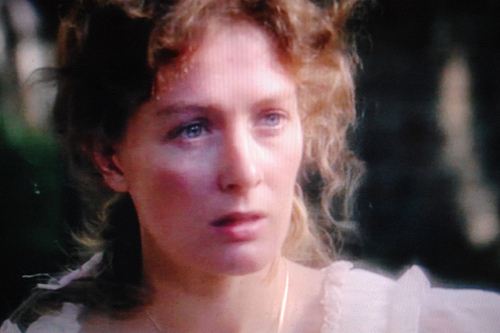
The Sea Gull (Sidney Lumet, 1968) Reading Sidney Lumet's book "Making Movies" he mentions that he got the idea to make this film of Anton Chekhov's play when working with James Mason, Simone Signoret, Harry Andrews and David Warner on The Deadly Affair in 1966.  Lynn Redgrave, sister of Vanessa, also worked on The Deadly Affair. By the time the financing was arranged and filming was set for Sweden, Lumet pretty much had his dream cast. Also, a couple times in the book. he announces "the theme" of The Sea Gull: "Everybody loves the wrong person."

No kidding...


He could also talk about the various strata of life stages and work-worth going on, of folks who are successful, or post-success, or craving success in their lives and how their attractions are reflected not only in their choices of who to imprint on (and they are choices), but also in how they regard other folks inside their strata and more importantly outside of it (Oh, this is getting complicated...and we haven't even gotten to the irony of success and getting to do what you want having nothing to do with happiness or self-worth, but, man, I keep digressing further and further here...).


The point is "everybody loves the wrong person" is such an obvious and simplistic break-down of The Sea Gull that you want to shake Lumet and say "anything else?"  Oh, it's there, and the actors are superb in playing it, but Lumet, as a director, imposes his technology on it in a ham-fisted way, choice of angles, edits, he's still directing for television and for a "rube" audience that might not get it if he doesn't beat you over the head with it, and as it's a character piece, any decision that the director chooses to show his hand (and the material's) just gets in the way of the communication between actors and audience.  We'll get to that in a second.


It's a less than idyllic retreat at the lake side getaway of Sorin (Andrews), who's in failing health.  His sister Irina (Signoret) has brought her lover, the successful writer Trigorin (Mason) with her to visit her son Konstantin (Warner), an aspiring playwright whose ambition for the stay is to stage an esoteric play about the death of the Earth with his love Nina (Redgrave, Vanessa), an aspiring actress, who lives on the neighboring estate. Sorin's place is being maintained by an out-of-work civil servant (Ronald Radd) and his wife (Eileen Herlie) and their daughter Masha (Kathleen Widdoes), who is pursued by Medvedenko (Alfred Lynch), despite that she is in love with Konstantin.   Konstantin is in love with Nina, though Nina is enamored of Trigorin.  The bailiff's wife is in love with Dr. Dorn (Denholm Elliott), whose affections are suspect. 

Things begin to get complicated when Konstantin stages his play within the play, an avant-garde work of the future Earth describing its decay at the hands of its now extinct population of human beings, a role played by Nina. Irina scoffs at the play, Trigorin dismisses it by his lack of of commenting on it, and Konstantin storms off, humiliated, while Nina, despite the group's apathy, is entranced with her time on stage.  It sets in motion the group's interactions as Konstantin, coveting Trigorin's success while critical of his work, and jealous of the writer's relationship with his Mother, increases his anti-social behavior, which further drives a wedge between him and Nina, who is drawn to Trigorin.

It's Lumet's presentation of the Konstantin's play here that frustrates and, frankly, its effect that keeps me from fulling embracing Lumet as a master film-maker.  How he presents the play is to keep the stage (and Redgrave performing her scene) out of focus, and keeping the far field across from a lake IN focus.  Dramatically and intellectually, one might defend it—the play within a play has Nature "speaking" and so maybe it makes some sort of sense to have the scenery in focus instead of the foreground action, or it's out of focus to reinforce that it is a "bad" play.  However, those contrarily focally challenged shots are intercut with the reaction of the people watching it and they are very much in focus, which creates this bizarre unease to the watcher of the film.  Is this a mistake?  Is there a "point" being made?  If so, why ruin it by interrupting it with sharply photographed reactions that call attention to the falsity of the effect?  And if it is to show that it's a "bad" play, isn't that communicated by the reaction shots?

It is this "going for a temporary effect," even on an intellectual level, at the expense of the experience of everyone in the scene as a whole, and the film's naturalism in toto.  Film is an illusion already, there's no point in calling attention to the fact, unless you want to just explode the whole intention of presenting a moment in time truthfully to the best of your craft.  And Lumet, especially, in his earlier films, has a tendency to just grand-stand at the risk of the film entire.

Still, it's a brilliant cast—Mason is a marvel here, and one should be grateful that we get a chance to see Redgrave's Nina (even if she might be a bit old for the part).  One cannot fault the amazing performances, even if the frame, pacing, cutting scheme might show them at a disadvantage.


Friday, October 11, 2013

The Sea Hawk (1940)

The Sea Hawk (Michael Curtiz, 1940) Thought I'd better get this one in before Captain Phillips dashes all our fantasies about pirates.  Or, in this case, "privateers."  

Captain Geoffrey Thorpe (Errol Flynn) is the captain of The Albatross, part of the Sea Hawks, a private fleet of Queen Elizabeth I (Flora Robson), taking "reparations" from the Spanish fleet of King Phillip II (Montagu Love—my new favorite actor name), who has plans to (dare I say it?) rule the World.


Well, not if Thorpe (rather loosely based on Sir Francis Drake in the Howard Koch-Seton I. Miller screenplay that has nothing to do with the Rafael Sabatini novel) can fire across their bow.  On a diplomatic mission to see the Queen, the ship carrying Don José Alvarez de Cordoba (Claude Rains) and his daughter Doña Maria (Brenda Marshall) is intercepted, fired upon and boarded by Thorpe and his all-too-eager crew.  Once there, they see that the oarsmen for the Spanish are former English sailors, who are freed and taken back to home and family.  Don José is allowed to keep his meeting with the Queen, but all puffed up and protesting about it, and he and the Queen's adviser, Lord Wolfingham (Henry Darnell) demand that Thorpe be arrested and thrown in the dungeon, or the brig, or the tower, or whatever gray-bar hotel they had in 16th century England.  The Queen puts on a stern public face, but is only too happy to let Thorpe command his ship to the isthmus of Panama to commandeer supplies from South America to the Spanish Armada.


But, the Queen's court has divided loyalties and Wolfingham is working with Don José to intercept Thorpe's plans, and the crew, once on land, and in a tinctured yellow setting, is trapped by Spanish forces and imprisoned as oarsmen on an enemy ship on its way back to Europe.  Can Thorpe and his men escape their fate and warn the Queen about the oncoming attack by the Spanish Armada?


What do you think?


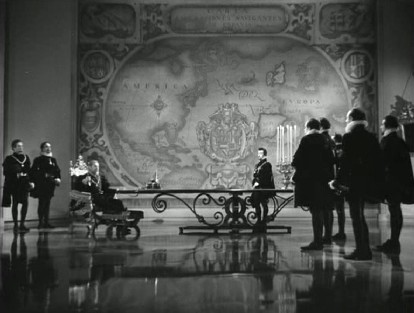
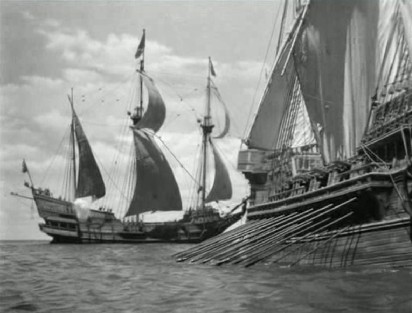
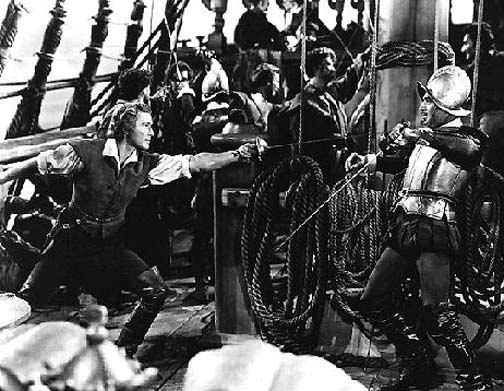
It's a grand epic, and director Curtiz, accustomed to filling the film-frame with detail has a lot of scenery to use.  The ships are big and impressive sets (especially when there are two next to each other), and the sea battles, some shots culled from Captain Blood (which is why this one is black and white and not Technicolor), are rousingly busy affairs starting with the chases, the cannon lobs, the swinging from ship to ship, then the sword-fights.  They're frenetic and fun, the stuff of our pre-Johnny Depp cultural memories, and blood-shed is kept to a minimum.  Curtiz and his designers also make the film feel a bit more gritty than one associates with a Hollywood studio film of the type (except of course in the Queen's court where everything is vast, spotless, and polished to the point of reflection).  But compare Curtiz's slave galley to the one Charlton Heston occupied in Ben-Hur, and although the effort displayed by the rowers in the latter seem more strenuous, the conditions in the former are far more depressing.  And Curtiz keeps it moving, no dawdling over the ironic dialogue or key sequences, as there's another just around the cut to get to.  The cherry on top is one of Erich Wolfgang Korngold's greatest film-scores, which in itself has an awful lot of swash-buckling just in the playing.  


Try to see the longer version, though.  For awhile, The Sea Hawk had its final scene plucked—The Queen's speech before the attack of the Spanish Armada, which may be the strangest speech a Queen has even been given: 


And now, my loyal subjects, a grave duty confronts us all: To prepare our nation for a war that none of us wants, least of all your queen. We have tried by all means in our power to avert this war. We have no quarrel with the people of Spain or of any other country; but when the ruthless ambition of a man threatens to engulf the world, it becomes the solemn obligation of all free men to affirm that the earth belongs not to any one man, but to all men, and that freedom is the deed and title to the soil on which we exist. Firm in this faith, we shall now make ready to meet the great armada that Philip sends against us. To this end, I pledge you ships - ships worthy of our seamen - a mighty fleet, hewn out of the forests of England; a navy foremost in the world - not only in our time, but for generations to come. 
"The earth belongs not to any one man, but to all men , and that freedom is the deed and title to the soil on which we exist."  What do mean "we," Queen E?  Fact is, Elizabeth didn't say this.*  But, as this film was released in 1940, it serves as its own little shot across the bow to another "one man" who wanted the map, not to be of Spain, but of the Third Reich—Herr Hitler.   The film, when first released, had that bit of rallying to it, in the days before The Blitz.  After the war, prints had that speech removed as unnecessary (and probably anachronistic, and not in a Queen's spirit.   


"...vast, spotless and polished to the point of reflection."


* She ACTUALLY said this: "My loving people, we have been persuaded by some that are careful of our safety, to take heed how we commit ourself to armed multitudes for fear of treachery; but I assure you, I do not desire to live to distrust my faithful and loving people ... I know I have the body but of a weak and feeble woman, but I have the heart and stomach of a king, and of a King of England too, and think foul scorn that Parma or Spain, or any Prince of Europe should dare to invade the borders of my realm."  "My" realm.  See that?  "My".

Thursday, October 3, 2013

Suddenly, Last Summer

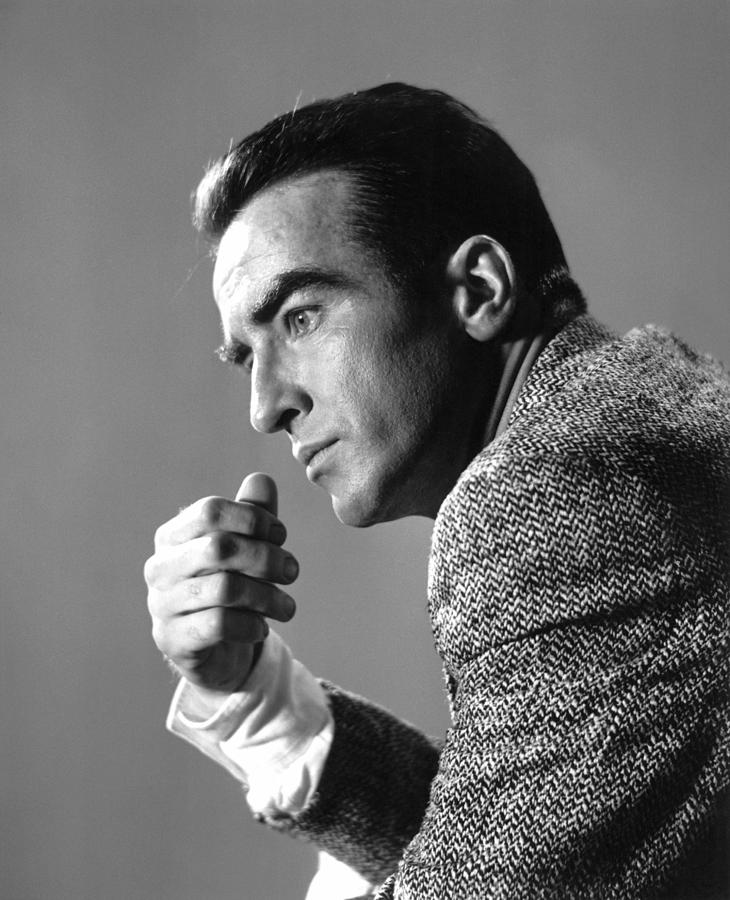
Suddenly, Last Summer (Joseph L. Mankiewicz, 1957) Tawdry gothic-noir that was so compromised by concessions to the moral powers-that-be that nobody associated with its production ended up liking it, not the original author of the play, Tennessee Williams, not his co-screenwriter Gore Vidal, nor the director Joe Mankiewicz.  Pity, as its an example of how Mankiewicz could juice up material directorially in a truly unsettling way when given the chance.  And he had a great cast in Katherine Hepburn, Montgomery Clift (even in the semi-drug-addled condition he was in), Elizabeth Taylor and Mercedes McCambridge.

What's missing is the person everyone talks about—the late Sebastian Venable, (poet and narcissist) who died (suddenly) last summer, ostensibly of a heart attack, as the whispers state, but has nothing to do with the truth, which is damaging enough that his doting mother Violet (Hepburn) will do anything to keep it secret, even if it means lobotomizing her niece Catherine Holt (Taylor) who witnessed his death and has blanked it from her memory. Mother Violet entreats the local psychiatric hospital and its brilliant lobotomist Dr. Cukrowicz (Clift) to see if Catherine is a suitable case for treatment, with the promise of a large endowment if she can be "cured."  "Cured" of the memory stuck in her head, and if not cured, silenced, whether institutionally or medically.


But what those memories are of that led to Sebastian's death "suddenly, last Summer" are only implied for the first 3/4 of the movie.  In the first couple of movements battle lines are drawn as Cukrowicz first gets Vi's version of things (as he investigates why she wants to donate so much money to his institute), then, once questions are raised, tries to coax it out of the mostly comatose Catherine without success.  The gist of it is that Catherine, at Sebastian's request, had replaced his mother as his travelling companion on his world-travelling jaunts from which he would produce his yearly published book of poems.  That Summer, in the town of Cabeza De Lobo, Sebastian died, leaving no book and no issue.


Except for Catherine.  The play's third scene is the explanation in the drawing room scene if this were a detective novel, where Catherine, under the influence of sodium pentathol reveals all (from her point of view), and Mankiewicz goes to directorial town (his point of view) in a weird silent flashback that threatens to crowd out Taylor from the frame, and that veers wildly from realism to German expressionism to surrealism within the course of its run, containing some of the most bizarre imagery just outside the horror realm (or Salvadore Dali's dream sequence from Spellbound).


To tell you what it all means ruins the ending, except that the movie itself doesn't come right out and say anything, owing to the tenor of the times (meaning you couldn't be) and to the so-called community standards that this particular era of film-making was challenging.  This was before ratings systems—G, PG-13, M, R, X and NC-17—but there was The Legion of Decency, over-run by the Catholic Church, that crossed itself, said five "Hail Mary's" and then banned your movie from being advertised.  You couldn't talk about homosexuality, procurement, prostitution, drug use, pedophilia, and cannibalism except in closeted code, and the "Truth Serum" sequence obfuscates with what's going on to the point of obtuseness.  Williams wasn't entirely guilt-free of this; he was just as capable of pulling the shade over a naked light-bulb or turning pleurosis into "blue roses"—he made an art of it.  But here, the mother-love perversity at the heart of so many of his plays runs on the hysterical side, and try as he might Mankiewicz can't make more of the empty book of poems than he can. All he can do is try and push Hepburn over the brink of sanity, after she's been doing wheelies near the edge the entire movie (Vivien Leigh nearly played the part; can you imagine?)

How far we have come since then—except, of course, for the cannibalism part (unless you were voted to the House of Representatives in 2010).

P.S. there's an excellent breakdown of the film, courtesy of The Last Drive-In, that did an excellent job of pulling screen-caps-two of which I cribbed above.

Liz Taylor glamour shot draped over the rail of an asylum


Wednesday, September 11, 2013

The Siege

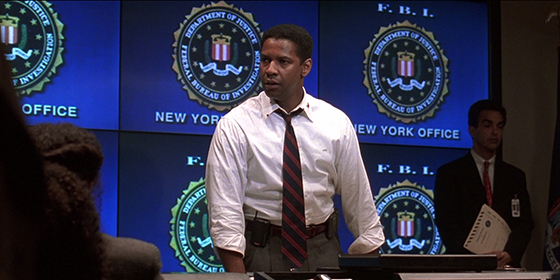
The Siege (Edward Zwick, 1998) Creepily omniscient film made three years before 9/11 (notice the WTC in the poster) in which terrorism comes home to roost in America, specifically with well-timed, somewhat improvised suicide bombers blowing up buses, theaters, and populous areas in the heart of New York City.  Zwick (and screenwriter Lawrence Wright, with dialogue tweaks by Zwick and Menno Meyjes) showed us something that Americans didn't want to see (and believed impossible): America under terrorist attack.   

No one went to see it, and critics attacked it as being xenophobic and unrealistic.  After 9/11, it was reality.  And one of the last films to feature radical Islamists as terrorists.  Now, studios shy away from such depictions because, in their infinite bravery, they're afraid of reprisals. 


But, here, they weren't, not even when the Arab-American Anti-Discrimination Committee and the Council on American-Islamic Relations started picketing the theaters, for the film being offensive and promoting stereotypes of Islamic terrorists.  


Evidently Al Qaeda didn't get the communiques.  Might've helped "the cause."

And despite some lip-service to Islam and Arab-Americans being just as aghast at terrorist activities and giving their full cooperation with the investigation—and Tony Shalhoub plays a Islamic Arab on the FBI task force—one gets the distinct impression that some of the film's best friends are Arab-Americans.  


But, that's the sideshow.  


What the film boils down to is not who's doing what to whom, but in meeting the enemy and it being ourselves.  New York becomes the target of accelerating attacks when a bus is hijacked with no demands—and no explosives it turns out, the passengers are merely splattered with blue dye. The FBI's lead investigator Anthony Hubbard (Denzel Washington) thinks it's more than a prank, or, as it's dismissed, "assault with a deadly color."  He knows two things that worries him: "they" know explosives and "they" know the FBI's response time now.


Inserting herself into the investigation is Elise Kraft (Annette Bening), an NSA investigator who doesn't like to share information, as much as take it. She and Hubbard spar over jurisdiction and ownership.  The FBI is new to the investigation and Elise has been at this for quite some time. "In this game, the most committed wins."  While they're bickering and throwing down threats, another bus gets hijacked, and negotiations begin.  But the results are different, attracting the Feds, especially the Army in the person of General Devereaux (Bruce Willis), who we have seen earlier overseeing the investigation of an Arab cleric (of whom the United States does not officially know the whereabouts).  He's nosing around just to make sure that, although the NSA and FBI seem to bungling and out of their depths at this point, his operation isn't compromised. 


But, the atrocities accelerate and get bigger—The FBI's New York headquarters is attacked, resulting in 600 victims, many of them Hubbard's colleagues, and at that point, the President declares Martial Law. 


Despite his earlier protests in committee ("The Army is a broad sword, not a scalpel. Make no mistake, Senator. We will hunt down the enemy, we will find the enemy, and we will kill the enemy. And no card-carrying member of the ACLU is more dead set against it than I am. Which is why I urge you - I implore you. Do not consider this as an option. Trust me, senator - you do not want the Army in an American city.") Devereaux heads up the operation, cordoning off Brooklyn and gathering up all Arabic-speaking young men and detaining them in Yankee Stadium.  Profiling isn't second-guessed, habeas is suspended, citizens are marched out to camps, and torture is the order of the day—specifically water-boarding.


Must have seemed pretty nightmarish in 1998.  Now, that the "ethics" of water-boarding have been discussed endlessly by the cable-news pundits (to the point where I want to drown them), Guantanamo (or the more friendly "Git-mo!") has been holding prisoners for...how many years now?...we've been living with no-fly lists, and even gone to such silly extremities as taking off our shoes at airports (while "they" have gone the way of planting underwear bombs) over the last eleven...ELEVEN...years.  And a lot of people have died, and Americans—loyal Americans—are coming back to a backlog of unanswered help, and we're now losing more of them to suicide (as we did in Vietnam) than to the actual war.


The crackdown will be televised

"We have met the enemy, and they are us."  That was the message of The Siege and no one listened.*  And here we are, on the anniversary of 9/11, and the longest war in our history, and conflicts have not been resolved.  They're only getting more complicated.  The situation has gotten even more fractured, and the wars are internal as well as external, looking more like the Mexican stand-off that ends the film. 
Now, here we are, a dozen years after the fact, and there are folks amidst the current host of Syria chatterers, who want to bomb Damascus, take out their leader, and replace him with the rebels opposing him, and in the glib words of Willis' commander "be back at base in time for the play-offs."


Trouble is, some of the factions among the rebels are Al Qaeda, who we've been fighting over these last dozen years and trillions of dollars.  As the movie says "It's easy to tell the difference between right and wrong. What's hard is choosing the wrong that's more right." 


Orwell is in his grave...creating his own spin zone.


* Anthony 'Hub' Hubbard: [upon learning Devereaux's plans to torture Tariq] Are you people insane? What are you talkin' about?
General William Devereaux: The time has come for one man to suffer in order to save hundreds of lives.
Anthony 'Hub' Hubbard: One Man? What about two, huh? What about six? How about public executions?
General William Devereaux: Feel free to leave whenever you like, Agent Hubbard.
Anthony 'Hub' Hubbard: Come on General, you've lost men, I've lost men, but you - you, you *can't* do this! What, what if they don't even want the sheik, have you considered that? What if what they really want is for us to herd our children into stadiums like we're doing? And put soldiers on the street and have Americans looking over their shoulders? Bend the law, shred the Constitution just a little bit? Because if we torture him, General, we do that and everything we have fought, and bled, and died for is over. And they've won. They've already won!
General William Devereaux: Escort him out.

Tuesday, September 10, 2013

The Spectacular Now

The Sins of the Sons of the Father
or
What if the Hokey-Pokey IS What It's All About?

(500) Days of Summer was one of my favorite movies a couple years back, a smart combination of naiveté, winsomeness, and cynicism about the whole "love" thing...especially from the needy/selfish male point of view, and was very charitable to the elastic female point of view...something you wouldn't find in your basic Woody Allen (or any male-written) love story.

The director, Marc Webb is off (er...) web-slinging on the re-booted "Spider-man" series, but writers Scott Neustadter and Michael Weber have done a new screenplay of Tim Tharp's National Book Award finalist The Spectacular Now, directed by James Ponsoldt, who's less flashy than Webb, a little less assured technically (especially in the sound department), but has a great casting eye as he's gotten a spectacular ensemble cast for this film.

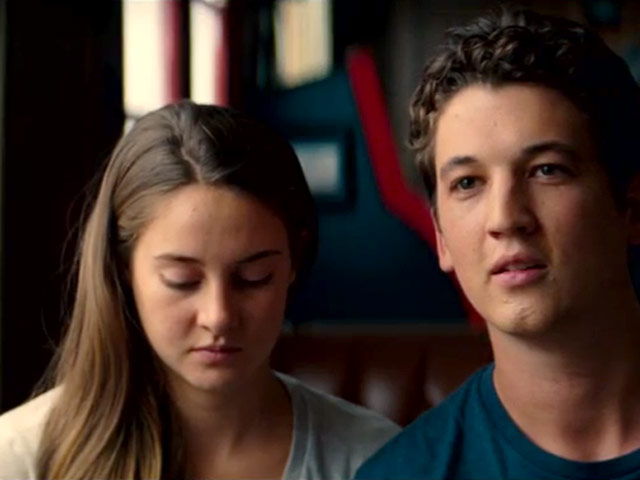
When we first meet Sutter Keely (Miles Teller, who is brilliant in this, his face morphing between man and boy with split-second speed), he's filling out a college entrance question: "Describe a misfortune, hardship or challenge in your life: How did it affect you, and what did you learn from it for the future?"  Sutter doesn't even hesitate: "Dear Dean of Admissions: Up until yesterday, I had the best fucking girlfriend in the world.  Sorry, I probably shouldn't say 'fuck' in this..."


It's true.  Sutter's just gone through a bad break-up with Cassidy (Brie Larson), who, in his eyes, was the perfect girlfriend and they were the perfect couple, the hit at every party (and there are a lot of them), but it's all come crashing down when she says "I'm done!" over Sutter helping his buddy get a girl, by giving a couple of fellow high-schoolers some of the ice-cooler'd beers he regularly stashes in his trunk.  Sutter's good for that, but for Cassidy that's not good enough.  They're through, so over and done.


Miles Teller, the breakout performance of The Spectacular Now
Cut to the title.  Next thing we know, we're looking up at a sun-blocking silhouette saying: "Hey!  Hello?  He-lllooo!  Oh my God, you're alive!"

It's 6 am.  He's passed out on a lawn of a house he's not familiar with, his car is nowhere to be found, and standing over him is Aimee Finecky (Shailene Woodley, proving that her instinctually felt performance in The Descendants was no fluke), who is out doing her Mom's paper route, only to find a body on the way.  They know each other from school.  Aimee helps Sutter up, and the two continue the route with two missions: delivering the papers and looking for his car.  The goals are short-term, which suits Sutter just fine.


It's clear early on that Sutter is a boat without a rudder (or even a paddle), and the women in his life, be they his Mom (Jennifer Jason Leigh, welcome back), Cassidy or the new Aimee, keep him focused and on the true.  Or as true as Sutter will let himself be (and Teller has a wonderful ambling gait, which I started calling "The Sutter Strut" that is both assured yet not going altogether fast, keeping anything approaching at a mesure pace).  Fairly early on, we learn that Sutter may indeed be "the life of the party," but he's also considered a flake and unreliable.  A heated discussion in the family kitchen produces a "Sometimes, you remind me so much of your father..." comment (and not in a complimentary way) from his mother and he's annoyed because a) his father having left the family early with no subsequent contact leaves a void about how that should be taken; and b) he harbors the notion that the reason Dad's gone is that it's Mom's fault, all evidence to the contrary being missing.  In the meantime, and for the moment, he is spending his critical senior year in High School marking time, regretting Cassidy and "hanging out" with Aimee.


"Dude, she's not a rebound!" he assures a buddy, but it's pretty clear she is, at least at the start, using her as an excuse to go see Cassidy at a kegger. It's a quid pro quo kind of arrangement: she can help him with algebra, he up's her social quotient—she's never had a boyfriend and he's an established arm to hang on. But before long, the conversations start to get deep, the facile conversations ("what's your 'thing?'") turn personal, the "maybe-I'll-see-ya's" become orchestrated "bump-into's" and the period apart starts to become a noticeable measure of time.  They're starting to fall into something: for her it means someone to share her plans for the future and college; for him, a long-term commitment is asking her to the prom.


She already knows what he's just beginning to suspect.

Now, before we go too far into this, let me say what a joy it is to watch Teller and Woodley riff off each other.  The lines are established, sure, but the way they stumble, falter, eke out, and fly from each other's mouths colliding in awkward crashing cadences and emotional ranges between feigned self-assurance to tip-toeing fear is truly something to see and enjoy.  Both actors are top of the line working with the other actors, but, with each other, there's a yearning sparring that feels like the magnetism of puppy-attraction.  If it ain't convincing as love, it sure is convincing as fresh conversation that feels real (and spoken for the first time), and is as fine as any movie bantering I've seen in years between young actors.*

So, with all that raw talent going for it,** where does the movie go?  There's been so much writing here, one worries that too much is going to be given away, and any particulars in subject matter and how it is revealed will result in the spoilage of any sort of subtle enjoyment of the film and how it subtly ingratiates and glad-hands you into darker territory..  It skirts Afterschool Special territory, but does it in so circumspect a way that you may not even be aware of The Problem, until you are confronted with it in the same way Sutter confronts it, in reflection, but he sees it, not when he looks in the mirror, but when he is especially focused on something other than a short-term goal, but rather on the realization of a dream.  Sutter has no depth, except in what he avoids, and he only realizes it to his horror and imagined shame.  The Spectacular Now includes author Tim Tharp's original ending for the book, but the screen-writers give Sutter an "out" to end on an up-beat note in the grand Hollywood "bauble" tradition, but at least they take a page from Mike Nichols' play-book, and don't make it a comfortable one, but leaves him...and the audience hanging on a precipice, leaving the Spectacular Now and entering an Uncertain Future.

The Spectacular Now is a Matinee (but I could change my mind in the Future) 


"Stumble, falter, eke out and fly..."- Teller and Woodley


* Come to think of it, they remind me of the Andrew Garfield-Emma Stone hemming-hawing in The Amazing Spider-man.

** And I haven't even told you about Kyle Chandler, who plays against "type" and does it so unnervingly well, you want to start a barroom brawl with the guy.

Friday, August 9, 2013

The Sin of Harold Diddlebock

The Sin of Harold Diddlebock (Preston Sturges, 1947) (aka Mad Wednesday, 1950) Sturges' first film out of his Paramount Studios contract, and with his film company California Films in partnership with millionaire polyglot Howard Hughes. Sturges adapted his script idea "The Sin of Hilda Diddlebock" (about a young girl's misadventures in Hollywood) for a favorite silent film star, Harold Lloyd—who was under the impression that he'd get to direct some sequences.  

It must have been "going around," as Sturges was under the impression he had free reign over the film.  But when it opened "soft," Hughes took over control of the film, re-editing it (in his painstaking way), finally releasing it in 1950 as "Mad Wednesday" (because a title with "sin" in it might not appeal to audiences throughout the nation—although it was probably that very enticing nature that led Sturges to title it that way in the first place).


The version we saw is the Sturges version, in desperate need of some sort of care and restoration—the black and white images are soft and dark looking, like it was shot in perpetual twilight, several splices mar the flow and interrupt a couple jokes here and there, and making one want to see the mangled version just to see if it's (ironically) in better shape.


It's hard to determine what "sin" Sturges is talking about. The film starts with a sequence from Lloyd's The Freshman (made in 1925) intercut with some recent scenes that act as bridging sequences as Lloyd's water boy manages to score a winning touchdown, impressing a business owner who (in new scenes filmed by Sturges) hires him on the spot.  Sturges keeps the sequence silent and primitive to mesh with the earlier filmed sequences and Lloyd looks young enough to pass for his younger self.


But, that's where the film starts.  Diddlebock's moment of glory results in his getting a job as an accountant for the man's firm.  Twenty years later, he's still there, passed by by other employees, including a series of sisters he admired and all moved on, leaving the youngest as Diddlebock's work colleague.  He's laid off, given a severance, and kicked out without prospects and no goal posts to run towards.


Already, the film is a commentary on American business, its spoiling of potential through pigeon-holing and compartmentalization, and the efficacy of "glory days."  But this is the first ten minutes.


Out on the street, Diddlebock gets way-laid by a racetrack tout (Jimmy Conlin) who sees him as a case of arrested development—one with a lot of disposable income—and after a two decades recess, Diddlebock goes back to school, as taught on the street.  First step: a bar, where he has his first adult beverage, an event that inspires the bartender (Edgar Kennedy)—"You arouse the artist in me"—to create a grand concoction of mixology, the sipping of which elicits a primal scream somewhere between the ubiquitously used red-tail hawk cry and a high-pitched ape roar.  A couple of toots of those and it's a trip to the barber's for a complete make-over, including a garishly nightmarish checkered suit, and the investment in short-term futures at the horse track, which pays off huge dividends, further inspiring high living, a blackout for an indeterminate length of time, and the investment in a defunct circus, including a menagerie of animals and one particularly cranky male lion that becomes Diddlebock's nearly constant companion and chief collateral throughout the rest of the movie.  Hilarity—and Sturges' unique brand of hysterical panic—ensues.


It's the maddest of screwball comedies with Diddlebock a cyclone of disruption wherever he goes, trying to unload the results of his bleary recent past and only finding himself with more problems, more prospects and an ever-growing number of acquaintances...the freak accidents of American success.

Even with Sturges' frenetic timing, the results are a bit off in tone and pace, as if somewhere along the way, the directorial edict became "faster..." (which, for Sturges, approaches the super-sonic).  Still, even though its uneven, it's still full of bizarre child-like invention and scrupulously drawn character types.

The dialogue is snappy and so is the lion—a couple of times making a lunge for LLoyd's hand, while the plucky silent star (probably to avoid further takes with the animal which he was terrified of) keeps going with the take, not missing a beat.  Amazing.

No, it wasn't successful; Sturges might have lost some of his homespun touch after so many frustrating years in Hollywood, despite his successes for Paramount.  Parallels can be found with Diddlebock, who hits the jackpot and keeps on hitting, despite being beset by day-to-day "small stuff" that he has to sweat.  But Sturges can still mine comedy gold out of his self-analysis, as he did with Sullivan's Travels.  He would continue to struggle, while still walking the thin line between message and entertainment.  He would only make three more films.


Tuesday, August 6, 2013

Steamboat Bill, Jr.

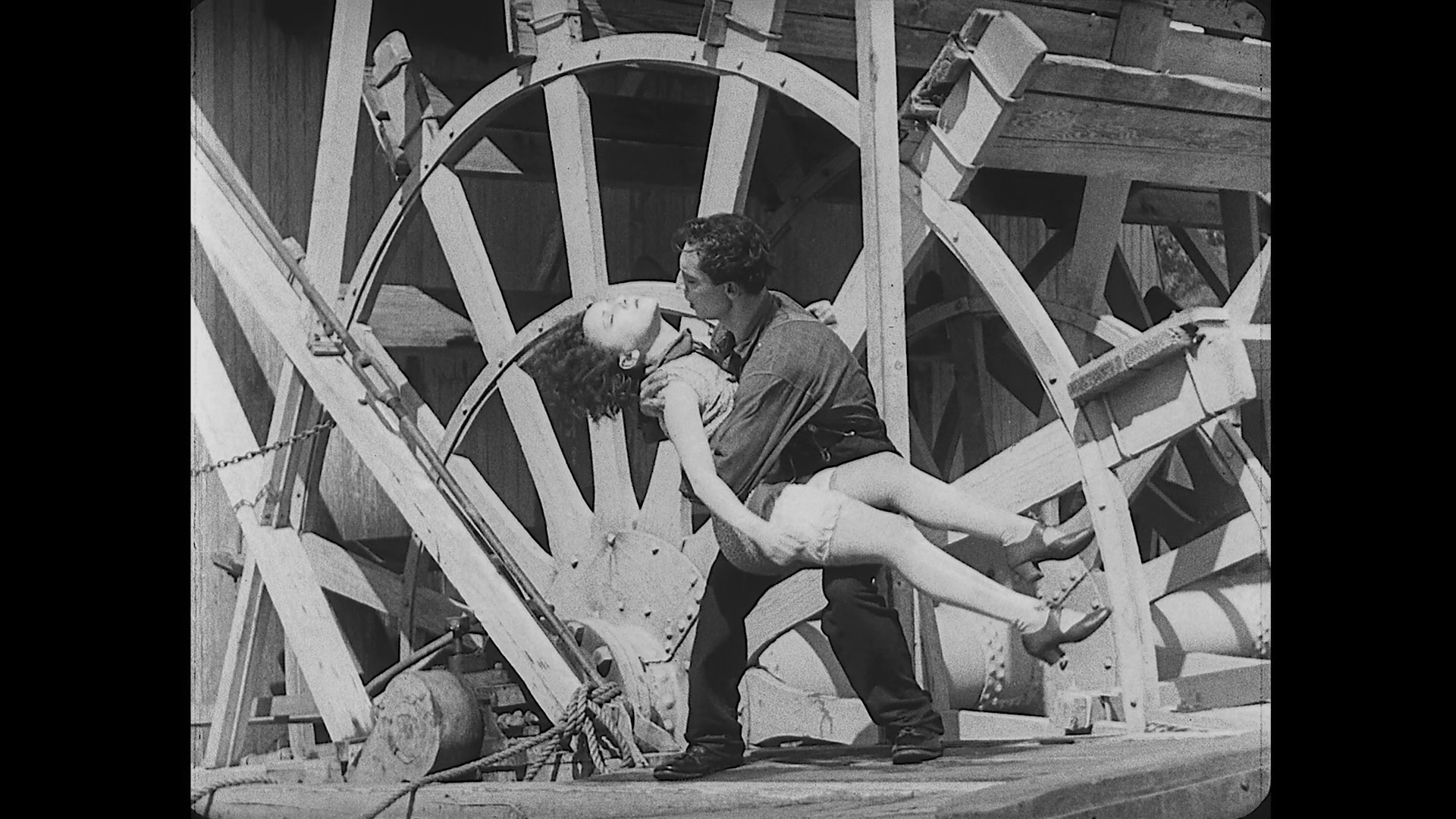
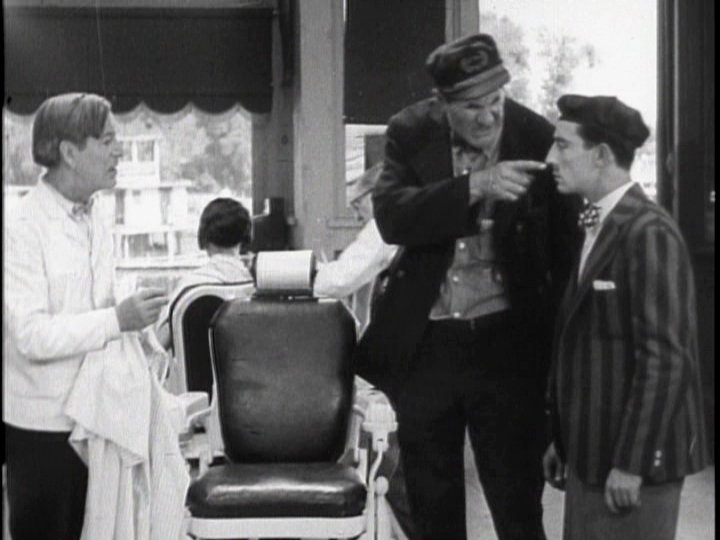
Steamboat Bill, Jr. (Charles Reisner/Buster Keaton, 1928) Keaton's last film as an independent (before signing onto an ultimately disastrous contrect with M-G-M) is a variation of "Romeo and Juliet," but instead of bickering families in Verona, Italy, it's two riverboat owning-fathers in the city of River Junction who object to William Canfield, Jr. (Keaton) and Kitty King (Marion Byron) finding any happiness together.

At 71 minutes, this one is feature length (for a silent film), with the story revolving around the son of "Steamboat Bill" coming back from college to spend time with his father, who he never knew growing up.  The rough-and-tumble paddle wheel captain is chagrined to find a slight, mustachioed ukulele player getting off the train, with the two not even recognizing each other for an entire sequence of the film.  Bill's hopes of Bill, Jr. helping his lackluster boat business try to stay afloat are soon dashed, and he's even more horrified that junior is fond of the daughter of a rich man, J.J. King, who's latest venture is a fancy riverboat business that attracts riders away from his own.


The two riverboat barons try to keep the two apart, and barring that, try to sink each others' businesses.  King gets Bill's boat condemned, and the flinty steamboat captain's subsequent rage gets him incarcerated, leaving junior to try to spring his father which ultimately fails in execution, and lands the son in the hospital.


Keaton, given a window of opportunity, bringing the house down.

Then, the winds come.  

In one of Keaton's (and cinema's) most elaborate stunt sequences, a typhoon hits River Junction wreaking havoc and destroying buildings, tossing denizens around as they scramble for shelter—all except for young Bill, still unconscious in a hospital...until there isn't one, anymore.  It has been ripped from its foundation by the tornado winds that come down upon a town like a deus ex machina to bring the warring parties together in the end.  It's also one of the most elaborate of the Keaton constructions that dominate the last acts of his films, where story is abandoned and the film accelerates to its final resolution by throwing at its hero any number of hurdles and obstacles that he must dance, pivot, and somersault up, over, around and through.  This one is a marvel, using high-powered wind machines and a massive crane, the river town is calved, halved, blown away and blown down, depending on which direction opposite to it Keaton is propelling through.  Even without the abundance of splintering buildings, Keaton's stunt work (against the push of six powerful wind machines) is still thrilling to watch, as he bends, corkscrews and leans impossibly forward in an impossible effort to stay on his feet.

It's thrilling, ingenious, often surrealist stuff to watch, even more amazing when you realize that Keaton did the stunts himself, designed the sequence and directed it, a tour de force of Nature, real and imagined, on all fronts.