Tuesday, February 12, 2013
Stand Up Guys
or
"...End of Story"
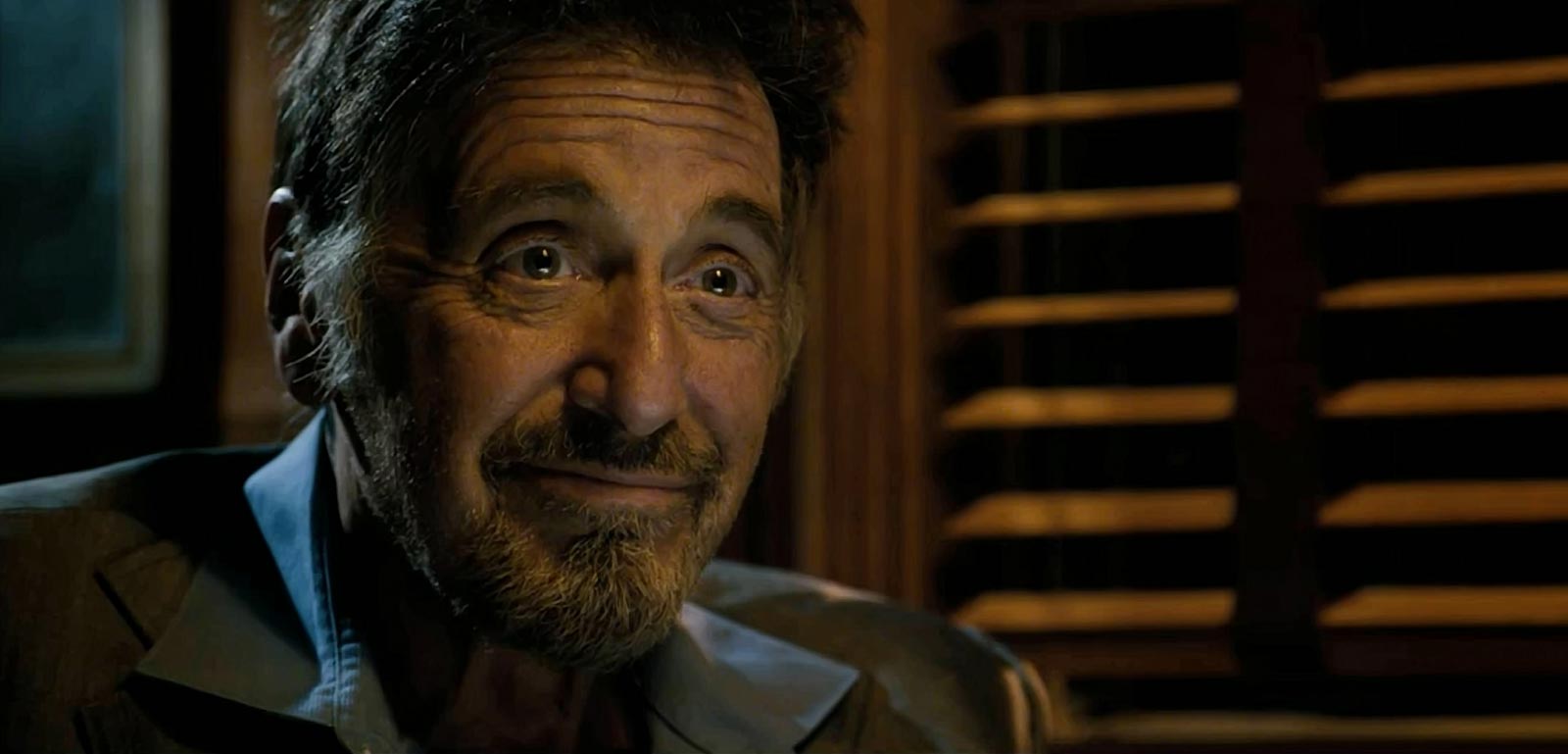
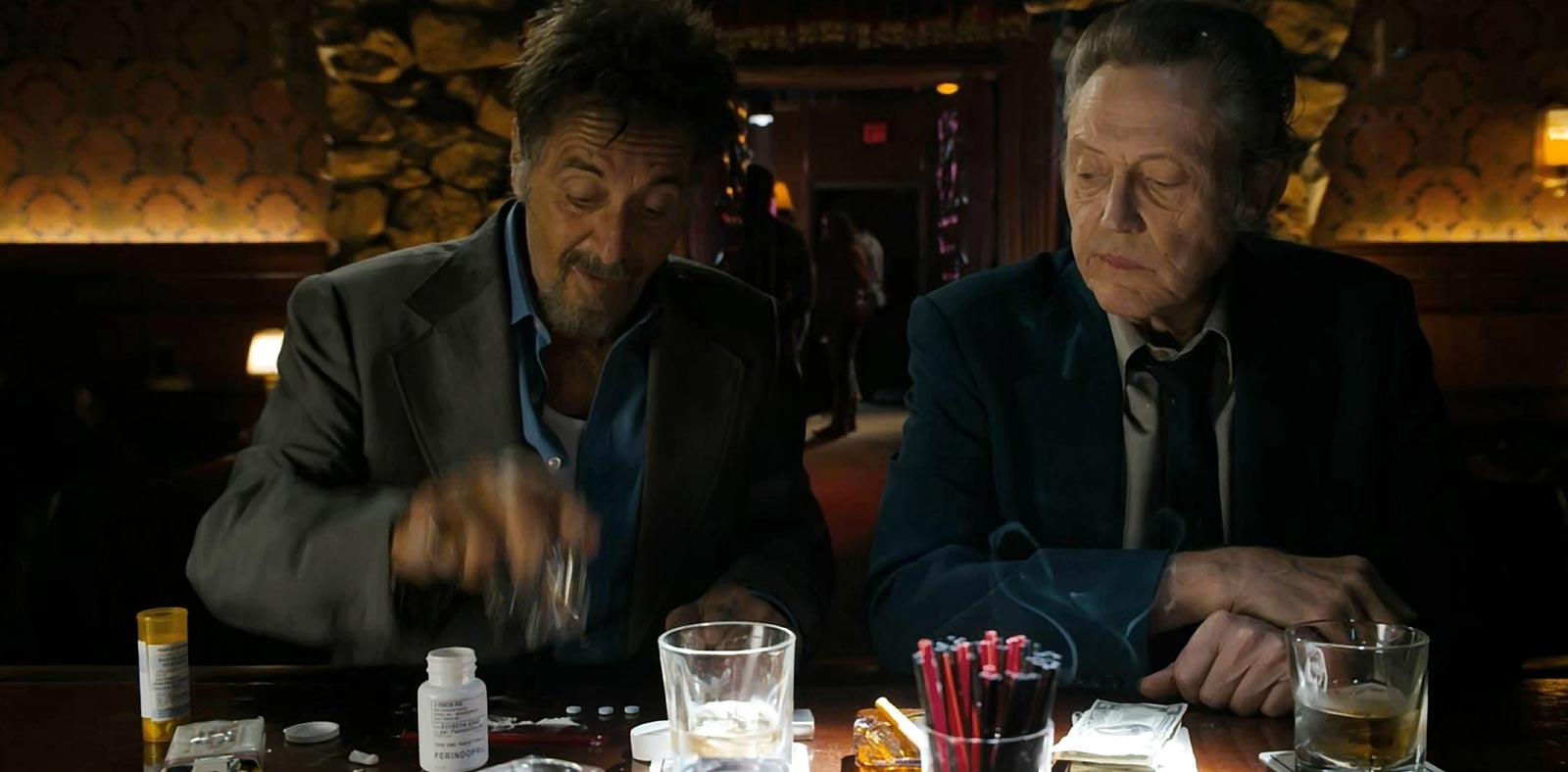
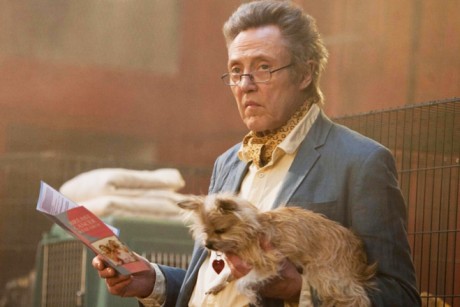
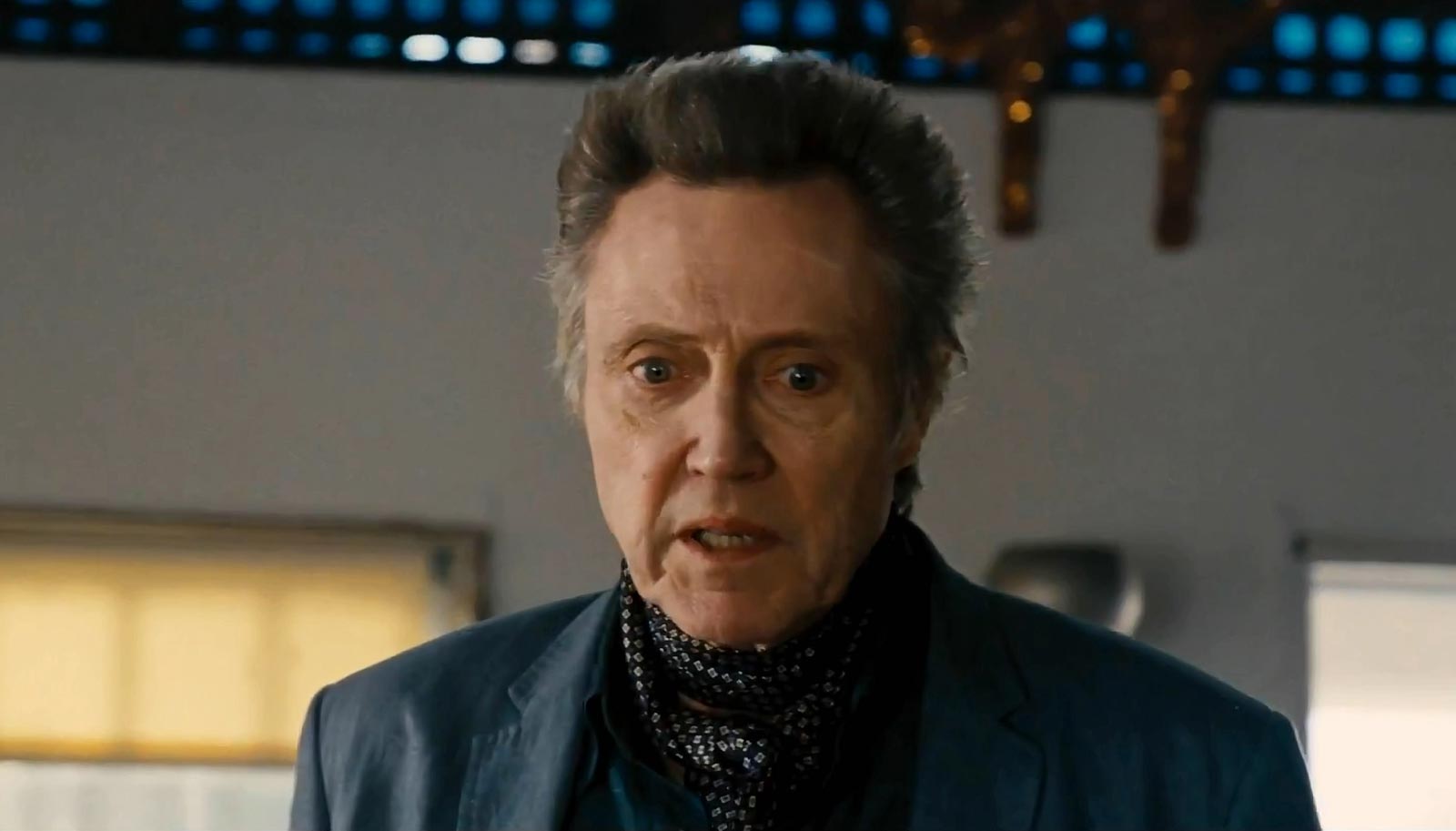
Oh, man, it's painful, the first few minutes of Stand Up Guys, the new gangster-with-gags film directed by Fisher Stevens. Valentine (Al Pacino) is being released from prison after 28 years, for his part in a robbery that turned deadly. On the outside, waiting for him, is Doc (Christopher Walken), who was also part of that robbery but managed to stay out of the gray-bar hotel for reasons unknown and is now "retired," spending his free time being a diner habitué and painting landscapes.
Doc takes Val home to his apartment, which the ex-con compares unfavorably to the accouterments he has recently vacated. At this point in the movie, Val announces that he wants "to party," at which point I resisted an urge to get up and get popcorn. It wasn't going to be pretty, whichever way it was played, comedy, bathos, or weirdness. The obligatory visit to a whorehouse is somewhat lightened by Lucy Punch (a Brit actress playing a longish Island accent) as the daughter of the madam these guys used to know in their and her prime.
Things don't go well (nyuk, nyuk) so Doc and Val rob a drug store (very easily)—Val gets little blue pills and proceeds to take too many of them, and Doc has some expensive prescriptions he needs to supplement—complications arise, so to speak, which requires a trip to the hospital, where Julianna Margulies provides an "E.R." flashback and informs the two about her father, their former getaway driver, who's stuck in a nursing home.
Alan Arkin plays that character, and it's at that point that the movie picks up with a couple quick chase sequences and a needed pivot point for the Pacino-Walken dynamic. The movie gets better with Arkin's presence, even though one can't say it improves. But Arkin's added energy manages to lift the movie over the speed-bumps that the script-cliché's drop in the path. Where Pacino is manic and Walken is passive, Arkin manages to bridge the gap (and their vocal pauses) with a complacent nervousness that bounces off both actors entertainingly.
It's unfortunate watching, really. To see these gold-standard actors (all Academy Award winners, not that that really matters) reduced to mining what they can out of a vein of tin is disheartening, no matter what smiles they can produce out of it. Something could have been done, recent examples of the story-form being In Bruges and Going in Style.* But just the casting of these young-now-aging turks can't make this one any more than it is, a faded half-hearted comedy about aging gangsters that might have been enough to re-team Jack Lemmon and Walter Matthau back in the day.
This is a minor, minor, minor film with major talent in it that eventually makes the most of the material, but can't elevate it into something worthwhile or even makes a statement. And, frankly, I'm getting too old for movies like this.
Stand Up Guys is a Rental.
* Martin Brest's 1979 comedy-drama about over-the-hill retired thieves trying to supplement their meager Social Security—Pacino surely knew about it, as it starred his mentor, Lee Strasberg.
Saturday, February 2, 2013
The Anderson Tapes
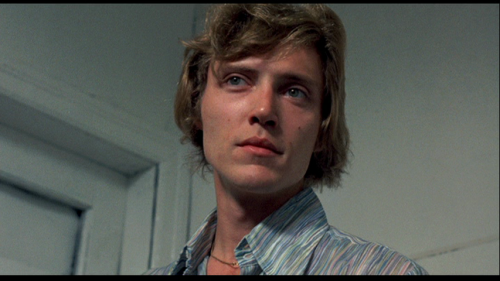
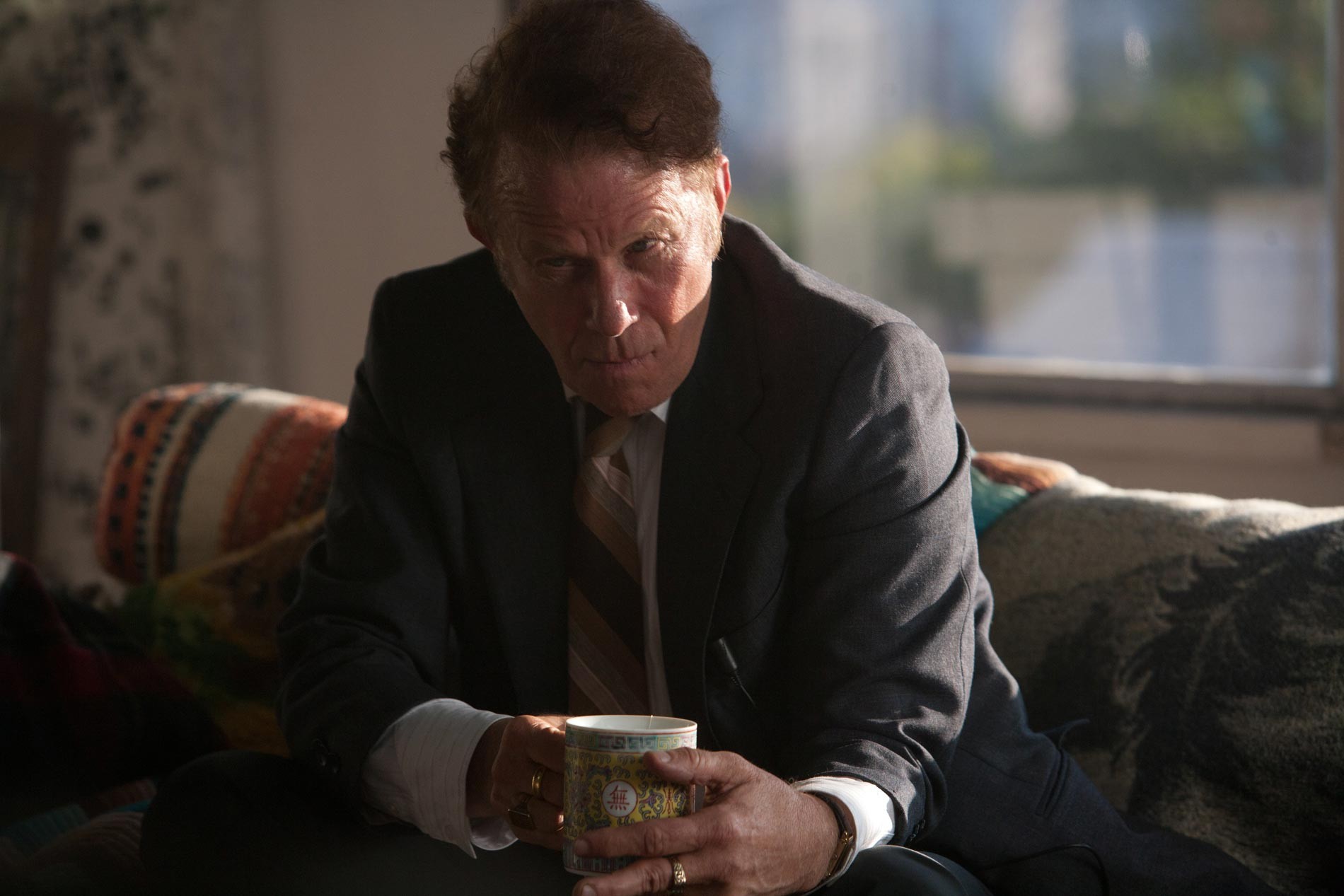
The Anderson Tapes, however, was a different creature, entirely. An extended heist film, in which Connery, Martin Balsam, and (introducing) Christopher Walken participate in what must be the slowest caper in history, the casing of a luxury apartment building in New York City. Connery plays Duke Anderson, a con just released from a ten year stretch in prison, who can't wait to do another score. The inspiration is his girlfriend Ingrid (Dyan Cannon), a high-end call-girl, who has been set up in a luxury apartment by another man.
But, things have changed in the ten years since Anderson was free. Unbeknownst to him, he is under constant surveillance by three different agencies: Ingrid's apartment is bugged by a private detective hired by her "keeper;" the FBI is tracking Black activists, whose headquarters is at a flop where the thieves meet; the IRS is phone-tapping the Mafia Boss (Alan King), who is funding the heist; and the Bureau of Narcotics is keeping tabs on one of the group's members. All of these groups are keeping a running record of the planning of the break-in...but none of them are coordinated or sharing information, and the surveillance work is so concentrated on their individual subjects, that nothing is put together to prevent it from happening. It's hard to determine exactly what is being decried here—that our privacies are being invaded to such an extent, or that this intelligence isn't being cross-referenced to prevent actual crimes and is...dumb. One gets the impression that there is no stance being taken, rather it's to present A Big Irony, that undercuts how events play out, eventually. But, that was Lumet's specialty—he frequently spaced his flat-out movie drama assignmnents with "Ironies," (as opposed to "Comedies") that, their point having been made half-way through the movie, wear out their welcome by the often dissatisfying end of the tale. Everybody looks a little stupid here: the agencies, for their tunnel-vision, the crooks for their own utter lack of surveillance as the crime goes about, and the NYPD, whose very elaborate storming of the apartment complex is literally over-the-top.
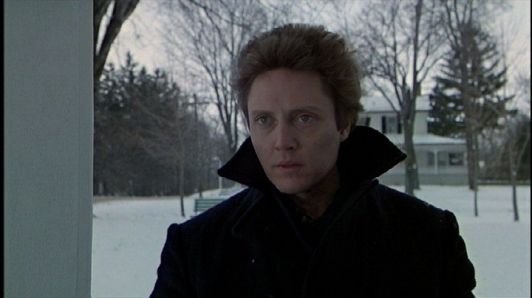
Lumet was not the best director for comedy as he had a tendency to sledge-hammer things—like Martin Balsam's mincing interior decorator/antiques smuggler (yeah, yeah, "it was the times," I suppose), but there are some joys to be had, besides Connery doing something different and Walken's debut: appearances by Max Showalter, Margaret Hamilton (her last role), and "crazy old lady" Judith Lowry, as well as Ralph Meeker and SNL pioneer Garrett Morris as Gotham police.
Lumet would hit his stride later in the decade (with the sure editorial hand of Dede Allen), but this one is only moderately successful.
Wednesday, November 7, 2012
Seven Psychopaths
The French have Cheese
The Irish have Alcoholics
What Do Americans Have...?
or
Write What You Know
Martin McDonagh, the Irish playwright turned filmmaker, made one of my favorite movies of the last few years, the nastily violent yet good-hearted In Bruges, the story of two hit-men who hide out in the Danish tourist-trap after a botched kill. One shouldn't anticipate when going to the movies, but this one was such a surprise, one couldn't help thinking about what else he might have up his sleeve.
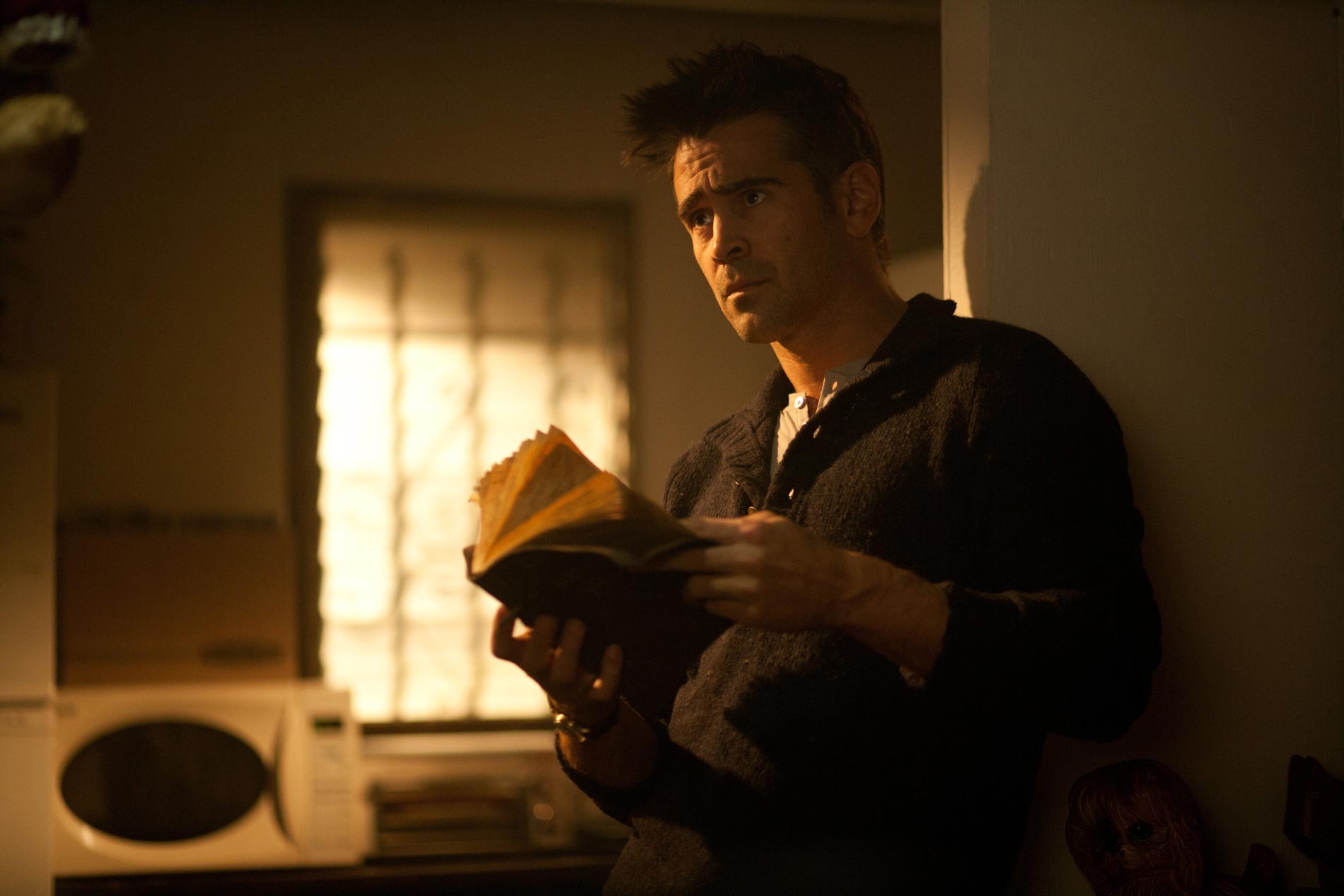
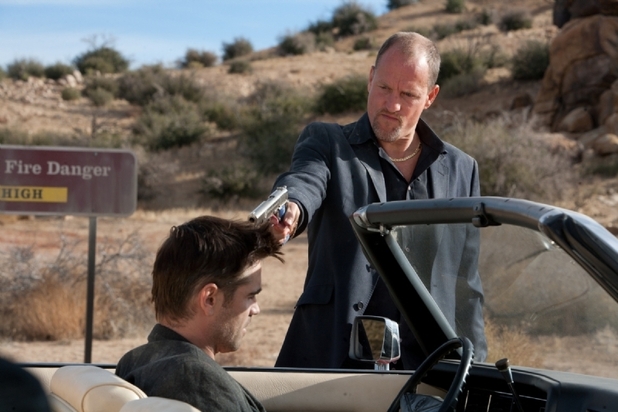
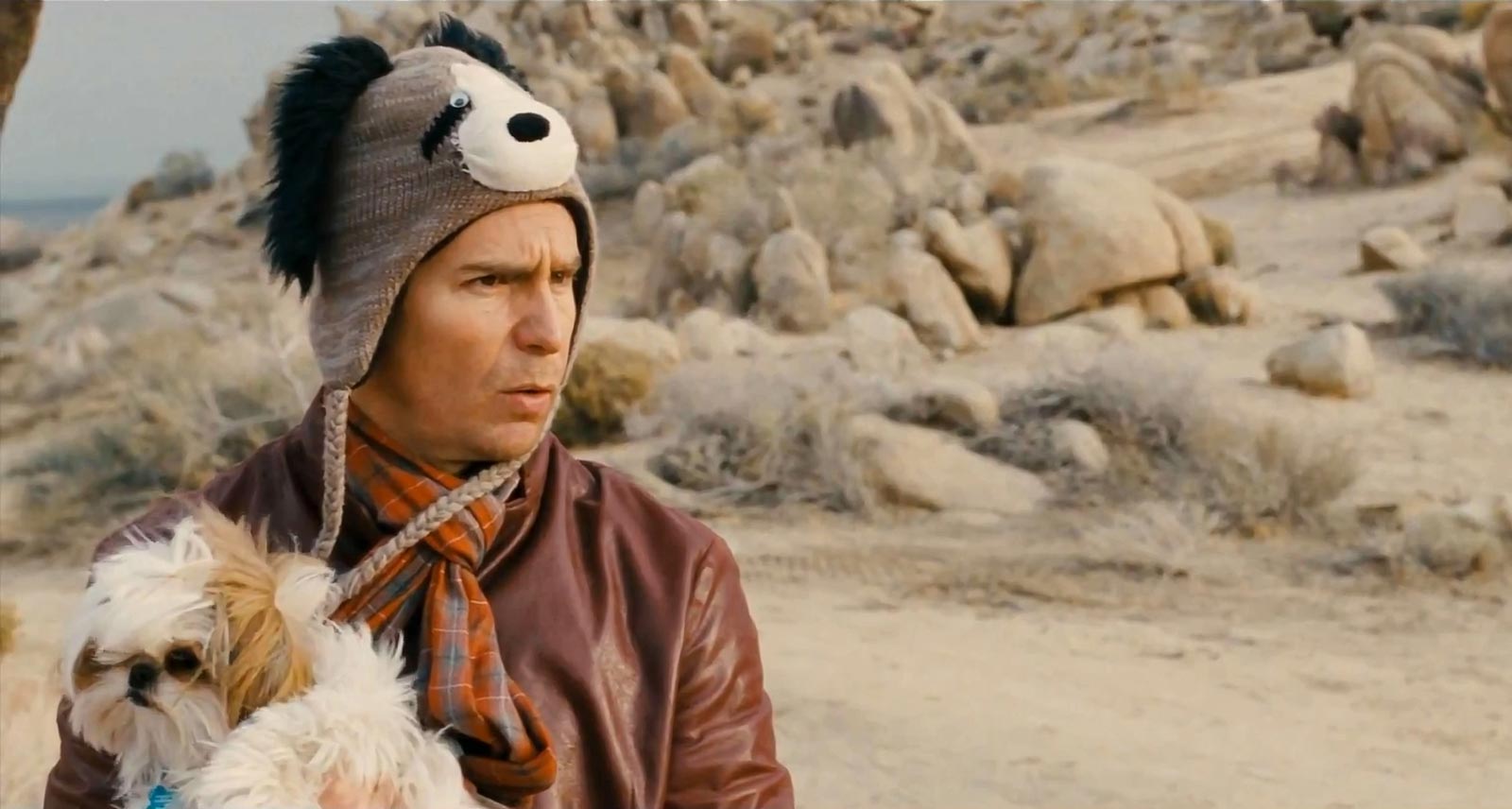
Well, he must have seen Adaptation., because this one is playing the same trick, but with better results, I think. Seven Psychopaths is about Marty (Colin Farrell), who's a struggling screenwriter (aren't they all?). His friend Billy (Sam Rockwell) is an aspiring actor (aren't they all?) who may or may not have the weirdest "day-job" of any thespian—he's a dog-napper, in partnership with Hans (Christopher Walken—there's no one like Christopher Walken). Billy is trying to help Marty with his screenplay entitled "Seven Psychopaths," with mixed results. Marty should take the advice of Ernest Hemingway who said "Write what you know." He has enough psychopathy in his life to fill up ninety minutes of screen-time. And if the dog-napping ring wasn't enough, Marty could take some pointers from Charlie (Woody Harrelson), whose shih tzu has just been the latest target of the canine-caper ring and is hell-bent to get his dog back and wreak havoc on the pooch-nappers.
Bizarre. But, it gets even more bizarre when the stories start coming. The newspaper is full of headlines of the "Jack of Diamonds" vigilante, who kills criminals and leaves that particular card on the bodies. Marty has a few kernels of ideas for his screenplay, which make sidebars in the film but nothing coalesces into a fleshed out screenplay. And then there's the contributions of the folks who answer an ad Billy puts in the paper to help Marty find inspiration, which produces a genuine
What is going on here? It's an interesting mix of truth and fiction, of apocrypha and legend that morphs with the story that the real life director
And McDonagh is doing something interesting here (benefiting from a superb cast—with only the top-billed girls Abbie Cornish and Olga Kurylenko going to waste—and quick appearances by Michael Stuhlbarg, Harry Dean Stanton, Gabourey Sibide, Crispin Glover (I swear I saw him), and look for a great performance by Linda Bright Clay) in a way that Adaptation. only touched on with the Robert McKee script-tutorial segments: making a comment for what passes as a screenplay these days. Movies have changed as subsequent generations have indulged in the art-form—where films were written and directed from other sources, now movies, by and large, are created by students of film, creating a reflexive diluted (and deluded) quality that does not so much reflect reality, as the movie-realities we're used to. From Leone to Tarantino, Lean to Spielberg, Hawks to Carpenter, Powell to Scorsese, Hitchcock to DePalma, we now see films refracted through the prism of other movies, and what inspired the makers about movies in the first place. With Seven Psychopaths' emphasis on revenge and revenge fantasies, it's squarely where movies sit right now with both the action genres and its current focus on superhero properties. And the character of Billy (Rockwell is brilliant in this) is an actor completely out of touch with reality, staging his life as if it was following a movie-script ("This is supposed to be the Final Shoot-Out") with the internal logic of a movie—but only a current formula-film, created by people who've learned about life from watching movies (as opposed to..ya know...living a life). Life is messier in real life than what's up on the screen (even one with the violence of Seven Psychopaths)...guns jam, mistakes happen, we forget our promises, and the wrong people die. It's part of why we go to the movies in the first place—to escape the randomness of life, and let artifice try to paint it in such a way to give us perspective...the way dreams are supposed to work.
This is quite a heavy burden to be laying on a quirky film that's frequently laugh out loud funny, and stomach-turning violent in parts. But McDonagh continues to be a fresh voice with an odd perspective that manages to entertain while making one think, simultaneously. Quite unique, that.
Seven Psychopaths is a Matinee.
Friday, September 2, 2011
The Dead Zone
The Dead Zone (David Cronenberg, 1983) Stephen King's "The Dead Zone" was written as a defense of assassination as a preventive measure for disaster (No, really...what if you could go back in time and kill Hitler as a child?*). What if you had the power of foreknowledge and did nothing to prevent something catastrophic? It may be a sin to kill, but the Catholic Curch also warns of sins of omission. The extraordinary circumstances of a psychic being able to see the future and acting to prevent it is the stuff of philosophy, morality and science-fiction.** But King, who took horror tropes and turned them on their pointed ears wasn't writing science-fiction. His brand of personal horror turned this cautionary tale into one of tragedy.
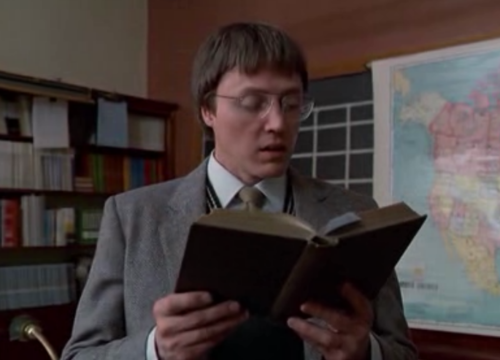
Up to that time, David Cronenberg was known for viscerally-filmed Grade-Z horror films with an emphasis on the squishy, but his film of The Dead Zone (one of the early King adaptations after DePalma's Carrie, Kubrick's version of The Shining, and the Tobe Hooper-directed TV version of 'Salem's Lot) was one of the strongest of the bunch. Cronenberg (and screenwriter Jeffrey Boam) took the larky good-nature out of the initial character of Johnny Smith (played in the film by Christopher Walken, but King thought it better suited for Bill Murray) and boiled the story down to essentials. Smith (as anonymous a name as you'd want) goes on a date with Sarah Bracknell (Brooke Adams) and things are going alright—he's fallen in love, in fact—when Fate raises its Huge Hand in the form of a near-fatal traffic accident that puts Johnny into a coma for five years (Cronenberg, perversely, has the collision occur with a milk tanker—as in "no use crying over..."***). Waking up, he finds that life is completely different—Mom's become unhinged, Sarah's up-and-married, he's semi-crippled, even after severe rehabilitation, and he can't find a job as a teacher of English Lit anywhere.
Oh, yes. Then there's "the power." By merely touching another human being, Johnny can see into that person's future, seeing their possible destiny and maybe death. He wants to live a "normal" life, a life of obscurity and happiness, but this "gift" is more of a curse, throwing him into the limelight, giving him responsibilities that he can't want or need. But, a man of conscience, Johnny can't keep his visions to himself—he has to warn people. He can't merely witness, an innocent by-channeller, he has to act to prevent the tragedies he sees and insert himself between those he touches and their Fates.
A social man, his gift makes him increasingly isolated, trying to hide his abilities, and avoiding people and touching them to keep from seeing those visions. But, as much as he tries to quash his ability to see the future, he is always confronted by it and must come out of his obscurity to prevent them from occurring.
Sounds like classic tragedy to me. With biblical, even apocalyptic echoes.
Cronenberg keeps the tone of the film oppressively heavy (Michael Kamen's score is particularly down-beat) and the Canadian locations have a dull, overcast, obliquely lit feel to them, like every moment is a late afternoon threatening to snow. Smith is a particularly sepulchral figure, Walken's tall frame shrouded by a long black overcoat, hobbling stiff-leggedly with a cane, like a harbinger of doom, his eyes haunted, but Walken's hooded eyes grow wide, when he touches someone or an object they possess, as if grabbing a live electrical wire as he goes into his vision. Before long, he is perpetually wearing black gloves.
But, on one of his rare excursions out he manages to take the hand of one Gregg Stillson (Martin Sheen), a Senator with eyes towards the presidency, and what he sees is Stillson launching a nuclear attack, ensuring Mutually Assured Destruction, and he becomes obsessed with stopping it.
Screenwriter Jeffrey Boam does some compression and simplification of the novel that emphasizes coincidence for the sake of a romantically resonant ending, but all in all, it is one of the best of the King screen adaptations (you've got to be careful with King—if you boil down his stories too much and take out too many of his incidents, you can sometimes see that the skeleton of his writing is calcium-deficient). The cast is amazing—Walken, Adams, Lom, but also Tom Skerritt, Anthony Zerbe (playing a strong character for once), Colleen Dewhurst, and the wonderful Jackie Burroughs—and keep things playing out naturally, with only Sheen veering into a kind of caricature.
It's one of Cronenberg's tamer, more straightforward early films (relatively, although there's some gut-churning violence), but it's one of his great ones.
![]() |
| Cronenberg gives Smith's visions a perverse power. |
* It's been years since I've read the book or seen the movie, and I'd forgotten that very question is asked by Smith in both: in the novel to a WWI veteran, and in the movie to his neurologist Dr. Weizack (Herbert Lom).
** King's next book "11-22-63" is about a man who travels back in time to prevent the Kennedy assassination. I'm going to write one called "The Well" about an author who goes back to one too many times. (Note: There was a "The Twilight Zone" episode called "Back There"—great score by Jerry Goldsmith, btw—about a man who goes back in time and—unsuccessfully—tries to prevent Lincoln's assassination. It starred Russell Johnson, who, whenever he came into the studio I worked at, I'd make sure that his reading copy had nice bold type on it. He appreciated it, and I had a standard exit line for his thanks: "Well, after all, you went back in time to save Lincoln...")
*** In the novel, the accident Johnny is in is caused by drag-racers.
Tuesday, November 9, 2010
Brainstorm
Brainstorm (Douglas Trumbull, 1983) Effects wizard Trumbull's second (and, to date, last) feature film had him experimenting with themes and film formats. Usually films taking on that track, either have a case of the cutes (see More American Graffiti), or have all the charm of a demonstration disc. But, in Brainstorm the jarring transitions seem necessary, dramatically proper, and perfectly suited to what's going on on-screen.
And that may be its trouble. Brainstorm has always seemed
snake-bit for one reason or another...unfairly, I think. It is notorious for being Natalie Wood's last film, as she died in a midnight boating accident during the filming, an event that has always had an element of the unknowable about it. No one knows why she rowed away from her boat in the middle of the night, making it the subject of gossipy speculation, and thus, irrelevant to the film. Some scenes went unfilmed, but the majority of her work made it to the finished film, and there are no continuity bumps noticeable from her absence. But the event did cast a pall over the film, probably to its detriment, as Death is already a major player in the film.
But there's another reason it's unlucky. It premiered at the dawn of home-video, and if there was an film that needed to be seen full-screen in a roadshow presentation, it is Brainstorm. I had the happy occasion to see it at a press preview where it was one of the attractions that would be demonstrating the wide screen glory of the new Grand Cinemas Alderwood, north of Seattle, which, bucking the trend of cracker-box multiplexes, were built large in scope and multi-channeled in sound to take advantage of the post-Star Wars spectaculars that were starting to flood theaters, after the timid response of the studios to large format fare. The Grand was the perfect place to see it large enough to encompass the full-width of the big-screen sections, but intimate enough to keep you from feeling cheated when the smaller format drama scenes took precedence.
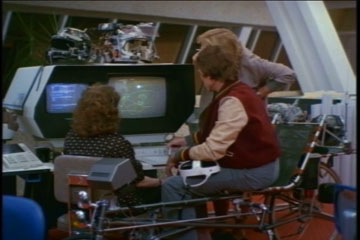
And that was something home-video and cable screenings never could duplicate—the awesome transitions from the scenes of scientists and technicians toiling over the wires and ramifications of their brainwave recorder to the hyper-dimensionality of the gizmo's playback in action. For that is the crux around which the film and its unique formatting revolves. Dr. Mike Brace (Christopher Walken) and his team of neuroscientists under the leadership of Dr. Lillian Reynolds (Louise Fletcher) are working on the ultimate video machine. They plan to actually tap into the brain's higher functions to capture memories—initially, just sight and sound, but eventually, the other neuro-pathways, as well. Thus, hardwired, they can experience another person's recorded memories, thoughts...even emotions...more real than real, with the exception that they're not yours.
The possibilities soon move beyond precipitous roller-coaster rides and flights over the Grand Canyon, as the scientists do their own beta-testing on themselves. For Brace, it renews his memories of the first blush of romance with his ignored-for-science wife, Karen (Wood, whose character's job is to streamline the helmet for FahrvergnĂĽgen), for another, it's straight to sex, suffering a breakdown when he splices an endless loop of "the good stuff" (Buddy, if it lasts more than four hours, call your doctor!), and in the ultimate trip, Reynolds turns on the machine and records her experiences while suffering a fatal heart attack.
That last tape becomes an obsession for Walken's Brace, risking everything to take that journey with the proviso that he has an "Off" switch for The White Light, a Cosmic Clapper if you will. For Trumbull the tech, it's an opportunity to pull out all the FX stops with journeys through memory bubbles, a Boschian vision of Hell, and a slit-scan trip down Heaven's main thoroughfare, complete with angelic Hosts.
Quite the show. But, in its attempts to present its Stairway to Heaven, the art design gets a little busy and too specific in its architecture, while disorienting the actual journey (was the trip through Hell necessary?). It's a bit too high-tech for its own good, as beautiful as it is. And, taken in context with the more teasing glimpse of the afterlife afforded by Hereafter, it might be too much of a God Thing.
Thursday, September 3, 2009
Hairspray (2007)
"Hairspray" (Adam Shankman, 2007) I'm not big on musicals. Rarely are they better than their source material and the songs, more often than not, are filler with "Moon/June" lyrics that fail to impress. My idea of clever musicals are "Guys and Dolls" and "The Music Man" that carry their music fantasies with a little bit of arrogant panache, daring you to not take it as seriously as regular dialog. My expectations of musicals are pretty low (which is good, I think, as it gves them more of a chance), and my expectations of "Hairspray"—despite rave reviews of the stage version that debuted *huzzah* in Seattle—were quite low. You just knew that a musical of "Hairspray" wouldn't be as edgy as the John Waters original. It was going to have to be neutered to be made "safe."
Plus, it has John Travolta in it. I can't remember a John Travolta* movie where I was impressed with him. I was probably going in with the wrong attitude.
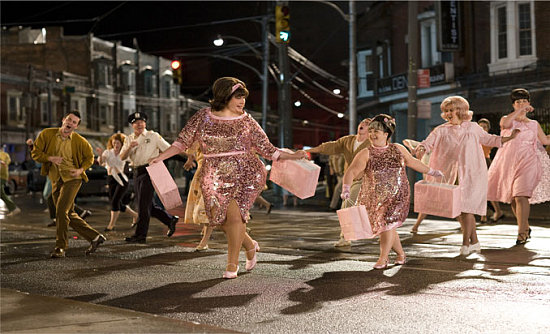
Because I enjoyed the Hell out of it. Word is that the movie version is a bit more stream-lined and a lot less camp than its stage-version. That may have helped, because "Hairspray" (the musical; the movie) is joyously anarchic, popping baloons gleefully as it goes—maybe laying it on a bit thick, as it goes—but as an expression of the freeing power of rock n' roll, few movies can top it. Especially the serious ones.
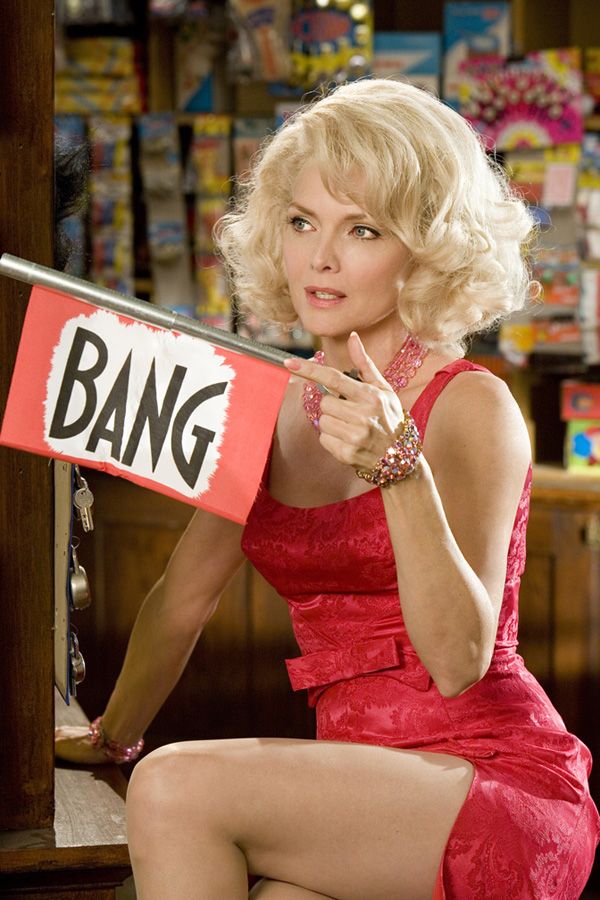
The year: 1962, pre-Kennedy assassination (it would have to be) in segregated Baltimore. For Tracy Turnblad (Nikki Blonsky—this girl needs to work more), life is surviving school in time to get home to watch "The Corny Collins Show" (with James Marsden, going full-wattage cheese), a dance party television show, featuring her dancing dreamboat Link Larkin (Zac Efron, not quite legitimizing the hysteria over him). Her dreams come true when one of the teen-dancers takes a leave of absence ("Nine months," she doesn't need to explain) giving Tracy and her blond twig girlfriend Penny Pingleton (Amanda Bynes) a chance to audition. She has many obstacles: station owner Velma von Tussle (Michelle Pfeiffer, whom my wife described as "voluptuously hideous"—yes, indeed**), and her parents, Wilbur and Edna Turnblad (Christopher Walken and John Travolta).
Now, here I must stop. Christopher Walken rarely fails to please, but it's a too-rare treat to see him sing-and-dance, which he obviously loves. And Travolta, in drag and dressed in a fat suit with a raspy ovah-the-"twop" Maryland accent?
He's great. Except for his accent slipping during the songs, he's damned near pitch-perfect, doing dance moves weighed down in prosthetics (and in high-heels no less), and providing a sympathetic life-force to the proceedings. Everybody's terrific in it, including old guys Paul Dooley and Jerry Stiller (who played Tracy's dad in Waters' original). Then there's Queen Latifah, who plays the "fill-in" host on Corny Collins' once-a-month "Negro Day"—the black dancers cordoned off from the white dancers by a rope partition—proving once again she is the Rock n' Roll Renaissance woman, who can rise above bad material, and soars with the good.
But it'd all be naught if not for the songs (well-staged with choreography-friendly directing by Shankman that recalls past movie musicals) by Scott Wittman and Marc Shaiman. Shaiman's ear for 60's rock styles is flawless and the words by Wittman and Shaiman are clever and sassy and occasionally downright rude.
Original "Hairspray" auteur John Waters even shows up (in an early cameo as a flasher). Word is that he's working on a screenplay for a sequel. If the product is half as fun as this singing step-child of his work, it will be a must-see.
* Since writing this, I remember I thought he did an extraordinary job of carrying Nicolas Cage's tic's in "Face/Off."
** Pfeiffer has a torchy song—"Miss Baltimore Crabs"—that she vamps though in such high-style that it catches one off-guard...until one remembers "Oh yeah...Susie Diamond."
Wednesday, May 7, 2008
Man of the Year
Man of the Year (Levinson, 2006) Politics are no laughing matter. Or are they? Maybe our current malaise is so deep that only a comedy can really reveal the mess we are in. After all, political satire has a long and distinguished history. More Mr. Smith goes to Washington than The Manchurian Candidate (even the good version), Man of the Year is an attempt to show not only the lack of any real choice we have between the Republican and Democrat parties but also the way that an election might be stolen.SPOILER ALERT: Barry Levinson is an accomplished enough director to get what he needs out of his cast including just enough but not too much out of Robin Williams as Tom Dobbs, a comedian who hosts a news satire TV show (and Jon Stewart gets the nod here) and Christopher Walken who plays Jack Mencken his manager, who acts as an on-screen narrator to the story as it unfolds from the decision of Dobbs to rise to the challenge set him by a member of the audience to enter the Presidential race. Although he has made his reputation as a hard-hitting satirist, Dobbs attempts to take the high road in his campaign eschewing any advertising in his attempt to be a clean candidate beholden to no-one but 'the people'. However, his desire to stick to 'the issues' doesn't seem to be what his potential supporters want and, after a hilarious parody of a Presidential debate, he finally gives in to the urging of his manager and his writer, Eddie Langston, (played by Lewis Black channeling Al Franken?) and runs a campaign that looks more like a mixture of a rock concert and a motivational speaker's tour. It seems to work when on Election Day, after having polled around 17% of the vote, he surprisingly emerges as the President-elect.
The truth is that he has won because of a glitch in the voting machines that have been mandated for the election. They are manufactured by the