Showing posts with label Alan Arkin. Show all posts

Saturday, June 1, 2013

The Incredible Burt Wonderstone

"Sometimes the Magic Works...."
or 
"Wanna See it Again?"

Repetition, repetition, repetition.  It is the secret to prestidigitation.  Do it over and over and over again, honing the skill, making it more fluid, perfecting the illusion, increasing the speed, so you leave the audience dazzled by the pixie dust of distraction.  Then, once perfected, you do it again and again and again in performance, producing a jaded hardening of the artistry, the audience becoming s revolving series of marks you hit over and over again.  You lose respect of the audience and the skills and the gig.  The magic goes away.

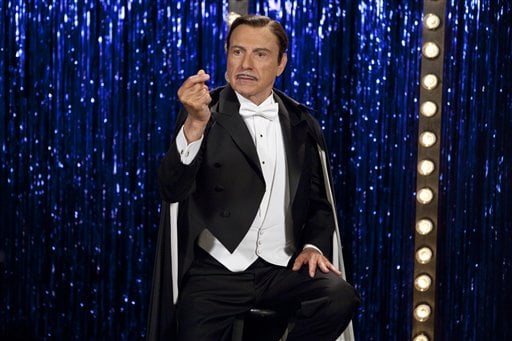
Repetition is the key to The Incredible Burt Wonderstone, too.  One of its major themes is the drudgery of performing the same tricks over and over and over again, a process that turns the titular magician (Steve Carell) into a zombie with a spray-tan, barely able to speak to his partner Anton Marvelton (Steve Buscemi) as they perform the umpteenth repetition of their standard Vegas act.  Not even the addition of a new assistant, Jane (Olivia Wilde) can stop the ennui, as the self-absorbed Wonderstone keeps calling her "Nicole" for some reason.  Probably because he can, she looks more like a "Nicole" than a "Jane," and he doesn't care.  At all.  So, he always calls her "Nicole."  "Jane" she immediately corrects, but he doesn't get it.

Repetition is also the key to Burt Wonderstone's comedy.  They throw out that "Nicole"/"Jane" joke a half-dozen times throughout the movie, and a good many others, too, usually to expose the shallowness and perpetual myopia of the characters as well as the flatness of their learning curves.


That flatness, that lethargy or lack of magic, is the starting point of the character arcs.  Burt is at the top of his game, successful, bored, settled into the day-to-day—the romantic encounters he engineers (if you can call them romantic) are one-night stands he pulls from the audience, provides a quick tour of his pad, a complimentary memento arranged for the evening, the signing of a non-disclosure agreement, and it all ends when he pulls a disappearing act.  Whatever happens in Vegas, stays in Vegas.  Except the magic.  It left a long time ago. 


Burt (Carell) and Anton (Buscemi)—Pure Magic

Because success isn't very funny, Burt and Anton stagnate, especially when there are newer, edgier, geekier magicians with reality shows—like the masochistic, egotistic Steve Gray (Jim Carrey) who bills himself as "the brain rapist." The owner of Bally's (James Gandolfini), where the two have performed to sell-out crowds for years, sees the attendance softening, and demands something more "street" than his regulars can provide, and so they get canned, split up, try to rebuild, crack up, and then the story can actually begin.  

As typical romantic comedies go, this one is by the numbers: Burt's career set-back is completely unprepared for, and he finds that without the safety net of Anton, and the routine of their act, that he can't start over, or reclaim his former glory, so before long he finds himself sinking to rock bottom (performing magic at an old folks home), where, by the prestidigitation of convenient screen-writing, he finds his magic mojo again in the form of Rance Holloway (Alan Arkin), mentor and Obi-Wan Kenobi-figure who critiques Burt's work and attitude ("What, magic makes you feel 80 again?" cracks Burt).  Anybody knows, if they've taken a screenwriting class, or seen any Tom Cruise movie from the '70's-'80's knows how it will run in its course (success kills your soul, there's a rival/villain, and one must have a sage elder to find the proper path), but at least the thing maintains an entertainment value throughout and right up to the end.  Thanks to the mixture of the personalities—Carell, Buscemi, Wilde, Arkin (I'll see anything with him in it), and especially Carrey, who makes the most of his small screen-time—there's always a sprinkling of surprise, a detail, a quirk to appreciate among the over-arching familiarity of it.  There's something magical about that.

The Incredible Burt Wonderstone is a rental.


Tuesday, February 12, 2013

Stand Up Guys

"We're Still Here!"
or 
"...End of Story" 

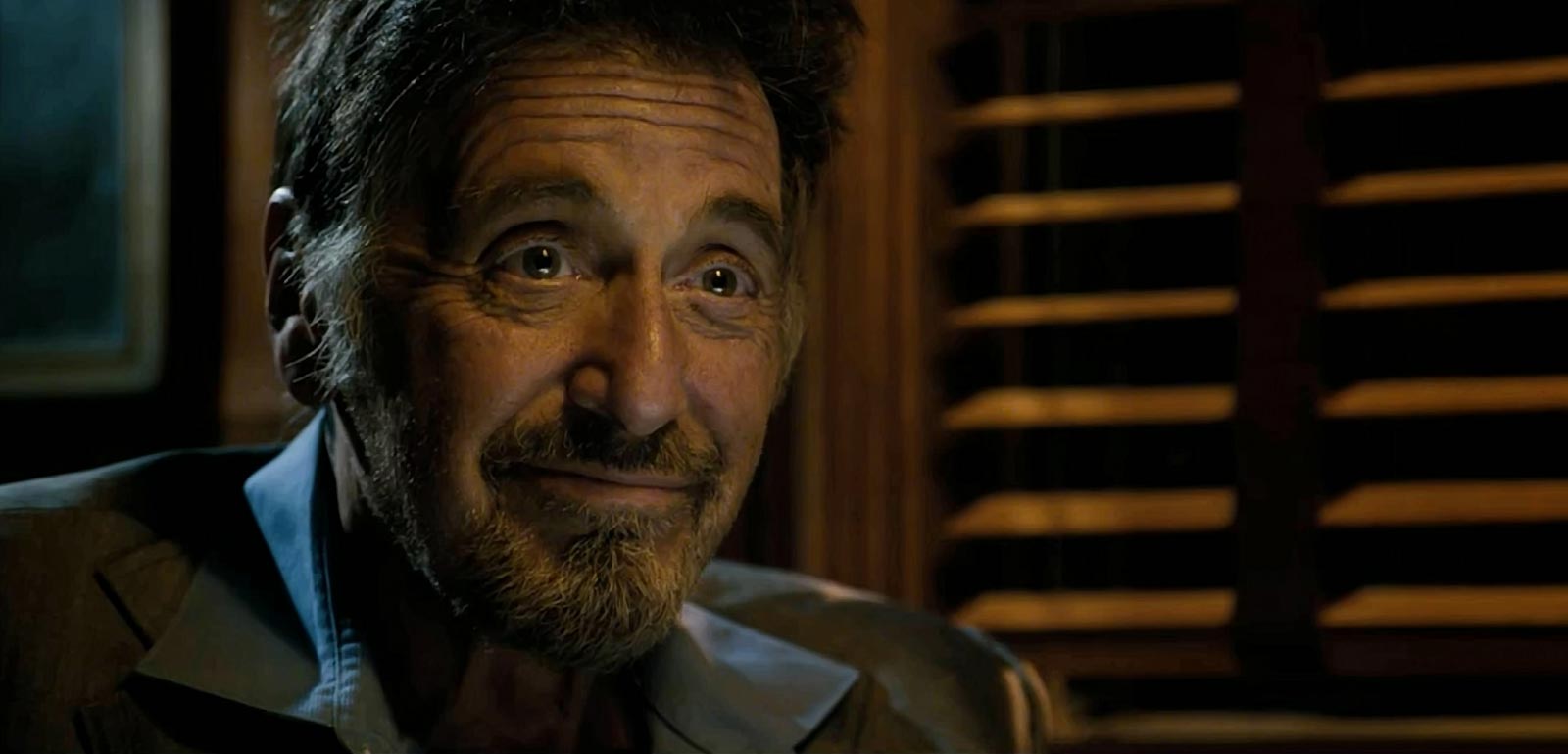
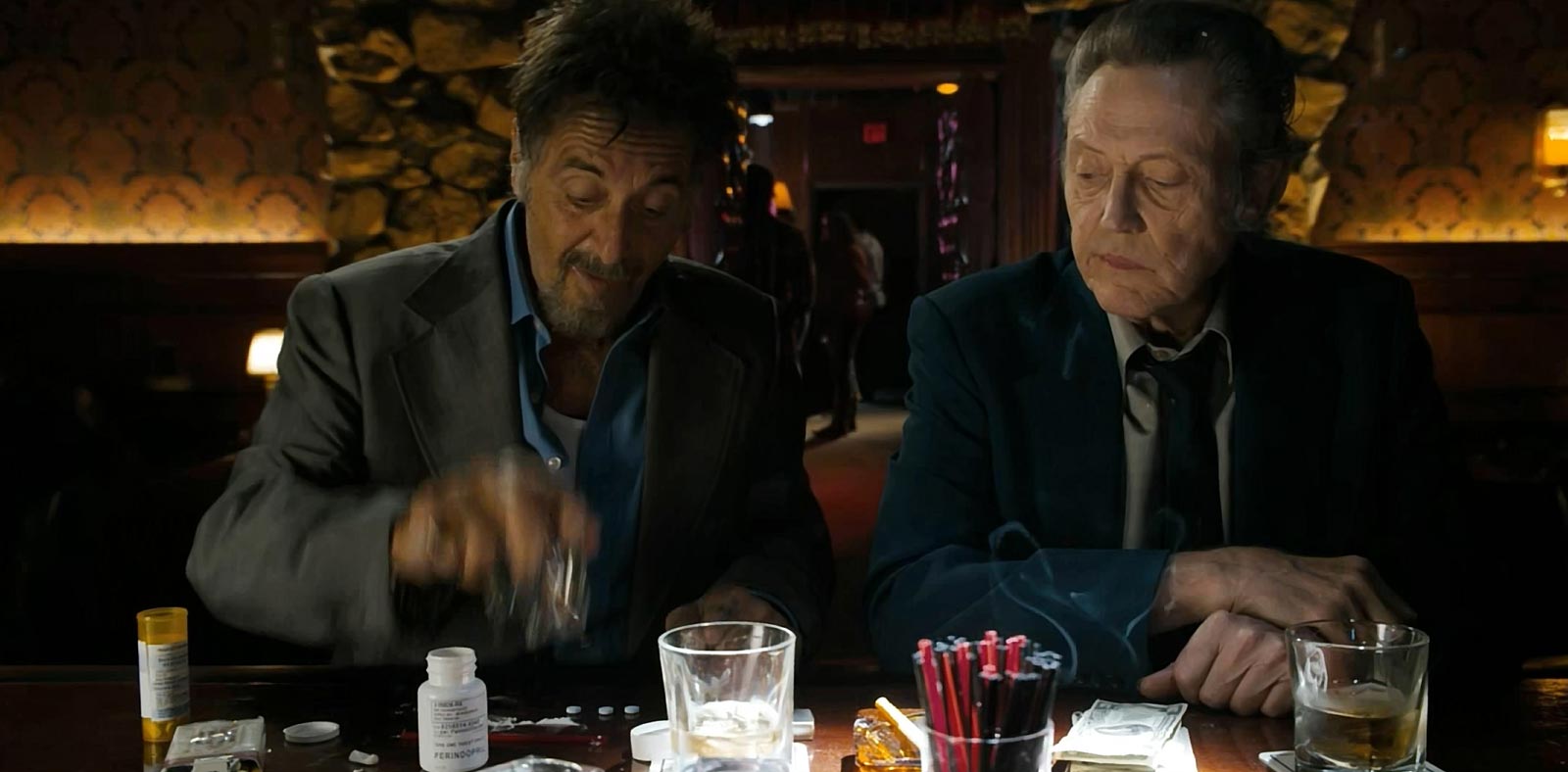
Oh, man, it's painful, the first few minutes of Stand Up Guys, the new gangster-with-gags film directed by Fisher Stevens.  Valentine (Al Pacino) is being released from prison after 28 years, for his part in a robbery that turned deadly.  On the outside, waiting for him, is Doc (Christopher Walken), who was also part of that robbery but managed to stay out of the gray-bar hotel for reasons unknown and is now "retired," spending his free time being a diner habituĂ© and painting landscapes.  

Doc takes Val home to his apartment, which the ex-con compares unfavorably to the accouterments he has recently vacated.  At this point in the movie, Val announces that he wants "to party," at which point I resisted an urge to get up and get popcorn.  It wasn't going to be pretty, whichever way it was played, comedy, bathos, or weirdness.  The obligatory visit to a whorehouse is somewhat lightened by Lucy Punch (a Brit actress playing a longish Island accent) as the daughter of the madam these guys used to know in their and her prime.

Things don't go well (nyuk, nyuk) so Doc and Val rob a drug store (very easily)—Val gets little blue pills and proceeds to take too many of them, and Doc has some expensive prescriptions he needs to supplement—complications arise, so to speak, which requires a trip to the hospital, where Julianna Margulies provides an "E.R." flashback and informs the two about her father, their former getaway driver, who's stuck in a nursing home.

Alan Arkin plays that character, and it's at that point that the movie picks up with a couple quick chase sequences and a needed pivot point for the Pacino-Walken dynamic.  The movie gets better with Arkin's presence, even though one can't say it improves.  But Arkin's added energy manages to lift the movie over the speed-bumps that the script-clichĂ©'s drop in the path.  Where Pacino is manic and Walken is passive, Arkin manages to bridge the gap (and their vocal pauses) with a complacent nervousness that bounces off both actors entertainingly.

It's unfortunate watching, really.  To see these gold-standard actors (all Academy Award winners, not that that really matters) reduced to mining what they can out of a vein of tin is disheartening, no matter what smiles they can produce out of it.  Something could have been done, recent examples of the story-form being In Bruges and Going in Style.*  But just the casting of these young-now-aging turks can't make this one any more than it is, a faded half-hearted comedy about aging gangsters that might have been enough to re-team Jack Lemmon and Walter Matthau back in the day.

This is a minor, minor, minor film with major talent in it that eventually makes the most of the material, but can't elevate it into something worthwhile or even makes a statement.  And, frankly, I'm getting too old for movies like this.

Stand Up Guys is a Rental. 

* Martin Brest's 1979 comedy-drama about over-the-hill retired thieves trying to supplement their meager Social Security—Pacino surely knew about it, as it starred his mentor, Lee Strasberg.


Thursday, November 1, 2012

Argo

Hoo-Ray for Hollywood (grumble)
or
The Best Bad Idea We Have...By Far

The 1979-1981 Iranian hostage crisis, the 444 day ordeal of the American Embassy workers captured and held by a well-organized angry mob (funny how those angry mobs in the Middle East have a sustainable infrastructure that can keep the ball...and the U.S...in the air for over a year), was an event that gave us our first taste of extremist Muslim terrorism and the presidency of Ronald Reagan (Way to go, Iran!  Can't wait to see the inadvertent fallout from your nuclear program!).

One of the back-stories of the whole magilla was what became known as "The Canadian Caper," where six of the workers walked out of the Embassy and stayed at the Canadian ambassador's residence for a nice chunk of the crisis and managed to fly home  under the noses of the cracked-down Iranian security thugacracy.  What was not known was that the operation to extricate those workers—on the QT, hush-hush, and only recently declassified—was the work of the very agency that was being blamed for the Shah's presence in the first place*—the CIA.

The story of the very weird "Mission: Impossible"-styled rescue is told in Argo, the third film to be directed by Ben Affleck (after Gone Baby Gone and The Town) and it's his most assured movie to date.  It's also his safest and least nuanced.  Maybe the story is so bizarre, so full of dangerously easy irony and satire, that the director in Affleck felt the need to tone things down on his style (much the same way that Affleck the actor does here, as well, in his performance as CIA advisor Tony Mendez) and just "stick to the facts" and get his recreations down right (there's enough pride in this that the end-credits show a split-screen of archive footage and movie film footage to prove the point), thinking he'd be guilty of "gilding the lily" or even undermining it by...I don't know...showing any "style," other than switching film-stocks and shooting in a "found-footage" way of snatch-and-grab.  And yet, were that true, the film might have had a far more different ending, rather than the one Argo actually presents.  It would have been nice to throw in some of Affleck's previous shooting ingenuity, rather than create the dichotomy that Argo ultimately presents.

It is a story that captures the imagination.  Six of the American embassy workers in Tehran manage to hole up at the residence of the Canadian ambassador, but time is of the essence as the Iranian guard are closing in on their location after carefully piecing together intel from the embassy.  The wonks at the State department and CIA try to come up with a scenario that might get the workers over the border—bicycles—but Mendez is skeptical of putting the six out in the open for a "casual" bike trip of a couple hundred miles.  Mendez's scheme (hatched after a viewing of a "Planet of the Apes" movie) hides them in plain sight—have them pose as a scouting group for a sci-fi movie that needs a desert location (like, say, Iran) and have the group (who have appeared out of nowhere) just fly out under those assumed roles and identities working on a project viable enough to be fact-checked at the time of departure.

So, Mendez recruits an industry friend, John Chambers (John Goodman), who has done extensive make-up and prosthetics work for the CIA and the Army (as well as winning an Oscar for his monkey-faces on those "Planet of the Apes" movies) to start a project that has enough publicity splash to make it all the way to Iran. A producer, Lester Siegel (a fabrication and played by the masterful Alan Arkin), is recruited to lend industry cred and get the word out to the press, allowing Mendez to fly to Tehran to train the hostages on their roles, synchronize watches, and sweat the details, which are many and widely scattered.

The idea is so crazy and "out there" that it "just could work."  The beauty of it is that it did,  but not quite in the way Affleck and scripter Chris Terrio would have us believe.  In fact, the final "ex-filtration" is so nested with complications and roadblocks—and a seeming need to fulfill some perceived action quotient—that it becomes frustratingly conventional in a "Hollywood" sense. 

This is slightly gear-grinding.  By now, we should be so used to The Movies' need to dramatically enhance actual events, that it shouldn't come as a surprise that some fact-tinkering is involved.  But, Affleck's film is so cynical of Tinseltown tampering,** that it's a little cake-eating to then rely on such notions for a white-knuckle finale, as the actual situation is tense enough without having to also (oh, I don't know) stage a gunfight on the sinking Titanic.  And it strains credulity that at each checkpoint on the way out, everything must come down to the wire, in the very nick of time...every...single...time.  I mean, didn't anything go right on this mission? Sure, the whole thing was a "Hail Mary" pass, but some of the planning had to have come off.  The story had a genuine happy ending.  Did it have to be The Ultimate Happy Ending?

Maybe the election year has got my fact-checker in overdrive, because up until then, Argo is a measured, understated, restrained, almost bloodless film, that manages to be smart, clever, and tense.  And while there's very little of the flair displayed in his first two films, it is a fine example of Affleck's impeccable sense in casting (although—quibbling again—he might have had someone genuinely Latino to play Mendez), and having the great good sense of staying out of his actors' way.

It might not be Affleck's best work to date, but for all that could have gone wrong, the results are quite impressive.  Hmm.  Maybe art does imitate life.

Argo is a Matinee.


The "Canadian Caper" embassy workers with President Carter


Argo concept art, created by comics veteran Jack Kirby

* The movie gives some back-story but is a little cagey in what it leaves out.  The CIA "coup" deplaced the democratically elected Persian prime minister Mossadegh who had the affrontery to nationalize the Iranian oil industry (pissing off the British) and flirting with communists (pissing off the Americans) and returned the Shah, who'd only fled the country fearing a communist take-over, to power.

** There are more zingers at the expense of the film industry than any movie since Altman's The Player.  My favorite: "We're going to make a movie in the most desolate, dangerous, paranoid place on Earth." "Universal City?"

Wednesday, June 16, 2010

The Rocketeer

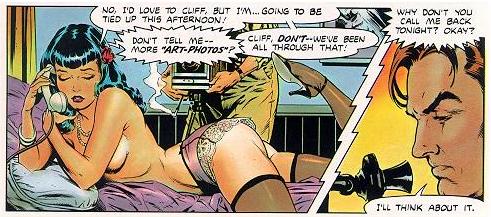
"The Rocketeer" (Joe Johnston, 1991) Graphic artist Dave Stevens was handed an assignment for a new comic book*—he'd get to create an eight-page second feature of his own devising and do anything he wanted with it. For Stevens, that meant it had to have a pulp-fiction atmosphere, a late 1930's Los Angeles locale, an art-deco look, and characters with which he was familiar enough to draw. He based the hero on himself, his mechanical engineer Peavey on Doug Wildey (who'd created "Jonny Quest") and for the hero's girlfriend, a forgotten pin-up girl of the 40's and 50's, "Bettie" Page.**

That second feature, "The Rocketeer," quickly eclipsed the comic's title character, and moved to its own publication that, due to Stevens' fastidious attention to artistic detail, came out only infrequently. But the elements were there to attract Disney, looking for a comic-book hero that could economically catch the wave of the recent burgeoning comic-book movie and match the box office returns of the "Batman" series.

Even though "The Rocketeer" didn't have the Caped Crusader's cache of cultural iconicism (That's Adam West-speak for recognition by the general public), the cult-status of the comic and the script's deep-dish banquet of 30's flotsam (Rocket-packs, Flying Gee-Bee's, Nazi's, gangsters, ugly goons, Howard Hughes, zeppelins, Erroll Flynn swinishness, and the Griffith observatory) looked like it was going to be 1991's "sure thing" at the box-office.  So confident that it would soar on plumes of flame into the stratosphere that Disney honcho's put out a "memo" saying that this was "the way" they were going to make movies: good properties, well-cast with cheap stars--put all the money up there in the screen.

Good plan if only "The Rocketeer" hadn't flamed out and fallen to Earth.  "The Rocketeer" under-performed badly at the time of its release.

It became popular on the rental circuit, but the damage was done.  No sequels (a trilogy was planned), the other studios chortled about Disney's memo hubris, and went back to paying stars (and their agents) $20 million for a movie.

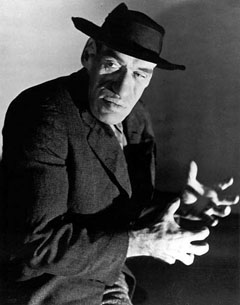
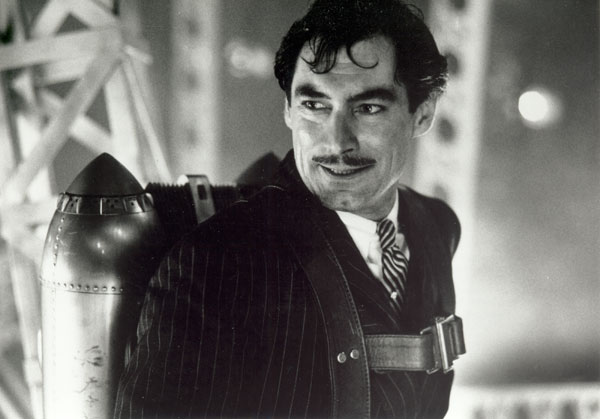
Too bad.  "The Rocketeer" is not that great of a movie, but if it had inspired similar "value" films, it would have been worth it.  The thing is, its heart is in the right place, it's sweet and affectionate about the period it's in, the romance is chaste and makes no concessions to modern audiences, the players adept—Billy Campbell was born to play "The Rocketeer," he looks just like Dave Stevens and any movie with Alan Arkin and Paul Sorvino, AND Terry O'Quinn, it goes without saying...plus, Tim Dalton got to bust up his Bond image a bit. 

The movie only takes off, logically enough, when the rocket-pack fires, then things zip, zoom, loop-de-loop and go slightly out-of-control in a giddy display pyrotechnics.  The rest of the time the film stays firmly rooted to Earth, refusing to soar.  Oh, Dalton has fun with his role—he was always better suited playing bad-guys, anyway—And Jennifer Connelly adds some brief spark to her role as "Jennie," Cliff's naive actress girl-friend. 

That's the problem.  Sweet as it is, "The Rocketeer" could use some spice, which Disney was just too timid to provide.  "Jennie" was "Bettie" in the comics, specifically "Bettie" Page, who was far more world-wise and ambitious than the screen incarnation could capture.  There was a bit of the real Page's persona in the original character, all too aware that she was the type of girl "men like," and all too willing to exploit her looks to be exploited.  That was way too hot for Disney, who gussied Connelly up from head to toe, effectively neutering her ambitions.  That the real "Bettie" Page was still alive at the time, and fully capable of contacting lawyers, probably influenced Disney's decision, as well.

And that's too bad.  "The Rocketeer" takes chances, but still feels "safe," something the comic was having too good a time to worry about. 

Dave Stevens, died after a long fight with leukemia, at the too-young age of 52.

Splash page ad from the original "Rocketeer" story, which promised more pulp sensibility than it delivered (at least it had a guest appearance by an unnamed "Doc" Savage character) but still contained the necessary "Bettie" Page figure.

* Mike Grell's "Starslayer" #2 was the first appearance of "The Rocketeer"

** She wouldn't stay forgotten for long.  "The Rocketeer" re-generated interest in her long career as a photographer's model, and "nudie" dancer, and she was able to see some money from the marketting of her image.  "The Notorious Bettie Page" is based on her life.  She didn't like it much, reportedly.

Tuesday, April 14, 2009

Sunshine Cleaning

"Blood in the Seams/Heaven on TV/God on the CB/and the Spirit in the Sky"

Where do they come up with these things, these independent movie-makers?

First off, the poster with the chirpy "From the producers of '
Little Miss Sunshine'" didn't help matters any; I'm not a fan of "Little Miss Sunshine" thinking it hit all the right "indie" crowd-pleasing ingredients (Alan Arkin + Gay depressive + quirky family + so-ugly-she's-cute-kid + passive-aggressive marriage + "bizarre" normals + a beater-van = "WARMTH") in the same "by-the-numbers" way James Bond fires off all his gadgets in the same order "Q" introduces them.

"Sunshine Cleaning" hits the same formulaic construction, but the finesse with which it's performed and the sheer weight of its "downer" concepts manages to make it bob cheerily higher in the dank waters it's been pushed into in a life-affirming defiance.

What are we talking about here? Single mom Rose Lorkowski (
Amy Adams, all dewy eyes and iron jaw) is a former Cheerleading Queen in her Albuquerque, New Mexico High School who made all the wrong choices. Knocked up, no prospects, she now cleans the homes of the less popular, stabler girls from her class. She's carrying on a going-nowhere affair with a married cop, who won't leave his wife, who just got pregnant again-(yay!) Her OCD son just got kicked out of school for obsessively licking things (including his teacher). Her worthless sister Nora (a brilliant Emily Blunt-not betraying a hint of her Britishness) just got fired from her worthless waitress job. And Dad (Alan Arkin) is played by Alan Arkin.

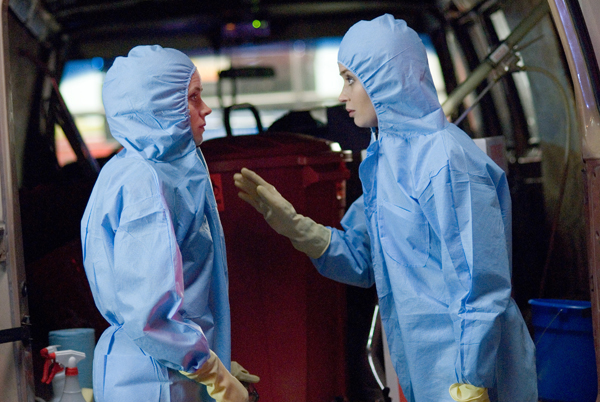
To pay for her kid's private education (or anything), she decides to take her cleaning skills up a notch—there's good money to be made cleaning up the "blood and body fluids" from recent crime-scenes. Soon, Rose and Nora are a going concern as their "Sunshine Cleaners" does a fast turn-around of suicide clean-ups, "de-comp's" (as they say in the trade), and every other obnoxious, toxic, disease-ridden scouring job that comes down the pike. "It's a burgeoning field" says Rose, the whites in her eyes showing all-around as she explains it at a baby shower. "We come into people's lives when they're going through something ... profound."

Indeed.
And the intertwining skeins of those lives weighs as heavily as the various crises in their own lives. It all is a bit messy. Amy Adams spends a lot of time looking into mirrors, sometimes chanting a mantra: "You are strong. You are powerful. You can do anything. You are a winner." One night, in a motel room that she's occupying alone, she'll have a new coda for that litany and burbling up will be a half-strangled cry/half-hysterical laugh. It's brilliant. Adams rarely disappoints, and only does when she's got something she's trying to stifle (like her nun in "Doubt" that threatens to turn into her Princess Giselle from "Enchanted" if she cracks a smile.) Not here. Give this girl an Oscar, quick. In fact, director Christine Jeffs gets a great performance out of everybody, that elevates its basic plot (which reminded me a bit of "Happy Gilmore") and stifles one's urge to apply the film's last line to casually toss it onto the indie "also-ran" pile. Films that click this well happen rarely.


"Sunshine Cleaning" is a Matinee.

Tuesday, February 10, 2009

Wendy and Lucy and Marley & Me

"Dog is My Co-Pilot"


"A dog has no use for fancy cars or big homes or designer clothes. Status symbols mean nothing to him. A dog judges others not by their colour or creed or class but by who they are inside. A dog doesn't care if you are rich or poor, educated or illiterate, clever or dull. Give him your heart and he will give you his. It was really quite simple, and yet we humans, so much wiser and more sophisticated, have always had trouble figuring out what really counts and what does not."


John Grogan, "Marley & Me"


That's just the sort of tripe that made me avoid reading "Marley & Me" by John Grogan (although I did give it to K., and she cried all the way through it, as, no doubt, would I, seeing how it's a "true story" by Hemingway's terms). See, Grogan can get all gooey about his dog (and I'm one to talk, anyone who knows me and my relationship with my dog knows I'm a big softie with him) but even I know that as much as I want to anthropomorphize my dog into seeming more like "my son the attorney," he's a dog—a pack animal, who craves being part of the pack. A dog doesn't know "privacy." A dog doesn't worry about "having space" (unless he's been shoved off the bed). A dog is hard-wired to be part of a group, his genetic-strings bunched to "family," which he interprets as anything that he can be a part of, and provides for him.

As much as I'd like to think my dog loves me, I think he merely respects the chain of command or the pack order, and knows where his next meal is coming from. I'm not going to call it "love."

Because the truth is he loves bacon. He may even consider it with religious fervor, like seeing
the Madonna in a piece of toast--which he'd also eat, just as a warning. You mention the word "bacon" and my dog's head will tilt, his eyes brighten. If he smells bacon cooking, his eyes soften and get teary, and he'd lay patiently, rooted in that spot with bacon-potential until such a time as he can wolf it down, concentrating with all his doggy-will to "just eat the bacon, not the Master's fingers." When I read Grogan burble that a dog judges you by who you are inside, I think, "Yeah, meat...and gristle and sinew and marrow..." all things my dog "loves." My wife and I are never sure that if we would both spontaneously collapse in a heap, our dog wouldn't "love" us so much that we'd be missing limbs after being found five days later.

But what do I know?
Grogan's a multi-millionaire now because of his shaggy dog story. I'm just content if I can bring home the bacon.

Safer that way.

So I avoid "dog movies" like I avoid rabies because I know they can't end well, be they "
Lassie" or "Lad: a dog," or "Old Yeller" or "Cujo."

Because I always cry at them. Buckets. I get very sentimental towards dogs in dog movies, because they're portrayed as such noble creatures that if anything ever happens to them, I bawl at the injustice of the world. And because the doggy's so cute. Hell, I even cried when the dog had to be put down before it was turned into a "Red Bull Mutant" in "
I Am Legend."

Here are two quite different "dog movies" but they share one lesson: a dog is a relationship. A dog changes your life. A dog teaches responsibility. A dog is a commitment. A dog canot be turned on and off, like the ones at
Radio Shack. Dog ownership is not to be entered into lightly. The two movies come at this basic truth from different angles.

"Wendy and Lucy" is about a girl making her way from Illinois to Alaska in her beat-up '88 Honda Accord (with a bad serpentine belt), with dog as her co-pilot. Her funds are few, and so when she shop-lifts some cans of dog-food in small-town Oregon, she gets nabbed and sent to jail, leaving her dog tied up in front of the scene-of-the-crime. The movie does a good job of turning evey kid's question during a sci-fi movie ("What happened to the monkey?") into a feature-length film. Writer-director Kelly Reichardt shows just how well you can make a film about just about nothing, and still pack it with drama—but drama to which we're well-accustomed: the balancing-the-budget, the making-ends-meet, the shock-of-the-car-repair-bill. Familiar ground. But for Wendy Carroll (Michelle Williams), runaway, this is an accumulation of a very-bad day, one which affects her path and alters her course, shattering dreams and teaching reponsibility.

The film looks good. It was filmed in Portland, Oregon. The sound needs a bit of work, and the secondary characters seem to resonate better than the title bi-ped. Kudos to Michelle Williams for carrying the movie like a knap-sack on her back, but there's a few too many times when she seems aware that the camera is on her—when she seems to be thinking "this is a close-up," rather than "there's a guy looking at me suspiciously." Still, it's not a showy performance, and Williams keeps it internalized throughout most of the movie.

Where "Wendy and Lucy" is quiet and introverted, "Marley & Me" is all labrador retriever, extroverted and just a little dumb. Half-way through the movie, you begin to realize that it's not a movie about a dog, it's about John Grogan's marriage—the dog is the bait-and-switch, a co-star and a trial-run in responsibilty for the two career-journalists before babies start rearing their ugly heads. The dog is the fool, the comic relief who inspires wisdom in the lead's. That's fine. Two hours of doggy-hijinks can sour any movie-going relationship.

Fortunately, the movie has
Owen Wilson and Jennifer Aniston: Wilson is especially strong in the lead, doing nothing special but being extremely charming in a just-folks-Jimmy-Stewart kind of way, and Aniston—the only "Friend" who seems to understand what acting is all about, does wonders with her role, finding just the right touch to enliven a scene. Both she and Wilson play conflicted adults who see dreams fall by the way-side while life takes precedence: it's the version of "Revolutionary Road" that you might want to see. Plus, it's got Alan Arkin in it. I'll see any piece of crap featuring him, and he doesn't disappoint here. "Nah, this stuff cracks me up," he says without a hint of humor, reading one of Grogan's columns. "Really, this makes me laugh."*

Yes, "
Marley & Me" is controversial: it was sold as a dog-comedy which the kids will lo-ove and presents the entire life-cycle of a dog—the entire life-cycle. Which the kiddies won't. It is, after all, a "true" story, and, as Hemingway pointed out, every true story ends in death. Life's a bitch, and then you die. But "Marley & Me" is a better movie for adding the bitter with the sweet, the yelling and tears with the joys. It's more honest that way, and you know how much people hate honesty. And frankly, it's a cheaper way to teach your kids an easy lesson in death than buying them a goldfish or a hamster.

But still, it's a tough thing to sit through. No, I didn't cry...in either of these films. But, watching "Marley & Me," it's just solidified in my mind that when the inevitable day comes, and I have to take my animal in for his final vet visit, he's not going to go out with mere platitudes and murmured words ringing in his ears. They aren't enough to convey my gratitude and depth of feeling for his life and companionship. He's going to know love when he goes. He'll have the taste of bacon in his mouth.

There. Dropped a tear. Happens every damn time.

Both "Wendy and Lucy" and "Marley & Me" are Rentals. No biscuit.


Post Post Script (02/20/2009) "Wendy and Lucy" has stayed with me a bit longer, partly because it's a simpler film with issues closer to my heart (and it's pathos, after all), but also because I read all these other criticisms that lavish praise on it for telling the simplest of stories in the simplest of ways. This is so much "Dark Knight" back-lash, and lighting critical candles in a dark world of hyper-edited blockbusters. Reichert is to be commended for maximizing her meager budget to make her film (I'll bet she didn't have to steal dog-food to do it)

All well and good. But let's not go rabid here. Ever occur to you scribes that the film ultimately endorses the words of the most objectionable character (who just so happens to be doing the right thing for his employer, by the way?) And the "can't get a job without an address and you can't get an address without a job" Catch-22 is familiar to anyone who's tried to buy something large without credit. Can't do it. You have to prove you've had debt to prove you won't go South on a loan. Makes sense only to a banker. Can we extend the metaphor to "You can't be irresponsible if you're responsible?" That's a dictum that would well suit the title character...and bankers.

For me, the most intriguing question is: What has she learned? Does she go back in "Wendy 2" or not?

My answer is probably different than a lot of people's. But then, I take care of a dog.

Also, both of these dog titles are mis-leading. "Wendy and Lucy" are joined, but separated in the film, with two story-arcs. "Marley & Me" has the billing wrong.


* The script is co-written by, of all people, Scott Frank, one of the better writers of mature films, having written "Out of Sight," "Get Shorty," "Minority Report," and directed "The Lookout." There's a veneer of truth to this film, as with a lot of his films. With the exception of the satiric "Get Shorty," none of his characters seem like they've ever visited Hollywood.

Saturday, July 19, 2008

Olde Review: Hearts of the West

Caution: there is spoilerage ahead!

"Hearts of the West" (Howard Zieff, 1975) You've gotta have some kinda admiration for a movie that starts out with dialog you always think of yelling when a movie starts in a jabbering theater: "Allright, people, settle down, please, please!" And then, when we're all settled we are given a screen-test--the illusion (it's all acted, after all) of a reality (screen-tests are "real" world versions of movie illusion) of an illsuion (the movie-world that we see on screen).

Through it all stumbles Lewis Tater (
Jeff Bridges), but he does it both in 16mm black and white for the screen-test, but also through the 35mm color for the movie-movie that we, the audience, see. Lewis keeps plunging himself through reality and illusion and multiple layers of the two. Lewis is shown to be a writer writing illusions (his western stories), acts them out (which is also an illusion/delusion, but a reality that they are acted out, but that's also an illusion). He is sent a letter from a Nevada correspondence college (reality) to which he goes to attend classes and hang around campus. His brothers are yokking it up as he tells of his plan because they can't adjust so easily as Lewis to crossing between reality and illusion (if they call the college a "ranch" and use all sorts of western jargon, then it has to be able to teach western writing--it's gotta be for real--but the western jargon is idiotic and hype to the brothers).

So Lewis goes to college. It ain't there. The college is an illusion, but not really, it's there in the form of the real post office boxes ticket agent
Dub Taylor points at. The college is an illusion, but it's there in the reality of the boxes. And Taylot talks about it as though it were really there. Tater is thrown out of his funk by a landlady who sets him up for the night. There he can start professing his abilities ("I'm a writer!--also an illusion if you take the words of Howard Pike (Andy Griffith), "You're not a writer 'til somebody tells ya ya are," for reality--but still Tater writes--he is a writer, whatever his talent) and acting out his illusions of battling desperadoes with an imaginary whip. Then, suddenly illusion becomes reality as he must fight and flee flea-bag desperadoes. He "wanders through thedesert, parched and thirsty" turning the reality of his situation into the fantasy of his novels. Who should he wander upon, or who should wander upon him? Real cowboys.

But not real cowboys--movie cowboys. They are, but they are not. Lewis becomes one himself, living out his fantasies on a movie set in anillusion of the West, while (in reality) he is being stalked by the two con-men he has inadvertently robbed. The conflict of reality and illusions abound: Lewis, overcome by his fantasies, going berserk, charging the leading man, extending a "bullet-tearin'-his-gut" death, generally screwing up a scene; the improbably scene where Lewis must pose as a young businessman to get some cash from the bank-notes of the two swindlers at the bank (improbable, but...what is a more interesting situation where a young actor must act a role to gain something, ala
Hitchcock's "Stage-Fright"); Howard pike's "in-the-nick" entrance as he shoots one of the swindlers full of lead--he only shoots imaginary bullets--blanks--which are enough to convince the crook, and us, that he has been shot, especially after Lewis really has been shot (his disbelief that such a thing could really happen exemplified in his "there's a hole in my leg...a round little hole" My God! It isn't pointing your finger and whistling air through your mouth, it's real!), and the final confusion as Tater, led into the ambulance, tells Pike, "What a story this'll be...independent wealth." Reality turned into Fantasy. A complete turn-around from the beginning of the film when Lewis' fantasies became true. Now, the truth will become a story--a fantasy. Lewis' life is now enough to fulfill his need of fantasy and illusion.


Howard Zieff directed "Hearts of the West" very simply and economically, a habit handed over from his commercial-making days. His "Slither," to me, was a vacancy--I can't remember much of it, except that it was paired* with "Scarecrow," which at least has Gene Hackman, Al Pacino and Vilmos Zsigmond going for it. And if i've dwelled too long on Rob Thompson's script a bitt too much (a bit?), it is because I found Zieff's direction of this story a trifle pedestrian. Zieff can direct a fine picture for writers, for he doesn't let his direction get too flashy and hurt the story. That's good if ya got a good story like "Hearts...," but it you've got an "El Goose-egg" like "Slither" his direction can't help.

Written December 1, 1975

I had to re-read this several times (and again, even as I was typing this out), and had trouble following it each time. So rather than re-review the movie, I feel like using this space to review the review. It's all too much "theme-paper" analysis assuming that the reader has already seen the film (and that's not a safe assumption, given this particular film) as opposed to being a good summation/review of the particulars for people who, it is assumed, have not seen it, and are making a decision to do so. For example, I give away far too much of the plot, and, again, as this film is not often seen, or even known about (undeservedly so, I think) that's not a good thing. Not a very good review, and notvery well-written. An "off" day.

So, perhaps a little summary is in order. "Hearts of the West" was a fairly-low budget film written by Seattle-based writer Rob Thompson, who, after a long time seeing B-westerns, wrote a screen-play about the early days of film-making--not too long after the time of the cowboy era, really--and of an aspiring writer who lived and dreamed the Old West, or rather the Old West portrayed in pulp-novels and the silent westerns. It was light-hearted, with some dark spots, and a unique voice that set it apart from most other movies being made at the time.

What I remember of "Hearts of the West" are the performances of Jeff Bridges and Blythe Danner, but especially Andy Griffith (playing a morally ambiguously character after years of squeaky-clean "Mayberry" television work) and more especially Alan Arkin--all riding-cropped egomania as the director. And I remember the bits of dialog--those sited in the review, like "a ROUND little hole," and "You're not a writer 'til someone says you are" (a favorite of mine), but also his screen-test line "This ain't a ca-tillion!" Rob Thompson the script-writer moved from films to television, and from writing to directing, and his quirky brand of each breathed that atypical freshness to such quirky shows as "Northern Exposure," "Ed," "Monk," and "The Book of Daniel."

It's nice to find entertainment outside of the cookie-cutter.

* This was in the day of double-bills (R.I.P.)

Wednesday, July 9, 2008

Get Smart

"86'd'"

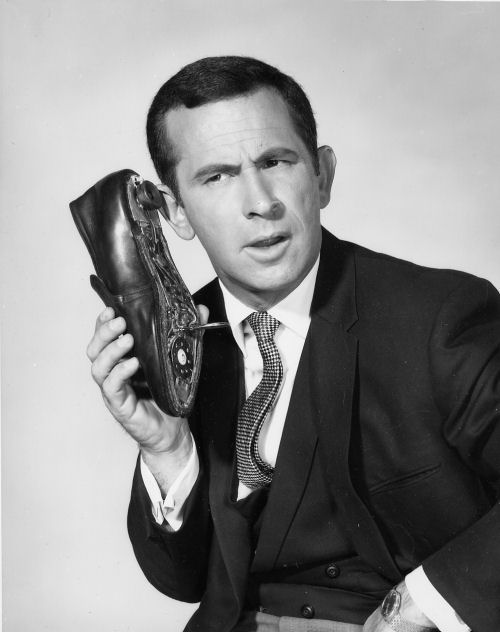
The latest film to make the unsteady transition from television to big-screen started out as a series collaboration between comedy power-houses Buck Henry and Mel Brooks, and is fondly remembered as a sharply-written schtick-filled send-up of the guns and gadgets formula of the James Bond series, starring Don Adams as Maxwell Smart, Agent 86 of CONTROL (the enemy agency was named KAOS). I have fond memories of the sure-fire laugh from my father at the finely-timed closing of a security door on Max's nose at the tail-end of each episode.

When it was announced that "Get Smart!" (the series had an exclamation mark, which seems to have gotten lost somewhere) would be made into a new film, * and that Steve Carell would be playing Smart, it seemed either a very shrewd move or a very bad one. Carell would be hard-pressed to match Adams' energy or his high nasal whine of a voice, and it's hard to imagine Smart without either of those.

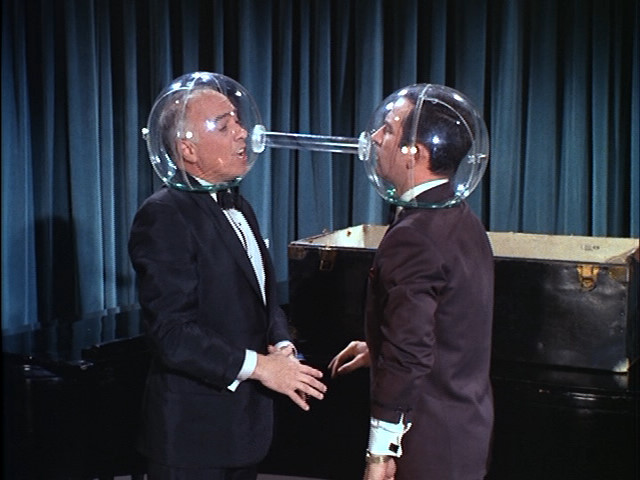
Don Adams' crack timing was also something that would be hard-pressed to duplicate--it was Adams alone that made the constantly re-used "Cone of Silence" gag work, with just a razor's edge of silence before his "Eh?!" and that was done in two-shot with the unflappable set-up of Ed Platt as CONTROL's Chief. Plus, "Get Smart!" was sharply written--a "MAD" magazine pastiche of parody, comedy schtick, slapstick and pop-culture references (along with enough sure-fire repeatable gags from Henry and Brooks to fill out the half-hour). Even at its worst, "Get Smart!" was sure to entertain.

So, one approached the movie with hopeful skepticism. Carell has failed as often as he's succeeded, and the ghost of
Don Adams would be tough to emulate or shake off. Fortunately, there's not a problem; "Get Smart" is hilarious, in many of the same ways as the series, but also with its own unique breezy rhythm that ekes out belly-laughs from sharp writing and performances. Only the casting of Terence Stamp (never a good clown) as KAOS operative Siegfried disappoints (series Siegfried Bernie Kopell makes a too-brief appearance). Anne Hathaway manages to be funny, vulnerable and commanding as Agent 99 (at one point donning a Barbara Feldon page-boy wig) who's a bit more Emma Peel than the original. Alan Arkin is a fine Chief, dry as dust, and "The Rock" a pleasant comedian. Bill Murray makes a cameo as the CONTROL agent, played by David Ketchum, that always hid in lockers, mail-boxes, garbage-bins.

But it's Carell's movie. The only gags he can't make work are, strangely enough, the old reliable ones from the show, and they're trucked out as if they were some sort of duty that had to be performed, reluctantly. But he does re-create the Smart persona in his own style--arrogant, foolish, running on fumes rather than juice, and all-too-willing to ignore his failings. But played sedately, and with an odd sort of rabbit-y vulnerability. He makes Max work, and that's a bit of a miracle, given Adams' identification with the character.

It's a good lark, trotting out bits from Bond and other spy-movies to make fun of (like a complicated fight in free-fall, a "Jaws"-type comic villain, and the gadgets), but in its final half-hour loses its good will with an extended chase involving planes, trains and automobiles that could have easily been sacrificed to get to the finale borrowed from "The Man Who Knew Too Much." If, "Get Smart" had stayed smart...and funny...without depending on the too-familiar formula of vehicular mayhem, it would have been one of the more refreshing comedies to have come to theaters in a long time.

Missed it by that much.

Would you believe "Get Smart" is a "Cinematic Triumph"?

Would you believe it's the "Must-See Comedy Hit of the Summer"?

How about a "Cult Film for Blue-Haired Old Ladies?"

"Get Smart" is a rental, a very good rental, but a rental. Maybe buy some popcorn from the store.

* There already has been a "Get Smart!" movie, starring original Max, Don Adams, called "The Nude Bomb," which tempting fate with that title, proved to be a bomb at the box-office.

Monday, June 9, 2008

Rendition

Rendition (2007, Gavin Hood)

"Politics is personal".

Rendition by Gavin Hood is a story based around one of the most criticized tactics used by the Bush administration in their 'war on terror' - the removal of those suspected of terrorist activities to a location outside of the United States in order to avoid any of the remaining legal safeguards against extended detention and unlawful methods of interrogation. By setting this as a fictionalized account, we are meant to see the human face of those who are affected by this policy as well as those who employ it. The plot revolves around the detention of Anwar El-Ibrahimi (Omar Metwally) and the attempts of his wife (Reese Witherspoon) to find out what has happened to her husband when he fails to return from a trip to South Africa. She tries to enlist the aid of an old boyfriend (played by Peter Sarsgaard), who is now an aide to Senator Hawkins (Alan Arkin), who attempts to intervene on her behalf with the head of US Intelligence, Corinne Whitman (Meryl Streep) until it becomes politically inopportune to do so. Whitman represents those that believe that what they do is worth the price that others pay for it:

Corrine Whitman: Honey, this is nasty business. There are upwards of 7,000 people in central London alive tonight, because of information that we elicited just this way. So maybe you can put your head on your pillow and feel proud for saving one man while 7,000 perish, but I got grandkids in London, so I'm glad I'm doing this job... and you're not.

Ibrahimi has been removed to an unnamed Maghreb country where he is to be interrogated by the local head of police, Abasi Fawal (Yigal Naor), supervised by a CIA intelligence officer, Douglas Freeman (Jake Gyllenhaall). To add another twist to the plot, Fawal's daughter, Fatima (Zineb Oukach) is having a relationship with a young jihadist, Khalid (Moa Khouas) who is planning an assassination attempt on her father's life.

Freeman, played with almost a complete lack of emotion by Gyllenhaal, has had no experience with the interrogation of prisoners but is less than impressed with the results of Fawal's methods.

Douglas Freeman: In all the years you've been doing this, how often can you say that we've produced truly legitimate intelligence? Once? Twice? Ten times? Give me a statistic; give me a number. Give me a pie chart, I love pie charts. Anything, anything that outweighs the fact that if you torture one person you create ten, a hundred, a thousand new enemies.

Hood gets good performances out of his actors and for two-thirds of the movie, we are engrossed in a thriller but then it seems that the Hollywood suits stepped in and asked for some kind of resolution that would leave us suitably outraged but not too complicit in the use of torture. Though it is probably true that there have been many prisoners quietly released from detention, it is hard to see it happening in the way that is shown here. Which is a shame after what has come before in the movie.