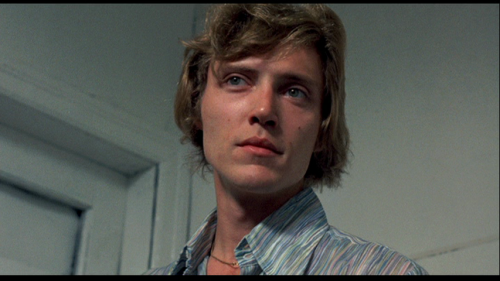
Kiss Me Deadly (Robert Aldrich, 1955) Kiss Me Deadly might be the greatest film noir film of all time. You know the genre—"When the streets are dark with something more than night"—implying that the lack of light goes far beyond foot-candles and is radiated by a void in the soul...or the permeating Evil in the World. Oh, there'd always been detective movies—but, they were usually played in a cocktail party environment, gussied up and prettified for the ladies...and there always had to be a pet. But, in the late 30's, with Hitler bringing real evil to our headlines and minds, that world changed, became darker, the booze cheaper, and the dames less dependable. After the war, we'd lost our innocence enough that the tarnished golden age of noir happened, its authors became legit, movie deals followed, and the resulting rougher, because we could take it. Combined with what Hollywood saw coming out of the European neo-realist movement, things got grittier, less polished and the gangsters came out of the dark cracks of the wood-work to walk amongst us and make the lives of decent folk miserable, while in the mind's eye loomed the existence of mushroom clouds that could turn all of us, any of us, into ash and dust. By the time the 50's sneaked up on us, promising a better life (if we followed the rules), paranoia walked the streets, the board-rooms and halls of government, setting the stage for Robert Aldrich's über-noir.
Mickey Spillane, author of "Kiss Me Deadly" in all its popular crudeness, didn't like the film version. It slapped his book around for its tough-guy attitude that puffed up its chest in the face of truly nihilistic forces that could wipe the sneer off its mug and dared to question the sexist-macho attitude of its protagonist. The script is by one of the better novelist-scriptwriter vagabonds, A.I. Bezzerides (whose novels were turned into the films They Drive By Night and Thieves' Highway). "I was having fun!" Bezzerides said of his adaptation of Kiss Me Deadly, and, indeed, it is a lot of fun in a savage, even cruel way, that has no truck with the merits of its source-book, and boils it down into a Maltese Falcon-ish quest of thugs for a "great whats-it," that, as is ultimately revealed is not riches, but power—at the time the most dangerous form of power extant.
Our savior—the point-man walking down these mean streets—is a private dick in all senses of the term, the not-subtly named Mike Hammer (Ralph Meeker), the bluntest of instruments, and where that other tool of the trade, Sam Spade, beat up bad-guys and gunsels, Hammer makes no character distinctions, he's as indiscriminate as a force of Nature, turning people, places and prized possessions into disaster areas so he can sort through the rubble.

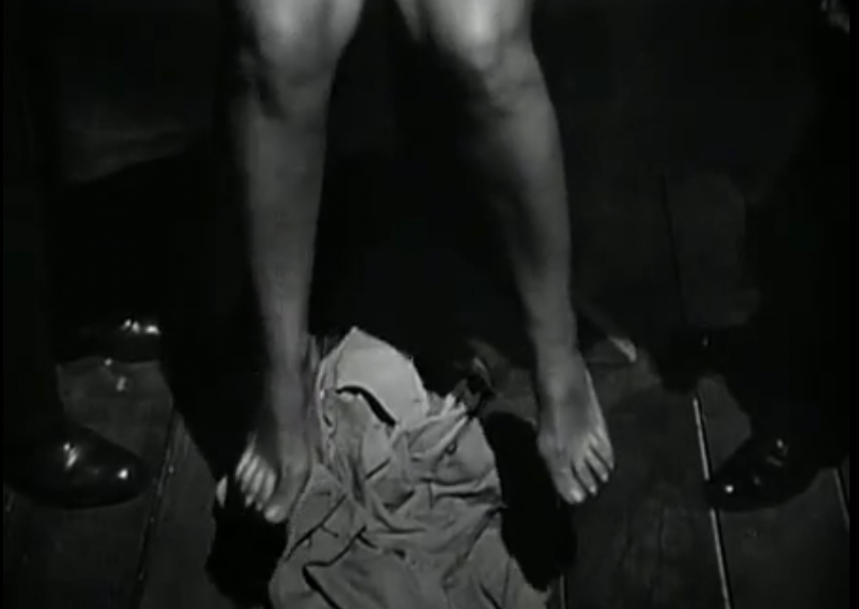
The caper doesn't start very subtley—it doesn't come to him, knocking politely on the door of his offices—he nearly runs it over on the highway. A damsel in distress (Cloris Leachman—yes, her—in her film debut) is running down the street in a panic and only a trench-coat. She might have escaped from a mental institution, but Hammer, at her request, tries to take her to the nearest bus stop.
"Get me to that bus stop and forget you ever saw me. If we don't make that bus stop…" "We will," says Hammer dismissively, confidently. "If we don’t," she pointedly says, "Remember me."
They never make it.
Details aside, Hammer wakes up in a hospital bed, remembering—the girl is dead, tortured, and he has two motivations: revenge and to find the people who tried to kill him and succeeded with her. Hammer strikes out, becoming the bull with Los Angeles as his personal china shop, getting closer to the responsible parties but not many answers. A detective without a clue, things usually have to be spelled out for him with a constant litany of "you just don't get it, do you's." His informants and victims dance around the answers, talking circumspectly, while Hammer just scowls, wondering if there's a way to beat the answers out of them.
It's the way things have to be, because almost everyone is corrupt, no matter what their position of the intelligence scale, and that includes the guy behind the whole operation, Dr. G.E. Soberin (Albert Dekker), the type of character Sydney Greenstreet might play in earlier mysteries: brilliant, erudite, but not smart enough to be brought down by baser instincts than his own. And, once he's gone, any hope of containing the evil about to be unleashed goes with him.
 |
The opening of "The Great 'Whats-it:" a "Pandora's Box" that would "inspire"
filmmakers Alex Cox, Steven Spielberg and Quentin Tarantino. |
There are two endings to the film: in the first, Hammer and his sexy secretary Velda (Maxine Cooper) manage to escape from the traditionally burning building (burning quite nontraditionally) and seek refuge in the surf. But, somewhere along the way, the film was streamlined, so their fate is undecided and, indeed, the film screams "The End" in the middle of a growing apocalyptic nuclear conflagration. Does it ever end, or does Los Angeles go up with it, the match being struck the sociopath who sold her soul for power.
It's the ending I first saw when I encountered the film and it's the ending I prefer: Kiss Me Deadly presents a world so far done the jungle path that even a thug like Mike Hammer can be considered a hero. Man has de-evolved so far but still managed to harness the power of God, that the inevitable happens. The film asks nihilistically, given how bad the world is, why not let the whole rotten system crash (sound familiar?). The quest for power has gone nuclear. Let 'em get what they deserve.
Given the view of the film Kiss Me Deadly, if the world is so corrupt, maybe the justice should be dealt in an uncontained fusion, where the shadows are permanently burned into the landscape. And so the world ends—not with a bang, but a high keening shriek, echoing the many screams that have occurred throughout the film.
Even in the glare of nuclear light, you can't get more dark than that.