Showing posts with label World War II. Show all posts

Friday, December 13, 2013

49th Parallel

49th Parallel (aka The Invaders) (Michael Powell, 1941)
Interesting propaganda film to promote the war effort by the British government, made by "The Archers" (Emeric Pressburger and Michael Powell) before they became "The Archers" and combining the writer-director credits together. More than anything, it was designed to influence isolationist American minds about the threat of the Nazis, by presenting a story where they arrive on our shores.

It is 1941 and a German sub is prowling Canadian waters, sinking any transport they can.  Detected, they make a run for Hudson's Bay and the sub commander orders a landing party to capture an outpost in the area.  But, soon after leaving the sub, the men see it attacked and sunk by a bomber, sent by the Canadian air force, alerted to their presence.  The Commander, Hirth (Eric Portman) continues to land to complete the mission, hoping that they can make their way eventually to the United States which is (gulp!) famously neutral in order to get back to Germany.


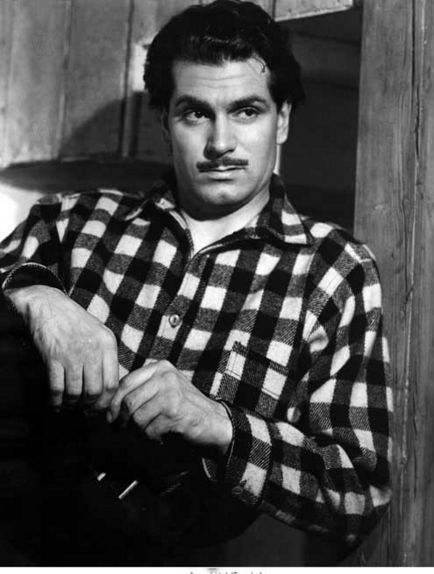
But, first they have to get through Canada.  First stop, a trading post, where Finley Currie and Eskimo guide Ley On are welcoming back French trapper Johnnie (Laurence Olivierwith the wildest accent you've ever heard, eh?) after being up north for eleven months.  The Nazi's take over the trading post, hoping to entice and hijack a plane to get them across the border.  But, it goes badly leading to a skirmish, which barely has the Nazis escaping with their lives.  They then make their way to a German Hutterite community led by Anton Walbrook, who first welcomes the visitors to their peaceful enclave, then when the Nazis' arrogance get the better of them and try to teach the community about their "better" way, Hirth and the community leader engage in a lively debate over the merits of each other's systems.  The Germans are kicked out, making their way to the wilderness where they are captured by the RCMP, but make their escape using an eccentric writer (Leslie Howard) as a hostage, but even that plan does not go as planned.  

Each encounter has reduced their numbers, and, at the last, only Hirth remains free and on the run.  He hops a freight to try and make it across the 49th parallel into the States, but riding the car with him is AWOL soldier Andy Brock (Raymond Massey), whose sympathies are still with Canada, despite being reluctant to fight, and he makes things very complicated.

It is a propaganda piece, after all, and if the various episodes seem a bit far-fetched and feel like a tortured demonstration on the length and breadth of Canadian diversity ("Meet the Canadians!  Even OUR Germans don't like THEIR Germans"), it is with the intent of contrasting that diversity with the sameness of the Aryan lineage and autocratic group-think of the sub crew.  If the thing gets a little pedantic, it was to educate reluctant Americans about Nazi philosophy in a dramatic fashion and inspire a feeling of "It CAN happen to YOU" to the "American Firster's."  It's a bit clumsy and the fisticuffs are a might ham-fisted, but it's positively sub-tle when you put it up against the thousand goose-stepping hosers of Triumph des Willens.  And Powell and Pressburger were just getting started.

Eric Portman's Commandant wants things a little
more orderly in 49th Parallel


Wednesday, July 3, 2013

Ministry of Fear

Ministry of Fear (Fritz Lang, 1944) So, here's the joke: a man walks out of an insane asylum and finds the world is crazier than he is.  

But, then, it usually is in Lang's films.  The forces of evil or nature are such that we don't stand a chance unless our own better natures or our just plain "stick-to-it-ive-ness" allows us to survive and move through.  And in Lang's directorial vision, the film frame is as much a trap as anything else, one that can be violated by unseen dangers that will drop into frame as if materialized by a malicious God out of nowhere to threaten those within it.


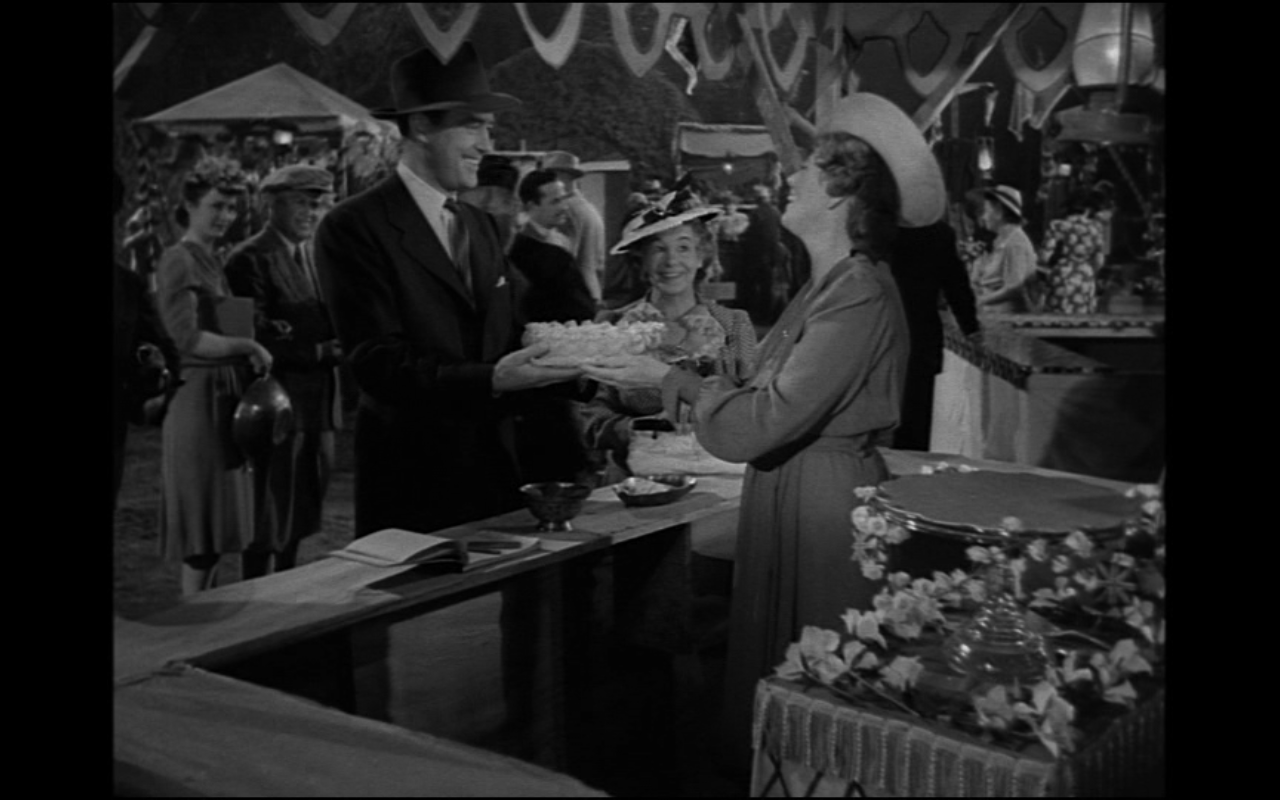
Ministry of Fear, based on a Graham Greene novel published the previous year, follows the dogged tracks of Stephen Neale (Ray Milland) as, having been released from Lembridge Asylum, he awaits a train to London and decides to pass the time at a charity fĂȘte supporting "The Mothers of Free Nations" where there is a booth for guessing the weights of cakes.  After dropping a shilling on a wrong guess, his next stop is a fortune teller's booth, where he's astonished to find the woman giving him the exact weight of one of the cakes at the booth across the way.  Neale can't resist using his knowledge (and testing the medium's prediction) and is astonished to find that he's guessed correctly and won.  


Everything's a little off-kilter in Fritz Lang's world.

Off to his train he goes, not knowing that his taking the cake has caused a commotion back at the tents and exhibits.  The cake has "gone" to the wrong man, intended for another (Dan Duryea).  On the train, Neale's cabin-mate is a blind man to whom he offers a slice.  But, Neale is astonished to find that instead of eating his portion, he's crumbling it in his hands.  The blind man is no blind man, and he attacks Neale, steals the cake and jumps off the train, pursued by Neale.  But it is the time of the Blitz, and as the two chase through a field in the night, bombs begin dropping, targetting their train.

Okay.  We'll stop there.  But, already, things are not what they seem, people are not who they say they are, and nobody can be trusted...not even a damn pastry.  It's not a cake, at all.  It's a MacGuffin, the movie-making slang for the object that the players in a movie seek (and has a sliding scale of relevance and importance*). 

The subsequent fandango has Neale involved with "The Mothers of Free Nations," a seance, dodging bullets with the police and secret service, and all sorts who pretend to be something they're not.  It's enough to drive a sane man crazy—if one hadn't already left an asylum.  That time in crazy-land might actually have steeled Neale for his subsequent adventure, which is no piece of cake.  Lang was the master of the paranoid thriller (at least until Alan J. Pakula teamed up with Gordon Willis in the post-Watergate 70's) and his ordinary man caught in the extraordinary is the very DNA of a Hitchcock thriller—in fact, Ministry of Fear might have been one of those that "got away" from The Master of Suspense.  With its seances, wolves in bureaucratic clothing and things that go boom in the night, all it needs is a national monument to be pure Hitchcock.  It's a fun, terrible ride, well worth seeking out.


*

Thursday, June 6, 2013

Above and Beyond

Above and Beyond (Melvin Frank and Norman Panama, 1952) The story of Lt. Col. Paul Tibbets who, during World War II, was charged with the task of training crews for the most secret bombing mission of the war—the dropping of the experimental atomic weapon that was concurrently being developed at Los Alamos.  The story is different in a couple different ways: one, made in 1952, it dares to tell the story of the mental strain that such a highly secretive mission can have on the psyche, especially considering the destructive consequences the new bombs would bring; two, probably to draw a female audience, it tells the story from Tibbets' wife's point-of-view, of the hardships that a war-time marriage must go through, especially in a situation where the details of the operation cannot be disclosed to anyone, even if the secrets and responsibilities threaten to tear the marriage apart.  The choices come down to nuclear war or nuclear family.  And both are extremely fissionable.

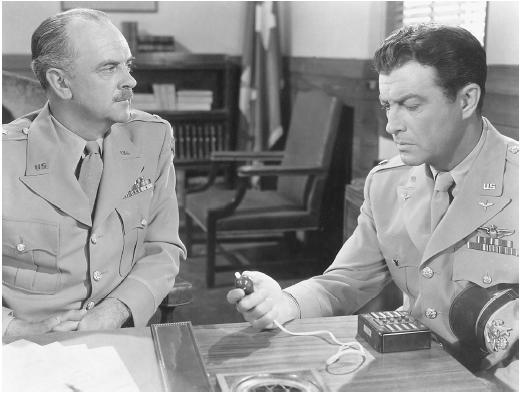
It's frustrating: Tibbets (Robert Taylor, far more nuanced than he usually is) working around the clock, must perfect the strategies for a potential suicide mission, while also consciously recognizing the horror his direct action will take—when offered an assignment, after readying the B-29 ("a flying death-trap," great commercial for Boeing) for high altitude combat missions, he's given a buzzer and told, "Now think—what would you do if that buzzer could end the war, but cause hundreds of thousands of Japanese lives." The idea rocks Tibbets back on his heels, considers all the options for forty seconds, then deliberately presses the buzzer.

Meanwhile, his wife (Eleanor Parker) must deal with long absences, no explanations, and the obvious stresses, the mission, which she knows nothing about, throws at them.  To make matters worse, she billeted, along with the other airmen's wives (who are only too quick to blame her and her husband for their own living situation), at Wendover air base in Utah, a hell-hole with sub-standard housing, raising two kids (with their own short fuses), virtually fatherless.  At first, it's suggested that she not come to Wendover, until the base's security officer (a tamped-down James Whitmore) opines that she being the only wife not on-base might arouse suspicions—the movie is full of such "damned is you do..." crossroads.

The scriptwriter-directors Frank and Panama, who were usually involved in lighter fare than this, do the character of Tibbets' wife no favors—she has difficulties, but domestically, not militarily, while a war rages on.  She's given some egregiously selfish moments, like telling her bomber-pilot husband how she feels bad for all the kids on the ground caught in the situation—absolutely, and an extremely valid sentiment, but are you really going to tell your bomber-pilot husband that, when he's got his own guilt he's dealing with?  At one point, remembering Tibbets' mother's name (which would eventually emblazon the Hiroshima bomber) she mopes "Enola—even the word backwards means 'alone.'"  Yeah, honey, the world's a powder-keg and it's all about you.  If you want something to worry about, how about your family turning to ash at ground zero?  And, not that she'd know it, her husband might get caught in the flash-point or his bomber might get buffeted by a shock-wave, the result of a man-made conflagration no atomic engineer could predict, and the world had never seen.  Tibbets as going through his own issues, but I'll bet his wife was faring better than her on-screen portrayal by Frank and Panama.  

Still pretty interesting to see a 1950's film sanctioned by the Air Force (and especially General Curtis LeMay—played in the film by Jim Backus) that contemplates the use of atomic weapons and—despite pressing the buzzer—takes that long pause to consider the options and the terrible weight such a decision might impose.


Thursday, December 6, 2012

The Dirty Dozen

The Dirty Dozen (Robert Aldrich, 1967) Another one of those films I've had (uh..) dozens of opportunities to see, but never bothered is Aldrich's off-set war-genre film, combining the heroics of The Guns of Navarone with the nihilism of The Magnificent 7.  

The Army chooses a loose cannon, Maj. John Reisman (Lee Marvin) to train and command a squad of brig-rats on a suicide mission behind enemy lines before D-Day.  The inmates are a motley crew of renegades, degenerates and non-com's (as in non-conformists), who need no training to be bad to the enemy.  If they survive, their jail sentences (and for some, death sentences) will be commuted.  If they don't, well, war is Hell.  But it's not a cell.  And these guys have nothing left to lose, given the situation, American kamikaze's, who might just make it to freedom, like any other soldier...if they make it through.


The movie is top-heavy with male character actors.  Besides Marvin, there's Robert Ryan, Ernest Borgnine, George Kennedy, Robert Webber, Richard Jaeckel, and Aldrich's Mike Hammer, Ralph Meeker.  Those are the good guys.  The cons include Charles Bronson, Clint Walker, Telly Savalas, Jim Brown, John Cassavettes, Donald Sutherland, and Trini Lopez (hey, where's Don Rickles and Bobby Darren?)  


Bronson gets a promotion in this one, becoming the Steve McQueen to Marvin's Yul Brynner, Cassavettes has the biggest character arc and the showiest performance (despite underplaying his death scene) winning a Best Supporting Actor nomination, Savalas has the most colorful role as a Bible-spouting psycho, and Jim Brown has the moment everybody remembers-sprinting across a courtyard throwing grenades down air vents, moving so fast the camera crew can barely keep him in the view-finder.


Aldrich—never one to be very conventional no matter what genre he was tackling—manages to make his anti-war, anti-authority statements in the story set-up—these guys have little choice but to hang it all out in combat, and, ironically, they're the best-suited to do all the dirty work, even if nobody is shooting at them in the initial stages.  At the time of its release, the film got all sorts of flack for its violence, which Aldrich manages to get away with by merely suggesting things with quick cut-aways, but it looks extraordinarily tame today (and, in fact, would look tame two years later when The Wild Bunch would take movie violence to a whole new level).  It might even get by with a light PG rating today.


But despite the dirt-dog-grubbiness of the whole thing, the director still manages to throw in some testosterone-laced sentimentality into it, then pulls back during the big action sequence as more and more men fall in battle and the director only affords them quick shots in death.  Pretty soon, you lose track of who made it and who didn't, and a pre-End-Credits roll-call of the dead is the only verification—not everybody gets their death scene, further undercutting any sense of heroics, despite the war-time setting.  And let's face it, most of the deaths occur by trapping the victims (party-guests mostly) in a cellar and burning them alive by drenching them in gasoline, and setting them alight with grenades.  It's never made clear why this might help the Normandy Invasion effort, but one shouldn't look too closely at the movie for authenticity.


Friday, October 12, 2012

Garbo the Spy

Garbo the Spy (Edmon Roch, 2010) Back to reality, but still dealing with spies, so "reality" is relative.  And the time-frame is similar—just as James Bond's creator, Ian Fleming, drew inspiration from his work with the OSS during the second World War, so, too comes this documentary—a true account of the work of Juan Pujol Garcia, a real-world double agent, who worked for the Nazis first, then after establishing credibility with them as a British-based spy (although he was actually living in Lisbon), offered his services to the Allies "for the good of humanity," and with the help of the OSS, creating for the Germans a funded network of 27 agents—all fictional.  To the Reich, he was known as "Arabel." To the West, he was "Garbo."  

His accomplishments were many.  First, he siphoned off considerable German funds to pay for his "network"—even establishing a pension for one of his phantom agents who had "died."  He was also able to send duplicate messages to both sides, allowing the British cyphers at Bletchley Park to have a "Rosetta stone" with which to check their round-the-clock de-coding efforts—an almost impossible task as the German changed their codes daily—and Garbo's writing style was so formal and distinct, his messages were easily identifiable.

But his coup was in spreading disinformation, the most successful instance being a big one—he managed to convince the Nazi's, particularly the CIC, Field Marshall von Runstedt, that the invasion of Europe would take place at the Pas de Calais under the command of the disgraced General Patton, rather than its actual location of Normandy—a ruse that was so successful, it was still believed in August of 1944, two months after D-Day, delaying an increased resistance to the Allied advancement to Berlin.  That's some trust.

The documentary is a potpourri of information—not unlike the hodge-podge of sources "Arabel" would cook up in his work—talking head interviews, vintage war-time footage, and recreations from such films as The Longest Day, Patton—big theater results of Garbo's deceptions.  The tone is slightly cheeky, with an emphasis on pulled quotes, especially from films like Our Man in Havana, Mata Hari, and an obscure Leslie Howard film called Pimpernel Smith, Howard being an impetus to the counter-intelligence efforts—his death in the war effort was both a cautionary tale and an exposure of Allied spy efforts.  Garbo is entertaining, as long as one can enjoy the breezy tone without darkening it with thoughts of the wholesale slaughter going on at the time.  But it is interesting in its tale of how world events can be shaped by one man with a lie and the razor's edge that is walked in times of conflict.


Juan Pujol Garcia or "Arabel," as he was known to the Germans

Wednesday, August 1, 2012

The Desert Fox

The Desert Fox: The Story of Rommel (Henry Hathaway, 1951) "In the somber wars of modern democracy, there is little place for chivalry." Words of Winston Churchill, during the Second World War and his censure debate before Parliament concerning Field Marshall Erwin Rommel, nicknamed "The Desert Fox," considered Germany's greatest strategist of WWII. 

Churchill may have been referring only to the consequences of his words, but that he made them is extraordinary.  No less extraordinary is that an American film studio would make a movie about a Nazi soldier six years after the termination of that war.  Even more extraordinary that the head of that studio, Darryl Zanuck, had spent a goodly amount of time as a chronicler of the North Africa campaign, and was as patriotic and conservative as they come.

But, he loved a good story.

And he found it in Desmond Young's post-war biography of Rommel; Young was also in that campaign, but in the trenches and had a brief encounter with him, inspiring him to research the man and write the book.  Young appears as himself in the film, but the narration sounds more like Michael Rennie.  The script, spare as it is, is by Nunnally Johnson (who wrote for Ford, Hawks, Wilder, Aldrich in a long career), who does very well at "writing to silence"—the practice of creating dialogue for conversations that no one surviving heard.  There's a lot of padding going on.  A pre-credits sequence of sorts that has a British commando raid on Rommel's HQ, some Allied talk about him—the letter telling soldiers not to attribute supernatural powers to the man is word for word true—and a lot of stock-war-footage sequences that bridge incidents that round out the story and provide the big picture (some of the scenes show Eisenhower and Patton).

But Rommel, played by James Mason, is the focus, specifically his years in the Second World War, his victories despite supply problems, and an increasingly erratic strategizing by the Fuehrer-in-Chief, which ultimately led the Field-Marshall to side with the conspirators who plotted to kill Hitler in a French bunker during a battle briefing (which was detailed in Valkyrie) and led, ultimately, to his death by Nazi-assisted suicide.

That turning of purpose, showing the conscience of a soldier fighting for his country, for its advancement and survival, whether by conquest or by treason, makes a very interesting story of principals.  And, along with the war footage, it is the through-line for the story, as Rommel comes to realize that in order to win the war and gain the peace, he must cut a little red tape, right at the jugular of the High Command.


Hathaway's approach is, as ever, artfully utilitarian.  He doesn't try to sentimentalize Rommel (too much), and spends a lot of time in desert locations trying to simulate the North African situations.  Stock-footage allows  Rommel to visit installations long since obliterated.  But mostly the filming is in California and Hathaway makes it work.  Johnson's script is first-rate, and nicely incremental in detailing Rommel's change of heart...and target.  Particularly nice is a prolonged dialogue with Field Marshall von Runstedt (Leo G. Carroll) full of irony and dripping sarcasm, but not so much that you'd mistake them for being other than loyal Germans...and chivalrous warriors of the Old School.  

Great cast, too, with Mason's cool intelligence drawing in all the veteran character actors like George Macready, Cedric Hardwicke, and Everett Sloane, and up-and-comers to the screen like Jessica Tandy (as Mrs. Field Marshall) and Richard Boone as his adjutant.  Luther Adler (brother of Stella) plays Adolf Hitler, and the Jewish actor had all the erratic moves and vocal cadences down.  Nice bit of irony there, in a film that was chivalrously kind to the enemy.

Mason would return to the role of Rommel two years later in the Robert Wise film of The Desert Rats, starring Richard Burton.


Thursday, June 7, 2012

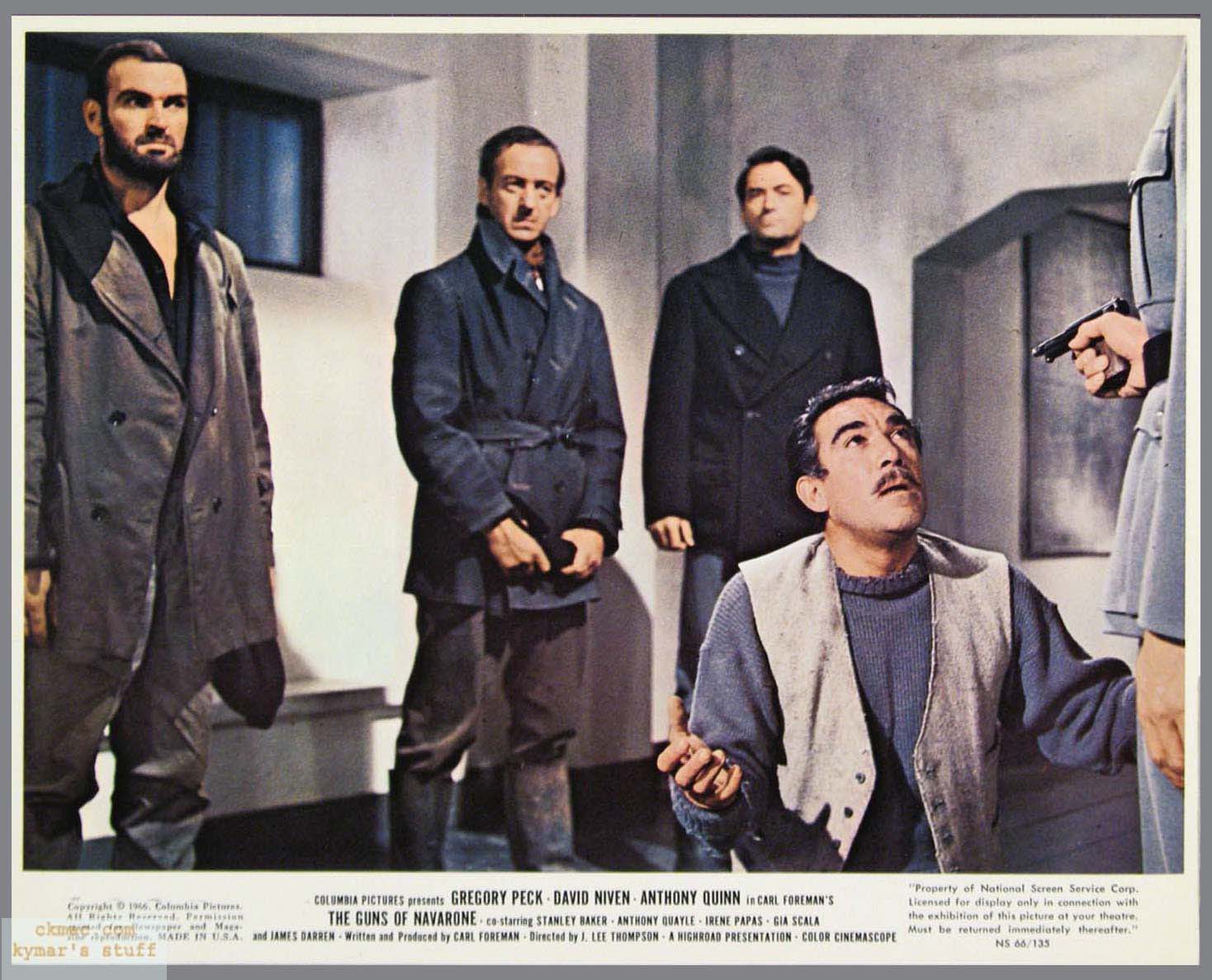
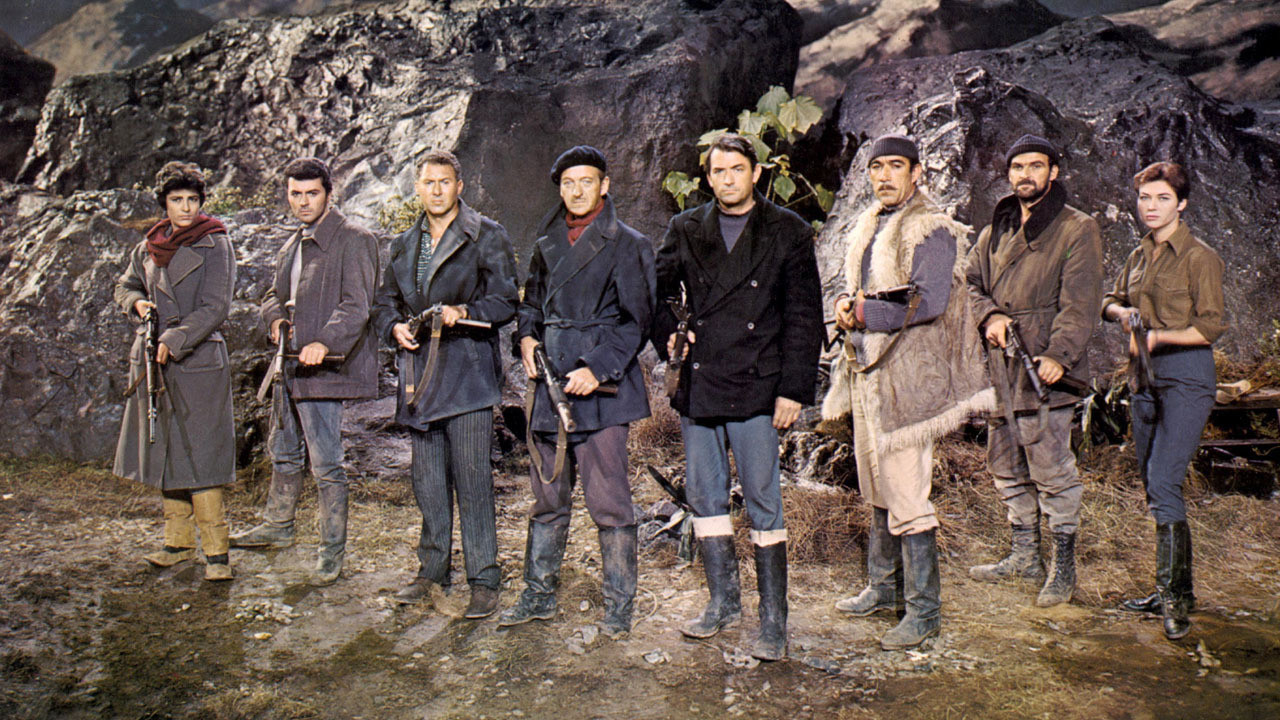
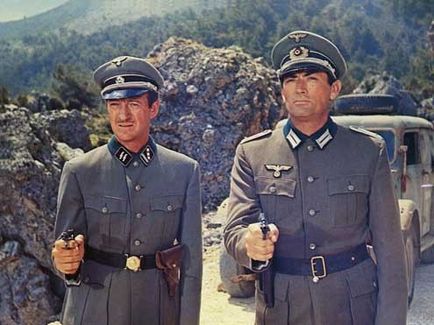
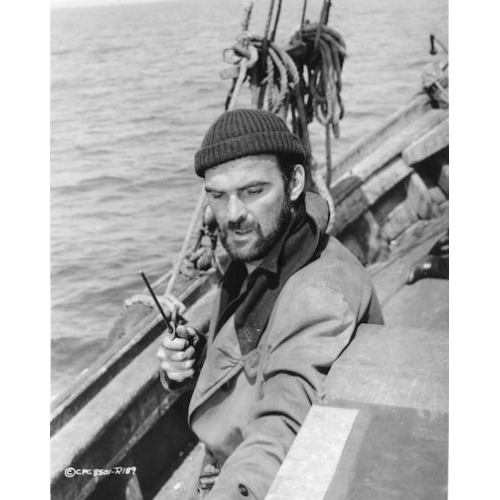
The Guns of Navarone

The Guns of Navarone (J. Lee Thompson, 1961) Maybe I should do a new LNTAM series—"The Ones That Got Away."  Somehow I managed to miss this one, an essential "action" film that "everybody" saw when it first came out, AND during umpteen playings on television. Not me.  I managed to sit down and watch it straight through only recently.  I do remember it from one particular Dick Van Dyke Show episode (Season 5, Episode 139-"You're Under Arrest") where Dick and Laura had a fight and Dick stomped out and went to a drive-in and fell asleep in the car and no one believed him because the movie playing was The Guns of Navarone. "YOU SLEPT THROUGH THE GUNS OF NAVARONE??!!" 

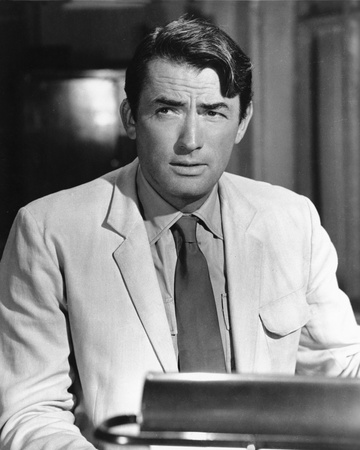
"With so many geniuses," says Team Captain Keith Mallory (Gregory Peck), "how can we fail?"

Ask a silly question...get a two and a half hour answer.  Particularly when the answer involves material supplied by Alistair McLean, from whose books nothing ever goes as planned and improvisation, no matter how well provisioned for, rules the day.

There are these cannons, see?*  They're caved into vertical cliff faces that have been daunting to regular forces.**  So, a team of specialists, cut-throats, and patriots form a surly group of cynics to make land-fall—extraordinarily uneasily—go up-country and meet up with resistance forces infiltrating a hummocky terrain populated by locals (who seem to be having a wedding every hour of the day) and an endless supply of Nazis, who seem to fall like ten-pins.

There's always a weak link in these groups.  In this case, it's Major Roy "Lucky" Franklin (Anthony Quayle), who has brittle bones and seems to have the ability to attract shrapnel.  The initial cliff-assault proves to be his undoing, although the rest of the team manage to make the climb without falling into the rear-projection.  And while not quite The Dirty Dozen, conflicts pop up pretty quickly—Corporal Miller (David Niven) is the griper, constantly needling Mallory and protective of Franklin.  Mallory has issues with Col. Andrea Stavros (Anthony Quinn) who holds a grudge for what happened to his family previously in the war.  Then there's Brown (Stanley Baker), "the Butcher of Barcelona," who seems to be having trouble negotiating wish-bones and his own conscience.***

Director J. Lee Thompson (a good yeoman-like director, who only gets "arty" on inanimate objects) keeps things moving fast and the frame centered—despite being a "widescreen" Cinemascope roadshow—managing to make everything capable of fitting into a square TV-frame.

The hero of the story, though, is Carl Foreman, black-listed writer-producer, who migrated to Europe to make films.  Despite the gung-heavery on display, his script still squeezes in enough anti-war sentiment and issues of conscience without slowing down the action any, even impressing crusty old John Wayne, one of the anti-communists who pressured him to leave the States.  His "Guns" fits into the same cynical fox-hole as the earlier Awards magnet The Bridge on the River Kwai, which he had once worked on. 

Curiously, even though I missed the original, I still managed to see its sequel Force 10 from Navarone (which recycled quite a lot of the first film's climax) a couple of times.  That one came out a full 16 years after the first, just in time to catch such up-and-coming stars as Harrison Ford, Barbara Bach and Richard Kiel, and replacing Peck and Niven with Robert Shaw and Edward Fox, two (count 'em, two) British actors who seemed to fit the characters a little bit better.  


* Them bloody "Navaronian" guns


*** Peck had an amusing homo-erotic spin on the story:  "David Niven really loves Anthony Quayle and Gregory Peck loves Anthony Quinn. Tony Quayle breaks a leg and is sent off to hospital. Tony Quinn falls in love with Irene Papas, and Niven and Peck catch each other on the rebound and live happily ever after." 


Tuesday, May 8, 2012

I Was a Male War Bride

I Was a Male War Bride (Howard Hawks, 1948) Hawks doing what he does best in a comedy—taking the finely chiseled speci-man that is Cary Grant and reducing him to a frustrated, humiliated wreck, robbing him of everything—dignity, decorum, manhood and sleep...mostly sleep.

In this one, Grant plays a Belgian in the French Army (in the same way he plays an American...as Cary Grant) in post-war Germany (it's actually based on a memoir—"I Was an Alien Spouse of Female Military Personnel en route to the United States Under Public Law 271 of the Congress" by the fellow this happened to) trying to break a black market operation with the help (and frequent hindrance) of Ann Sheridan.  They have history and start out loathing each other.  Along the way, he suffers bumpy rides in a motorcycle sidecar—in a rainstorm, no less—is nearly vaulted and scrunched by a barricade, paddles on the brink of a waterfall, climbs a pole (only to find that the sign, in German, says "Wet Paint"), is knocked off an awning from the second floor of a hotel, tossed in jail, and, in general, is made to suffer every indignity known to Man.

War is Hell, with several levels of humiliation, and its an everyday occurrence in this man's (and this woman's) Army.  If it's not a battle of the sexes. its a battle with bureaucracy, or the everyday battle with being a stranger in a strange land.  It is constant frustration, and Grant, outwardly so unflappable, is the master of its comic equivalent (as evidenced by such Hawks-Grant pairings as His Girl Friday, Bringing Up Baby, and the non-Marx Monkey Business.  Grant was the perfect test-subject for emasculation and the break-down of the cool customer.

As is typical Hawks, the camerawork is nothing fancy; set the camera up at chest-level and let the actors go and just try to keep up with everyone jumping over roadblocks, whether made or wood or red tape.  Typical situation—getting married.  She's American.  He's Belgian.  They're in Germany.  So, there are three wedding ceremonies and so many "I do's" that there's no time for a honeymoon—leaving him with one big "I don't" ("Get some sleep" says one of the hoteliers to him, to which he replies "That's ALL I'm getting," which is a pretty racy comment for the time, but Hawks always liked to push the envelope and tweak the censors)—plus, she's getting re-assigned to America, while he's fresh out of the Army, something that he'd been looking forward to but is now complicated by...all the complications.  But the mark of a professional in the Hawks world is the ability to punt, to improvise, and heal quickly...and move on, or around.  It was a constant with this director, in front of and behind the camera.  To persevere, do the job, despite set-backs and soldier on was the measure of a man...or a male war bride.

Thursday, May 3, 2012

Walking Kurosawa's Road: The Most Beautiful

The inability to write about the films of Akira Kurosawa to my satisfaction led me to to take a different path: start at the beginning, take each film in sequence, one after the other, and watch the progression of the man from film-maker to Master.   I'm hoping I can write more intelligently and more knowledgeably about his work by, step by step, Walking Kurosawa's Road.


The Most Beautiful (aka äž€ç•ȘçŸŽă—ă, aka Ichiban utsukushiku) (Akira Kurosawa, 1944) Kurosawa's second film as director was one I was willing to skip for its reputation as a documentary.  That would have been a mis-step, as it's a curious combination of fiction and non-fiction—doing it's job, certainly, as a record of civilian efforts during the Japanese war effort, but Kurosawa used the documentary as a spine for a story about the workers, their motivations and their interaction, which did far more towards the purpose than merely showing parades and workers huddled over machines.

So, does that make it a documentary?  Not really.  Is any propaganda piece truly a documentary, or is it advocacy?  Across the ocean, the Americans were making documentaries (by film-makers like Frank Capra, John Ford, John Huston,   Darryl F. Zanuck, and George Stevens) that mixed real footage with special effects and dramatized scenes, so the issue seems moot, not even worth bringing up.  But, it seems an essential piece of the Kurosawa puzzle.


Tasked with showing the efforts of the Nippon Kogaku optics factory in Hiratsuke that provided lenses for gunsights for Japanese Zeros (the original subject for the documentary, but shelved for budgetary reasons). The factory gave its full cooperation—the actors lived in the workers' dormitories and trained on their equipment.  There are brief montages of the women workers at their jobs in the factory-settings and lots of shots of parading workers in formation with flags and instruments—a precision team showing off.  There are lots of shots of that so the documentary aspect is satisfied.

But, that wasn't enough for Kurosawa.  There's no story.  The women working is "different" (certainly for that time) and inspiring; the parades, decorative.  Fine for the results required by the government.  But, all the parades in the world won't create a sense of sacrifice for the "common" man (or woman) to work towards victory; those are just pictures.  What inspires those images?  What creates the precision, the dedication required for the effort?

So Kurosawa weaves a story of one dormitory of women who are given a goal: prove yourselves.  An emergency effort is set up for maximum performance: the men must put out 100% effort; the women, 50%.  The women (respectfully) revolt.  Why half the effort of the men, when they can do just as much?  The factory relents, granting permission to push the limits and see what they can do.  Emboldened, the women knuckle down and re-double the work.

But it comes at a cost.  The health of the women suffer.  One actually leaves, taken home by her strict father who fears for her safety.  The support for her by her co-workers impresses him, and he bows in respect, but she leaves anyway.*  Conflicts arise.  The women begin to bicker over their relative efforts.  But, the results are what matter, and the women win the respect of their peers, their supervisors and managers...and themselves.  


Kurosawa once said The Most Beautiful is the film of his "closest to my heart."  Whether that's because it's his favorite, or because it's where he met, directed, argued with on-set and married actress YĂŽko Yaguchi would be speculation.


* She returns later in the film, and prances around, giddy with her return, but the emotion is not met by her co-workers, who leave to see what happened to their supervisor, who journeyed to retrieve her.  "It's good you're back, but get to work."

Saturday, April 28, 2012

A Guy Named Joe

A Guy Named Joe (Victor Fleming, 1943) Wartime fantasy film that was such a favorite of Steven Spielberg's that he remade it as Always in 1989.  One can see why, despite the torturous transition from changing the milieu from World War II bombers to forest fire-fighting.  It has a lot of diverse plot elements and crosses many genres: love story, war story, fantasy, action.  Yet it's also a personal story with a character arc close to Spielberg's heart: a man-child has to learn to grow up.  But, instead of committing to something, here the key to maturity is letting go...making the sacrifice.  Of course, that story is only one dangerous mission away from being told in any war film.  In a story about fire-fighting, not so much.

But, back to Spielbergian motivations—the best reason to remake this movie? The love story doesn't work. Whatever passes between Spencer Tracy and Irene Dunne in this movie feels more like mere tolerance than a quickening flame.  One hesitates to bring Hollywood gossip into discussing the results on film; what is on-screen should be taken at face value, and the situations  and logistics on-set should, if all goes well, be invisible to the casual movie-goer (and Fleming, a yeoman director who skirted the complexities of Gone with the Wind and The Wizard of Oz is better than most at surmounting them).  But, the chemistry between Tracy and Dunne, that is so important to making the rest of the film work is not there.  The two did not get along during filming, and Tracy's entire performance comes off as aloof and "above-it-all," not heartfelt as it should be.  In his update, Spielberg overcompensated, going the other way, Richard Dreyfuss' work being a little too smiley and treacly and trying too hard to be "winning," making his character seem petty and destructively selfish during Always' dark passages.

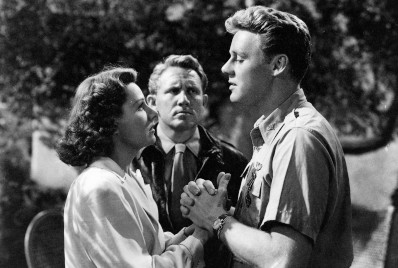
But, the story's a compelling one: Pete Sandidge (Tracy) is a chances-taking bomber pilot in the European theater of WWII.  He's best buddies with Al Yackey (Ward Bond) and sweet on Durinda (Dunne), a pilot in her own right.  During one mission, Pete is killed, and finding himself in the after-life, is tasked by "The General" (Lionel Barrymore) with helping to train a young pilot, Ted Randall (Van Johnson in his first major screen role) in the Japanese theater.  Durinda comes back into the picture, still shattered by Pete's death, but at the urging of Yackey, she ends up nearby, and, though reluctant, finds herself falling for Ted.

For Pete, this is agony, watching their budding romance, and leaves him conflicted about his "mission" and his feelings, and only an extremely melodramatic act of sacrifice forces him to "see the light," as it were.  

The screenplay is by Dalton Trumbo, and he works hard—maybe a might too hard—to balance the conflicting emotions in Pete, and as good as Tracy is, he can't seem to find the right balance to give Pete the depth of character integration to keep the different aspects of his personality together.  The motivations are there in the script, but Tracy, fine in individual scenes, can't seem to make Pete a whole human being, giving a slightly disinterested air to the character.  Some scenes were re-shot later in the studio to find a better balance (which, ironically, might have led to the problem), but the results on-screen don't pay off.  Maybe it's the integration of fantasy elements with a war film that causes the conflict, and although the film comes to a resolution satisfyingly, it leaves one feeling a little melancholy, as if something more could be done.  Partially, that's the film and how its elements might have more fully gelled.  But, it's also the resolution of the film, too.  Realistically (and bear in mind we're talking about a fantasy film here) the proper resolution is to face facts and accept and let go, for spirits on both sides of the astral plane...to accept grief and move on, parting.  A bitter pill, even if for a greater good (which is always suspect).  In the end, it comes down to making the best out of loss, and given the time of strife in which the film was made, that's a heartening statement to make, if superfluous, given the very real individual losses the world was producing during that war.

Interesting film, if not completely successful.  However, three years later, Michael Powell and Emeric Pressburger would take similar themes and turn it into the far superior, and more fantastical, A Matter of Life and Death


Tuesday, March 20, 2012

Red Tails

Why We Fight
or
The Brother Gets It First*

Like Francis Ford Coppola's Tucker: The Man and His Dream (which he also financed), Red Tails is the movie that George Lucas has waited the longest to make.  In development even before the "Star Wars" prequels, the story of the Tuskeegee Airmen has been on Lucas' mainframe for over 20 years.  And as with most director "Dream Projects," this one had the potential to soar into great summits of excellence or tail-spin into an exercise of excess and pretentiousness.
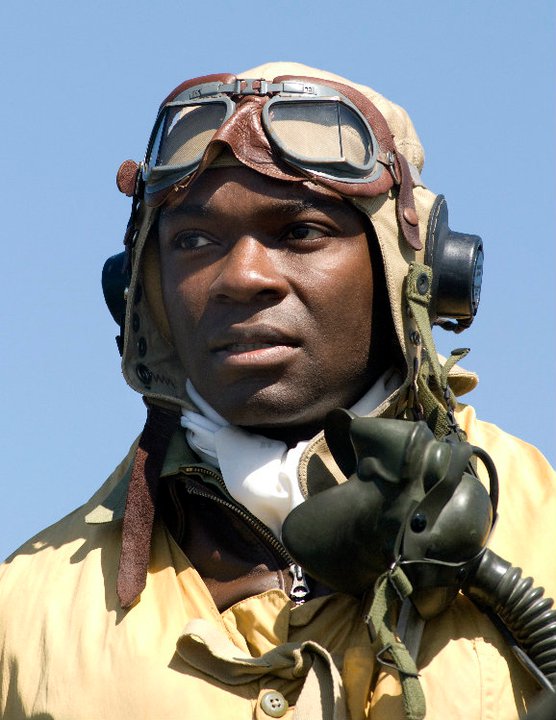
Red Tails is neither one of those, but it does do some interesting things along the way.  Respectful of the airmen, and "gung-ho" enough to end with "America The Beautiful" playing out over the End Titles,  it does remind one, in spirit, of the old war films, that appeared during and immediately after the second world war,** tough, haggard, slightly cranky, and all-too-willing to bring up some risky aspects of the vet's experience that would be tossed under the rug of homilies that later "recruitment" war films would present.  At the same time, it plays things a bit safe, dramatically, while, in subtle ways, taking chances that modern audiences—thank God—might not be aware of.***  It follows a typically diverse group of air-men with defining cliches—the "hot-shot" (David Oyelowo), the alcoholic (Nate Parker), "the kid" (Tristan Wilds"the yokel" (Ne-Yo)—through their story-arcs, fighting on two fronts—against the Nazis and their own brass and fellow soldiers, who, if not wanting to shoot the pilots out of the sky, didn't want them in the air in the first place.

One good thing that sets Red Tails apart from the other "yes, they fought too" films is there's no "white-wash" element (as one finds in a good effort like Glory, where a forgotten story about the participation of black soldiers in the Civil War, has to feature Matthew Broderick and Cary Elwes over Denzel Washington, Morgan Freeman, and Andre Braugher). These guys are on their own. There's no angelic white-devil's advocate that has to make the condescending "these are men" speech and, if anything, here, the white guys are pushing against back, making this film a lot more dramatic than your standard "liberal guilt" trip, where everybody's mind miraculously changes once "they're" "given a chance."****  The pressure never lets up on them and the only time they don't have to be on the defensive is in the air, fighting. Their inclusion in the war effort is a convenience, taking pressure off the other guys, and nothing noble. Doesn't matter to the pilots, though, as long as they're free of Earthly bonds, fingers on the triggers and Nazi Aryans in their sights.

And the battle scenescomplex, nasty and dangerous as the dog-fights are— are where Red Tails excels.  The same visceral energy of the Death Star battles (which were pre-visualized with edited WWII dogfight footage) is here, but with a rougher edge, bumpier, and more of a sense of true danger than a battle in space could provide.

Why'd it take so long?  Probably because Lucas wanted to do this one right (and also because studios were reluctant to finance a movie this black-centric), so he took the back-seat producer job, wrote the frame-work, hired John Ridley to write it and director Anthony Hemingway to film it, then doing some re-shoots (reportedly written with "Boondocks" creator Aaron McGruder) to do some dramatic streamlining.*****  Usually, it works with Lucas projects, especially when the director is strong, like Spielberg; there's a dramatic frisson that happens when it's not a "one-man/one-vision" project—something that was missing from the "Star Wars" Prequels, which suffered from too many "yes-men"—and Lucasfilms always seem to be better when he has to compromise and think off the top of his head...or someone else's.

One still gets a sense, though, of pandering.  The film Tuskeegee's don't need the "hey, these guys are good" comments that drop like leaden bombs throughout the film's second half.  As an audience, we can see it, we don't need to have it re-inforced by the white pilots they're escorting, especially considering those flight sequences are the best thing in the film.  The energy, thrills and derring-do (with their frequent "Yahoo" moments) are far more emotionally satisfying and communicative of the pilots' excellence.  Those sequences make Red Tails reach great heights, when everything else is trying to keep it grounded.  They didn't play it safe.  There's no good reason the film should.

Red Tails is a Rental.

The first wave of Tuskegee pilots

* A variation of the "trope" "Black Dude Dies First," which is a truism in "easy" drama and always struck me as being seminally racist.  In a war situation, with an all-black cast, it isn't true, and feels far less manipulative than in most war films.  In this war film, people die because "war is dangerous and people die in war."  It's random, unfair, and serves no purpose—not even dramatically.  That was an important take-way from this particular war film.

** This was in the 1940's, kids.


*** It's a bit soapish, but there's a romance between "hot-shot" pilot "Lightning" and an Italian girl, where nothing (blissfully) is mentioned about race, making the sequence seem idyllic, but also not clueing modern audiences in to the fact that if the same events happened in the country the pilots were fighting for, he would have stood a good chance of going to prison or being lynched for it.  It passes without comment or explanation, which might be dramatically risky, but sure feels good.  Real progress is made when the un-usual becomes commonplace and antique words like "miscegenation" disappear like disgarded, rusty tools.  Racial prejudice is SO "last century."

**** Even so, there's still a little too much of it, done mostly in voice-over behind masks, as if in post-production after-thought.  The screen-actions speak louder than any number of patronizing words.

***** Not sure where those sequences are—I'd only be speculating—but at one point "the kid" is shot down and put in a Nazi POW camp—the same camp that was the origination of the events and the film of The Great Escape.  Amusingly, there is one sequence that looks shot-for-shot like a sequence from the John Sturges film with "the kid" in the role played by Steve McQueen!  Heh.