 The Guns of Navarone (J. Lee Thompson, 1961) Maybe I should do a new LNTAM series—"The Ones That Got Away." Somehow I managed to miss this one, an essential "action" film that "everybody" saw when it first came out, AND during umpteen playings on television. Not me. I managed to sit down and watch it straight through only recently. I do remember it from one particular Dick Van Dyke Show episode (Season 5, Episode 139-"You're Under Arrest") where Dick and Laura had a fight and Dick stomped out and went to a drive-in and fell asleep in the car and no one believed him because the movie playing was The Guns of Navarone. "YOU SLEPT THROUGH THE GUNS OF NAVARONE??!!"
 "With so many geniuses," says Team Captain Keith Mallory (Gregory Peck), "how can we fail?"
Ask a silly question...get a two and a half hour answer. Particularly when the answer involves material supplied by Alistair McLean, from whose books nothing ever goes as planned and improvisation, no matter how well provisioned for, rules the day.
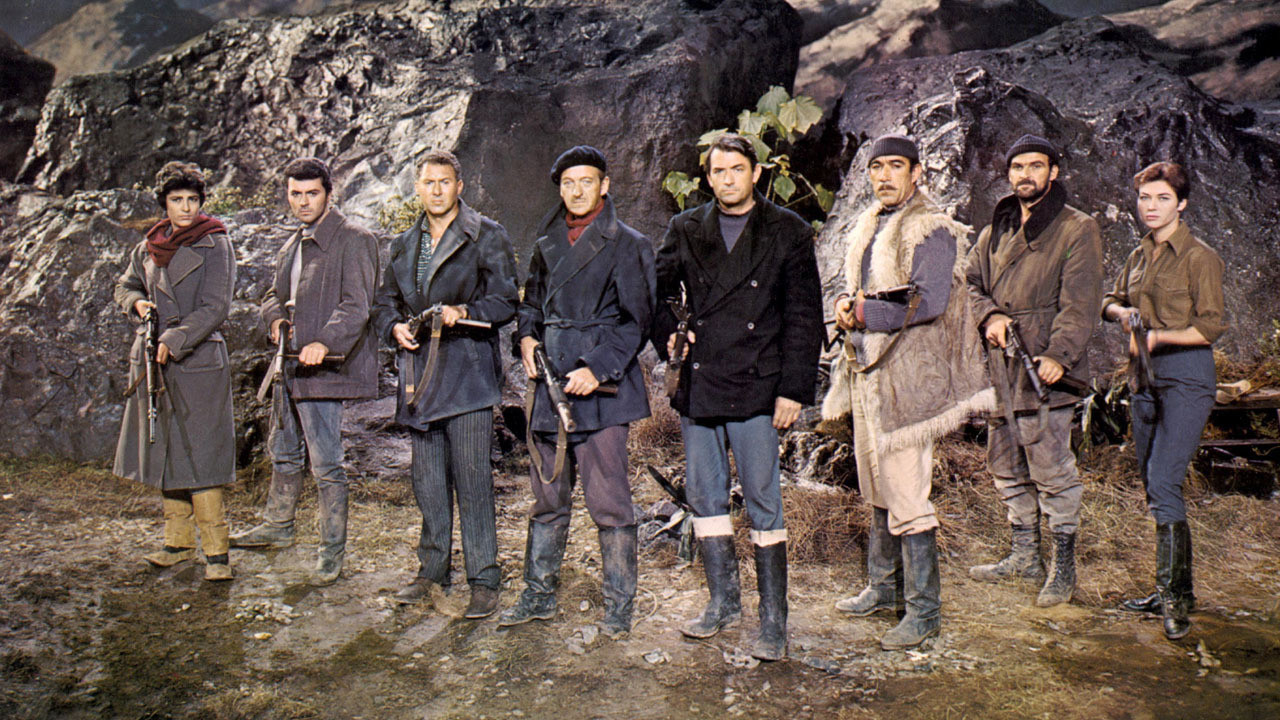
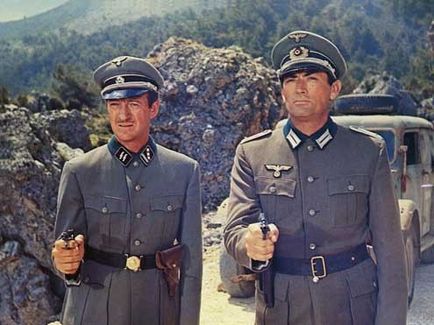
There are these cannons, see?* They're caved into vertical cliff faces that have been daunting to regular forces.** So, a team of specialists, cut-throats, and patriots form a surly group of cynics to make land-fall—extraordinarily uneasily—go up-country and meet up with resistance forces infiltrating a hummocky terrain populated by locals (who seem to be having a wedding every hour of the day) and an endless supply of Nazis, who seem to fall like ten-pins.
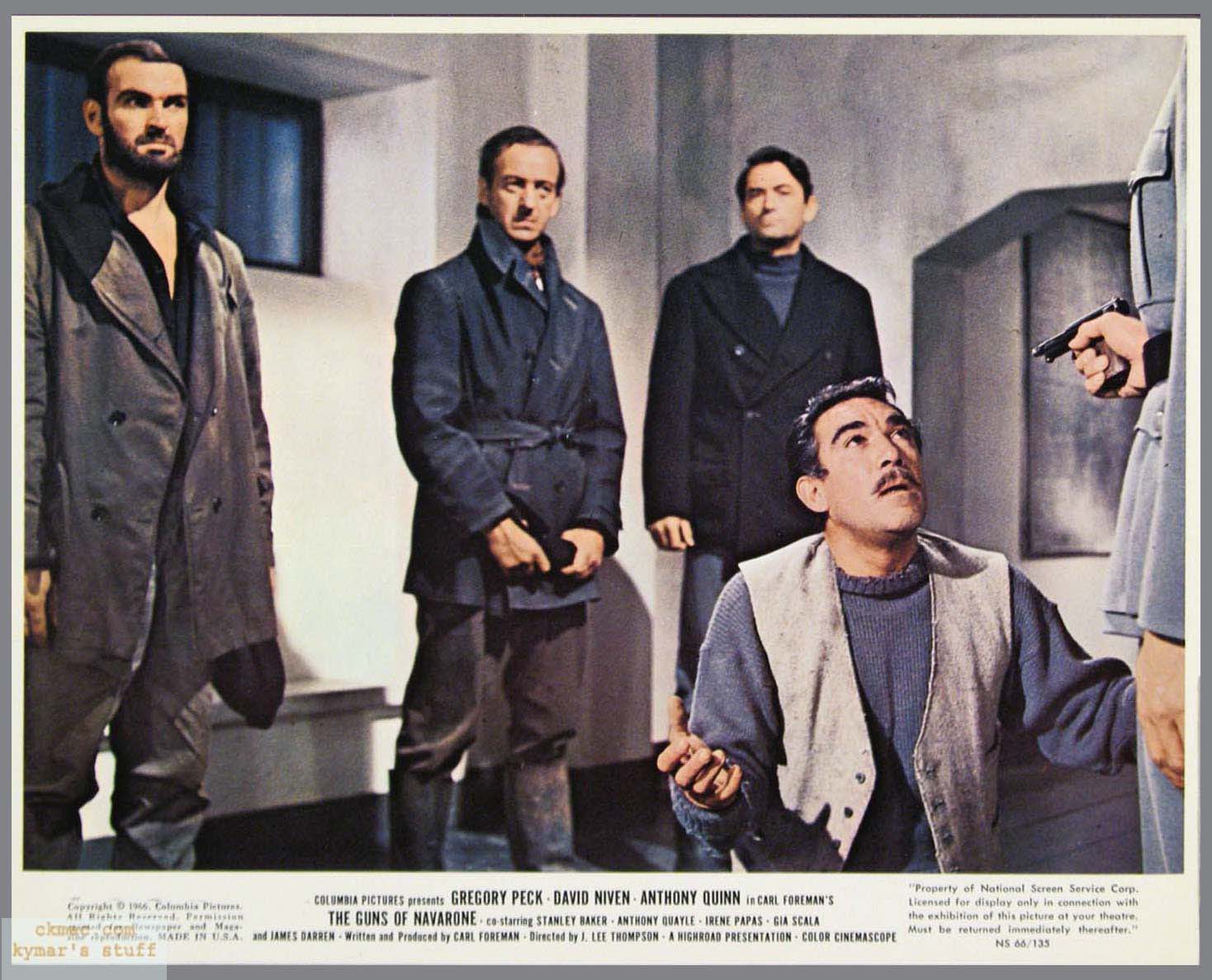
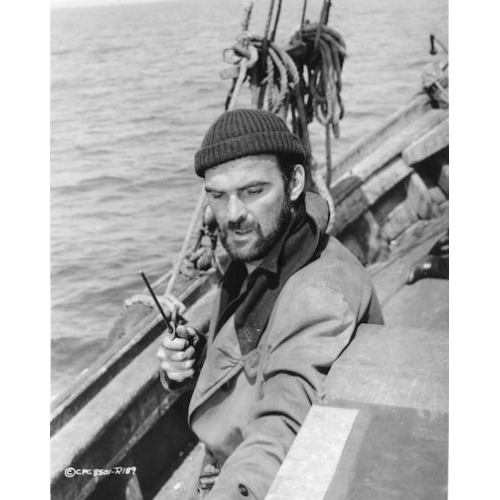
There's always a weak link in these groups. In this case, it's Major Roy "Lucky" Franklin (Anthony Quayle), who has brittle bones and seems to have the ability to attract shrapnel. The initial cliff-assault proves to be his undoing, although the rest of the team manage to make the climb without falling into the rear-projection. And while not quite The Dirty Dozen, conflicts pop up pretty quickly—Corporal Miller (David Niven) is the griper, constantly needling Mallory and protective of Franklin. Mallory has issues with Col. Andrea Stavros (Anthony Quinn) who holds a grudge for what happened to his family previously in the war. Then there's Brown (Stanley Baker), "the Butcher of Barcelona," who seems to be having trouble negotiating wish-bones and his own conscience.***
Director J. Lee Thompson (a good yeoman-like director, who only gets "arty" on inanimate objects) keeps things moving fast and the frame centered—despite being a "widescreen" Cinemascope roadshow—managing to make everything capable of fitting into a square TV-frame.
The hero of the story, though, is Carl Foreman, black-listed writer-producer, who migrated to Europe to make films. Despite the gung-heavery on display, his script still squeezes in enough anti-war sentiment and issues of conscience without slowing down the action any, even impressing crusty old John Wayne, one of the anti-communists who pressured him to leave the States. His "Guns" fits into the same cynical fox-hole as the earlier Awards magnet The Bridge on the River Kwai, which he had once worked on.
Curiously, even though I missed the original, I still managed to see its sequel Force 10 from Navarone (which recycled quite a lot of the first film's climax) a couple of times. That one came out a full 16 years after the first, just in time to catch such up-and-coming stars as Harrison Ford, Barbara Bach and Richard Kiel, and replacing Peck and Niven with Robert Shaw and Edward Fox, two (count 'em, two) British actors who seemed to fit the characters a little bit better.
 |
| * Them bloody "Navaronian" guns |
** Richard Harris gets the job of running down the odds: "First, you've got that bloody old fortress on top of that bloody cliff. Then you've got the bloody cliff overhang. You can't even see the bloody cave, let alone the bloody guns. And anyway, we haven't got a bloody bomb big enough to smash that bloody rock. And that's the bloody truth, sir."
*** Peck had an amusing homo-erotic spin on the story: "David Niven really loves Anthony Quayle and Gregory Peck loves Anthony Quinn. Tony Quayle breaks a leg and is sent off to hospital. Tony Quinn falls in love with Irene Papas, and Niven and Peck catch each other on the rebound and live happily ever after."





_02.jpg)
_01.jpg)



_01.jpg)


