Showing posts with label Italian. Show all posts

Friday, September 9, 2011

Il Bidone


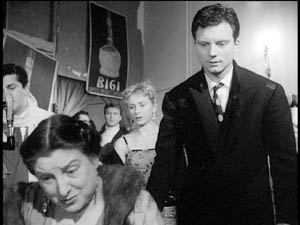
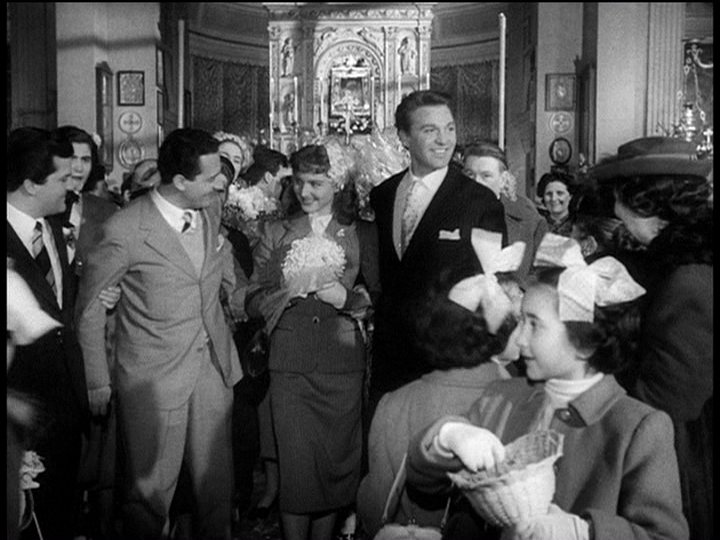
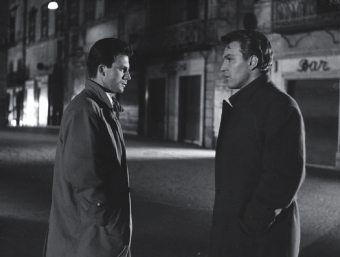
Il Bidone (aka "The Swindle") (Federico Fellini, 1955) The Italian maestro in his hey-dey.  This 1955 film follows a trio of grifters—Augusto (Broderick Crawford), Picasso (Richard Basehart), and Roberto (Franco Fabrizi)—who are low-level con-artists in search of the Big Score—even a Ponzi scheme would do.  They drive into a small village, all pomp and circumstance, with as much respectability as a disguise or a decent suit can buy, and with guile and a healthy disrespect for people's own need for "easy riches" or a "too-good-to-be-true" deal, bilk the citizenry out of as much cash as they can find lying around.  As priests (using the respectability of the Church), they convince simple farm-folk of "buried treasure."  On a grander scale, they're developers collecting down-payments on rooms to a vapor—hotel that will never materialize ("The economy's bad and we've suffered some set-backs"). 

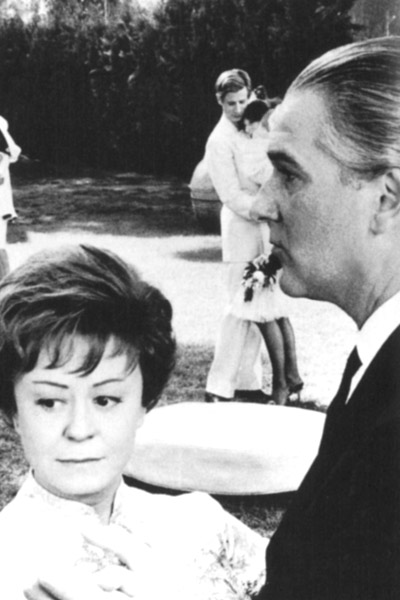
For Picasso, there are dreams of becoming a famous painter (but in the mean-time he can forge a few masterpieces to get by, much to the chagrin of his long-suffering wife, played by the wonderful Giulietta Masina).  Roberto, their chauffeur/get-away driver, is young to the game and is always looking for new angles so he can set off on his own crime-spree, free of "the losers" he thinks might be holding him back.  

But, the leader of the group, Augusto, is feeling the advance of age and getting a little desperate; he hasn't achieved any real fortune, just what can be piffled away on a falsley high lifestyle and an evening of prospecting at the clubs (he's not a high-roller, but he has to play one and that can get "spendy").  He is torn.  He wants the respectability that a really big perpetual con (like the kind found in government circles and among the constabulary can provide) can bring.  In essence, what he wants to do is be for real what he only play-acts as his work.  A man of respect, a high roller...an adult, or his version—his imagining—of what that is, this overlarge, over-age boy in big pants.  For Augusto, he hits "the brick-wall of Reality," in the presence of his very real daughter, for whom he wants most to be seen as a man of respect, a man of accomplishment, instead of the fraud he pretends to be.

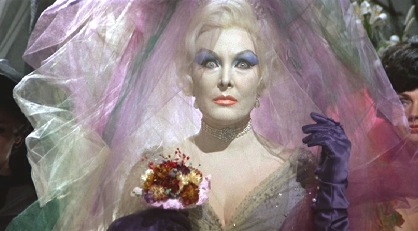
I started out this review saying "the Italian maestro in his hey-dey" and have come to this point wondering if that is true.  I've often dismissed his latter films as inferior if more complicated and less grounded in reality to his 1950's films, which are more asprirational in nature.  They're about wishing and hoping for success which eludes their protagonists—the street-performers of La Strada, the drifting men of I Vitelloni...Cabiria.   When Federico Fellini became "Fellini," international artist, he seemed to lose that touch of "becoming," to make observations of his new life of "having made it," and finding it difficult to maintain and empty, finding it wanting, and in a sense, was compiling an autobiography of his journey to success and beyond.  Even his wife (Messina) complained that his Juliet of the Spirits wasn't about a woman's issues, but about his own.  His movies about the glitzerati felt hollow and self-absorbed (appropriately). 

But, the director still aspired, although he struggled for subject matter (see 8½) or funding, especially in his later years, despite his reputation.  He retreated to fantasies and circuses, reality being not enough—and maybe not sure anymore about what reality was, surrounded as he was by reputation, the expectations of fame, and the glare of the spotlight.  Simple virtues and humble origins cannot be found on the soundstages of Cinecitta, or the boardrooms of Titanus. 

But, the aspirations continued.  As if documenting Shakespeare's seven stages of life, Fellini's vision, aimed ever inward, began looking back, became nostalgic for those early times of "wanting" dreams, trying to reclaim them, make them real again.  Not so much aprirational anymore, but seeking the times and memories of aspiration, when the world was full of possibilities, when wonder was more than klieg-lights and grease-piant, a fraud wanting to be real.

I've had a review of Amarcord in the drafting stage for almost a year. I think I can write that now.


Thursday, July 21, 2011

The Double Hour

"Wishing Doesn't Make It So"

Sonia (Kseniya Rappoport) is a chambermaid in a Turin hotel.  It's dull work, broken by the creepy tenants, the staff gossip and the occassional suicide out the window.  This certainly doesn't cheer up Sonia's life and makes things particularly difficult at a speed-dating service where she meets (mercifully quickly) a bunch of losers all of whom are attracted to her. Last (but not least) is Guido (Filippo Timi), ex-cop now security guard, widower and sound-junkie.  They seem to hit it off, at least in speed-dating terms, and soon, they're taking the first tentative steps to...uh...slow-dating, I guess.*

Guido takes Sonia to the palatial res' he is currently monitoring, shows her his recording equipment which he uses to tape nature sounds, then takes her for a walk around the grounds.  As Fate would have it, that's just the moment that the mansion becomes the setting for a robbery and Guido is knocked unconscious, Sonia taken hostage and the place ransacked of its antiques and valuable paintings.  It is when one of the thieves decides to have some fun with Sonia that Guido jumps the guy, head-butts him...and then the gun goes off.

Fade to Black.

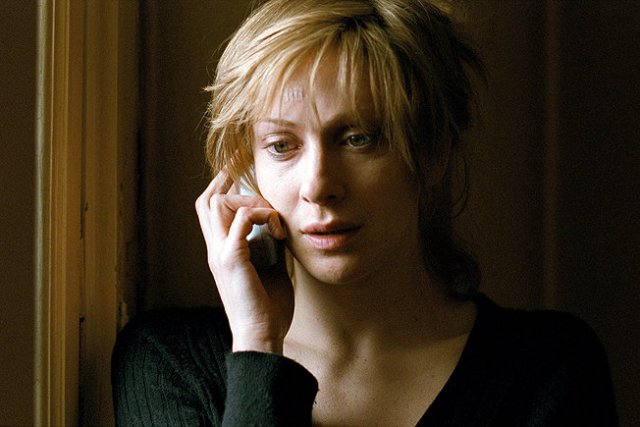
It is some time later.  Sonia is sporting a nasty scar on her forehead, the result of a bullet wound.  Guido is dead, killed by the same bullet, and Sonia mourns.  She misses him.  Well, more acurately, she is haunted by him...because she hears him speak her name every so often.  And then there are his ghostly appearances, and the strange booming noises that periodically elevate the audience out of their seats.  What is going on?

I can't tell you because it would spoil the movie.  It is enough to say that the film is a Möbius strip of twists and turns of both the mind and the heart, with a Hitchcockian identification shift that's disorienting, disheartening and damned clever.  There are enough red herrings to burst a fishing net, some of them necessary and some of them just distractions.  For instance, the title: Guido mentions on their first extended talk his own curious wish-myth of "the double hour"—when the hour and minutes are the same (like 12:12 am), make a wish and it might come true.  "Does it work?" asks Sonia.  "No," says Guido. 

Funny, but unnecessary.  It's used as a touch-stone for the entire movie, a call-back that ultimately adds little, one of a number of details that cloud the issue and distract (which may be the point).  A little buttoning-up of some of these elements might have made this one a better film.

Still, at its core, The Double Hour (La doppia ora) is a neat little conceit, and director Giuseppe Capotondi and his writers keep you guessing the whole way, bending, shaping and twisting the plot...and your mind along with it.

The Double Hour is a Rental.


* The slowest of which is Carbon-14 dating (....sorry).  

Thursday, July 7, 2011

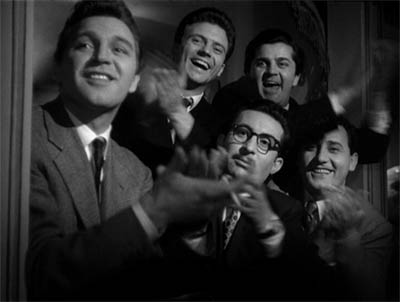
I vitelloni

I Vitelloni (aka The Large Calves) (Federico Fellini, 1953) So many films have come down the strada since this one (American Graffiti, Diner) that bear a resemblance to this nicely melancholy collection of stories about the wasted lives of young men that fans of those later Americanized versions will find themselves in cozily familiar (if uncomfortable) terrain.  It has become a staple of film makers who have become nostalgic, but just smart enough to see their pasts with the lenses of irony and affectionate smugness.

In a provincial town, there are five men who, post-education and living with their parents, are poised on the edge of putting away childish things and becoming men—and they're doing it as slowly as possible: Alberto (Alberto Sordi) a flamboyant life-of-the-partier, which is fine for him but he's bothered by sister's dalliances with a married man; Riccardo (Riccardo Fellini, the director's brother) is a fine baritone with never-realized dreams of being an entertainer;  Leopoldo (Leopoldo Trieste), the intellectual, has the required "script-in-the-drawer," never published, never performed; the unofficial leader, Fausto (Franco Fabrizi), whom all the others look up to, is an unrepentant womanizer, good at seducing but bad at staying 'til morning; then, there's Moraldo (Franco Interlenghi), the youngest, who observes all the behavior, following in the others' footsteps if not down their paths.

See, there's a problem: Moraldo's sister (Leonora Ruffo), who's just been named "Miss Siren of 1953" at the end-of-Summer bash, is pregnant with Fausto's baby.  When she faints after being crowned, the whole town becomes aware of the scandal and Fausto is forced to marry her, then take on a job as a clerk, which he despises.  Already, Moraldo's loyalties are divided, between loyalty to family and friends, between fun and responsibility, and right and wrong, and it creates a new perspective from which he observes his friends as they listlessly make their way from Summer to Summer (their season to shine) free, but not care-free...and not entirely rootless.  Time goes by, getting by, and all are shown lessons they don't want to learn—about compromise, about self-reliance and duty.  But there's always another party to go to, another prank to pull, another alley to duck into when the going gets uncomfortable.  There's no time to lose, as time can't be wasted, only spent.

It's all set to the sad swagger of Nino Rota's perfectly-in-tune score, and it is one of those rare Fellini films that ends with a resolution, rather than a wry shrug.  There is hope, and an indelible last image that hangs in the memory (and not because it's freeze-framed) that shows how brilliant Fellini could be when he kept things simple (and he had to on this film, shot over six months, with different cinematographers).  The last line is also curious, as it is dubbed, not by the actor, but by Fellini himself.  He would insert himself more and more into his films, until they merged, the two indistinguishable for a time, the man and his work, his dreams made real.


Sittin' on the dock of the bay...wastin' time

.

Saturday, December 5, 2009

Juliet of the Spirits

"Juliet of the Spirits" aka "Giulietta degli spiriti" (Federico Fellini, 1965) Any director's first forays into color from black and white are worthy of attention. John Ford filled his palette with startling reds. Stanley Kubrick set his first color film in the black and white world of space-travel and suffused interior spaces with hot red's, pale greens and cool blues. Fellini you'd expect to go somewhat crazy right off the bat.* But then, how colorful can priests and dirty beaches be? Oh, and the circuses. The circuses must be splendente with color.

But, the great Italian director starts conservatively with its dimension of other-worldliness and
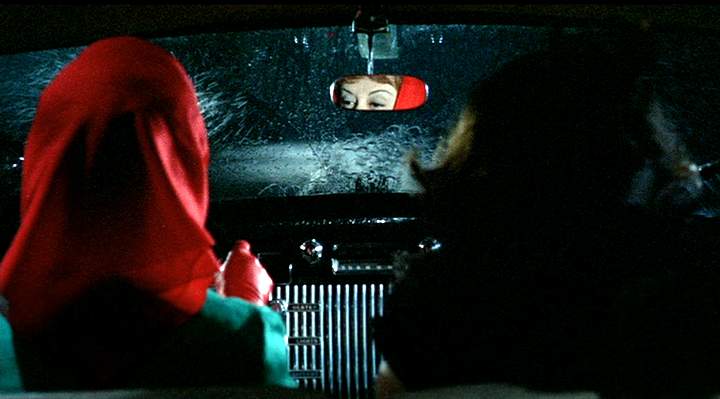
earthy matters with a natural palette and muted colors. But as the world of Giulietta (played by Fellini's wife and muse, Giulietta Masina) starts to crush inside and explode outwards, the colors within her reach become more vibrant and exotic, approaching the phantasmagorical as she explores the phantasmic.

On her fifteenth anniversary to roguish businessman Giorgio (
Mario Pisu), Giulietta has a romantic dinner planned, only to have to share it with the clutch of hangers-on and sycophants he drags home with him. She begins to suspect that she's sharing him in other ways as well, and she seeks guidance from the spirit-world and evidence from a detective agency (of priests!) to get the goods on her no-good husband. At the same time, she begins...slowly, reluctantly to move on from her past life to a new one.

Fellini has famously said "All of my movies are really about me."** Of course. He's making them and writing them—creating them—so they'd naturally reflect his thoughts and
obsessions. But the Fellini who earlier collaborated with his wife-star on empathetic films like "Nights of Cabiria" and "La Strada" was now an internationally known and renowned film-maker. His previous films—"La dolce vita" and "8½ "—were international hits, as well as being particularly autobiographical Pilgrim's progresses through the glitterati of a new Italian dynamic. He's still working in that mode in "Giulietta," but he's inserting Masina into the scenario as an outsider looking in on the decadent adventures of the journeying artist and exploiting the pain of the taken-for-granted wife in the story. One could be gossipy and say that Giorgio is Fellini and the entire movie is an invitation to Giulietta into his dream-life of passions, or a cinematic separation telling the world what a stick-in-the-mud his wife is, but given his past empathetic films with Masina, "Giulietta" is a bit dispassionate and curiously cold. And cruel; He's inserted his wife into his collection of grotesques and nubile concubines and finds her wanting.

Masina, too, is a little off-put in her performance. Where, in her previous roles with Fellini, she is passionate and eccentric, even effervescent, here she is withdrawn, and 1/4 into the film, after seeing
the constant tight smile that she has on her face—pensive, patient (but only so far), repeated again and again in a medium close-up, you get the impression that she's holding back her frustration. One can hardly blame her; "Giulietta" is caught between two worlds, neither one to her comfort or liking. As she expressed the pain and hope of her characters in the past, one feels her pain with this film.

But you can't argue with a dream.
The colors are eye-popping. The images are by turns, challenging and inviting. The film has the same fascination that a corner holds—what's coming up? What lies beyond? But somewhere, in turning the corner, the journey becomes all-important. The lead character becomes lost in the landscape; lost, or left behind.

* Fellini first experimented with color in his segment of the Omnibus film "Boccaccio '70"—one of the director's "half"-films.

** I've avoided using the exact quote as it comes in two different flavors, depending on which translation you use (and which bumbling entertainment "journalist" translated it): "If I were to make a film about the life of a soul, it would end up being about me," or "Even if I set out to make a film about a fillet of sole, it would be about me." Cosa?

Wednesday, August 26, 2009

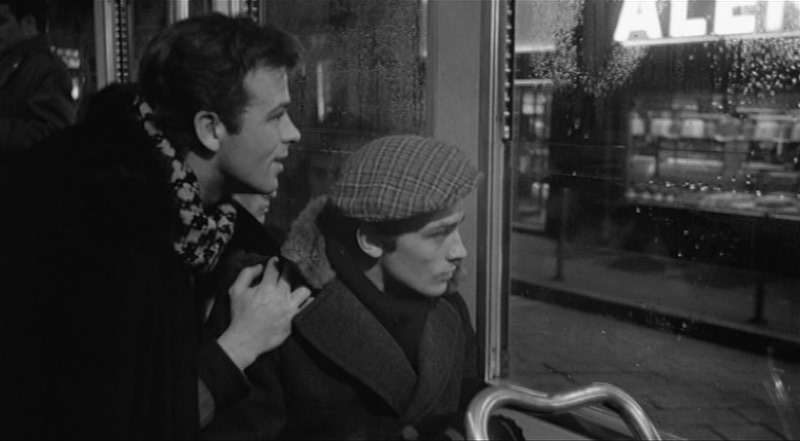
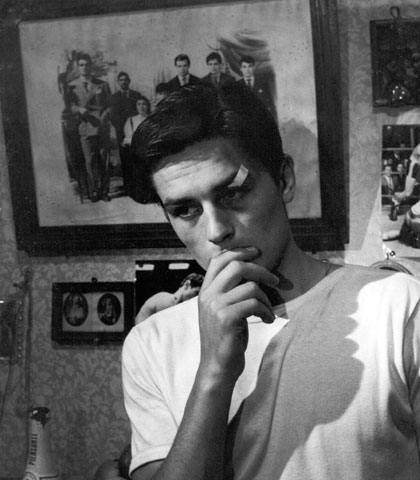
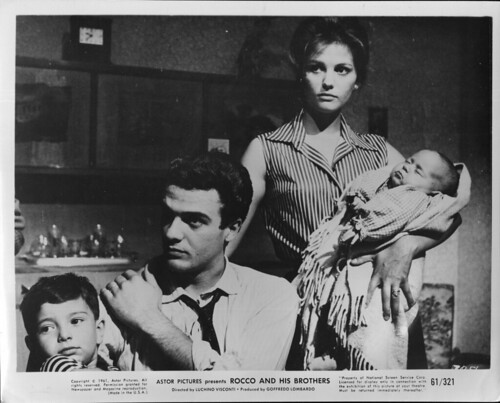
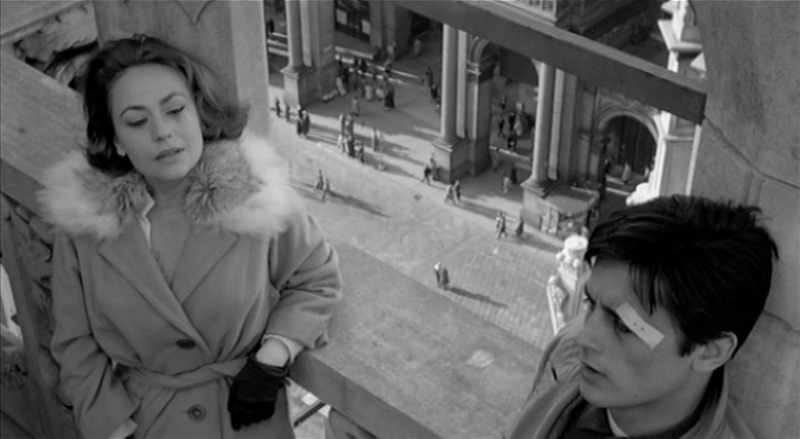
Rocco and His Brothers

"Rocco and His Brothers" aka "Rocco e i suo fratelli" (Luchino Visconti, 1960) The Parondi family moves up to Northern Italy from the country and they find simultaneous success and tragedy in the city. It's the immigrant's story: they move to make a better life and the choices they make are wholly determined by their conditions. The widow Parondi (Katina Paxinou) moves her brood to Milano, where eldest son Vincenzo (Spiros Focás) is guest of honor at an engagement party for his intended, Ginetta (Claudia Cardinale). The family swoops in and North/South prejudices erupt and break up the party. The worst news for Vincenzo is, as eldest, he has to provide for them and arranges a short term rental that he plans to break the lease on, so they can be kicked out and depend on government housing. From there, the brothers must find work and make a life for themselves.

But it's tough to be a saint in the city. The film is divided into chapters for each brother, starting with
Vincenzo, then the mercurial Simone (Renato Salvatori), good-hearted Rocco (Alain Delon), practical Ciro (Max Cartier) and the innocent Luca (Rocco Vidolazzi) who looks up to them all. Simone and Rocco take the fast money way out, going into the traditional immigrant sport—boxing—and its underworld of shady characters, Ciro gets an auto-workers job, while Vince ignores his mother's objections, marries Ginetta and moves out. Each brother, in turn, finds their escape from family, even Rocco whose mission seems to be to keep the family intact. The brothers are wholly unprepared for the city and their separate ways of dealing leads to internal conflict and strife, with the women in their lives often being the ones chewed up in their machinations.

It's not just the 3-hour length and terrific
Nino Rota score that suggest it, but you look at Visconti's direction of "Rocco and His Brothers" and you see the playbook Francis Ford Coppola used for "The Godfather:" the half-lit sets, the faces emerging from darkness, the "communal" shots where a lot happens in long takes of activity, the simultaneous staging of triumph and tragedy, and the bursts of violence communicated with a minute pre-echo of dread. That "Rocco" matches so many of "The Godfather's" themes—the passing of old traditions in modern times, the splintering of the family, the immigrant's plight, and the futility of good intentions—one can see how film-buff Coppola was inspired to make a silk purse out of Mario Puzo's best-selling sow's ear.

Thursday, May 7, 2009

Olde Review: A Brief Vacation

This was part of a series of reviews of the ASUW Film series back in the '70's. Except for some punctuation, I haven't changed anything from the way it was presented, giving the snarky, clueless kid I was back in the '70's a break. Any stray thoughts and updates I've included with the inevitable asterisked post-scripts.

This is a companion piece to the review of "The Earrings of Madame De..."

"A Brief Vacation" aka "Una breve vacanza" (Vittorio De Sica, 1973) The late Vittorio DeSica was not only a fine actor, as he displayed in "The Earrings of Madame De..." He was also one of the foremost directors forging a name for himself by helping to pioneer the post-war neo-realist school of Italian Cinema—a type of film that found poetry, not in the cloistered fabrications of the film studio, but out in the streets, favoring location shooting and the light of the sun to tell its simple, human stories.

Fortunately, DeSica never changed his style too much throughout his career, and his last film, in 1973, "A Brief Vacation" has all the strengths of the neo-realist style. Clara (
Florinda Bolkan) is a working class house-wife with a senile mother-in-law, a sick husband, a crud for a brother-in-law, three kids, a machine-like job...and a routine. She's getting old before her time and the pressures of her family, job, and time are causing her to lose her grip and her health. She is sent to Sondolo, a resort up in the mountain, in order to gain back her health. She leaves her utterly useless family behind to spend time away from the city and the pressures. It is a simpler, less rigid life in recuperation, but she finds that she is still needed—by the people of the resort, her fellow in-patients, by her new family.

DeSica excells at showing little details of life, that make his films that much more easier to live in. There is a sequence at a concert that is superb in its content and its sheer choreography.

In a film like this, with one central character, the person who plays that character has a difficult task. But
Florinda Bolkan has the sheer screen presence to carry it off. You can watch her for two hours; she commands the attention. The western films that she has been in ("Royal Flash" and "The Last Valley") both bombed in the U.S. and dragged her superb performances down with them. And so this may be your first chance to see Bolkan and see what acting power she contains.

The last scene in the film—Clara on the train returning to the city in a too-brief cinematic journey, much like a stylized version of a trip from Heaven to a limbo-tunnel (in which she is the only illumination) to a city-hell—is a superb moment of film, the last in a long line of superb moments in the films of Vittorio DeSica. He died soon after making this film, and he could not have foreseen how appropriate the last shot of the film—a city wall fading into blackness—could be such a perfect end to an illustrious career.

Broadcast on KCMU-FM on February 5th-6th, 1976

Some pretty torturous writing there. Also, since I haven't seen all of DeSica's films, I'm wondering how my younger self could make the claim that DeSica never changed his style. That seems unlikely. And I don't remember much about "A Brief Vacation," as it has turned into a faint memory. But, reading this, I'd like to see it again. I'd like to know if the character of Clara, considering she becomes indispensible in both the home and the resort, brings it upon herself, rather merely being taken advantage of. It's an interesting thought, as we very often make our own hells. And it would make her character arc that much more interesting, rather than her being stuck in a situation, then going to Paradise and finding love and happiness that she must forsake to go back. Suppose she's just the type of person who insists on doing things and people fall back into taking a back-seat to her wishes.

I also notice that it's tough to find "A Brief Vacation" (I had to settle for a "Review" poster for the film rather than a theatrical poster that might better illustrate the movie, and I found that one on Ebay!) in a search on the Internet. It might be that it's an Allied Artists release, and AA had some financial problems later on (although it's much easier to find their film, "The Man Who Would Be King").

It goes on the list of "To Be Re-encountered."

Saturday, April 25, 2009

Big Deal on Madonna Street

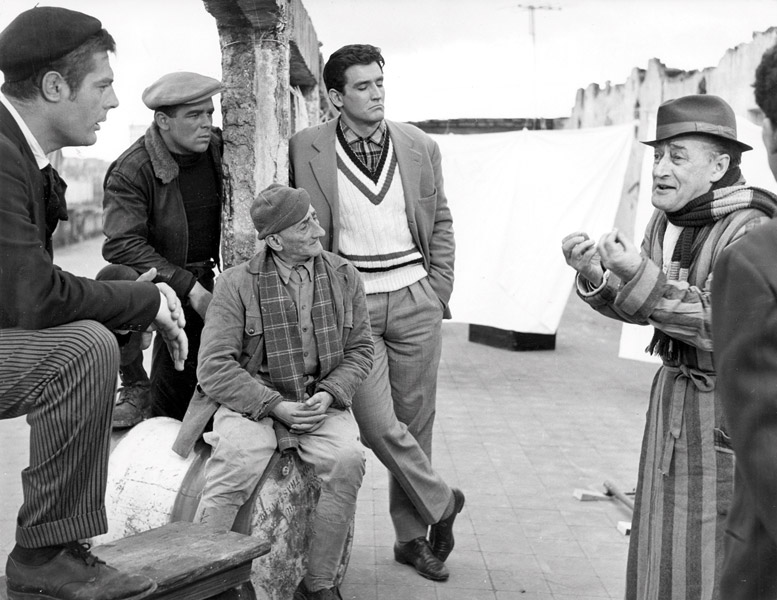
"Big Deal on Madonna Street" aka "I Solti Ignotti" (Mario Monicelli, 1958) Italian caper film that's as much a spoof of caper films as it is the real deal. Neighborhood heisters team up to break in to a pawn-shop and the usual complications ensue between clashes of ego's, incompetence, prison stints by proxy, art-film reconnaissance of the target and the very real treasure of a virgin's love.

"Big Deal on Madonna Street" (the "big deal" is meant to be sarcastic, as in "Big Deal, you know how to operate a camera!") is filled with established and future stars of the Italian cinema (Totò, Marcello Mastroianni, Renato Salvatore, Vittorio Gassman, Claudia Cardinale, many of whom became stars because of this film) and is done in the neo-realist style of post-war Italian classics as "The Bicycle Thief" (a style that is spoofed in the course of the film, as well). Coming as it did, following the sensation that "Rififi" generated, resuscitating the career of Jules Dassin (Dassin made his own caper spoof "Topkapi" six years later). Like links in an elaborate knock-over plot, films influence films and keep the genre going to such contemporary examples as "Mission: Impossible," "Reservoir Dogs," and Steven Soderbergh's "Ocean" movies.

Friday, November 21, 2008

Olde Review: The Sound of Trumpets

This Friday's ASUW films in 130 Kane at 7:30 pm are Ermanno Olmi's "The Sound of Trumpets" and John Schlesinger's "Midnight Cowboy." In a broad sense, both films deal with the death of one's dreams. But the approaches of the films and film-makers to that theme are very different, and so, too, are my reactions to them.

"The Sound of Trumpets" aka "Il Posto" (Ermanno Olmi, 1961) After a rather depressing day, I was in no mood to see a movie called "The Sound of Trumpets"—sounded like another war film to me.

But it is not a war movie: it's original title was "The Job," which wouldn't have been too thrilling a prospect, either. "The Sound of Trumpets" is a modest little Italian movie about a naive and old-fashioned young man names Domenico, who is gently shoved by his family into looking for a "life-long" job with an important firm.
And this film should be a nostalgic jog for anyone who has ever taken a test, gone job-hunting, had a crush, had a family, worked in an office, or gone to an office New Year's party. In other words, everyone should recognize and enjoy this film.

For me, it was like looking into a mirror, one that looks both inside and outside.
For we not only see Domenico's reactions to, say, a test he's taking, but also what he sees—the same things we look at, basically—the ceiling, the other test-takers, the lousy crud who finishes first, anything but the test. And it's all done with wit, subtlety, compassion and economy; at one point during the film a thoroughly irrelevant look at the lives of the other clerks whose jobs Domenico covets, is included for the bloody hell of it. But the segments do so much in so little time that one is thankful that its included, even if you are a trifle anxious to continue with the main story. I think you will be. I think you'll care about the people in this film because the director so obviously did. And a lot of important things are said in this film—about competition, about dreams, about wasted potentials, and about the "security" of a life-long job. I know this is a film you've never heard of, but it's definitely one you should see, because, folks...it's us.

Broadcast on KCMU-FM December 3rd and 4th, 1976

Or not. That's a little presumptuous to say.

I remember "Il Posto" being one of the best films I saw in that quarter, and I need to see it again for many reasons. The most important one is how it has held up over time. But the second most important is how it holds up compared to the mockumentary approach to similar situations, ala "The Office." My memory of "Il Posto" is of it being absurdly dry for a deliberate comedic effect, and far more formal than the hand-held "busy-ness" of any of the "Office" incarnations (it's gone international, if you hadn't heard). And with far more warmth and humanity than seen displayed in the American or British versions. Plus,
Olmi's vision places an emphasis on architecture and its relation to the figures in each landscape. I still recommend this movie, even if its less known than Olmi's most popular film 1978's "The Tree of the Wooden Clogs."

And it just goes to show what joys you can experience in the cinema, if you just give a film with a lackluster title a chance, depressing day or no.

Wednesday, August 20, 2008

Olde Review: The Conformist

This was part of a series of reviews of the ASUW Film series back in the '70's. Except for some punctuation, I haven't changed anything from the way it was presented, giving the kid I was back in the '70's a bit of a break. Any stray thoughts and updates I've included with the inevitable asterisked post-scripts.

In celebration of the shroud of smog that envelops Seattle, the ASUW will continue to show "Thrillers" on Saturday night in 130 Kane and the particular films are Lina Wertmüller's "Love and Anarchy," and Bernardo Bertolucci's "The Conformist."

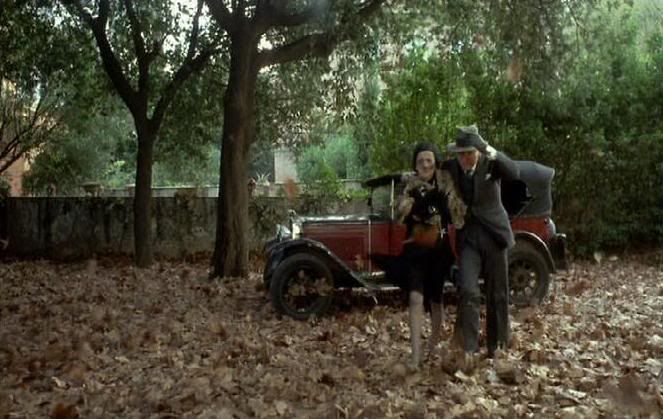
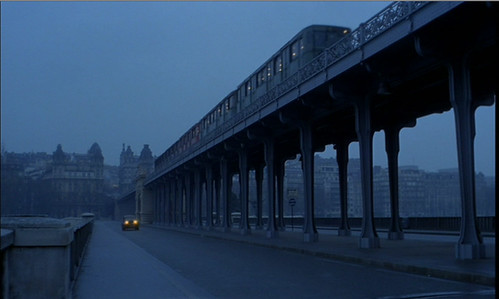
"The Conformist" aka "Il Conformista" (Bernardo Betulucci, 1972) "The Conformist" (or "Il Conformista," as you'll see it on the screen) is a fascinating movie to watch. It was written and directed by Bernardo Bertolucci, who was in Lina Wertmüller's shoes as the most talked-about director a couple years ago with his "The Last Tango in Paris." But Bertolucci deserves a lot of the credit given him. On a very cheap budget, he has done things with film techniques, old and new, that expand the potentialitiess of the cinema. Even more, he makes you realize what those potentialities really are. Bertolucci uses environments, colors, weather to express moods, themes, and actions. Atmospheric is what this film is. It establishes that atmosphere, and so, without subtitles, one can infer what sort of scene is going on.

And I like the way Bertolucci has made this movie. It, like "
Love and Anarchy," is in no way a thriller, as Friday's "Chinatown" is, or as we have come to know the term. "The Conformist" is something of a chiller--for its iciness in presentation works on you in a way no thriller can. And the audacity of Bertolucci to warp time right in the middle of a scene in order to create the proper tone of a love scene constitutes its own type of thrill. (and the very fact that he can bring it off and do so, so disturbingly, maybe subtlety I don't know whether you will notice it or not, is proof of what a talent Bertolucci is).

He's an uneven talent, to be sure. But those moments when he is effective make up for the times when he is not. "The Conformist" is one of the few films that make me see things differently, and make me realize, again, why I am so in love with the medium.

"The Conformist" is still a favorite film. If you haven't seen it, do. Francis Ford Coppola appropriated a lot of the sensibility of "The Conformist" when he made "The Godfather, Part II"--one can't help but see the similarities, and a few of the tricks Bertolucci employed, so it may not seem the striking example of "new" that it once was when you've seen that film...or a couple of the Coen brothers' films.

And that last paragraph is absolutely true. After seeing a film like "The Conformist," one walks out seeing the world with new eyes. Seeing any
Orson Welles film does that to me. Or one of Nicolas Roeg's films. The documentary about cinematographers, "Visions of Light," made the world seem much more vivid and full of color. It's a rare after-effect...after-glow... from very special films, but it feels like a gift every time it occurs.

And one wants to immediately feel that feeling again--to seek out a new film, to discover what visions it holds...and whether it will affect your world-view. And if it doesn't, well, maybe the next one...and the hunt begins anew.

The kid who wrote this knew what he was doing when he described "The Conformist" as not a "thriller," but a "chiller." The
Jean-Louis Trintignant character is a man who has no real feelings. He blows with the wind in the matter of love, politics...everything. He's just along for the ride...quite literally. And the dispassionate way that Bertolucci presents his scenes, with a romantic's eye, but an architects' design is beautiful and dramatic. Bertolucci has tried in the following years to replace that icy presentation with a warmer heart, but it never seems to come off as genuine, but as artifice. But he's still making films, and once in a while one captures the world's fancy, like "Last Tango..." or his equally chilly "The Last Emperor" (Bertolucci provided the template for getting the most out of the Forbidden City for every film-artist since!). Always interesting to watch, even if his films aren't.

Tuesday, August 19, 2008

Olde Review: Love and Anarchy

This was part of a series of reviews of the ASUW Film series back in the '70's. Except for some punctuation, I haven't changed anything from the way it was presented, giving the kid I was back in the '70's a bit of a break. Any stray thoughts and updates I've included with the inevitable asterisked post-scripts.

In celebration of the shroud of smog that envelops Seattle, the ASUW will continue to show "Thrillers" on Saturday night in 130 Kane and the particular films are Lina Wertmüller's "Love and Anarchy," and Bernardo Bertolucci's "The Conformist."

"Love and Anarchy" aka "Film d'amore e d'anarchia, ovvero: stamattina alle 10, in via dei Fiori, nella nota casa di tolleranza..." (Lina Wertmüller, 1974) First of all, I have to say that I approached Lina Wertmuller's film with some wariness. I have a built-in prejudice about movies and directors that are praised to the skies by critics, fawned over by the press and I tend to go to that particular movie with an attitude of "All right....prove it!" That's a terrible way to go see a movie; you should be completely unprejudiced (which a lot of critics aren't). Your mind should be a complete blank (which is easy for a lot of critics). You can't be unprejudiced in any endeavor you try. So...that, for what it's worth, is my apology for not being at all thrilled by Wertmüller's "Love and Anarchy" to everyone who was.*

On the debit side of the ledger,** Ms. Wertmüller tends to stress very arty-looking shots in her work but at times when the movie isn't really doing anything. When the movie takes a lull in the action, we are given very striking, if obvious compositions. Why? Her dialog is, at times, very unoriginal. Directors should at least come up with new cliches for their characters to spout (and this is a questionable point, as the film is subtitled, so the translations may be a little rough--and again, with both of the Saturday night films, they are subtitled--sometimes invisibly super-imposed over white objects--so go early, as the best place to read them, if you can at all, is on the main floor of 130 Kane). Ms. Wertmüller's portrait of a high-echelon Fascisti is badly caricatured, turning him into an Italian Colonel Klink. Also, easy irony turns me off, as when a light little theme is used to accompany a character's death by bludgeon. Nothing much there to praise.

What there is, is in the performances. Giancarlo Giannini is someone to praise to the skies, a more likable sad-sack I have never seen since Buster Keaton, and there is an immediate identification and sympathy for him when he first appears on the screen. he is a delight, and he keeps the film above water for quite awhile.

Lina Wertmüller is still making films, but the critical parade has moved on. When her "Swept Away..." was re-made by Guy Ritchie a few years ago, featuring Mrs. Ritchie in the lead, the film was attacked for her screeching, unpleasant performance, probably forgetting the fact that it was in keeping with the original. Lina Wertmüller was (and is) a challenging film-maker, exploring her themes with a none-too-subtle hand, and making points that polarized film-goers, except for the fawning. Lovers didn't love "Love and Anarchy" and neither did anarchists--a San Francisco anarchist group picketed and distributed leaflets denouncing the film and Wertmüller during its initial run. Perhaps they didn't know she was making a tragedy. (I wonder if anarchists picket in an orderly manner...or if they just make it up as they go....Hmmm. best not to think too much about that).

The cinema needs movers and shakers like Lina Wertmüller, if only to challenge the complacent. Then again, the complacent probably wouldn't seek out one of her films.

* Whatever thoughts one has about Lina Wertmüller or any director, the best policy is to go into any film with an open mind, thereby allowing yourself the luxury of appreciating what is there, without being hampered by predilections towards negativity. One makes one's own reality. If you walk into a movie expecting it to be a bomb because of "X," chances are you will walk out convinced it's a bomb (because of "X"). And in the work of confirming your own opinions by ticking off your personal check-list of dislikes, you will be more than likely to miss something that might change your mind. I don't believe "Once a hack, always a hack." Every film is a learning experience, for creator and viewer. I've seen too many good films by directors I haven't liked, to believe, or trust, in prejudices.

** See what I mean about ticking off a checklist of dislikes?

Wednesday, June 25, 2008

Olde Review: The Nights of Cabiria

This was part of a series of reviews of the ASUW Film series back in the '70's. Except for some punctuation, I haven't changed anything from the way it was presented, giving the kid I was back in the '70's a break. Any stray thoughts and updates I've included with the inevitable asterisked post-scripts.

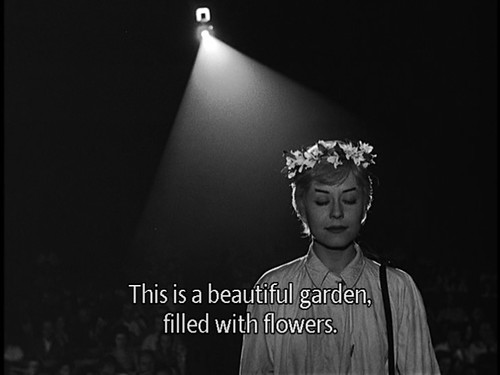
"The Nights of Cabiria" (Frederico Fellini, 1956) Both times that I previously saw "The Nights of Cabiria" I was in the projection room showing it, and that is not the best place to try and appreciate any movie, believe me. But even filtered between dirty glass, and the change-overs,* and the re-windings, it was easy to see that it was an exceptionally fine film.

Cabiria, when we first see her, is in the process of being robbed and shoved into the river by her lover of one month, and after going down for the third time and being fished out by some nearby kids, she is pronounced "dead" (albeit by one of the kids) and then revived and indignantly stalks back to her house. "She's got nine lives, like a cat," one of Fellini's nosey neighbors says as she disappears down the road.

That first scene is symbolically representative of the entire film, for it has an episodic structure in which Cabiria, "a well-known night-bird," is continually finding herself putting herself into situations that, for a while, make her think she might improve her current state as a street-walker, only to be "shoved" and "drowned" by having those hopes dashed. She is usually rescued by something else which also provides hope and also explodes in her face, providing more humiliation, Not coincidentally, most of these hopes entail people: an actor who momentarily uses Cabiria, is momentarily charmed by her, and in a moment, drops her; a hypnotist who exposes her fantasies to a cruelly amused audience. By the end of the film, Cabiria has come full circle--she is miles away from her home, which was her only previous certainty of retreat and recovery, she is without money for she has been robbed and betrayed by her fiancee, who only out of sheer cowardice refrained from pushing her off a cliff. When we last see her, she is presumably walking home in the dark, when a group of young people, revelling and celebrating, catch up with her and gradually her spirits are lifted by them. She begins to nod and smile at the revellers, and then, finally she nods at us, as if to say, "Yeah...well, it's alright" and she continues to move on.

I can just hear the feminists in the audience hiss this film** because Cabiria is prey, just asking to be taken advantage of. She smirks and sneers on the outside, but inside, she is quite susceptible to being suckered into anything. How could she constantly take such abuse? Why does she allow herself into such situations? I'm not sure I can put what I feel on that into this review, but I can safely say that that final few feet of film, when she turns to the audience and nods with a slight, battered smile--that final few feet of film is charged with a life-renewing energy, and I see it as a personal challenge, just as surely as I see "The Nights of Cabiria" as Fellini's finest film.

One note: "Nights of Cabiria" is subtitled, so you might want to get in line early, since it's tough to read them from the top row of 130 Kane.

Broadcast on KCMU-FM , Oct. 7th and 8th, 1976

Nothing to add, really. I still love "The Nights of Cabiria," and although Fellini went many marvelous and torturous routes during his film-career, I still think it's his finest film (Although I also have a deep love for "Toby Dammit: Or, Never Bet the Devil Your Head"--which has just been restored, I've heard. Reason to celebrate. And I neglected to mention the performance of Giulietta Masina, putting her in the category of Chaplin as one of the great screen-faces and personas)

Tomorrow: the second half of the double-bill (remember those?): "Diary of a Mad Housewife"

*In college (when this was written), I was a film projectionist showing movies all around the UW campus. There were no DVD's back then, just massive reels of celluloid encased in metal, each feature made up of a few reels. The projectionist's job was to switch from reel to reel (and projector to projector) without missing a beat, and certainly without distracting the viewer's attention. Two film-blips, ten seconds apart at the end of reels was the signal to "switch-over" from one reel to the next. Then the projectionist would rewind the previous reel (for the next projectionist), and set up the next one, and wait for the blips. A nice job, that. And you got to see a lot of movies.

** Yeah, that's a little harsh, but I can certainly see the argument. Cabiria is a victim, led astray by her hope for something better. If that was all she was, if she was accepting of this victim-hood, and gave in to it, she might be warranting some bad attitude. But she's also a fighter, who keeps picking herself up, throwing off self-pity, and accepting the joy that life has to offer. I really love this character. I want her to "make" it.

Who wouldn't?

Sunday, February 3, 2008

La Strada

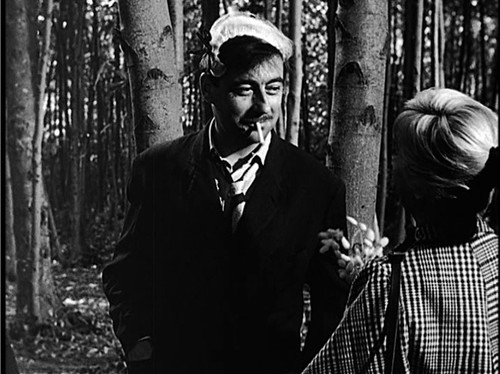
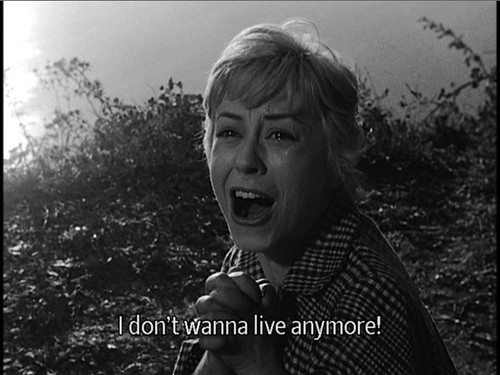
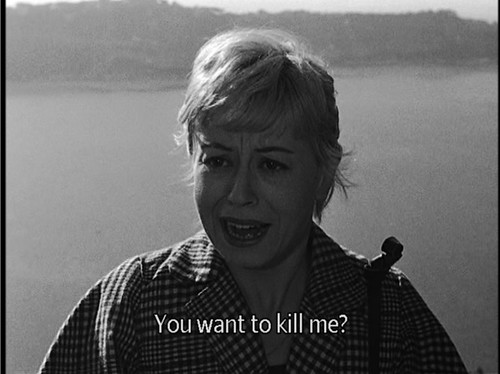
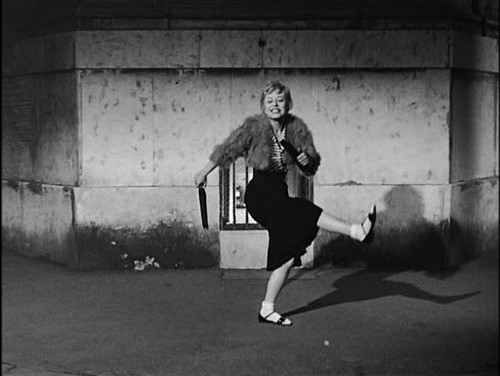
"La Srada" (Frederico Fellini, 1954) Before his imagination took surrealistic flight, Fellini was still grounded in the Italian neo-realist school, and his "La Strada" takes place in the still existent ruins from the second World War--the villages and hovels where roving bands of merchants and entertainers try to eke out a living on the road. Strongman Zampano (Anthony Quinn), who breaks chains for a living returns to the family where his first assistant (now deceased) was acquired. Next in line is dim, but sweet Gelsomina (played by Mrs. Fellini, Giulietta Masina), and she hops on board Zampano's makeshift motorcycle/carnival tent/camper-trailer ("It's American!") and learns the tricks of the trade, which she takes to quickly. Eventually, they hook up with a larger circus, where they meet The Fool (Richard Basehart), who is sweet to her, but pushes all of Zampano's buttons, making the frustrated performer ever more enraged. Quinn is terrific, a bull with steam constantly coming out of his nose, Basehart shows his lighter irresponsible side rather than the stalwart authority figure he became used to playing, and Masina's performance is one of such force of personality that you can only call it "Chaplinesque," so much of it is tied to wordless expression and acting with the face. It's a melancholy circus Fellini liked to paint, supported by Nino Rota's ebullient/lyrical score but in the end shows how some chains can never be broken. Like any good fable or morality play, it saddens but doesn't disappoint.

(A week after watching "La Strada," Nino Rota's score still capers in my head.)

Monday, January 14, 2008

Once Upon A Time In The West

Landscapes.

That’s what’s featured in
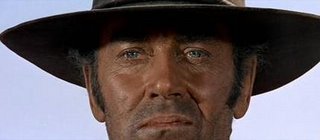
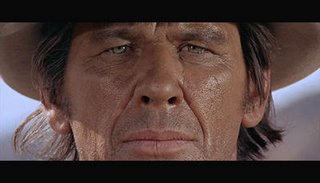
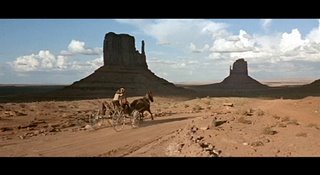
Sergio Leone’s “Once Upon a Time in the West.” Whether it’s the vast, aboriginal spaces of Monument Valley—an affectionate genuflection to the films of John Ford—or the intricately chiseled planes of the faces of Charles Bronson and Henry Fonda, you spend a lot of time looking at both in “Once….”, as well as deep close-ups on the faces of Jason Robards and Claudia Cardinale. There is one shot where Bronson ever so slowly relaxes a smile out of existence. It’s one of those shots where you don’t know what’s happening until it’s happened, Bronson does it so subtly. It’s one of the things I look forward to in the Dance of Death of “Once Upon a Time in the West.” Here are some others:

1. “Looks Like We’re Shy One Horse…” The first twelve minutes. A dilapidated train station in the middle of nowhere. Three long-coated bad-men wait for a train. They while away the time, each in their own unique fashion. Driven mostly by sound and filmed in extreme close-ups, the sequence, accompanied by the homely squeak of a windmill--one of the out-sized sound effects typical of Leone’s westerns--and the jokey placement of the credits, rolls on and on until a confrontation ends explosively. It’s an opening of great economy and intricate film-making. Few words are spoken throughout. I’ve shown students this sequence to show just how much presence and atmosphere simple sound effects can bring to a scene. Here’s the ending of the sequence. It’s just the opening gambit in a plot by two men who are playing against each other. It will take the entire movie to explain why.


2. “You Don’t Know How To Play” The gist of “Once Upon a Time in the West” is a chess game with lives and futures as the playing pieces. As scripted by Sergio Leone and his co-scenarists--the soon to be master of Italian horror films
Dario Argento and the young Bernardo Bertolucci--the movie is a series of moves and counter-moves by the antagonists, each one trying to tame the frontier in their own way, and taking their own sweet time about it. Each has to make the pieces fall their way. For the first-time viewer it can be maddening following the strategems of the four participants in the story, but by the end the motivations and loyalties--or lack of them-- become clear.


3. “People Scare Easier When They’re Dyin’” The villain of the piece is the meanest, rottenest most conniving scumbag to ever walk a dusty street and spit on it. “Frank” is a sadist who smiles when he kills and for the first time in his life he has a patron with a vision—one big enough for Frank to start to see how there might be such a thing as a future, and that one man can own it. He just can’t understand why people are getting in his way.


4. “Instead of Talking, He Plays. And When He Better Play, He Talks.” The composer and the director did it backwards. Ennio Morricone wrote the music for the film first and Leone built his sequences around the music, playing it on-set to establish mood. There are two spectacular pay-offs--one in the previously mentioned Monument Valley sequence. But the other is at a train station where Claudia Cardinale, has just arrived from New Orleans to find no one to meet her. After a long wait (which is actually mercifully short for a Leone western) she decides to hire passage. Sounds disappear as she is seen through a station window talking to an official, and then the camera HEAVES up and over the roof, and in a burst of music reveals a burgeoning western town full of life and activity. It’s as if all of America is presented in that one astounding crane shot. My wife audibly gasped when she saw the shot in some movie clip program on TV, so stunning is the effect. And more than a little of the power of that shot is due to Morricone’s music and the angelic voice of Edda Dell’Orso, wordlessly cooing an ode to the country and to the protagonist around whom the movie and the future hinges.
5. “Ma’am, It Seems To Me You Ain’t Caught The Idea” For the first time in a Leone western, a woman is the hero, but like her predecessor—The Man with No Name—she is flawed, and has some learning to do, and it’s up to Leone’s trio of men – another man with no name using the names of dead men, a wolf-like vagabond-thief, and the villain, Frank—to push, prod, blackmail, challenge and coerce her into a new role. It’s a role each man knows they’ll have no part of and that, for a time, she is reluctant to fulfill. In the last shot of the film, she is seen bringing water to the railroad work-crew who will be bringing people and prosperity to what will be her town. It may seem a servile role, but as we pull away and follow the disappearing tracks to the frontier, leaving her to her future, she begins to bark orders, to direct and take charge. Her station will become a cornerstone of the push west. “This movie drips with testosterone,” a colleague once told me after a screening. Yes, but Leone includes a healthy shot of estrogen as, for the first time, he is dealing with a story that not only leaves the past behind, but also looks forward to the future.


Anytime Movies are movies I can watch anytime, anywhere. If I see a second of it, I can identify it. If it shows up on television, my attention is focused on it until the conclusion. Sometimes it's the direction, sometimes it's the writing, sometimes it's the acting, sometimes it's just the idea behind it, but these are the movies I can watch again and again and never tire of them. There are ten. This is Number 3.


III: Once Upon a Time In the West


IV: -Only Angels Have Wings


V: The Searchers


VII: Chinatown


VIII: American Graffiti


X: Goldfinger