 The Mackintosh Man (John Huston, 1973) One of the best kept secrets (until 1974, anyway) of the second World War was Project Ultra, the British operation centered in Bletchley Park tasked with breaking the German Enigma codes that scrambled their communications so as to be undecipherable. What the Germans did not know (because the British kept it secret) was that their dispatches were being regularly decoded and read, and their plans made known to forces in the field. This was a great boon to the generals who took advantage of the intel—many, including General Patton, did not—but there were times when the messages were merely shelved. The most egregious example might be the Coventry Blitz, although the facts are in dispute. Some authors (including the man who first shed light on Ultra) have claimed that Churchill knew of the devastating November 14, 1940 raid by the Luftwaffe, but did nothing to warn the populace or take counter-measures, lest it tip off the Germans that the code had been cracked, thus nullifying an important source of information and intelligence. If the Nazis knew their messages were being decoded, they might (probably would) make new measures to keep their transmissions secret. And so (the story goes) Coventry burned in order to keep the secret. War is not logical, and spycraft even less so, but there's an absurd madness there that parallels the VietNam-era quote stated "we had to destroy the village in order to save it."
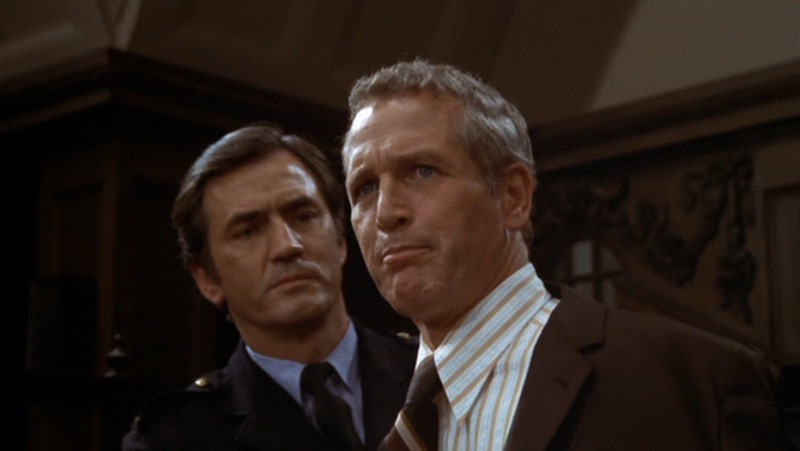
That logic (or lack of it) is much in display in Huston's film of The Mackintosh Man (written by Walter Hill),* a spy thriller the director made in Britain and Malta with Paul Newman. In it, a British Intelligence agent (Newman) is framed and sent to prison, in order to infiltrate a criminal organization. But, unknown to him, the deceit goes much deeper, as his superior, Mackintosh (Harry Andrews), is using the mission to ferret out a leak in information in the British government. Once the agent, named Rearden, is sprung from prison by the conspirators, overseen by an enigmatic figure named "Mr. Brown" (Michael Hordren). Rearden and another prisoner, Blake (Ian Bannen), are spirited away to an unknown location, drugged and held until the police activity surrounding the prison break cools down. The escape causes a row in Parliament, led by a law-and-order lord, Sir George Wheeler (James Mason), who rails against the bumbling way in which the prisons and the law are handling it, until he is persuaded to cool down the rhetoric by Mackintosh, himself.
Things get complicated when Mackintosh is run down in the street, and the operation taken over by his deputy, Mrs. Smith (Dominique Sanda), who is now charged with a double mission—Rearden's and the murder of Mackintosh.
Huston barely takes any of this seriously, even if Newman plays it straight, and Sanda—well, it's hard to tell if she plays it at all, her character being so enigmatic as to be undecipherable. But, it's all staged well (and photographed by the legendary Oswald Morris), especially a car chase through winding Irish country roads that looks dangerous as Hell, and Huston ends on a typically ambiguous note. But, he's made much better films about duplicity and duty (as has Hill, for that matter), and this one feels like a minor effort before tackling much more ambitious projects. His next film would be his long-planned adaptation of The Man Who Would Be King.
The Mackintosh Man (John Huston, 1973) One of the best kept secrets (until 1974, anyway) of the second World War was Project Ultra, the British operation centered in Bletchley Park tasked with breaking the German Enigma codes that scrambled their communications so as to be undecipherable. What the Germans did not know (because the British kept it secret) was that their dispatches were being regularly decoded and read, and their plans made known to forces in the field. This was a great boon to the generals who took advantage of the intel—many, including General Patton, did not—but there were times when the messages were merely shelved. The most egregious example might be the Coventry Blitz, although the facts are in dispute. Some authors (including the man who first shed light on Ultra) have claimed that Churchill knew of the devastating November 14, 1940 raid by the Luftwaffe, but did nothing to warn the populace or take counter-measures, lest it tip off the Germans that the code had been cracked, thus nullifying an important source of information and intelligence. If the Nazis knew their messages were being decoded, they might (probably would) make new measures to keep their transmissions secret. And so (the story goes) Coventry burned in order to keep the secret. War is not logical, and spycraft even less so, but there's an absurd madness there that parallels the VietNam-era quote stated "we had to destroy the village in order to save it."
That logic (or lack of it) is much in display in Huston's film of The Mackintosh Man (written by Walter Hill),* a spy thriller the director made in Britain and Malta with Paul Newman. In it, a British Intelligence agent (Newman) is framed and sent to prison, in order to infiltrate a criminal organization. But, unknown to him, the deceit goes much deeper, as his superior, Mackintosh (Harry Andrews), is using the mission to ferret out a leak in information in the British government. Once the agent, named Rearden, is sprung from prison by the conspirators, overseen by an enigmatic figure named "Mr. Brown" (Michael Hordren). Rearden and another prisoner, Blake (Ian Bannen), are spirited away to an unknown location, drugged and held until the police activity surrounding the prison break cools down. The escape causes a row in Parliament, led by a law-and-order lord, Sir George Wheeler (James Mason), who rails against the bumbling way in which the prisons and the law are handling it, until he is persuaded to cool down the rhetoric by Mackintosh, himself.
Things get complicated when Mackintosh is run down in the street, and the operation taken over by his deputy, Mrs. Smith (Dominique Sanda), who is now charged with a double mission—Rearden's and the murder of Mackintosh.
Huston barely takes any of this seriously, even if Newman plays it straight, and Sanda—well, it's hard to tell if she plays it at all, her character being so enigmatic as to be undecipherable. But, it's all staged well (and photographed by the legendary Oswald Morris), especially a car chase through winding Irish country roads that looks dangerous as Hell, and Huston ends on a typically ambiguous note. But, he's made much better films about duplicity and duty (as has Hill, for that matter), and this one feels like a minor effort before tackling much more ambitious projects. His next film would be his long-planned adaptation of The Man Who Would Be King.
* This was around the era where Huston was no longer adapting classics, but beginning to take advantage of the scripts of the new college-class of film-makers, including Hill and (for his previous film) John Milius.
This was part of a series of reviews of the ASUW Film series back in the '70's. Except for some punctuation, I haven't changed anything from the way it was presented, giving the kid I was back in the '70's a bit of a break. Any stray thoughts and updates I've included with the inevitable asterisked post-scripts.
In celebration of the shroud of smog that envelops Seattle, the ASUW will continue to show "Thrillers" on Saturday night in 130 Kane and the particular films are Lina Wertmüller's "Love and Anarchy," and Bernardo Bertolucci's "The Conformist."
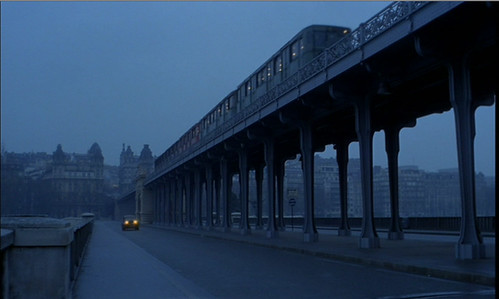
"The Conformist" aka "Il Conformista" (Bernardo Betulucci , 1972) "The Conformist" (or "Il Conformista," as you'll see it on the screen) is a fascinating movie to watch. It was written and directed by Bernardo Bertolucci, who was in Lina Wertmüller's shoes as the most talked-about director a couple years ago with his "The Last Tango in Paris." But Bertolucci deserves a lot of the credit given him. On a very cheap budget, he has done things with film techniques, old and new, that expand the potentialitiess of the cinema. Even more, he makes you realize what those potentialities really are. Bertolucci uses environments, colors, weather to express moods, themes, and actions. Atmospheric is what this film is. It establishes that atmosphere, and so, without subtitles, one can infer what sort of scene is going on.
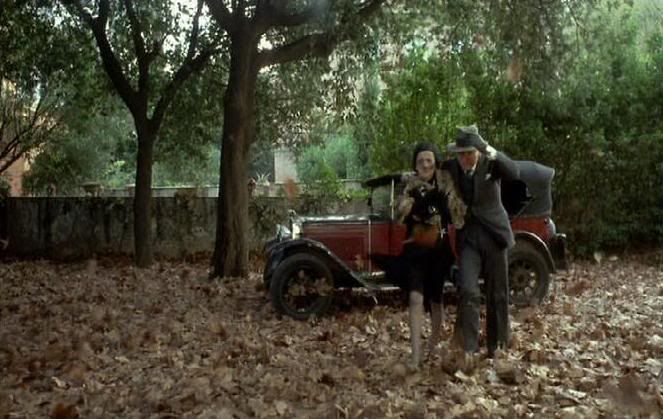
And I like the way Bertolucci has made this movie. It, like "Love and Anarchy," is in no way a thriller, as Friday's "Chinatown" is, or as we have come to know the term. "The Conformist" is something of a chiller--for its iciness in presentation works on you in a way no thriller can. And the audacity of Bertolucci to warp time right in the middle of a scene in order to create the proper tone of a love scene constitutes its own type of thrill. (and the very fact that he can bring it off and do so, so disturbingly, maybe subtlety I don't know whether you will notice it or not, is proof of what a talent Bertolucci is).
He's an uneven talent, to be sure. But those moments when he is effective make up for the times when he is not. "The Conformist" is one of the few films that make me see things differently, and make me realize, again, why I am so in love with the medium.
"The Conformist" is still a favorite film. If you haven't seen it, do. Francis Ford Coppola appropriated a lot of the sensibility of "The Conformist" when he made "The Godfather, Part II"--one can't help but see the similarities, and a few of the tricks Bertolucci employed, so it may not seem the striking example of "new" that it once was when you've seen that film...or a couple of the Coen brothers' films.
And that last paragraph is absolutely true. After seeing a film like "The Conformist," one walks out seeing the world with new eyes. Seeing any Orson Welles film does that to me. Or one of Nicolas Roeg's films. The documentary about cinematographers, "Visions of Light," made the world seem much more vivid and full of color. It's a rare after-effect...after-glow... from very special films, but it feels like a gift every time it occurs.
And one wants to immediately feel that feeling again--to seek out a new film, to discover what visions it holds...and whether it will affect your world-view. And if it doesn't, well, maybe the next one...and the hunt begins anew.
The kid who wrote this knew what he was doing when he described "The Conformist" as not a "thriller," but a "chiller." The Jean-Louis Trintignant character is a man who has no real feelings. He blows with the wind in the matter of love, politics...everything. He's just along for the ride...quite literally. And the dispassionate way that Bertolucci presents his scenes, with a romantic's eye, but an architects' design is beautiful and dramatic. Bertolucci has tried in the following years to replace that icy presentation with a warmer heart, but it never seems to come off as genuine, but as artifice. But he's still making films, and once in a while one captures the world's fancy, like "Last Tango..." or his equally chilly "The Last Emperor" (Bertolucci provided the template for getting the most out of the Forbidden City for every film-artist since!). Always interesting to watch, even if his films aren't.
 The Mackintosh Man (John Huston, 1973) One of the best kept secrets (until 1974, anyway) of the second World War was Project Ultra, the British operation centered in Bletchley Park tasked with breaking the German Enigma codes that scrambled their communications so as to be undecipherable. What the Germans did not know (because the British kept it secret) was that their dispatches were being regularly decoded and read, and their plans made known to forces in the field. This was a great boon to the generals who took advantage of the intel—many, including General Patton, did not—but there were times when the messages were merely shelved. The most egregious example might be the Coventry Blitz, although the facts are in dispute. Some authors (including the man who first shed light on Ultra) have claimed that Churchill knew of the devastating November 14, 1940 raid by the Luftwaffe, but did nothing to warn the populace or take counter-measures, lest it tip off the Germans that the code had been cracked, thus nullifying an important source of information and intelligence. If the Nazis knew their messages were being decoded, they might (probably would) make new measures to keep their transmissions secret. And so (the story goes) Coventry burned in order to keep the secret. War is not logical, and spycraft even less so, but there's an absurd madness there that parallels the VietNam-era quote stated "we had to destroy the village in order to save it."




.jpg)