This week, we're re-publishing some reviews of the films from the post 9-11 environment.
 Moonwalking Through the Kill-Zone
or
"Cravin' a burger. Isn't that strange?"
A lone figure walks down an alien landscape in a space-suit of Kevlar and crash-helmet, his only companions are his breath and his thoughts. Death surrounds him, and he walks towards the only certain death he knows of: a make-shift explosive device, conceived in cunning and hate that he must dis-arm in order to save himself, his comrades, and the watching by-standers, one of whom just might be waiting to explode the device. It is not some forbidden planet, or an anarchic Western town, but it could be. It's downtown Iraq, and it comes down to one man walking and facing his fear.Kathryn Bigelow will probably never be considered a "superstar" director.
That's too bad, because she miles ahead of the so-called "young Turks" doing action movies these days. Instead of following current trends, she adheres to the rock-solid action direction styles of Anthony Mann and Don Siegel: let the audience know what's going on, and one other thing that too many directors these days forget—an audience has to know the territory their heroes walk through to fully present the dangers they face. In The Hurt Locker she may use a hand-held camera a bit too much to re-create the verisimilitude of war-footage, but it comes in handy to lock you into the searching point-of-view of Bravo Company's of Bomb "Tech's" and "Post-Bomb Assessors"—"The Blasters"—in Iraq's Camp Freedom ("They changed it from Camp Liberty to Camp Freedom because Camp Freedom sounds better," says veteran Sergeant JT Sanborn (Anthony Mackie) to the new Team Leader Staff Sergeant William James (Jeremy Renner, looking like a cross between Nathan Fillion and Brendan Fraser, like most of the principals of "The Hurt Locker," his performance is understated and full of small nuances). James is described as "a rowdy boy" and "reckless." Before his arrival, "the suit," that cumbersome Kevlar get-up which would protect anyone but the man who needs it most, has been the last resort in a disarmament situation. But that's not good enough for James. He likes to disarm the things by hand, and collect the odd bit of equipment for a trophy that "could have killed" him. He'll go in with "the suit" first, and puzzle the thing out, something that doesn't win him prizes with his team-mates, especially Specialist Eldridge (Brian Geraghty), because the longer it takes James to disarm a bomb, the more vulnerable his team-mates are to snipers.
It doesn't take long for the team to realize that James loves his work a little too much, and that it may kill them before their tour is up. Bigelow keeps a running track of the "short-timer" count-down as the situations become more dire and the traps more intricate, electronically and ethically.
War films have gone through a weird evolution from the time they were conscious enough to move beyond the "good guys vs. bad guys" (while still acknowledging that both sides share their share of casualties. But it's been since the Korean conflict that movies started to go deeper into the psychosis of war—not the PTSD issues, but the psychosis of being inside the conflict. One of the counselors at Camp Freedom ineffectually tells Eldridge "You know, this doesn't have to be a bad time in your life." Easy for him to say. All Eldridge can think about is the best outcome of the war—surviving it. And when his orders come down to "Be smart. Make a good decision" it's tough to say what is a good day and what is a bad day. But lately, war-films have taken a look at the man on the line and what makes a good soldier, and it comes down to a blurred combination of self-sacrifice and controlled psychopathy. Whatever the motivations its the results that count. We've seen that theme in Hell is For Heroes, and Patton, Apocalypse Now, The Burmese Harp, Full Metal Jacket, and Flags of Our Fathers. How the soldier compartmentalizes the war experience to survive and even stay sane through the fire determines his ultimate worth as a soldier and as a human being. It is that perspective, of life is brief increments, that keeps a soldier walking alone in The Now, where "The Big Picture" is unseen in the limited view of his path, unknowable and brutally finite—the past a bitter memory, the future an empty promise, and today is walked with the high of High Noon.
The Hurt Locker is a Full-Price Ticket.
Friday, September 16, 2011
The Hurt Locker


.jpg)




.jpg)


Thursday, July 21, 2011
The Double Hour
 "Wishing Doesn't Make It So"


Guido takes Sonia to the palatial res' he is currently monitoring, shows her his recording equipment which he uses to tape nature sounds, then takes her for a walk around the grounds. As Fate would have it, that's just the moment that the mansion becomes the setting for a robbery and Guido is knocked unconscious, Sonia taken hostage and the place ransacked of its antiques and valuable paintings. It is when one of the thieves decides to have some fun with Sonia that Guido jumps the guy, head-butts him...and then the gun goes off.
Fade to Black.
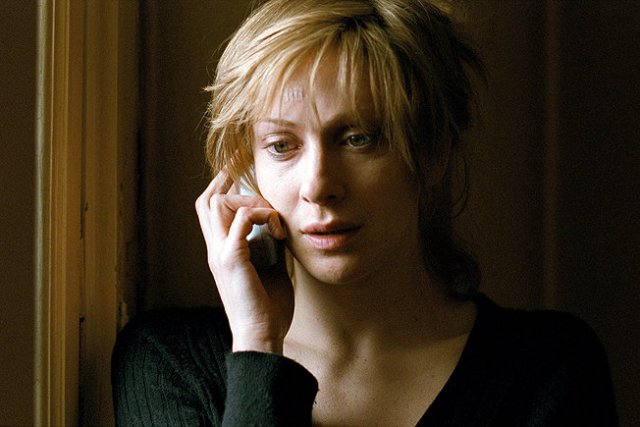
It is some time later. Sonia is sporting a nasty scar on her forehead, the result of a bullet wound. Guido is dead, killed by the same bullet, and Sonia mourns. She misses him. Well, more acurately, she is haunted by him...because she hears him speak her name every so often. And then there are his ghostly appearances, and the strange booming noises that periodically elevate the audience out of their seats. What is going on?
I can't tell you because it would spoil the movie. It is enough to say that the film is a Möbius strip of twists and turns of both the mind and the heart, with a Hitchcockian identification shift that's disorienting, disheartening and damned clever. There are enough red herrings to burst a fishing net, some of them necessary and some of them just distractions. For instance, the title: Guido mentions on their first extended talk his own curious wish-myth of "the double hour"—when the hour and minutes are the same (like 12:12 am), make a wish and it might come true. "Does it work?" asks Sonia. "No," says Guido.
Funny, but unnecessary. It's used as a touch-stone for the entire movie, a call-back that ultimately adds little, one of a number of details that cloud the issue and distract (which may be the point). A little buttoning-up of some of these elements might have made this one a better film.
Still, at its core, The Double Hour (La doppia ora) is a neat little conceit, and director Giuseppe Capotondi and his writers keep you guessing the whole way, bending, shaping and twisting the plot...and your mind along with it.
The Double Hour is a Rental.
* The slowest of which is Carbon-14 dating (....sorry).




Thursday, May 5, 2011
It Might Get Loud
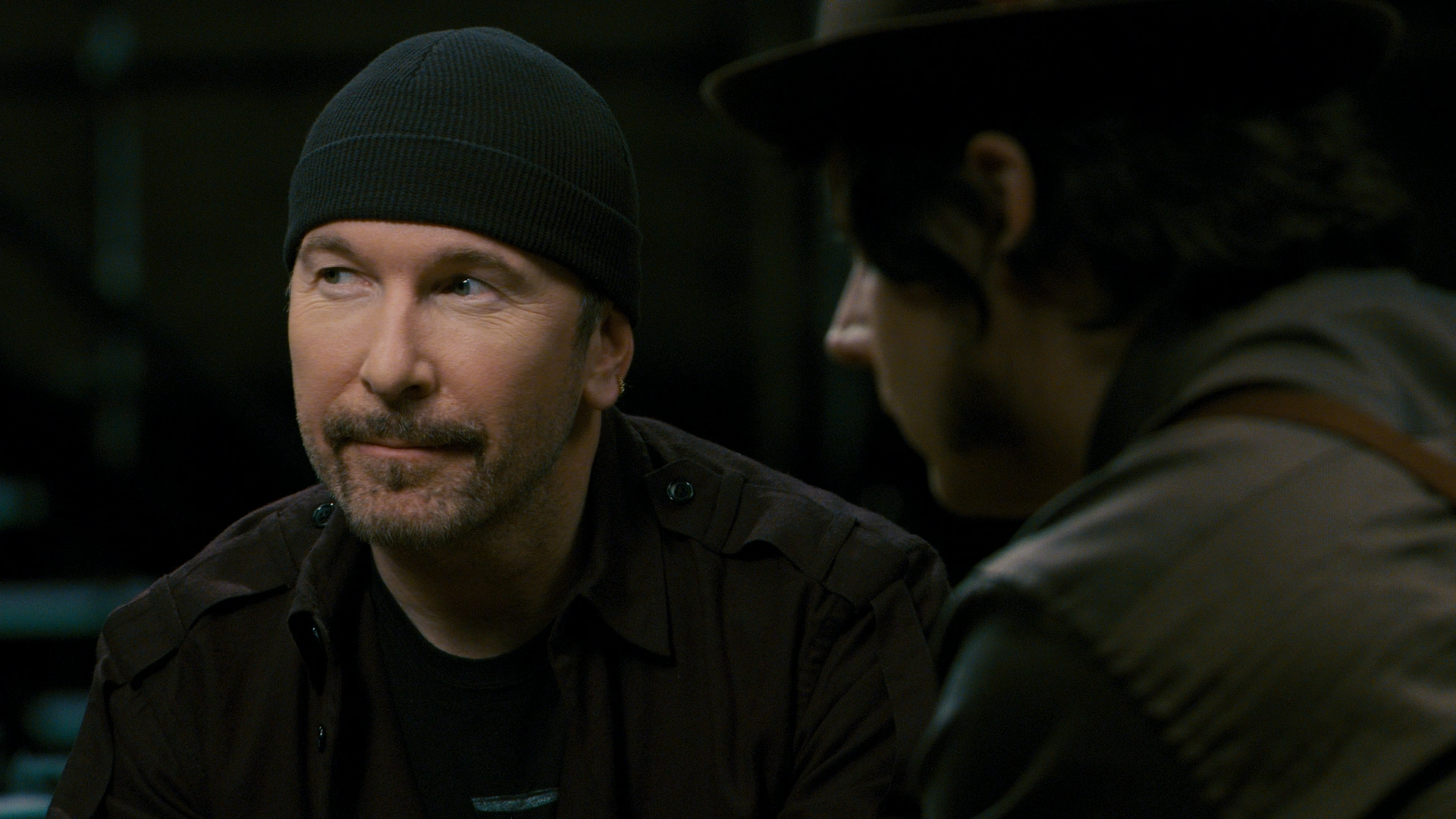
 It Might Get Loud (Davis Guggenheim, 2009) Between making An Inconvenient Truth and Waiting for 'Superman', (and the occasional tv work like the pilots for "The Defenders," filmmaker Davis Guggenheim did one for fun: It Might Get Loud, a summit, if you will, of three electric guitar afficianados, Jimmy Page, The Edge, and Jack White. The axe-men were brought together to talk, but as Page wryly notes "there will be guitars there, so who knows?" What's interesting about the documentary and hearing them three men talk is their completely different approaches to using the electric guitar: for Page, it's technique; for The Edge, it's technology; for White, it's breaking it down to the bare essentials. All three do things nobody else does with the electric guitar, approaching the instrument with a completely different mind-set, as writers approach a piece of paper.
It reduces them to human beings, all capable of greatness, but not fathoming where each gets it ("I can't tell you what a 'process' is" says Page at one point): to see the unbridled love in the eyes of The Edge and White as they watch Page play the opening to "Whole Lotta Love," how Edge intensley scrutinizes White's fingering during a jam session, all three's tales of creative crises—Page's dissatisfaction with studio sessions, Edge's dealing with writing the "War" album, White, how to create a blues aesthetic in a world of "packaged" music and bands.
And it is fun to watch them eye each other and tell tales and compare notes, artisans and students all. My favorite moments are with White, whose work I kniow the least and who always veers precipitously close to the edge of pretension: the first opens the film as he builds a guitar out of scrap wood and a pick-up; the second, is in the extras, and has Page and Edge ask about a particular riff that White wrote for "Seven Nation Army" and White tells the tale of how he socked it away "if I was going to write a James Bond theme song or something." But Edge wants to know how he did it, and when White tells them, the other's eyes go wide with the simplicity of it, and both have to try it. Then, they all riff, finding possibilities. "That'll be five dollars," White cracks.
I'm not a musician, but I appreciate musicianship, and I have no particular interest in electric guitars, but I like good stories told by good people. And It Might Get Loud sure is fun.


Wednesday, March 23, 2011
OSS 117—Lost in Rio

OSS 117— Lost in Rio (Michel Hazanavicius, 2009) Another one that got away from theaters last year and ended up in the video aisles. Too bad. Because the first of the OSS 117 spoofs starring Jean Dujardin (Cairo: Nest of Spies) was an amusing spoof of the James Bond films, circa early 1960's under the direction of Terence Young—all high-light filming (it didn't rain in a Bond film until 2006's Casino Royale), clueless cool, casual absurdism, DuJardin's cheery resemblance to Sean Connery mixed with James Coburn's cheesy grin, and a pace that didn't give you a chance to question "Q'est-ce que c'est?"
Cairo: Nest of Spies nailed it. And the sequel: Lost in Rio (literal translation: "Rio Doesn't Answer") was to be filmed partially in the city of Brasilia, a 60's construct that could have been designed by Bond-architect Ken Adam—and played a role in the french spy spoof That Man from Rio.
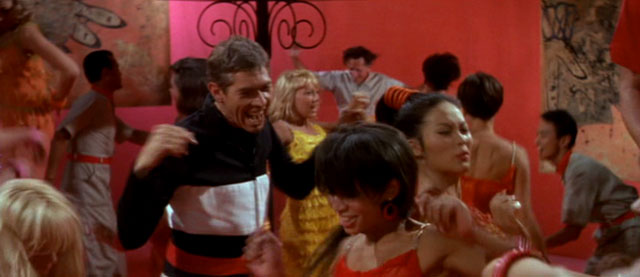
Lost in Rio doesn't disappoint. Establishing the time-frame as 1967, French agent Hubert Bonisseur de La Bath (with newly long side-burns) enters the play-room of his Swiss villa in Gstaad, and begins to twist with a bevy of snow-bunnies in his Jean-Claude Killy snow-suit to Dean Martin crooning "Gentle on my Mind," documented in groovy split-screen (the year it was used extensively at Expo '67). The OSS spoof trademarks are trotted out—the adherence to Young's photographic style, that de La Bath's Walther ppk fires an endless supply of bullets from its clip (that's okay, as the enemy's Lugers do the same), he is still cluelessly sexist and racist in his attitudes, this time being particularly rude dealing with the Mossad and the Chinese. This time, he's helping Israeli agents track down yet another Nazi in Rio de Janeiro, with the passive-aggressive assistance of the CIA's Bill Trumendous (Ken Samuels). But, while paying homage to the Bond style, it also goes after Hitchcock (particularly his penchant for staging precarious situations on national monuments)—seems de La Bath was once a circus gymnast where an accident gave him a phobia for heights.
The humor is all over the map from subtle film references to absurd slapstick and Dujardin is still an amiable lizard presence. This one wasn't as successful as the first film (hence its straight-to-video status), but here's hoping they do more.



Friday, January 21, 2011
The Fighter
 "Put Back What You Use"
or
"I-Yi-Yi-Yi-Yi'm Not Your Stepping-Stone"
The family that preys together, stays together. For the extended family of boxer Micky Ward (Mark Wahlberg), the preying is mostly internal although they have the illusion that they're getting the best of everybody else.
Micky is the younger brother (step-brother, actually) of Dickie Eklund (Christian Bale), former up-and-coming boxer, who had one glory moment: knocking down Sugar Ray Leonard in a match some years before. Now, he's a part-time trainer for his half-brother and a full-time crack addict. HBO is making a documentary about Dickie, who, despite his years and habits, still thinks he's on the comeback trail. But the pipe keeps him missing training sessions with Micky, leaving the heavy lifting to his trainer (Mickey O'Keefe playing himself). While the boys' lioness of a mother (Melissa Leo) manages Micky and enables Dickie, it leads to some bad decisions on matches for Ward, leaving him battered and disillusioned. The higher-ups at the sports networks have Ward pegged as a "stepping-stone," the fall-guy they use to advance other fighters in the winning circle to boost ratings, and that reputation follows him around his home-town of Lowell, Massachusettes. Ward's on a downward spiral, and any outside help is treated with suspicion. "You can't trust that guy. He ain't family." says Dickie, lounging in the limo his brother's money rented, sucking a beer.
Yeah. About that...
Perspective is all in The Fighter. And the boxing motif is the perfect setting. Micky is caged by his relations with his family, but every time he tries to strike out on his own, he gets attacked by Mom (playing the suffering card), step-brother hangs back and then takes his licks, and a coven of sisters and half-sisters are a unified greek-chorus of mom-ditto-speak. All you need to make this a match is a soft canvas to fall on, so Micky's a fighter always on the defensive. It's no reason he doesn't say much, but the eyes are far away, looking for a way out, looking for an opportunity to make a move, looking for anything.
"Your fahther looks at my ass, too, but at least he tawks ta me," says Charlene (Amy Adams, while not looking at him), the "bah-girl" Micky keeps staring at. Micky's so down for the count, he thinks even she's out of his league. And she might be, but she keeps showing up in his corner, alarmed at the punishment he's taking. When she questions it, Micky tells her everybody's not concerned. "Who's 'everybody?'" she asks. "My mother, my brother," he replies.
Yeah. About that...


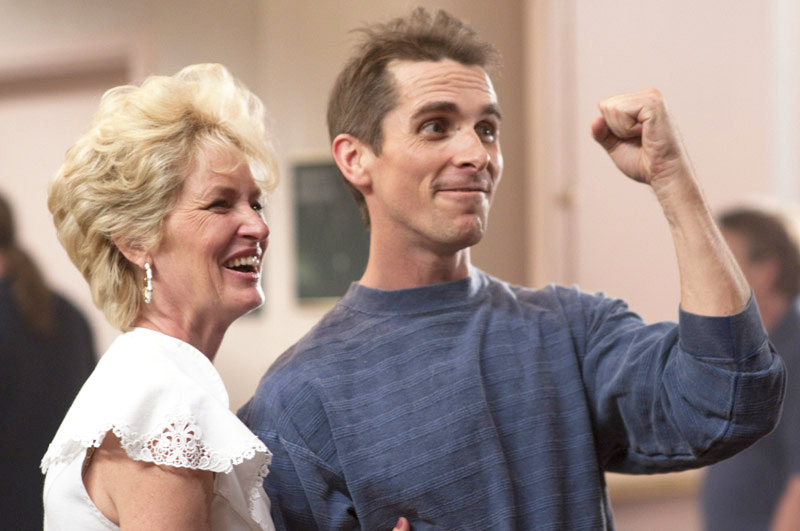

The Fighter is a mostly true story. Ward is a better, tougher fighter than the movie wants to give credit for (the underdog status makes for a better story, I'm sure, but the dismissive commentary on the soundtrack during the fight sequences is the real thing...taken from the actual broadcasts...Ward was considered an underdog), and Dickie DID do all those things, but his timing was a bit better in real life. One wants to say that the best character arc in the movie is Dickie's, but that would be falling into the appreciation trap the movie sets up.

Because Micky's is the best character arc, although it seems a very simple Rocky-like success story on the surface. It's the approach that Micky takes with the forces in his life that are tearing each other apart which is the most interesting aspect of the story. Micky has been wronged by his family, but he won't discount their worth, or their place in his life, even over the objections of his new supporters—they have to find a way of dealing with each other and their conflicts, with or without him. For a fighter to take the stance that he does, reaching compromise with the warring factions in his life—to stand up and take control, risking everything from everybody—is a complete negation to what he does for a living and how he was raised.* The acting kudos are going to go to Bale (who is incredible, not to slight him) and Leo and Adams (who has two great scenes involving an intercom, and throws some nice punches in a chick-fight), but Wahlberg is the champ in this movie, with the tougher part (he trained for this through his last six roles), which he does almost purely physically. Micky is a man of few words, and not too many moods, but Wahlberg, restrained and less showy, does all of it with body language and does the difficult fight scenes, as well—in the latter taking a lot of body-blows that are not hidden with oblique camera angles or trickery. Wahlberg has worked with director David O. Russell before—in fact it was Russell's war pic Three Kings that first showed how good an actor Markey-Mark could be. Russell keeps the movie on edge with quick cutting and an improvised feel, even managing to make the final fight scenes nerve-rattling, despite the suspicion that one is going to see a typical boxing picture ending. But, his assurance with good material, performed by such a dedicated cast, manages to keep the movie on its feet, even at the final bell.


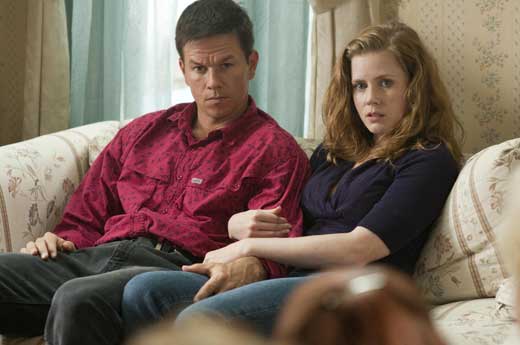


The Fighter is a Full-Price Ticket.
 |
| Micky and Dickie at the time of the events of the film |
Friday, January 14, 2011
The Secret in their Eyes

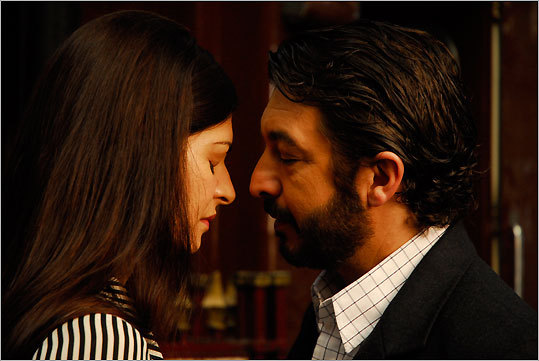
The Secrets in Their Eyes (aka El secreto de sus ojos) (Juan José Campanella, 2009) Argentinian film that won the 2010 Academy Award for Best Foreign Film. It is difficult to say, after the fact, exactly what The Secret in Their Eyes actually is: is it fiction, deposition, fever dream, memory, fantasy, wish-fulfilment...any of them, all of them a bit. And yet, it is a mystery with a conclusion, a love story with a happy ending, a character study, a psychological thriller—all of it.
It begins as a blur: a writer is trying to begin his novel...and begins it many times: a hazy, blurred separation of lovers at a departing train; the last memory of a woman soothing an ailment with tea and lemon; a brutal rape. All facets of the story, but not one facet, above all. The author, Benjamin Esposito (Ricardo Darín) a former legal counselor in retirement, is trying to write a novelization of a case that he can't shake for the life of him: what he calls the Morales case—the sexual assault and murder of Liliana Coloto (Carla Quevedo), new bride of Ricardo Morales (Pablo Rago). It is a case that he got by default, but it haunts him: the way the girl appears crumpled at the crime scene, the devastation of the husband, the utter lack of clues—and that a rival counselor (Mariano Argento) has arrested and beaten a confession out of two construction workers who could not have been there at the time. Determined to find the real killer, if only to bring peace to Morales, Esposito breaks a few rules, goes by his own instinct on the slimmest of leads, consequently landing him in hot water with his immediate superior Irene Menedez-Hastings (Soledad Villamil) and her boss.
That he is holding an unspoken love for her is only part of the complicated story, a facet.
At one point in the story it is observed that you can change anything about a person...but you can't change their passion. And that's what The Secret in their Eyes is all about: passion. Passions that define us, and might undo us. For Esposito, passion is what drives him to write the story of this one case that led him to fear for his life and go into exile, the results of a deliberate miscarriage of justice that has nothing to do with passion, but only a cynical machination of wielding power to one's own ends. His return to discover, to begin the investigation again and see it through to its inevitable conclusion...in all facets...drives the film along its complicated time-line, to a satisfying resolution.
But, the journey, and what it says about people...and passion...will haunt you for days.




Wednesday, January 12, 2011
The Soloist
 The Soloist (Joe Wright, 2009) The Los Angeles of Joe Wright's The Soloist is an alien landscape of clover-leaved asphalt, caves of concrete, and dwellings like jail-cells, overlain with a constant muffled roar, punctuated with neon- and police-bar-lit nights through which the homeless meander in surrealist tableaux that would give Federico Fellini pause.
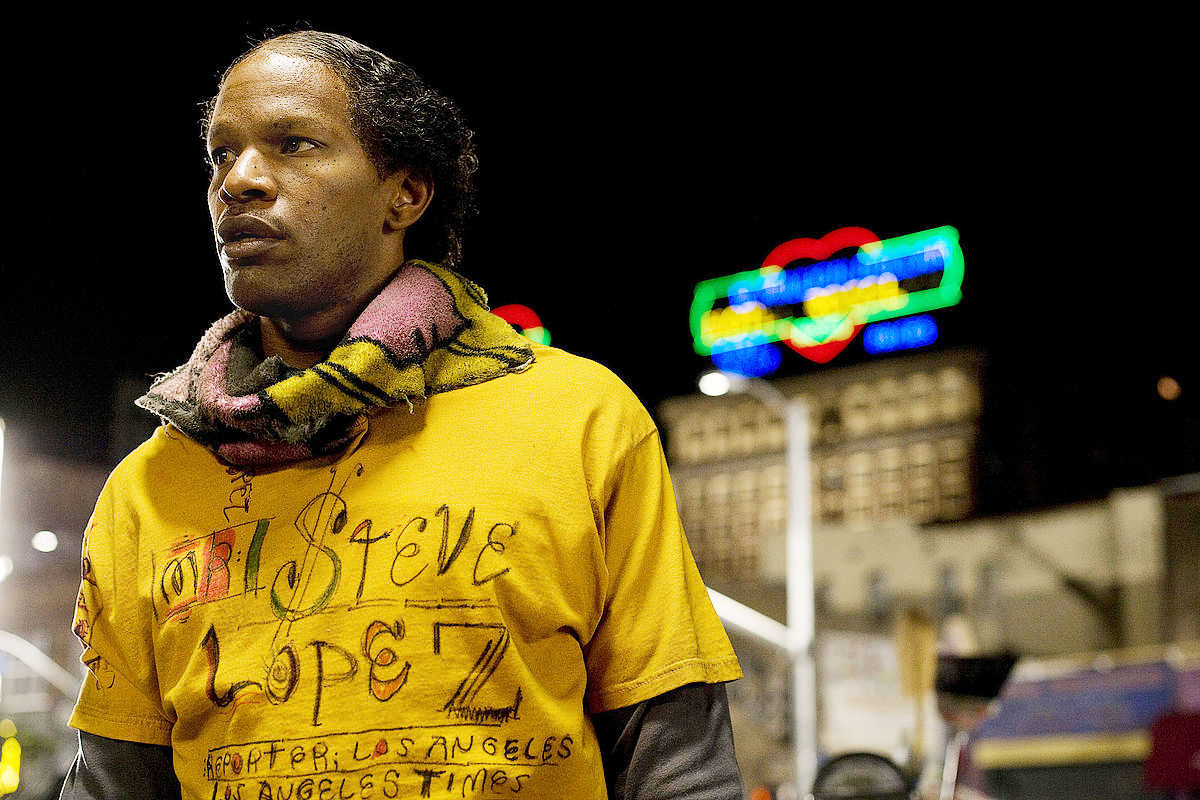
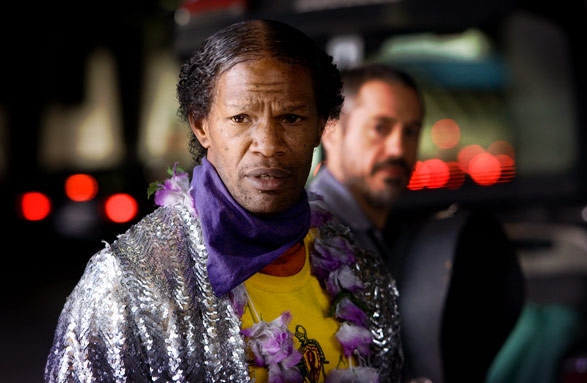
In this environment, while recovering from a nasty bicycle accident Los Angeles Times feature reporter Steve Lopez (Robert Downey Jr.) is contemplating another failed idea for a column, when he hears, echoing, a high sonority piercing the white noise. It emanates from Nathaniel Anthony Ayers (Jamie Foxx)—homeless, schizophrenic, sawing out pure tones from a violin with only two strings, the sounds of the others only imagined in Ayers' head. It's the stuff human interest columns are made of: a Julliard drop-out, cast adrift amidst the flotsam and jetsam on economic beachrocks, whose music cuts through the din. Soon, Lopez's column puts a face on the L.A. homeless community (numbering 90,000) and the public responds, including the donation of a no-longer-used bass-cello, Ayers' original instrument, and Ayers' simple existence gets complicated.
Joe Wright has made two rarefied films set in the English gentry (Pride & Prejudice, Atonement), but this urban tale of harmony amidst grinding chaos, propels his gifts into a new arena. No longer able to settle on the classical symmetry of English estates, this film is jagged, off-kilter, and sonically and visually complex, both in exterior spaces and in the echoing interiors of Ayers' mind. Music soon supplants the chattering roar of the film, softening and simplifying it, finally allowing it to soar, sometimes literally, evoking the peace that soothes Ayers' mind. But those moments are all-too brief, as the two men are both impacted by each other's demons.
That jagged, off-kilter quality is also necessitated by the editing rhythms Wright is forced into by his principal stars, two of the better "riffers" of the current crop of young actors. Downey, Jr. and Foxx intersect each other, the latter, in a constant stream of focused non-sequiturs, while the former interjects whenever he can, like Ayers' music trying to find structure in the jumble of words and thoughts. The editing of their scenes together is tight and, frankly, a little daunting to consider how difficult it must have been. Like the rest of the film, it succeeds if, in not bringing order to chaos, it offers a respite from disorder.


The_Soloist_1.jpg)


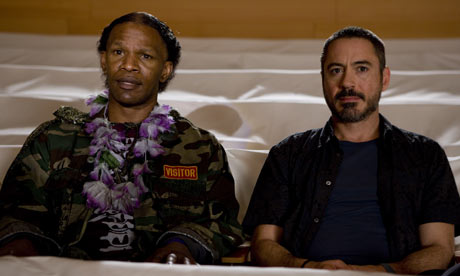
 |
| Mr. Ayers |
Thursday, December 9, 2010
The International

The International (Tom Tykwer, 2009) Say this for Tom Tykwer—he certainly does try and push the envelope. Run Lola Run takes one situation and explored three possible scenarios, bending time and film in the process. He attempts the impossible in Perfume: Portrait of a Murderer, basing a film around one sense the art of cinema cannot convey—smell. And in The International, he bases a thriller plot around the concept of...architecture. It's a film with a definite edifice complex.
It's a fine conceit: the gleeming facades of the banking organizations who are the villains of the piece conceal the corruption within (and didn't all the villains of the Bond films have the coolest, cleanest, most glimmering pads?), presenting walls of respectability to hide the base activities contained within, disguising their true nature and internecine practices from the public at large. The film-makers also benefited greatly from timing—The International just so happened to have corrupt international bankers be the focus after the banking meltdown of 2008.
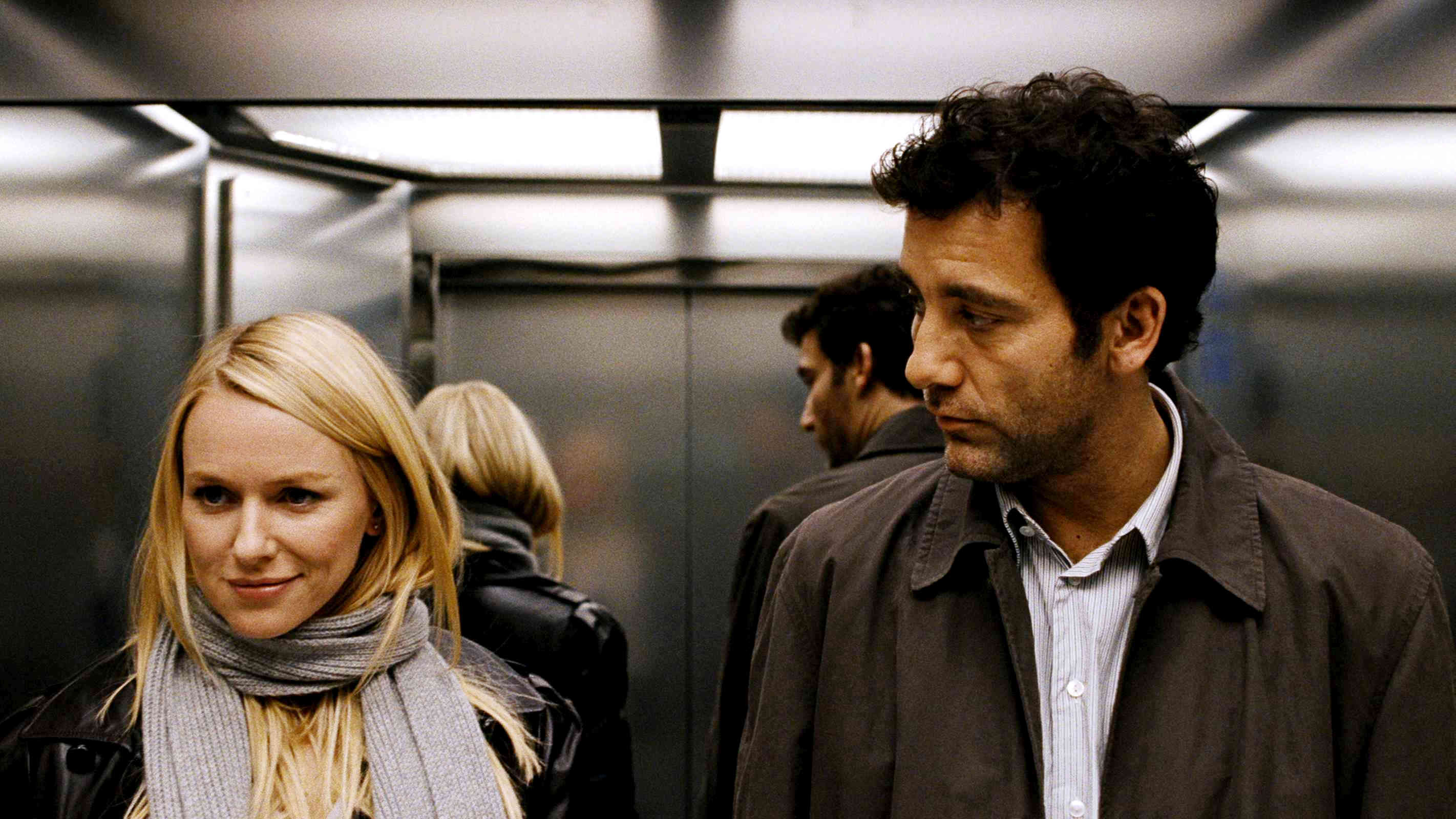
The unseen is a central theme of the film. Interpol agent Louis Salinger (Clive Owen) sees a colleague die before his eyes during an investigation, but doesn't catch the small incident that kills him. He then spends the rest of the film, with the help of Manhattan D.A. Eleanor Whitman (Naomi Watts, wasted in a nothing part), trying to gather evidence he only suspects exists about the arms-dealings being bank-rolled by the the International Bank of Business and Credit.
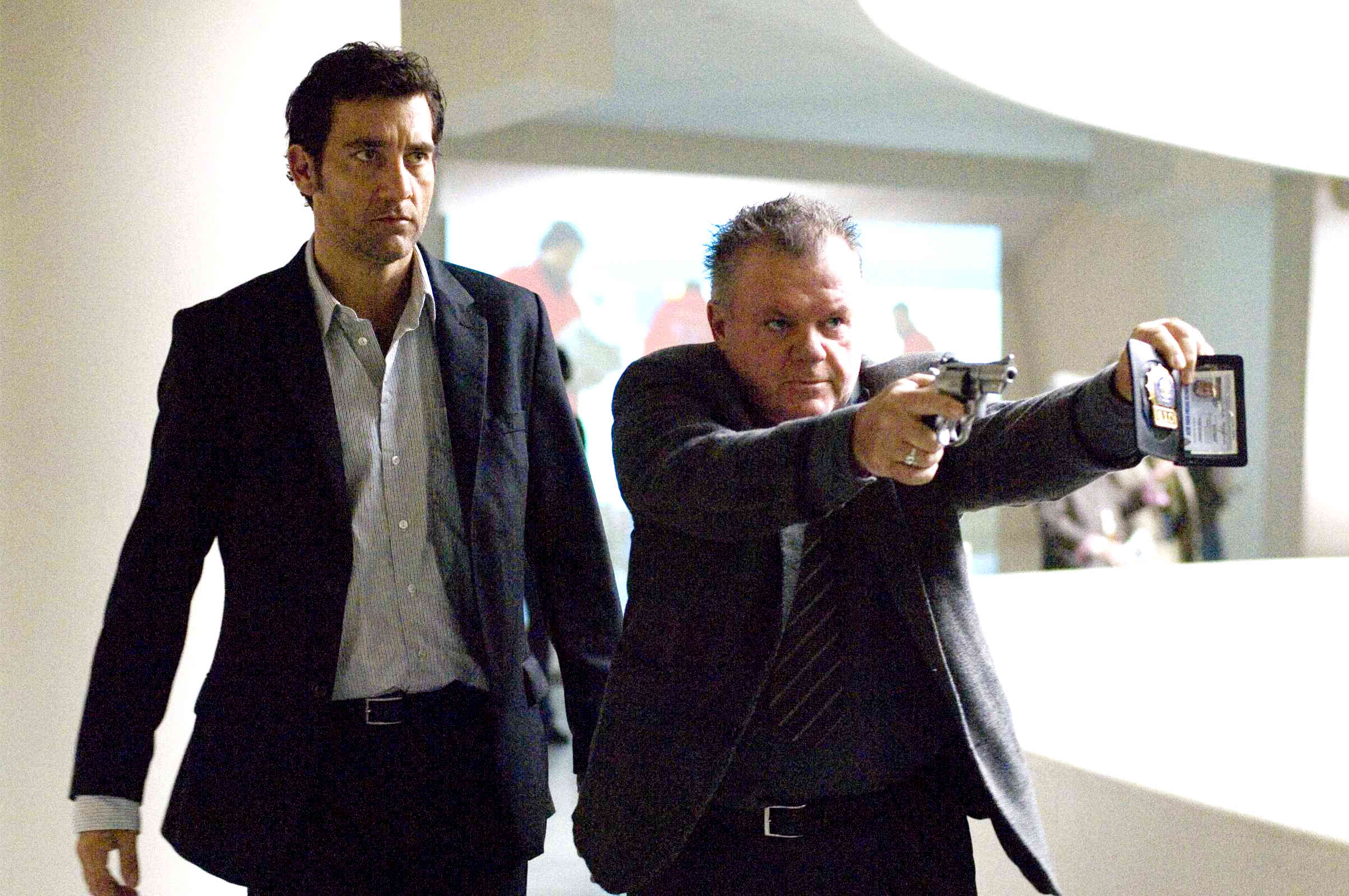
The film globe-trots from Berlin to New York to Milan to Istanbul, as Salinger follows an IBBC hitman (they apparenly only have the budget for one), then goes to the top to try to find the puppet-masters. Tykwer does this sort of thing very well, but ultimately the story lets him down, leaving his visuals as the most memorable thing about it. What most will remember is a shoot-out set-piece staged in the Guggenheim Museum in New York (and no, they didn't film it there, ingeniously recreating the Frank Lloyd Wright structure in a soundstage). In it, Salinger and a police colleague attempt to confront the IBBC assassin, only to find themselves and their target, the subjects of a hit-squad sent by the IBBC (took awhile to generate a purchase order, I guess), which suddenly doesn't mind staging a hap-hazard shooting-match out in the open in one of the most famous structures in the world (Hmmm. Best not to think too much about it). Tykwer takes your mind off the absurdity of the situation with his complicated, precise direction, as hunter and hunted find themselves unlikely allies once they find themselves on the wrong-end of automatic weapons. This stays with you, long after the rest of the assets of The International have been depleted.




Saturday, December 4, 2010
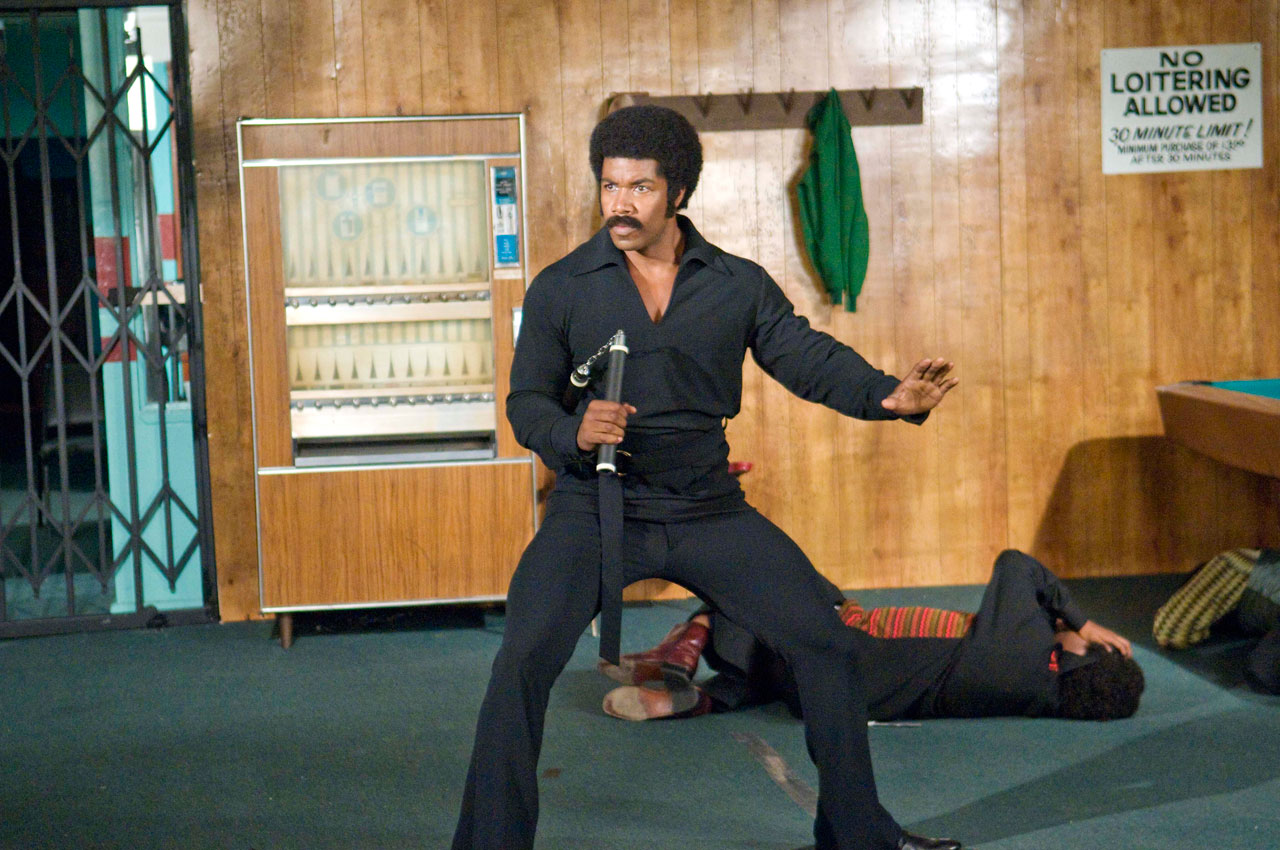
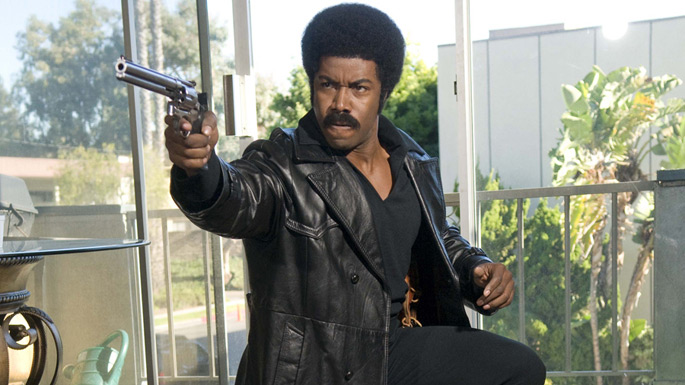
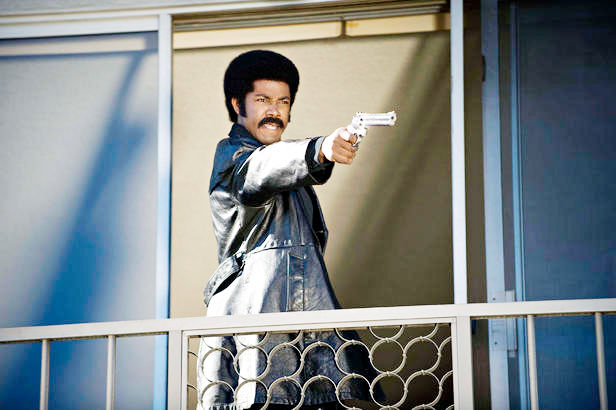
Black Dynamite
 Black Dynamite (Scott Sanders, 2009) This is the film that won the coveted "Golden Space Needle Award"* at the Seattle International Film Festival. I don't go to film festivals because I find them snooty, but one nice thing about the Seattle Awards, they're not afraid to give their top award to a comedy, making them ever so less pretentious than the Oscars.
It is hard to argue with the choice. This is a damned funny send-up of the whole blaxploitation era of the early 70's—something pretty easy to "send up," actually, but hard to do well (for example, as much as I love the late Leslie Nielsen and his series of "Naked Gun" films, more often than not, they'd veer off from sending up the tv-police procedurals, and grab as many jokes from far-afield sources as they could). Black Dynamite, however, nails the genre and its eccentricities, reveling in its own cheap-jack production values (mirroring the budgetary constraints on those films), the limited acting ("Who's in charge here?" "Sarcasticly, I'm in charge."), and the weak plotting that went along with them. Sanders and co-scenarist/star Michael Jai White spent $500 to make an 8mm trailer to get funding (which quickly happened), and used the money to write a cracker-jack script (in three weeks, with Byron Minns) true to the film-era, skewering it with zealous affection, and filmed in glorious 16mm.
In so doing, it also manages to be a great satire by following its over-the-top scenario hunting for "The Man" responsible for a nation-wide assault on the black libido and tracing it to an outlandish (and apt) end-point. Raw (in all senses of the term), raucous, and equal parts poking fun and revelling in its jones for all things blaxploitation ("Ain't nothin' in the world get Black Dynamite more mad than some jive ass sucka dealin' smack to the kids!"), Black Dynamite is a cackling joy to watch. That it is being turned into a Cartoon Network adult animation is good news, insuring that the legend of Black Dynamite will keep on turning, just as sure as the Earth. "And it's gonna keep right on turning right along with it. Until this little planet rotates off its axis as a result of it's core overheating and explodes into cosmic dust!"
Can you dig that?






* Yes...really.
Happy Birthday, Sister, from your bruthah!
Tuesday, July 27, 2010
The Girl Who Played With Fire

It has been a year since Lisbeth Salander (Noomi Rapace), the multi-hyphenated* titular anti-hero of the "Millennium" series (or "The Girl with the Dragon Tattoo") skipped off with a fortune to travel the world on the run from the slugs of Swedish officialdom who might exact revenge.
As if...
Now, she is pulled back to Sweden, against her better judgement, moving in relative obscurity; her only connection to her partner-in-investigating Mikael Blomqvist (Michael Nyqvist) is virtual, connected to his computer hard-drive. Though she continually scours what he's investigating and reads his columns, there hasn't been contact, e-mail, text, or ping between them in that entire year.
She's been busy enough, though. The events of the first film perpetrated by "The Girl Who Played With Fire" are coming back to haunt her, as she is evidentially linked to the murders of a "Millennium" journalist (Hans Christian Thulin) and his girlfriend, who have been working on exposing Swedish sex-traffickers with some highly placed officials as customers. That those homicides also lead to the murder of Salander's former "guardian" (in name only) Nils Erik Burman (Peter Andersson), on whom Salander exacted a brutally appropriate revenge in the last film, only make the hunt for her more intense.
This time it's personal (as they say in the trailers). And the fascinating Salander becomes the focus of this story that has her confronting her demons while tangentially attempting to clear her name. In the center of the story, while simultaneously watching from the sidelines, Blomqvist can only dog the elusive hacker's trail, learning more about his enigmatic co-hort/lover and what stokes the fire in her belly, a fire that actually turns the calm, collected Blomqvist into one very angry man, staunchly defending her, while coming to grips with the reasons she "despises men who hate women."
"The Girl Who Played with Fire" (directed by Daniel Alfredson) is not as good a film, or as fine a mystery as "The Girl With the Dragon Tattoo," being much less convoluted (and thus intriguing) and a little more by-the-numbers as far as plotting. There's no real mystery here, as opposed to the first film (and book), but it focuses on what fascinated—and made one vaguely uncomfortable—about the first part of what will ultimately be a trilogy: Salander's burning desire to not just see justice done, but to exact her personal revenge—coldly, clinically, savagely. That it has a feminist slant (and one winces at using the word—these are crimes against human beings, sexually and power-abuse based, that just happen to be women) of turning the tables gives it a certain satisfaction, but I've seen too many Eastwood-directed movies (...heh...) to be entirely comfortable with the vigilante justice angle.
What makes it work, finally, are the lead characters, especially the unconventional renegade that is Salander. Her heart's in the right place, even though her soul is damaged, and the mandarin restraint that Rapace brings her is only betrayed a notch here, but even that still ends up breaking your heart. You can't help but root for her, despite the kindling she leaves in her wake.
And she does leave kindling. The violence that made one queasy about the first film is only slightly muted here, and concentrated to the back-end of the story—a set-piece of violence and tension that contains no catharsis but merely stops, unresolved, leaving the fate of Salander up in the air.
Not to worry, though. The last book, "The Girl Who Kicked the Hornet's Nest" rides the top of the New York Times Best Seller List and looks to be there for quite awhile. The third film comes out in the Fall. Can't wait.
"The Girl Who Played with Fire" is a Matinee.
* In my review of the first film I described her thus: "a 22 year old full-time goth-punk chain-smoking, bi-sexual, PTSD'd borderline-schizophrenic, sociopathic, fire-fixated security-investigator-computer-hacker...and part-time judge, jury and executioner. Add to that Blomqvist's inadequate (and slightly hilarious) description of her as "...a very private person."




Saturday, July 24, 2010
Coco Chanel and Igor Stravinsky

"And Then the World Tilted..."
I was attracted to this icily erotic French film by its promise to dramatize one of the great contretemps of the Art-world, the May 29, 1913 premiere of "Le Sacre du Printemps" at the Théâtre des Champs-Élysées, where the combination of Stravinsky's score for the Ballets Russes and Vaslav Nijinsky's radical choreography caused a riot in the theater. The incident has become fabled and even famously made it into film criticism,* the impression being that fist-fights were breaking out among the tuxedoed intelligentsia. But, in the film "Coco Chanel and Igor Stravinsky," it is presented, not as a riot of the soccer hooligan variety, but rather some rather rude behavior on the part of a few incensed art patrons, cat-called by opposing members of the audience, until the gendarmes arrive and break things up. Riots, as with real estate, depend on "location, location, location." This was, after all, an opera house filled with tuxedoes and stuffed shirts.
Composer Stravinsky (Mads Mikkelson) is humiliated by the incident, but it fascinates fashion diva Coco Chanel (Anna Mouglalis**), in the audience, to the point where she offers patronage to the composer at her villa. Too proud to accept money, he does accept residence for his tubercular wife and clutch of children...and a study for his composing. The country estate is just the breath of fresh air the family needs, and the space and time the composer requires to further his career.
But what does Chanel need? In mourning after the death of her lover ("She even makes grief look chic"), moved by the music she heard, and very much "an independent woman" (after a fashion) her motives may be altruistic, but at this stage in her life they may be more direct. At one point, showing the Stravinskys their bedroom at the villa, the composer's wife notes the high-contrast black and white palette of the room. "You don't like color, Mademoiselle Chanel..." "As long as it's black" is the assured reply.
She might also be drawn to a kindred spirit. Both she and Stravinsky are glaciers, moving slowly, not revealing much fire except through their work, very much interior people. But where she is direct ("I'm late"), he is circumspect ("I am patient"). Both are precise and intricate and do not broach compromises; she likes clear strong lines and simplicity in fashion and he writes brutal hard edged dissonances. They both think differently from the norm, and each other, and they both rock their respective worlds. And things tilt massively when their worlds collide.
Director Jan Kounen directs the film sparingly, allowing images to tell the story more fully than words: an image of Stravinsky lost in thought at the piano while a metronome ticks unaccompanied says far more about his creative doldrums than a scene of frustrated acting out; a child on a still swing breaks the heart. Mikkelson, very much an actor of coolness, betrays no emotion as his character finds himself adrift in two worlds that have nothing to do with his roots, and Anna Mouglalis' Chanel is a gliding sylph-like presence who economically portrays drama without betraying any of the planes of her face. Words fail as these two artists concerned with the world of the sensuous act out a passion whose only previous outlet has been through their work.
It's an interesting study of two cultural revolutionaries whose orbits cross, lending a brief, propulsive energy to both, and whose gravity then extends shock-waves beyong, tilting our world.
"Coco Chanel and Igor Stravinsky" is a Matinee.


* That would be Pauline Kael's fatuous statement that the unveiling of Bernardo Bertolucci's "Last Tango in Paris" "altered the face of an art-form," comparing it to the riotous "Rite of Spring" opening. If Ms. Kael had done some research, she might have mentioned that "The Rules of the Game" provoked a more similar reaction (Oh, you sensitive French!) or the premiere of "2001: A Space Odyssey" where walk-outs were prevalent—Rock Hudson huffed up the aisle yelling, "Will someone explain to me what this movie is about?" It's about 2 1/2 hours, "Rock." Will that do for ya?
** Mouglalis' work is unusually well-informed; since 2002, she has been one of the model faces for Chanel.