Showing posts with label Naomi Watts. Show all posts

Tuesday, January 29, 2013

The Impossible

Disaster Relief
or
The Tides That Bind

It truly is an amazing story, fully befitting the title The Impossible.  The heart-and earth-rending circumstances surrounding the 2004 tsunami are the stuff of nightmares.

The Bennett family* is spending Christmas 2004 in Thailand.  They're Australians living in Japan: she's a wife/mother/home-maker for now, a doctor by trade; he's a something or other, attached to his phone and worried about losing his job.  The kids are twelve, seven, and five, respectively with the oldest, Lucas, a bit of a pre-teen jerk to everybody—little brothers and parents—and has a bad case of the surlies with a lot of growing up to do.

Thailand at Christmastime 2004 is the perfect time to do it.  Their seaside resort is pristine, perfect.  They spend Christmas lightly bickering, worrying, and considering the future.  Man plans.  God laughs.

What they can't anticipate is the earthquake that rocks Southeast Asia, or the resulting wall of water that comes crashing through the resort, pushing everything out of its path, slamming everything up-shore, sucking it back to the ocean and then, hammering them again, turning the tidelands into a raging river in both directions, scattering everything in random paths.


That includes the Bennetts. When Mom Maria rises above the wall of water, battered and bleeding, she sees Lucas being carried away to the ocean.  The two desperately risk safety and stability to connect and stay within reach, despite being tossed about like so much silt.  When the waters subside they scrabble in bare feet amid the carnage of uprooted vegetation, rubble and broken bodies.  Maria's leg is torn apart, flesh ripped from bone.  A makeshift tourniquet keeps her together, and Lucas becomes parent, keeping her focused through her shock and finding high ground and supervising her trip to a triage center, a hospital drastically ill-equipped to deal with the wreckage of such a catastrophe.  What has become of the rest of the family is anybody's guess, but that is for another time, if they can spare it from just surviving.

Director Juan Antonio Bayona (in the credits, he's "J.A. Bayona") manages to keep the focus micro, while presenting a macro canvas.  That in itself is an amazing accomplishment, but he has an amazing talent for making things personal and visceral, the scenes of the struggle swept up in the ocean waves is tough to watch, and the inundation of the victims in the tsunami's path, as experienced by Maria is a surreal nightmare of images, that convey panic and horror simultaneously. The details of everything, especially the personal crises of the peripheral victims is in plain view, as much a part of the story as the Bennett's struggles.  Their crisis is central, but the individuals' own efforts in providing help to other survivors is reflected by the help they get back.  It's a story of one family, but the efforts of all the survivors, native and tourist, to help each other through the overwhelming havoc is knitted throughout the story in an overall arc that is inspiring, and something of a tonic in this movie season.

The Impossible is a Full-Price Ticket.

Watts, McGregor and The Impossible Belon family

* Much has been made of the fact that the Belon's (who are Latinos) are being played by Anglo actors,  something that is much pooh-poohed by Maria Belon.  But, one has to ask: why did a production, headed by Spanish-speaking artists, make such a decision, other than for "sellability?"  I only bring this up, as there is a pattern here, what with the similarly anglicized Argo.  Are Latinos not allowed to be featured in movies because it might hurt the box office (I say this while ruefully noting that a Latino actor and black actor are "inserted" into the all-white Gangster Squad—if one is to be accurate one way, shouldn't one the other—and yet I thought Mackie and Pena were a nice touch, and they're always welcome to see). Yes, as Maria Belon says, the story is "universal"—it has more to do with family than what race that family is.

Friday, November 18, 2011

J. Edgar


The F.B.I. (Love) Story
or
"What Determines a Man's Legacy is Sometimes That Which Isn't Seen"

J. Edgar Hoover ruled the Federal Bureau of Investigation for 45 years under the Department of Justice.  Over the course of his tenure, he made the FBI his personal weapon in defending the nation from threats as he saw them, even as they changed form—from Bolshevik radicals to hayseed bootleggers and bank robbers to Communists to Civil Rights Activists to his very bosses.  He did this unsubtly and unequivocally with press-trumpeted raids and whispered-about secret files that, if it didn't make him (as the phrase goes) "the most powerful man in the country," he was certainly the most feared.  It was always assumed that Hoover had "the goods" on everyone, and guaranteed his long-held government post with weapons in manila files.

When he died (in office), Hoover's mug had the well-known face of a haggard bulldog—keeping secrets is something that can age you rapidly—and keeping secrets is something Hoover did best.  Not only those of others, but his own.  Rumors swirled about the nature of his relationship with FBI Associate Director Clyde Tolson—that they were secretly gay lovers rather than "gentleman cops," that Hoover was a cross-dresser, and that the reason Hoover didn't pursue the gangsters of La Cosa Nostra in the '40's and '50's was because of compromising photographs in the hands of Meyer Lansky.  Nothing has ever been confirmed.  It's all just rumor, the smirking kind that the powerful get (but there's never any proof).

Which is why news of a Hoover bio-pic, written by Dustin Lance Black and directed by Clint Eastwood seemed so intriguing.  Eastwood isn't afraid to take chances, turning cliches on their ear and Black's clear-eyed script for Milk garnered an Oscar.  Their film J. Edgar promised "red meat," of the kind that could be delightfully and salaciously chewed.

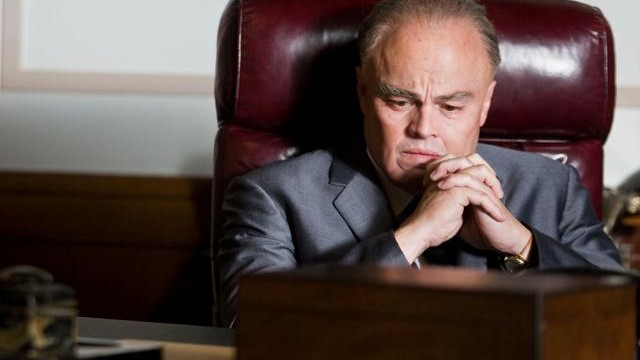
 And the two men have taken chances...but not with the result you would think.  Rather than being a rant or skreed, J. Edgar is actually a sympathetic look at the FBI director and his peccadilloes and shortcomings.  There's nothing hysterical (save for one fist-fight that breaks out between Leonardo DiCaprio's Hoover and Armie Hammer's Tolson) in script or direction, but it offers a look at a severely closeted man who had to be in the times he lived and with the mantle he carried.  Ambitious, yes.  Paranoid, certainly.  Vain and glory-hunting, without a doubt.  Hoover craved the spotlight and his role in being "Head G-Man," while at the same time operating in the shadows, single-mindedly hoarding the secrets of others, while keeping his own in the height of ironies.   At the same time that he espoused the Bureau ethic for red-blooded American males as agents, one wonders if it is done for appearances' sake, a beard that would mask his own leanings while also serving as a "hiding-in-plain-sight" revelation of his own taste in men.

Black and Eastwood conduct the story-telling in flashback, as Hoover in his latter years, decides to set the record straight, dictating his memoirs to an amusingly rotating number of agent-stenographers who disappear as soon as a point is questioned, or a weakness revealed.  The story is a white-wash, reflecting the man's "official" view of the Bureau's history in a mix of incident and myth.  At many times, J.Edgar is a bit reminiscent of Citizen Kane, with its fracturing point-of-view, shifting perspective, and ironic commentary on some of the incidents.*

It also shares Kane's sense of the unattainable summation of a life.  C.F. Kane's had little to do with "Rosebud," just as Hoover's gay leanings was a small part of his whole story.  It began with a controlling mother (Judi Dench), determined to keep young John Edgar from becoming a drunk like his father.  Groomed to become "the most powerful man in the country," Mother Hoover controls her son's life to make him the image of the perfect son, diction lessons to force past a stammer, impeccable grooming, and the enforcement of all of her prejudices.  And the nullification of any behavior less than manly.  He is made in the image of his Mother's "perfect son," even though that image may be completely counter to reality.  It sets him on a lifelong course of fighting her battles, never really being his own man, as much as posing in the presentation he wanted to project.  A performance.  An actMyth and lies.

It is a story soaked in ironies: the man who kept secrets on everybody, but the biggest being his own; the investigator who saw no harm in exposing other's private lives, while keeping an iron grip on his own; the policeman who targetted and made war on many enemies, the primary one being himself.  Black and Eastwood present a case for sympathy, even empathy, for a man who shaped, and was shaped, by his times, who rose through the ranks of power in society, to not be shunned by it, and who searched for verifiable fact while living in denial, and closeted by the bureau of his own making.

J. Edgar is a Matinee.


Hoover and Tolson at their regular table at The Stork Club.


* Not to mention that DiCaprio's "old-man" make-up makes him look more like the aged Charles Foster Kane than the jowly Hoover (still, it's better than the never convincing make-up that Hammer sports as an aging Tolson), and the shots of Hoover witnessing the Inaugural parades of Franklin Roosevelt and Richard Nixon are shot from the same angle as the "newsreel" shot of Kane in a balcony appearance with Adolph Hitler.

Thursday, December 9, 2010

The International


The International (Tom Tykwer, 2009) Say this for Tom Tykwer—he certainly does try and push the envelope.  Run Lola Run takes one situation and explored three possible scenarios, bending time and film in the process.  He attempts the impossible in Perfume: Portrait of a Murderer, basing a film around one sense the art of cinema cannot convey—smell.  And in The International, he bases a thriller plot around the concept of...architecture.  It's a film with a definite edifice complex.

It's a fine conceit: the gleeming facades of the banking organizations who are the villains of the piece conceal the corruption within (and didn't all the villains of the Bond films have the coolest, cleanest, most glimmering pads?), presenting walls of respectability to hide the base activities contained within, disguising their true nature and internecine practices from the public at large.  The film-makers also benefited greatly from timing—The International just so happened to have corrupt international bankers be the focus after the banking meltdown of 2008.

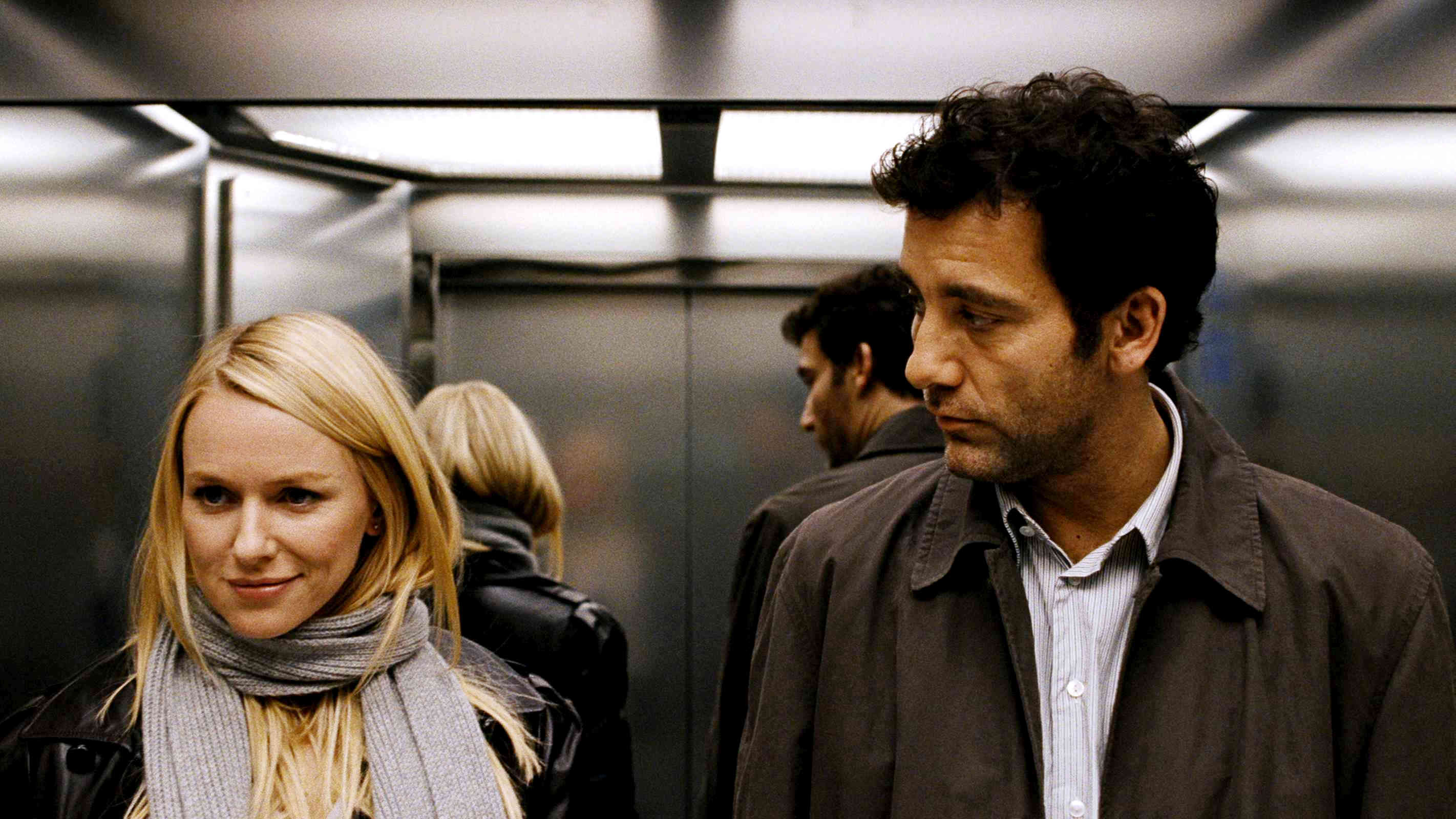
The unseen is a central theme of the film.  Interpol agent Louis Salinger (Clive Owen) sees a colleague die before his eyes during an investigation, but doesn't catch the small incident that kills him.  He then spends the rest of the film, with the help of Manhattan D.A. Eleanor Whitman (Naomi Watts, wasted in a nothing part), trying to gather evidence he only suspects exists about the arms-dealings being bank-rolled by the the International Bank of Business and Credit.

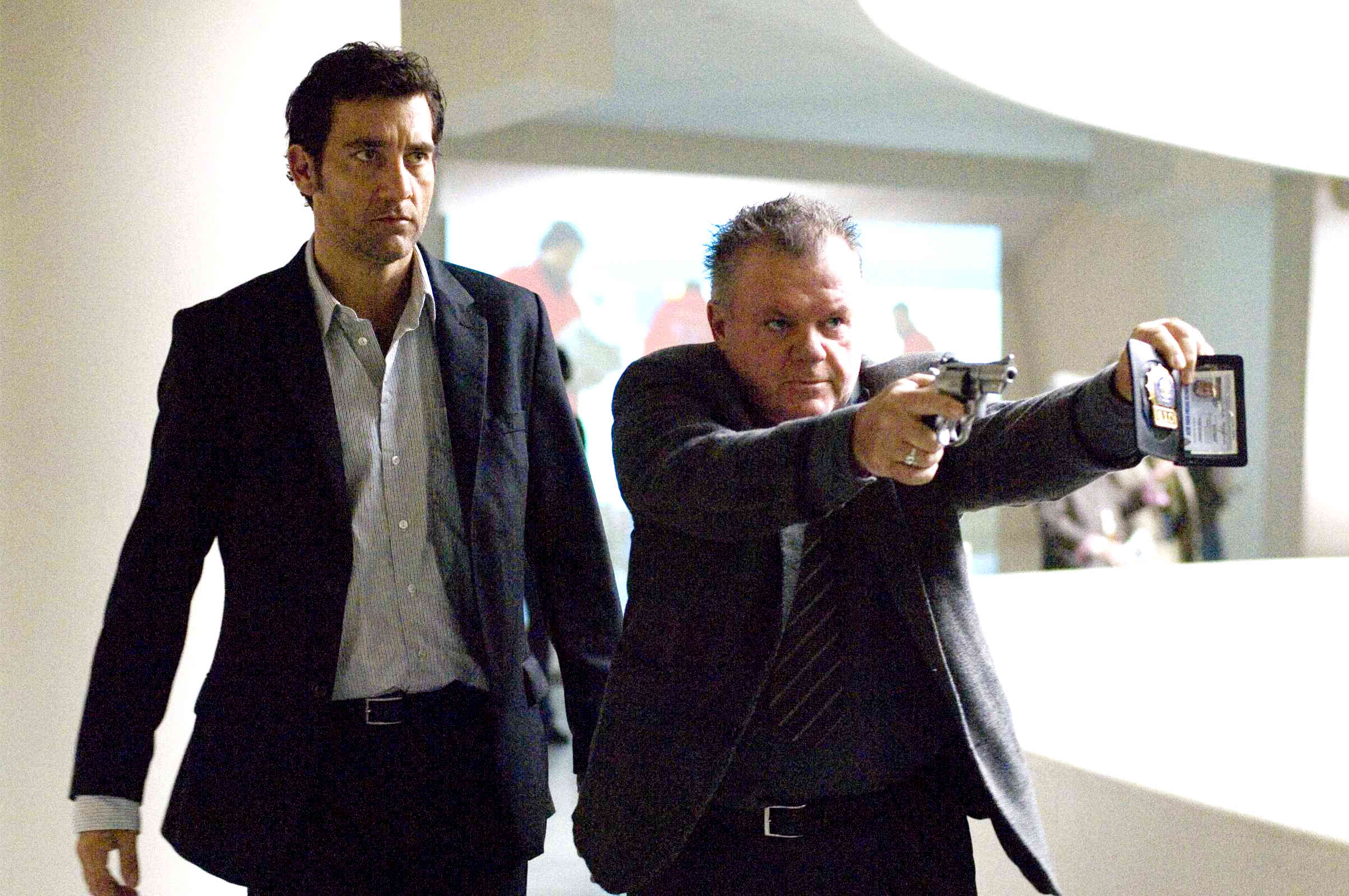
The film globe-trots from Berlin to New York to Milan to Istanbul, as Salinger follows an IBBC hitman (they apparenly only have the budget for one), then goes to the top to try to find the puppet-masters.  Tykwer does this sort of thing very well, but ultimately the story lets him down, leaving his visuals as the most memorable thing about it.  What most will remember is a shoot-out set-piece staged in the Guggenheim Museum in New York (and no, they didn't film it there, ingeniously recreating the Frank Lloyd Wright structure in a soundstage).  In it, Salinger and a police colleague attempt to confront the IBBC assassin, only to find themselves and their target, the subjects of a hit-squad sent by the IBBC (took awhile to generate a purchase order, I guess), which suddenly doesn't mind staging a hap-hazard shooting-match out in the open in one of the most famous structures in the world (Hmmm. Best not to think too much about it).  Tykwer takes your mind off the absurdity of the situation with his complicated, precise direction, as hunter and hunted find themselves unlikely allies once they find themselves on the wrong-end of automatic weapons.  This stays with you, long after the rest of the assets of The International have been depleted.


Tykwer using space as a function of violence: The Guggenheim shoot-out in The International
Warning: this clip is violent and bloody.

Wednesday, November 24, 2010

Fair Game


"Playing the Plame Game"
or
"The Problems of Two Little People Don't Amount to a Hill of Yellow-Cake in this Crazy World."

Those of us in the United States know the story: Ramp-up to the Iraq war; alleged yellow-cake uranium sales from Niger to Iraq; aluminum tubes thought to be nuclear weapons partsambassador Joe Wilson's editorial calling fraud on those suspicions; shock and awe tactics by the White House leaking information to the press, publicly exposing Wilson's wife as a CIA agent; the furor that created; the investigation; the prosecution and resignation of a key Bush administration official; the President's commuting of his fine and prison term.  That's the headlines.

But, the nice thing about Doug Liman's film about the case, Fair Game, is that he immediately makes it personal.  Using the same gritty techniques used in The Bourne Identity and Go (he is also the director of photography on this one, as he was making Go), he takes us to hot-spots of the world, the cold corridors of power, and the warm cozy homes of the participants, finding the nuances of life and feeling.  We watch as Plame (Naomi Watts), posing as a chemical consultant, travels to Kuala Lampur to talk business, effectively dodging a trap with hockey trivia, then, when things get dicey, turns the table on her contact.  Plame's cool friendly exterior turns icy when she looks her hostage in the eye and says calmly "If you help us, we can help you.  And I promise you one thing: you have no idea what we can do."

Truer words.  And she has no idea how true those words are.

Plame knows stuff.  She knows a lot of stuff*.  A prized CIA investigator, she regularly travels to the Middle East coercing, cajoling and charming nuclear scientists and terrorist contacts, making promises, making contacts, hovering in the peripheries, returning home to domesticity with her husband, former ambassador Joe Wilson (a nicely rumpled Sean Penn), currently trying to turn his connections into a consulting business.  Because of his knowledge on Niger, the CIA asks him to investigate the yellow-cake sale for their investigation for the Vice-President's office...the logistics of which would have been impossible to pull off unseen.  Plame, on the other hand, has all the facts that the Bush operatives don't have (or won't acknowledge) about those aluminum tubes that, it turns out, are completely unsuitable for bomb-building.

But that doesn't stop the Administration from using both fraudulent claims as pretexts for invading Iraq to stop a non-existent nuclear program—selling the war is easier if the motivation is fear.  Both Plame and Wilson (and their colleagues) watch in horror as the invasion occurs under false pretenses (and Wilson, having met, and been threatened by Saddam Hussein, is no apologist calling him "a monster").  Wilson calls "bull-shit" on the White House, and, fearing "a trust issue," the President's advisers start to spin the story in the Press, starting by leaking that Plame is a CIA officer.  Suddenly, this spy, with enemies around the world and friends out of the loop at home, is besieged with questions and the protective bubble she has lived in is popped.  Considered toxic by her colleagues in the CIA, she loses her clearances and her job, the phone rings off the hook with confused friends and death-threats and just-plain crazies.  The stories start to spin out of control, with Wilson fighting back, but Plame trying to retreat back to an anonymity she will never have again, and a truth that has become irrelevant in the fire-fight at home.

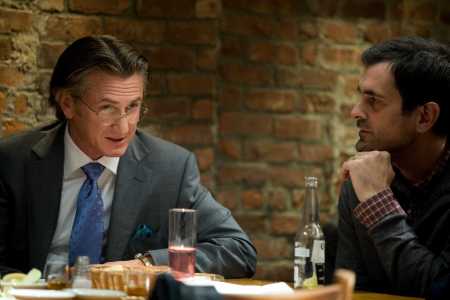
The emphasis on the home situations of Wilson and Plame (and their two children) is what makes this personal political thriller so interesting**: he fights his battles out in the open, but she works in the shadows—when the couple must fight the same battle against their oppressors, the divergent styles splinter the two of them apart.  Watts and Penn have worked together before (21 Grams and The Assassination of Richard Nixon), so they're old hands at making a relationship look believable, both, in turn, have moments of weakness and vulnerability, alternating with a fierceness in strength which they share, but rarely at the same time.***  That internal squabble inside the larger fight makes up the heart and soul of Fair Game, Liman and his camera catching moments of temperament between two "inside" outsiders at war at home.

Fair Game is a Full-Price Ticket.


* One of the amusing things about Plame's book on the subject (that shares the same name as the movie) was the redacting of so much of it; Plame was still bound to pass her book's galley to the CIA for review to prevent the dissemination of sensitive state secrets.  So much of the book was blacked out that Plame published the censored document as is, and a relative not tied to the CIA explained the deleted segments—using completely public documents—in the Appendix.  The credits for the movie black out many of the names of the characters. Heh.  

** And somewhat akin to Liman's earlier fanciful, fictional spy film Mr. & Mrs. Smith... 

*** They're just the marquee names in a great cast, including Bruce McGill—always fine—as Plame's boss, Michael Kelly—who I've been watching since Eastwood's Changeling—as one of Plame's colleagues, a very subtle Polly Holliday (tremember "Flo?") as Plame's mother and Sam Shepard, who has a very short, but very significant, cameo as Plame's Air Force father.

Tuesday, November 2, 2010

You Will Meet a Talk Dark Stranger

"Man Makes Plans. God Laughs."
or
"The 'Thing Without Feathers' Turns Out to be My Nephew."

With a title like You Will Meet a Tall Dark Stranger, you know this won't be one of Woody Allen's autobiographical tales.  The Woodman never strays too far from All Things Woody, his characters usually being scrambled aspects of himself, with one character being a direct comic stand-in.  The likes of Kenneth Branagh, Mia Farrow, John Cusack, Larry David and Edward Norton have all been past dopple-neuroti-gangers for the writer-director.  Rarely has there been a film of his without one.

This is one of those rare films, although one could say this tangled web of London residents could all be aspects of Allen's personality, with the closest being (maybe) Anthony Hopkins' Senior Fool.  One needs a play-book to keep everybody in this rondeau straight, although they are all in each others' orbits.  Start with Hopkins' Alfie—married to Helena (Gemma Jones), parents of Sally (Naomi Watts), wife of Roy (Josh Brolin).  Alfie, going through his "middle-age crazy" period, divorces Helena, sending her to a faux psychic (Pauline Collins) in her grief.  This all upsets Sally, who's trying to make ends meet working for a gallery owner, Greg (Antonio Banderas) while her husband is becoming frayed trying to write a follow-up to his previous publishing success.  Basically, everyone's in the weeds, and it's not long before everybody decides that somebody else's grass in better than their own.  Soon Da is marrying a call-girl/"actress" (Lucy Punch), Roy is pursuing a neighbor he keeps oggling through his window (Freida Pinto), and Sally starts to have feelings for her boss, as her feelings for Roy start to wane.

Allen starts and ends the movie with Leon Redbone warbling "When You Wish Upon a Star," and begins with Helena visiting a psychic, making one think that instead of a rating designation ("R," btw), it should have a sign saying "Abandon All Hope, Ye Who Sit in the Auditorium."  That he equates spiritualism as just a more rigorous form of "hoping against hope" (when the two are merely con-games with different sources—second-hand or internal) is dispiriting, and though it's a continuation of his life-view—"full of loneliness, and misery, and suffering, and unhappiness, and it's all over much too quickly"—there isn't the shrugging whimsey that serves as a warming punch-line this time.

For it may be true, as Emily Dickinson says, that "Hope is a thing without feathers" (and Allen's screwball lateral to that is the second title for this review), and "if wishes were horses, beggars would ride," I tend to take the more optimistic view.  Yes, there will always be poor (because Jesus tells me so) without a nagging destiny, that's no reason that, even though their feet are perpetually on the ground, they shouldn't be reaching for the stars.

Because there will always be stars, too, even if we don't see them, and even if we're not looking for them.  It's why I keep looking up at them.  It's why Woody Allen keeps making movies. 

Maybe his next one will be better.  I hope. 

You Will Meet a Tall Dark Stranger is a Rental. 

Friday, March 21, 2008

Mulholland Dr.


SPOILER: I had the strangest dream last night. I dreamed of people dancing the jitterbug and then I saw this cute blonde girl and she was laughing and she was happy and she was there with her mother and father and they were old. There was this black limo snaking up Mulholland Drive and in the back seat there was this other beautiful woman. She must have been a movie star and then the car stops but the woman says that its wrong and then the driver says no its OK its a surprise and there's another guy in the front who gets out and goes to the back door and the girl looks scared and then there were these kids joyriding down the hill and one of the cars crashes into the limousine and everyone was dead except the beautiful woman. She starts walking down the hill toward the city lights and she gets to Sunset Boulevard but she gets scared by a drunken couple walking down the street so she hides in the front yard of one of the houses but she is hurt and she needs to go to sleep. The cops come to investigate the accident on the hill and they realize that there was someone in the limo that is not there now and they talk just like in the cop movies in the 60's. In the morning she wakes up and she is asleep outside one of those apartment complexes you get in LA with a central courtyard. An older woman is walking out to a cab carrying a small case. The driver is struggling with a much larger case which he puts in the back of the cab and then the woman goes back for some more stuff. It looks like she's going away somewhere. The young woman just watches for a while until the older woman gets in the cab. Then she runs into the apartment complex. I don't think the older woman sees her even though she looks in her direction. The older woman goes back to check everything is switched off in her apartment and to pick up her keys and the young woman is hiding under the table but the older woman doesn't see her. Then the blonde cute girl is coming out of the airport with this older woman who looks like her mom and she looks really excited to be there like she has never been to a place like this before but when she gets outside the old woman says goodbye and so does her husband and they are not her mom and dad but just two people she met on the plane and then she thinks that someone has stolen her suitcases but the cab driver has just put them in the back of his car for her and it is like everyone is talking like in the movies in the 1930's and then the blonde girl arrives at the apartment complex and she meets the manager who looks like she was in the movies in the 1930's and talks like it too and she is staying at her aunt's apartment and it is the same apartment but she doesn't know that and she is very excited and looks around the apartment but then she finds the black haired woman's dress and then she finds the black haired woman in the shower and she doesn't understand and she thinks the woman is a friend of her aunt and she feels embarrassed but the black haired woman has lost her memory in the car crash and doesn't know who she is but she says her name is Rita because she sees the name on a movie poster in the bathroom but later the blonde finds out she is not a friend of her aunt's but she feels sorry for Rita because she was hurt and there's this diner with a man and his analyst and the man had a dream about the diner and that's why he wants to be in the diner with his analyst and in the dream the man sees a scary man out back of the diner only he sees him through the wall and the analyst wants him to go out back so they do and there is a scary man and the patient collapses and then there is this film director and he is in a meeting with these scary guys who work for an old man in a wheelchair and there is a problem with the espresso and there is a problem with the movie because the scary guys want the director to put this girl in as the lead but the director doesn't want to and he goes outside and he trashes the scary guys limo and then he goes home and finds his wife in bed with the pool guy and he gets mad and pours pink paint over her jewelry but the pool guy throws him out and the dialog is really bad again and then he finds out he has no money and he goes to hide out in a sleazy hotel but the manager throws him out so he has to meet the cowboy who looks like Tom Mix and the cowboy tells him he has to choose the right girl and then everything will be alright. The blonde girl tries to help the beautiful woman remember who she is but all she has in her purse is about a million dollars in cash and a strange-looking key but then she remembers a name and then they make out or that might be later and then they go to find the apartment of the woman but it is the wrong apartment because this woman Diane has swapped apartments with another woman but the blonde girl breaks in and they find a dead body but before that the blonde girl goes to an audition for a movie and she is wonderful and this agent wants to introduce her to the film director who is making a movie about the 50's. There is these two young guys talking in an office about a car accident and it might be the same accident and then one guy shoots the other because he wants this black book but he accidentally shoots through the wall and hits this woman so he has to kill her too but while he is trying to get her into the office he sees a cleaner so he has to kill him too but when he shoots at the vacuum cleaner then the alarm goes off but he escapes out of the window and then the blonde and Rita go to a magic show and then I woke up. But when I went back to sleep, I started having the dream again except this time it was different because the blonde girl wasn't Betty anymore, she was Diane and she was the one living in the apartment and Rita wasn't Rita but she was Camilla and she was a big star and she was making a movie with the film director and Diane was in love with her but she was not in love with Diane anymore and Diane got mad and she paid the hit guy to kill Camilla and there was a bunch of other stuff but none of it made much sense and then the dream was over.

So I thought it would be a great idea for a movie even if it didn't make a whole lot of sense and maybe they could get one of those directors like Cronenburg or Tarantino or the Coen Brothers or David Lynch to make it with some older actors who could remember what it was like to talk like they did in the old movies and maybe some new young actors who hadn't made it in Hollywood yet just like it happens in the movie and then maybe everyone would be intrigued by it and they wouldn't really understand it but that would be all right because they would say that you don't need to understand it because it is art and he always makes movies like this and it is like the emperors new clothes with these guys because they are so clever and they know everything about the movies so they can play with the conventions even if it looks like they don't know what they are doing and maybe it might even get nominated for an Oscar.

Thursday, February 28, 2008

The Painted Veil - Take Two


The Painted Veil seems to have a lot of the elements that could result in a decorative but trifling piece: it's set in the most gorgeous Chinese landscape imaginable, it takes place in the 1920's, one of the most trodden-over eras in movies, and it's based on a novel by some British guy who likes to bang on about relationships rather than have some nitty-gritty adventure story going on. Added to that, it was produced by its two co-stars and was something of a labor of love for one of them, Edward Norton, who labored indeed for many a year to bring this to the screen. Under these circumstances it might be expected to be an over-indulgent vanity project. However, while this isn't Indiana Jones and the Painted Veil, it's not Indochine either. It is a movie that fairly zips along to the extent that when we are faced with shots of Naomi Watts looking bored surrounded by luscious landscape, it is entirely consistent to the world of the movie: she is bored and this in part leads her to want something to do to redeem the mistakes of her life and pretty soon she is going to find a way to do it. In fact, the movie seems to reflect the male lead's disdain for anything superfluous to the matter at hand. Things are so telescoped at one point that what seems like an initial seduction scene turns out to be the pivotal in flagrante moment that moves us from reel one to reel two. Like the good doctor, the conversations are often kept to the minimum needed to move the story along. Norton's character is a true action hero - one who makes his point through his medical skills rather than by pointing a gun at someone (the kind of movie I would like my nerf-toting kids to see if it weren't for the ucky kissy-face stuff). Yet, he is not quite the stereotypical shy virginal character who falls for the vivacious bad girl - he reveals himself as not only capable of jealousy and violence once his bored bride embarks on an affair with a local lothario but also of a cruelly- calculated revenge. He is everything of the man of science though he seems capable of love too. Maybe it is not really clear why he should have fallen so hard for Kitty, though one can imagine an inhibited man with little experience of dealing with the opposite sex to be just the type to harbor romantic dreams of unattainable women. Of course in the best tradition this revenge turns out to be transformational for his wife who eventually comes to not only appreciate her husband's virtues but also to find a meaning to her life beyond rebelling against her comfortable existence. The movie even seems to resonate with current events - set against the time of the nationalist uprisings in China, it puts the story against the backdrop of a colonial occupation and the increasingly vociferous and violent moves of the local population to throw off their oppressors, there is even a local warlord who is appeased by the army and the imperialists as a bulwark against the populist uprising - sounds familiar huh? It's a compact and well-acted movie that utilizes its assets rather than indulges in them.

Sunday, February 3, 2008

The Painted Veil

The Painted Veil (John Curran, 2006) Maugham's tough. A restrained writer of underlying passions and the complications of class and personality, he has had little luck in adaptations for the screen, which when separated from the civility of his tone, tend to look all the more melodramatic. Filmmakers have combated this in a number of ways when adapting works by Maugham. They either are as dry as dust, the juice sucked right out of them (The Razor's Edge, 1947), played to hysterics, overcompensating for the former (The Razor's Edge, 1987...with a "jokey" Bill Murray performance), or just the basic idea used and the rest transmuted to some other end (Hitchcock's "Secret Agent"). However, we're gradually catching up to him. With time, his themes have seen better, more fulfilling adaptations, but Maugham needs a director like Elia Kazan, who wasn't afraid to walk the fine line of good/bad taste. "The Painted Veil" has been lensed twice before--once with Garbo in 1937, and, as "The Seventh Sin" (more box-officey title) with Bill Travers and Elanor Parker in 1957. Both films emphasized the soap-ish, melodramatic aspects of the story, but this one is a huge improvement. It's obviously a labor of love, because it cost $17 million to produce and it looks like three times that much, at least. Filmed mostly in China, "The Painted Veil" tells the story of a spiteful marriage between a cold physician, and a spoiled society girl, who must adapt to a life of sacrifice and want in the Far East, and in the process find their priorities shift and their expectations shattered. It's one of Maugham's "too little, too late" stories, but I've rarely seen one better acted (the cast includes Naomi Watts, Edward Norton--sacrificing salaries as producers--Liev Schrieber, Toby Jones, and Dame Diana Rigg) or realized so well. This may be the best movie deal in years from a production and audience stand-point.

Wednesday, November 14, 2007

Eastern Promises

Every picture tells a story, don't it?

"Eastern Promises" is the latest film by David Cronenberg, Master of the Uncomfortable, Enemy to the Squeamish. As with "A History of Violence" his star of choice is Viggo Mortenson, who after years of "body in a suit" roles where he barely registered, became a star with the "Lord of the Rings" trilogy. His post-"Ring" choices have been interesting, including two films by Cronenberg where he could use his inscrutable demeanor to maximum advantage. His Nikolai--ostensibly "The Driver," but to others, "The Undertaker"--is a lieutenant in the Russian mob in contemporary London. His boss is Kirill (Vincent Cassell), the unreliable son of Semyon (Armin Mueller-Stahl), owner of the Trans-Siberian supper club, and "King" of the mob. There are many facades in "Eastern Promises," whether they're legitimate businesses that front prostitution, or the quaint grandfatherly demeanor that Semyon presents. *

Into this world of death comes mid-wife Anna (Anna Ivanovna as Semyon, from the old country, calls her) who oversees the birth of a baby girl to a heroin addict who dies in childbirth. Trying to return the child to relatives, Anna takes the girl's diary to try and gleen any information from it. As it's written in Russian, she turns to the Russian community for help. Her timing couldn't be worse as warring factions are busy slitting the throats of their enemies and it's a world where innocence can be completely subsumed in everyone's search for "a better life."

Cronenberg doesn't make "feel-good" movies, and all of his films take you places you don't want to go. Fans of Viggo Mortenson will see this film and be nicely rewarded with a finely layered, laid-back performance using an accent that approaches parody. But be warned: It's a violent flick with two graphic throat-cuttings, a scene where a dead man's fingers are snipped off to prevent identification, and in the major set-piece of the film, Mortenson's Nikolai is attacked in a bathhouse by two toughs with box-cutters. Yes, ladies (and gentlemen), you get to see his package, but the price you pay is sitting through one of the crunchiest, gristleiest, gooiest fights in a long, long time.

But that's the price you pay.

"Eastern Promises" is a full price ticket

*The only truths are those tatooes into the bodies of the mobsters, from their days in the Russian work-camps--their lives, their stories are burned into their skin for all to see.