Showing posts with label Michael Powell. Show all posts

Friday, December 13, 2013

49th Parallel

49th Parallel (aka The Invaders) (Michael Powell, 1941)
Interesting propaganda film to promote the war effort by the British government, made by "The Archers" (Emeric Pressburger and Michael Powell) before they became "The Archers" and combining the writer-director credits together. More than anything, it was designed to influence isolationist American minds about the threat of the Nazis, by presenting a story where they arrive on our shores.

It is 1941 and a German sub is prowling Canadian waters, sinking any transport they can.  Detected, they make a run for Hudson's Bay and the sub commander orders a landing party to capture an outpost in the area.  But, soon after leaving the sub, the men see it attacked and sunk by a bomber, sent by the Canadian air force, alerted to their presence.  The Commander, Hirth (Eric Portman) continues to land to complete the mission, hoping that they can make their way eventually to the United States which is (gulp!) famously neutral in order to get back to Germany.


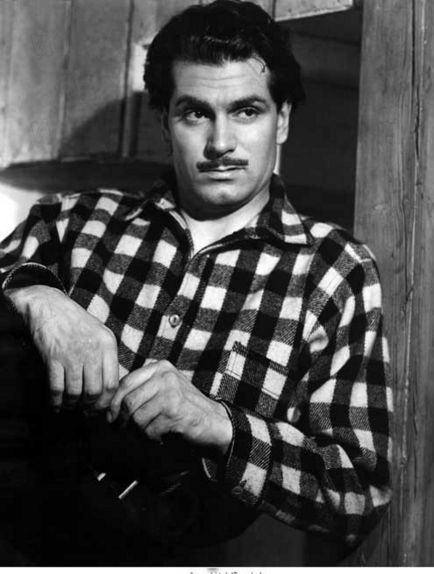
But, first they have to get through Canada.  First stop, a trading post, where Finley Currie and Eskimo guide Ley On are welcoming back French trapper Johnnie (Laurence Olivier—with the wildest accent you've ever heard, eh?) after being up north for eleven months.  The Nazi's take over the trading post, hoping to entice and hijack a plane to get them across the border.  But, it goes badly leading to a skirmish, which barely has the Nazis escaping with their lives.  They then make their way to a German Hutterite community led by Anton Walbrook, who first welcomes the visitors to their peaceful enclave, then when the Nazis' arrogance get the better of them and try to teach the community about their "better" way, Hirth and the community leader engage in a lively debate over the merits of each other's systems.  The Germans are kicked out, making their way to the wilderness where they are captured by the RCMP, but make their escape using an eccentric writer (Leslie Howard) as a hostage, but even that plan does not go as planned.  

Each encounter has reduced their numbers, and, at the last, only Hirth remains free and on the run.  He hops a freight to try and make it across the 49th parallel into the States, but riding the car with him is AWOL soldier Andy Brock (Raymond Massey), whose sympathies are still with Canada, despite being reluctant to fight, and he makes things very complicated.

It is a propaganda piece, after all, and if the various episodes seem a bit far-fetched and feel like a tortured demonstration on the length and breadth of Canadian diversity ("Meet the Canadians!  Even OUR Germans don't like THEIR Germans"), it is with the intent of contrasting that diversity with the sameness of the Aryan lineage and autocratic group-think of the sub crew.  If the thing gets a little pedantic, it was to educate reluctant Americans about Nazi philosophy in a dramatic fashion and inspire a feeling of "It CAN happen to YOU" to the "American Firster's."  It's a bit clumsy and the fisticuffs are a might ham-fisted, but it's positively sub-tle when you put it up against the thousand goose-stepping hosers of Triumph des Willens.  And Powell and Pressburger were just getting started.

Eric Portman's Commandant wants things a little
more orderly in 49th Parallel


Thursday, March 22, 2012

The Thief of Bagdad


The Thief of Bagdad (Michael Powell, Ludwig Berger, Tim Whelan, etc., 1940) Epic Alexander Korda production, with considerable work from his brothers Vincent and Zoltan, and the grand production designer William Cameron Menzies, that boasted three directors, filming on two continents (interrupted by the Blitz) and became a fantasy favorite.

It's still amazing, even if the two leads are a little leaden (and if we don't get too picky that all of the featured players are extraordinarily ethnically inaccurate—
Sabu was born in Mysore, then a part of British India, and Conrad Veidt...was German!), but if one takes it with a light-heartedness, and a mighty roaring laughter worthy of the Djinn (played by the larger-than-life—even without special effects—Rex Ingram), there are more than enough wonders that would enchant and entice a watcher (as it did with the young Francis Ford Coppola and Martin Scorsese, who both count it as their favorite childhood film).
Because it all comes together, all the disparate elements in eye-popping Technicolor, that somehow manages to make the real world look drab and shabby by comparison.  I've had that experience where movies change your outlook:  every new Orson Welles film made me see the world—and its possibilites—differently; a theater screening of the cinematography documentary Visions of Light was followed by an extended parking lot discussion in which the lights of the city (even in that drab corner of Seattle) never looked more beautiful to the eye; a screening of Don't Look Now (in the very same theater, coincidentally) had me walking back to the car, obsessively looking for the color red.

And The Thief of Bagdad has that same effect.  Between Menzies' sets (and his insistence on how they be filmed), the vibrant color sense and stylishness of the entire production, one yearns that movies might be more like this one, let alone the world (oh, by the way, give me a chance at those three wishes)...and isn't that illusion why we go to the movies, anyway?


The visually eye-popping The Thief of Bagdad

Friday, October 8, 2010

The Red Shoes

"The Red Shoes" (The Archers, 1948) A film considered by many toilers in the field (including Brian DePalma and Martin Scorsese) to be the most beautiful film ever made. It's also one of the most ingenious and ambitious (typical of of the writer-director-producer team of Powell and Pressburger), combining Hans Christian Andersen's story of a compulsively dancing set of ballet slippers (told in dance form) that takes over the soul of a woman, and couching it in a modern re-telling of the story, where magic is replaced by ambition, and the story parallels the real-life story of Russian impresario Sergei Diaghilev and his relationship with a British ballet dancer, Diana Gould.  Fantasy becomes psychology, and the Fates stay the same; that's a pretty bold statement on the power of myth and myth-making, both in the worlds of fairy-tales and The Arts.  And it's the kind of Deep Thought that Powell and Pressburger brought to the conception of their films.  Modern audiences may find them overwrought (and TOO "British?"), but that's missing the forest for the trees.  Let's agree to call it hyper-theatricality.  The Archers made exquisite films of subtlety and sophistication, and imaginatively bridged the fine cinematic line between reality and fantasy...and sanity and madness.*

The story is an expansion of Andersen's tale of a woman who loves to dance, is given a pair of magical shoes that fulfills her desires...only too well...finally dancing her to her doom.  Here, Vicky Page (the vivid...there's no other way to say it...Moira Shearer) is a dancer of great ambitions, but circumstances bring her into the orbit of ballet impresario Boris Lermontov (Anton Walbrook), who, impressed by her devotion to "The Dance" brings her into his company.  Given the chance to be a prima ballerina, she is also torn by her love for young composer Julian Craster (Marius Goring), who composes her signature ballet ("The Red Shoes," natch') for her, specifically.  The pressures of touring, and the constant strains both physical and emotional, spurred on by the controlling Lermontov, conflict with her love for Julian, but it's a metaphor, as much as "The Red Shoes" is, she is conflicted between her love of dancing and her love for the man. 

And then, there are the images:


They are startling.  Each frame could be hung on the wall of a gallery.  With the deep tones of a black-and-white film, but in eye-popping, arresting Technicolor, composed with equal attention to composition and detail.  Each advances the story-line, but moves deeper into the very psychology of the actors on stage.

But, they're moving in three-dimensions, and each edit to another shot is a new revelation that startles and pleases the eye.** This is incredible, sumptuous film-making using the combined skills of art and photo-chemistry. Every time I hear someone extolling the virtues of today's digital bleaching and leeching of color, I know they haven't seen this film and its full-to-dripping palette.


Choices that hurt the brain: In the middle of a performance, reality and fantasy merge in the conflicted heart of dancer Victoria Page (Moira Shearer).  The stress in the face is manifested by the dancer's physical exertions by beads of sweat and welling tears.
 
In one of the most startling images/special effects in "The Red Shoes," Vicky, in performance, imagines an image of her composer-lover, which she rushes to and falls through, a dream-like nightmarish image of the traps of love.

Lermontov (Anton Walbrook), a dark figure in the shadow of the wings


The conflict in a single image


The body of a dancer must be that of an athlete's. Strong, focused, and tough, as tough as the soles of their feet...as calloused as their toes. But what can come of that pirouetting figure, spinning, when it is in mortal conflict between a romantic heart and an artistic soul for possession of the self? Which ever way the music turns, love conquers all.  That is the heart of "The Red Shoes," and like the cautionary folk-tale that inspired it, that does not necessarily mean that everything ends "happily ever after."

One of those movies you should see before you kick, balletically or not.


* I can't help but think that Darren Aronofsky's up-coming Natalie Portman ballerina psycho-drama "Black Swan" will have also been massively influenced by this film, as well (although, given the trailer's theme of "You Must Find Your Passion," it sounds a bit more like "Red Shoe Diaries"), but one lives in hope that Aronofsky's dark sensibilities (and dabblings in theory, both mathematical and sociological) will be the dominant underpinnings.


** Yeah, yeah, I know. The previous sentences are as generic as they could be; that is what film-making SHOULD be, after all. Unfortunately, as the better the technology has become, the fundamentals of film-making as ticked off in those sentences seem to be lacking in most product. "The Red Shoes" is a shining (one might even say, glowing) example of taking the art to a new level.

Wednesday, September 15, 2010

A Matter of Life and Death


"A Matter of Life and Death" (aka "Stairway to Heaven") (The Archers, 1946) A cryptic reference to "The Archers" (and their ability to seamlessly combine reality and fantasy) crept into my review of "Scott Pilgrim vs. The World," and necessitated the completion of a couple reviews I've had in draft stage the last few months, waiting for the creative spark that would ignite them into a full-blown post.


"A Matter of Life and Death," coming as it did with the stench of the Second World War still enveloping the planet, is a meditation on, and an impassioned plea for, the value of a single human life at a time when the world had seen so much slaughter.  Like it's American counterpart, Frank Capra's "It's a Wonderful Life," both films begin in the Heavens for a brief prelude contemplating cosmic predetermination.  One man is literally, and spiritually, put to trial for his life, on Earth (as it is in Heaven) when he doesn't die in circumstances that should have killed him.  The story proper begins with the protagonist's life in the air.  A lone RAF pilot, poet Peter Carter (David Niven) is the last man crouching on a doomed bomber hurtling to destruction.  The rest of the crew has bailed out, and Carter, without a parachute, has determined to go down with the plane, hoping to bail out at the last second to avoid death. 


He spends his last fleeting moments in tenuous radio communication with June (Kim Hunter), an American radio operator, who listens, horrified, as Carter banters through his stiff upper lip, and a  parallel falling occurs, as the two are linked in life, death and love for those precious few minutes.  Nothing can come of it, of course.  He's a dead man, for sure.


So, the two are both shocked (though delighted) that Carter survives the fall and is washed up on the beach.  It's some sort of miracle.


"Every time the factory whistle blows, an angel gets it's wings..."

Heavens Above...

The Earth Below

Actually, no.  It is more of a clerical error, as the being-counters in Heaven (we presume, and it's never stated outright) await Carter's arrival with the rest of his crew (none of them made it).  A representative (Marius Goring) is dispatched from Powell and Pressburger's amusing depiction of Kingdom Come (as a sort of empyrean General Motors, an Industrial Age Promised Land), to send Carter packing for Paradise...except...he doesn't want to go.  And won't, unless, he's forced to.  Of course, that he's seeing time-stopping visions of Heavenly Hosts indicates "chronic adhesive arachnoiditis" suffered from an earlier brain injury, and a battle for Carter's life is fought on two fronts, both dependent on the work of one man: Doctor Frank Reeves (Roger Livesey), who diagnoses the ailment and, before he can perform surgery, is killed, where he can conveniently argue Carter's case for life in a celestial court-room—the highest court of all.


The Highest Court of All


Carter's out-of-body experience on the operating table—a comic highlight

But, it is more than that—it always is with the films of Powell and Pressburger.  At the end of the European War, there was bitterness on both sides of "the pond:" Americans were grieving their losses and blaming England for "having to be bailed out;" Britons were bitter of the first American Invasion of the war—their own country, and of the havoc "the Yanks" caused creating their launch-point.*  The Case for Peter Carter becomes, in a deeper and richer sense, a debate centering on "Whither England," and whether the "special arrangement" between The Kingdom and The Colonies should be continued, unquestioned.  This odd and whimsical fantasy** becomes a propaganda piece for the very existence of Britain itself, God (or Whoever) Save the King.


The production values are top-notch and imaginative, including an ecumenical escalator that bridges the two worlds...and two photographic processes.  Reversing "The Wizard of Oz" schema, it is the worlds under the rainbow that glow with rich eye-dazzling Technicolor, while "the next world" is shown in black and pearly-white. 


And you thought "Led Zeppelin" made it up...

  It is rich in humor, rich in thought, and it stands right behind "Get Carter"(...?) in polls of the greatest British-made film.  This is one of those films you should see before you die...if only so you can get directions. And to make the journey until then...that much more enjoyable and precious.


* A fine film, too often overlooked, about this war on the home-front is John Schlesinger's unusually restrained (for him) "Yanks."

** This is one of those films that modern critics would sniff "is inconsistent in tone."  Hey, life is inconsistent, pal!

Friday, January 16, 2009

The Life and Death of Colonel Blimp

"The Life and Death of Colonel Blimp" (The Archers, 1946) Controversial film for the majority of its life, although looking at it now, one wonders what all the fuss was about.

"Colonel Blimp" was a political cartoon created by cartoonist David Low as a blow against pomposity and complacency, but writer/director team of Michael Powell and Emeric Pressburger ("The Archers") took the name and reputation and turned it into another animal altogether—an epic about manners, regimentation and the Rules of Engagement, both intimate and grandiose.

After serving in the
Boer War, Clive Wynne-Candy (the criminally forgotten Roger Livesey) is embroiled in a sword-duel with a German officer, Theodor Kretschmar-Schuldorff (Anton Walbrook), which results in both men being wounded and a substantial recovery time in the same hospital. The two become friends, and while friendships may last, alliances do not, especially in the European history of the 20th Century. Times change, the borders of countries shift like Teutonic plates, but loyalties...what happens to them? It may seem an odd thing to focus on to American audiences (as we've always fought "dirty" in our wars, bending the rules of warfare to our advantage), but the British throughout that century struggled to maintain a decorum to war, which, if it were not so ingrained, must seem like a flight of fancy.*

"The criminally-forgotten Roger Livesey"

Flights of Fancy are what Powell and Pressburger do best. And despite mis-understanding by, primarily, Churchill (who must have thought it was about him), the film has been unfairly maligned, and expectations for it blown out of proportion. Satirical it is. But also a melancholy treatise on long life and outliving one's epoch. One walks in expecting brash and finds it sad and sweet. And cleverly inventive, in technique and story-line. Deborah Kerr (in a daunting screen debut) plays three women in Candy's life: the woman he gave away to a friend, the woman he married, and his driver during WWII—the arc of a love in three acts for women who resemble each other, if only in the mind of one man.

If nothing else, "The Life and Death of Colonel Blimp" is amazing in its look--a Technicolor confection that pops off the screen, a mark of "The Archers."


*However...given the film begins with The Boer War, one can't help but use the word "decorum" a bit sarcastically given the British use of "scorched Earth" policies and concentration camps during that conflict.

Monday, February 4, 2008

I Know Where I'm Going

"I Know Where I'm Going!" (Michael Powell/Emeric Pressburger, 1945) Wendy Hiller stars as a determined woman whose whole life has been planned out and played out according to her own well thought-out scenario. Now, she's travelling to the Scottish Highlands to marry her industrialist fiancee on the Island of Kiloran. But to get there she must book passage from the Island of Mull. But Nature and Fate conspire to keep her Mulling and scuttle her schedule, while the cutely eccentric citizens cast a spell all their own. Powell and Pressburger create a film concoction with fantasy elements, surreal dream sequences and musical interludes, taking a straightforward story and apply an extremely creative approach to it. The story may seem overly familiar, but not the approach to it which keeps one watching intently to see not so much what will happen, but how. It's a lost little gem that shows what a creative force "The Archers"--the team that made "The Red Shoes" could be. Also, look for a short appearance by a child-actress named Petula Clark. Yup, that one.