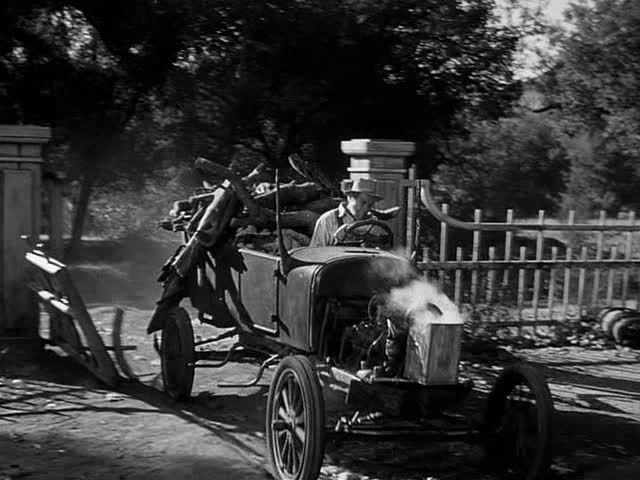
49th Parallel (aka The Invaders)(Michael Powell, 1941) Interesting propaganda film to promote the war effort by the British government, made by "The Archers" (Emeric Pressburger and Michael Powell) before they became "The Archers" and combining the writer-director credits together. More than anything, it was designed to influence isolationist American minds about the threat of the Nazis, by presenting a story where they arrive on our shores. It is 1941 and a German sub is prowling Canadian waters, sinking any transport they can. Detected, they make a run for Hudson's Bay and the sub commander orders a landing party to capture an outpost in the area. But, soon after leaving the sub, the men see it attacked and sunk by a bomber, sent by the Canadian air force, alerted to their presence. The Commander, Hirth (Eric Portman) continues to land to complete the mission, hoping that they can make their way eventually to the United States which is (gulp!) famously neutral in order to get back to Germany.
Each encounter has reduced their numbers, and, at the last, only Hirth remains free and on the run. He hops a freight to try and make it across the 49th parallel into the States, but riding the car with him is AWOL soldier Andy Brock (Raymond Massey), whose sympathies are still with Canada, despite being reluctant to fight, and he makes things very complicated.
It is a propaganda piece, after all, and if the various episodes seem a bit far-fetched and feel like a tortured demonstration on the length and breadth of Canadian diversity ("Meet the Canadians! Even OUR Germans don't like THEIR Germans"), it is with the intent of contrasting that diversity with the sameness of the Aryan lineage and autocratic group-think of the sub crew. If the thing gets a little pedantic, it was to educate reluctant Americans about Nazi philosophy in a dramatic fashion and inspire a feeling of "It CAN happen to YOU" to the "American Firster's." It's a bit clumsy and the fisticuffs are a might ham-fisted, but it's positively sub-tle when you put it up against the thousand goose-stepping hosers of Triumph des Willens. And Powell and Pressburger were just getting started.
Eric Portman's Commandant wants things a little more orderly in 49th Parallel
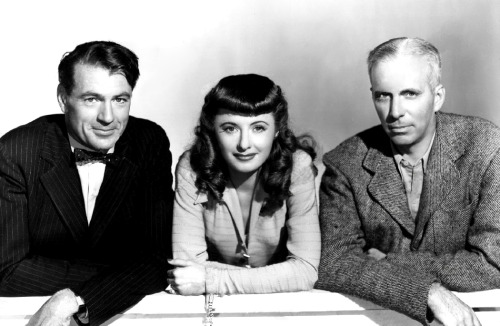
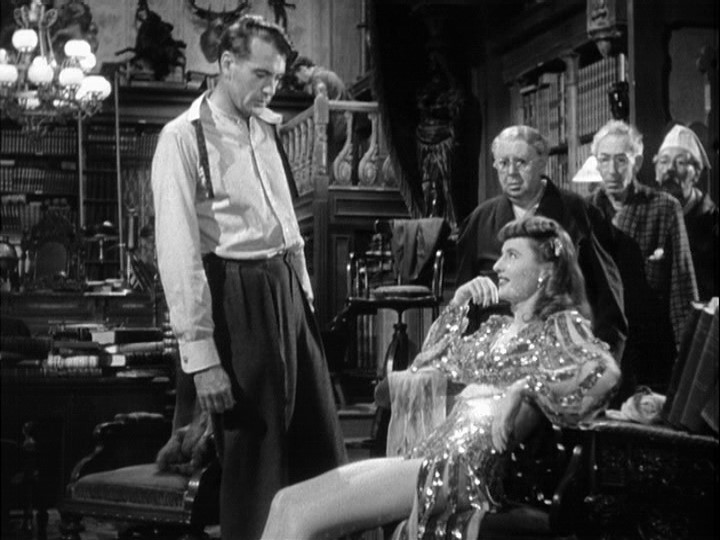
Ball of Fire(Howard Hawks, 1941) It doesn't get much better than this: screenplay by Charles Brackett and Billy Wilder (from a story by Wilder), produced by Samuel Goldwyn, photographed by Gregg Toland, music by Alfred Newman and directed by Howard Hawks. Add that it's a swing-era version of "Snow White" stock-piled by anything-but-dwarvish character actors (Henry Travers, Richard Hayden, Oscar Homolka, S.Z.Sakall), some nifty up-and-comers like Dana Andrews and Dan Duryea, and top-lined by Gary Cooper (in pixie-ish Capra mode) and Barbara Stanwyck (who usually runs on all cylinders, but seems turbo-charged in this one) and you have the makings of a great, stylish and culturally-winking comedy, with lots of great musical material, too.* Years in the making, the Dutton Encyclopedia, written by eight myopic scholars, is hitting the skids just as it's hitting the "S" words. Professor Bertram Potts (Cooper) has just finished a 26 page treatise on "Slang," when a garbage-man walks in with some fancy (and utterly incomprehensible) patter that puts his research to shame. Potts determines that he will leave his ivory tower and venture forth into the world to see what all the...what's the word? *flip/flip*..."rhubarb" is about. He stumbles upon a nightclub (where Gene Krupa happens to be playing) and taking on the lead vocals is "Sugarpuss" O'Shea (Stanwyck, in full "bad-girl" mode), mob-girl to Joe Lilac (Dana Andrews) who's being investigated by the New York cops. The focus of their investigation is Sugarpuss, who can give them a lot of inside information, so she has to go on the lam, and the professor's invitation to her to be a part of his slang symposium, gives her the perfect hideout, going "to the mattresses" with the eight encyclopediacs, but under the distrusting baleful eye of Miss Bragg, the housekeeper.
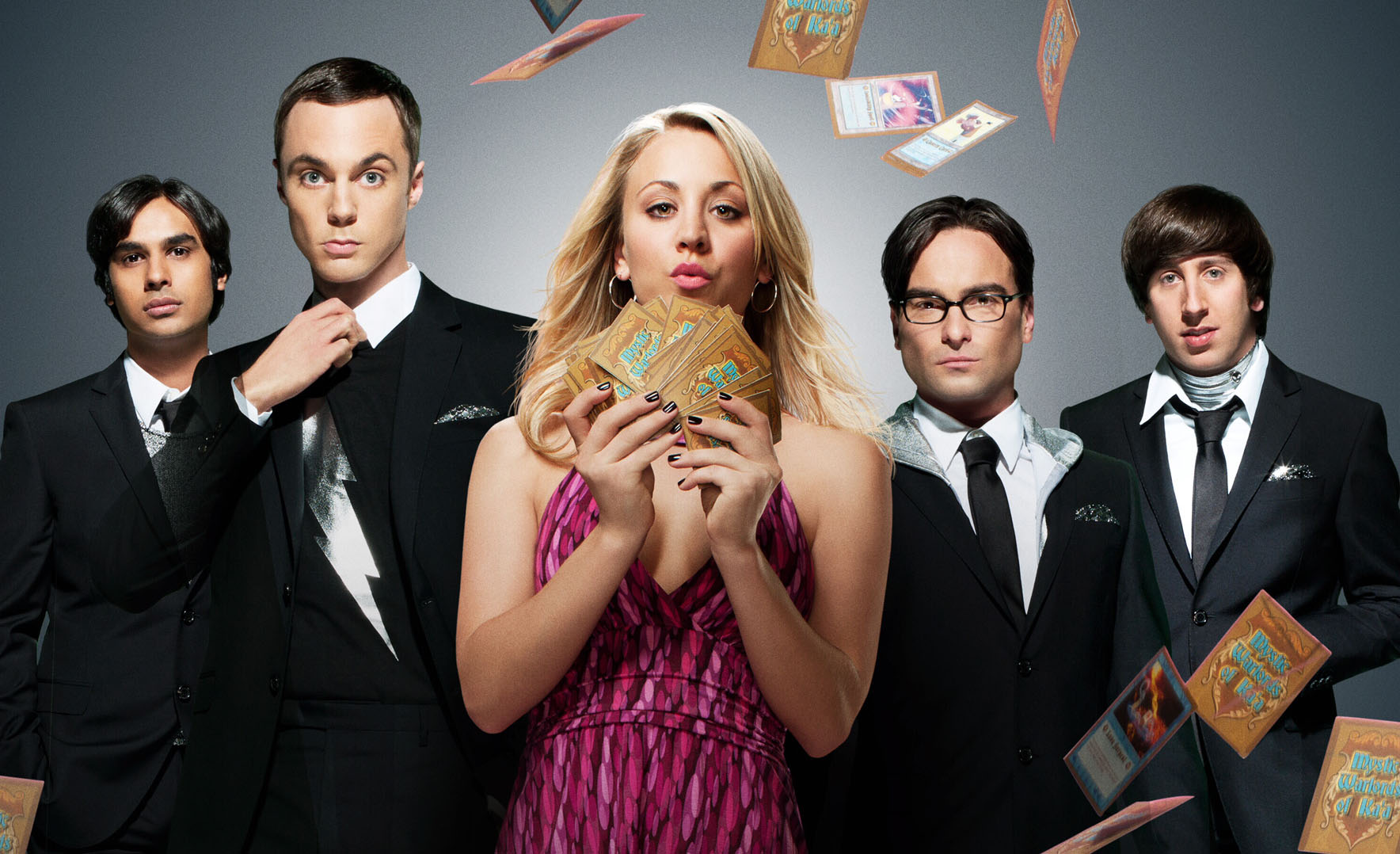
Complications arise, with the possibilities of broken and/or ventilated hearts, as it turns into a particularly pointy triangle between Potts, O' Shea and Lilac, with a suddenly energized Greek chorus of academics trying to deal, rather haplessly, with the real world. "Snow White" is the inspiration, but fans of "The Big Bang Theory" will also see its roots in this and its Grimm ancestor. One also has Ball of Fire to thank for Billy Wilder's directing career, as Hawks let him sit in on the set, auditing during the making of the film, observing, taking notes, prepping for his own directorial turn that year with The Major and the Minor. This is one of the great unsung Hawks movies, slightly different from his formula, thanks to Brackett and Wilder's script, but it still falls under the category where a team of different skilled people—in this case scholars—come together under circumstance to form a like-minded unit, even if, as here, it happens a little late in the proceedings. It was Hawks' version of making a film about film-making, but obliquely, showing that any group of gypsies can unite under a common goal despite their differences. It's part of the charm that makes Hawks one of the most American-minded of film-makers, those films being a reflection of the melting pot of the Great National Experiment.
* One of Hawks' trademarks is a musical number in the proceedings, often by amateurs to show they're bonding in their efforts. Ball of Fire was re-made eight years later by Hawks in a musical version called A Song is Born (also photographed by Toland, but this time in technicolor) starring Danny Kaye and Virginia Mayo.
The Shanghai Gesture(Josef von Sternberg, 1941) So, what would happen if a film-stylist like Josef von Sternberg had directed a programmer like Casablanca? It would be a lot like The Shanghai Gesture (made a year before Ilsa walked into Rick's), with a disparate group of diaspora all gathered around a central community house—but, instead of Rick's Cafe Americain, it's Mother Gin-Sling's Casino, a casino of ill-repute that the Shanghai city-fathers (all white, all Brits) frequent with abandon, even while they're plotting to get rid of it ("I am shocked, SHOCKED that gambling is going on in this establishment!") The script is by von Sternberg, Gerza Herczeg, and Howard Hawks' scripter Jules Furthman, with emphasis on the smart-aleck remark, witty patter and easy irony. The script is smart, the acting mannered (but in the von Sternberg manner of haughtiness and exaggeration for effect), and everything else from costuming, set design, and photographic style is elaborate.
Boris Leven's design for Mother Gin-Sling's Casino resembles a multi-level Pit of Hell
The men are von Sternberg's collection of stiffs, drones, and leering rakes (heck, von Sternberg turned Gary Cooper into one of the latter in Sahara). Walter Huston plays the stiff, a reforming developer who runs afoul of Mother Gin-Sling, while the latter is in the form of Victor Mature's "Dr. Omar," a Muslim "doctor of nothing," except one assumes, for a memorized expertise on "The Rubaiyat of Omar Khayyam."
The women are von Sternberg's complicated, well-lit archetypes, more devils than angels, the way he used Marlene Dietrich. They had to do a lot of cleaning up of the original play by John Colton, resulting in a "coded" film that "suggested" what was really going on.* The original location was a house of ill repute—a brothel (hinted at by the caged women ringing the casino's playing area, which, as designed by Boris Leven, looks like the Pit of Hell), the floosie (Phyllis Brooks) that Omar picks up in the street is a hooker, not a "dance-hall girl, in the play "Mother Gin-Sling" is named Mother Goddam, and the addiction the young thrill-seeker Gene Tierney plays isn't gambling (as in the film), but drugs, as suggested by her name "Poppy." So, yes, a lot of self-censorshp, but sophisticated audiences could see through the veiled references to see what the issues were.
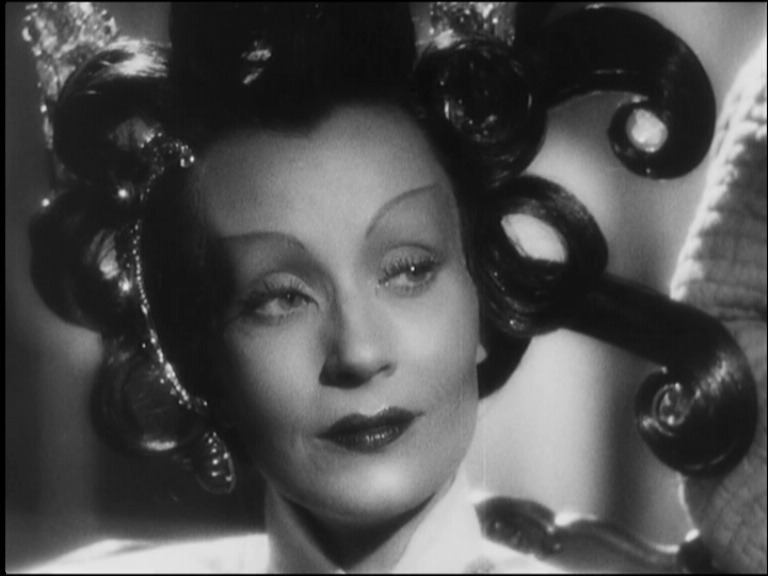
Von Sternberg was a stylist with an emphasis on glamor photography—his work with Dietrich is some of the most scrupulouslyaccomplished shadow work in movies—and his capturing of Ona Munson, Brooks, and especially Tierney is a tightly controlled use of light to emphasize the contours of the face. Munson's wild hair-styles suggest nothing so much as a medusa, and Tierney, once she slides down the slippery slope of..."too much gambling" begins, in her body language, is all broken doll, a marionette with some strings broken (something foreshadowed by von Sternberg early on) Both Curtiz and von Sternberg had penchants for filling up the screen-frame, but Curtiz kept things naturalistic, with his performers squarely rooted in specific places. Von Sternberg's close-ups are frequently floating heads, backed by a light pattern that has nothing to do with their surroundings. But, that's where comparisons end: The Shanghai Gesture is a bizarre bazaar of weirdness, a combination of kitsch and creepiness, a glamorized descent into degradation and venality (beautifully shot, though!), with possibly the worst example of mother-love demonstrated on screen. It is the dark side of entertainment, gussied up with glamor to make the proceedings seem tolerable, something that could be said for all of the work of von Sternberg, master of both light and darkness.
The Shanghai Gesture is also unique for giving a credit to the extras.
* Furthman was great at that: in The Big Sleep he and Hawks suggested nymphomania by having the character suck her thumb.
Private Joker: I think I was trying to suggest something about the duality of man, sir. Pogue Colonel: The what? Private Joker: The duality of man. The Jungian thing, sir. Pogue Colonel: ...Whose side are you on, son?
Full Metal Jacket
"(Cocaine) enhances your personality!" "Well, what if you're an asshole!?"
Bill Cosby from Bill Cosby, Himself
Better living through chemistry? And whose side, indeed? This Hallowe'en season we haven't been looking at monsters, and creatures and other outside forces that threaten us and make us come face to face with horror (as we have in the past). We've been looking at those that attack us from within. Not at the monsters that peer at us from outside our bedroom window, but the ones that look at us indoors in our very own mirrors. What special horror it is, when we come face to face with our enemy, and it's our own. No better example of that came from the pen of Robert Louis Stevenson in the year 1861.
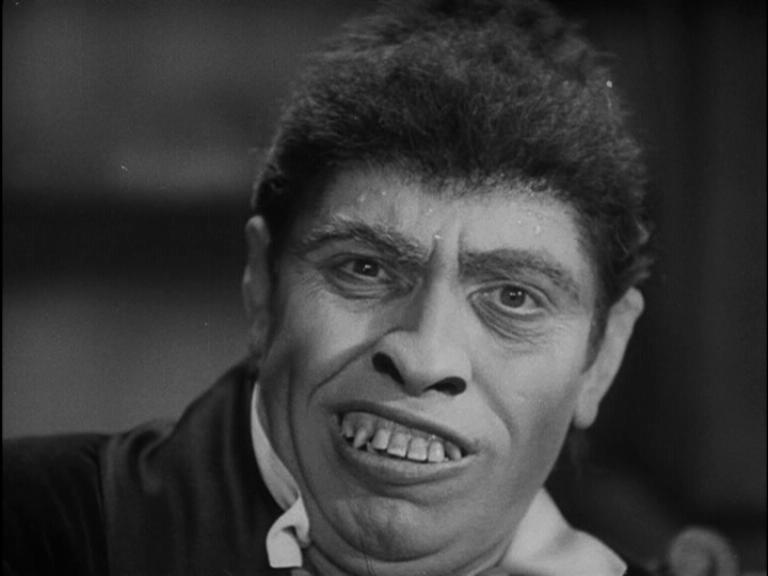
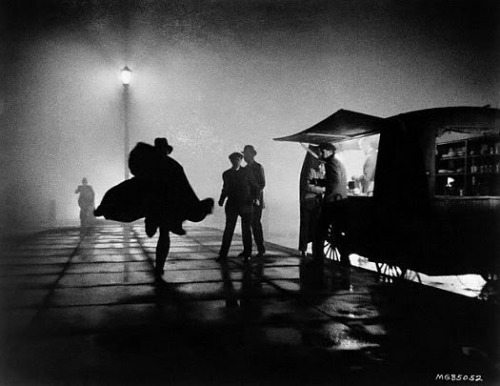
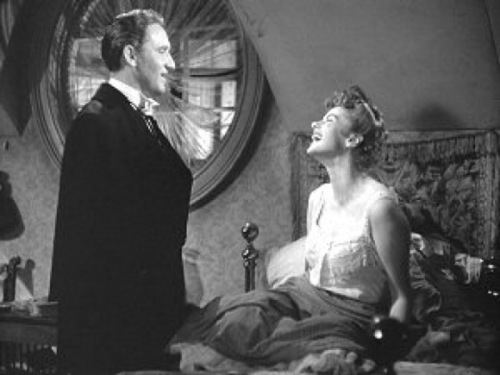
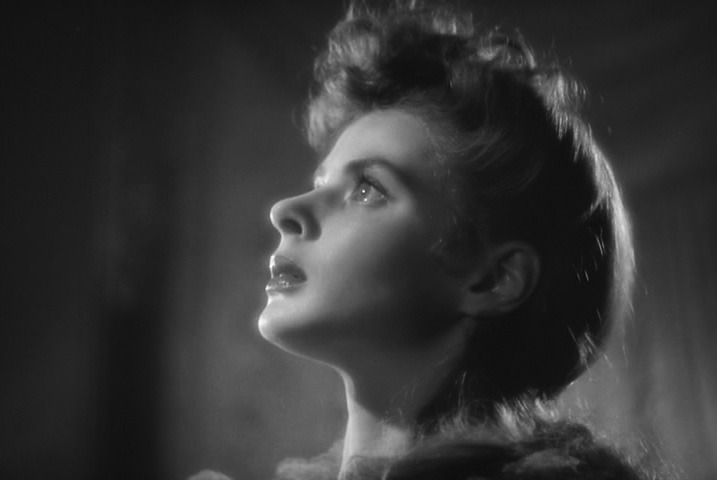
Now, inDr. Jekyll and Mr. Hyde(Victor Fleming, 1941) the Dr. Jekyll (pronounced Jeh-kull) played by Spencer Tracy, is far more considering: "So, this is evil, then" he observes staring at his new countenance in the mirror. Yes. Yes, it is. Tracy's Jekyll is a thinking, decent man with dark undertones, far less egocentric than the stentorian performance of March; his Hyde is shaggy dark eyebrows and hair, with a curled upper lip like a scar and a direct gaze and uncouthness, despite his pretensions of refinement. March's Hyde is a proto-human; Tracy's is just a sadistic sociopath. Jekyll's frustrations with his straight-laced potential father-in-law (Halliwell Hobbs in the first, Donald Crisp in the latter) are buried deep and Hyde releases that pent-up rage. In the Tracy version, the intelligence is still there (as opposed to March's gleeful monkey-man) but used malevolently—the words are erudite and evenly spoken, but his actions are quick-silver and savage. The Tracy version of the character depends less on make-up than the actor's own inventiveness (not that March was any slouch, far from it). Directed by Victor Fleming, with more emphasis on thick fog effects (where Hyde seems to be allowed to be swallowed in the thick mists, until he disappears like so much water vapor) and the psychology of evil, it is sumptuously produced and veers into the surreal during the transformation sequences. These are weirdly disturbing, shifting from surfacing lily-pads to Jekyll whipping a team of horses...which then turn into the two women in his life: his faithful fiance (played by a never-lovelier Lana Turner) and a bar-maid (a very early role for Ingrid Bergman, this one preceded Casablanca). One can only imagine the direction that the director gave his actresses for this sequence and the others ("Okay, Ingrid, you're a wine-cork, but a happy wine-cork!"). Whereas March's Hyde is all simian actions and attitudes, Tracy's is psychologically, adroitly cool, a genuinely mean bastard gleefully tripping up theater managers with his walking stick, and setting up Bergman's Ivy Petersen as a kept woman, scarring her physically and mentally. Both films stray from Stevenson's narrative, which only implies Hyde's actions, which seem to stay only in the realm of violence, but both Mamoulian's and Fleming's films features the story of the two women who suffer at the man's hands and split personalities. Bergman's performance is raw and heartbreaking, subtly letting emotions percolate under the surface of her skin, a luminous smile capable of dropping precipitously and tremulously, then escalating into hysteria. Turner's performance is pitch-perfect, but merely an ingénue role and she's not required too much of the tortured complexity she would display later in her career. Mamoulian's film is fancy; Fleming's is fanciful, each taking different approaches to what is essentially the same screen-story, deviating just as far off the cobblestone streets of the novella, and each one coming to the same conclusion—different from the story's where Jekyll's fate is left in the air, seemingly condemned to live out his life as the evil Hyde—to satisfy the moralists in the audience, pre-Code or not. Interesting to see them back-to-back (to-back-to-back) and explore the similarities and differences—a bit like Jekyll and Hyde themselves.
Interestingly, these two Jekyll's, Tracy and March, squared off against each other in the courtroom drama Inherit the Wind.*
* And another parallel: March received his first Oscar nomination for playing the part of actor Tony Cavendish in The Royal Family of Broadway. The role of Cavendish was based on John Barrymore who had a big success...playing Dr. Jekyll/Mr. Hyde in the 1920 film version.
"...Room for one more, honey?"
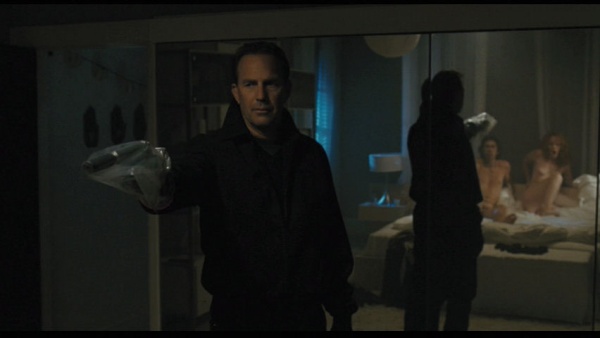
Mr. Brooks(Bruce A. Evans, 2007) A more modern take on the Jekyll/Hyde-in-plain-sight story (we won't talk about the various "Hulk" movies—the superhero version of it) is this creepy psychological thriller about another upstanding citizen and pillar of the community, Earl Brooks (Kevin Costner), CEO of a thriving box-making business. Brooks has a seemingly normal nuclear family: a loving, doting gorgeous wife (Marg Helgenberger) and a slightly spinning-out-of-orbit daughter (Danielle Panabaker), but the fourth member of the clan is the one with the most fission—the other voice in Brooks' head, Marshall, played by an on-screen William Hurt. The performances of the two men couldn't be more different: Hurt has the easier one—the all-leering, cackling, lip-smacking Id, while Costner (being in the "real" world) is restrained, cerebral, and calculating on the inside. Costner really is a fine actor, and his Brooks, in control of most situations unless Marshall convinces him otherwise, every so often goes on a killing binge that satisfies a weird craving. One entertaining aspect is that Brooks is self-aware enough of his situation to go to AA meetings. He's an addict and he knows it. But there aren't enough steps in any program to cure his issues. He's made enough of a blood-splash to attract the attention of local detectives (Demi Mooreleading the investigation) and one fan-boy (Dane Cook) who wants in on the action. Earl and Marshall are caught in the middle (and with two personalities it gets very crowded in there), yinging and yanging between their two points of view and calculations. But the creepiest moments—the genuinely chilling ones—are when they combine, joining each other in a sick, twisted laugh for a shared joke, between the two personalities in the one man. For all the gruesome murders and gouts of blood on display, that's when Mr. Brooks gets really scary.
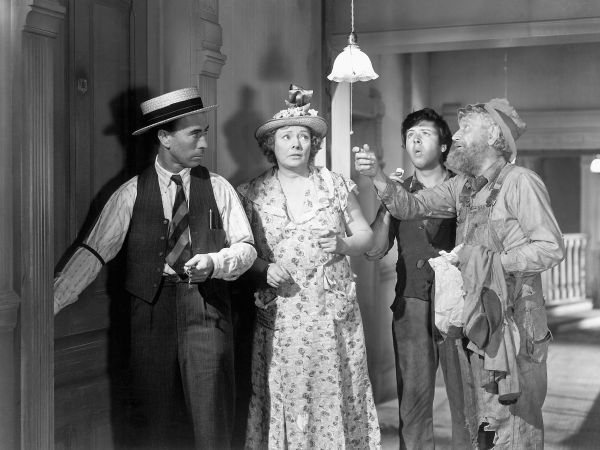
Tobacco Road(John Ford, 1941) The same year that Ford made the magnificent How Green Was My Valley (which won the Best Picture Oscar over Citizen Kane, a decision I'm still surprisingly ambivalent about) and after he'd made The Long Voyage Home, he made this oddity, an adaptation of the hit play that, itself, was an adaptation of Erskine Caldwell's scandalously bleak novel about the (to put it mildly) dysfunction among the Georgia poor. I'm not familiar with either, but the material is so venal and hard-scrabble that with each level of the airing of its dirty laundry, compromises had to be made to reach the stage and the screen. By the time producer Darryl Zanuck and Ford got hold of it, it was a bizzarro version of their collaborative effort on The Grapes of Wrath, an out-and-out comedy of the "Kettle" variety, with much slapstick and hee-hawing, the novel's displays of greed, selfishness, shiftlessness and hypocrisy and (let's call it what it is) its animalistic depiction of rural poor life, neutered by low comedy and high over-acting. And to pass the censors and the Board of Review (not to mention the Catholic Legion of Decency), Caldwell's malicious intentions with its 13 year old brides, dead grammas, and apocalyptic "Wrath of God" fire (and no one would think of Gene Tierney possessing a cleft palate) is left by the way-side for lunk-headed males, religious loons, and the wholesale destruction of property. The effect is to take Caldwell's metaphorical screed...and turn it into "L'il Abner." It's a little dispiriting. The material is so compromised as to be toothless, with no bite at all (although one might fear rabies), but any more mean-spirited and one couldn't see Ford—who could have trouble tackling tough subject matter head on—directing it. It's a bit like how Ford started handling the production of Mister Roberts as a service comedy, rather than a barnacled "rust-and-all" look at the war-Navy. But here, the strategy was sanctioned by Zanuck and the powers that be, not only at Fox, but at the Breen Office, just to get a hot property on the screen. Compromise is not new to the movies, it's an integral part, actually (unless you're ideologically fundamentalist on the auteur theory). But, as it was, the only reason to make this version of the film was to make hay, cashing in on the notoriety it had generated, while still getting away with it, something that must have appealed to the huckster-showman in Zanuck. The producer loved a good story, liked to push the envelope, but also knew what chances he could take, before bringing down the ire of the blue noses. And Ford could do comedy—he was better at it when it provided a relief from drama, or as texture inside of it—but he could do it, and economically, in a minimum of footage. So Tobacco Road was made a comedy, curdled and dusty, and if some of Caldwell's malice got into it, so much the better, better than none at all. Such compromise brought Maugham to the screen and Faulkner and Hemingway and Fitzgerald. Not unadulterated, but some of it. One could make a case for Ford trying to desanctify his image of "the people," away from the respectful, earnest portrayals of The Grapes of Wrath, but Ford never painted with a wide brush and not all of his "po' folk" were saints. Far from it, in fact. So, there has to be some back-story to this one, some vital piece of information, but for now, the "get-it-on-the-screen-any-way-you-can" theory fits Occam's razor. However, it has had one effect on me. It's going to be tough to watch Ford's westerns with their solemn funerals with ragged voices singing "Shall We Gather at the River" after seeing what's done with it in this film. Like I said, "compromise."
If, when talking about movies, someone at this year's New Year party (or at a film blog) pontificates the blanket statement "there's never been a remake of a film better than the original," here's a rebuttal (besides, say, True Grit) you can have at the ready:
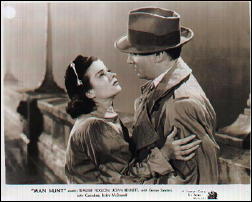
Man Hunt(Fritz Lang, 1941) Dudley Nichols' adaptation of the 1939 Geoffrey Household novel that begins with a sure-fire set-up: a big game hunter, Captain Alan Thorndike (Walter Pidgeon), travels to Berchtesgaden to shoot Adolf Hitler right in the Berghofwith a long-range rifle. He "takes the shot," but then, on second thought loads a bullet into the chamber...too late. He's discovered, taken prisoner and tortured for information by Major Quive-Smith (George Sanders, at his most impenetrably cold). The Major wants the Captain to admit that his intent was to kill Der Fuhrer (something he understands being an avid sportsman himself) and sign a confession to that effect, saying that he was doing it for the British government. Thorndike refuses, is beaten, then dumped over a cliff to make his death appear an accident.
It's a corker of a story, told with the visual paranoiathat Lang excelled at. It's one long chase that finally goes elementally one-on-one. Where Nichols diverges from Household (aside from actually naming the dictator the author's anonymous hunter aims for, no doubt with the approval of the director, a German exile*) is in a neat insertion of a "woman's part," through the extended English city section, which becomes a deus ex machina for the final confrontations. "Jerry Stokes" was a Nichols creation, it being thought that giving Thorndike a visible love interest for the audience to identify with, would more humanize Thorndike and his quest. "Jerry" has her origins in the book, but was only suggested. Nichols, Lang, and Bennett made flesh what Household only used as a back-story.
Rogue Male (Clive Donner, 1976) BBC film of the Household novel that keeps the original more in its sights. Where Man Hunt is urban, has a love interest, and is quite light-hearted at times, Rogue Male is more to the point, quite brutal (the shots of Peter O'Toole's Thordyke after being beaten to a bloody pulp are tough to watch) and extends the cave scenes, making them much more a part of the story (Pidgeon spends barely 20 minutes in the cave in Man Hunt) as they are in the book.
But it is the character of Thorndyke where the two most diverge—Pidgeon's captain does what he does to survive. That's certainly true of O'Toole's characterization (it has to be!), but one also gets the sense that this hunter prefers life in a cave to one in the aristocracy. Any hint of romance is purely prologue, giving an ethereal quality to the unnamed woman, that O'Toole merely suggests with a melancholy cast of his eyes. Written with 20/20 hindsight by Frederic Raphael, the film is far more political than either the book or first film could ever hope to be at the time they were written, given the historical perspective nearly forty years can bring. Smart, intelligent, unwavering, the BBC version of Household's novel is an adaptation worthy of the anonymous Hunter.
The Lang version is more stylish and romantic, but Donner's TV-version has the novel down cold. O'Toole has stated that it is the favorite of all films.
* This supposedly worried 20th Century Fox exec Darryl F. Zanuck, as well as The Breen Office, as America, at the time, was neutral in the European War, not entering the fray until the attack on Pearl Harbor.
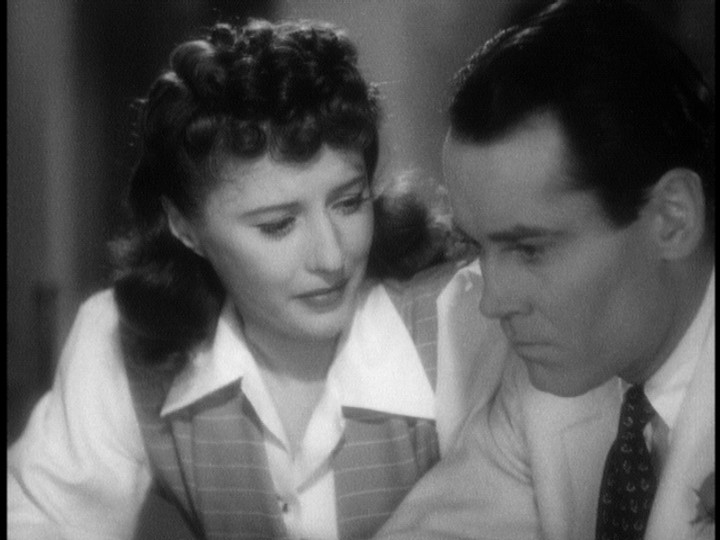
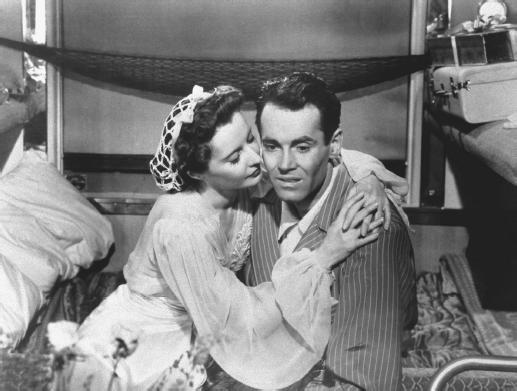
"The Lady Eve"(Preston Sturges, 1941) Ale heir Charles "Hopsey" Pike (Henry Fonda) has been up the Amazon for a year as an ophiologist (emphasis on the "oaf."). It must have been without a paddle because he can't tell two snakey grifters (Charles Coburn, Barbara Stanwyck playing a father-daughter con artist team—the family that preys together...) are trying to collect him...and his dough...on the cruise back to the States. She's already beaned him with an apple as he was boarding ship—it's not exactly Cupid's Arrow, but it'll do, in theory. After he gets hit, well, he's not a lot wiser.
Sturges' third film (and first big hit) is a distillation of every screwball romance that had come down the pike previously. As with the best screwball comedies, the woman has all the power and nobody could play power better or with more cruel humor than the ungainly Barbara Stanwyck, here as fast as quicksilver and, frankly, a bit tough to keep up with—you want to watch it twice just to see all of her nuances you missed. Her opponent...object of affliction...affection...is a combination of every man-handled man-type that you can have in these comedies. "Hopsey" Pike is well-off, a specialist in his field but a tenderfoot out of it—he can spot snakes in the jungle but not in the grass—somewhat sheltered and clumsy, and saves money on casting Ralph Bellamy by playing his own stuffed shirt. And being on a boat ensures that the ground is never too sure under his feet, the better for the sweeping off of. And the best guy to "take" in a "confidence" game is somebody who doesn't have any.
But the best un-laid plans... Pretty soon, Eugenia is falling for Hopsey, as evidenced by her getting hot and bothered by his chosen field of study. "Slimey snake!" she yells as she wakes up from a nightmare. Preston Sturges was always one for tweaking the censors, and with "The Lady Eve," he's more than suggesting by associations of culture and psychology what's going on here in a knowing way—the biblical way of knowing, complete with snakes and apples and falls from innocence.
It's Spring-Break for me. Times are busy. The Summer Movie Season is already begun (and I'll be writing about the new ones) and the Film Festivals are grinding away like creaky mills separating wheat from chaff. It's as good a time as any to re-boot a feature I started years ago, when it was suggested I do a "Top Ten" List.
I don't like those: they're rather arbitrary; they pit films against each other, and there's always one or two that should be on the list that aren't because something better shoved it down the trash-bin.
So, I came up with this: "Anytime" Movies.
Anytime Movies are the movies I can watch anytime, anywhere. If I see a second of it, I can identify it. If it shows up on television, my attention is focused on it until the conclusion. Sometimes it’s the direction, sometimes it’s the writing, sometimes it’s the acting, sometimes it’s just the idea behind it, but these are the movies I can watch again and again (and again!) and never tire of them. There are ten (kinda). They're not in any particular order, but the #1 movie IS the #1 movie.
So obvious a choice.
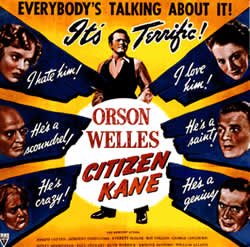
Yet “Citizen Kane”(or RKO 281) has been fielding off re-appraisals and critical backlash since the day of its premiere. Is it really "the greatest American film ever made?"
Yes.
So far….
Part of the argument against it is that it can’t be since it was the product of a 26 year old who had never made a film before. But Orson Welles was a 26 year old who grew up pampered and precocious—who read Shakespeare at an age when other kids are reading Seuss. As a teen he made his way in the world by his brio and his considerable talents and his nerve to try just about anything. He was an artistic sociopath who staged alternative Shakespeare productions and avant-garde radio plays for years before be given, as Kane puts it, “the candy store”—a carte blanche contract with a film studio to make any film of his choice, any way he wanted with final cut and a stipulation that said no one could alter it in any way in perpetuity (This is the reason why Turner Broadcasting in its rush to colorize moviescould never put so much as a pink pixel to “Citizen Kane.” Some contract!). With it, he gathered his seasoned Mercury Theater actors (some of whom would go onto major Hollywood careers), one of the most innovative and painterly cinematographers, Gregg Toland, young, daring editor Robert Wise, the arrogant and brilliant composer Bernard Herrmann, and the amazing technical crew at RKO who produced such amazing feats as “King Kong” and the Astaire-Rogers musicals and turned them loose on Herman Mankiewicz’s long-in-the-planning screenplay that he believed could never be produced.
His next film, “The Magnificent Ambersons” was a more mature and accomplished–looking film, but RKO chopped it up. re-shot the ending into a certain incomprehensibility and threw it on the bottom of a cheesey double bill. Welles’ Falstaff movie “The Chimes at Midnight” was the project closest to his heart, and might be better if not for the logistical and technical hurdles Welles had to jump in order to make it.
That shot is the exit from the worlds of memory through which we have seen many reflections of Kane—the house of mirrors that makes up the bulk of “Citizen Kane,” the movie. It is also our last image of Kane, himself, in the film. He’s talked about through to the end, of course, but that splintered mirror-shot is our final impression of him (Kane—and Welles—are not even seen in the End Credits review of actors). At that point it becomes clear (as crystal) that the entire film is like that hall of mirrors that reflected back the aspects of Kane important to each narrator—a process that began with the newsreel that quickly jumped through the highlights of Kane’s life as a public figure and set up the film’s surface mystery—what is the meaning of Kane’s last word (and so serves as a stand-in for “who was Kane, really?”).
In the course of the various reflections there are all sorts of legerdemain—little tricks and in-jokes—that Welles, who was an amateur magician, clearly loved pulling off even if an audience didn’t immediately “get” them. One of my favorites is the craning shot through the model of the “El Rancho” nightclub where Susan Alexander performs and drinks herself into a stupor every night. The night of Thompson’s first visit it’s storming outside and flashes of lightning hide the camera’s passage through the roof sign and through the glass transom into the nightclub inside. When, half the movie later, we again travel through that transom it’s broken—presumably by our first trip through it. In the film’s original framing (unfortunately not in the DVD presentation) there is the slightest nudge of the camera to the right in the rather severe shot of Mrs. Kane signing little Charles away to the banker, and we see, just on the edge of the frame, that significant snow-globe that keeps popping up in dramatic moments. In the newsreel there is a shot of a newspaper of the entire Kane family. Later in the film, we actually see that shot being taken. Another is the way Kane’s hectoring “Sing-Siiiiing!” to “Boss” Jim Gettys is cut off by a shutting door, but continues by a braying car-horn out on the street. These are little filigrees to the grand architecture of lighting, framing and editing tricks that Welles and his crew pull off.*
But that central question “who was Kane?” is purposely never answered, not by a word, not by an object, and not by a person. In the end, the film says that it can’t solve the problem, that it can only present it, and leave us with the acknowledgement of its complexity.
So what are we left with as the remnants of Kane and his life fly up from the furnace of Xanadu? An answer to the mystery of "Rosebud," but not an answer to the man. For Kane was many things, but as Kane himself passed judgment on himself, he was never great. Given gifts that many of us will never ever have, he ultimately squandered them. Insular, wasteful, in his house of mirrors, he is left alone to contemplate himself.
We all have our gifts. What do we do with them? “Citizen Kane” is like that glass globe that we can peer inside and see the illusion of life…and consider our own lives. And in the end we are left with its final image to contemplate, and one may consider that Kane was a master illusionist himself, pretending greatness where there was none, and utilizing the very same tools used by those other illusionists—magicians and very young film directors--to create those illusions.
Those tools being smoke…and mirrors.
* Orson Welles is unique in the group of directors of movies that I’ve seen in that every time I exit from a new film of his, I come out looking at the world with new eyes…or with a new perception of the old world--one that seems filled with possibilities.
Citizen Kane Once Upon a Time in the West -Only Angels Have Wings The Searchers Mr. Smith Goes to Washington Chinatown American Graffiti To Kill a Mockingbird Goldfinger Bonus: Edge of Darkness


---Spencer-Tracy-766431.jpg)


 there?) and right after he trashes her room—destroying the acquisitions of her life—and Kane picks up


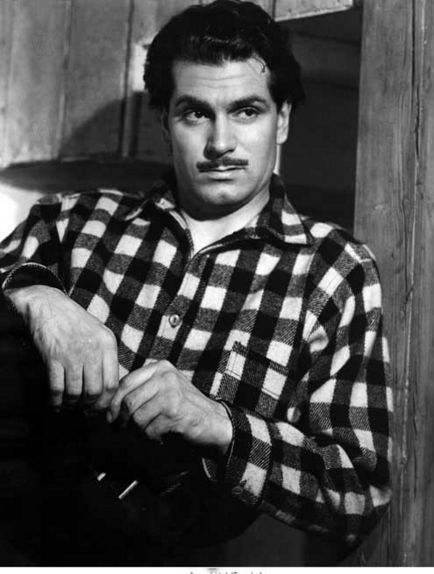




_02.jpg)






---Spencer-Tracy-766431.jpg)











---Barbara-Stanwyck-and-Peter-Fonda-752958.jpg)

_03.jpg)




---Barbara-Stanwyck-768955.jpg)


_03.jpg)

