Showing posts with label George Sanders. Show all posts

Friday, November 1, 2013

Post Hallowe'en Special: Get Off the Lawn, You "Damned" Kids!

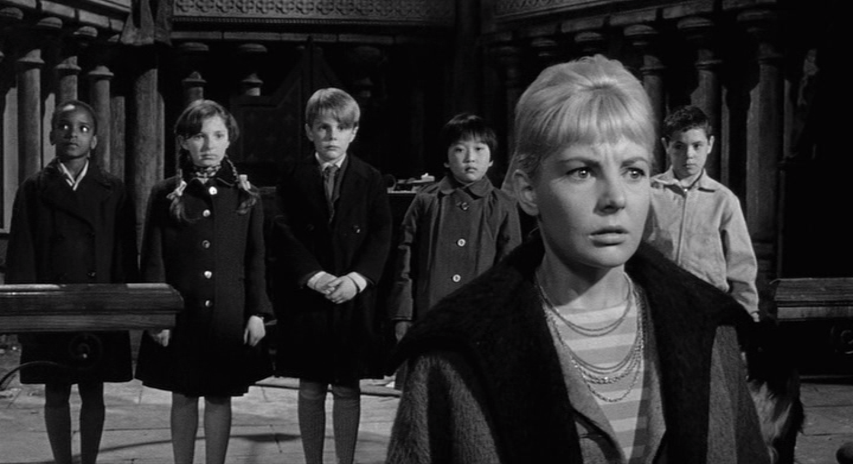
Village of the Damned (Wolfe Rilla, 1960)  Based on the John Wyndham sci-fi novel "The Midwich Cukoos," adapted by Stirling Silliphant and director Rilla, Village of the Damned* is a curious mixture of sci-fi and horror—a combination of pulp sensibilities, but with a strange sub-text that could be taken as religious, mystical, or invasive, and then has the audacity to not answer any of the questions and leave you hanging as the suppositions swirl through your head.  Both it and its sequel are fascinating things to watch, but each in their different way.

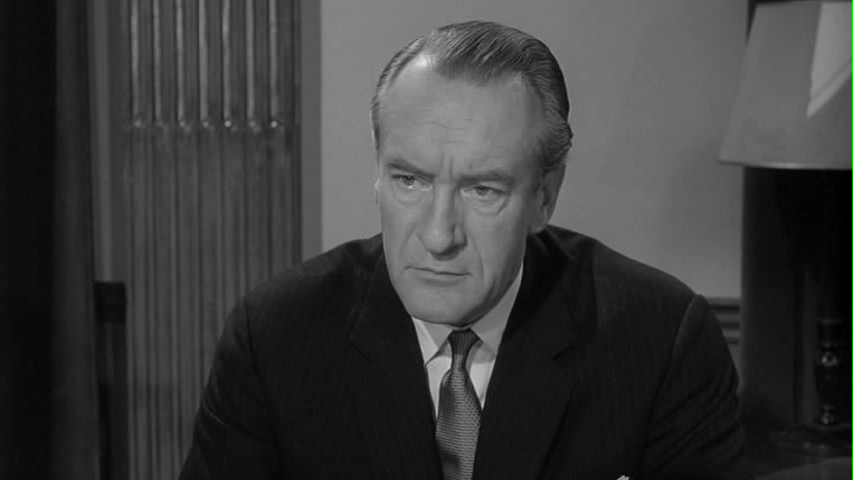
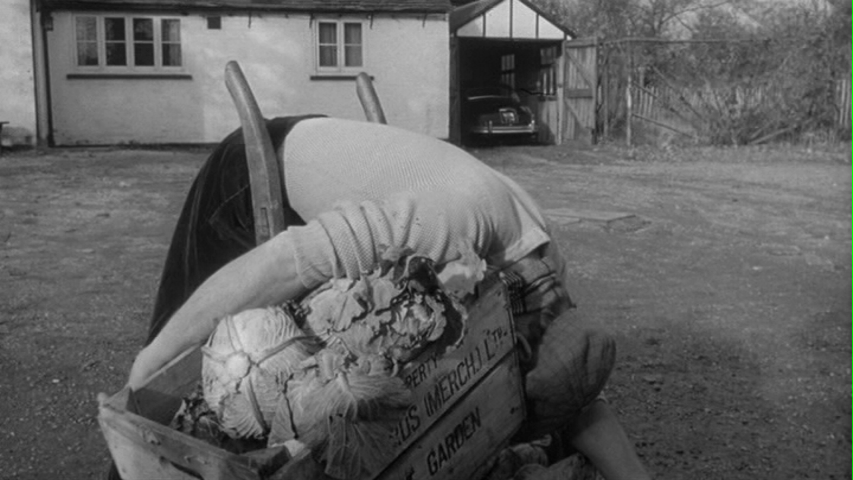
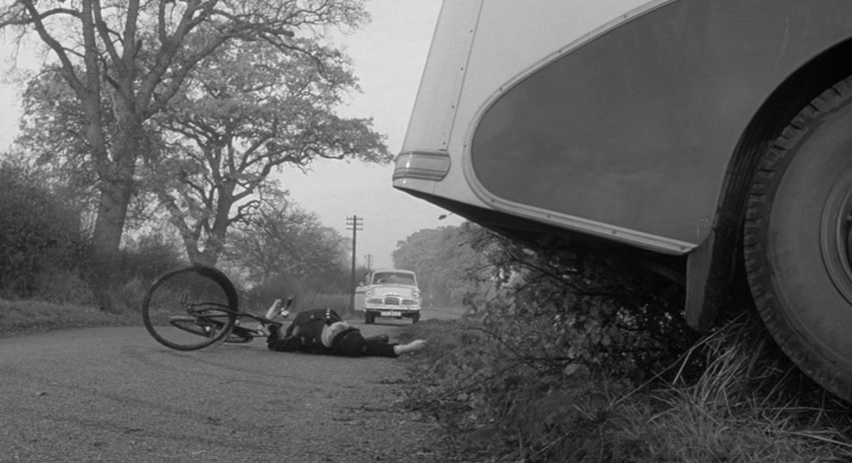
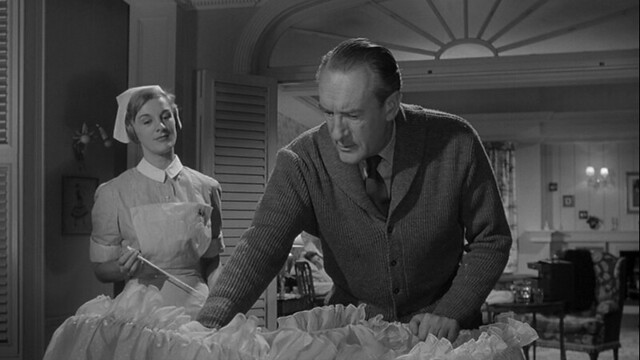
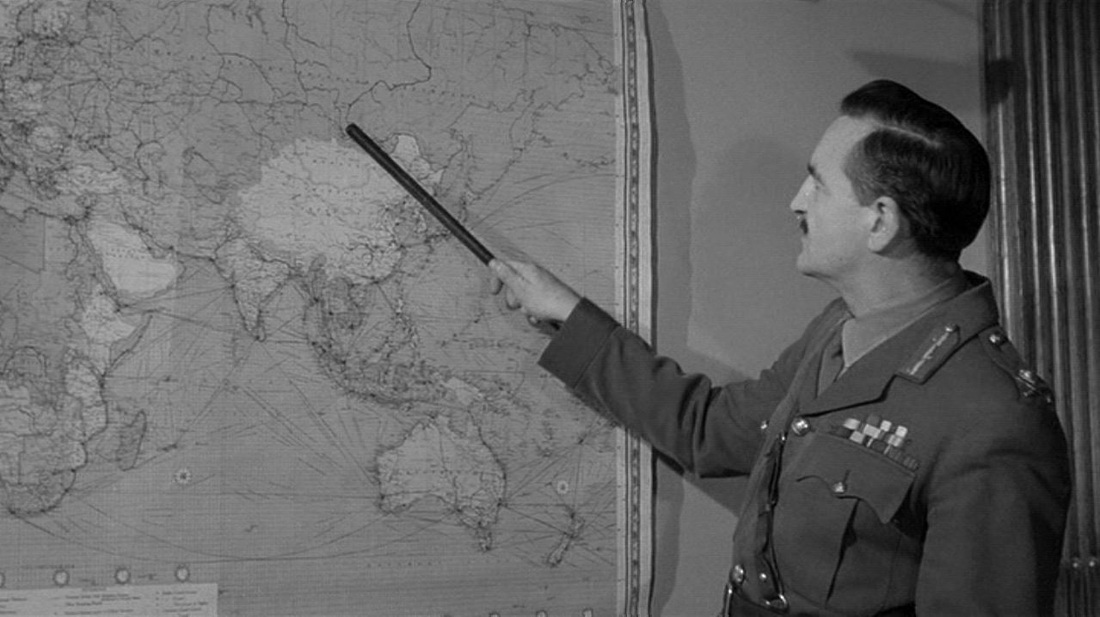
In the town of Midwich, professor Gordon Zellaby (George Sanders) is making a call to his brother-in-law Alan Bernard (Michael Gwynn) when all of a sudden, he falls unconscious.  So does the family dog.  Bernard is alarmed at this and can't raise anyone in town, so he investigates and being in the military he doesn't do it subtly.  What he finds is that everyone within a few mile radius of city center is unconscious...or will become unconscious (even taking preventative measures like gas-masks) if they enter within that "zone"—aeroplanes flying overhead will have their pilots drop off, the planes crashing.  


It's a mystery.  Why this town?  Why this effect?  But, two hours later, everyone awakens, mystified.  They felt a cold sensation before they dropped, but that was it.  The disturbance is forgotten.


Until two months later, when it's determined that every woman "of child-bearing years" in Midwich is pregnant.  For Zellaby and his wife (Barbara Shelley), it's a miracle though it's a little late in life for him.  But, for the unmarried women in town, and for the women with husbands away, it's not only embarrassing, it has to be some bizarre mistake...and when it's confirmed it makes things uncomfortable, socially.  For awhile they're stigmatized, but before long (and with the doctor's confirmation) it's determined that all the women are pregnant...and they don't how.


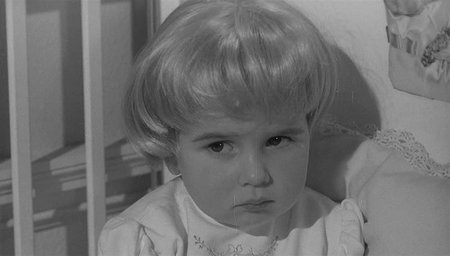
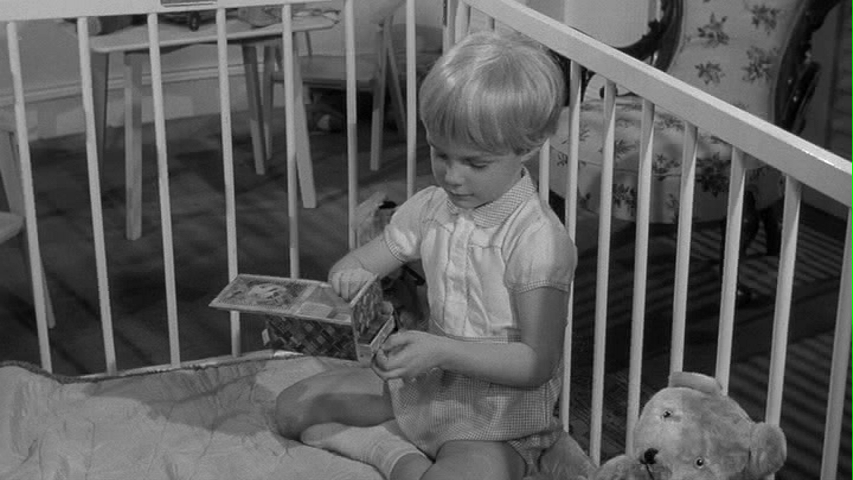
Out of this mass-immaculate conception, the village is seriously creeped out, but the children appear to be normal, if gestating at an accelerated rate.  And all are born on the same night, all premature by normal standards, but all around ten pounds, all with white shocks of hair and something "weird" about their eyes, totally black.  The kids grow quickly and they learn quickly, being able to figure out chinese puzzle boxes while still toddlers.  Give it to one, and then another, sight unseen, will be able to figure it out, as if by telepathy or shared mental faculties.

And...if things don't go their way, they can influence the thoughts and actions of others, an act apparent when their eyes begin to glow white.  The children, as they grow older and become more sophisticated, become even odder—walking as a group by themselves, dressing themselves, speaking in a tone, sophisticated and cold.
**

What to do about them...and who "is" them, anyway?  No one has any answers, but reports around the world suggest Midwich isn't the only village on Earth to experience this.  Some of the places have murdered the children. One isolated village in Russia is trying to instruct the children to the best they can.  What is the answer: to eradicate, or to exploit? 

The military doesn't want to do anything subtle, but Zellaby, with doubts as to their origin, staves off their eradication by seeing if he can teach them in their own segregated school (naturally).  The trouble is, the children don't want to do anything subtle, either, and these kids are of a mind to stop the problem of bullying by any means necessary.


This is a great film, which doesn't shirk societal issues at the same time it doesn't pin down exactly what the hell is going on here.  The fact is the kids are here and dealing must begin.  But how, never mind why.  Plus, it's a genuine horror-fest, making one web-site's list of "10 movies pregnant women should never watch." Apt.  And one curious anomaly about the film is that the strange glowing eyes that signal some heavy brain-work on the part of the children (and figures in the denouement) is only seen in American prints of the film.  Interesting, as they seem to appear in the British posters for the film.

But, those curiosities aside, it's well-worth seeing, and pondering...

One further note, young Martin Stephens who gives such a calmly mature performance as little David Zellaby in this (and The Innocents) left acting while still a child and became an architect.  Yes, he has a web-site.


°° °° °° °° °° °° °° °° °° °° °° °° °° °° °° °° °° °° °° °° °° °° °° °° °° 


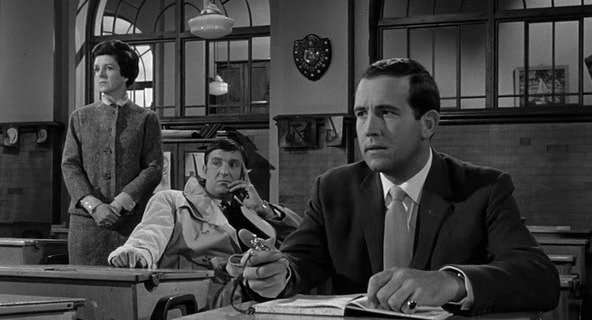
Children of the Damned (Anton M. Leader, 1964) If Village of the Damned leaves things unexplained, Children of the Damned just complicates the issue, rather than coming up with any concrete answers. The six titular children have the same powers and intellect, but not the same attributes.  None of them has the tell-tale white hair or the slightly high browline as the first crop of kids.  And there's only one child from Britain; the others, flown in by the UN, come from Russia, China, India, America, and Nigeria and their abilities are only discovered by a UNESCO survey on child development.  The lead investigators in England, psychiatrist Tom Llewelynn (Ian Hendry) and geneticist Dr. David Neville (Alan Badel, laconically ironic) are looking into the why's and wherefore's of young Paul Looren (Clive Powell), a child of extraordinary learning skills that are frankly off their charts.  A visit to his single mother only ends with her tossing them out and their disbelief in her claiming she was never "touched by a man."

Llewelynn and Neville make an odd duck duo,*** the shrink earnest and straightforward and the geneticist cracking wise with every line.  Their investigations come up with no reason why these kids have these abilities, they just do, and when Britain's Secret Service tries to take control of young Paul, he sets up a distraction and scampers, seeking out the other five children and taking up residence in an abandoned church, with Paul's aunt (Barbara Ferris) as hostage/mouthpiece.  The various embassies want each of their children back to exploit them, weaponizing them, in effect.  Llewlynn is thunderstruck by the idiocy of that: "As soon as one of them knows your plan, then the others will know it."  So much for Cold War secrets.


Neville and Llewelynn, U.N. observers...observing

Still the various countries want their kids back, and the kids want nothing of it, attacking from their stronghold in the church, devizing a broadcasting "thingie" using the church's pipe-organ to incapacitate anyone attempting to remove them, leaving their attackers dead or "wishing they were."


Children of the Damned is slightly diminished from its original, but on its own is one of those great science fiction films of limited scope and budget that still manages to evoke the sense of a much larger concept, despite narrowing down what the children "are," while giving the film a sense of cautionary tragedy that the first film doesn't have.  Less a horror film than a story of sociological and political paranoia, Children of the Damned features good performances and an efficiently crackling script (by John Briley—he would go on to write Cry Freedom and Gandhi) and manages to stand on its own terms, apart from the first film, as an entertaining, if very unsettling film.


...and what they're observing.


°° °° °° °° °° °° °° °° °° °° °° °° °° °° °° °° °° °° °° °° °° °° °° °° °° 


Village of the Damned (John Carpenter, 1995) This updated version of the original follows the same plot structure of the first, with less emphasis on the mysterious circumstances that cause the "immaculate" pregnancies in the town of "Midwich, California," less stigma—it is the '90's, after all, there's even the subject, given the circumstances, of aborting the children—and more emphasis on the children and the violence they mete out on the town.  In color, and sporting a good cast of stars (with Christopher Reeve—his last role before his crippling accident—Linda Kozlowski—she of the "Crocodile Dundee" series—Michael ParĂ©, Mark Hamill and Kristie Alley), these kids are more pointedly accusatory, speak in archly threatening whispers,**** and action-oriented, and unusually vicious in the way they have their victims destroy themselves—impaled on a broom, blinding an eye-doctor, having one of the parents driving into a propane tank (rather than a brick wall), another perform an autopsy on herself, and the botched military intervention in another country alluded to in the first film is dutifully played out with all the blood-bags the budget can allow—and Carpenter doesn't cut away as the original did.  There's no implication here, which (as it usually is) isn't as powerful as leaving your audience's squirming imagination to do the dirty work.  


Christopher Reeve's doctor hates talking to kids.

On the plus side, it's less of a man's world this time out on both sides: the chief investigator of the phenomenon is a woman (Alley, whose a bit cavalier in her dealing with the kids) and the leader of the children is one of the little girls, Mara (Lindsey Haun) daughter of Reeve's local physician and his wife (Karen Kahn).  This time out, the children pair off, boy-girl, with one of the children (Tom Dekker) left partnerless because one of the children is stillborn, and, as a result, being the only one to develop any empathy at all.  The other kids are little monsters who, when forced to go up against an adult with any will at all, will have the pinwheels in their glowing eyes go from green to red to white, then, just to stack the deck against them further, their faces glow red into a demon's visage.

In other words, what was subtle and thought-provoking in the first film doesn't have the same effect in this one.  And the reason is you're being beaten over the head with it, and rather pointlessly.  There's no ambiguity here.  There's no mystery.  It's just a simple formula: strange is bad=kill it. Carpenter can be a good film-maker and stylist—he wrote the playbook on the post-Hitchcock slasher film (which may not be much of a recommendation—until you compare it with his imitators).  Maybe this was just a case of studio expectations for meeting a carnage quotient.  But whatever it is, the 1995 remake of the Village of the Damned takes all the fun...and the seriousness out of the story.

And that's a "Damned" shame.


* There is another film done by the Hammer group, and directed by American director Joseph Losey, starring McDonald Carey and Oliver Reed called (depending on which version you see) These are the Damned or The Damned, and are unrelated to this film series, although it does involve children, with special qualities.

** It was odd watching it this time around, as the children, particularly Martin Stephens, reminded me of no one so much as Sheldon Cooper, Jim Parson's character on "The Big Bang Theory."  Sorry, DR. Sheldon Cooper.

*** And no, I don't think they're gay, even if they do share a flat in London (separate rooms, mind you).  Both are on assignment from Unesco in London.

**** Unfortunately, the kids' performances are melodramatically threatening, a bit like Patty McCormick in The Bad Seed.

Friday, December 31, 2010

Man Hunt/Rogue Male

If, when talking about movies, someone at this year's New Year party (or at a film blog) pontificates the blanket statement "there's never been a remake of a film better than the original," here's a rebuttal (besides, say, True Grit) you can have at the ready:


Man Hunt (Fritz Lang, 1941) Dudley Nichols' adaptation of the 1939 Geoffrey Household novel that begins with a sure-fire set-up: a big game hunter, Captain Alan Thorndike (Walter Pidgeon), travels to Berchtesgaden to shoot Adolf Hitler right in the Berghof with a long-range rifle.  He "takes the shot," but then, on second thought loads a bullet into the chamber...too late.  He's discovered, taken prisoner and tortured for information by Major Quive-Smith (George Sanders, at his most impenetrably cold).  The Major wants the Captain to admit that his intent was to kill Der Fuhrer (something he understands being an avid sportsman himself) and sign a confession to that effect, saying that he was doing it for the British government.  Thorndike refuses, is beaten, then dumped over a cliff to make his death appear an accident.

But Thorndike survives, and makes his way back to England, barely ahead of his Nazi pursuers.  With the aid of a cockney lass, Jerry Stokes (Joan Bennett), he manages to elude his pursuers, going, literally, underground by living in a makeshift cave and living off the land.  But a cave has one drawback—it only has one exit, and this proves to be a weakness in Thorndike's cat-and-mouse with the Nazis.

It's a corker of a story, told with the visual paranoia that Lang excelled at.  It's one long chase that finally goes elementally one-on-one.  Where Nichols diverges from Household (aside from actually naming the dictator the author's anonymous hunter aims for, no doubt with the approval of the director, a German exile*) is in a neat insertion of a "woman's part," through the extended English city section, which becomes a deus ex machina for the final confrontations.  "Jerry Stokes" was a Nichols creation, it being thought that giving Thorndike a visible love interest for the audience to identify with, would more humanize Thorndike and his quest.  "Jerry" has her origins in the book, but was only suggested.  Nichols, Lang, and Bennett made flesh what Household only used as a back-story.   


Rogue Male (Clive Donner, 1976) BBC film of the Household novel that keeps the original more in its sights.  Where Man Hunt is urban, has a love interest, and is quite light-hearted at times, Rogue Male is more to the point, quite brutal (the shots of Peter O'Toole's Thordyke after being beaten to a bloody pulp are tough to watch) and extends the cave scenes, making them much more a part of the story (Pidgeon spends barely 20 minutes in the cave in Man Hunt) as they are in the book.

But it is the character of Thorndyke where the two most diverge—Pidgeon's captain does what he does to survive.  That's certainly true of O'Toole's characterization (it has to be!), but one also gets the sense that this hunter prefers life in a cave to one in the aristocracy.  Any hint of romance is purely prologue, giving an ethereal quality to the unnamed woman, that O'Toole merely suggests with a melancholy cast of his eyes.  Written with 20/20 hindsight by Frederic Raphael, the film is far more political than either the book or first film could ever hope to be at the time they were written, given the historical perspective nearly forty years can bring.  Smart, intelligent, unwavering, the BBC version of Household's novel is an adaptation worthy of the anonymous Hunter.

The Lang version is more stylish and romantic, but Donner's TV-version has the novel down cold.  O'Toole has stated that it is the favorite of all films.
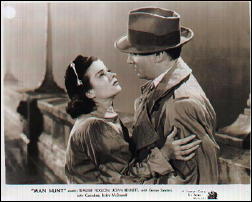


* This supposedly worried 20th Century Fox exec Darryl F. Zanuck, as well as The Breen Office, as America, at the time, was neutral in the European War, not entering the fray until the attack on Pearl Harbor.

Friday, February 27, 2009

Olde Review: All About Eve

This was part of a series of reviews of the ASUW Film series back in the '70's. Except for some punctuation, I haven't changed anything from the way it was presented, giving the snarky, clueless kid I was back in the '70's a break. Any stray thoughts and updates I've included with the inevitable asterisked post-scripts.

This is a companion piece to "Sunset Boulevard."

"All About Eve" (Joseph L. Mankiewicz 1950) "All About Eve" is not unlike "Sunset Boulevard." It deals with the lust for glamour in show business—in this case, the theater in New York, not the neighborhoods of studios in Hollywood. It, too, was made in 1950, its female characters, for the most part, actresses, are...uh, abnormal. And it, too, is biting, but places its knives-in-the-back in a ci-vi-lized manner, and twists it...delicately...not with Wilder's carving techniques.

What we have is
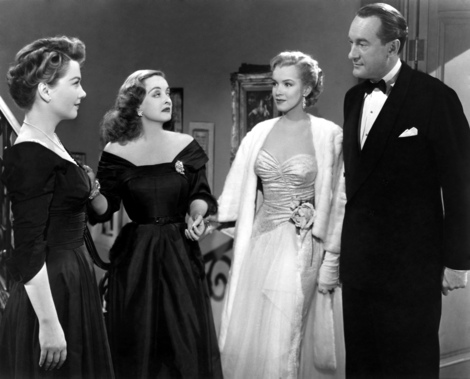
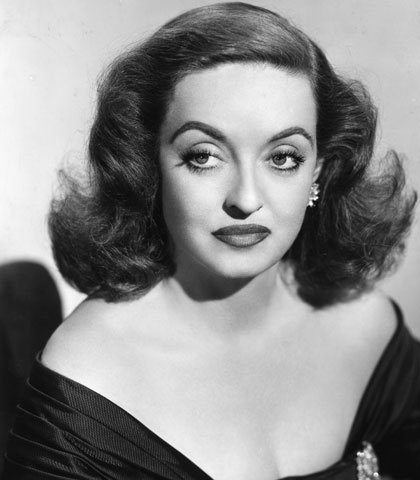
Bette Davis as Margot Channing, a spoiled child-actress, now on the shady side of 40, but still playing ingenue roles. What we have is Anne Baxter as Eve Harrington, a young ingenue who gazes adoringly at her idol, Margo Channing. What we have is Addison DeWitt (played by George Sanders as drily as a total-vermouth martini), the chief stiletto of the critical press, but you've also got Gary Merrill, Celeste Holm, Thelma Ritter, (and, in a very brief role, Marilyn Monroe) in a highly literate script which gives almost everyone some role they can sink, or cut, their acting teeth on, in a story that has "everything but the blood-hounds snapping at their rear end" (and, in a way, that happens, too.)

You see, we meet all these people as
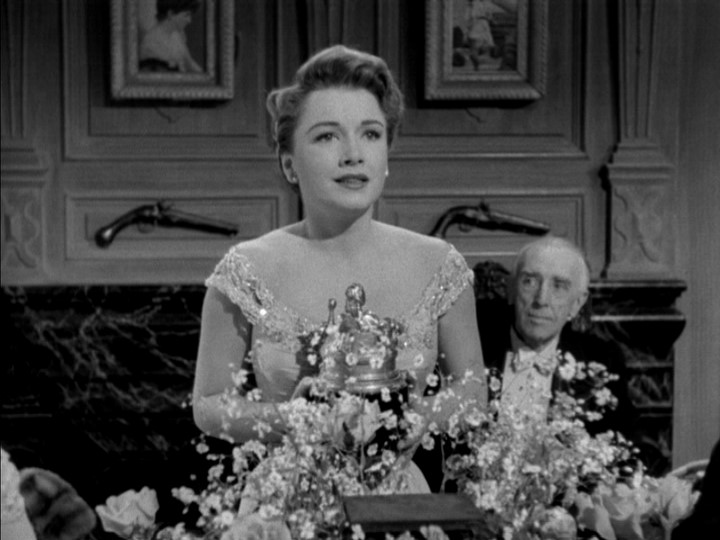
Eve is receiving the Sarah Siddon Award for Best Stage Performance of the Year. A joyous occasion for everyone, right? The very young actress gets a big break—everyone's happy, right?

No, the principal characters are either looking embarrassed, wonderingly perplexed, mad, or just cold to the event. It's flashback time to see why such a double-reaction to the prestigious theater event. And in a "Citizen Kane-switch," one flashback is narrated in turn by several people. And we are through this told "
All About Eve"...but also Margo, Addison, everybody. Everybody's soul is laid bare through the dialogue and the quirks and pops of the performances of the cast. It's a thoroughly entertaining two and a half hours, and its light cynicism will take of the staleness of "Sunset Boulevard" out of your mouth. It will do that, but will hardly make hopeful young starlets complacent.

Broadcast on KCMU-FM on February 3-4th, 1976

I still love this movie and I find it invaluable as a source for great lines. Go ahead. Go to the IMDB listing for "All About Eve" (all you have to do is click on the name at the head of the review*) and go to "Memorable Quotes." There's at least a couple pages of them. All smart, literate and bitchy. I used one in January 2009, as a sub-head for the blog-title (Addison DeWitt's non-self-deprecating "While you're waiting you can read my column. It'll make the minutes fly like hours." Only he could say that about himself--everybody else would be cut down for a remark like that, sort of like only Nixon being able to go to China.) Another favorite of mine is in this olde review: "Wow. Everything but the blood-hounds snappin' at her rear-end" as expressed by the inimitable Thelma Ritter. There's one involving Marilyn Monroe's hungry starlet, Miss Casswell, as she enters a theater-party. She scans the room looking at the producers: "Why do they all look like unhappy rabbits?" DeWitt leans in and confides: "...because they are." Smart. Literate. Bitchy.

And curiously old-fashioned. One doesn't get too far in that list before it comes to the Margo Channing monologue about the value of her life—a speech that always made me uncomfortable: "Funny business, a woman's career - the things you drop on your way up the ladder so you can move faster. You forget you'll need them again when you get back to being a woman. That's one career all females have in common, whether we like it or not: being a woman. Sooner or later, we've got to work at it, no matter how many other careers we've had or wanted. And in the last analysis, nothing's any good unless you can look up just before dinner or turn around in bed, and there he is. Without that, you're not a woman. You're something with a French provincial office or a book full of clippings, but you're not a woman. Slow curtain, the end."

Oh, really! Pretty prosaic for a smart script. Even though this was written in the late 1940's, it still rankles a bit unless you're, say, Anita Bryant.
There's also the way Addison DeWitt and Eve Harrington come across as asexual monsters for whom career is everything and a "normal" lifestyle is to be shunned and mocked.** Being a careerist is a bad thing in "All About Eve." Chasing after love, whether you're good at it or not is the holiest of holies. As I said, this was written in the 40's. One of my favorite quotes from 2008 is Richard Dreyfuss' one about being directed by Oliver Stone in "W.": "You can be a liberal and still be a fascist." Just as you can be smart, literate, and bitchy, and still come across like a schoolma'rm.

"All About Eve" was one of the first films to be made part of The National Film Registry.

It has a "100% Rating" on the Rotten Tomatoes site. Can't do better than that.

* That would be the start. It's an old habit of mine to think interms of "reels." The "head" is the start, and the "tail" is the finish, or the part that tucked into the reel's hub.

** The wikipedia article on "All About Eve" suggests that Addison and Eve are gay, thus making their aberrant behavior a result of their sexuality. "Okay, but whatever you do, don't tell Chuck."