Showing posts with label Barbara Stanwyck. Show all posts

Thursday, July 25, 2013

Ball of Fire

Ball of Fire (Howard Hawks, 1941) It doesn't get much better than this: screenplay by Charles Brackett and Billy Wilder (from a story by Wilder), produced by Samuel Goldwyn, photographed by Gregg Toland, music by Alfred Newman and directed by Howard Hawks.  Add that it's a swing-era version of "Snow White" stock-piled by anything-but-dwarvish character actors (Henry Travers, Richard Hayden, Oscar Homolka, S.Z.Sakall), some nifty up-and-comers like Dana Andrews and Dan Duryea, and top-lined by Gary Cooper (in pixie-ish Capra mode) and Barbara Stanwyck (who usually runs on all cylinders, but seems turbo-charged in this one) and you have the makings of a great, stylish and culturally-winking comedy, with lots of great musical material, too.*

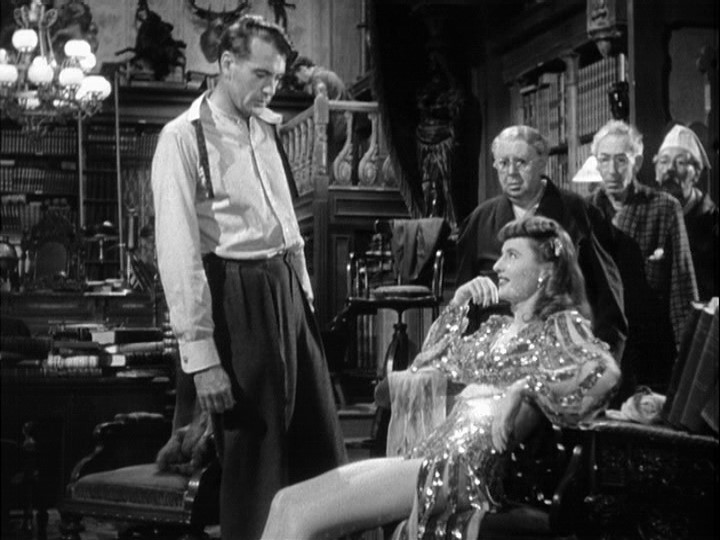
Years in the making, the Dutton Encyclopedia, written by eight myopic scholars, is hitting the skids just as it's hitting the "S" words.  Professor Bertram Potts (Cooper) has just finished a 26 page treatise on "Slang," when a garbage-man walks in with some fancy (and utterly incomprehensible) patter that puts his research to shame.  Potts determines that he will leave his ivory tower and venture forth into the world to see what all the...what's the word? *flip/flip*..."rhubarb" is about.  He stumbles upon a nightclub (where Gene Krupa happens to be playing) and taking on the lead vocals is "Sugarpuss" O'Shea (Stanwyck, in full "bad-girl" mode), mob-girl to Joe Lilac (Dana Andrews) who's being investigated by the New York cops.  The focus of their investigation is Sugarpuss, who can give them a lot of inside information, so she has to go on the lam, and the professor's invitation to her to be a part of his slang symposium, gives her the perfect hideout, going "to the mattresses" with the eight encyclopediacs, but under the distrusting baleful eye of Miss Bragg, the housekeeper.


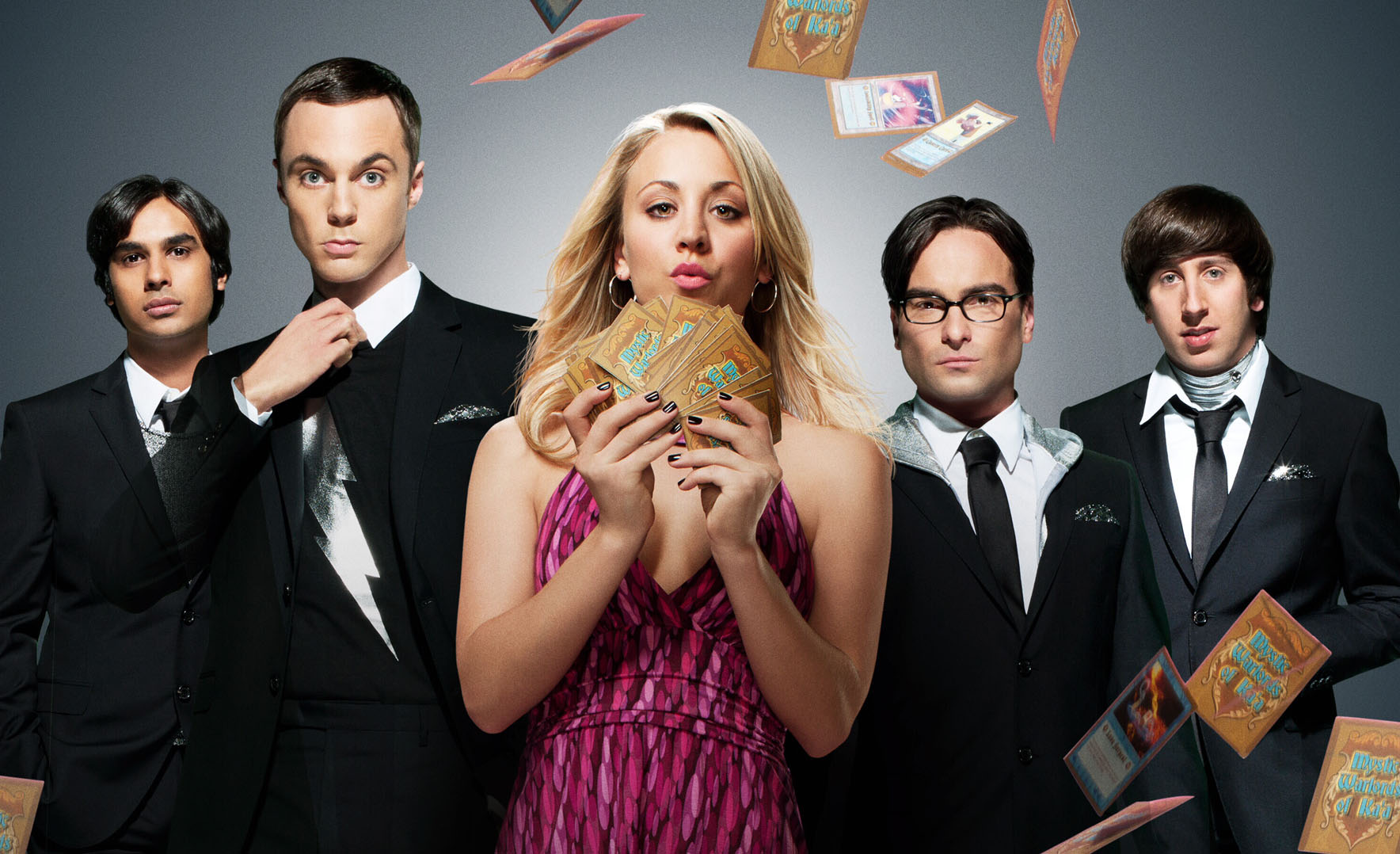
Complications arise, with the possibilities of broken and/or ventilated hearts, as it turns into a particularly pointy triangle between Potts, O' Shea and Lilac, with a suddenly energized Greek chorus of academics trying to deal, rather haplessly, with the real world.  "Snow White" is the inspiration, but fans of "The Big Bang Theory" will also see its roots in this and its Grimm ancestor. One also has Ball of Fire to thank for Billy Wilder's directing career, as Hawks let him sit in on the set, auditing during the making of the film, observing, taking notes, prepping for his own directorial turn that year with The Major and the Minor.

This is one of the great unsung Hawks movies, slightly different from his formula, thanks to Brackett and Wilder's script, but it still falls under the category where a team of different skilled people—in this case scholars—come together under circumstance to form a like-minded unit, even if, as here, it happens a little late in the proceedings.  It was Hawks' version of making a film about film-making, but obliquely, showing that any group of gypsies can unite under a common goal despite their differences.  It's part of the charm that makes Hawks one of the most American-minded of film-makers, those films being a reflection of the melting pot of the Great National Experiment.


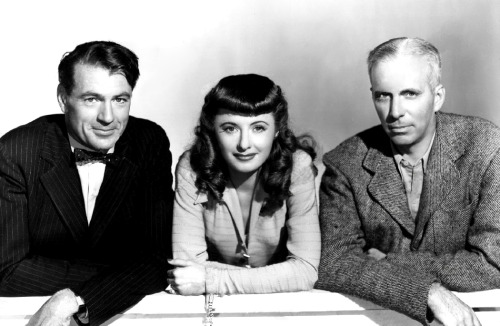



* One of Hawks' trademarks is a musical number in the proceedings, often by amateurs to show they're bonding in their efforts.   Ball of Fire was re-made eight years later by Hawks in a musical version called A Song is Born (also photographed by Toland, but this time in technicolor) starring Danny Kaye and Virginia Mayo.

Wednesday, June 12, 2013

Clash By Night

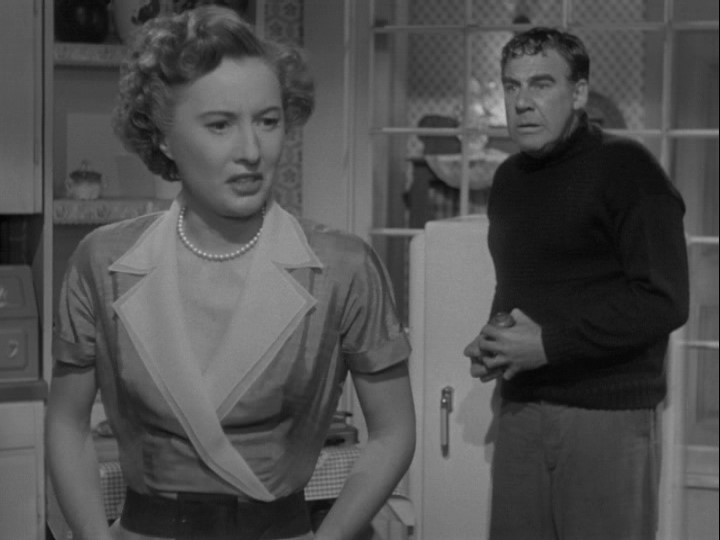
Clash By Night (Fritz Lang, 1952) Interesting. Fritz Lang directing Barbara Stanwyck, Paul Douglas, Robert Ryan and Marilyn Monroe in an adaptation of a play by Clifford Odets (produced on stage by Billy Rose!).  Talk about clashes.  The events take place in a fishing town and Lang gets a lot of mileage with shots of Nature—seals, gulls and a violently crashing surf—drawing parallels between the various top-feeders trying to take advantage of the spoils of the fishing fleet's daily labors.  They're scavengers of opportunities and Lang keeps the beasts on land and sea in the same universe, making a more direct and poetic pictorial comment on the squalid life in town than any amount of purple Odets prose can provide.

Mae Doyle (Stanwyck) comes back to Monterey, after years on the road, to move back into the family house with her brother (Keith Andes).  "Home is where you come when you run out of other places," she snarls.  But her purpose is not to settle down so much as to lick wounds.  Her search for a better, easier life than working in a cannery (like Monroe's Peggy) or marrying a fisherman and raising kids has proven a bitter disappointment.  She slinks back into town ("Home is where you go when you run out of places") and word gets 'round that Joe's sister's back, which attracts the attention of Jerry D'Amato (Douglas), a bachelor-fisherman living with his widowed father (Silvio Minciotti) and sleazy Uncle Vince (J. Carroll Naish).  Mae and Jerry start seeing each other, but she rejects any advances he makes, telling him he doesn't even know her, "what kind of animal I am.  Do I have fangs?  Do I purr?"  


He takes her to meet his friend Earl (Robert Ryan), whom Jerry describes as "in the movie business;" He runs the projector at the local bijou.  Earl's one piece of work.  A sour drinker, married to a vaudeville dancer, he'll tell you all about what's wrong with women to your date.  "Take any six of them.  Throw them up in the air.  The one who sticks to the ceiling, I like."*  Mae is repulsed, but Jerry is still loyal to Earl, even though he'll talk bad about his friend behind his back.  "Jerry's the salt of the Earth—but he's not the right seasoning for you." (Ugh. Odets) Again, Mae's reaction to Earl is to be repulsed, which sends her right into the arms of Jerry, and any previous objections she had to marrying him are suddenly forgotten.  Before long, they're hitched and have a daughter, which is upsetting to Jerry's opportunistic Uncle Vince, who will never put up with anything that interrupts his mooching lifestyle.  Jerry ends up throwing him out.

But, Mae is still restless, and complications ensue that tie back to life in the animal kingdom, and the charm of aggressive males.  Because the movie then starts to take place solely at night, there are those that will call this a "film noir," the genre most commonly associated with gangsters, surly private eyes, never-spoken-of family secrets, and the evil impulses of men.   Got the last one right, as the worst of people gets the better of others.  But, the film noir genre is less prominent than the soap opera one, and it doesn't help that the material is sometimes eye-rollingly colorful.  Still, the cast is uniformly excellent, and Lang's hand is sure, and makes puts everything in the proper perspective.


* This is one of the problems I have with Odets as a writer: that sentiment must mean something—at least to Odets—but it makes no sense to the rest of humanity, which is supposed to be his audience.  I suppose it means that Earl doesn't like any woman; there's a better way to say it, I'm sure.  But then I don't like Odets much—take any six of his works.  Throw them up in the air.  The one that sticks to reality, I like.

Friday, December 4, 2009

The Lady Eve

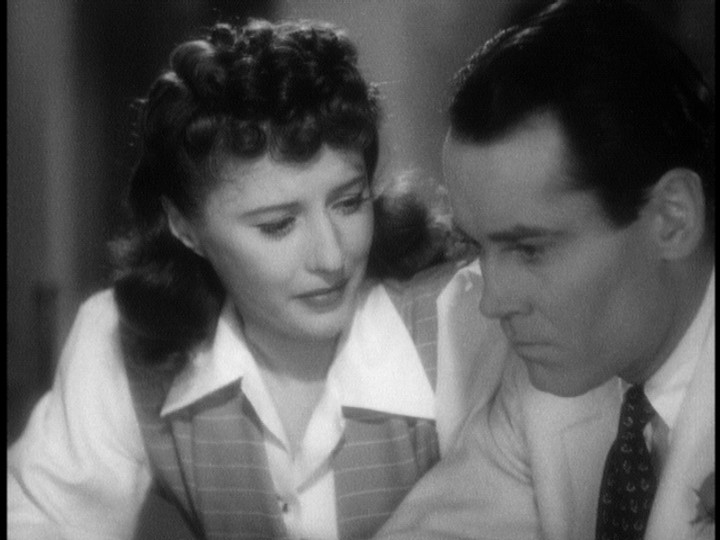
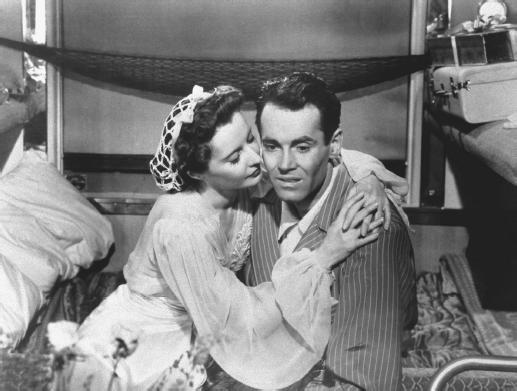
"The Lady Eve" (Preston Sturges, 1941) Ale heir Charles "Hopsey" Pike (Henry Fonda) has been up the Amazon for a year as an ophiologist (emphasis on the "oaf."). It must have been without a paddle because he can't tell two snakey grifters (Charles Coburn, Barbara Stanwyck playing a father-daughter con artist team—the family that preys together...) are trying to collect him...and his dough...on the cruise back to the States. She's already beaned him with an apple as he was boarding ship—it's not exactly Cupid's Arrow, but it'll do, in theory. After he gets hit, well, he's not a lot wiser.

Sturges' third film (and first big hit) is a distillation of every screwball romance that had come down the pike previously. As with the best screwball comedies, the woman has all the power and nobody could play power better or with more cruel humor than the ungainly
Barbara Stanwyck, here as fast as quicksilver and, frankly, a bit tough to keep up with—you want to watch it twice just to see all of her nuances you missed. Her opponent...object of affliction...affection...is a combination of every man-handled man-type that you can have in these comedies. "Hopsey" Pike is well-off, a specialist in his field but a tenderfoot out of it—he can spot snakes in the jungle but not in the grass—somewhat sheltered and clumsy, and saves money on casting Ralph Bellamy by playing his own stuffed shirt. And being on a boat ensures that the ground is never too sure under his feet, the better for the sweeping off of. And the best guy to "take" in a "confidence" game is somebody who doesn't have any.

Confidence, that is.

Henry Fonda didn't play many rubes, as there was always something steely under his baby-blues; you couldn't hide his intelligence and Sturges doesn't try, making Hopsey book-smart, but virginally inexperienced and shy. One would say clumsy, given the right circumstances, which is where Stanwyck's Eugenia comes in, with her foot in the aisle to trip him up, literally. Pretty soon, that becomes Sturges' short-hand for letting you know that "Hopsey" is falling for Eugenia, a 40's comedy substitute for attraction being physically evident.

But the best un-laid plans... Pretty soon, Eugenia is falling for Hopsey, as evidenced by her getting hot and bothered by his chosen field of study. "Slimey snake!" she yells as she wakes up from a nightmare.
Preston Sturges was always one for tweaking the censors, and with "The Lady Eve," he's more than suggesting by associations of culture and psychology what's going on here in a knowing way—the biblical way of knowing, complete with snakes and apples and falls from innocence.

Things get complicated as Eugenia must thwart her father's plans for fleecing the golden boy—she does actually care about him, but when Pike finds out what the two are up to, he breaks off with her, leaving her in a huff. If she was honest with him, he'd probably have done the same thing, so with that moral quandary and his making her feel cheap and all, she plots her revenge, with one of the best lines of spite to come out of Hollywood: "I need him like an axe needs a turkey!" Appropriate vindication mixed with a vindictiveness chaser ensues.

Well worth the time and effort to seek out, "The Lady Eve" is a shining example of how sophisticated and down-and-dirty Hollywood comedy could get. In 1994, "The Lady Eve" became part of The National Film Registry as being "culturally, historically or aesthetically significant."

Funny as the devil, too.