Showing posts with label Judi Dench. Show all posts

Saturday, September 21, 2013

84 Charing Cross Road

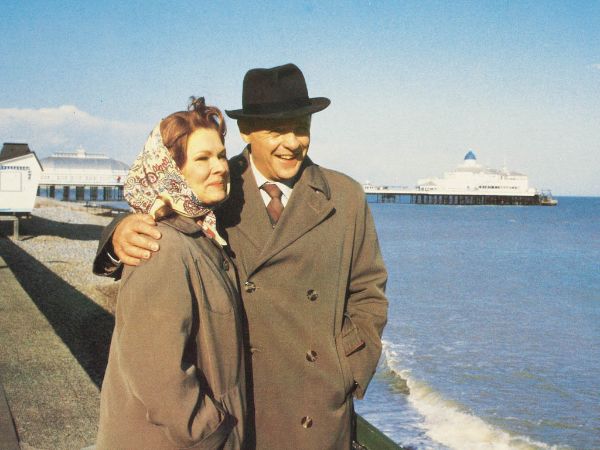
84 Charing Cross Road (David Hugh Jones, 1987) You never know where something delightful might come in, like a parcel of unexpected mail that can lighten one's mood, or found money in a not-recently worn garment, or the spurious act of kindness.  The "nice" surprise.  84 Charing Cross is one of those, one of the films I've known about, mostly for its score by George Fenton, and that's about it, save that it starred Anne Bancroft and Anthony Hopkins, both of whom were in a popularity valley, Hopkins doing TV movies at that time (four years away from The Silence of the Lambs), she doing one movie a year, often at the behest of her producer-director husband, Mel Brooks (who produced this one).  

Good property, too.  Brooks tended to bankroll movies from stage-plays (or based on stage-plays), and 84 Charing Cross made it to the boards after being published in book form by author Helene Hanff, documenting her decades long relationship with a London book store.  This was in the day before the Internet, before Amazon, even before Barnes & Noble or Tower Books or the massive retailers who would buy books by the case-load to over-populate bargain bins. These were Mom & Pop operations, or even older, in dark rooms that smelled of dust and yellowing paper, where books had cloth or leather bindings, and even opening one of them was an adventure.  I could spend an entire day in one of these hovels, marveling at what one could find waiting on the heavy oaken shelves.  Before they actually became warehouses, it was the closest thing to a warehouse of information and just following a line across the Dewey Decimal System could lead you to an amazing surprise. 


The Marks and Cohen Secondhand Bookseller at 84 Charing Cross Road

The story begins in New York, 1949.  Hanff, an editor by trade a playwright by desire, is looking for specific books around the city and coming up with bupkis. A stray ad in the Saturday Review of Books mentions the bookseller in London, Marks & Co, at the 84, Charing Cross Road address and she writes to the place looking for her treasures.  She is answered by Fred Doel, buyer, who sends her what he has, mentions the price and the two work out a pounds to dollars conversion with some sloppage in change here and there, with a relationship of immediate trust established, and an expertise that Hanff comes to rely on and marvel at.

Before long, her hearing of food shortages in Britain inspires her to send food-stuffs to the store, which are distributed amongst the employees and generally making their life increasingly special.  Before long, everyone is on a first name basis in correspondence and the letters and orders from Hanff become a special treat for the business.  It becomes a long distance love story of mutual kindnesses and respect.

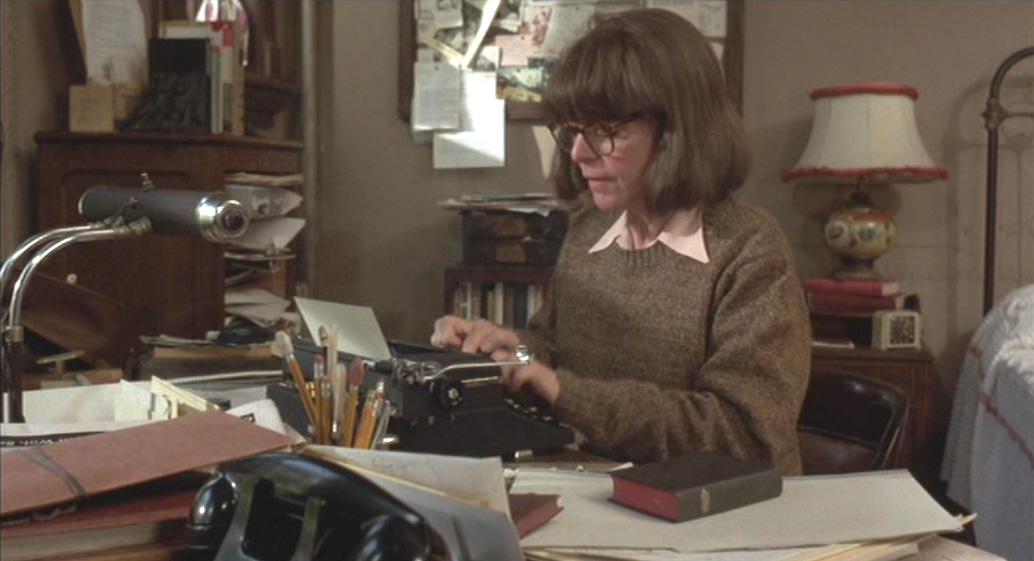
Hanff (Anne Bancroft) leaves a long ash watching Brief Encounter (in a theater, kids!)

Lovely story, and certainly something that anyone who has a favorite place of business or customer for whom business is never usual can relate to.  And it's one of those movies that would particularly appeal to the blue-haired old ladies in matinees for whom the shocks should not be roller-coasterish or beyond community standards.  The performances are comfortable—Bancroft's verbose and brazen, Hopkins, donnish and in that automaton-ically restrained emotionally manner he'd perfect in Remains of the Day, Judi Dench has very little to do as his wife, other than dignified fretting, but does it like with an immediacy and a good-natured bantering with Hopkins that feels right.

If there is one complaint, it is that, after awhile, the director gets weary with the cutting back and forth and gets a little cutesy with the transitions, at one point Hanff addresses the camera which is jarring, and then there is a sequence where both characters are talking to the camera with no pretext of papyrus, writing or reading interpolated as voice-over.  They appear (God help us) to be on Skype, and by that time the illusion and some of the magic disappears. They're not talking to each other anymore, as we've gotten used to.  Instead the fourth wall is broken and they're talking to us, right at us, and, frankly, treating the audience as an unnecessary go-between is rather a step-down from our previous role as omniscient viewer.  I didn't appreciate it much.

But other than that little spoiler, it's fun, nicely unique, and quite refreshing.


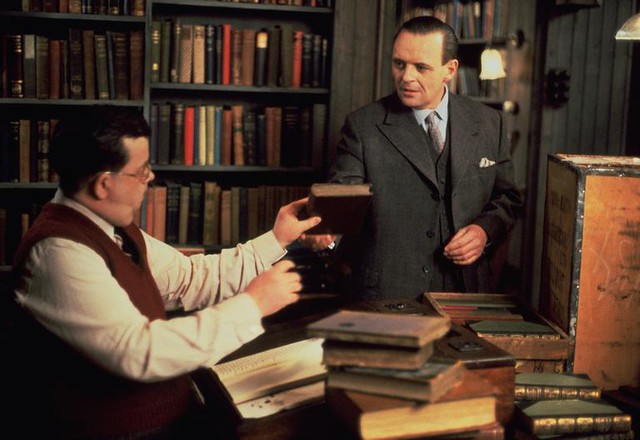
                         Helene Hanff                                                   The Doel family, Frank to the right


Tuesday, November 13, 2012

Skyfall

Once More into the Security Breach, Dear Friends...
or
"Old Dog.  New Tricks."

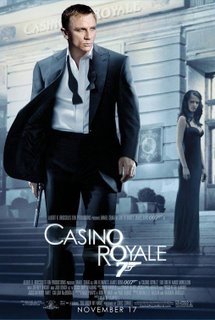
Bond is back, as promised, a longer wait than usual.  But with the Bond series (this is the 23rd "official" film from EON), that's usually a good thing.  After 50 years, there have been enough of the slap-dash ones that have been sub-par in order to get "product" into the theaters every biennium.  The Bond films have always been best when Cubby Broccoli's kids take a couple years to plan, take a breath and then throw themselves pell-mell into a fury of film-making that lasts less than a year, but creates something above and beyond what has been done in the past, both within the series and by its competitors.  Those interruptions usually occur with a change-over of studio or lead actor.  In this case, M-G-M's past financial cliff (if we want to be current) gave a couple more years distance between this one and its predecessor, Quantum of Solace—which entered production with an unfinished script, an overcompensation of chase scenes, and a misguided editorial effort to make the Bond series re-Bourne.  It was a decided stumble, after the brilliant series re-boot in Casino Royale, which tossed aside the easy laughs that were purloined for the "Austin Powers" movies and went back to Fleming's book (written in 1954) and found ways to make it work in a 21st Century without jet-packs.

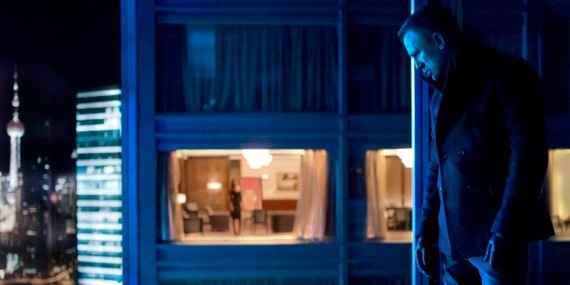
EON should take all the time it wants if something like Skyfall is the result.  Based on a story outline by Peter Morgan (The Queen), then fleshed out and re-tinkered by series regulars Purvis and Wade, and polished by John Logan, the script is a fine thriller in the odd "out-there" Bond tradition, while also making comments about the series and its relevance in the world.  And as directed by Craig-pick Sam Mendes (they'd worked together on Road to Perdition), photographed by Roger Deakins, and edited by Stuart Baird, it takes the Bond series to stylish heights it hasn't achieved in years.  This one is sumptuous, looks great, has great dialogue, and isn't one long chase from start to finish.  This one is decidedly old-school, God save the Queen.

Somebody had better save her, and if Her Majesty isn't directly in danger, her stand-in, head of the Her Majesty's Secret Service, will serve.  An assassin has swiped a hard-drive with the names of embedded agents in terrorist organizations.  Two agents are dead.  One's dying, and Bond (Daniel Craig) tries to staunch his bleeding, but is rebuffed by his boss "M" (Dame Judi Dench, again) over his head-set: "Leave him."  And with a curt "Yes, mum"  Bond abandons the dying agent, miffed, but in pursuit, throughout the bazaars, streets and railways of Istanbul, with the aid of a female operative named Eve (Naomie Harris, a fine addition to the cast). It's a rough-and-tumble, messy fight with a lot of improvisation, a lot of destruction to property, old and new, and a last minute attempt by Eve to try to take out the assassin (Ola Rapace) before the train disappears into a tunnel.  But she hesitates, fearing she'll hit Bond.  "Take the bloody shot!" barks "M" and she fires, and Bond is hit, knocked off the train and falls hundreds of feet into a river, where his body is swept away.  The assassin and hard drive are gone, and so is Bond, sinking into a particularly macabre title sequence by Daniel Kleinman to Adele's defiantly melancholy title song. 

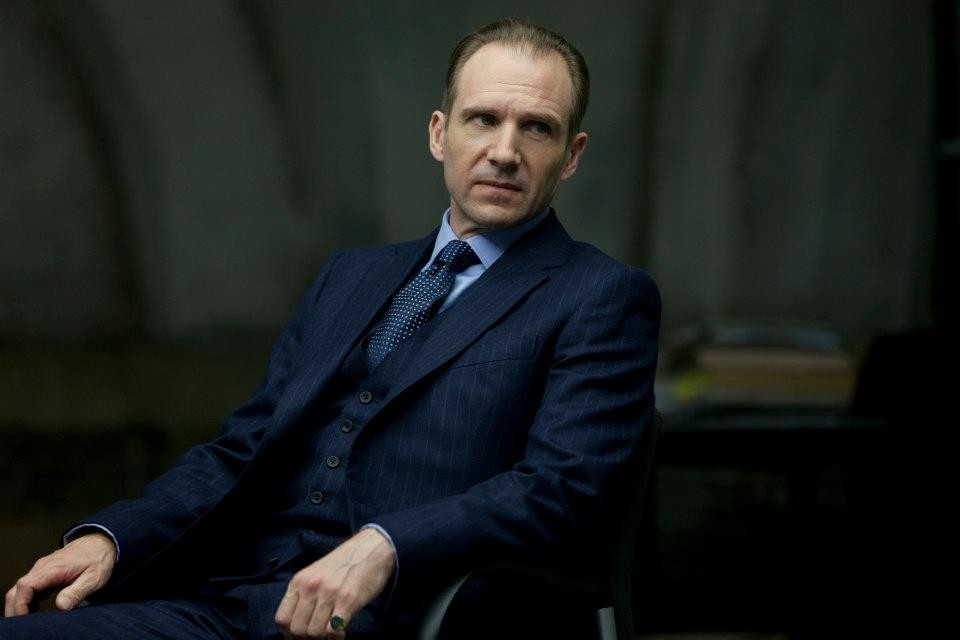
Wow.  But, we've seen this before.  Bond died (surreptitiously) in You Only Live Twice, and Fleming's novel of the same name had Bond lost in a mission,* only to have him return in the next novel "The Man with the Golden Gun," brainwashed by Soviet agents to attack MI6 headquarters and kill his boss.  That doesn't happen here, but the outcome—"M" sending 007 on a mission somewhat ill-prepared to either prove himself or die in battle—does.   As far as "M" is concerned, she's on the way out anyway, a victim of the botched operation and its ramifications in what the Minister of Intelligence (Ralph Fiennes) euphemistically calls "retirement planning."

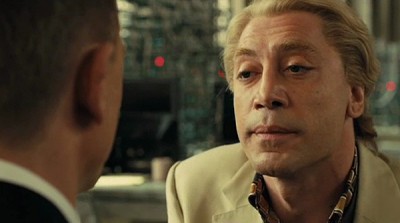
Seems that hard-drive has fallen into the wrong hands, a particularly misguided hacker named Silva (Javier Bardem), with a score to settle with MI6, exposing its agents and doing as much damage to the organization and Lady "M" as possible.  Britain's spy network is in retreat, ironically having to go to ground and reorganize with means both high-tech and historical to gain the upper hand.


Roger Deakins' cinematography is, at times, breath-taking.

That's the first 15 minutes or so of Skyfall, and one is loathe to reveal much else, even though, for a series that has depended on formula story-telling for so long, there is much that is surprising and different about this chapter.  For instance, despite the film being (as it always is) about Bond, there is much more supporting cast here with more to do than previous films in the series, more humor than previous Craig films (and not the kind of low-pun stuff that passed as humor—and writing—during the Moore and Brosnan years) with nice jabbing dialogue that doesn't just reveal plot, but attitude and character.  For instance, an MI6 analyst doing a perfunctory word-analysis on Bond (we've seen a bit of it in trailers) is a fine examination of 007's sophistication, wit and grit.  And when, later he's grilled by Silva about his hobbies, Bond says one word: "Resurrection."

Apt answer, that, but one can apply it to the entire series, as well.  Whenever the movies push the envelope on outlandishness (You Only Live Twice, Moonraker, Die Another Day) the production team steps back, takes a breather, and takes Bond back to his roots creating better than average entries (On Her Majesty's Secret Service, For Your Eyes Only, Casino Royale) and reinvigorates the possibilities of where the character and the movies can go, usually falling back on Fleming for a guide.


But the Fleming titles are gone (except for three odd ones), the stories (mostly) filmed, so Skyfall only takes inspiration from the author, specifically the novel version of "Golden Gun," and instead of the film having Bond "go rogue," this time, he does just the opposite, coming back to the fold in a time of crisis, tossed out on his mission by "M" to prove himself and the viability of the secret service and its methods.

The results are extraordinarily good, making this the best of the original movie stories not directly linked to Fleming and depending less on protracted action scenes, but emphasizing suspense and crackling good dialogue.  As "M" speechifies in her competency hearing, the targets are smaller, more dangerous, less predictable, and no longer tied to nation-states that can be manipulated by politics.  Now, it's individuals with access to disrupting vulnerable infrastructures that hold societies together and who will cause damage just to make a point.  One can draw parallels to Julian Assange (Silva uses YouTube to identify agents) and his unquestioning devotion to exposing anything and anyone—as long as it's not himself.

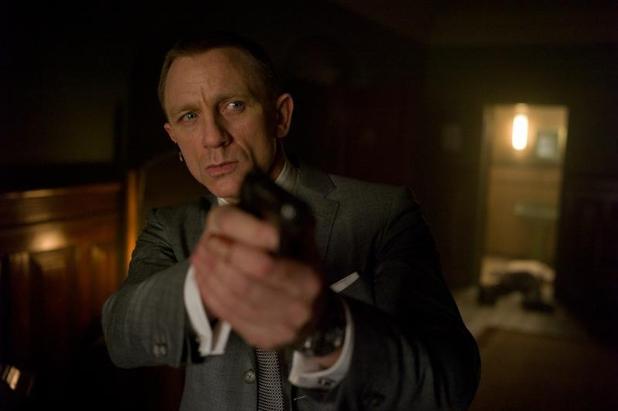
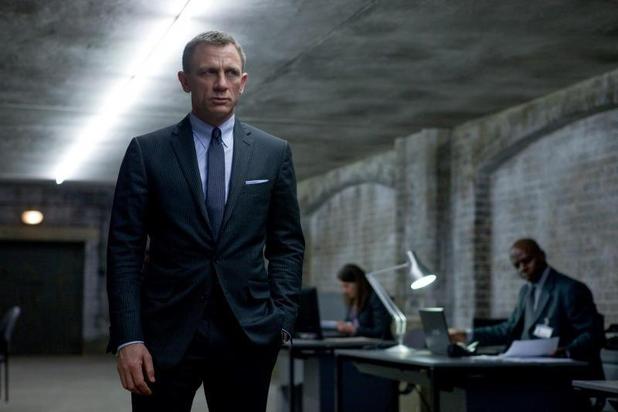
The cast, as it has been for awhile, is uniformly excellent.  Craig's Bond is just as steely, just as obstinate, but the actor enjoys playing him as a bit of a wreck, physically and mentally.  His Bond, after a time away, is not the man he was, and he goes through the film slightly hampered, his eyes hooded and bleary, his appearance often haggard and mussed, his demeanor prickly and defiant.  Dench has far more to do than any "M," and any past tremulousness is gone, and she's excellent in every way.  Ralph Fiennes plays his role quietly and competently with a heavy gravitas—he's a fine addition to the cast.  The Bond women, this time out, are very interesting and not just decorative: field operative Eve is cheeky and gives as good as she gets (that'll become important later), and as the femme fatale of the piece, Bérèniece Marlohe has a brief, but well-played expertise—her Severine has a dragon lady's cool, with a sex-worker's high-contrast too-bright smile that droops with a crash, revealing a trapped animal.  Ben Whishaw's "Q" is a contrast to what has gone before, far younger, far more tart than Desmond Llewelyn's court-jester toy-maker, but a whipper-snapper computer whiz.  Albert Finney has a small, pertinent role (that could have easily gone to Sean Connery, but it was thought he'd be too 'distracting," according to Mendes).  And Bardem makes his villain creepy-scary in the best tradition of the series, jolly in his evil, but believably so, cracked from his past and with an atypical physical deformity (as Fleming was wont to endow) that feels right given the context and is the stuff of nightmares.

After a high-powered finale—yes, things blow up as they do in Bond films, but not the way one expects—and by the end, Bond truly has gone back to his roots, as anyone who's looked at  the early Bonds will be able to tell, with ghosts left behind, family in place, and tradition—the old ways—firmly established.  Bond is back, and will be back.  With pleasure.

Can't wait.


Skyfall is a Full-Price Ticket.


"...the things we do for England..."


* Fleming killed Bond off twice...at least left readers on the edge of their last pages—in "From Russia With Love" and "You Only Live Twice," and one suspects he had the same love/hate relationship with his character as Arthur Conan Doyle did with Sherlock Holmes, killing him off over the Reichenberg Falls, then returning him years later, at readers' request.

Wednesday, October 10, 2012

Quantum of Solace Revisited

Cutting to the Chase
or
"Once More into the Cuisinart, Dear Friends"


When last we left James Bond, newly double-0'd agent On Her Majesty's Secret Service, he was nursing a broken heart and the betrayal by his lover, by the one way that he knew to ease the pain--shooting someone in the leg with an assault rifle.

After the success of
Casino Royale, the last complete James Bond novel not to be given an "official" film version, and the revival of the franchise with the casting of Daniel Craig, one had to wonder what the producers would do for an encore.


Or a sequel.
Quantum of Solace* takes place 30 minutes after the ending of Casino Royale, (in mid-car-chase) with Bond going "rogue" and seeking revenge.**
It's the first "true" sequel in the Bond series--all of them previously being stand-alone stories, where for budgetary or scheduling reasons, the secondary characters --like CIA agent Felix Leiter--would be played by different people from movie to movie.

Here, things are consistent: Jeffrey Wright again plays Leiter, Giancarlo Giannini returns as Rene Mathis as does Judi Dench as "M." And the mysterious Mr. White (Jesper Christensen), behind so much of Bond's troubles last film is in the rather bumpy custody of MI6, where he drops the news that there's a world-wide criminal organization that the Brits aren't even aware of, presumably the one financing the bombing of the Skyway jet, the funding of "freedom fighters," and high stakes poker games from the last film. Apparently these activities are so "under the radar" that the world's network of spies--and in this film even Bolivia has a Secret Service--hasn't noticed. But that is just a wild goose chase to Bond achieving that quantum of solace about the events of Casino Royale.

One could go on and on with the trivial aspects of QOS, but in broad strokes, one can answer the entreaties of those who couldn't wait for the next installment last time. No, it isn't as good as the last one;  Casino Royale was one of the best film in the series (this is No. 22 of the "official" Bond films), even after the perspective of a couple years.

Does Bond find out the answers to the questions he's seeking? Yeah, for all the good it does us. We spend 95% going down a blind alley--at 90 miles an hour, with a shaking camera pointed aimlessly and an average edit length of half a second. More on that in a moment.


Does Daniel Craig take off his shirt? Yes, all too briefly for some, I'm sure.

The dialog is crisp and also very, very brief. The acting is uniformly good, with particular mention of Craig,
Dench, and Giannini. Even the "Bond girls," traditionally where the Bond films fall down in the presentation category, can act: former model Olga Kurylenko is quite good, using a cat-walk scowl as the basis of her performance; and Gemma Arterton is pert, spunky...and sadly disposable. Mathieu Amalric--so good in The Diving Bell and the Butterfly--makes the most of his reptilian looks, as a sort of bug-eyed Roman Polanski.***


All well and good. The film feels like a less goofy version of the Roger Moore Bonds where outlandishness is the order of the day, but without the obvious winking. There are some lighter moments (and Craig makes the most of them) but most of it is played with deadly earnest. One expects to get lost in some details along the way by the orange light of the explosions. Indeed, two of the major players in this film are brought up and never mentioned again.****
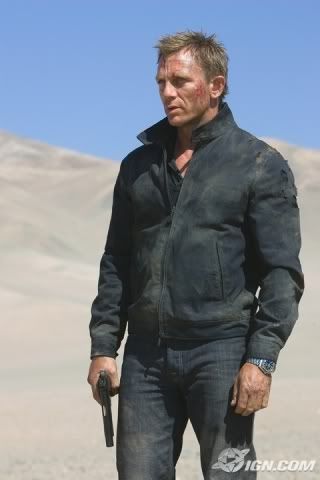
But there is a major problem with Quantum... which dims the viewing experience, that being the slap-dash way that director Marc Forster and his second unit director Dan Bradley (who stunt coordinated the "Bourne" and last couple "Spiderman" movies) have staged and assembled the action sequences--and there are a lot of them--on land, sea, air, and fire, by foot and all manner of motorized vehicles. These sequences are nearly incomprehensible, with a rapid pace that does not allow the distinguishing of any participant or the context in which they're being done. A good action director allows the time to register surroundings and environment, and provides the context of relationship--who's doing what to whom and where. It's that information that provides suspense. Without that information, it's just fleeting images that don't add up—in other words, a trailer. What Forster and Bradley may be trying to do is put the audience in the same dizzying, disoriented position as Bond, but even then, there are times when there isn't enough context to inspire alarm. At one point, in one of the hand to hand fights it becomes apparent that, suddenly, one of the combatants has acquired an axe. There was just enough time for me to register that perhaps the film would be better if it were edited with that. The shame is that a lot of work went into these sequences--QOS is the most expensive Bond film while simultaneously being the shortest--and a couple of marvelous shots that literally tumble along with Bond merely disorient, rather than thrill, as you're not allowed to see the original position from where these shots start. At the end of it all, you're left with a battered Bond but absolutely no idea how he got that way.

This is a major mis-step. These are suspense films, after all. But in pushing the envelope of how fast to take these action sequences, post-Bourne, the film-makers have reached the point where they are no longer telling a story, no longer communicating with the audience, at which point they've failed in their own mission.

I'm not even sure what is to be gained by seeing Quantum of Solace in a theater, even in the back row. The best way to get anything out of the action is to watch it at a slower speed on DVD.


Hence, "Quantum of Solace" is a Rental.


Two of examples of the subliminal editing style of Quantum of Solace.


* The name is taken from a Fleming Bond short story in which Bond merely sits and listens to a tale of a marriage turned ruinous, and a "quantum of solace" is the smallest particle of comfort one can derive to keep it going. The only Bond titles left to be used are "Risico," "The Property of a Lady," "The Hildebrand Rarity," and "James Bond in New York," none of which is a "grabber" of a title, or would make a good song. But then, who thought you could do anything with Thunderball? Passing a reader-board for another theater en route to the Cinerama, it read simply "007."

** "What, he's gone 'rogue' again?" is what a friend said after seeing the trailer. Bond had already done something similar in the Timothy Dalton-starring Licence To Kill, which combined equal parts "Miami Vice," Yojimbo, and elements of the Fleming novel, "Live and Let Die."'


*** Director Marc Forster used directors Guillermo del Toro and Robert Rodriguez as voice-actors on this film, and the "director" connection applies to a henchman called "Elvis" who reminds one of Quentin Tarentino. What with the "colorful" names of the villains, ala Resevoir Dogs and the producers' history with QT--he famously announced that he wanted to make "Casino Royale" with Pierce Brosnan and griped about not getting the chance--it wouldn't be too far afield to think he was being tweaked.


**** I've since been told by one of the "Opening Night Regulars" I see the Bond's with, that a sequence resolving their stories (all one minute of it) was left on the cutting room floor, giving the producers a chance to start afresh next film, rather than continue with yet another sequel
.


Casino Royale (2006) Revisited

Breaking Bonds

Is it that good?
Short answer: yes.
Is he that good?
Yeah. He's the best thing about it. There are other good things as well, but let's look at Bond 6.0.


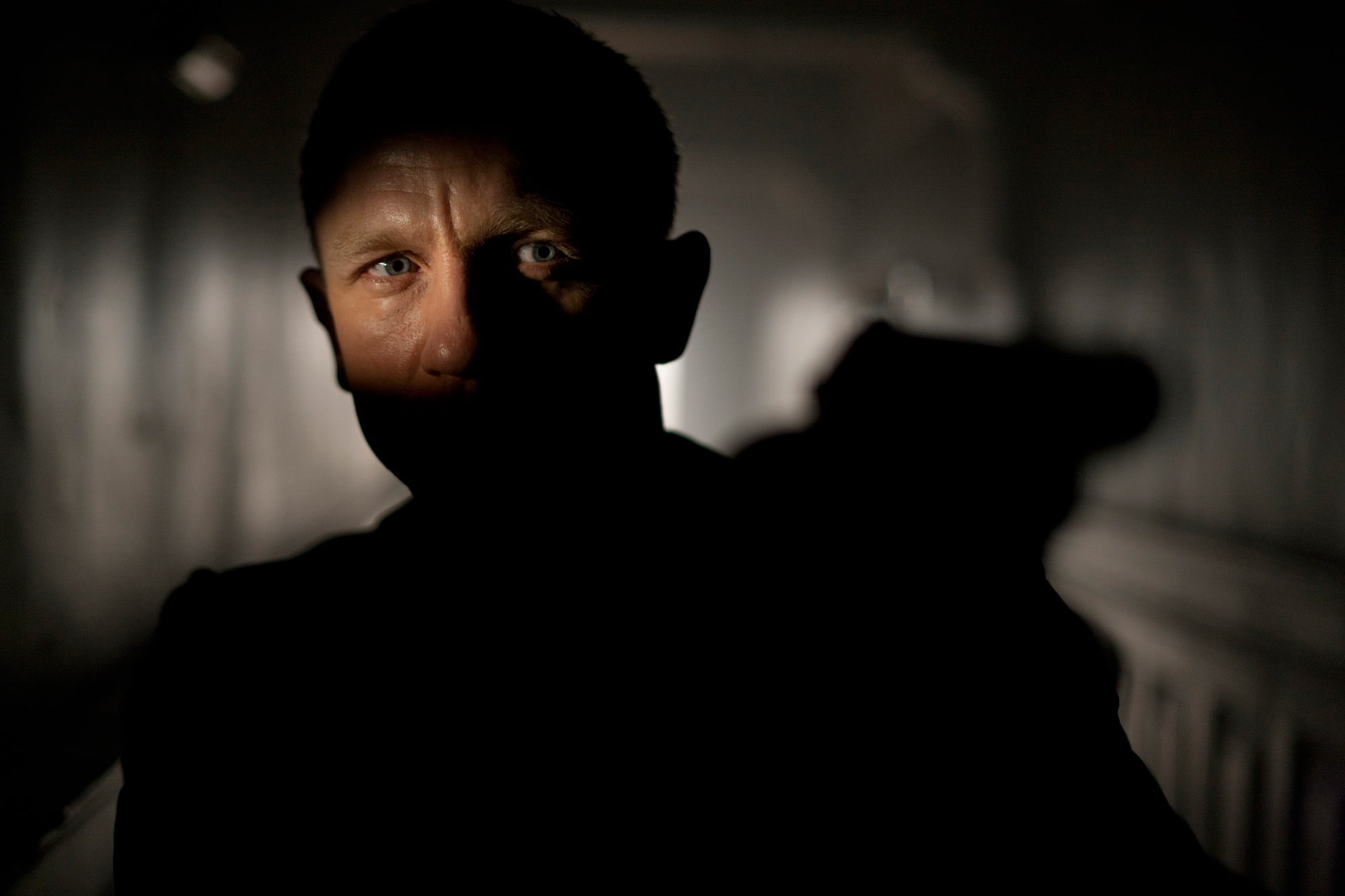
Not conventionally handsome, not the Arrow-shirt version of Bond, Craig has a multi-planed face that's great to watch whether it's jammed up against a shattered bathroom mirror considering just how much pressure it's going to take to strangle an assailant* or, half-a-movie later in another bathroom mirror, clearly satisfied with himself in a newly-tailored tuxedo jacket. His acting choices are subtle, nicely measured. His atypical look is just one of the many breaks from the past in a series that has not only embraced clichés, but luxuriated in them, and would even occasionally ham-string a promising entry to accommodate them (quite opposite from the early intentions of the producing team, which was to go against the grain of conventional thrillers--something not to far afield from Fleming's literary intentions--and surpass them, and in that regard, Casino Royale is the first film since Goldfinger to actually improve on its source.) The films are, after all, about Bond, so you'd better have somebody interesting in the lead, and Craig's Bond, his face becoming criss-crossed with scars as the movie progresses, makes you care just how much of a toll the mission is taking on him, both physically and psychologically. When was the last time anybody gave a damn about James Bond's soul in the movies?

In this "reboot" the clichés are dusted off, their origins shown and exposed for the good ideas they once were. The stunts and longish action sequences are still there, but they're used, at their best, to expose character.** There are gadgets, but nothing you couldn't find in catalogs this Christmas (technology has long since caught up to Bond with cell-phones, GPS tracking and personal defibrillators). "The James Bond Theme" is merely hinted at in the body of the film and in the "Secret Agent Man"-ish title song*** (growled by home-boy Chris Cornell), and saved for the end with a fully formed (for good and ill) Bond.

As good as Craig is, he's matched by his co-stars. Mads Mikkelson as LeChiffre has a nice, oily quality to him, and certainly projects the most danger to Bond since Robert Shaw's Red Grant (in From Russia With Love), The only cast member retained (so far) from the Brosnan films is Dame Judi Dench, whose "M" is finally given the authoritative role over Bond that Bernard Lee once had, rather than seeming like Bond's subordinate.

And the Bond-"girls?" Well, there is Ivana Milicevic, who's there mostly for decoration. But Caterina Murino certainly can act, and brings a nice world-weary resignation to the role as a terrorist's wife out for some revenge. But the revelation here is Eva Green, who's Vesper Lynd manages to flesh out the cypher that Fleming created. A mystery in the book, Green conveys a genuine human being, and her scenes with Craig are some of the best written exchanges (and are cracklingly well delivered) in the series, and includes one heart-breaker of a scene, after a brutal fight in a stairwell. It's so moving and so well-done that it's surprising to see it in a Bond movie.

And that's the thing: there has always been a great deal of disparity between what constitutes a "Good James Bond Movie" and a genuinely "Good Movie." And this is a "Good Movie"...which happens to have James Bond in it...that can stand as a fine drama, AS WELL AS holding its own in the adventure/action aisle. I didn't cringe at a performance or roll my eyes at a joke once and if there was one thing I was dissatisfied with it might be the small amount of screen-time given to Jeffrey Wright...and maybe tweak the ending a bit. Credit the writers (regulars Purvis and Wade and the ubiquitous Paul Haggis), the director (Martin Campbell, who did "Edge of Darkness") and super-editor Stuart Baird. This is going to be a fun one to watch slowed down on DVD. Oh, and "Cubby" Broccoli's kids, who followed up one of the most profitable movies in the series (the loud, obnoxious video-gamer Die Another Day) with this one, that challenged, re-wrote, and kept the edge of Fleming's writing, when the temptation might have been to cash in on what worked before with just more of the same. 

Talk about gambling...

Casino Royale (2006) is a Full-Price Ticket to be chased by a large tumbler of Scotch and a warm, comforting shower

The View from 2012:  It still holds up, and if there are three great Bond films, Casino Royale would be firmly there, hovering near, if not holding, the top spot.  Craig has proven to be a boon to the series, raising the bar, advising, bringing in top-drawer talent, and raising the entire series' image in the larger movie community.  One might even consider him indispensable (but that idea has been disproven before), which is a far cry from the derision that was tossed out when his choice was first announced.


* Oh, did I say "strangled?" There's a lot of very brutal violence in this movie (not just card-playing in tuxedos) that managed to skirt by with an inexplicable PG-13 rating, including a scene where Bond is stripped naked, tied to a seat-less chair, and has his testicles beaten with a very heavy, very gnarly knotted rope--a scene that should send any 13 year old boy running for the bathroom. This is not the clean "one-shot/no-blood" violence of past Bonds. Here the violence is fast, painfully brutish and bloody. Be warned.

** There is a wonderful moment when Bond has just (barely) foiled an attempt at industrial espionage, where he cocks his head, exhausted, at the untouched target and quietly marvels at what he's done.

*** The title sequence is also unique--gone are the writhing go-go girls--but it should delight anyone who grew up with the imaginative main titles of many a 60's spy series.

Friday, January 6, 2012

My Week with Marilyn

The Battle of Mrs. Miller ("Whose Side Are You On?")
or
"What Becomes a Legend Most?"

"We are such stuff as dreams are made on" says Prospero in "The Tempest."  Prospero and Shakespeare run through My Week with Marilyn (the latest confection of young love and fictionalized reality—with appearance by Judi Dench—from the Weinstein Company) like Caliban, a spirit of confused form and intent in Shakespeare's play.  All the revelers in Simon Curtis' film (written—especially well by Adrian Hodges) are real, based on real individuals and events, but how true they are to the source is questionable, given as they are to interpretation and expectations, and to the dreams of the particpants, for whom the movies and fame is a business, an art, as well as personal obsessions.

None more so than Norma Jeane Baker, who inhabited our world and our dreams as Marilyn Monroe, a free spirit trapped in prison bars formed of klieg lights, a vessel that men poured their love and lust onto and women their princess dreams of being the most popular girl in the world.  Heavy, heavy burden, that, and she bore it from the lowliest, sleeziest agent in Hollywood to Kings of the Sports World and Men of Letters.  She also bore it from other film stars, who looked at her fame and wanted a piece of it (and maybe her, as well), including Sir Laurence Olivier, who insisted on casting Marilyn in his production of The Prince and the Showgirl, a trifling movie if ever there was one, despite being written by Terence Rattigan. 

What Marilyn saw in doing the movie was obvious; she was working with the world's greatest Shakespearean actor and director on a film written by an acknowledged writer.  Why Olivier wanted to do this is less so: financial success for his unbarded film; name recognition to draw the crowds for a film out of his metier; maybe he just wanted Marilyn, as so many men did, and the new bride of American playwright Arthur Miller (not the best looking guy in the world) might have provided a world to conquer for the actor who played so much ambitious Shakespearean royalty.  Whatever the reason, Olivier was constantly frustrated with the fragile, neurotic actress, who had other concerns besides working with the exacting director—it was the only film she made outside of her protective home studio, 20th Century Fox, the only film she made outside of the United States, and the first film of her fledgling production company—all unique concerns that might have distracted the actress, on top of her new marriage to Miller and a hushed-up pregnancy during filming that resulted in a miscarriage.

The film that Hodges and Curtis have crafted from the events and a tell-all written about it by filmmaker Colin Clark (played by Eddie Redmayne), is one of the better ones to be made of this type.  Casting has a lot to do with it.  Michelle Williams is not the first person I would picture as Norma Jean, but the versatile actress manages to capture the presence of the human being at the core of the star and suggest the winsomeness that charmed so many in her orbit.   Kenneth Branagh has been linked with Olivier for most of his career, paralleling the legendary thesp by making his own film directing debut with a gritty, strapping version of Olivier's own first directorial effort of Henry V.  His portrayal of Olivier might seem too easy, but there was nothing about the man that was 'easy," and Branagh has a fine time, mixing Olivier voices, accents, and mercurial swings throughout the film—his Olivier is never consistent in mood, manner or method, just as you'd expect a Master Thespian to be (he maximizes the precision of great lines like "Teaching Miss Monroe to ACT is like trying to teach URDU to a BADGER!").  Rounding out the cast are such fine performers as Toby Jones (hilariously indecent as Marilyn's publicist and future Planet of the Apes producer Arthur P. Jacobs), Dench—playing a woman she once acted with, Dame Sybil Thorndike, Dougray Scott as Arthur Miller, and Weinstein go-to girl Julia Ormond as Olivier wife-partner, Vivien Leigh, as well as turns by Zoë Wanamaker, Derek Jacobi, Emma Watson, and one of my favorites, Michael Kitchen.  Redmayne is fine and callow, as he's supposed to be, eyes always a little bit wide at a new turn of events in the film business, and a tentative, crooked half-smile his constant fall-back.

The script is full of great zingers about fame, fortune, the madness of the movie business, and how hard people work to make things look effortless (and on-time), as well as loads of gossipy references for "the blue-hairs."  It also has a nice undercurrent that touches on fantasy and reality—hence the Prospero—and the process by which reality and the illusion of reality can really mess us up...if we believe our own "press."  Sometimes the illusion of reality is nothing more than fantasy—the very stuff that dreams are made on.  And the makers of fantasy are just as susceptible as the rest of us—maybe even more.  My Week with Marilyn brings to the imagination such thoughts, beyond just being a tale of the Myth of Marilyn. 

She did exist in reality.  And her reality had little to do with her fantasy.  The camera loved her.  And that's what killed her. 

My Week with Marilyn is a Full-Price Ticket.


Marilyn...in the wind.
 

Tuesday, January 22, 2008

Notes on a Scandal

"Notes on a Scandal" (Richard Eyre, 2006) There's a sub-category of movies that always sends K. and I into fits of giggles. It started when we saw (take a breath) Kenneth Branagh's film of Francis Ford Coppola's production of "Mary Shelley's 'Frankenstein.'" (whew!) We'd enjoyed Coppola's "Bram Stoker's 'Dracula,'" and liked Branagh's earlier films. But something about this "Frankenstein" went seriously off-the-rails. It seemed like every performance was delivered at fever-pitch (except for John Cleese, who drastically underplayed to avoid Python-esque associations), Branagh's direction was a combination of Brian DePalma swoop-and-carousel moves and Michael Bay "shudder-shots," and Brian Doyle's score was dialed up "to 11." After awhile, she and I turned to each other with our eyes wide, and I said "I think everybody in this movie needs a good night's sleep!" and from then on, we couldn't take the movie seriously anymore.

Everybody in "Notes on a Scandal" needs a good night's sleep. It's a bit like "Snow White" done as an urban British drama. Except "Snow" isn't quite as pure. Here's the gist: Judi Dench plays Barbara, an embittered veteran school teacher, who develops a fixation on Bathsheba (Cate Blanchett), a new art-teacher in school. Sheba, as she's know, begins an affair with one of her young students, which becomes known to Barbara quite early on. Barbara then devises a scheme to blackmail a relationship with Sheba and drive a wedge between her and her family, with the aim of having Sheba for herself. It's a joy (and a scary thing) to see Judi Dench turn on the after-burners and go into full "battle-axe" mode. Her Barbara is the creepiest creation since Anthony Hopkins' Hannibal Lecter, with the added element of a pathetic (calculated?) vulnerability, and she's matched by Blanchett's distracted portrayal of the flibbertigibbet Sheba. There's one scene where both women go into an acting fever-pitch and its a bit like watching the performances fuse into one that's fascinating to watch, but makes you want to pull the "Emergency Stop" cord. And the hysteria is pushed at every hint of motion by Philip Glass' galloping score, even when it seems entirely gratuitous. It makes you want to back away slowly, get behind a locked door...and get a good night's sleep.