Showing posts with label Martin Campbell. Show all posts

Wednesday, October 10, 2012

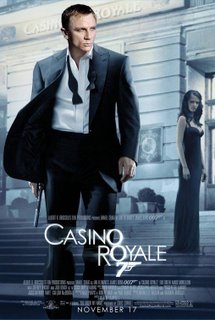
Casino Royale (2006) Revisited

Breaking Bonds

Is it that good?
Short answer: yes.
Is he that good?
Yeah. He's the best thing about it. There are other good things as well, but let's look at Bond 6.0.


Not conventionally handsome, not the Arrow-shirt version of Bond, Craig has a multi-planed face that's great to watch whether it's jammed up against a shattered bathroom mirror considering just how much pressure it's going to take to strangle an assailant* or, half-a-movie later in another bathroom mirror, clearly satisfied with himself in a newly-tailored tuxedo jacket. His acting choices are subtle, nicely measured. His atypical look is just one of the many breaks from the past in a series that has not only embraced clichés, but luxuriated in them, and would even occasionally ham-string a promising entry to accommodate them (quite opposite from the early intentions of the producing team, which was to go against the grain of conventional thrillers--something not to far afield from Fleming's literary intentions--and surpass them, and in that regard, Casino Royale is the first film since Goldfinger to actually improve on its source.) The films are, after all, about Bond, so you'd better have somebody interesting in the lead, and Craig's Bond, his face becoming criss-crossed with scars as the movie progresses, makes you care just how much of a toll the mission is taking on him, both physically and psychologically. When was the last time anybody gave a damn about James Bond's soul in the movies?

In this "reboot" the clichés are dusted off, their origins shown and exposed for the good ideas they once were. The stunts and longish action sequences are still there, but they're used, at their best, to expose character.** There are gadgets, but nothing you couldn't find in catalogs this Christmas (technology has long since caught up to Bond with cell-phones, GPS tracking and personal defibrillators). "The James Bond Theme" is merely hinted at in the body of the film and in the "Secret Agent Man"-ish title song*** (growled by home-boy Chris Cornell), and saved for the end with a fully formed (for good and ill) Bond.

As good as Craig is, he's matched by his co-stars. Mads Mikkelson as LeChiffre has a nice, oily quality to him, and certainly projects the most danger to Bond since Robert Shaw's Red Grant (in From Russia With Love), The only cast member retained (so far) from the Brosnan films is Dame Judi Dench, whose "M" is finally given the authoritative role over Bond that Bernard Lee once had, rather than seeming like Bond's subordinate.

And the Bond-"girls?" Well, there is Ivana Milicevic, who's there mostly for decoration. But Caterina Murino certainly can act, and brings a nice world-weary resignation to the role as a terrorist's wife out for some revenge. But the revelation here is Eva Green, who's Vesper Lynd manages to flesh out the cypher that Fleming created. A mystery in the book, Green conveys a genuine human being, and her scenes with Craig are some of the best written exchanges (and are cracklingly well delivered) in the series, and includes one heart-breaker of a scene, after a brutal fight in a stairwell. It's so moving and so well-done that it's surprising to see it in a Bond movie.

And that's the thing: there has always been a great deal of disparity between what constitutes a "Good James Bond Movie" and a genuinely "Good Movie." And this is a "Good Movie"...which happens to have James Bond in it...that can stand as a fine drama, AS WELL AS holding its own in the adventure/action aisle. I didn't cringe at a performance or roll my eyes at a joke once and if there was one thing I was dissatisfied with it might be the small amount of screen-time given to Jeffrey Wright...and maybe tweak the ending a bit. Credit the writers (regulars Purvis and Wade and the ubiquitous Paul Haggis), the director (Martin Campbell, who did "Edge of Darkness") and super-editor Stuart Baird. This is going to be a fun one to watch slowed down on DVD. Oh, and "Cubby" Broccoli's kids, who followed up one of the most profitable movies in the series (the loud, obnoxious video-gamer Die Another Day) with this one, that challenged, re-wrote, and kept the edge of Fleming's writing, when the temptation might have been to cash in on what worked before with just more of the same. 

Talk about gambling...

Casino Royale (2006) is a Full-Price Ticket to be chased by a large tumbler of Scotch and a warm, comforting shower

The View from 2012:  It still holds up, and if there are three great Bond films, Casino Royale would be firmly there, hovering near, if not holding, the top spot.  Craig has proven to be a boon to the series, raising the bar, advising, bringing in top-drawer talent, and raising the entire series' image in the larger movie community.  One might even consider him indispensable (but that idea has been disproven before), which is a far cry from the derision that was tossed out when his choice was first announced.


* Oh, did I say "strangled?" There's a lot of very brutal violence in this movie (not just card-playing in tuxedos) that managed to skirt by with an inexplicable PG-13 rating, including a scene where Bond is stripped naked, tied to a seat-less chair, and has his testicles beaten with a very heavy, very gnarly knotted rope--a scene that should send any 13 year old boy running for the bathroom. This is not the clean "one-shot/no-blood" violence of past Bonds. Here the violence is fast, painfully brutish and bloody. Be warned.

** There is a wonderful moment when Bond has just (barely) foiled an attempt at industrial espionage, where he cocks his head, exhausted, at the untouched target and quietly marvels at what he's done.

*** The title sequence is also unique--gone are the writhing go-go girls--but it should delight anyone who grew up with the imaginative main titles of many a 60's spy series.

Saturday, June 18, 2011

Green Lantern

"In Dullest Day, the Weakest Light..."
or
"Oa, the Humanity!"

When the silver-age of comics began in the late 1950's, the '40's age of super-heroes were being replaced with westerns, horror and science-fiction tales.  So, those earlier mystery-men were re-incarnated with sciency origins that no longer depended on mystic powers and a sense of right-and-wrong.  Befitting the times, the original Green Lantern was a railroad engineer, who happened upon a mystic rune that gave him extraordinary powers.  The modern GL was a test-pilot, bequeathed a magic ring by a dying alien who'd crash-landed his spacecraft while on patrol.  As the story progressed, the pilot Hal Jordan, found he had been made a part of an intergalactic police corps (based in no small part on E.E. Smith's "Lensmen" series and its "Galactic Patrol") led by a clutch of identical blue-skinned big-headed "Guardians of the Universe," who supervised the Corps on a planet in the middle of the Universe, Oa, where was built the Corps central battery from where all green power originated.  There are a lot of Green Lanterns, patrolling every corner of the Galaxy.  And they had two weaknesses: you had to recharge the ring or it would run out of juice after 24 hours, and it didn't work on anything yellow.

That's a lot of back-story.  Probably too much for one movie, and it pushes the credibility envelope that science-fiction movies can push before leaving general audiences in an anti-matter cloud of skepticism, if not downright derision.*  And the movie version of Green Lantern, written by a bullpen of the comics' writers crams enough emerald exposition to make any viewer green around the gills.  I know there are a lot of fan-boys out there who will probably cry crocodile tears if their favorite Lantern isn't in the movie (where's Ch'p?  And G'nort?), but it's only a two hour flick—you can't put the whole Universe (and Mogo) in it, though this one tries (Me, I just wanted to see that staple of Hal Jordan tricks—he can create anything he wants, and the thing he uses the most is a boxing-glove—I was not disappointed).


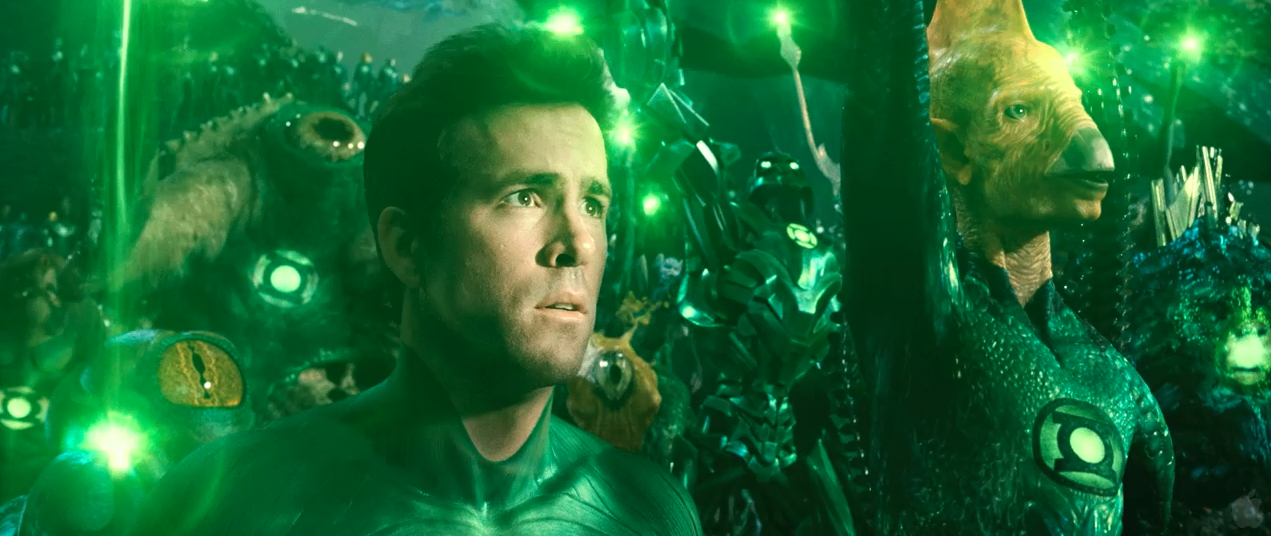
It took the rest of the movie to do that.  TMI is the least of this movie's problems.  As much as it pains me to say it, Green Lantern just isn't very good.  Casting is fine: Ryan Reynolds makes a great Hal Jordan, Blake Lively is merely okay as over-dependent on-again/off-again g-f Carol Ferris, and Peter Sarsgaard has a fun time screwing around with arch-villain Hector Hammond, affecting a John Malkovich whine before he turns into an über-brained cross between Joseph Merrick and Truman CapoteMark Strong does nice work as the devilish looking "bad" Lantern Sinestro.  And with that, it's a kick to see some of these characters brought to life.

But...it needs a bit of a power battery charge.  The pace is a little sluggish**—with all the global and galactic goings-on, there's a little too much Carol Ferris interaction for the movie's own good—she's not as integral as, say, Lois Lane is to Superman, and she never really came into her own as a character until she became a super-hero, too (don't ask), and it's not as if Blake Lively was demanding that she had more to do.  Fact is, the scenes between Reynolds and Lively are the worst of the picture, as they're stuck with Screenwriter 101 dialog*** and little chemistry between them to make it in any way interesting.****  The tone is just a little too proud of itself—the Corps is taken VERY seriously, even though that's the part that should have been the most fun, and although Hal Jordan has the most wise-cracks with his "fish-out-of-water" learning curve, this is the latter-day mythos Jordan, suffering from "The Marvel Curse" of being angst-ridden over some lack in his life, in this case "absent-father" syndrome.

And The Guardians are even worse useless ideologues than they are in the comics, their pretentious dithering and superiority making their scenes sound like they were transcripts from the U.N.

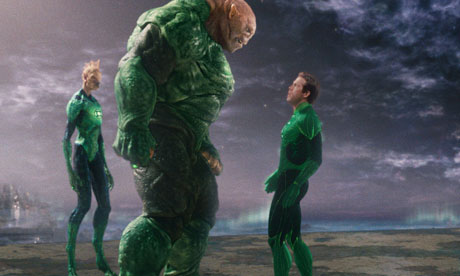
But, there's something else about The Guardians that solved the riddle of what bothered me about the movie from the start.  It's one of the darkest movies I've ever seen, as if it was a 100 watt movie projected with a 20 watt bulb (I saw it flat, so I can't imagine what the 3-D version, which is always less bright, must be like).  There is just no "brightest day" in Green Lantern. It's when The Guardians show up on their too-high-seats (that should give you a clue about them) and you can barely make them out—they look plasticine and animatronic, less life-like than the Lincoln at Disneyland.  But that's not the worst of it, the sight of the entire Corps must surely be impressive, but you get the sense that the crowd scenes are merely composed of randomly moving blobs, and the design of the main bad-thing, Parallax—a Guardian possessed of the essence of fear—looks like a particularly gnarly piece of Brillo-pad that's been set on fire, with a blocky Mt. Rushmore face in the middle of it.  It all points to one thing—the FX shots are substandard enough that the film-makers—partcularly director Martin Campbell, who directed (and invigorated) the two best Bond movies of the past 20 years had so little confidence in so many of these shots that the entire film has been desaturated to keep the bad shots from standing out from the goodIt's not all bad.  The FX-wizards did impressive work with the GL costumes (completely CGI) and the couple of Lanterns that we see wellTomar-Re (voiced by Geoffrey Rush) and D.I. Kilowog (Michael Clarke Duncan)—some of the flying works, but the landings are a little rocky.  But the ring-constructs are kinda dull (that's the scripters' fault)...lasso's and jets and guns and...Hot-Wheels tracks???  If we're doing product placement how about beating people over the head with a bottle of Coke (label out)?  "The only limits are what you can imagine."  Earth is in trouble.  But the retailers should do fine.

But, I think the worst thing about Green Lantern is that nothing resonates, nothing inspires, nothing evokes a sense of wonder or service.  Nothing even made me crack a smile—except that the green energy coming from the most powerful accessory in the world is apparently painful (as well it should be).  As a fan of the comics who wanted it to be good, watching the movie was painful for me.

Now, if you would, please repeat after me Yojimbo's empowering adaptation of the Green Lantern oath:


"In dullest day, the weakest light,
the SFX might look all right.
To cure the need to see the sight
of comic-flicks...
Green Lantern might."

Because it's just a Cable-Watcher.


"Green Lantern ponders the Universal Question: "why is there so much yellow paint in the world?"


* The secret is to couch your sci-fi in legend or familiar genres—so Star Wars gets a pass because it borrows liberally from westerns, samurai movies and old sci-fi, but A.I. Artificial Intelligence featuring robot-mother-love, melted ice-caps and "the mechas will inherit the Earth" provokes superior chortling.
** But then, so's Hal.  A couple of times during battle scenes I was thinking, "This guy can jet across the Galaxy.  Shouldn't he be showing up now, before anybody gets killed?"

*** "Nice." "Impressive, isn't it?"  "I was talking about your dress."  Really?  Is that a line they use at Comic-con's?

**** The only interesting aspect to her is that she sees GL is Jordan almost immediately: "I've seen you naked, you think I wouldn't recognize you by hiding your cheek-bones?"  Good point.  Although he DOES lower his voice as is par for the course in superhero movies. 

Tuesday, February 2, 2010

Edge of Darkness (2010)

"Losing Your Edge"*
or,
"I Love the British. They Deserve the Falklands."
**


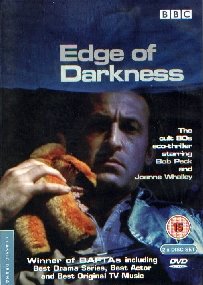
Those who've been reading LNTAM for awhile know of my deep and abiding love for the 1985 British mini-series "Edge of Darkness," Troy Kennedy-Martin's attempt to "politicize" the police procedurals that had become so prominent on the BBC. Martin took the standard murder mystery and made it a comment on the Thatcher era of politics,as well as on the growing nuclear industry in Britain and the apparent entanglements of British and American interests. Then, with director Martin Campbell, it became something more: not only a murder mystery, but a ghost story, a psychological drama and an almost mythological fable, with the Earth itself as a participating character in the balancing of the scales of justice. It also had strains of comic loopiness amid the gritty brownstones and harsh fluorescent lights of urban crime investigation, and an overall tragic tone of inevitability. Over six hours, it covered a lot of ground above and below the surface.

Campbell desired for many years to make a film of it and with his box-office clout resulting from resurrecting the Bond franchise with "Casino Royale," he has finally managed to do it, bringing along many members of his Bond-team, including cinematographer Phil Meheux, editor extraordinaire Stuart Baird and costumer Lindy Hemming. Adapted by Andrew Bovell and William Monahan (he wrote "The Departed"), I've been curious (with an undercurrent of dread) of what the new version of one of my favorites would be like.

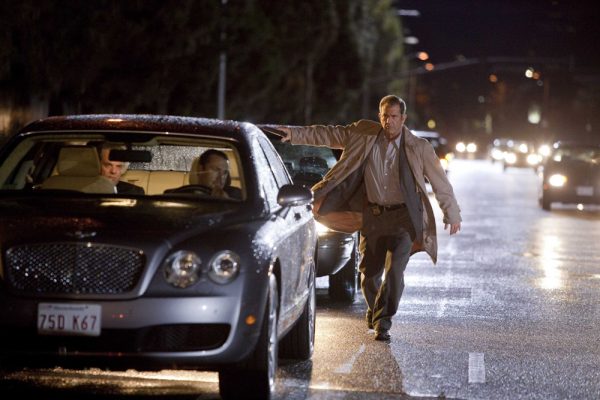
Well, this "Edge of Darkness" is not as good as the original, compressing and tossing a lot of the story to accommodate a two hour length. But, it's not half-bad either—efficient, taut, and, if you're paying attention, weaving its own commentary on the bad marriage between government and industry, especially in the post-911/W.years in which it is set. Gone is the humor, the tilted quality, the psychology and the Big Picture aspects of the tale. The ghost story is given up, as well, but it still manages to have the haunted quality of the original, while buttoning up the story for a less-delayed, more visceral conclusion.

Thomas Craven (
Mel Gibson) is a widowed detective in the "Bahston" police force, welcoming his daughter Emma (Bojana Novakovic) home from a long absence. She's been using her Masters of Science degree interning at a local facility, the Northmoor nuclear facility working on cold fusion energy production ("It's very green," says its slimy CEO Bennett, played by a dead-eyed Danny Huston). But, at dinner, she begins to vomit uncontrollably and as Craven is desperately trying to take her to the hospital, they are attacked in the night. A single yell—"Craven!"—pierces the darkness and Emma is shot-gunned, mortally wounded.

The conventional wisdom is that it is one of Craven's enemies seeking revenge and missing his target, combining murder and accident.
But Craven doggedly pursues clues, haunted by his daughter's memory, to pursue the assassin and get justice. Very quickly, the murder weapon and an old perp of Craven's is found—dead of a particularly nasty head-wound—the case apparently closed.

But not so fast. Acting alone,
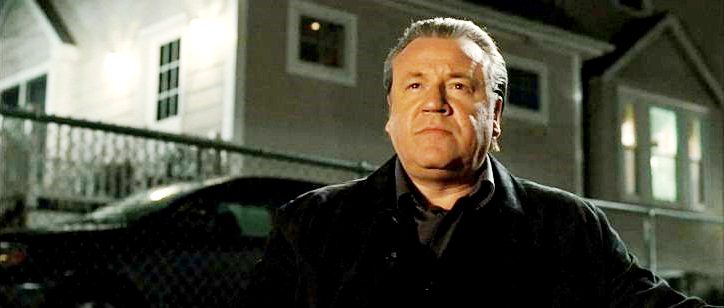
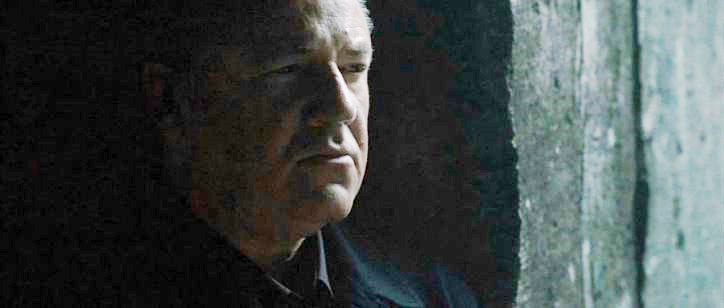
Craven digs further into Northmoor and his daughter's recent past to find out what happened, her cell-phone leading to a line of suspects that he questions seeking the truth. His lone-wolf quest puts him on the radar of Northmoor's private security firm and the U.S. government, particularly a "cleaner" named Darius Jedburgh (Ray Winstone), who makes his own inquiry, deciding if Craven should be allowed to proceed further or be stopped.

That's pretty much the opening thread of the original, too, except that the locales and characters are different. In the mini-series, British Intelligence is following Craven's investigation and they bring C.I.A. operative Jedburgh to provide Craven with information—a situation that creates an odd bond between the two men. In the original,
Ronnie Craven is fragile, having had a break-down when his wife died, and keeps himself together by suppressing his emotions, except for the odd conversation he has with his dead daughter, whose clues lead him to different corners of the investigation. That may be his mental condition coming to hand, but it might not. He also has to deal with the guilt of being part of the authority that his activist daughter is working against. But Tommy Craven, of this version, is a coiled spring that only loosens in moments of extreme violence, periodically reliving his memories of his daughter and anything she says is non-specific to the case. A similar scene of Craven identifying his daughter's body is handled completely different. When the morgue nurse attempts to cover Emma's face after the identification, Gibson's Craven suddenly and violently hisses "Leave her alone!" Bob Peck's reaction was a loud wounded animal howl—"Leeeeave her!"

Jedburgh is a different creature, as well.
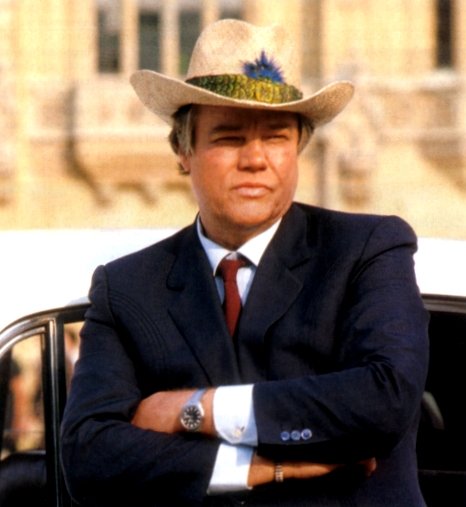
Joe Don Baker's C.I.A. operative from the mini-series was a loud, Stetson-wearing Texan who waxed philosophically on the roots of all problems, arcane and mundane. Ray Winstone's British character is a low rumbling bear with a lower class argot, a disappearing act and an expression that gives nothing away but by what he says. In the mini-series, Craven and Jedburgh team up as an assault force to get clues, but in the 2010 film, they play opposite sides, aware of each other's presence and linked by common maladies and points of philosophy. The character is still amusing, but not a tragic-comic high wire act the way Baker played him.

Tommy Craven (rather than his older mini-series brother Ronnie) is more aggressive, and frequently yells his dialogue in a cynical sneer ("I'm the guy with nothing to lose and I don't give a shit. So, fasten your seat-belt"), and, since there's less of a mystery to be solved due to the thuddingly obvious machinations of the bad guys, it all boils down to one man seeking revenge, something that was out of the question in the original. Those action set pieces are stunningly conceived and delivered by Campbell and shaped by Baird into especially visceral short bursts, with one bit of film mayhem coming so fast and so out of the blue that it practically knocks you out of your theater seat. It's refreshing in these days of salad-shooter editing to see fast, punchy dust-ups (and wet-works) that one can actually follow and has so much impact.

The new version is probably more satisfying for contemporary audiences jacked up on Red-Bull and obsessed with "closure;" I, for one, enormously enjoyed the hopeless quality of the original's ending with its ghoulishly ironic end-joke (which made everything all right in my eyes). But, the politics are still there, and this "Edge" does a fine job of being morphed into something for its time, with its stated philosophy of "
It's not what it is—it's what it can be made to look like." In other words, you can have your yellow cake and eat it, too. Words to live and die by.

So, take it for what it is, it's a good boiling down and re-vamping, which has the dual effect of making it both fresh and too familiar, as so many things that made the original unique have been jettisoned out the old chute. But, as a display of technical craftsmanship, it is quite impressive.
***

"Edge of Darkness" is a Rental.


* I've known, ever since this project was announced, that whatever was done with it, it couldn't impact my admiration for the original mini-series. And it doesn't. It's like the story of a visitor to Raymond Chandler, asking him if he he felt bad about what the movies had done to some of his novels. Chandler took the guest into his library. "They haven't done anything to my novels," he said. "Look. They're still there." The mini-series is still a classic. And this one is good for what it is.

** A line from the original's Darius Jedburgh (played brilliantly by Joe Don Baker), as he and Craven sit, watching a dancing competition on the telly. "Look at that," says Jedburgh, before that particular line. "They don't have anything like this in the States." Well, they do now.

*** Since writing this, I've been looking at a smattering of reviews, and finding myself appalled. First off, a lot of reviewers seem to see this as a Mel Gibson production. It isn't, and although it makes it easier to knock the film if you mis-characterize it as such, Martin Campbell directed it. And too many reviews have led off with "Mel's being a martyr again" (which I suspect were cribbed from one AP review) which may be so, but he's got a way to go before he beats Charlton Heston's record. Quite a few get it wrong to compare it to "Taken." "Edge of Darkness" isn't very original, no. It's based on the 1985 British mini-series (that's been established). "Taken," however, isn't the heighth of originality, either, as it's a contemporary urban version of "The Searchers." Finally, what genius over at "The Atlantic" hired Ed Koch to review movies, as he displays that he knows nothing about them? "How're you doing, Ed?" Badly.


Tuesday, May 12, 2009

Anytime Movies Reloaded: Edge of Darkness

It's Spring-Break for me. Times are busy. The Summer Movie Season is already begun (and I'll be writing about the new ones) and the Film Festivals are grinding away like creaky mills separating wheat from chaff. It's as good a time as any to re-boot a feature I started years ago, when it was suggested I do a "Top Ten" List.

I don't like those: they're rather arbitrary; they pit films against each other, and there's always one or two that should be on the list that aren't because something better shoved it down the trash-bin.

So, I came up with this: "Anytime" Movies.

Anytime Movies are the movies I can watch anytime, anywhere. If I see a second of it, I can identify it. If it shows up on television, my attention is focused on it until the conclusion. Sometimes it’s the direction, sometimes it’s the writing, sometimes it’s the acting, sometimes it’s just the idea behind it, but these are the movies I can watch again and again (and again!) and never tire of them. There are ten (kinda). They're not in any particular order, but the #1 movie IS the #1 movie. And we begin in as contrary a way as possible—so as to avoid any comparison to a "Top Ten." This one is a bonus. And that's not all:

What the hell is this? It’s not a classic movie!

Oh, it’s worse than that! It’s not even a movie! It’s a British mini-series.

Okay, so what’s so special about it that it squeezes into the “Wild Card” position of the “Anytime Movies” list over, say, “
Casablanca” or “Gone With the Wind,” or your favorite film?

1. It’s a police procedural, as steeped in the gritty realism of shabby interrogation rooms and bad neon-tube-lighting as “
NYPD Blue” or “Prime Suspect.”


2. It’s a spy story, with rogue undercover operatives (particularly an eccentric CIA operative by the name of Darius Jedburgh, played in the performance of his career by Joe Don Baker), chases (two stand out--an edge-of-your-seat hacking exercise, and another through an abandoned nuclear facility) and intrigue on the part of goverment, and commerce.

3. It’s a political thriller, with investigations into government corruption and collaboration with a privatized nuclear industry, that involves Union-busting, suppression of environmental groups, and murder.

4. It’s a revenge story, as a police investigator attempts to find who murdered his daughter...or was the bullet meant for him?.

5. It’s a ghost story, as she keeps coming back to advise and inspire her father’s efforts, as he sinks deeper and deeper into an ever-expanding investigation, that he is being encouraged to abandon.

6. It’s a psychological thriller—because maybe she isn’t really there, and is just a figment of his severe grief.

7. It’s a black comedy—it has some of the most absurd sequences ever put to film (a sumptuous dinner in an underground "hot" room), and some of the funniest lines ("He's in the field," but you have to be there).

8. On top of that, it’s a story of myth, although grounded in reality, for, impossibly, one of the main protagonists (and an alarming participant) would appear to be the Earth goddess, Gaea.


9. It has one of the best performances I’ve ever seen, by the hawk-faced Bob Peck (you might remember him as the big game hunter Muldoon in “Jurassic Park.” You don’t? One line: “Clever girl…” Now you know him)

10. It crosses genres, and expectations and always keeps you guessing not only what will happen next, but what COULD happen next. It seems to revel in going 90° from normal at every juncture. It is truly a thrilling film.

11. It has one of the most down-beat endings ever put to film. But it’s okay—it's assured the bad guys will lose. The Good Earth will win.

Sad to say, there’s no DVD release of this thing in the U.S., although it has been released in Britain. For all the crap out there that has been “digitally mastered,” there evidently is no room for this rough little gem of a movie despite its pedigree of being directed by Martin Campbell, director of two James Bond movies and the two Antonio Banderas Zorro films. One should also make note of the exceptional Troy Kennedy-Martin screenplay, and the music by the late Michael Kamen and Eric Clapton. Peck is gone now, as well, and it would have been nice to see him in other things, so good is he in this. But it’s another in a long string of sad eventualities for this odd, crazy, thrilling piece of film-making.

You gotta love the British. We could never do this in the States.

They deserve the Falklands.


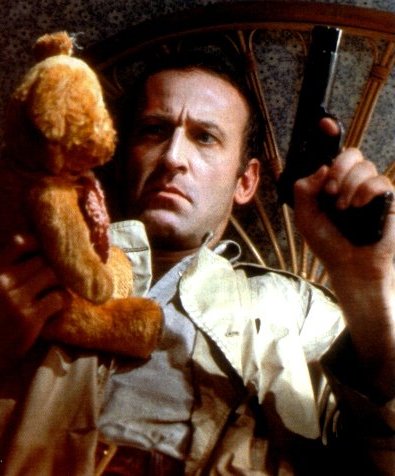
Craven (Bob Peck) finds a gun in his daughter's teddy-bear.

Update: Not precisely true, now. Martin Campbell, the mini-series' original director has long held a dream of making a feature of this, and what with his industry power from directing the two best James Bond films of the past twenty years and a studio film being made of the Brit-series "State of Play," Gaea seemed to be in alignment for this. The film version will be released this year under the same title, starring Mel Gibson and Ray Winstone (replacing Robert DeNiro, who walked off-set over "creative differences"-meaning the famous method actor failed to learn how to chip a golf-ball out of a sand-trap for the role!) Fellow fans are aghast that this is being attempted, and seeing how there is STILL no DVD release of this excellent production, there is fear that this will replace the original and we'll never get to see it released. On the other hand, this may force whoever's holding it up to release the original in order to confuse the DVD-buying consumer. That's how it works.

At any rate, it should be seen.


Northmoor - a site dedicated to "Edge of Darkness"

"Edge of Darkness" at the IMDB

Bonus: Edge of Darkness

Tomorrow: Another British film with nuclear concerns, but a bit lighter in tone.

Thursday, August 21, 2008

Now I've Seen Everything Department: James Bond

In which the author, having seen everything there is to see on the subject makes a capsule* summary of each, looking for trends and contributing what he calls an Ouvre-view.**

Subject: The James Bond Series


"Casino Royale" (Brown, 1954): This one-hour adaptation for live-television's "Climax!" series starred Barry Nelson as "card-sharp" "Jimmy" Bond (American) taking on LeChiffre played by Peter Lorre. Primitive, a bit ill-timed in execution, it is a fairly faithful adaptation of Fleming's story although some liberties had to be taken (Bond's torture: tied up in a bathtub, his toes crushed by pliers (Ah, The Golden Age of Television), Bond never questions his assignment, Vesper lives). A not bad first attempt, but not great, either.00


"Dr. No" (Young, 1962): Sean Connery plays James Bond, Joseph Wiseman is Dr. No, Ursula Andress is...impressive. Armed with a $1 million budget, Bond comes to the big-screen with a heavy injection of humor, a lot more implied sexual activity than in the novel, and genuinely nasty streak in violence. Bernard Lee plays Bond boss "M" with a heavy layer of crust. Bond gets his Walther PPK and ends up in a boat with the girl at the end. Connery's rough around the edges with a soft purr to his voice. Director Terence Young has put a lot of grit into the movie, and Peter Hunt's slash-and-burn editing keeps things moving faster than your normal adventure flick. It's also a bit of a send-up of your normal adventure flick--Ken Adam's flamboyant sets being the most obvious evidence of so many tongues in cheeks. The music is laughable except for John Barry's arrangement of "The James Bond Theme" which is used so much it nearly out-wears its welcome. Introduces S.P.E.C.T.R.E., a world-wide terrorism outfit as a stand-in for the Soviet Union (the producers wanted to court them as a market). 0000000

"From Russia With Love" (Young, 1963): What is Fleming's best novel is given a couple extra surprises mostly in Soviet spies working as double-agents for SPECTRE-chief Blofeld (whose face is not revealed). Casting is top-notch: Lotte Lenya as spy-chief Rosa Klebb, Pedro Armedariz as Our Man in Instanbul, but best of all is Robert Shaw as Grant, assigned to assassinate Bond and discredit him. The Shaw/Connery scenes are genuinely tense culminating in a no-holds-barred fight in the close-quarters of a railroad car. Some spectacular stunt work--and a scene where Bond is pursued amidst hill-tops by a grenade-launching helicopter becomes iconic, which is a nod and a wink to Hitchcock. "Q" is introduced. Bond ends up with girl in boat. 0000000

"Goldfinger" (Hamilton, 1964): There are still thrills, but an extra coat of polish and humor is given this one, which also improves on Fleming, ditching his caper for one that's a bit more practical and scarier. Connery throws in more comic bits of business and plays it a bit more detached, probably because his Bond is a bit passive in the detecting department. Lots more gadgets. That car. That laser. Oddjob and his lethal derby. That little old lady with the machine-gun. Pussy Galore starts the trend towards eye-rolling names. Extended battle sequence at Fort Knox is the first extended battle sequence to climax the movie. 0000000


"Thunderball" (Young, 1965): Gadgets and locales start to crowd out Connery and for the first time, the movie seems like a let-down from Fleming. Starts with a jet-pack escape and ends with an underwater battle sequence that seems to go on forever--underwater ballet with spear-guns. So does the central atom-bomb hijacking that sets the plot...well, one is attempted to say "in motion" but it stops the movie cold. SPECTRE and the man with the cat is back. Connery appears iritated at times. But it is the all-time Bond box-office camp (adjusted for inflation). Bond ends up with girl in boat (until they're whisked away by air-sea rescue, see what I mean about the gadgets?) 00000


"Casino Royale" (Hughes, et al., 1967) Tiresome spoof with an all-star cast (David Niven, Peter Sellers, Orson Welles, Ursula Andress, Woody Allen...Woody Allen?) "Hellzapoppin'" Bond. If only it were funnier. Everyone ends up in Hell (deservedly, I thought) Audience only feels like it. 0


"You Only Live Twice" (Gilbert, 1967): Bond goes to Japan to stop hi-jacked space capsules. SPECTRE's secret HQ is in a big hollowed-out volcano that regularly launches rockets and helicopters. Right, no one'll notice. Finally see Blofeld and it's Donald Pleasance with one nasty scar and the voice of a braying chihuahua. Script logic and any resemblance to the Fleming story go down the ol' lava-tube. Connery hits his marks professionally, but that's about it. Big ninja attack in the volcano!! Goes...on...forever. Bond ends up with girl in a raft. 0000


"On Her Majesty's Secret Service" (Hunt, 1969): Connery's gone, but not for good. George Lazenby is Bond...only semi-good. He looks fine in stunts but so does a 2 x4 when used right. Editor Peter Hunt directs with an eye toward more color and a pell-mell style. Bond undercover to track down Blofeld who's now Telly Savalas. Bond falls in love with Diana Rigg who's groovy, baby. Lots of good skiing action. One bad love-montage with music. No gadgets to be seen. Nice crisp attack on mountain-top HQ, then a big wedding. Bond ends up with dead wife in his car. 000000


"Diamonds Are Forever" (Hamilton, 1971): Connery's back, jowlier and with a greyer toupee. Camp abounds. Effete Blofeld. Gay hoodlums. Big diamond laser thingy in sky. Played for laffs (what else can you do with Jill St. John as the Bond-girl), but some good jokey dialog still manages to surface. A none-too-impressive battle on an offshore oil rig. Bond ends up on ocean liner (another boat!) with girl. 0000


"Live and Let Die" (Hamilton, 1973): Roger Moore is Bond, and kinda mannequins his way through it. Racist little plot but a bit more hip than racist little book. Yaphet Kotto is not sure what movie he's in, can't maintain an attitude. Jane Seymour's not sure what movie she's in, feels she has to act. More chases, less material stringing movie together. Looking a little threadbare. Bond ends up with girl on train. 0000

"The Man with the Golden Gun" (Hamilton, 1974): Moore's back and is a little meaner which is hard to believe. Cristopher Lee would have been a terrific Scaramanga in another movie--here he's a bit cheery. Britt Ekland is the bottom of the barrel for Bond-girls. But is better than Herve Vellechaize as hench-thing. Exotic locales. Energy "crisis" plot (in 1975!) Highpoint is barrell-rolling car stunt across river. Still looks amazing. Bond ends up with girl in junk. Precisely! 000
"The Spy Who Loved Me" (Gilbert, 1977): Moore at his best, but Bond-by-formula. Lazy writing. Too-easy seductions. Bond has it too easy all the way. Jaws--"Nuff said." Chase after chase with a plot spray-painted from the "You Only Live Twice" stencil. Marvin Hamlisch score feels like "James Bond! The Musical!" Barbara Bach plastic-pretty. But that's a great stunt in the open. Good will of that can't sustain the movie. Bond ends up with girl in bath-o-sub-escape-thingee. 000"Moonraker" (Gilbert, 1979): Moore is less. Very lazy writing. Venice sequence with hover-craft gondola and double-taking pigeons. Space movie with ray-gun shoot-out. Jaws falls in love with Pippi Longstocking. Bond-girl's name is Holly Goodhead (and she's supposed to be taken seriously?). Bond ends up with girl in orbit. Shoulda stayed there. 00"For Your Eyes Only" (Glen, 1981): More plot. Less stunts. Moore's starting to show age. Great climbing sequence. Borrowed bit from Fleming's "Live and Let Die" works well. Major ick factor as under-age gymnast Lynn-Holly Johnson hits on grand-dad Moore. Topol makes a good ally though he chews a lot of scenery. Bond ends up with girl on boat. 0000 "Octopussy" (Glen, 1983): A lot of plot partly written by George MacDonald Fraser. Some good moments, especially those involving a radical Russian General (Steven Berkoff). Moore dressed as clown disarming nuclear bomb feels...natural. Maud Adams, a bit stiff. Louis Jordan, a bit ripe. Fight outside a plane in flight a bit preposterous. Bond ends up with girl on boat. 000


"Never Say Never Again" (Kershner, 1983): Connery back. Writer Lorenzo Semple (Batman television series) briefly uses the "age" thing but then returns to Bond as elder stuntsman. Great cast with Kim Basinger, Klaus Maria Brandauer (superb!), Max Von Sydow, Edward Fox and an over the top Barbara Carrera (never better). Borrowed "Thunderball" plot with some 80's relics (Bond and villain "duel" over a video game?) . Last third of the movie is slipshod and rushed. Time to say "Never Again." Bond ends up with girl in a therapeutic hot-tub. Good choice. 000

"A View to a Kill" (Glen, 1985): Speaking of not coming back. Roger Moore's last outing and its irritating. It's fun to have Christopher Walken (as the villain) and Patrick MacNee (as a disposable field operative), but not to have Grace Jones and Tanya Roberts (who's particularly grating). Oddly unexciting film about a plot to cause The Big California Earthquake. Villain's a genius who produces computer chips but doesn't realize he's trying to kill a sizable chunk of his customer base. Hmmm. Starts with a chase at the Eiffel Tower. Ends with a fight at the Golden Gate Bridge. After all that, Bond ends up with girl in a shower. Moore leaves all washed up. 00


"The Living Daylights" (Glen, 1987): Timothy Dalton is Bond and a good one, this 007 taking the job VERY seriously and not liking it much. Though Dalton is king of romantic mini-series, he tones it down here. Bit of a cad, in fact. And sometimes barely in control. Great pre-credit sequence on Gibraltar. Possibly best fight in series and Bond's not in it. Good cast with Jeroen Crabbe as The Villain, and Joe Don Baker as the literal heavy (subsisting on scenery, I think) Bond ends up with girl...backstage in dressing room. 000000 "Licence To Kill" (Glen, 1989): Borrowed bits from Fleming in a story about a drug king-pin who maims Felix Leiter, Bond's pal in the CIA. Bond quits MI6 and goes rogue for revenge. Feels like Fleming, but doesn't feel like Bond. Bond-girls are a bit token-tough. Villain has best lines. A very young Benecio DelToro shows up as villain's creepy, weasley assistant. Sub-plot of a televangelist as a drug marketer is mean-spirited/funny, but ruined by the casting of Wayne Newton. A guy gets exploded in a pressure chamber but Newton is ickier. Extended action sequence with 18-wheelers goes on far too long. Bond ends up with girl in a swimming pool. 00000


"Goldeneye" (Campbell, 1995): After a seven year hiatus where most of the old Bond-team die, Bond returns. Pierce Brosnan makes a dapper, very crisp Bond and his introduction in the pre-credits in terrific. Casting of unfamiliar names (except for Sean Bean and Famke Janssen as the villains) with fine acting chops helps push Brosnan to the forefront. Bond-girl can ACT!! And she's the one who saves the day! Dame Judi Dench is the female "M" (she's squinty-eyed/prickly), Allan Cumming is a Russian computer-nerd, Joe Don Baker is back as an ally, Michael Kitchen as M's Chief of Staff and Robbie Coltrane and Minnie Driver show up in cameos. Another too-long finale. Great CGI credit sequence. Horrible score by Eric Serra that electronically with sampled clanking between "oohs" and "aahs." Bond ends up with girl...in a military helicopter. 00000

 
"Tomorrow Never Dies" (Spottiswoode, 1997): Brosnan again, but a slightly devalued Bond. Plot's about a media mogul who makes his own conflict-headlines. A bit over-written in places. Too many worthless chases. Jonathan Pryce makes an ineffectual villain. Teri Hatcher shows up briefly and is killed. Michelle Yeoh kicks things up as Chinese agent. Odd little sequence with Vincent Schiavelli as assassination specialist Dr. Kaufmann. As soon as garage-chase ends, it all goes downhill. Final battle on "stealth-boat" in interminable. Bond ends up with girl...on pieces of a boat. 000 "The World is Not Enough" (Apted, 1999): Longest pre-credits sequence in Bond history makes a slight kerfluffle of the story, but Bond has to protect an oil heiress from an international terrorist who had previously kidnapped her. Robert Carlyle is largely wasted but Sophie Marceau makes the best of a confusedly-written part. Denise Richards is a nuclear physicist named "Christmas" (oh, the possibilities are endless) Old "Q" leaves, and new "Q" is John Cleese and hardly a "harrumph" is skipped. Dramatically a bit inert. Bond ends up with girl in Turkey... after exiting a too-long submarine sequence. Brosnan-Richards romance feels a bit icky. 0000"Die Another Day" (Tamahori, 2002): Starts out promisingly: Bond is captured by North Korea and held prisoner and tortured while 9-11 happens. Traded and discredited but escapes own services' captivity to start an investigation in Cuba. Then Halle Berry shows up and it all goes horribly...horribly wrong. Bond's Greatest Hits Done Poorly. Laser satellite. Car chase on ice. The thing is like a steroid-pumped video game (which probably was the idea). Snarky villain. Madonna title-song and..urk..cameo. Awful. Bond ends up with girl in Korean prayer temple. Protests ensue. Wanted to grab a sign and join them. 00


"Casino Royale" (Campbell, 2005): Brosnan out/Daniel Craig in. Great script. Great action. Out-Flemings Fleming. Somehow makes Bond work for post-9-11 world in the same way he worked for the Cold War. Terrific cast. Eva Green shines as love-interest. No gadgets. Bond ends up withOUT girl...on a boat. 0000000

"Quantum of Solace" (Forster, 2008): Settles into the same formula, though there are bright spots, great cast who all try to do their best with the material. However, the emotions are dictated in short-hand, the script scrimps on the dialogue, and the plot pin-balls from action sequence to action sequence, ala the tepid "Live and Let Die." While those action sequences are spectacularly conceived, they're filmed obliquely and edited horribly-almost incompetently, without a sense of context. Blink and you'll miss three shots. More Fleming, please, and less frenzy. Bond ends up...alone...and in a proper gun-barell! 0000

Ouvre-view: It only took forty years but somehow the producers and the audience have come together to bring Fleming's Bond to the silver-screen and see it succeed. "Dr. No" changed Fleming to increase the laughs and entertainment quotient and as long as the movies were in the Swingin' 60's it seemed to work. But once the '60's and the series' Rosetta Stone--Connery--passed, the movies and Fleming parted company to provide audiences with bread, circuses and gadgets-up-the-tailpipe jalopies. When attempts were made to take Bond back to his graying roots--with "OHMSS" and "Licence To Kill"--the poor box-office had the producers fleeing back to their bullet-proof tuxedoes. But, finally, with an official adaptation of the very first novel, everyone seems to be on the same page...and fortunately it's one written by Ian Fleming.