 "When The Music's Over (...And the Band Plays On)"
or
"Momma, There's Wolves in the House"
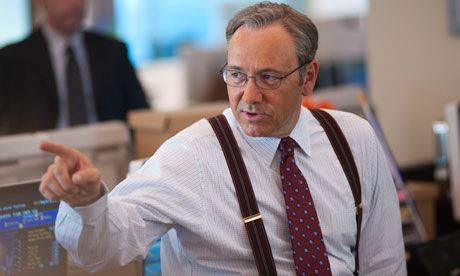
Margin Call begins like The Company Men and Up in the Air—in the midst of a corporate slaughter—people being fired from jobs they've held a long time. Cut-backs. "Generous" severance. Thanks for your service. Security will escort you out.
Eric Dale (Stanley Tucci) listens to it all, a little stunned, but tentative. "Uh, listen," he says in the middle of the administering of Last Rights, "I was working on something and I'm not finished yet." Doesn't matter. Go to your office. Empty your desk. Proprietary information. Your losing your phone, e-mail, etc. "No, really..." he says.
Doesn't matter. He's out. On the way to the elevator, he runs into two of his turks, Peter Sullivan (Zachary Quinto) and Seth Bregman (Penn Badgley). "Am I safe?" asks Seth (as Seth is wont to do). But Peter walks him to the elevator to tell him how much his mentorship meant to him. Dale cuts him off. "I know. I was working on something. They won't let me finish it," says Dale as he hands him a USB drive. And as the elevator doors shut, he has just enough time to say "Be careful."
Fwump.
It's the "be careful" that gets everybody's attention. "He said that?"
Sullivan begs off the traditional drinks for the battle survivors and takes a look at Dale's figures. Then he sees something. Digs, does some calculations and then stares at his projections screen. Over the next twelve hours, the world will go to Hell and he's the only one who sees the gate.
Margin Call is a boardroom thriller about our recent financial crisis, but its played like a mystery story. Everybody speaks in code. The night is dark and no one is betraying secrets. No one knows what's around the corner and everybody's looking behind them for the knife. Written and directed by J.C. Chandor (Who? This is his first film and it is an impressive debut), it plays out like a conspiracy—it is—and if so much of it didn't anticipate the dawn, one would be tempted to call it a film noir; there is a palpable air of organized evil, built of greed and self-interest, that hangs over the film, for what is being planned is the crime of the century.
The cast is uniformly superb—how could it not be with the likes of Kevin Spacey, Jeremy Irons, Simon Baker, Paul Bettany, Demi Moore, and Tucci?—but those performances depend on the great dialog generated by Chandor and the way he presents what should be dry material as drama and intrigue. These are gangsters in Gucci, cold-blooded, playing the long odds and the fast kill, but instead of "going to the mattresses" they are isolated in fancy cars and well-appointed high-rise board-rooms, their views of the world their actions are affecting armored by safety glass. There isn't much soul-searching (their businesspeople, so why look in a dry hole?) about what devastation their actions will bring, except for the immediate future and what it will do "for business." Even then, loyalty to the corporate mantra of "be first, be smarter or cheat" trumps conscience. That would make a hell of a slogan wouldn't it?
If one could gripe (and there is little to gripe about), one could argue that, if anything, this reverse "Godfather"—where businesspeople are gangsters, rather than gangsters as businesspeople—is heavily romanticized. There are no "Masters of the Universe" statements coming from these mortgage titans (as one heard from Wall Street bar-recordings on "This American Life," where these mavens crowed about deserving bonuses from bail-outs because "they're smarter than everybody else"), but, rather, short-term hedges about "dog-eat-dog" survival. No cynical betting against failure schemes, but merely making the best out of a bad situation before everyone else does.
As bad as Margin Call makes its protagonists, the truth is even worse—there were folks betting on things coming crashing down and profiting from it. It doesn't take a rocket scientist to see that a fix was in and that analysts saw it coming, not, suddenly, seeing it and going "Garsh, this looks bad." And the worst thing that's happened to these people is a little traffic congestion on Wall Street.
That is, if they're working at all.
Margin Call is a Full-Price Ticket.
Wednesday, October 26, 2011
Margin Call




Saturday, August 6, 2011
Horrible Bosses
 "That 'Strangers on a Train' Shit"
or
"It's Like a Douchebag Museum...!"
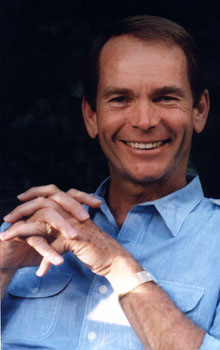
Office politics can get mean. Office politics can make you crazy. Office politics can get very, very messy (now, we have a movie that has all three!)However, I don't know many offices (outside the Post Office) where the politics can make you homicidal. Not even Congress.But that's the situation in Horrible Bosses, which given the tough economic times, the high unemployment rates, and the relative lack of power suffered by your disappearing middle class, almost seems plausible. Documentarian/director Seth Gordon (The King of Kong: A Fistful of Quarters) has made a film that follows three rather hapless worker-buddies (who seem competent at their jobs, the events of the movie notwithstanding), as their job situations drive them to considering murdering their higher-ups. All three are unmarried (although Charlie Day's dental technician is engaged), so we're talking some arrested development here, especially considering Jason Bateman is one of the three and SNL's Jason Sudeikis is the third). Bateman's Nick is up for a promotion, so he's been tolerating some abusive grooming tactics by his boss Dave Harken (Kevin Spacey, recycling his role in Swimming with Sharks), but doesn't get it when Harken takes the position himself; Sudeikis' Kurt is also expecting advancement as an account manager at the chemical factory run by Donald Sutherland, when Sutherland's character dies, and the company is taken over by his "Dipshit Cokehead Son", played by Colin Farrell (in a nicely over-the-top skeezeball performance, which seems to have been cut a bit—he's not in it much; And Day's Dale is a tech for an extremely aggressive cougar of a dentist (Jennifer Aniston, bless her) who is determined to seduce him (for some reason), and is incapable of anything more complicated than single entendres.



They decide that, rather than "Best Practices," going to "H.R.," or finding another situation, they'll merely cut through the red tape and go straight to the yellow—they're going to kill their bosses. So much for negotiating skills and being a "people person." This is what commiserating in a bar can lead to. The next bar leads them to Dean Jones (Jamie Foxx—playing it straight and dead-pan), an ex-con who goes by a common vulgarism, because "Dean Jones" reminds too many people of The Love Bug. No wonder they want this guy to plan the executions. Jones' suggestion is that each of the guys does the murder of someone else's boss (and dutifully, Alfred Hitchcock's Strangers on a Train is mentioned, as is Throw Momma From the Train, which is the red-headed step-child of the Hitchcock film...which reminds me that today is recycling day).



This cannot go well, and despite some laugh-out-loud moments, it does not, succumbing to "easy answers," and a "Deus ex machina." God's gotta be watching these guys, because they're so incompetent, they can't do anything right*...which leads us back to the recycling bin. Rummaging through, it is not too hard to see that this is The Hangover which itself is a new version of a Three Stooges movie, especially in the psychology of the three leads. Bateman plays Moe the strong one, Day is Larry the weak whiner, and Sudeikis is so meat-headed he can only be Curly. And while no eye-poking or face-slapping occurs, you just know that the insults and slow burns between the three are the passive-aggressive equivalent. And a lot less fun.

There are good moments—Aniston and Farrell are clearly having fun playing broad—and one of my favorite actor-characters shows up at the end (a little too briefly), but all in all, the face I wanted to slap was my own.
Though not completely horrible, Horrible Bosses is a Cable Watcher.
* This shoots down the premise of the movie: if these guys are so ham-fisted doing...everything...maybe they don't deserve the promotions they think they've been cheated out of.
Friday, June 3, 2011
The Usual Suspects

"The Usual Suspects" (Bryan Singer, 1998) A truck hi-jacking occurs. As a result, a motley collection of grifters are called together for a police line-up in an effort by U.S. Customs Agent Dave Kujan (Chazz Palminteri) to frame one of them, Dean Keegan (Gabriel Byrne). Instead of proving there's no honor among thieves, the five criminals decide to collaborate on a defiantly ingenious crime-spree, which eventually runs afoul of a major international organization run by the legendary crime boss Keyser Söze. Before too long all but one of the collaborators is dead, and the remaining is in police custody, for once unwilling to talk for fear of his life. Ironically, his name is Verbal. Verbal Kint (Kevin Spacey).
It is only when Söze's name becomes known to the police that Verbal begins to babble, filling in the many gaps that Kujan and local police sergeant Rabin (Dan Hedaya) don't know, starting with that fateful line-up of Keaton, McManus (Stephen Baldwin), the almost-incomprehensible small-timer Fenster (Benicio Del Toro), smart-ass chopper Hockney (Kevin Pollak, never better), and Kint, and the ever-more elaborate coups they pull off, ending with the death of nearly everyone on a freighter that has blown up the night previous. As Keaton has eluded him before, Kujan is convinced that he's the one behind it all, but Kint swears he's wrong, as he was the only surviving witness to Keaton's death at the hands of Keyser Söze. And Kint's tale is the proof of it. Keaton is dead. Keyser Söze lives. And Kint is terrified, convinced that, now that Söze's name is known, he'll be accused of being a rat. And because he's seen Söze's face, he won't be allowed to live.
Meticulously cast, directed just-so, with a ribald sense of language, irony and black humor, The Usual Suspects is a fine example of editorial legerdemain, one of the neatest tricks to pull off in the movies—especially considering that audiences to mystery films are usually five steps ahead of the movie. How can they not, as the director Sammy Michaels (Peter Bogdanovich) says in Targets: "All the good movies have been made," and all the plots have been used, and all the tricks have been revealed.
Well, almost.
IF, gentle reader, you have not yet seen The Usual Suspects, PROCEED NO FURTHER, please. As much as I try to dance around the issue not revealing too much, I have to concede that, beyond this line and, indeed, for the rest of today's post, THERE BE SPOILERS, and they will irreparably destroy any first viewings of The Usual Suspects. Trust me on this, I am not kidding, and don't come whining to me if you are so unwise as to not heed this warning!!! (The only worse fate would be having to transcribe Benicio del Toro's dialogue).
There are a lot of great lines in The Usual Suspects, but that one is a key one. What is it saying, actually? It's hard to penetrate its meaning, and after staring at it and parsing it (but not going so far as to "diagram" it), I finally gave up with an aching head and just said "It's a black-hole of a sentence."
But, then, so is the movie. All of it. A double-negative with a marked-for-dead "X" at its center, The Usual Suspects is constructed like a tight thriller, when it really is not. The answer to the riddle is there, almost from the beginning. But, we, the audience, never see, it even though we have. And we probably don't even realize we were told after the movie is over. It comes down to one shot. One shot at the center of the situation, and like a black-hole, and like any unsolved mystery, there is nothing there...but what we put into it.

It is a pull-in of wharf jetsam—pallets, rope and crab-pots discarded pell-mell on the San Pedro dock occupied by the freighter, as it, and what remains of the Keaton gang, goes up in a big ball of flame, illuminating the night-sky and the junk on the dock. The shot continues slowly boring in on the circle of ropes in the center of the frame. What we see is junk, complicated, random, but the devil is in the details. Since the director is taking us there, this shot must be of some import. It is, for the movie (why wouldn't it be?). I remember, sitting in the theater, watching this stretch of film, as it moved ever closer, thinking: "Who's behind the ropes watching this?" At the end of the shot, it might even be revealed who it was, behind this, the witness to the events, the guy with the knowledge of the events that were unfolding in the heat and the flash.
Nothing is revealed, ultimately. The scene goes into a long, slow, lingering transition to Verbal being interrogated. We won't be told why we're there until later in the picture, once all the names are known, and the ultimate triumph of Söze is at its end-game. For the moment, though, that empty shot is just another piece of the puzzle at its center. A lot more pieces must be placed before we can be given the context of what lies at the empty center of this shot.

We have a compact—we, the audience and the creators of movies. Their job is to re-create a reality and ours is to accept it as truth. We come to "buy," not only our tickets, but also the verisimilitude of the flickering images on the screen (itself an illusion, a series of still images run at a speed to fool the eye into thinking it a seamless reality). That compact is an agreed contract. We accept that it is not reality ("It's only a movie," "No, honey, the blood isn't real..."), but for the sake of drama we put that aside for entertainment. It is the director's intention to fool us—presenting artifice as reality. Yet, to fulfill the expectations of entertainment, audiences must offer a suspension of dis-belief, while, at the same time, having absolute faith in the veracity of the writer-director. If we are shown something, it must be important, not only to the story, but also the story-telling. If we are presented something on the screen, it must be for a good reason. If not, the director has broken his contract. He has gone beyond manipulating the images...and manipulating us.

But, that is their job from the beginning. To calculate the equation of Artifice = Reality. But, it takes a director with the true knowledge of how powerful film is in its effect on the audience to go beyond the usual movie-magic of presenting Reel Life as Real Life, to presenting fiction as fact and getting away with it—to mis-lead us—to break the trust between director and audience and make us smile at the subterfuge.

Like the shot in Rear Window of Torvald escorting his wife (with luggage) on a trip that goes unnoticed by the protagonist, it is superfluous, intended not for the story...but for the viewing audience. It's a little seed of doubt sewn by the director to keep us guessing. Or, in another case of Hitchcock, the elaborate crane shot that follows Norman Bates up the staircase to retrieve his mother in Psycho, a move designed to call attention to itself and not to what is going on on-screen. A feint. A slight-of-hand (and camera).

So, what of that empty image that must stand for (or in front of) something in The Usual Suspects? Later in the film, director Singer will take us back to this place. To put words to the image, as Kint describes his flight from the carnage of the freighter and watches Keegan's execution at the hands of Söze—the only reliable witness to the act.


Kujan doesn't believe it. He's convinced that Keegan is Söze, the criminal plays all leading to a supposed drug-deal at the freighter—just a ruse for Söze to kill the one man capable of identifying him. Söze's deals with the Keegan gang are small-time, just so he can slip unnoticed onto that one ship and assassinate the man who has seen him. His ends justify the means, creating a subterfuge for the ultimate goal. And director Singer, does the same thing, using our trust and knowledge of movies to include a shot that tells us nothing, and is, for all intents and purposes except of its own, meaningless.
The lesson that we ultimately learn (as also, too late and to a lesser extent, does Kujan in the film) is the undeniable fact of this story, and of movie-making itself: The devil does exist, and he is in the details.
Even if we don't see him.
 |
"The greatest trick the devil ever pulled was convincing the world he did not exist." |
Saturday, February 12, 2011
Casino Jack
 "The Be$t Government Money Can Buy"
or
"Jack Abramoff (and for my money you can leave out the Abram)"
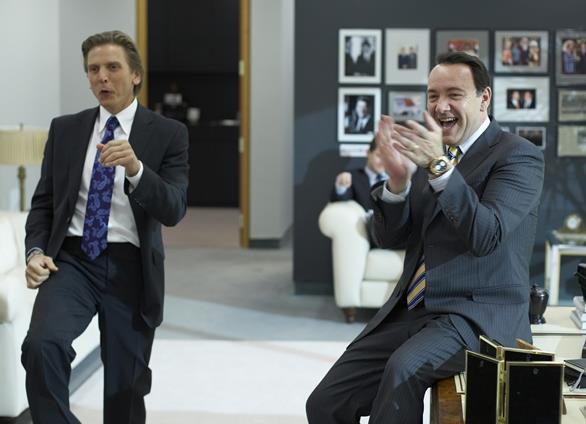
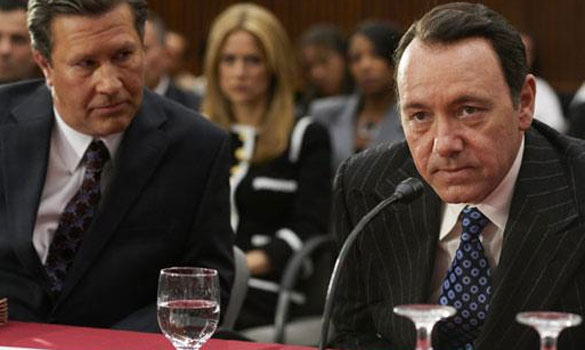
Despite what "The Last Word" at the bottom of the page says, I don't find bad reviews fun to write or to read. It pains me to admit failure...even if it's someone else's. This one pains me a lot, because it seems like such a slam-dunk—a comedy on the rise and downfall of Washington's most powerful lobbyist, Jack Abramoff, played here by Kevin Spacey in a tour de force of excessive grand-standing. That the film-maker who made it died just before it opened (and that he previously made some things I admire) makes a bad notice that much more greivous to write. That I'm sympathetic with the political views espoused makes it more so.
But to these eager liberal eyes Casino Jack is a hack-job, rather than, say, a sure bet. Frankly, if you want the story told better, turn to the documentary Casino Jack and The United States of Money, which is a more thorough, even-handed and truthful account (because it's all real footage of these beasts proudly exhorting their dirty deeds) of the shameless fleecing of America and the flagrant influence-peddling of an all-too-willing Congress.*
Film-maker George Hickenlooper—who died last year on October 29th—and his screenwriter Norman Snider want to make a "Dr. Strangelove"-type condemnation of the black-as-pitch corruption that Abramoff and his cronies espoused in the name of idealism, but it comes across as a loud, crass, unfunny version of events with the film-maker pushing our faces into scenes and hectoring "this is funny, right? Funny? It's funny!" with all the smug self-satisfaction of a preacher cooking marshmallows over a witch-burning...or a politician taking a bribe. Everything is played brooooooooooad, making Stanley Kramer's It's a Mad, Mad, Mad, Mad World seem subdued and tasteful in comparison.
There may be some joy in the pilloring, but the style of film-making and the general volume of the acting makes everything seem obvious and crass (with a capitol "K" street) that the feeling of contempt comes early and stays long past the party is over. Barry Pepper is all caricature as Abramoff's right hand-biter, and Spacey does enough bad impressions of his good impressions that the habit becomes tiresome and annoying. I'll bet he and Jon Lovitz yelled "Act-ing!!" after each one of their takes—there can't have been many from the looks of it—and then giggled like it was actually amusing. It's easy to make fun of wretched excess, and especially hypocritical wretched excess, but the film-makers went overboard with the caricaturish, smirking portrayals of everything and it sinks the picture. They could have played it absolutely straight, and the high-handed antics of these high-ideal crooks would have provided plenty of spit-takes and sputtering indignation.
But, they had to have "fun" with it, beating any subtlety into the tarmac or marble-flooring. The result is not fun, and only marginally frown-cracking at times. Good satire has to have an element of cold-blooded revenge to it, with an element of horror in the subject matter, rather than in how it is presented. Casino Jack goes for the easy-sucker bet, and still comes up craps.
Casino Jack is a Cable-watcher. In fact, they oughta bribe YOU to see it!






* Interestingly, the film-maker's earliest credit was the great "making of" documentary Hearts of Darkness, about the ordeal of filming Apocalypse Now...in a reverse of the "truth is stranger than fiction" aspect of the Abramoff story, the true story of Francis Ford Coppola's VietNam epic has more of the tone and feel of Joseph Conrad's "Heart of Darkness" than any of the adaptations (Coppola's and Nicolas Roeg's) made from the source—a lesson this film-maker might have heeded. Hickenlooper also made such interesting films as the original short of Sling Blade, The Man from Elysian Fields, Mayor of the Sunset Strip, Factory Girl, and was the only one in Hollywood with balls enough to make a film of Orson Welles' last screenplay, the political satire The Big Brass Ring. Sad to go out on this which such past work as his legacy.
Wednesday, November 11, 2009
The Men Who Stare at Goats
 "If Looks Could Kill"
An odd choice for Veteran's Day, but timing is... everything.
Despite an opening graphic that cautions "More of this is true than you might believe" "The Men Who Stare at Goats" is more of a fantasia based on the reporting of Jon Ronson than an actual true story. Yes, the truth is in the details; during the 1980's there was an army troop training as psychic warriors tasked with perfecting ways of defeating the enemy beyond fighting. These included perfectly legitimate examples of psychological disciplines, like moving past one's fears and one's predilections (it's pointed out that 15 to 20% of "fresh" soldiers usually shot above the heads of enemy combatants—not wanting to kill anybody), heightening one's powers of observation, gaining a psychological advantage over one's adversary by one's actions and thoughts, and moved beyond that into training that was anything but basic.
Ultimately the goal of the so-called "First Earth Battalion" was to make "super-soldiers," "psychic warriors," or "Jedi knights"* who could intuit answers from prisoners, psychically deflect attacks, become invisible, "phase" through objects, and, most diabolically, stop the hearts of their opponents by staring at them.
In the movie, McGregor's Ronson stand-in, Bob Wilton, gets wind of a "New Earth Army" doing some feature work for his local newspaper, but it isn't until he's in Iraq—trying to impress his estranged wife—that "the circle becomes complete" and he meets the closest thing to an adept among the psy-warriors, Lyn Cassidy (George Clooney, looking remarkably like Dennis Farina) who's "been re-activated" on a secret mission to find his former commanding officer and creator of the First Earth Army, Bill Django (Jeff Bridges, who perfects his Leibowskish "bubble-off-plumb" hippie personification and manages to make it poignant). Cassidy appears to be legit, capable of cloud bursting and the one Earher who could drop a goat with a look. He's less than expert in the "sparkley eyes" technique, despite being played by George Clooney (who manages to play it completely straight while pulling off some of the strangest actions of his career).
Director Grant Heslov, Clooney's production partner and script-writer for "Good Night, and Good Luck," keeps things moving at a good clip, moving fast enough to avoid analysis or deep thinking. The story is slight, owing much to, of all things, "Ishtar" (two clueless guys, out of their depth in a Middle East war-zone) while waving an anti-establishment freak-flag that reeks of "M*A*S*H" (with Kevin Spacey as Frank Burns). The story, of remnants of the original NEA operating in Iraq and Afghanistan, seems plausible (given the way those wars have been run), but the story merely exploits true concepts to spin the gauziest of screenplays from, while poking fun at the "Be All That You Can Be" gozo-ness of an Army that's trying "to be wonderful."
Semi-satirical movies are rarely more than semi-amusing. "The Men Who Stare at Goats," however, delivers quite a few belly-laughs.


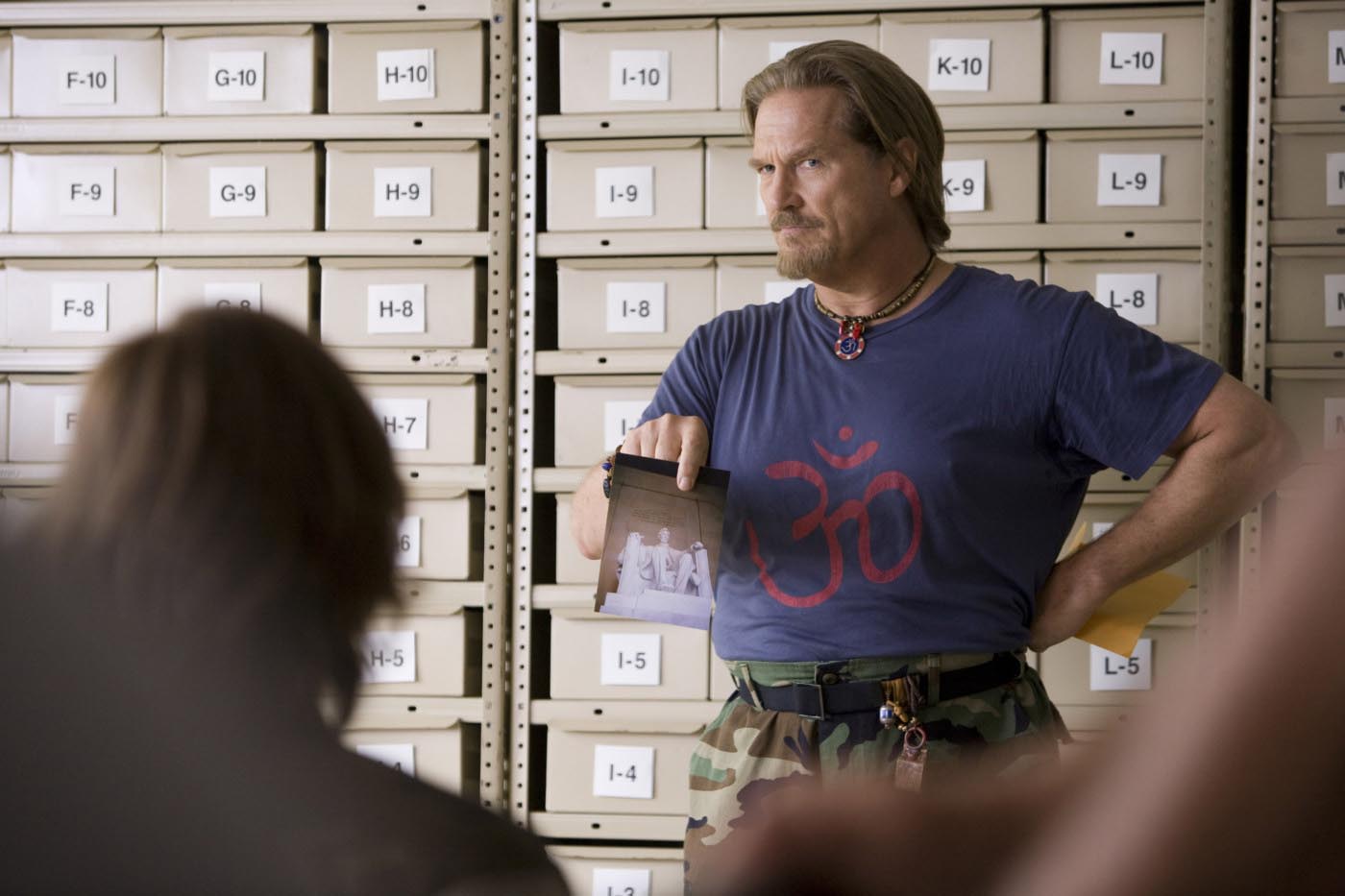

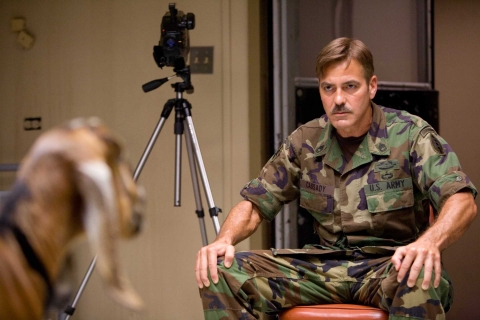


"The Men Who Stare at Goats" is a Matinee.
* The movie earns many—too many—knowing audience laughs by casting Ewan McGregor (the post/pre-Guiness Obi-Wan Kenobi) as the Ronson-surrogate reporter who is more of a "Doubting Thomas" than a "Padewan Apprentice." It's a little too "on the nose" and is, frankly, done to death, like some of the more winkingly obvious in-jokes in the "Ocean's Eleven" series.

Tuesday, July 14, 2009
Moon
He wakes up in the infirmary—Gerty solicitously telling him that he needs to take it easy and that he's in no condition to resume his duties, and indeed, he's having trouble walking and remembering what happened to get him there, and he's surprisingly short-tempered. Not only that, Gerty's telling him he can't go outside...at all...he's in no shape to do anything right now, and Earth is sending out repair crews to fix the harvester. But that's not good enough for Sam, so he devises a leak to some system or other, so he HAS to go outside to check the source. Once he gets out there...well, that would be telling. Jones sets up a nifty little mystery that could have twenty different sci-fi solutions to it (they've all been dramatized at one time or another on "The Twilight Zone"), and keeps you guessing until all becomes clear. But as with any good science fiction story, it's the implications that are most interesting, and they're delved into, and expanded in a brief audio coda at the film's end. Jones also finds a neat way to set the stage beyond the dull "It was a Dark and Stormy Future" graphics scrawl to explain how "things are different." And he has an able ally in Sam Rockwell, who is becoming one of our most gifted film actors. Here he has to do double duty as actor and re-actor (Spacey was recorded at another time, so Rockwell had to react to, basically, nothing) and he manages to do it—as he always does—in the most low-keyed, least grand-standing way possible. His own performance manages to stave off early speculation of "wot's hoppenin'" and with the sophistication of film-goers to the tricks of film-makers, that's a rare commodity. Almost as rare as moon-rocks. Those who come to these for special effects jollies will see a return to old-school model effects (good ones!) and the very little amount of CGI (mostly in the realm of photo-manipulation). The sets are industrial-functional with a bit of future-pre-fab thrown in. It's a good film, B-level science fiction, nicely thought out and carried out with sophistication, but nothing to radio Mission Control about. "Hello, I Must Be Going"
Charlie Duke lived for a couple of days on the Moon. In two documentaries,* he's repeated the story of the vivid dream that he had while feverish during a training exercise.
He and his Captain, John Young, were driving in their Boeing-built moon-buggy to an area that did not seem familiar, at least it didn't look like the geography of the place they'd been prepared for. They kept driving, and came across tracks. Tire tracks that stood out on the virgin lunar soil like they had fluoresecent yellow stripes painted down them. Somebody had been here before. And so we got excited, told Houston, and they said 'Well, follow the tracks.' You could tell by the tread marks that the vehicle was going to the east. So we turned right, to the east. And towards the eastern end of the valley we come upon this car, as we come over the ridge and there's this car which looked very similar to the Lunar Rover and there was two figures in it. So we radioed that we'd found this car, and we start to describe it, and they start to get excited, we're excited. So we turned the car, pointed and turned the TV on, and I ran over to the passenger side and I pulled up the visor and I was looking at myself. But it wasn't like a nightmare - it wasn't like you were dead - whoever it was looked like me but it wasn't me, I'm in this dream and I'm ok, and it wasn't like a premonition. I didn't wake up, it's just me.
He told no one about that dream until after he came back from the Moon.
There's a similar thing going on in the new Duncan Jones sci-fi movie "Moon" (it seems like we've been inundated with sci-fi films the last few years, but we really haven't—they've been dumbed down fantasies and super-hero flicks). Sam Bell (Sam Rockwell) is an employee for Lunar Industries, finishing up a lonely three-year stint on the far side of the Moon, supervising and fixing up the robotic rock harvesters providing the Earth with "safe, clean" Helium 3 for energy—by this time (never specified) 70% of the USA's energy comes from Helium 3.
He gets taped messages from Earth from his wife and 3 year old child. He gets occasional updates from Headquarters, he works on his whittled miniature village, gets on the treadmill, and watches old episodes of "Bewitched."** And there's a helpful robot named "Gerty" (voice by Kevin Spacey, channelling Douglas "Hal" Rain), that can see to his medical needs, give him updates and generally "make sure" he's safe. He also has a handy cup-holder, and a little emoticon-generater to show Sam his "mood."
Something goes wrong (something always has to go worng!) with one of the harvesters, and Sam goes out to investigate. Lately, he's been hallucinating, seeing people at the Sarang Moon Base and he's supposedly the only bi-ped on the planetoid. One of those hallucinations distracts him and he ends up smashing his vehicle into the side of the harvester, injuring himself in the process.
"Moon" is a Rental.
* "For All Mankind" and "In The Shadow of the Moon" (in the out-takes)—each has a different perspective, and are both highly reccommended. It's hard to believe, but in a week from yesterday, will be the 40th Anniversary of the first lunar landing.


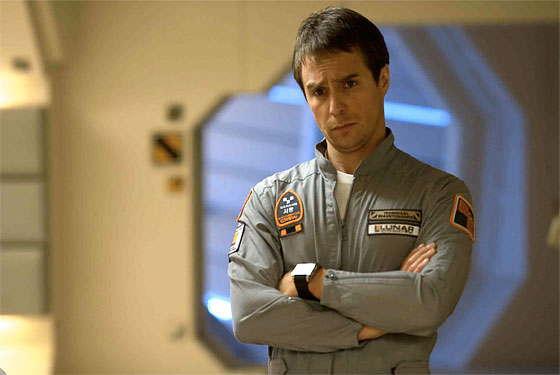

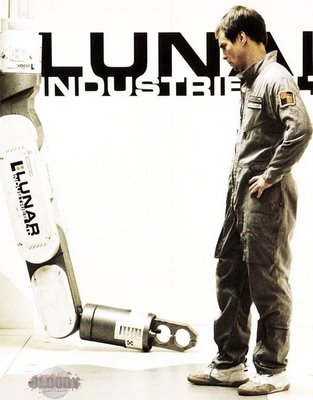



** My wife's favorite. Actually, it's an interesting choice for reasons I won't get into.
Saturday, January 24, 2009
Midnight in the Garden of Good and Evil
 "Midnight in the Garden of Good and Evil" (Clint Eastwood, 1997) This may seem like an oddball project for Eastwood, but truth to tell, it fits him like a wolfish scowl. He's always been interested in "true-crime" stories, and John Berendt's fictional non-fiction book about the Jim Williams trials fills that bill. Eastwood loves to shoot in the South, and Savannah, Georgia provides a wonderful backdrop for the jazz afficianado, who can use the music of the tangentially related Johnny Mercer.
And most importantly, it's a story of outsiders and iconoclasts, and that's where Eastwood excels. He was obviously having the time of his life fitting in the kooks and eccentrics who flit about the story like one of Luther Driggers' lassooed flies. For Eastwood, it must have seemed like filming "Every Which Way But Loose" with a murder trial thrown in. And he clearly loves working with drag queen The Lady Chablis working her into as much as the movie as he can, no matter how illogically--he squawked about getting more money, Eastwood probably figured he'd better earn it. During an extended comedic set-piece where Chablis crashes a very posh debutante ball and shocks the locals you can almost hear Eastwood chuckling--John Cusack is encouraged to mug just a bit too much.
And the cast, though not so stellar, is filled with great character actors: Eastwood crony Geoffrey Lewis, Kim Hunter, Jack Thompson, Dorothy Loudon, Richard Herd, Bob Gunton, Michael Rosenbaum, and the irrepressible Irma P. Hall. Doesn't matter if you've heard of them or not, you'll recognize them from other things. Heading the cast alongside Cusack is a sly and reserved Kevin Spacey, with molasses running through his veins. The only sour note is the one struck by Jude Law as the murder victim. You only wish there were more bullets.
It was the perfect tonic for Eastwood, coming between the "Absolute Power," and "True Crime."
Saturday, May 24, 2008
Recount
 "Recount" (Jay Roach, 2008) Another of those HBO films that couldn't find a distributor despite its top-lined cast and A-list director. Jay Roach abandons the Fockers and the Austin Powers series for awhile to team with producer Sydney Pollack to tell the story of the machinations behind the 2000 election certification--the wheeling and dealing, the last minute "saves," the maneuvering among the state and federal courts, the hypocrisy and the political theater put on by two camps desperate to win. Bush and Gore, or the actors portraying them--body-doubles, really--are bearly seen, or appear as video-taped images. It's the folks in the background that matter as the whole country turns its eyes to Florida.
Leading the cast is Kevin Spacey, making up for "Superman Returns" and "Fred Claus" by putting on a focussed, mature portrayal of former Gore Chief of Staff Ron Klain ("I don't even like Gore!"), Denis Leary as Michael Whouley, Ed Begley, jr. as the wonky attorney David Boies pleading the case, and John Hurt as the old school, but ineffectual Clinton negotiator Warren Christopher, playing by rules of civility.
On the Republican side is Tom Wilkinson (I seem to be seeing Wilkinson in everything these days--where's Gene Hackman?) as James Baker, Bob Balaban as Ben Ginsberg, and Laura Dern as the frankly scary Katherine Harris.
It would all seem crazy if it weren't all true, and just to verify some of the more colorful aspects of the tale, actual new footage of the recreated events is synopsized in the closing credits.
Too much of a political hot potato to risk putting in theaters, "Recount" is one more political thriller that's stranger than fiction. There's a lot of great work being done on both sides of the camera, and the only shame is that the audience for it is so limited.
"Recount" premieres on HBO Sunday. Far better than a cable-watcher. Would that it were a matinee.
Monday, March 31, 2008
Superman Returns - Take Two
 Superman Returns (Bryan Singer, 2006) There have to be reasons other than money to film a remake of a very successful movie because, in some ways, it's a zero sum game: the audience is familiar with the product so you don't have to do so much to establish it, on the other hand, if you don't bring something new to the screen, there's not much incentive for people to come to see your movie. In the case of Superman Returns, I might guess that Bryan Singer wanted to take advantage of the advances in technology that could bring a whole new look and a desire to bring a new slant to a character that is embedded in our culture. In doing so, he has produced a much more somber movie than those of the Reeves franchise; less comic strip, more graphic novel.
He focuses on the allegorical nature of the Superman story and lays it on thick. It's like he is channeling C Day Lewis at times. We begin with the voice of Marlon Brando as Jor-El (from the first Richard Donner movie):
"They only lack the Light to show the way. I have sent you, my only Son".
 As the man himself says:
Singer: Well, yeah, that's true, so I guess it's going to come up! (Laughs) I think that it [Superman as Christ figure] is kind of a natural evolution, because he began as kind of a Moses figure, of the child sent by the parents down the river to fulfill a destiny.
And that, obviously, translates into these kinds of allegories, Christ being a natural one, because Superman's a savior. And even more so in my film, because he's gone for a period of time, and then he returns. For me to say that those messianic images don't exist in the movie would be absurd.
Christianity Today Movies
 In other words, if you want to, you can read all kinds of stuff into the movie. Superman (Brandon Routh) struggles with his role as savior:
Superman: Listen; what do you hear?
Lois Lane: Nothing.
Superman: I hear everything. You wrote that the world doesn't need a savior, but every day I hear people crying for one.
 He is captured, scourged and left to die.
 Some of the scenes seem almost shot to resemble a medieval painting:
 And then, guess what? He rises again.
But, maybe, it is not a Christian allegory, after all. Maybe it is a movie about father-son relationships, about inheritance. In this version of the story, Superman has returned to Earth to find that Lois Lane (Kate Bosworth) is now a mother though with a partner, Richard White (James Marsden), she feels ambivalent enough about not to have married. The movie teases us about the possibility that Richard is not the father of Lois's child, Jason (Tristan Lake Leabu). If not he, then who? You guessed it - however, this is one of the weakest parts of the movie - we get hints: coy glances between Clark Kent and Jason, a suggestion that Jason can see the resemblance to Superman that supposedly everyone else always misses, Lex Luthor (Kevin Spacey) suspects a reaction to green kryptonite, and then there is the matter of the grand piano. How could a child who we have been clearly told is not in great physical health to begin with and is now having an asthmatic attack as he watches his mother being threatened by one of Luthor's thugs, how could he have the strength to push a piano across the room unless ..? It's not like Singer doesn't know what he is doing here - otherwise why does he turn the whole idea into the best joke of the movie when Jason, trapped with Lois on board Lex's boat, moves ponderously to a locked door and pulls at the handle only for the door to open - because his father(?) is on the other side at that very moment unlocking it. Yet, he can't resist teasing us again with the kiss that supposedly resurrects Superman in the third reel. So is he or isn't he? Would it be the greatest irony that a son of Superman should be such a weak child? Or is his weakness because he is the union of a human and an alien?
Even Lex Luthor gets into the act with the father-son stuff:
Lex Luthor: Kitty, what did my father used to say to me?Much as he tries to meld the psychological themes into the action, it feels like the movie is made of two disconnected parts. On the one hand, we have all the stuff going on between Superman and Lois and then there is the small matter of Lex Luthor's plot to take over the world. There is little enough contact between Lex and Superman - one big scene really. Even when Superman defeats Lex, there is no face to face showdown. The effect of shoe-horning the family plot into the movie seems to be the crowding out of the other players. Whatever happened to Clark? OK, Singer makes the point that he has been away, that no-one really cares about him anymore but this is Clark Kent - star reporter for the Daily Planet. Would Perry White (Frank Langella) really only give him his job back because someone on the staff has died? And, talk about a lack of chemistry. There is zilch between Lois and Clark though maybe it's because of the way that Routh plays him. Clark has to be the counterpoint to Superman - he is the exaggeration of human weakness as Superman is the epitome of strength. To make him plausible, Reeves played up the goofiness and made him attractive in a Cary Grant kind of way (remember Bringing Up Baby?). Instead of Reeve's wry smile and practiced clumsiness, Routh's Kent is just bewildered and lost. No wonder Lois blows him off so easily. As for Perry White, what has happened to the cigar-chomping tyrant? Where is JJ Jameson when you need him? Langella plays White like an accountant - muted and reasonable. Jimmy Olsen (Sam Huntington) has grown up too and he seems to be in the movie more to provide exposition than anything else.
Kitty Kowalski: You're losing your hair.
Lex Luthor: Before that.
Kitty Kowalski: Get out.
Lex Luthor: He said: You can print money, manufacture diamonds, and people are a dime a dozen, but they'll always need land. It's the one thing they're not making anymore of.
and later:
Lex Luthor: Crystals inherit the traits of the minerals around them - kind of like the son inheriting the traits of his father.
This mutedness comes out in Superman too. He seems almost embarrassed to be a hero. He doesn't interact with anyone whose name isn't on the movie poster. When he emerges from the jetliner having saved the day, we don't even get a wave:

After saving Kittie (Parker Posey), the crowd just stand and watch, taking photos on their cellphones:

Many of the shots of Superman show him small against the background. Singer has gone big for the technology and sometimes, it seems more important than the Man of Steel. Yet, it is the subtle things that grabbed me - like hearing and seeing Superman's cloak rustle in the wind. To me, that is better than the supposed show-stoppers:


So if you are not in the mood for some 'up, up and away', then this might be the Superman movie for you. Maybe it captures the mood of the times more.
