Showing posts with label Bryan Singer. Show all posts

Friday, June 3, 2011

The Usual Suspects


"The Usual Suspects" (Bryan Singer, 1998) A truck hi-jacking occurs.  As a result, a motley collection of grifters are called together for a police line-up in an effort by U.S. Customs Agent Dave Kujan (Chazz Palminteri) to frame one of them, Dean Keegan (Gabriel Byrne). Instead of proving there's no honor among thieves, the five criminals decide to collaborate on a defiantly ingenious crime-spree, which eventually runs afoul of a major international organization run by the legendary crime boss Keyser Söze.  Before too long all but one of the collaborators is dead, and the remaining is in police custody, for once unwilling to talk for fear of his life.  Ironically, his name is Verbal.  Verbal Kint (Kevin Spacey).

It is only when Söze's name becomes known to the police that Verbal begins to babble, filling in the many gaps that Kujan and local police sergeant Rabin (Dan Hedaya) don't know, starting with that fateful line-up of Keaton, McManus (Stephen Baldwin), the almost-incomprehensible small-timer Fenster (Benicio Del Toro), smart-ass chopper Hockney (Kevin Pollak, never better), and Kint, and the ever-more elaborate coups they pull off, ending with the death of nearly everyone on a freighter that has blown up the night previous.  As Keaton has eluded him before, Kujan is convinced that he's the one behind it all, but Kint swears he's wrong, as he was the only surviving witness to Keaton's death at the hands of Keyser Söze.  And Kint's tale is the proof of it.  Keaton is dead.  Keyser Söze lives.  And Kint is terrified, convinced that, now that Söze's name is known, he'll be accused of being a rat.  And because he's seen Söze's face, he won't be allowed to live.

Meticulously cast, directed just-so, with a ribald sense of language, irony and black humor, The Usual Suspects is a fine example of editorial legerdemain, one of the neatest tricks to pull off in the movies—especially considering that audiences to mystery films are usually five steps ahead of the movie.  How can they not, as the director Sammy Michaels (Peter Bogdanovich) says in Targets: "All the good movies have been made," and all the plots have been used, and all the tricks have been revealed.

Well, almost.


IF, gentle reader, you have not yet seen The Usual Suspects, PROCEED NO FURTHER, please. As much as I try to dance around the issue not revealing too much, I have to concede that, beyond this line and, indeed, for the rest of today's post, THERE BE SPOILERS, and they will irreparably destroy any first viewings of The Usual Suspects. Trust me on this, I am not kidding, and don't come whining to me if you are so unwise as to not heed this warning!!!  (The only worse fate would be having to transcribe Benicio del Toro's dialogue).


"The greatest trick the devil ever pulled was convincing the world he did not exist."


There are a lot of great lines in The Usual Suspects, but that one is a key one. What is it saying, actually?  It's hard to penetrate its meaning, and after staring at it and parsing it (but not going so far as to "diagram" it), I finally gave up with an aching head and just said "It's a black-hole of a sentence."

But, then, so is the movie.  All of it.  A double-negative with a marked-for-dead "X" at its center, The Usual Suspects is constructed like a tight thriller, when it really is not.  The answer to the riddle is there, almost from the beginning.  But, we, the audience, never see, it even though we have.  And we probably don't even realize we were told after the movie is over.  It comes down to one shot.  One shot at the center of the situation, and like a black-hole, and like any unsolved mystery, there is nothing there...but what we put into it.


It is a pull-in of wharf jetsam—pallets, rope and crab-pots discarded pell-mell on the San Pedro dock occupied by the freighter, as it, and what remains of the Keaton gang, goes up in a big ball of flame, illuminating the night-sky and the junk on the dock.  The shot continues slowly boring in on the circle of ropes in the center of the frame.  What we see is junk, complicated, random, but the devil is in the details.  Since the director is taking us there, this shot must be of some import.  It is, for the movie (why wouldn't it be?).  I remember, sitting in the theater, watching this stretch of film, as it moved ever closer, thinking: "Who's behind the ropes watching this?"  At the end of the shot, it might even be revealed who it was, behind this, the witness to the events, the guy with the knowledge of the events that were unfolding in the heat and the flash. 

Nothing is revealed, ultimately.  The scene goes into a long, slow, lingering transition to Verbal being interrogated.  We won't be told why we're there until later in the picture, once all the names are known, and the ultimate triumph of Söze is at its end-game.  For the moment, though, that empty shot is just another piece of the puzzle at its center.  A lot more pieces must be placed before we can be given the context of what lies at the empty center of this shot.


We have a compact—we, the audience and the creators of movies.  Their job is to re-create a reality and ours is to accept it as truth.  We come to "buy," not only our tickets, but also the verisimilitude of the flickering images on the screen (itself an illusion, a series of still images run at a speed to fool the eye into thinking it a seamless reality).  That compact is an agreed contract.  We accept that it is not reality ("It's only a movie," "No, honey, the blood isn't real..."), but for the sake of drama we put that aside for entertainment.  It is the director's intention to fool us—presenting artifice as reality.  Yet, to fulfill the expectations of entertainment, audiences must offer a suspension of dis-belief, while, at the same time, having absolute faith in the veracity of the writer-director.  If we are shown something, it must be important, not only to the story, but also the story-telling.  If we are presented something on the screen, it must be for a good reason.  If not, the director has broken his contract.  He has gone beyond manipulating the images...and manipulating us.


But, that is their job from the beginning.  To calculate the equation of Artifice = Reality.  But, it takes a director with the true knowledge of how powerful film is in its effect on the audience to go beyond the usual movie-magic of presenting Reel Life as Real Life, to presenting fiction as fact and getting away with it—to mis-lead us—to break the trust between director and audience and make us smile at the subterfuge.


Like the shot in Rear Window of Torvald escorting his wife (with luggage) on a trip that goes unnoticed by the protagonist, it is superfluous, intended not for the story...but for the viewing audience. It's a little seed of doubt sewn by the director to keep us guessing. Or, in another case of Hitchcock, the elaborate crane shot that follows Norman Bates up the staircase to retrieve his mother in Psycho, a move designed to call attention to itself and not to what is going on on-screen.  A feint.  A slight-of-hand (and camera).


So, what of that empty image that must stand for (or in front of) something in The Usual Suspects? Later in the film, director Singer will take us back to this place.  To put words to the image, as Kint describes his flight from the carnage of the freighter and watches Keegan's execution at the hands of Söze—the only reliable witness to the act.


Kujan doesn't believe it.  He's convinced that Keegan is Söze, the criminal plays all leading to a supposed drug-deal at the freighter—just a ruse for Söze to kill the one man capable of identifying him.  Söze's deals with the Keegan gang are small-time, just so he can slip unnoticed onto that one ship and assassinate the man who has seen him.  His ends justify the means, creating a subterfuge for the ultimate goal.  And director Singer, does the same thing, using our trust and knowledge of movies to include a shot that tells us nothing, and is, for all intents and purposes except of its own, meaningless.

The lesson that we ultimately learn (as also, too late and to a lesser extent, does Kujan in the film) is the undeniable fact of this story, and of movie-making itself:  The devil does exist, and he is in the details.

Even if we don't see him.


"The greatest trick the devil ever pulled was convincing the world he did not exist."


Wednesday, January 7, 2009

Valkyrie

"Tom Cruise Takes on Adolph Hitler, Single-Handed"

Man, they've been rough on this movie and particularly Tom Cruise. It's been "Nacht der Langen Messer" for a lot of gossip columnists who fancy themselves critics (but had second-hand facts from their "sources").

Among the rumors that were cackled about was Cruise's lack of a German accent (there aren't any in the film and Singer makes a big show of having Cruise narrate the beginning of the film in German--a rather stilted, halting German--before transitioning to English), that he rather grossly takes out a glass eye in the film (he does--with his back turned to the camera), that he does a weird Nazi salute (his character—
the very real Count Von Stauffenberg—gets away with forgoing the usual "nicety" throughout the film until, in one the film's best scenes, the War Minister (Tom Wilkinson) calls him on it—"I would hear you say it, Colonel"—and Stauffenberg, irritated that 1) he can't get away with it and 2) he's being forced to give allegiance to a man he's conspiring to kill, pointedly turns and yells the "Heil" while giving the standard right-handed salute—only he doesn't have a right hand, having lost it in the war, the stump of his arm protruding from his jacket, making a point. Good scene, that.)

Look, I don't like
Tom Cruise, either. His performances have dragged down many a movie, especially the vain-glorious ones. The man seems incapable of portraying more than one emotion at a time, and whenever his character must choose options Cruise falls back on an open-mouthed blank look.* Listening to him in interviews I get the impression that his acting process runs something like: "I have to do this, then I have to do this, then I have to do this, and then I have to do this."

But, though he's the King of Hollywood and the "
Jesus Christ of Scientology," one could cut him some slack; none--none--of those rumors are true in the final analysis, and no one making those rumors is held accountable for them, shoddy and unprofessional as they are. But that's "Entertainment Reporting" for ya.**

Enough about the 800 pound top-gorilla. How's the movie? Good, actually. It is a true story and screenwriter
Christopher McQuarrie and Director Bryan Singer (the team behind, and still trying to top, "The Usual Suspects") lay everything out in a clear time-line, do their best to cast faces that have a 1940's German feel and maintain the illusion that it's that time and place. They keep the tension taut and make the most of the story's quirks and coincidences--the kind that make you say "if it weren't true, you couldn't write this." The fascination of the story is that the German bureaucracy that was running the war (badly in the minds of the conspirators) was just as responsible for the conspiracy coming apart, and Stauffenberg was the only one with the Hoden who would push if there was any chance of success, to his credit and the conspiracy's detriment. It's a real-life version of the "Mission: Impossible" scenario, something that Cruise is all-too familiar with.

What's nice is that the film-makers turn the process of pushing through policy-changes into tense set-pieces that have just as much verve as a pistol shoot-out. In fact, there is a small fire-fight later in the film and getting Hitler to sign a policy-change (
the "Valkyrie" operation of the title) is far more exciting. And the central gambit—there's a satchel with a bomb in it that's set to go off in a room full of men—is the classic Hitchcock example of tension versus surprise.

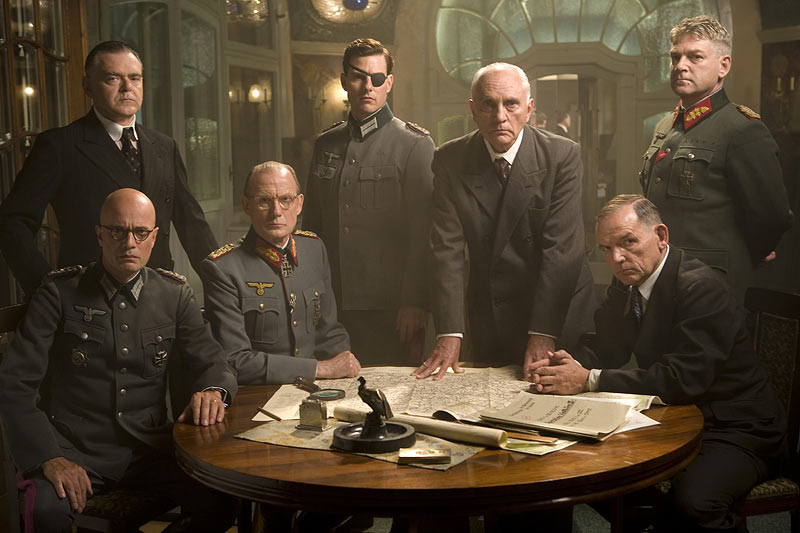
The film is top-heavy with fine British actors: Wilkinson, Terence Stamp (another fine portrait of an ineffectual pol), Bill Nighy, Eddie Izzard (!!), Ian McNeice and Kenneth Branagh. That's a lot of impressive talent for a movie not written by Richard Curtis. And they're all spot-on. Branagh is particularly good as an initial conspirator who is whisked away to the front before the bombing of the Führerhauptquartier Wolfsschanze.

If there's a problem with the movie, it is
Singer's sometimes too-elaborate direction—the most egregious example being a circular camera move that catches up to a record (and it's a 78!) so that it can stabilize on the label to read the word "Walkure" while the rest of the world keeps on spinning—an awful lot of effect for not much return. As such it parallels the story of the movie.*** The film of that story—of conscience over the brutal status quo—is much more successful.

"Valkrie" is a Nachmittagsvorstellung.

* As opposed to Brad Pitt, another Hollywood pretty-boy, but who's managed to pick interesting roles (on occasion) and has grown as an actor of depth and subtlety. Something Cruise used to do. Cruise once was attached to "The Curious Case of Benjamin Button."

** My favorite bit of bone-head journalism from Hollywood came from the "reporter" who asserted that Russel Crowe had gone off the deep-end because he said something about "Bob being his uncle." Shhyeah! Been out of Hollywood much?

*** There is such a rich vein of fascinating stories that came out of the ashes of World War II that would make compelling films. A similar story—of the elaborate civilian aassassination of Hitler's "Golden Boy" (and probable successor) Reinhard Heydrich in 1942 I've always thought would make a compelling story of uprising. But one couldn't tell it without mentioning Hitler's utter crushing of the town of Lidice in reprisal for the attack.

Monday, March 31, 2008

Superman Returns - Take Two

Superman Returns (Bryan Singer, 2006) There have to be reasons other than money to film a remake of a very successful movie because, in some ways, it's a zero sum game: the audience is familiar with the product so you don't have to do so much to establish it, on the other hand, if you don't bring something new to the screen, there's not much incentive for people to come to see your movie. In the case of Superman Returns, I might guess that Bryan Singer wanted to take advantage of the advances in technology that could bring a whole new look and a desire to bring a new slant to a character that is embedded in our culture. In doing so, he has produced a much more somber movie than those of the Reeves franchise; less comic strip, more graphic novel.

He focuses on the allegorical nature of the Superman story and lays it on thick. It's like he is channeling C Day Lewis at times. We begin with the voice of Marlon Brando as Jor-El (from the first Richard Donner movie):

"They only lack the Light to show the way. I have sent you, my only Son".

As the man himself says:

Singer: Well, yeah, that's true, so I guess it's going to come up! (Laughs) I think that it [Superman as Christ figure] is kind of a natural evolution, because he began as kind of a Moses figure, of the child sent by the parents down the river to fulfill a destiny.

And that, obviously, translates into these kinds of allegories, Christ being a natural one, because Superman's a savior. And even more so in my film, because he's gone for a period of time, and then he returns. For me to say that those messianic images don't exist in the movie would be absurd
.

Christianity Today Movies
In other words, if you want to, you can read all kinds of stuff into the movie. Superman (Brandon Routh) struggles with his role as savior:
Superman: Listen; what do you hear?
Lois Lane: Nothing.
Superman: I hear everything. You wrote that the world doesn't need a savior, but every day I hear people crying for one.

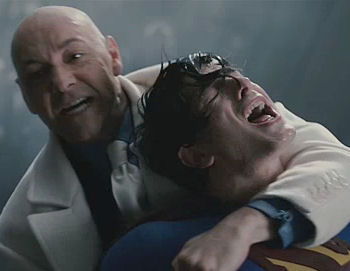
He is captured, scourged and left to die.

Some of the scenes seem almost shot to resemble a medieval painting:

And then, guess what? He rises again.

But, maybe, it is not a Christian allegory, after all. Maybe it is a movie about father-son relationships, about inheritance. In this version of the story, Superman has returned to Earth to find that Lois Lane (Kate Bosworth) is now a mother though with a partner, Richard White (James Marsden), she feels ambivalent enough about not to have married. The movie teases us about the possibility that Richard is not the father of Lois's child, Jason (Tristan Lake Leabu). If not he, then who? You guessed it - however, this is one of the weakest parts of the movie - we get hints: coy glances between Clark Kent and Jason, a suggestion that Jason can see the resemblance to Superman that supposedly everyone else always misses, Lex Luthor (Kevin Spacey) suspects a reaction to green kryptonite, and then there is the matter of the grand piano. How could a child who we have been clearly told is not in great physical health to begin with and is now having an asthmatic attack as he watches his mother being threatened by one of Luthor's thugs, how could he have the strength to push a piano across the room unless ..? It's not like Singer doesn't know what he is doing here - otherwise why does he turn the whole idea into the best joke of the movie when Jason, trapped with Lois on board Lex's boat, moves ponderously to a locked door and pulls at the handle only for the door to open - because his father(?) is on the other side at that very moment unlocking it. Yet, he can't resist teasing us again with the kiss that supposedly resurrects Superman in the third reel. So is he or isn't he? Would it be the greatest irony that a son of Superman should be such a weak child? Or is his weakness because he is the union of a human and an alien?

Even Lex Luthor gets into the act with the father-son stuff:

Lex Luthor: Kitty, what did my father used to say to me?
Kitty Kowalski: You're losing your hair.
Lex Luthor: Before that.
Kitty Kowalski: Get out.
Lex Luthor: He said: You can print money, manufacture diamonds, and people are a dime a dozen, but they'll always need land. It's the one thing they're not making anymore of.

and later:

Lex Luthor: Crystals inherit the traits of the minerals around them - kind of like the son inheriting the traits of his father.
Much as he tries to meld the psychological themes into the action, it feels like the movie is made of two disconnected parts. On the one hand, we have all the stuff going on between Superman and Lois and then there is the small matter of Lex Luthor's plot to take over the world. There is little enough contact between Lex and Superman - one big scene really. Even when Superman defeats Lex, there is no face to face showdown. The effect of shoe-horning the family plot into the movie seems to be the crowding out of the other players. Whatever happened to Clark? OK, Singer makes the point that he has been away, that no-one really cares about him anymore but this is Clark Kent - star reporter for the Daily Planet. Would Perry White (Frank Langella) really only give him his job back because someone on the staff has died? And, talk about a lack of chemistry. There is zilch between Lois and Clark though maybe it's because of the way that Routh plays him. Clark has to be the counterpoint to Superman - he is the exaggeration of human weakness as Superman is the epitome of strength. To make him plausible, Reeves played up the goofiness and made him attractive in a Cary Grant kind of way (remember Bringing Up Baby?). Instead of Reeve's wry smile and practiced clumsiness, Routh's Kent is just bewildered and lost. No wonder Lois blows him off so easily. As for Perry White, what has happened to the cigar-chomping tyrant? Where is JJ Jameson when you need him? Langella plays White like an accountant - muted and reasonable. Jimmy Olsen (Sam Huntington) has grown up too and he seems to be in the movie more to provide exposition than anything else.

This mutedness comes out in Superman too. He seems almost embarrassed to be a hero. He doesn't interact with anyone whose name isn't on the movie poster. When he emerges from the jetliner having saved the day, we don't even get a wave:


After saving Kittie (Parker Posey), the crowd just stand and watch, taking photos on their cellphones:

Many of the shots of Superman show him small against the background. Singer has gone big for the technology and sometimes, it seems more important than the Man of Steel. Yet, it is the subtle things that grabbed me - like hearing and seeing Superman's cloak rustle in the wind. To me, that is better than the supposed show-stoppers:


So if you are not in the mood for some 'up, up and away', then this might be the Superman movie for you. Maybe it captures the mood of the times more.

Friday, February 29, 2008

Now I've Seen Everything Department: Superman

February 29th is leap-day, and with such a designation it's the perfect birthday for the most celebrated leaper (of tall buildings in a single bound).

Happy Birthday to Kal El. last son of the doomed planet Krypton, otherwise known as "Superman," The Man of Tomorrow.


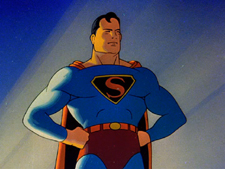
Nietzsche's concepts about the transcendent "Übermensch" simultaneously inspired the Nazi's to work towards their concept of an Aryan "Master Race," while also inspiring two weisenheimer Jewish kids from Cleveland to create their own "Super-man," set adrift like Moses among the stars to settle on a planet, which enabled him to "possess powers and abilities far beyond those of mortal men." The silver screen has chronicled his "never-ending battle for Truth, Justice and the American Way," starting in the 1940's with feature cartoons, moving into serials, and then landing on the silver screen in legitimate films. Here's a look at them.


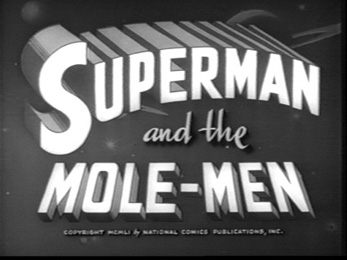
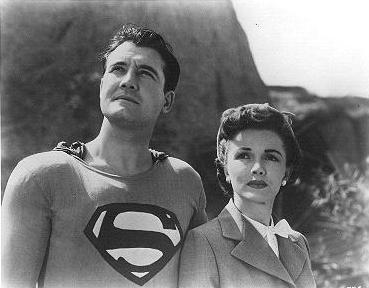
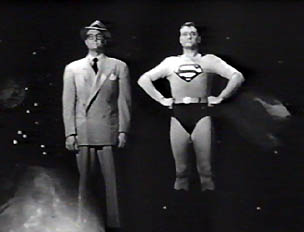
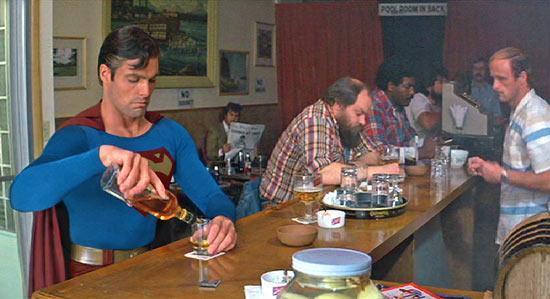
"Superman and the Mole-Men" (Lee Sholem, 1951) A black-and-white short film (running just under an hour), "Superman and the Mole Men" was a trial-run (a pilot, if you will) for the subsequent "Superman" television series starring George Reeves as the Man of Steel. Daily Planet reporters Clark Kent (Reeves) and Lois Lane (Phyllis Coates) are assigned to cover the world's deepest oil-well, and find that something or some "things" have come up through the well to see what's on the surface. It being the 50's (of course, we were so backward then!) the town's populace fears the Invaders, and set up a vigilante mob to deal with them. But Superman (being an unpapered alien, himself) pleads the case for tolerance--by turning the mob's guns into pretzels. Shot on a shoe-string budget (a ray-weapon carried by the Mole men was made from an Electrolux vacuum cleaner!), "Superman and the Mole Men" is long on exposition, but short on costly super-heroics. Still, given the material, the actors give it their all. Coates was always my favorite Lois Lane, tough as nails, and more prone to kicking an assailant in the shins than shrieking back in horror. And Reeves is all steel-jawed seriousness as Kent and Superman. There's none of the winking-at-the-audience that would come later in the series--Superman is all-business and Reeves plays the Man of Steel absolutely straight, like it's a mission. And because he believes in it, you have to take him at face value, even if the trappings that surround him aren't too convincing. Reeves would go on to play the Man of Steel until his death by gun-shot (ruled a suicide) in 1959.


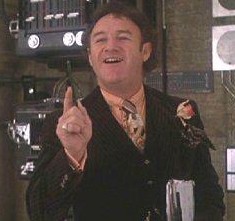
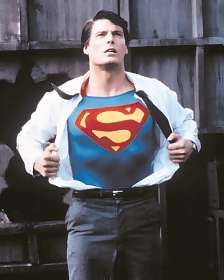
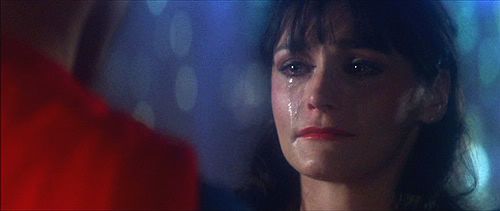
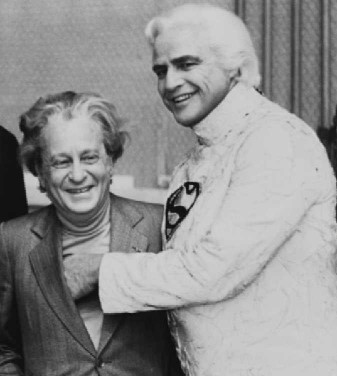
"Superman: The Movie" (Richard Donner, 1979) For a movie that promised "You'll believe a man can fly" it couldn't be more elephantine. The Salkind family of producers bought the movie rights to Superman, and in an orgiastic frenzy to garner investors hired "Godfather" scribe Mario Puzo to write the script (sure seems like a natural!) and hired Marlon Brando and Gene Hackman to star. They had a movie! Well, sort of....Puzo turned in a massive script, Brando had his usually odd ideas to avoid work, Hackman was getting a little nervous. Things started to gel when Richard Donner was hired to direct. First, he settled things down. The script, which had been worked on by the "Bonnie and Clyde" team of Benton and Newman, was hammered into shape by Tom Mankiewicz. Then they hired the big guns, Lois Lane and Superman. For Lois, they picked Margot Kidder--not a glamour-puss, but a dame, who could convincingly play the "goes-all-gooey" side of the Daily Planet reporter. And for Superman/Clark Kent, they picked a skinny up-and-comer named Christopher Reeve, who wasn't all that sure he wanted the job. But Christopher Reeve made a fine, slightly self-deprecating Superman, and Superman made him a star.

The movie's all over the map, but moves at such a clip, you're not allowed time to notice. There's the austere Krypton section that ladels on the tragedy with Marlon Brando playing it absolutely straight. There's the Smallville segment with Glenn Ford, and an America so archetypal that they had to film it in Canada. And then there's the loopy Metropolis section, as Superman (who seems to enjoy the effect he has on ordinary mortals) must battle the nefarious Lex Luthor (Gene Hackman, clearly enjoying playing comedy) and his curiously buffoonish aides-de-camp (Valerie Perrine and Ned Beatty). The thing should fly apart at the seams, but Donner's rock-solid direction, Stuart Baird's don't-blink editing and John Williams' anthem-pumping score keeps the momentum going so the thing never touches the ground. It's a little bit of a miracle.


"Superman II" (Richard Lester & Richard Donner, 1980) "Superman: The Movie" was a miracle--a costly one. Financed to be two movies, Donner was forced to concentrate finishing the one at the sacrifice of the second--sequences were re-shuffled* to meet the Christmas release date. The movie was a flying success, and Donner was rewarded...by being fired. "Production consultant" Richard Lester--who directed the Salkind's near-perfect "Musketeers" movies--was brought in to finish Part II...with some provisos--to be considered the director of note, he had to have directed at least 50% of the picture. That meant scrapping some of the Donner footage. Hackman wasn't coming back, and Brando's already-shot footage was shelved, to relieve the producers of any financial burden. A lot of fans prefer II to the first one. But... they're crazy. Lester's touch is far more goofy and slap-stick than Donner's, to the point of silliness. Plus, Superman is given a whole roster of new powers to defeat the Kryptonian villains (and zap Lois into forgetting Clark is Superman). Some scenes like a super-brawl on Broadway are impressive, but others like the Krypton Trio in a poor-excuse-for-Mayberry not only don't play well but are insultingly juvenile. Plus, Superman sleeps with Lois. Hold that thought. You'll need it later.

After years of wondering what the Donner "Superman II" would have been like, the director was given unprecedented access to re-edit "Superman II" "his way," restoring long-abandoned scenes and even restoring Marlon Brando to the story! The result? Not very successful, but an interesting curiosity. The problems besetting "Superman II" were more than just digital editing could solve. It is neither a vindication for Donner, nor a smack-down of Lester. That would come later.


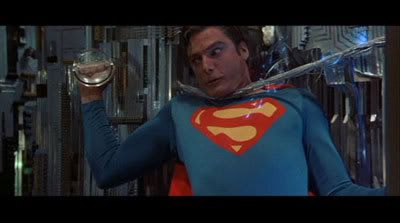
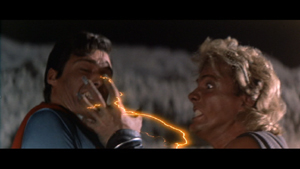
"Superman III" (Richard Lester, 1983) Like giving Superman extra powers he had never previously displayed or needed, at some point it was decided that Superman alone wouldn't draw crowds. The solution? Bring in another box-office star, and one of the most beloved at the time was Richard Pryor, who had a knack for bringing in audiences. His improvisational brilliance had rescued poor material in the past, but even Pryor had little to work with here. He plays a computer savant who is coerced by evil magnate Robert Vaughn (who doesn't have quite the comedic chops of Gene Hackman) to build an evil empire run by a super-computer that could even kill Superman. That's one part of the movie. Clark goes back to Smallville to attend a high school reunion and re-links with sweetheart Lana Lang (Annette O' Toole, trying vainly--she now plays Martha Kent on "Smallville"). Lois makes the briefest of appearances, either because her story had run its course--or Margot Kidder was in salary disputes with the producers, depending who you talk to. At one point, Pryor's Gus Gorman creates some half-baked synthetic kryptonite that turns Superman into a super-creep. As much as Reeve might have found it dramatically freeing to play Bad-assuperman, it's disheartening. The whole movie is.


"Superman IV: The Quest For Peace" (Sidney J. Furie, 1987 ) But it's better than this one. Produced by fire-sale film company The Cannon Group, the franchise was taken out of moth-balls with a story idea by Reeve where Superman becomes a one-man disarmament program, taking all of Earth's nuclear weapons and throwing them in the Sun. One problem: Gene Hackman is back as Lex Luthor, and he's got a plot to become the greatest arms manufacturer the world has ever seen. But first, he has to kill the Man of Steel, so he creates a Frankenstein's monster of a sun-powered strongman. Things get a bit hazy at this point, because prior to release, the film was edited by some 45 minutes making it unintelligible. Oh, well. Lois Lane appeared. Mariel Hemingway is there as a romantic rival for Clark for some reason...and Superman gets some even new powers--this time, Great-Wall-of-China-rebuilding-vision. Flying and squeezing diamonds from coal doesn't have the same thrill it once had, especially when the effects are as flat and badly thought out as they are here. "Superman IV: The Quest for Peace" pretty much killed off the series for close to twenty years.


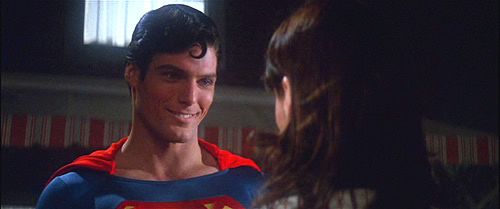
"Superman Returns" (Bryan Singer, 2006) Years in development that saw rumors of a Tim Burton version starring Nicolas Cage, a Kevin Smith script, and other wild schemes were finally brought to a screeching halt when Bryan Singer jumped the "X-men" franchise to tackle his dream project--bringing back Superman. His Superman. The Superman from the earliest films. So "Superman Returns" has an oddly nostalgic feel to it--almost morosely nostalgic. By this time Brando was dead, and Christopher Reeve had finally succumbed to complications from his spinal injury. At times, "Superman Returns" feels like a wake. It doesn't help that Singer has so much love for the first two films that he can't treat it with anything less than an almost religious devotion. This Superman is treated like a tragic, lonely god, but it's tough to feel sorry for him when he's the most powerful guy on the planet. If Superman can get the Kryptonite blues, what hope do the rest of us have? Vintage Brando footage is restored for Kal-el's father. Kevin Spacey fills in Gene Hackman's shoes (inadequately) as Lex Luthor. And Kate Bosworth is a more mature, less fun Lois Lane (she lacks Kidder's almost-macho fire). The film only has a proper feel when Supes is doing some incredible stunt. Also SR takes up a few years after the timeline of "Superman II," so...that little Supes-Lois tryst. There's a little issue that goes with it. Brandon Routh looks and talks so much like Chris Reeve it's down-right haunting. Maybe the next one, Singer will let him have a little bit more fun...like the first movies were.


Bonus:

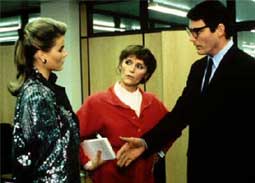
"Supergirl" (Jeannot Szwarc, 1984) Back in the days after III, but before IV, when it was kind of tough to pin Christopher Reeve to coming back to play Superman, the Salkinds had it in mind to expand the franchise by creating an off-shoot, featuring Kal-el's cousin Lara, whose family survived the distruction of Krypton in a protectively-domed city. She came to Earth as Linda Lee, but followed in her cousin's flight-path as Supergirl. They tried to make it work. Helen Slater is a real charmer as The Maid of Might, and the cast is surrealistically amazing: Peter O'Toole, Faye Dunaway, Mia Farrow, Peter Cook, Brenda Vaccaro, but David Odell's script is a mess. The vet's try their best to make it work with Dunaway's work feeling like an audition to play Cruella Deville...or Joan Crawford. Jerry Goldsmith gives a taste of what his "Superman" score would have been like--he and John Williams were trading off being assigned to it. "Supergirl" is a bit better than Superman III and IV, but that's not saying an awful lot.


Whither Superman? "Superman Returns" cost a lot of money, but wasn't the super-hit Warner Brothers was expecting. There's talk of another, but right now it's just talk. But if Singer's in charge, he'd better study that first "Superman" movie again, and lighten it up, or it'll never get off the ground.


* (Spoiler alert) The solves-all-problems time-reversal ending of II was thrown onto I, and the cliff-hanger ending of I (the space-bound nuke hijacked by Lex Luthor unwittingly frees three Kryptonian villains from "The Phantom Zone") was jettisoned--no one knew for sure there would be a "Superman II" though it was promised at the end of the 10minute + End Credits.


Monday, January 14, 2008

Superman Returns


You'll Believe a Man Can Float


Driving home from "Superman Returns" in 4-story IMAX and 3-freepin'-D on Wednesday night, I was listening to KIRO Newsradio. Thousands were evacuating, fearing the cresting of the Delaware River. Andrea Yates was convicted (again) of killing her kids. A public official was lost in the Olympic Forest.

"Man!" I thought. "We could really use Superman. "

I knew I needed him. It had been a rough week of moving furniture and hauling myself from The Island to The Redmond. I was swamped at work and I had to take Tuesday off for the transfer of our big stuff from The Place What We're Selling to the current domicile, so my Wednesday started at 4 am (just in time for the sunrise) to get started early on due assignments. After all this, I was looking forward to seeing friends I hadn't seen...in ages, and seeing the new Superman movie. I was really looking forward to that. I've been pretty discouraged lately, and a new Superman movie...well, that seemed just the ticket. The previews for it were great.

So, how is it?

Good! Not as good as "Superman: The Movie." Better than "Superman II" (which I've never liked) and it's Shakespeare compared to the moronic "Superman III: Wasting Richard Pryor" and the incompetent "Superman IV: The Quest for Peace" ("You'll Believe a Movie Can Stink to Highest Heaven!").

But everyone will be comparing it to the first one. As well they should. "Superman Returns" should be called "Son of Superman" (*ahem* cough!) as it's so closely tied to the first film. It recycles Marlon Brando as Father Jor-El, and recycles whole sections of the first film's Mario Puzo/Robert Benton/David Newman/Tom Mankiewicz script, including my favorite Lex Luthor line: "My father always told me..." "Get out!"

But, "Superman: The Movie" was really three films: The deadly earnest Krypton section ("This is no fantasy" intoned Brando at the beginning); the equally serious Smallville/Fortress of Solitude section (with Glenn Ford's last great performance, and a farewell to Ma Kent scene in a seemingly endless epic wheat field); and finally, the Metropolis movie, with its antic screwball comedy pace (brilliantly achieved, by the way), it's cartoonish villains ("Otis-burg? O-TIS-BURG???!!!") with their absurdly successful attempts at stealing nuclear missiles, andat its soul the "Superman Meets Girl" romantic comedy storyline. I've always felt that lurching shift in tone was a bit out of step with the rest of the film (though you could make a case for showing that stalwart Superman is needed in such a crazy, zany world). Now, I'm not so sure. Because "Superman Returns" keeps the earnest tone of the first couple sections of the original throughout its considerable length. More cohesive it may be, but it's not more entertaining. In fact, it tends to bog down the proceedings, which consists of "regrets and things unsaid" which would have made Richard Donner's "His Girl Friday" pacing inappropriate. Which only points out how large the gulf is between that first film and this one. Donner's "Superman" was a frothy entertainment, that, in the days of disco long sideburns, and flaired pants, winked at the concept of heroics. This one is heavier, darker, meaner and less entertaining. There's less joy to it. And it takes its heroes deadly seriously. You think a guy like Spiderman has great power, thus great responsibility? Hell! Try being "Superman!"

Donner's flying scenes in the first (with a lot of credit going to licensed pilot Christipher Reeve) showed the joy of flight--the freedom of it--the grace. Who wouldn't want to fly after "Superman?" "SR's" flights are rarely graceful, and powered by stress. This Superman is always in a hurry. He doesn't stop to smell the up-drafts or do a lazy roll through the clouds. He's making a bee-line from one emergency to another. There's another quality to the "SR" aerial scenes--isolation. Superman is often seen as a small speck in a big, empty sky with life going on far below him. He's not a part of this Earth, and Singer drives the point home again and again. It's no fun being Superman.

I'll bet audiences have a problem with that: if they were Superman, of course, they'd enjoy it. It brings to mind the Superman scene I'd like to see. Howard Chaykin, of "American Flagg" comics fame said in an interview how he'd like to start off a Superman comic. Lots of panels of ordinary Metropolitans going about their day only to have them interrupted by a blue-red streak going by their window. BOOM! Another about to sip his coffee. BOOM! A couple more of those until you get to the "splash" page: Superman, over the ocean, wearing a pair of shades, and popping his fingers, listening to "I Believe in You" (from "How to Succeed in Business (Without Really Trying)) on his Walkman. "You have the cool, clear eyes /of a seeker of wisdom and truth." Yeah. I'd love to see that Superman.
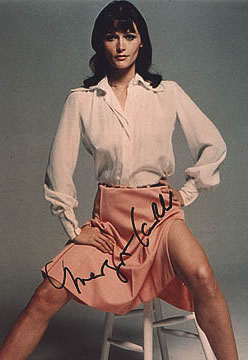
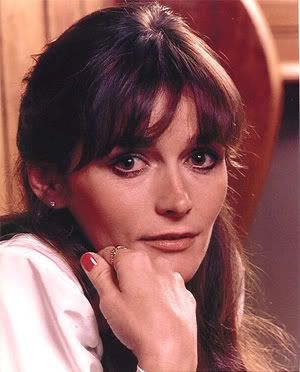

But despite "Returns'" seriousness, there are joys. Brandon Routh looks and sounds so much like Christopher Reeve that it doesn't take a big leap (or a single bound) to accept him in the role. He exhibits a bit more life as Clark Kent than the more stalwart Superman, breaking into a goofy grin at the slightest provocation, and restraining the klutz routine (he doesn't constantly punch up his glasses the way Reeves' CK did). I also like the fact that his performance doesn't have the same "I'm sharing a joke with the audience" quality that Reeve brought to the role. Kate Bosworth is damned cute as Lois Lane (as a blonde, she barely registers on the screen, but here, her hair darkened brown, she seems to have a bit more depth) and has little of the Margot Kidder neuroticism and (here's a plus!) I don't remember hearing her scream once. I do miss Kidder's whiskey baritone cracking on "Clark!," however.

There could be a bit more life to Frank Langella's Perry White and Kevin Spacey's Lex Luthor. Spacey's Luthor is self-contained malice and only sparks to life during a confrontation scene with Lois. Gene Hackman expertly tred the mine-field of jokes in the first film, but it was tough to buy him as a real threat to anybody but his cronies. Spacey's Luthor is a villain who does bad things...and enjoys doing bad things. Unfortunately, here, you mostly see him prepare to do bad things, and so there's no real pay-off for the character until 2/3 of the way through the film.

There is one cracker-jack sequence involving a doomed airliner that shows that it's pretty darned hard task to stop a plane in free-fall. It's note-perfect, right down to showing the skin of the craft buckling from a lurching halt. The movie has a good bead on the concept of heroism, too. There are a lot of heroics in this film (not just from der Ubermensch) where people who could take the easy way out, go against their better judgement and do What Must Be Done, despite the jeopardy it may put them in. It makes a statement that heroism doesn't come from powers and abilities far beyond those of mortal men. It comes from the heart, the conscience and the will.

Good movie/bad movie? Thumbs up/Thumbs down? Hard to say at this point. There are some movies that are merely okay while you suffer through them, but are better in memory ("Napoleon Dynamite" is one of those films: I can laugh at parts of it in retrospect, but I'd have to be kidnapped and a gun placed to my skull to watch it again). "Superman Returns" was just the opposite: enjoyable while sitting through it (though I was aware of just how long it was, I didn't quite get to the point of checking the time), but the farther I get from it, I remember what's wrong with it more than what was right. If I had my "druthers," "Superman Returns" would be lighter than the "Batman Begins," the "X-men" films, "Spiderman," certainly lighter than Ang Lee's "Hulk." At least it wasn't as frivolous as the "Fantastic Four." My opinion of it is evolving, and that brings up another issue.

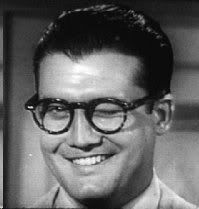
I've noticed an interesting trend in on-line reviews over the weekend. Initially, they're scathing, criticizing every aspect of the film..and harshly, to a ridiculous , often hysterical level. Second viewings produce a more favorable response, even admiration. I suspect that folks go, expecting to see the first film or worse yet, their idealized memory of the first...or second film. In that regards, this one will fail, but it can't help but fail. You can't fight a cherished favorite, or the memory of a cherished favorite. My advice: Go, expecting "Superman IV." I know I'm going to see it again. Through the double exposure of the 3-D glasses, I couldn't tell whether the cribbed...sorry, the "homage"...final shot of Superman flying up, up and away past the audience had its Superman smile benignly at the audience. Like the George Reeves wink at the end of some of the tv shows, and Christopher Reeve's shared smile, it would have been nice to see it in this one. The fact that I didn't disappoints me, and makes me wonder why a decision not to include it, was made. Don't we want Superman on our side? I'll have to see it again.
*

My favorite sum-up is by The Stranger's Andrew Wright who grumped: "For a movie featuring a hero who can conceivably give God a wedgie, there's precious little zowie to be found." "Zowie!" as in Adam West clobbering Ceasar Romero "Zowie?"


* And, sad to say, there is no smile on the final fly-by of 2006 Superman. He merely scans the audience with his eyes on the way past, ever vigilant. He probably isn't smiling because of the relatively few bodies he sees in the seats. And the ones that were there are already heading for the Exits. Not exactly what a super-hero expects when he sets out to "watch your back."