Showing posts with label Jean Arthur. Show all posts

Thursday, December 12, 2013

The Talk of the Town

The Talk of the Town (George Stevens, 1942) One could almost look at The Talk of the Town as being a sequel of sorts to Mr. Smith Goes to Washington, focusing on the judicial branch, rather than the legislative, and with more of a divided heart as to what kind of movie it should be.  

Part of that may be the number of screenwriters involved. Not only is Mr. Smith's scripter Sidney Buchman present, but also Irwin Shaw (both men would feel the lash of the blacklist in the 1950's) and Dale Van Every for story adaptation.  That many cooks typing away may explain the sometimes lurching tone from comedy to romance to high-mindedness to, uh, the underlying plot-line that once-in-awhile gets attended to.


The "main" interest is: who will Nora Shelley (Jean Arthur) end up with, romantically?  Stevens shot two endings and let preview audiences decide. Case closed.


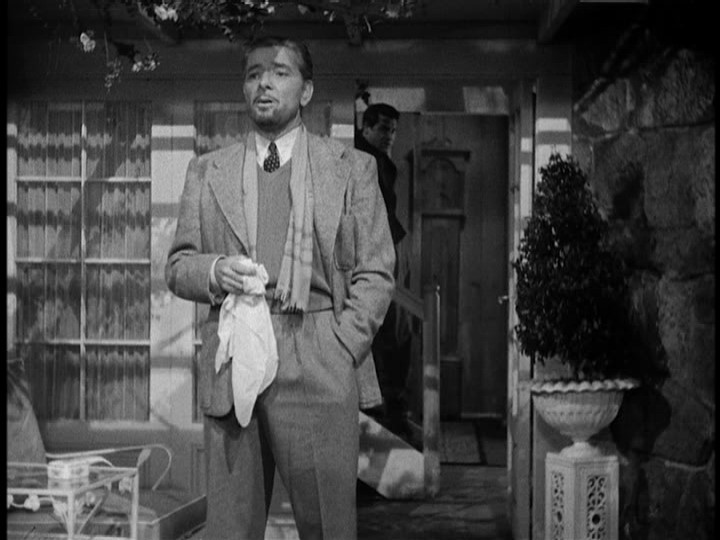
It's the least material aspect to the film in the first place.  The plot involves the burning of a local mill and the framing of mill worker and "activist" (one assumes a unionist) Leopold Dilg (Cary Grant) for arson and the murder of the plant foreman.  Everything is stacked against Dilg from the mill owner calling for his blood in the sympathetic press, to the trial judge being in Holmes' hip-pocket.  Dilg escapes from prison (in a dramatic opening sequence that's a bit out of sync with the rest of the movie) and hides out in "Sweetbrook," the rental house run by his high-school acquaintance Nora, who's trying to get the place in shape for the impending arrival of a temporary lodger, law dean Michael Lightcap (Ronald Colman) who's taking the Summer off to write a book.  This being a comedy, Lightcap arrives early—the night Dilg has stumbled his way in—and Nora has to hide the runaway in the attic, while the police comb the area looking for him.


"Hilarity ensues"
After a restless first night for all—nervous Nora has spent the night in another room and Dilg snores in his attic roost leading Lightcap to advise Nora she needs to do something about her adenoids—the complications begin: Dilg is too restless a spirit and cranky an agitator to to stay cooped in the attic; Lightcap needs a secretary and to keep Dilg under wraps and separated from Lightcap, Nora takes the job; and then, to raise the stakes, a local Senator stops by to tell Lightcap he's being nominated for the Supreme Court.  So, politics being what they are (the same as always), if there's any hint of scandal, oh, like, say, harboring a wanted fugitive in your house, it could hurt the professor's chances of being one of the Supremes (depending on who's in The White House, of course).

Dilg being Dilg, he can't stay under wraps for long, and he's soon hiding in plain sight as "the gardener," and his views of the law leads to some sparring over the letter of the law and how it can conflict with the intent, especially when those intentions are not honorable to the spirit of the law, and Lightcap finds himself embroiled in a conflict of interest, where his cloistered view from his ivory tower looks pretty good in theory, but bares only a conversational similarity to its practical applications in the world of dog-eat-dog. 

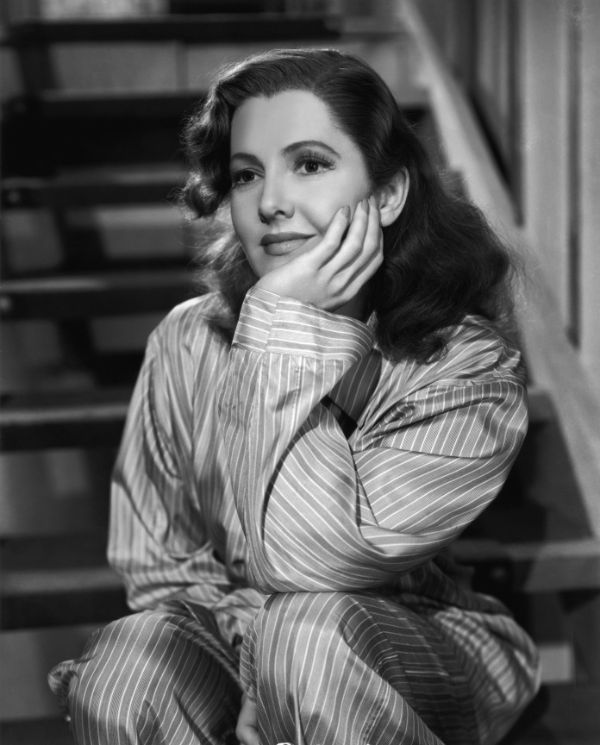
That's the meat of The Talk of the Town, but the screenwriters and Stevens must gild it with a "who gets the girl" storyline that will satisfy the jury of the audience.  Stevens let the answer to the question be decided by a preview audience of peers—with nothing decided until the very last second.  With Colman as a sophisticated book-smart professional with a lot of learning to do, and Grant as am earnest dreamer, it's hard to choose, but Arthur is, as always, a delight, finding ways to make the quick-witted Nora flustered, but with the best of intentions and the most charming of choices.   Like the movie, she's a bit of a mess, but an enjoyable one.


Tuesday, November 6, 2012

Anytime Movies Perpetually Reloaded: Election Edition

It's Election day 2012. If you haven't already, go out and vote, dammit. And in that spirit, time for some truths to be self-evident.

Anytime Movies are the movies I can watch anytime, anywhere. If I see a second of it, I can identify it. If it shows up on television, my attention is focused on it until the conclusion. Sometimes it’s the direction, sometimes it’s the writing, sometimes it’s the acting, sometimes it’s just the idea behind it, but these are the movies I can watch again and again (and again!) and never tire of them.


I’m very suspicious of patriotism (I always recall the "last resort of a scoundrel" remark), yet nothing moves me so much like a movie extolling the virtues of America.

It wasn’t until I was voting on the
Emmy’s that I sat down and watched “The West Wing.” I figured it was going to be a vapid “America-Love It or Leave It” tract (starring Rob Lowe), even if it did have Martin Sheen playing the President, in which case, I could leave it. But TWW was a serious look at government work—its glories and disappointments, the combination of ego and sacrifice. It could criticize individuals and “ideology for ideology’s sake,” but one thing it never ever criticized was the idea of Public Service, no matter what side of the aisle it was on. At the same time the country is being run by crooks specializing in an institutionalized form of bribery and graft, there is an infrastructure of people for whom government service is a sacred trust (well, there’s gotta be ONE!) “The West Wing” paid tribute to that corps of people wherever they might be, week after week, and it made for refreshingly positive TV. It also made for a refreshing look at our nation as it stands.

And so, too, does “

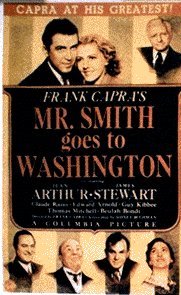
Mr. Smith Goes to Washington.” Made in 1939, it plays like it was written yesterday. When I saw it for the first time—right after “Watergate”—I found it amazingly prescient. But no, it was talking about its own times. The problems just keep re-occurring again and again. And again. Whoever doesn’t know history is doomed to repeat it, and with every fresh crop of people governing, they’ll keep making the same mistakes. Maybe they think they’re unique. Maybe they don’t know history. They say that if you keep making the same mistake over and over, it’s a sign of insanity. Well, psychology never factored in term limits.
“Mr. Smith…” is the story of a youth leader who is appointed to the Senate after the incumbent dies. This runs afoul of the state’s political machine that ran that senator as well as the senior Senator, Paine (
Claude Rains)—who just happens to be an idol of the new senator’s.

It wouldn’t work if director
Frank Capra didn’t have tall awkward Jimmy Stewart—not James, Jimmy—whose every stammered syllable bespoke humility. But get him talking about America or Liberty of The Capitol Dome and the stutter disappears in a fervent stage whisper that trails off in awe. Mr. Smith isn’t sure of himself, but he’s sure sure of the Country.

And
Washington, D.C. is just the place to shake him up with a few lashes of the Beltway. Stewart could be frustratingly folksy, but for Capra (and for Hitchcock and Anthony Mann) he could be unnervingly vulnerable and, at the other end of the bi-pole, dramatically unhinged. The last act of “Mr. Smith…”—the filibuster against false charges of graft—features Stewart in both phases. At one point, he's knee-deep in political hate-mail, clutching it in his hands and looking skyward like Jesus at Gethsemane. Then a few short paragraphs about “lost causes” later, he’s at his most defiant. “You think I’m licked! You ALL think I’m licked!!” That was his Oscar-winning performance, not the next year’s “The Philadelphia Story” where the “cynical reporter” bit just didn’t wash with someone who looked so homespun. The filibuster scene always brings a lump to my throat, and it’s not sympathy pains for Stewart’s frayed larynx.

Now, I’ve read the screenplay to “Mr. Smith Goes to Washington.” It ends with a big parade honoring the completely vindicated Smith, surrounded by his boy-rangers, supported by the woman-he-loves (Jean Arthur,
again, who manages to make her extraordinarily jaded Senate Aide adorable, even when she’s at her worst—and she has a great drunk scene with Thomas Mitchell. Hmmm, Thomas Mitchell, again). Why, even the disgraced Senator Paine is being lionized. Oh, it’s just so sweet, your eyes could roll back in their sockets and jam and stick that way. As Arthur’s Miss Saunders tipsily says in the film, “Nah, I can’t think of anything more shappy!” “Capra-corn” is what the very self-aware director called it.

So, he cut it.
Orson Welles has said: "If you want a happy ending that depends, of course, on where you stop your story." Capra leaves his story’s ending ambiguous. Oh, you could call the riotous goings-on at the end a Happy Ending—but all of Paine’s Senate pals are trying to calm him down, telling him it’s okay…everything’s all right, we're still on your side. The only solace Jefferson Smith is granted is in the sympathetic smile from the Vice-President (played by John Ford’s silent cowboy film-star Harry Carey) before he collapses in a heap of his enemy’s mass-generated letters. The movie "celebration" has all the weight of an Al Gore victory celebration on Election Day 2000--a case of premature exaltation. But nothing's been solved. No one's been cleared. Nothing has been decided. There is just misunderstanding and confusion. Carey leans back and has a chaw while the chaos of Democracy continues unabated. It may not be a "happy" ending, considering the sequence that was shelved. It may not even be a dramatically satisfying ending. But it is representative of the loud, messy process that turns the gears of Democracy. However slow-moving, however off-course, they still turn.

Jeferson Smith (Jimmy Stewart) looks for guidance.
Mr. Smith Goes to Washington
American Graffiti
To Kill a Mockingbird
Goldfinger
Bonus: Edge of Darkness

Sunday's Scene: For Dads and Grads
Tuesday: Fuggedaboutit...

Thursday, May 21, 2009

Anytime Movies Reloaded: - Only Angels Have Wings

It's Spring-Break for me. Times are busy. The Summer Movie Season is already begun (and I'll be writing about the new ones) and the Film Festivals are grinding away like creaky mills separating wheat from chaff. It's as good a time as any to re-boot a feature I started years ago, when it was suggested I do a "Top Ten" List.

I don't like those: they're rather arbitrary; they pit films against each other, and there's always one or two that should be on the list that aren't because something better shoved it down the trash-bin.

So, I came up with this: "Anytime" Movies.

Anytime Movies are the movies I can watch anytime, anywhere. If I see a second of it, I can identify it. If it shows up on television, my attention is focused on it until the conclusion. Sometimes it’s the direction, sometimes it’s the writing, sometimes it’s the acting, sometimes it’s just the idea behind it, but these are the movies I can watch again and again (and again!) and never tire of them. There are ten (kinda). They're not in any particular order, but the #1 movie IS the #1 movie.

While in college, I worked as a movie projectionist, and had an opportunity to show many great films for the various film courses being taught. But one film left a distinct impression—over the course of five days I had to show it eight times. I got to know it pretty well. Its name is “-Only Angels Have Wings” and it was directed by one of the great director-producers, Howard Hawks.

Hawks directed all types of movies, many of them classics of their genre: westerns (
Rio Bravo, Red River); mystery/noir (The Big Sleep); adventure (To Have and Have Not, Hatari!) and comedy (Bringing Up Baby, His Girl Friday). He even produced one of the first truly classic science fiction films (The Thing! [From Another World]), and an iconic musical (Gentlemen Prefer Blondes). Despite the genre, and despite the decade in which it was produced each film is unmistakably a Hawks film – a group of men (and women, but usually men) of diverse talents must come together to achieve a singular goal, be it to drive a huge herd of cattle to Missouri, or contain the alien threat, or capture a live rhinoceros, or get the bad guy to the Marshall (alive if possible) or ferry the refugees to safety, or find the dinosaur clavicle, or land a millionaire.

Conflict is achieved by introducing a newcomer to the mix who doesn’t understand the synergy of the group and who must learn “the code” to belong, and that keeps the group in cohesion. And so much the better if they do it without talking about it much.

That’s the Hawks formula, and he was able to create enough variations in the design that his films all seem different, even though they’re always telling the same basic story—a story that’s a metaphor for movie-making.
*

“Hello, professional”

Why “-Only Angels Have Wings” out of all those classics? It is the ultimate Hawks movie. Watch any of those others and you’ll hear similar lines and see similar situations, but in “Angels,” everything is distilled to the basic essence of the tale to become the best Hemingway story Hemingway never wrote. Distilled? The majority of the film takes place in one set! For this band of professionals, the goal is to fly the mail from the port city of Barancca through a narrow passage in the Andes utilizing one of a number of prop aircraft, all in need of repair. The men realize they’re merely links in a chain getting the mail…or a doctor…or a shipment of nitro-glycerin…to its destination with the threat of death flying right alongside. So hazardous is the job for these civilian-pilots that their base is a revolving door for the new blood who have to prove themselves. It’s "The Right Stuff” twenty years before Tom Wolfe popularized the phrase.

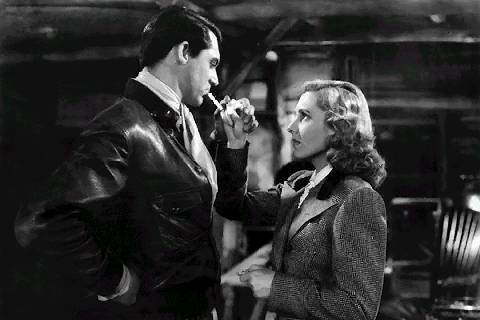
And it’s prime Hawks. For instance, watch the cigarettes. In a Hawks film, they’re visual short-hand for relationships—who’s in need and who can provide, who’s giving, who’s dependable, giving, taking, reading other's thoughts, . More than any other Hawks film, except perhaps “Rio Bravo,” the flame that’s there when you need it is a gambit that crams twice the information into the film, and reveals more about the characters than their deliberately circumspect dialog—what
Frank Capra called Hawks’s “three-corner dialog”—was allowed. To come right out and say things point-blank, well, not only would it be corny and unbelieveable…it just wasn’t done in Hawks's circles.

Hawks also liked to use music to convey mood. But it usually isn’t a Hollywood background score it's indigenous music—in this case, the bar band at Dutchy’s bar/mercantile and air terminal (this is a couple of years before “
Casablanca”). They set the mood, provide a little extra entertainment value, some local color for a set-bound movie and when the time is right and there’s a meeting of minds it’s reflected in a musical number in which everyone
participates. Again, no one has to come out and say ”We’re all thinking the same way.” They’re all singing the same song, so it’s understood.

"Boy, things happen fast around here, don't they?"

There’s also the unspoken ethos of the professional—you do your job to the best of your ability and you don’t talk about it. You don’t brag. You don’t cut corners and you don’t dwell on it. You do your job, you move on. You do your job right and people will notice. Do your job wrong and everyone suffers. In this way the group can depend on each other while staying out of their debt. In this movie-atmosphere, bit-players are allowed to shine. Yeah, the movie revolves around
Cary Grant (and the only role where he would be more stoic than he is here would be playing the icy spy Devlin in Hitchcock’s Notorious”) and the delightful Jean Arthur—she could turn on a dime from tragedy to comedy and not miss a step— but even the lowliest of character-actors get great moments of screen-time. Also of note are a very young Rita Hayworth at the start of her career and Richard Barthlemess—a former silent screen star who didn’t make the transition to “talkies.” He plays a pilot who must prove himself to the others and that he can “cut” it in their world. Art imitates life.

And then there’s
Thomas Mitchell, who might well be the greatest character actor to never achieve name-above-the-title status. A veteran of many a Frank Capra comedy—and whose most prominent role would be as Scarlett O’Hara’s father in “Gone with the Wind”—here he plays a character with the title “The Kid,” even though he’s the oldest of the pilots. So much of the movie centers on him that his one character fulfills every plot device except love interest, although with Hawks one could never be too sure of that, either. **

Ultimately it’s Mitchell’s Kid who provides the means for Grant’s character to express his feelings, which, typically, he does without really having to, and in a way that makes it obvious to everybody involved. And as if anybody missed the point how dependent everyone is on each other, most of the pilots wind up injured, “winged” so that by the end of the movie, two pilots have to perform the job of one to fly each mail-run. Perhaps the better title may have been “-Only Angels Have Two Wings.”

It’s all done so economically, so breezily and with so little in the way of “action” that one may get through the entire movie before realizing that mostly everybody just talked…without really coming out and saying what they mean. Everything is shot at eye-level. There’s nothing fancy in the camera-work. The story is the King, and everyone is working towards making it work…like professionals.


Cary Grant needs a match. Jean Arthur carries a torch.

* Hawks was well-known for taking different stories and turning them into the Hawks formula, sometimes rewiting the entire film on a day to day basis to get there. The most extreme example of this is “El Dorado,” which after ten minutes of one story suddenly veers into becoming a remake of the earlier Hawks-John Wayne western “Rio Bravo.” When Hawks called John Wayne to ask if he’d star in yet another western, “Rio Lobo,” Wayne knew exactly what he was getting into. “Do I get to play the drunk this time?” he drawled.

** Someday, someone far more intelligent than I is going to go through the Hawks filmography with an eye towards sexual politics—whether it’s the leering banter between
Montgomery Clift and John Ireland in “Red River,” or Cray Grant in drag in “Bringing Up Baby” (“I went GAY all of a sudden!!”) and “I Was a Male War Bride,” or some of the more bizarre stagings of musical numbers in “Gentlemen Prefer Blondes.” And then there’s the long line of husky-voiced women in his movies who are one of “the boys,” from Rosalind Russell to Lauren Bacall all the way up to future Paramount Studios exec Sherry Lansing. For all the macho posturing exhibited in his movies, there are hints that Hawks never completely “bought” into it and is enjoying winking at it. He may well be second only to James Whale in sneaking so much gay subtext into his movies.


-Only Angels Have Wings
Chinatown
Mr. Smith Goes to Washington
American Graffiti
To Kill a Mockingbird
Goldfinger
Bonus: Edge of Darkness

Saturday, May 16, 2009

Anytime Movies Reloaded: Mr. Smith Goes to Washington

It's Spring-Break for me. Times are busy. The Summer Movie Season is already begun (and I'll be writing about the new ones) and the Film Festivals are grinding away like creaky mills separating wheat from chaff. It's as good a time as any to re-boot a feature I started years ago, when it was suggested I do a "Top Ten" List.

I don't like those: they're rather arbitrary; they pit films against each other, and there's always one or two that should be on the list that aren't because something better shoved it down the trash-bin.

So, I came up with this: "Anytime" Movies.

Anytime Movies are the movies I can watch anytime, anywhere. If I see a second of it, I can identify it. If it shows up on television, my attention is focused on it until the conclusion. Sometimes it’s the direction, sometimes it’s the writing, sometimes it’s the acting, sometimes it’s just the idea behind it, but these are the movies I can watch again and again (and again!) and never tire of them. There are ten (kinda). They're not in any particular order, but the #1 movie IS the #1 movie.

I’m very suspicious of patriotism (I always recall the "last resort of a scoundrel" remark), yet nothing moves me so much like a movie extolling the virtues of America.

It wasn’t until I was voting on the
Emmy’s that I sat down and watched “The West Wing.” I figured it was going to be a vapid “America-Love It or Leave It” tract (starring Rob Lowe), even if it did have Martin Sheen playing the President, in which case, I could leave it. But TWW was a serious look at government work—its glories and disappointments, the combination of ego and sacrifice. It could criticize individuals and “ideology for ideology’s sake,” but one thing it never ever criticized was the idea of Public Service, no matter what side of the aisle it was on. At the same time the country is being run by crooks specializing in an institutionalized form of bribery and graft, there is an infrastructure of people for whom government service is a sacred trust (well, there’s gotta be ONE!) “The West Wing” paid tribute to that corps of people wherever they might be, week after week, and it made for refreshingly positive TV. It also made for a refreshing look at our nation as it stands.

And so, too, does “
Mr. Smith Goes to Washington.” Made in 1939, it plays like it was written yesterday. When I saw it for the first time—right after “Watergate”—I found it amazingly prescient. But no, it was talking about its own times. The problems just keep re-occurring again and again. And again. Whoever doesn’t know history is doomed to repeat it, and with every fresh crop of people governing, they’ll keep making the same mistakes. Maybe they think they’re unique. Maybe they don’t know history. They say that if you keep making the same mistake over and over, it’s a sign of insanity. Well, psychology never factored in term limits.

“Mr. Smith…” is the story of a youth leader who is appointed to the Senate after the incumbent dies. This runs afoul of the state’s political machine that ran that senator as well as the senior Senator, Paine (
Claude Rains)—who just happens to be an idol of the new senator’s.

It wouldn’t work if director
Frank Capra didn’t have tall awkward Jimmy Stewart—not James, Jimmy—whose every stammered syllable bespoke humility. But get him talking about America or Liberty of The Capitol Dome and the stutter disappears in a fervent stage whisper that trails off in awe. Mr. Smith isn’t sure of himself, but he’s sure sure of the Country.

And
Washington, D.C. is just the place to shake him up with a few lashes of the Beltway. Stewart could be frustratingly folksy, but for Capra (and for Hitchcock and Anthony Mann) he could be unnervingly vulnerable and, at the other end of the bi-pole, dramatically unhinged. The last act of “Mr. Smith…”—the filibuster against false charges of graft—features Stewart in both phases. At one point, he's knee-deep in political hate-mail, clutching it in his hands and looking skyward like Jesus at Gethsemane. Then a few short paragraphs about “lost causes” later, he’s at his most defiant. “You think I’m licked! You ALL think I’m licked!!” That was his Oscar-winning performance, not the next year’s “The Philadelphia Story” where the “cynical reporter” bit just didn’t wash with someone who looked so homespun. The filibuster scene always brings a lump to my throat, and it’s not sympathy pains for Stewart’s frayed larynx.


Now, I’ve read the screenplay to “Mr. Smith Goes to Washington.” It ends with a big parade honoring the completely vindicated Smith, surrounded by his boy-rangers, supported by the woman-he-loves (Jean Arthur, again, who manages to make her extraordinarily jaded Senate Aide adorable, even when she’s at her worst—and she has a great drunk scene with Thomas Mitchell. Hmmm, Thomas Mitchell, again). Why, even the disgraced Senator Paine is being lionized. Oh, it’s just so sweet, your eyes could roll back in their sockets and jam and stick that way. As Arthur’s Miss Saunders tipsily says in the film, “Nah, I can’t think of anything more shappy!” “Capra-corn” is what the very self-aware director called it.

So, he cut it.
Orson Welles has said: "If you want a happy ending that depends, of course, on where you stop your story." Capra leaves his story’s ending ambiguous. Oh, you could call the riotous goings-on at the end a Happy Ending—but all of Paine’s Senate pals are trying to calm him down, telling him it’s okay…everything’s all right, we're still on your side. The only solace Jefferson Smith is granted is in the sympathetic smile from the Vice-President (played by John Ford’s silent cowboy film-star Harry Carey) before he collapses in a heap of his enemy’s mass-generated letters. The movie "celebration" has all the weight of an Al Gore victory celebration on Election Day 2000--a case of premature exaltation. But nothing's been solved. No one's been cleared. Nothing has been decided. There is just misunderstanding and confusion. Carey leans back and has a chaw while the chaos of Democracy continues unabated. It may not be a "happy" ending, considering the sequence that was shelved. It may not even be a dramatically satisfying ending. But it is representative of the loud, messy process that turns the gears of Democracy. However slow-moving, however off-course, they still turn.


Jeferson Smith (Jimmy Stewart) looks for guidance.

Mr. Smith Goes to Washington
American Graffiti
To Kill a Mockingbird
Goldfinger
Bonus: Edge of Darkness

Sunday's Scene: For Dads and Grads
Tuesday: Fuggedaboutit...


Monday, January 14, 2008

Mr. Smith Goes to Washington

I’m very suspicious of patriotism (I always recall the "last resort of a scoundrel" remark), yet nothing moves me so much like a movie extolling the virtues of America.

It wasn’t until I was voting on the Emmy’s that I sat down and watched “The West Wing.” I figured it was going to be a vapid “America-Love It or Leave It” tract (starring Rob Lowe), even if it did have Martin Sheen playing the President, in which case, I could leave it. But TWW was a serious look at government work—its glories and disappointments, the combination of ego and sacrifice. It could criticize individuals and “ideology for ideology’s sake,” but one thing it never ever criticized was the idea of Public Service, no matter what side of the aisle it was on. At the same time the country is being run by crooks specializing in an institutionalized form of bribery and graft, there is an infrastructure of people for whom government service is a sacred trust (well, there’s gotta be ONE!) “The West Wing” paid tribute to that corps of people wherever they might be, week after week, and it made for refreshingly positive TV. It also made for a refreshing look at our nation as it stands.

And so, too, does “
Mr. Smith Goes to Washington.” Made in 1939, it plays like it was written yesterday. When I saw it for the first time—right after “Watergate”—I found it amazingly prescient. But no, it was talking about its own times. The problems just keep re-occurring again and again. And again. Whoever doesn’t know history is doomed to repeat it, and with every fresh crop of people governing, they’ll keep making the same mistakes. Maybe they think they’re unique. Maybe they don’t know history. They say that if you keep making the same mistake over and over, it’s a sign of insanity. Well, psychology never factored in term limits.

“Mr. Smith…” is the story of a youth leader who is appointed to the Senate after the incumbent dies. This runs afoul of the state’s political machine that ran that senator as well as the senior Senator, Paine (
Claude Rains)—who just happens to be an idol of the new senator’s.

It wouldn’t work if director
Frank Capra didn’t have tall awkward Jimmy Stewart—not James, Jimmy—whose every stammered syllable bespoke humility. But get him talking about America or Liberty of The Capitol Dome and the stutter disappears in a fervent stage whisper that trails off in awe. Mr. Smith isn’t sure of himself, but he’s sure sure of the Country.

And
Washington, D.C. is just the place to shake him up with a few lashes of the Beltway. Stewart could be frustratingly folksy, but for Capra (and for Hitchcock and Anthony Mann) he could be unnervingly vulnerable and, at the other end of the bi-pole, dramatically unhinged. The last act of “Mr. Smith…”—the filibuster against false charges of graft—features Stewart in both phases. At one point, he's knee-deep in political hate-mail, clutching it in his hands and looking skyward like Jesus at Gethsemane. Then a few short paragraphs about “lost causes” later, he’s at his most defiant. “You think I’m licked! You ALL think I’m licked!!” That was his Oscar-winning performance, not the next year’s “The Philadelphia Story” where the “cynical reporter” bit just didn’t wash with someone who looked so homespun. The filibuster scene always brings a lump to my throat, and it’s not sympathy pains for Stewart’s frayed larynx.


Now, I’ve read the screenplay to “Mr. Smith Goes to Washington.” It ends with a big parade honoring the completely vindicated Smith, surrounded by his boy-rangers, supported by the woman-he-loves (Jean Arthur, again, who manages to make her extraordinarily jaded Senate Aide adorable, even when she’s at her worst—and she has a great drunk scene with Thomas Mitchell. Hmmm, Thomas Mitchell, again). Why, even the disgraced Senator Paine is being lionized. Oh, it’s just so sweet, your eyes could roll back in their sockets and jam and stick that way. As Arthur’s Miss Saunders tipsily says in the film, “Nah, I can’t think of anything more shappy!” “Capra-corn” is what the very self-aware director called it.

So, he cut it.
Orson Welles has said: "If you want a happy ending that depends, of course, on where you stop your story." Capra leaves his story’s ending ambiguous. Oh, you could call the riotous goings-on at the end a Happy Ending—but all of Paine’s Senate pals are trying to calm him down, telling him it’s okay…everything’s all right, we're still on your side. The only solace Jefferson Smith is granted is in the sympathetic smile from the Vice-President (played by John Ford’s silent cowboy film-star Harry Carey) before he collapses in a heap of his enemy’s mass-generated letters. The movie "celebration" has all the weight of an Al Gore victory celebration on Election Day 2000--a case of premature exaltation. But nothing's been solved. No one's been cleared. Nothing has been decided. There is just misunderstanding and confusion. Carey leans back and has a chaw while the chaos of Democracy continues unabated. It may not be a "happy" ending, considering the sequence that was shelved. It may not even be a dramatically satisfying ending. But it is representative of the loud, messy process that turns the gears of Democracy. However slow-moving, however off-course, they still turn.

Jeferson Smith (Jimmy Stewart) looks for guidance.


Anytime Movies are movies I can watch anytime, anywhere. If I see a second of it, I can identify it. If it shows up on television, my attention is focused on it until the conclusion. Sometimes it's the direction, sometimes it's the writing, sometimes it's the acting, sometimes it's just the idea behind it, but these are the movies I can watch again and again and never tire of them. There are ten. This is Number 6.


III: Once Upon a Time In the West
IV: -Only Angels Have Wings
V: The Searchers


VI: Mr. Smith Goes to Washington


VII: Chinatown
VIII: American Graffiti
X: Goldfinger

- Only Angels Have Wings

While in college, I worked as a movie projectionist, and had an opportunity to show many great films for the various film courses being taught. But one film left a distinct impression—over the course of five days I had to show it eight times. I got to know it pretty well. Its name is “-Only Angels Have Wings” and it was directed by one of the great director-producers, Howard Hawks.

Hawks directed all types of movies, many of them classics of their genre: westerns (
Rio Bravo, Red River); mystery/noir (The Big Sleep); adventure (To Have and Have Not, Hatari!) and comedy (Bringing Up Baby, His Girl Friday). He even produced one of the first truly classic science fiction films (The Thing! [From Another World]), and an iconic musical (Gentlemen Prefer Blondes). Despite the genre, and despite the decade in which it was produced each film is unmistakably a Hawks film – a group of men (and women, but usually men) of diverse talents must come together to achieve a singular goal, be it to drive a huge herd of cattle to Missouri, or contain the alien threat, or capture a live rhinoceros, or get the bad guy to the Marshall (alive if possible) or ferry the refugees to safety, or find the dinosaur clavicle, or land a millionaire.

Conflict is achieved by introducing a newcomer to the mix who doesn’t understand the synergy of the group and who must learn “the code” to belong, and to keep the group in cohesion. And so much the better if they do it without talking about it much.

That’s the Hawks formula, and he was able to create enough variations in the design that his films all seem different, even though they’re always telling the same basic story—a story that’s a metaphor for movie-making.*

“Hello, professional”


Why “-Only Angels Have Wings” out of all those classics? It’s the ultimate Hawks movie. Watch any of those others and you’ll hear similar lines and see similar situations, but in “Angels,” everything is distilled to the basic essence of the tale to become the best Hemingway story Hemingway never wrote. Distilled? The majority of the film takes place in one set! For this band of professionals, the goal is to fly the mail from the port city of Barancca through a narrow passage in the Andes utilizing one of a number of prop aircraft in need of repair. All the men realize they’re merely links in a chain getting the mail…or a doctor…or a shipment of nitro-glycerin…to its destination with the threat of death flying right alongside. So hazardous is the job for these civilian-pilots that their base is a revolving door for the new blood who have to prove themselves. It’s "The Right Stuff” twenty years before Tom Wolfe popularized the phrase.

And it’s prime Hawks. For instance, watch the cigarettes. In a Hawks film, they’re visual short-hand for relationships—who’s in need, who can provide, who’s giving, who’s dependable. More than any other Hawks film, except perhaps “Rio Bravo,” the flame that’s there when you need it is a gambit that crams twice the information into the film, and reveals more about the characters than their deliberately circumspect dialog—what
Frank Capra called Hawks’ “three-corner dialog”—was allowed. To come right out and say things point-blank, well, not only would it be corny and unbelieveable…it just wasn’t done.

Hawks also liked to use music to convey mood. But it usually isn’t a Hollywood background score but indigenous music—in this case, the bar band at Dutchy’s bar/mercantile and air terminal (this is a couple of years before “
Casablanca”). They set the mood, provide a little extra entertainment value, some local color for a set-bound movie and when the time is right and there’s a meeting of minds it’s reflected in a musical number in which everyone
participates. Again, no one has to come out and say ”We’re all thinking the same way.” They’re all singing the same song, so it’s understood.

"Boy, things happen fast around here, don't they?"


There’s also the unspoken ethos of the professional—you do your job to the best of your ability and you don’t talk about it. You don’t brag. You don’t cut corners and you don’t dwell on it. You do your job, you move on. You do your job right and people will notice. Do your job wrong and everyone suffers. In this way the group can depend on each other while staying out of their debt. In this movie-atmosphere, bit-players are allowed to shine. Yeah, the movie revolves around Cary Grant (the only role where he’s more stoic than he is here would be playing the icy spy Devlin in Hitchcock’s Notorious”) and the delightful Jean Arthur--she could turn on a dime from tragedy to comedy and not miss a step, but even the lowliest of character-actors get great moments of screen-time. Also of note are a very young Rita Hayworth at the start of her career and Richard Barthlemess—a former silent screen star who didn’t make the transition to “talkies.” He plays a pilot who must prove himself to the others and that he can “cut” it in their world. Art imitates life.

And then there’s
Thomas Mitchell, who might well be the greatest character actor to never achieve name-above-the-title status. A veteran of many a Frank Capra comedy—and whose most prominent role would be as Scarlett O’Hara’s father in “Gone with the Wind”—here he plays a character with the title “The Kid,” even though he’s the oldest of the pilots. So much of the movie centers on him that his one character fulfills every plot device except love interest, although with Hawks one could never be too sure of that, either. **

Ultimately it’s Mitchell’s Kid who provides the means for Grant’s character to express his feelings, which, typically, he does without really having to, and in a way that makes it obvious to everybody involved. And as if anybody missed the point how dependent everyone is on each other, most of the pilots wind up injured, “winged” so that by the end of the movie, two pilots have to perform the job of one to fly each mail-run. Perhaps the better title may have been “-Only Angels Have Two Wings.”

It’s all done so economically, so breezily and with so little in the way of “action” that one may get through the entire movie before realizing that mostly everybody just talked…without really coming out and saying what they mean. Everything is shot at eye-level. There’s nothing fancy in the camera-work. The story is the King, and everyone is working towards making it work…like professionals.


*Hawks was well-known for taking different stories and turning them into the Hawks formula, sometimes rewiting the entire film on a day to day basis to get there. The most extreme example of this is “El Dorado,” which after ten minutes of one story suddenly veers into becoming a remake of the earlier Hawks-Wayne western “Rio Bravo.” When Hawks called John Wayne to ask if he’d star in yet another western, “Rio Lobo,” Wayne knew exactly what he was getting into. “Do I get to play the drunk this time?” he drawled.

** Someday, someone far more intelligent than I is going to go through the Hawks filmography with an eye towards sexual politics—whether it’s the leering banter between
Montgomery Clift and John Ireland in “Red River,” or Cray Grant in drag in “Bringing Up Baby” (“I went GAY all of a sudden!!”) and “I Was a Male War Bride,” or some of the more bizarre stagings of musical numbers in “Gentlemen Prefer Blondes.” And then there’s the long line of husky-voiced women in his movies who are one of “the boys,” from Rosalind Russell to Lauren Bacall all the way up to future Paramount Studios exec. Sherry Lansing. For all the macho posturing exhibited in his movies, there are hints that Hawks never completely “bought” into it and is enjoying winking at it. He may well be second only to James Whale in sneaking so much gay subtext into his movies.


Cary Grant needs a match. Jean Arthur carries a torch.


Anytime Movies are movies I can watch anytime, anywhere. If I see a second of it, I can identify it. If it shows up on television, my attention is focused on it until the conclusion. Sometimes it’s the direction, sometimes it’s the writing, sometimes it’s the acting, sometimes it’s just the idea behind it, but these are the movies I can watch again and again and never tire of them. There are ten. This is Number 4.


IV: -Only Angels Have Wings


V: The Searchers


X: Goldfinger