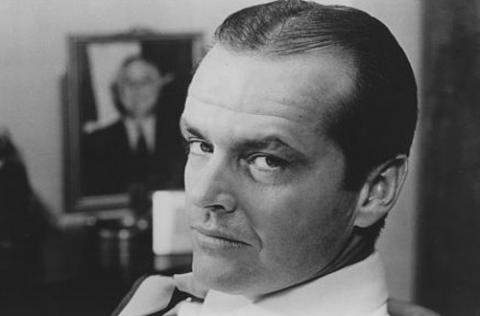
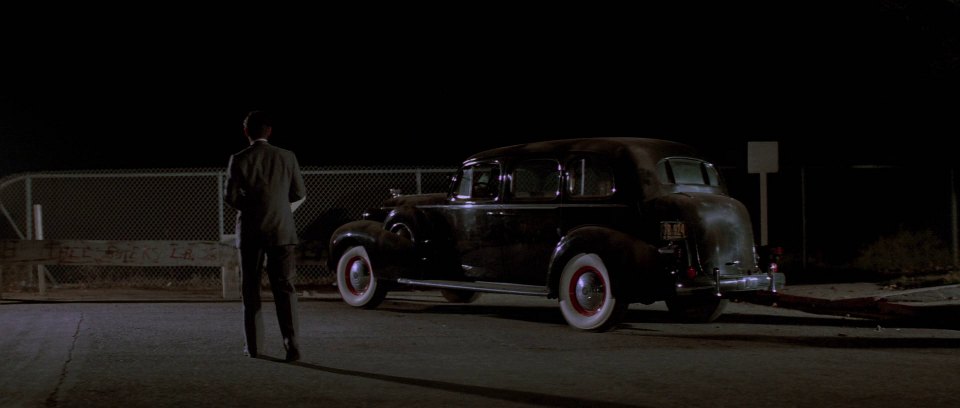
It's Spring-Break for me. Times are busy. The Summer Movie Season is already begun (and I'll be writing about the new ones) and the Film Festivals are grinding away like creaky mills separating wheat from chaff. It's as good a time as any to re-boot a feature I started years ago, when it was suggested I do a "Top Ten" List.
I don't like those: they're rather arbitrary; they pit films against each other, and there's always one or two that should be on the list that aren't because something better shoved it down the trash-bin.
So, I came up with this: "Anytime" Movies.
Anytime Movies are the movies I can watch anytime, anywhere. If I see a second of it, I can identify it. If it shows up on television, my attention is focused on it until the conclusion. Sometimes it’s the direction, sometimes it’s the writing, sometimes it’s the acting, sometimes it’s just the idea behind it, but these are the movies I can watch again and again (and again!) and never tire of them. There are ten (kinda). They're not in any particular order, but the #1 movie IS the #1 movie.
 This is the one of the “Anytime Movies” that falls into the category of “Lost Causes and the Futility of Good Intentions,” but lest anyone think these films are depressing, they’re not.
Well, okay, this one is.
It’s also perfect. Given the nature of the trio of men who oversaw its creation—screenwriter Robert Towne, director Roman Polanski, and producer Robert Evans—the thing could have self-destructed like a fragment grenade. And, in fact, the planned trilogy of films featuring detective JJ “Jake” Gittes investigating three big California crimes (water, land, and nuclear) stopped after the personality clashes that derailed the first attempt at filming “The Two Jakes.” Polanski couldn’t set foot on American soil due to rape charges, and Evans (who was producing and co-starring) and Towne (writing and directing) clashed on the set. The combination of expanded roles and ego following the first film’s success shut down production, and it was only the efforts of star Jack Nicholson, who took over directing, that allowed the film to be made. They say that great films need a miracle – “Chinatown” had it, but “The Two Jakes” didn’t have a prayer.
“Middle of a drought and the water commissioner drown. Only in L.A., huh?”
Based loosely on the construction of the William Mulholland designed aqueduct, and the real estate swindles it engendered, “Chinatown” starts out as a mystery even more steeped in the locale of L.A. than Chandler’s Marlowe stories. Here, the very city is a part of the crime and corruption is steeped in its soil and water. Water is the heart of “Chinatown.” Its ebbs and flows are constantly monitored –the original object of investigation is the city’s head of the Department of Water and Power who then becomes the victim of a grisly murder. Water is never too far from the surface of the story. Even Jerry Goldsmith’s shimmering score suggests water in its low harp trills, and the sighing of, yes, water phones.
“Chinatown” gets all its details right—the language, the costumes—Richard Sylbert’s period work is amazing, and a perfect cast makes the most of Robert Towne’s wise-acre dialog. A perfect cast? Right down to the smallest part. There’s a favorite moment of mine when Gittes, after badgering the secretary of the new head of Water and Power, is distracted by an odd squeaking noise. He, of course, has to investigate, and opens the outside door on the two work-men who are scraping the dead man’s name off the door. The one guy looks irritated—the other guy smiles, nods, and as the door is closing shakes his head ruefully—“Happens every time.” It’s a tiny little moment that feels so authentic, so much more than a mere movie might provide, it provides a moment of truth in a continuous string of truths.
But, that is a moment you can appreciate as it happens. “Chinatown” lives on in the memory. After the mystery is solved, moments come back, as the pieces come together and the journey to the conclusion coalesces. They haunt. On repeat viewings, “Chinatown” is a treasure trove of call-backs and foreshadowing’s.* Little things, like the odd cadence of a name, mispronunciations that can be traced back, a birth-mark—lead you downstream to a resolution that you should, in retrospect, have seen all along. Like Gittes, its only at the end that you get the full story. Of course, like him, you follow the most obvious things that seem out of place or arouse suspicions. ** But the world is a more complicated place and long after the film is finished does it strike you that the two most suspicious people while watching the film are actually the most decent and altruistic ones acting with the best of intentions. Of course, in this world they come to a bad end.
“Do you know how long I've been in this business?”
And here’s where that mix of personalities comes in. Towne’s screenplay is very grey—Jake Gittes at the beginning of the film—the very beginning—gets angry and abusive with his moaning client, Curly (In the film, there’s only an impatient irritation). Later dialog casts a sympathetic spin on water magnate Noah Cross. The original screenplay ends with, if not a happy ending, then a triumphant one. Evans loved the screenplay (though he didn’t quite get it), but in one of those odd bursts of inspiration that sustained him throughout an eccentric career as a producer, decided that the film needed a European sensibility, and so, brought in Polanski, who had left the country and Los Angeles following the murder of his wife Sharon Tate by the Manson family. His perverse take on the city and the material focused it, and made a stronger delineation between good that is good and evil that is truly evil—and provided the ending that doomed those most in need of rescuing. “Chinatown” ends in shock, and with a sense of tragic inevitability. That Jake, in a moment of selfishness and hubris, sets up a series of events that ends up completely bollixing up his good intentions, completes a circle and a character arc that had been percolating below the surface the entire time. He ends up ignoring the lessons he learned in Chinatown (the district, not the film), and paying the same consequences. The final words are ironic--“Forget it, Jake. It’s Chinatown.” Forgetting isn’t his problem. Remembering is. Towne would hammer the point home with the last line of “The Two Jakes”—“Kitty! You never get over it.”
But by that time it wasn’t necessary to say.
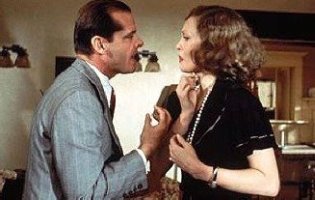
Jake wants the truth.
He can't handle the truth.
* On my most recent viewing, I noticed a moment that shocked me. After Jake and Evelyn flee a scene in her car amidst a hail of gunfire, the superbly coiffed Evelyn touches her left eye—as if she has something in it. Whether it was Polanski’s or Dunaway’s choice, it’s a brilliantly sick one.
** Towne’s screenplay is so fully formed that, unlike Chandler’s Marlowe stories, a first person narrative isn’t necessary. We are always aware of what Gittes is doing, and thanks to Nicholson’s performance, what he’s thinking.
Chinatown
Mr. Smith Goes to Washington
American Graffiti
To Kill a Mockingbird
Goldfinger
Bonus: Edge of Darkness