Showing posts with label Audrey Hepburn. Show all posts

Thursday, April 26, 2012

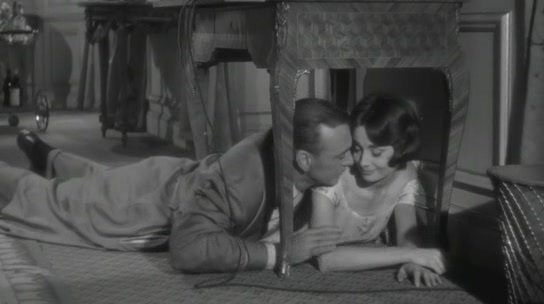
Love in the Afternoon

Love in the Afternoon (Billy Wilder, 1957) Light Billy Wilder film from the effervescent days when he was directing Audrey Hepburn at the start of her career.

This one had me smiling immediately with Maurice Chevalier's opening narration—"Zis is the city, Paris France"—echoing Jack Webb's "Dragnet" opening.  Chevalier plays a private detective, Claude Chavasse, specializing in "matrimonial work," and lately the case-work has been dominated by one subject, American millionaire Frank Flannagan (Gary Cooper), who is cutting a wide swath through the world's female population, both married and unmarried divisions.  The work has turned Chavasse into a cynic about the paths of love—he's gumshoed too many of them—in marked contrast to his daughter, Ariane (Hepburn), a cello player (hold that image in your head for a moment), still wide-eyed at the prospect of romance, and fascinated with her father's work, something he does his utmost to discourage.

When she gets wind that a cuckolded husband (John McGiver, hyperventilating amusingly in fine comic fashion) plans on breaking in on his wife's tryst to ventilate Flannagan, she steps in from the balcony to insert herself into the situation.  This inevitably (in the movies, at least) to an affair between the elder lothario and the young ingenue, one that she manipulates by trying to talk a competitive game in conquests.  The situation is ripe with comic possibilities, which Wilder exploits every chance he gets, even using Flannagan's moving musical accompaniment (the final assault is preceded by a four piece rendition of "Fascination").

Much has been made of Cooper's age in the film, and it is an issue.   Cary Grant was supposed to be Flannagan (Wilder had been trying to entice Grant into one of his films for years) but when a deal wasn't reached,* Cooper, who at 56 was Grant's senior by three years, was hired.  Cooper is an odd fit, as opposed to younger men like, say, Gregory Peck (as in Roman Holiday) or William Holden (in Sabrina), but Wilder works around it, initially, keeping Coop' in shadow to emphasize his "mystery man" status, and Cooper's early performance is, interestingly, boyish and somewhat immature.

And that's the point.  Flannagan is a man-child, used to getting everything he wants.  And Ariane has her choice between younger men—immature and unsophisticated—and Flannagan—sophisticated but immature.  All it takes for him to grow up is a level of commitment, something he's avoided his whole life by having a train to catch.  Both character arcs feel complete and satisfying, even though it is the "7-10 split" of May-December romances, and one feels a little creepy watching them make out.

And a little guilty, in the same way that it was tough to watch the denouement of Sabrina.  Okay, it's charming that she likes the old guy, but if he really was thinking this through, with all this new-found maturity, wouldn't he be thinking about her, and what she has to look forward to in a life with him (which can be summed up in one word..."short")?

And then, one considers Wilder, and the blithe, darkly cavalier sensibility that he brought to the movies, moral though his stand-point might be.  One can imagine Wilder, the guy who ended Some Like It Hot with "Nobody's perfect," with a similar tag for this movie: "Aren't you concerned about the age difference?"  "If she dies, she dies..."

*  At this point, Grant was getting concerned about his age and being paired with young actresses ("robbing the cradle, again" is how James Stewart summarized the situation late in his career), but his misgivings must have subsided enough to co-star with Hepburn in Charade for Stanley Donen six years later.

Friday, September 19, 2008

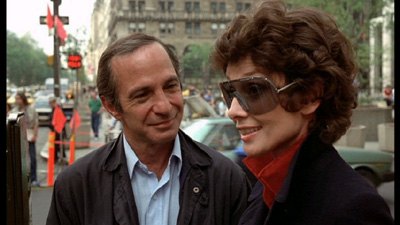
They All Laughed

"They All Laughed" (Peter Bogdanovich, 1981) There's something sweet and low-down about Peter Bogdanovich's "They All Laughed," a mid-summer night's urban romance-a-thon set to country music in the heart of New York City. Part detective story, part romance, part Altman-esque roundelay, part screwball comedy, it's another of those Bogdanovich love-letters to the style of old movies that reflected life through a rose-colored filter. It isn't life as it is, or life as it should be, but life as you'd want it to be, suffused with the pangs and dangers that new love energizes into life and makes it crisp. New York has never looked better, because it's seen through the eyes of a hopeless romantic--all of the excitement with none of the hassles. Would that the same were true of the various trysts and liaisons zipping through the movie.

"They All Laughed" also has a fresh feel to it, with a mix of movie veterans and spry new-comers (and some of the production crew) all intermingling and bringing some zing to the proceedings.
Ben Gazzara proves himself the best heir to Bogart for portraying tough guys with a tarnished heart of gold, and Audrey Hepburn is indescribably Audrey Hepburn, coquettishness shimmering through the worry-lines of experience. John Ritter fulfills the promise of a leading man capable of grace and ungraceful slapstick that was only hinted at in the leering farce of "Three's Company." Then there's the trio of model-actresses in various stages of crossing that dash--Colleen Camp, Patti Hansen, and the doomed Dorothy Stratten. Of the production staff, Blaine Novak, the film's co-screenwriter makes for an entertaining odd-ball/voice of reason, and producer George Morfogen plays, appropriately, a harried boss.


Gazzara, Ritter and Novak are all investigators for a Big Apple detective agency, and the first two are sent to trail two supposedly errant wives in the city, and before you can sing "Laura is the face in the misty light," the stalking has turned to love...completely the opposite from what you'd expect in New York City.

Put aside the on-set intrigues and backstage stories, "They All Laughed" is a sweet-spirited romp. The country-western music dates it a bit, and a sad nostalgia permeates it now. But it's one of the best of Peter Bogdanovich's productions that doesn't retreat into the past to garner its graces. And with his mixed cast of professionally-minded veterans and star-crossed amateurs, he probably felt more freedom working on this film than three of his previous elephantine-proportioned ones ("Daisy Miller," "At Long Last Love" and "Nickelodeon"). Certainly with his guerrilla crew (working without permits) led by Wim Wenders DP Robby Muller, the film has the energy and snap of what one would consider an indie hit these days. But in 1981, critics and industry folk had the knives out for Bogdanovich, making this an overlooked gem--a true labor of love in a medium that held a lot of heart-break for the director.

Tuesday, April 8, 2008

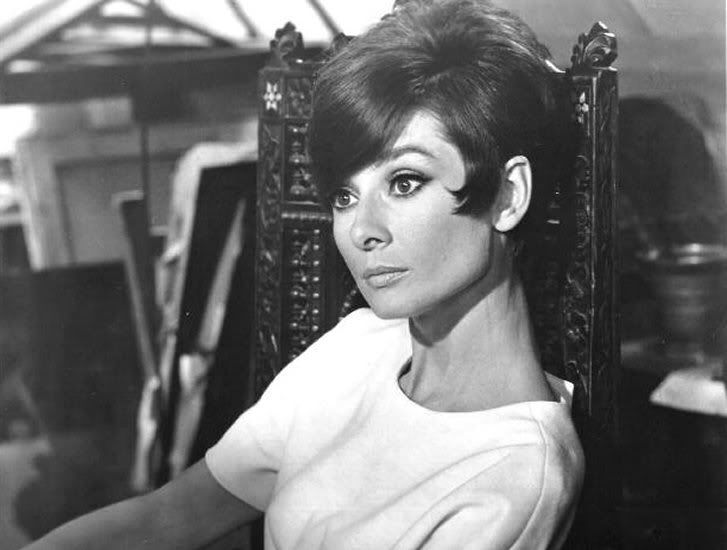
How to Steal a Million

"How to Steal a Million" (William Wyler, 1966) Audrey Hepburn, all Givenchy'd up and no place to go, with her "Roman Holiday" director, William Wyler. Now the locale is Paris--the exteriors, at least--and the slim plot revolves around Hepburn securing the services of an art thief (Peter O'Toole--committed, but aloof) to break into a National Gallery to nab a statue (created by her forger-father) before the insurance company can examine it and expose it as a fraud. It takes about an hour of cute dialogue, spry encounters, several costume changes and an incident of "meet-cute" before we get there. The rest of the movie documents the long, drawn-out robbery which relies on false alarms--and we see all of them. There is magnetism involved, but not among the principal actors--Hepburn pirouettes in her own spotlight, and O'Toole observes, amused. Wyler, on the other hand, is content to make sure we see how expansive the sets are, like he was still filming "Ben-Hur." Those sets, however, never seem more than nattily-dressed cavernous soundstages (his next film would be the equally leaden "Funny Girl"). It's a trifle, with all the consistency of just-applied meringue, and with as much confectioner's sugar.

Sunday, February 3, 2008

Missed It By That Much: Robin and Marian

Missed It By That MuchA series of analyses of treasured film that are not classics,
though they could have been if only a few elements were changed.


"Robin and Marian" (Columbia/Tri-Star) 1976
Director: Richard Lester
Screenplay: James Goldman

On paper, it looks perfect. The author of "The Lion In Winter" jumping a few years ahead in the story to tell of the end of Richard the Lionheart's bloody Crusades, and the return of Robin Hood and the loyal Little John to Sherwood Forest, where they find a lot has changed. Directing would be Richard Lester, who had returned to A-list prominence with his extraordinary staging of "The Three Musketeers"/"The Four Musketeers." He was becoming the "go-to" guy for period dramas, finding ways to bring a mature light-heartedness to any dreary point in history (or more appropriately, he would ignore Hollywood sound-stage pretense and show historical periods a bit more accurately--for example, his fly-filled Rome in the otherwise schtick-filled "A Funny Thing Happened On the Way to the Forum"). In the years since, his successes had been spotty: "Juggernaut," his all-star take on the disaster film, sank at the box-office (never mind--watch it!), as did his dream-project "Royal Flash" bringing his "Musketeers" adaptor George MacDonald Fraser's character to the big screen.
But "Robin and Marian" had that Goldman script (unfortunately, Goldman's other produced screenplay "They Might Be Giants," although good for naming rock bands, also failed at the box-office despite the star-power of a post-"Patton" George C. Scott and Joanne Woodward) and a dream-cast. Goldman wanted Nicol Williamson as Robin and maybe Sean Connery as Little John. Lester got them, but reversed the roles, which Goldman had to admit, worked. Robert Shaw would re-unite with his "From Russia With Love" co-star (and golfing partner) as the Sheriff of Nottingham. Richard Harris would play King Richard, Denholm Elliott and Ronnie Barker (of "The Two Ronnies") would be Merry Men. Ian Holm would appear as the weasley King John. But, with the role of Maid Marian, they hit the mother-lode: after nearly a decade off the screen, producer Ray Stark coaxed Audrey Hepburn to play the older, wiser lost love of Robin Hood.

Filming was done in Spain (Lester's old haunt from "Musketeers" and "A Funny Thing Happened On the Way to the Forum") and completed quickly--Lester's a "one-take" kind of director which always appealed to Connery.


Then things started to go wrong.
The script by Goldman is charming, but often relies, as did "The Lion in Winter" on piquant anachronisms--the kind of "Isn't that funny? They talk like we do!" approach to historical drama that can be a bit cloying. "You never wrote!" complains Maid Marian at one point in the script about Robin Hood's many years away. "I don't know how!" says Robin in perplexed reply.
But there are some nice things--the over-all theme of living past your prime or need, combined with Robin's nostalgia for the old days and his childish belief that he can make things right again on all fronts. There are some nice little cliche-bashings. I remember a couple of cut-away shots of Nicol Williamson's Little John looking pained at Robin and Marian expressing affection for each other, and thinking, "Oh Lord, they're going to make Little John gay!" which I thought was a pretty cheap way to bring in relevance to the story. But it proves to be a clever gambit. Later in the film when Marian goes to John and begs him to keep Robin out of battle, she makes the same assumption. "You've always been jealous of me! But you had him all those years!" Williamson beautifully underplays this scene "Yer Rob's lady," he mumbles. "What?" she cries. "If ye'd been mine, I'd never've left." and Williamson chucks the apple he was eating into the night where it arcs and disappears. Nice set-up. Nice turn. As is the ending, recreating the myth of Robin firing one last arrow through the window, telling John to bury Marian and he where it lands. In Lester's last shot, it never falls to earth.

The charm of the script no doubt appealed to Hepburn--she has a speech at the end that most actresses would kill for, though, practically. it slows the film to a crawl at a critical time. There are publicity pictures of Lester and Connery showing her around the set, but Hepburn, given Lester's directorial approach of "You act, I'll shoot" might have been a bit put off by his quick approach and lack of hand-holding.

She made complaints about some of the gristlier aspects to Lester's cut, particularly to his opening the film with a shot of ripe fruit, and ending it, with the fruit rotting in the sun. This is a brilliant way to express an aspect of the story--that Robin, and Marian too, have overstayed their usefulness. And the film is gritty. The staging of an opening scene in a burned-out desert fortress feels more like everybody's waiting for Godot rather than King Richard. And Lester keeps his own anachronisms well-chosen, for example Robin Hood's morning routine--waking up in the forest, stretching, brushing his teeth with a fir branch, and reaching for a good ball-scratch until he sees Marian waking up--Connery's hopping attempt to be nonchalant is priceless.

And the violence is rough stuff. People die very badly in the film despite the chain-mail and armor, and the wounds they suffer are played up. Lester seemed determined to counter-act any chirpiness in the film by bringing it down to Earth. Maybe this upset Hepburn.

But for whatever reason, producer Ray Stark chose to take control. Initially, Lester employed Michel Legrand, his composer for the "Musketeers" films, to write a period-appropriate score, which was met with much approval, though it wasn't tuneful or romantic in any way. Stark, hearing the score, and not having control over much else, replaced it with a quickly put-together score by John Barry, who'd worked with Lester before and whose James Bond scores for Connery were well-known. He also won an Oscar for the music for Goldman's "The Lion in Winter." Barry's a wonderful composer, but the main-stay of his score is a bucolic love theme that frequently bounces over the scenes and makes them too sweet for a film about the passing of youth and the end of days. It's sounds like it would be more appropriate for a film about otters frolicing than "Robin and Marian." Perhaps Stark thought would be enough to soothe the blue-haired ladies going to see Audrey Hepburn's first film in a decade. Given her rather cute performance, maybe it would have been a good idea to re-cast her, too. Perhaps she took the role as a chance to get another Oscar (she won in 1954 for "Roman Holiday"--Katherine Hepburn won for her starring role in "The Lion in Winter"). She didn't get it. Nor did the blue-hairs show up. The film was not a major hit at the box office.

I've never heard the Legrand score, but considering the amazing job that he did scoring "The Three Musketeers" for Lester, the two might have done something very interesting for this film. But we'll never know. "Robin and Marian" is locked in a bizarre nether-world where it's at once too sweet, but also stark and unsentimental. Lester could make misconcieved films, but his approach to counter-point Goldman's sentimentality in a world of hardship was a good one. One would have liked to have seen that version of the film.