 "Ninotchka" (Ernst Lubitsch, 1937) You don't often get to see a perfect movie—a movie of fine material: a great script, perfectly cast and executed, yet isn't calcified in pre-calculation, that lives and breathes and takes advantage of accidents. Something that feels like life, only written better. A movie that beguiles, while still acknowledging the real world, and that any interruption will just have to wait until "The End"...which comes far too soon. A movie that widens the eyes, expands the mind and tickles the funny bone. That's "Ninotchka."
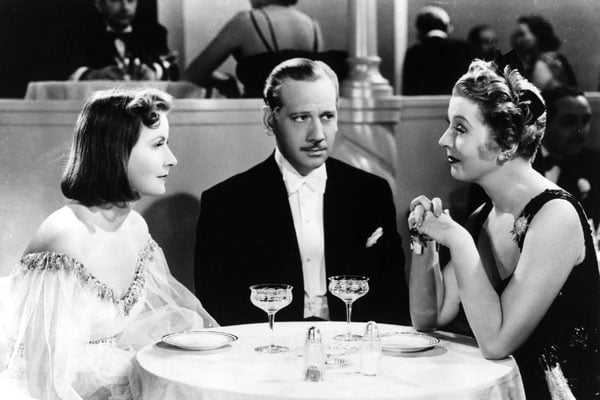
Three Russian emissaries (Sig Ruman, Felix Bressart, Alexander Granach) are in Paris on official business, hoping to get top dollar for some diamonds confiscated during the Russian Revolution. Out of the discriminating eye of the commissar, they decide to stay at Paris' most opulent hotel--the better to attract the interest of capitalist speculators, comrade. Of course. As luck would have it, it's also the domicile of the Russian Grand Duchess Swana (Ina Claire), in exile, and shy a few diamonds due to the Revolution. When her "kept man," the Count Leon D'Algout (Melvyn Douglas) encounters them, he plies them with the finest life Paris has to offer, stringing them along while the gears of the authorities grind slowly to take back the diamonds before they can be sold.
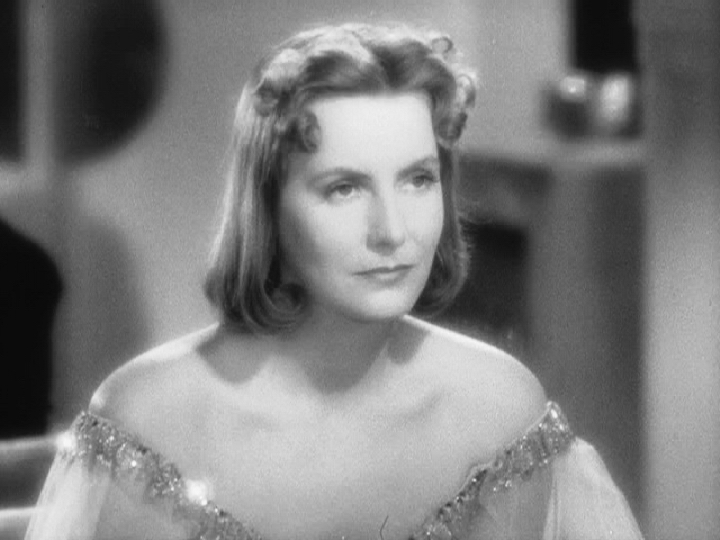
The delays in retrieving money for the Soviet State puts the Reds on high alert, and a by-the-book-politburo-crat, Nina Ivanova Yakushova (Greta Garbo) is dispatched to investigate.
She does not like what she sees.
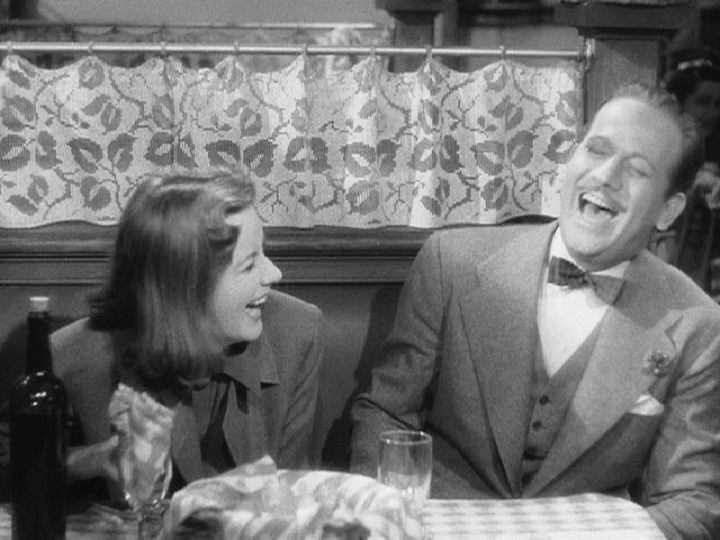
Her humorless buttinski attitude might put things on the right track, and that's the last thing Count D'Algout wants, but he finds his and Paris' charms are lost on "Ninotchka." She is so gray and humorless, with a suspicious look in her eye and expressionless of face, she is more than ideologically committed to the Socialist state, she is practically Vulcan (emphasis on "practical"). The Count must work overtime to beguile her, and overtime is something this representative of the Worker cannot abide. Like it matters. The Count becomes intrigued with her, and decides to make time on his own time.
"Ninotchka" is political satire as fairy-tale, complete with the converted princess and the pixieish subservients (all thing being equal, comrade, but some are more equal than others—or is that "fairest of them all?"). The conceit is charming, and add the star-power of Greta Garbo as "Ninotchka" and the thing practically fizzes. Garbo has always been a legendary presence, somewhat unapproachable. But her work in this film, with Billy Wilder and Charles Brackett's words and buoyed in its interpretation by "The Lubitsch Touch," is the effervescence that pops the film's cork. Again, the structure of the story helps. Garbo's no-bolshevik attitude at the beginning sets up a magical transformation from mugly ducklink to beautiful swana-be. That she is funny in both aspects and possessed of a comic timing with the accuracy of a Swiss watch, while still radiating the sex appeal that made her a box-office queen, is a bit of a miracle. It's my prejudice to think that such a lionized star couldn't possibly be such a fine actress. You learn something new every day.
Which is exactly the point. You might as well enjoy it. One can't help it when the lesson is so delightful.
Showing posts with label Ernst Lubitsch. Show all posts
Showing posts with label Ernst Lubitsch. Show all posts
Thursday, May 13, 2010
Ninotchka


_05.jpg)



Friday, May 16, 2008
To Be or Not To Be
"To Be or Not To Be" (Ernst Lubitsch, 1942) "The Lubitsch Touch"  (that undefinable "something" that made the films of Ernst Lubitsch work) had so many elements connected to the man himself--the instincts, the East European sensibility for craft, the worldly wisdom and the timeless humor. What was it that made Lubitsch such a master of what ever material he chose to over-see?*
But this one's a tricky one, and it didn't do well at the box-office during war-time, but not for want of trying. "To Be or Not To Be"** focusses on a Polish theater troupe during the days just before the Nazi occupation. It stars Jack Benny (he rarely did films, but his crack slow burn double takes are on brilliant display here), Carole Lombard (at her best, too--this was her last film before being killed in a plane crash coming back from a War Bonds rally), and it just roasts the Nazi's over the coals, mocking their blustering bureaucratic-ness, while hinting at their dark, dark designs. it's just one of the films that was poking Hitler in the eyes during the '40's. Today, one looks at it with eyes popping and jaw dropping every few minutes for the forwardness of the material. It did not tread lightly, and never less than entertainingly.
But even so, the populace was getting a daily dose of Hitler-slamming (Chaplin had made "The Great Dictator" in 1940, you could see comic book super-heroes kicking the tushes of caricatures of Adolf and Tojo, and Spike Jones had a nice novelty hit with "In the Feuhrer's Face"), and the majority of Americans had loved ones in the service while being rationed gasoline, sugar, rubber, nylons and all sorts of American luxuries to provide for the more pressing needs of the military, up to and including buying war bonds. It might have been too much to expect them to take this one in too...even for a nickel.
Still, looking at it today without the constant barrage of war-news from Europe, it's still a credible comedy, although there are some timing problems in the second act. It begins with one of the most used comedy bits in war documentaries, when an actor portraying Hitler walks into the room to be greeted by snappy salutes and a unison "Heil Hitler." To which, "Hitler" raises his hand and says "Heil myself." Benny doesn't stray too far from his radio persona, as a cluelessly vain actor and leader of a theater troupe (One of the Nazi's says of him: "Oh, yes I saw him in 'Hamlet' once. What he did to Shakespeare we are now doing to Poland." uh...your jaw--you might want to pick that up), oblivious to the fact that his wife is the big draw, and that she plays host to any number of dashing pilots who dash into her dressing room the moment he begins one of his drawn-out soliloquys, where he can have the spotlight all to himself. Lombard does not play cute in this one, but turns on the glamour, while never losing her comic timing--a nice trick, that. Her Mrs. Tura is just as vain as her husband, but a good deal smarter and the wit emanating from her and about her are some of the best lines in the movie. Her dashing pilot is played by a very young and very one-note Robert Stack, long before he would find better roles that would benefit his limitations.
Quibbles aside, it's still a great example of miraculous "The Lubitsch Touch."*** When the final laugh-filled shot went to black, K. said, "Now I know why you like old movies." Smart, funny, poignant, the grand masters of the cinema, like Lubitsch, transcend the passage of time and circumstance.
* Want to see "The Lubitsch Touch" in action? Rent "Shop Around the Corner" with James Stewart and Claudette Colbert, and watch its modern redress "You've Got Mail" with Tom Hanks and Meg Ryan. Same story, basically. Worlds apart as far as quality and craft, and even timeliness, of all things.
** Not to be confused with the crass remake starring Mel Brooks and Anne Bancroft--again, same story, but who's behind the wheel makes all the difference.
*** I think I've mentioned the story before of Billy Wilder and William Wyler leaving Lubitsch's funeral and Wilder sighing, "Well, no more Lubitsch." To which, Wyler replied, "Worse than that. No more Lubitsch pictures."
 (that undefinable "something" that made the films of Ernst Lubitsch work) had so many elements connected to the man himself--the instincts, the East European sensibility for craft, the worldly wisdom and the timeless humor. What was it that made Lubitsch such a master of what ever material he chose to over-see?*
But this one's a tricky one, and it didn't do well at the box-office during war-time, but not for want of trying. "To Be or Not To Be"** focusses on a Polish theater troupe during the days just before the Nazi occupation. It stars Jack Benny (he rarely did films, but his crack slow burn double takes are on brilliant display here), Carole Lombard (at her best, too--this was her last film before being killed in a plane crash coming back from a War Bonds rally), and it just roasts the Nazi's over the coals, mocking their blustering bureaucratic-ness, while hinting at their dark, dark designs. it's just one of the films that was poking Hitler in the eyes during the '40's. Today, one looks at it with eyes popping and jaw dropping every few minutes for the forwardness of the material. It did not tread lightly, and never less than entertainingly.
But even so, the populace was getting a daily dose of Hitler-slamming (Chaplin had made "The Great Dictator" in 1940, you could see comic book super-heroes kicking the tushes of caricatures of Adolf and Tojo, and Spike Jones had a nice novelty hit with "In the Feuhrer's Face"), and the majority of Americans had loved ones in the service while being rationed gasoline, sugar, rubber, nylons and all sorts of American luxuries to provide for the more pressing needs of the military, up to and including buying war bonds. It might have been too much to expect them to take this one in too...even for a nickel.

Still, looking at it today without the constant barrage of war-news from Europe, it's still a credible comedy, although there are some timing problems in the second act. It begins with one of the most used comedy bits in war documentaries, when an actor portraying Hitler walks into the room to be greeted by snappy salutes and a unison "Heil Hitler." To which, "Hitler" raises his hand and says "Heil myself." Benny doesn't stray too far from his radio persona, as a cluelessly vain actor and leader of a theater troupe (One of the Nazi's says of him: "Oh, yes I saw him in 'Hamlet' once. What he did to Shakespeare we are now doing to Poland." uh...your jaw--you might want to pick that up), oblivious to the fact that his wife is the big draw, and that she plays host to any number of dashing pilots who dash into her dressing room the moment he begins one of his drawn-out soliloquys, where he can have the spotlight all to himself. Lombard does not play cute in this one, but turns on the glamour, while never losing her comic timing--a nice trick, that. Her Mrs. Tura is just as vain as her husband, but a good deal smarter and the wit emanating from her and about her are some of the best lines in the movie. Her dashing pilot is played by a very young and very one-note Robert Stack, long before he would find better roles that would benefit his limitations.
Quibbles aside, it's still a great example of miraculous "The Lubitsch Touch."*** When the final laugh-filled shot went to black, K. said, "Now I know why you like old movies." Smart, funny, poignant, the grand masters of the cinema, like Lubitsch, transcend the passage of time and circumstance.
* Want to see "The Lubitsch Touch" in action? Rent "Shop Around the Corner" with James Stewart and Claudette Colbert, and watch its modern redress "You've Got Mail" with Tom Hanks and Meg Ryan. Same story, basically. Worlds apart as far as quality and craft, and even timeliness, of all things.
** Not to be confused with the crass remake starring Mel Brooks and Anne Bancroft--again, same story, but who's behind the wheel makes all the difference.
*** I think I've mentioned the story before of Billy Wilder and William Wyler leaving Lubitsch's funeral and Wilder sighing, "Well, no more Lubitsch." To which, Wyler replied, "Worse than that. No more Lubitsch pictures."
Subscribe to:
Posts (Atom)