"An Affair to Remember" (Leo McCarey, 1957) I'm of two minds about "An Affair To Remember," which is as it should be, as it's two movies: the deft romantic comedy on-board ship and the maudlin tragedy with musical numbers (by a kid's chorus)—not one of my favorite genres! The first part is terrific, and the second part is insufferable, at least to me, and shows the best and worst of director Leo McCarey.
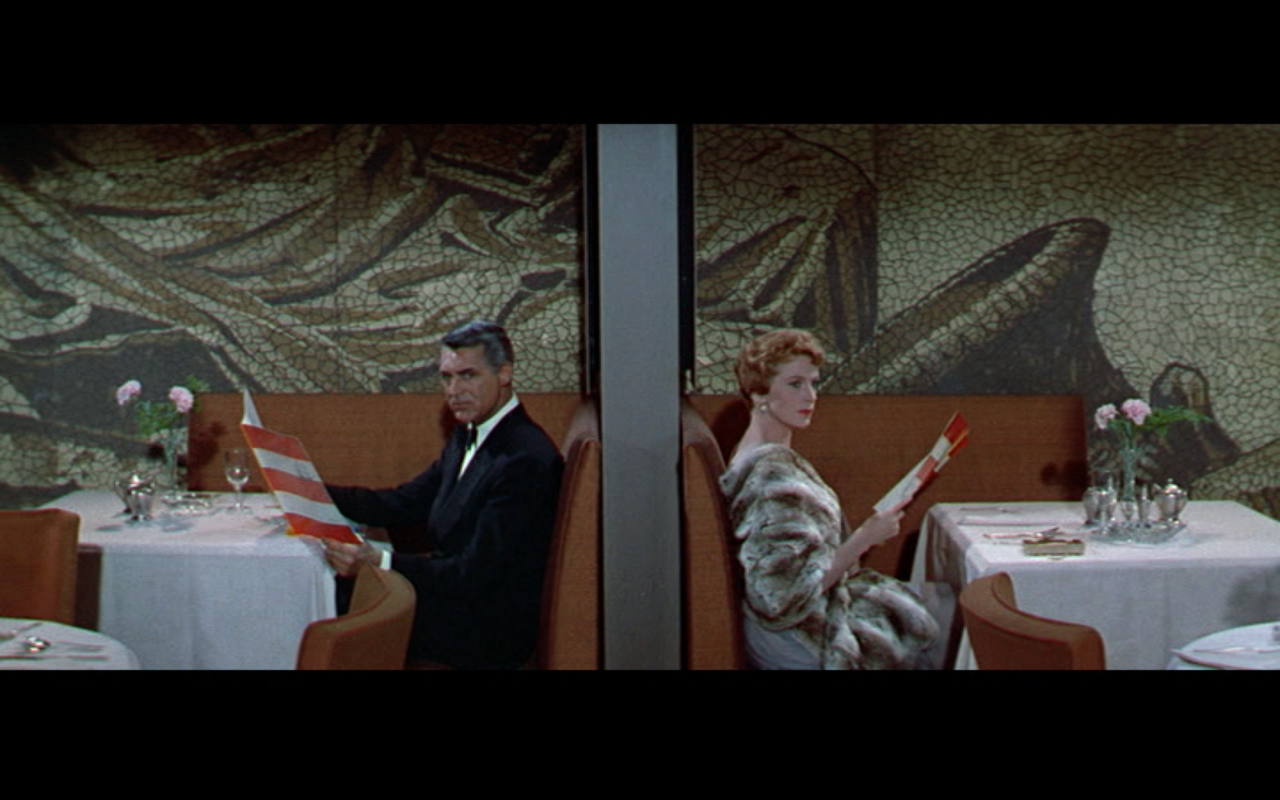
Let's start with the good stuff, shall we? Two co-dependents, a gigolo and a "kept woman," meet on board a cruise that in practicality and the metaphoric sense represent escape from a pair of disasterous relationships. They "meet cute," and spend the rest of their cruise tryng to avoid each other in public, as he's an infamous playboy and she's just trying to maintain her reputation. It's a neat little cinematic problem (filmed in cruise-ship-length Cinemascope). They resolve to 1) jilt their lovers and their dependent life-styles and 2) vow to meet at the top of the Empire State Building in six months or once they're on their feet (ironic turn of phrase, that).
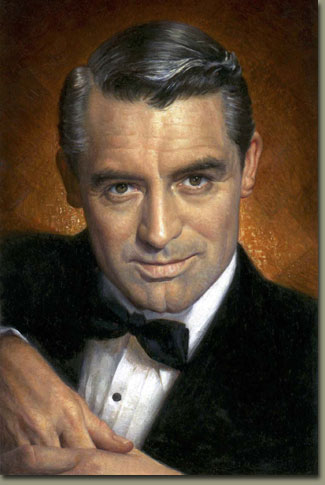
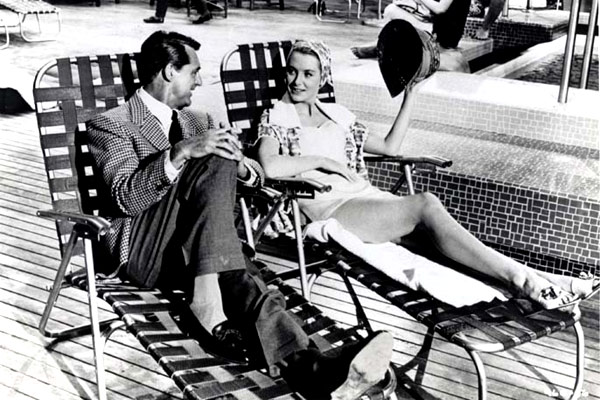
This part of the film is great fun because it's light and airy and features two performers who could do romantic comedy like no other (McCarey solidified Cary Grant as "Cary Grant" in the film "The Awful Truth"), and reflected the circumstances of filming. Grant is perfectly matched with Deborah Kerr, whose reputation as a comedienne has historically been given short-shrift. Here, the two characters conspire to meet in the close quarters of the ship, while avoiding detection by the nosey passengers. In real-life Grant and Kerr got on like a house-afire: Grant was nursing a broken-heart at the time of filming, and Kerr was a fellow British ex-pat with his sense of home and humor. You can see the chemistry between the two—at one point, Kerr flubs a line and the two don't break the scene, leaving Grant with a delighted look on his face, and Kerr making it feel like real-life. When they're separated as they leave the boat, the movie no longer floats, but founders with melodrama and tragedy.
McCarey (who directed "Duck Soup") falls back on an old Marx Bros. solution: to give the audience a little breathing room, throw in a few songs (a tactic that Groucho famously harpooned in "Horse Feathers" when he addresses the audience: "I have to stay here, but there's no reason you folks can't go to the lobby 'til this blows over.").
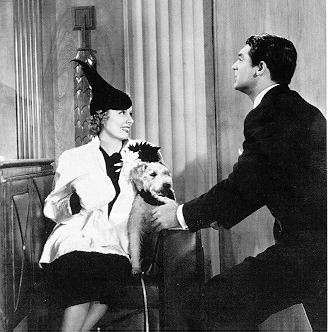
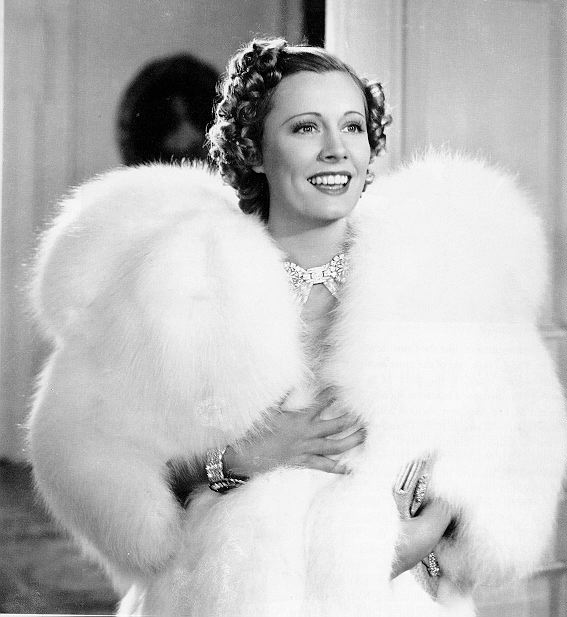
I'm even more cynical about this section of the film for a number of reasons, both having to do with McCarey. "An Affair To Remember" is a remake of McCarey's earlier "Love Affair" (1939, starring Irene Dunne and Charles Boyer),* and except for the wide-screen color photography and the songs nothing much changed, although it's easier to see Boyer as a European playboy (trying to pass off Cary Grant as Italian, is about as successful as passing him off as an American). Watching the film, McCarey's first after a couple of anti-communist propaganda pieces ("You Can Change the World" and "My Son John"), one begins to see it as McCarey's Pension Guarantee. He wears all the hats: co-writer, producer, director and—the part that rankles a bit—lyricist for all the Harry Warren songs in the film's last half. Nice gig that he hired himself for. And if any of those songs became a hit, he had money from the residuals for life.
I don't begrudge McCarey's double-dipping—this happened quite a bit in Hollywood when a producer could get away with it,** but one wonders--with a co-lyricist credited--just how much McCarey contributed to the songs. Me, I want to head for the lobby when the orchestra starts up (especially for such enduring classics as "TomorrowLand" and "The Tiny Scout," which lie at the bottom of Warren's prolific, accomplished output). They're padding, and prolong the wait to the inevitable reunion (which is given remarkably short-shrift) at the movie's end.
Also, there is a moment of revelation in "An Affair to Remember" that, hard to admit, is just beyond the considerable acting abilities of Cary Grant to pull off. McCarey blows that moment by leaving his camera on Grant the entire time when a cut-away (to what he's looking at) might have provided more dramatic weight (merely by the editing) to Grant's angst. Long takes are great, but there's an absence of information here that hurts the scene and what it's trying to convey. That we are also unprepared for that revelation by any fore-shadowing compounds the error.
And it is a mistake. In planning and execution.
One still seeks out McCarey films...especially the chance to see the film that didn't win the Academy Award for Best Picture (and he felt should have) the year "The Awful Truth" did—the sad and melancholy "Make Way for Tomorrow." It has yet to see a DVD release in this country.
* It was remade again, using the original title, by producer Warren Beatty and director Glenn Gordon Caron with Beatty, Annette Bening and Katharine Hepburn (in her last role) as Beatty's grandmother. The material about a lifelong lothario meeting the woman whom he chooses to settle down with, only to be separated by tragedy must have seemed particularly poignant to Beatty.
** Here's a nasty one: "The Theme from Star Trek." Written by Alexander Courage for the original series, producer Gene Roddenberry then penned completely unnecessary lyrics (beyond the South Sea Island "Aaa-aah's"), merely to skim half the proceeds from Courage's pay-check to himself. Nice guy. But he had the power to do it...so he did.


_02.jpg)



_01.jpg)