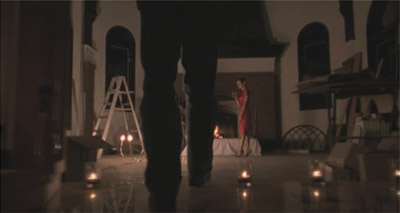
 "The Brothers Bloom" (Rian Johnson, 2008) One of those ones that "got away" when I first started LNTAM; I'd wanted to see this in the theaters and it disappeared, like your betting money, so quickly there wasn't a chance.
Johnson had been the enfant terrible behind the enfant terrible noir-film "Brick," (which was a nicely designed but ultimately precious/pretentious conceit—a detective movie set in high school), and there was enough there to anticipate what he was going to do next. The last thing you'd expect would be this reality-twisting con-game movie at equal times ebullient and dark, densely written and skippily edited that tips its hat to the Tarantino era with all its style, but none of its sloppy excesses.
And the other thing: it's a double-love story...about people who can't, don't or won't tell the truth and being able to express that love and make it stick, or accept that love and believe it.
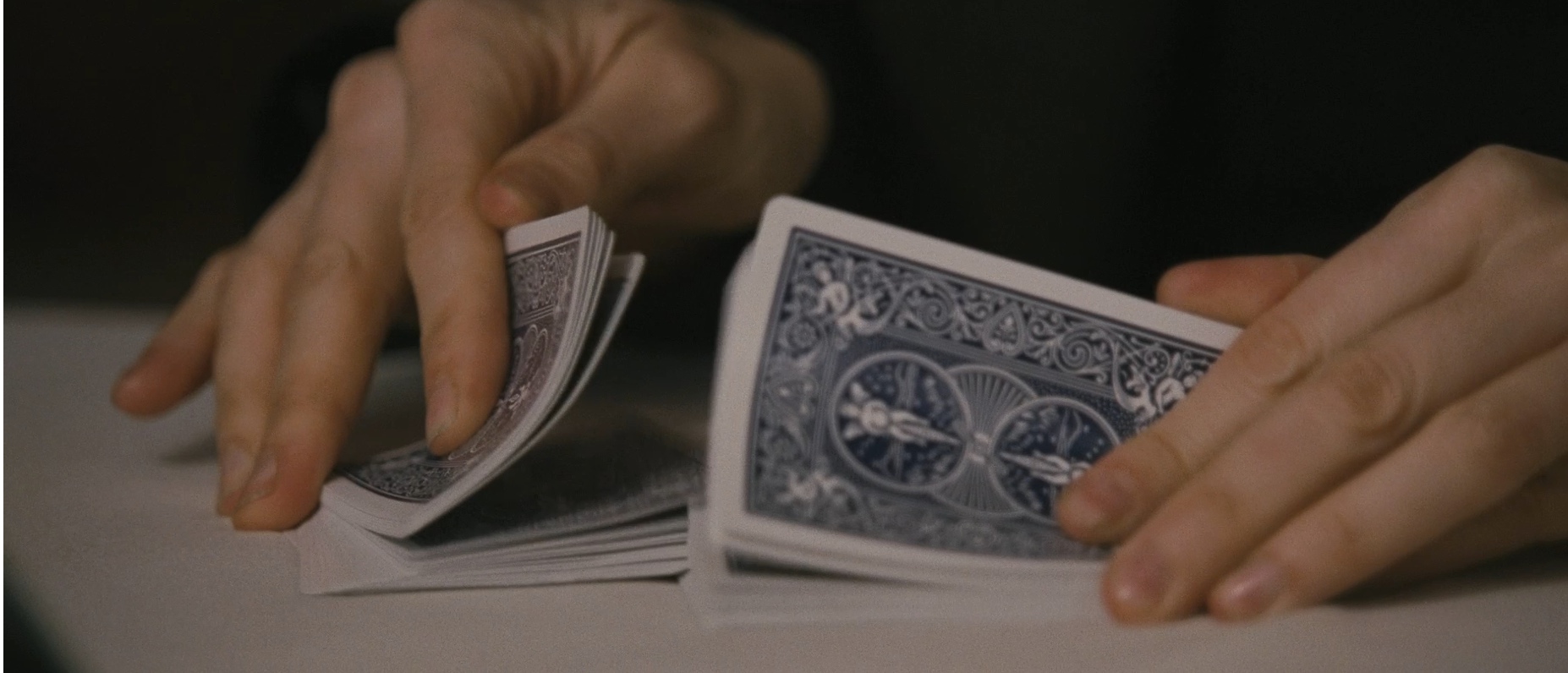
No, no. Don't get worried. It's also a lot of fun, especially in its puppyish wise-acre first hour that moves at such an unsustainable pace of quirk that the second-half doesn't have a chance to match it. That half-way down-shift initially feels like a let-down (and some unfortunate back-story editing robs the movie of some Peckinpavian resonance), but Johnson has to reveal the con at some point and the visceral let-down is inevitable. The motto of the movie (and The Brothers Bloom) is "the perfect con is when everyone gets exactly what they want." Johnson manages to pull that off...and quite brilliantly.
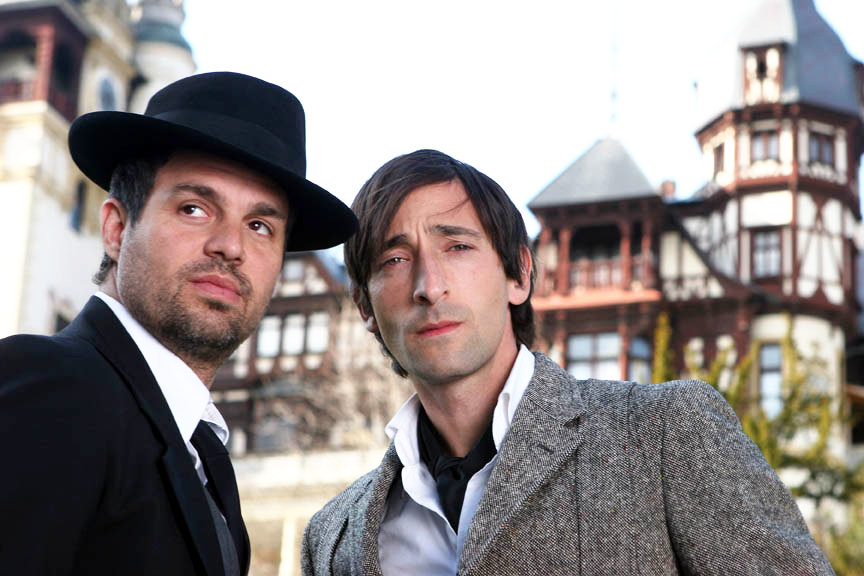
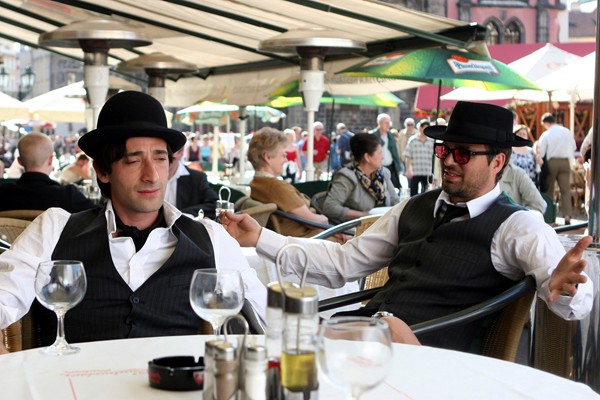
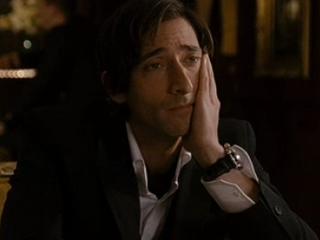
He's got great players to do it with. Adrien Brody and Mark Ruffalo play the brothers (Brody's Bloom, and Ruffalo's his older brother Stephen), two orphan con-men locked in the game that informs and colors their lives. Their partner in crime is the mostly mute Bang Bang (the clever Rinko Kikuchi), and there's a network of con-men they tap into (but never really trust) including The Curator (Robbie Coltrane) and Diamond Dog (Maximilian Schell)—a lot of Oscars in this cast—but the focus of the last of a series of Last Big Cons is Penelope Stamp (Rachel Weisz) an eccentric millionaire, isolated in her youth by a misdiagnosed allergy (to everything), and with whom Bloom becomes her first true friend. Weisz's peculiar choices in performance nicely buoy Brody's sad-sack (which he has perfected) and both Ruffalo and Kikuchi play off each other and the other actors with a kind of thrilling certainty of the world and their place in it (and ability to change it). Johnson's multi-plane action in frames (especially in the first half) approach the deft timing of a Warner Brothers cartoon.
It's different, breaks the mold, keeps you guessing and stays with you until you make that last jump—that all movies are a con. And the best ones are the ones where people get exactly what they want. Yes.
Showing posts with label Rian Johnson. Show all posts
Showing posts with label Rian Johnson. Show all posts
Tuesday, April 6, 2010
The Brothers Bloom










Saturday, October 25, 2008
Brick
"Brick" (Rian Johnson, 2006) One can see why the writer-director of this "high school noir" wanted to do this: the societal stratification of high school resembles the noir tiers of authority and outlaws, be they penny-ante, or high rollers. But, instead of the mooks and frails, we have the sosh's, the jocks, the drama queens, the brains, etc. Instead of the mean streets of the city, there are the sterile hallways and cold, hard walkways of the courtyards of high school (specifically, San Clemente High School--located in Richard Nixon's Elba). There's the police, but also the school administration (Richard "Shaft" Roundtree plays the vice-principal, bless him). Then there are the crimes--against society and the obligatory ones of the heart. And there's the melodrama, at its sulphurously volcanic peak in noir and high-school; everybody has their blood up and the rocket-fuel of pulsing testosterone and estrogen becomes toxic and explosive. It's amazing that anyone gets out of high school alive, let alone graduates with honors. They're the lucky few.
So, one can see why they'd do it. And there's the advantage that film noir's are traditionally the down-side of the studio system. They weren't expected to be "prestige," in fact, the cheaper, the better. So, if there's a bit of amateurishness, that's part of the charm--as with high school theatrics. "Brick" benefits from that, too. These are teen actor's. We're not expecting them to be too good, although there are some pleasures in the performances.
But, the amateurishness hurts. This is one of the first English language films I've had to watch with subtitles "on." Two reasons for that: the tough-as-nails patter from all parties is more exotic (and phony) than the teen-speak of "Juno," and it's delivered at break-neck speed with little inflection by soft-palette actors who haven't learned to e-nun-ci-ate. You can get lost pretty quickly in all the muttered asides and rolled together phrases. One section of early, extremely important dialogue is phone-filtered on top of being delivered by a semi-hysterical character and it's undecipherable without a libretto. The lone exception is "The Pin," played by grown-up kid actor Lukas Haas with a laser-like intensity, and the costuming of Barnabas Collins.
Fortunately, Johnson has enough visual pyrotechnics to lean on, but just as he's borrowed elements of the script from Hammet, his visual style is cribbed from, of all people, Leone--all negative space and extreme proximity's. One is propelled by the occasional good idea or a visual joke that thrusts into his frame. Every punch is a hay maker. No clue is left without a tilted close-up. Johnson couldn't be more obviously visual, while being tone-deaf with the sound.
In the end, with the pro's and the con-artists, one begins to see it as the one thing it shouldn't be--precious. The effect is a bit like all those kids playing gangsters shooting marshmallow bullets in Alan Parker's "Bugsy Malone." The dialogue wants to impress you with its toughness, but ultimately its out of the mouth of babes, with the visual sense of Danny DeVito, rather than Dassin or Hawks or Mann. In the words of Bogart's Philip Marlowe, "The cheaper the hood, the gaudier the patter." Or as P.I. Milton Arbogast (before he climbs the stairway to heaven), "If it ain't gellin', it ain't aspic." And this ain't gellin.'
 One can see why the writer-director of this "high school noir" wanted to do this: the societal stratification of high school resembles the noir tiers of authority and outlaws, be they penny-ante, or high rollers. But, instead of the mooks and frails, we have the sosh's, the jocks, the drama queens, the brains, etc. Instead of the mean streets of the city, there are the sterile hallways and cold, hard walkways of the courtyards of high school (specifically, San Clemente High School--located in Richard Nixon's Elba). There's the police, but also the school administration (Richard "Shaft" Roundtree plays the vice-principal, bless him). Then there are the crimes--against society and the obligatory ones of the heart. And there's the melodrama, at its sulphurously volcanic peak in noir and high-school; everybody has their blood up and the rocket-fuel of pulsing testosterone and estrogen becomes toxic and explosive. It's amazing that anyone gets out of high school alive, let alone graduates with honors. They're the lucky few.


So, one can see why they'd do it. And there's the advantage that film noir's are traditionally the down-side of the studio system. They weren't expected to be "prestige," in fact, the cheaper, the better. So, if there's a bit of amateurishness, that's part of the charm--as with high school theatrics. "Brick" benefits from that, too. These are teen actor's. We're not expecting them to be too good, although there are some pleasures in the performances.


But, the amateurishness hurts. This is one of the first English language films I've had to watch with subtitles "on." Two reasons for that: the tough-as-nails patter from all parties is more exotic (and phony) than the teen-speak of "Juno," and it's delivered at break-neck speed with little inflection by soft-palette actors who haven't learned to e-nun-ci-ate. You can get lost pretty quickly in all the muttered asides and rolled together phrases. One section of early, extremely important dialogue is phone-filtered on top of being delivered by a semi-hysterical character and it's undecipherable without a libretto. The lone exception is "The Pin," played by grown-up kid actor Lukas Haas with a laser-like intensity, and the costuming of Barnabas Collins.


Fortunately, Johnson has enough visual pyrotechnics to lean on, but just as he's borrowed elements of the script from Hammet, his visual style is cribbed from, of all people, Leone--all negative space and extreme proximity's. One is propelled by the occasional good idea or a visual joke that thrusts into his frame. Every punch is a hay maker. No clue is left without a tilted close-up. Johnson couldn't be more obviously visual, while being tone-deaf with the sound.
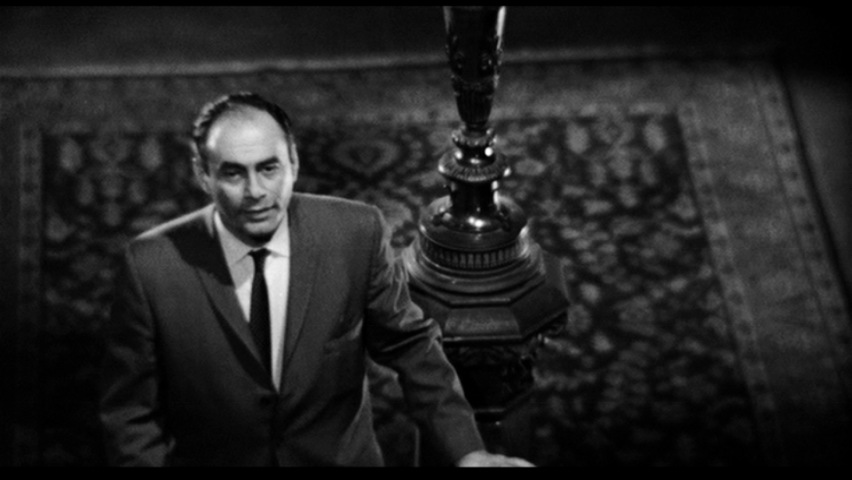
In the end, with the pro's and the con-artists, one begins to see it as the one thing it shouldn't be--precious. The effect is a bit like all those kids playing gangsters shooting marshmallow bullets in Alan Parker's "Bugsy Malone." The dialogue wants to impress you with its toughness, but ultimately its out of the mouth of babes, with the visual sense of Danny DeVito, rather than Dassin or Hawks or Mann. In the words of Bogart's Philip Marlowe, "The cheaper the hood, the gaudier the patter." Or as P.I. Milton Arbogast (before he climbs the stairway to heaven), "If it ain't gellin', it ain't aspic." And this ain't gellin.'
Subscribe to:
Posts (Atom)