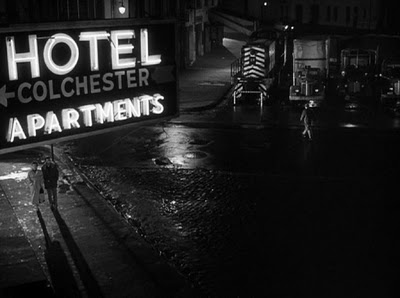
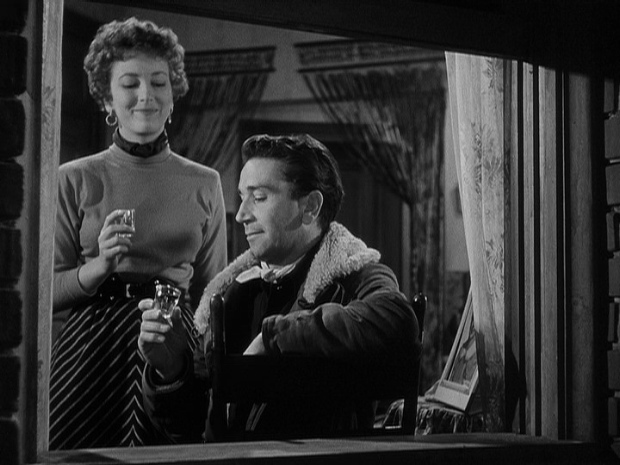
Boomerang! (Elia Kazan, 1947) Not to be confused with the Eddie Murphy vanity project made 45 years later. No, this one is an Elia Kazan film when he was still learning the ropes in film-making and experimenting with what he could do. This one was shot on location in a semi-documentary style and based on a Reader's Digest article (written by the author of The Greatest Story Ever Told and the book the film Boy's Town was based on) about a true incident involving a murdered priest, a vagrant scapegoated for the crime after a public outrage, and a prosecutor ethical enough to not follow "procedure."
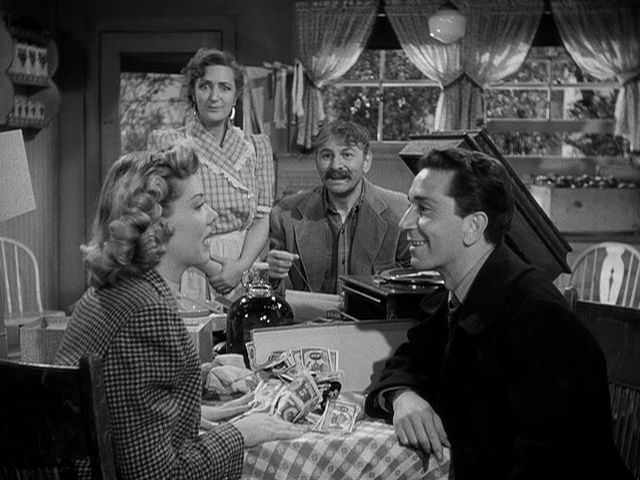
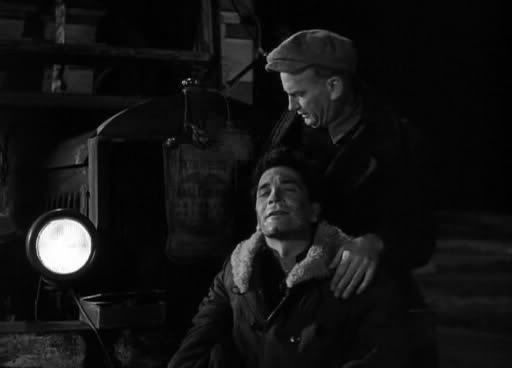
Boomerang! tells the story of the murder in Connecticut of a popular minister, gunned down in the street on a pleasant evening. There are many witnesses, but the description—medium-build man in a dark coat and light hat—creates few helpful leads. But, the public outcry for "justice" (or something like it), considering the slow speed of the investigation, fueled by an ambitious newspaper publisher, puts government officials in panic mode, and the resulting pressure on the police department—chief investigator played by Lee J. Cobb—creates too many suspects and the arrest of a drifter (Arthur Kennedy) who protests his innocence.
When the District Attorney (Dana Andrews) goes over the facts of the case for trial, he is unconvinced, but instead of doing the politically expedient thing—try the case on the flimsy evidence anyway and mollify the city—he decides to present the facts of the case as he sees them, in effect shouldering the roles of both prosecutor and defense, attempting to prove that the defendant could not actually have committed the crime.
It's an unusual chapter in jurisprudence, but, in reality, it's how the process should work. The norm is for the culprit (alleged) to be in the dock and the prosecutor makes the case, presents the evidence, states the facts of what happened. The defense must refute or explain. But, even if the prosecutor doesn't stand behind the facts, it's only for political reasons, laziness, ego, or protecting his job that would compel the P.A. to go ahead with a flimsy case. By rights, such a case shouldn't even be brought forth, wasting court costs and time. It's only because of the incorruptibility of this D.A. that events unfolded as they did and in a way, demonstrated in court, that paralleled the risks the official was taking in his efforts.
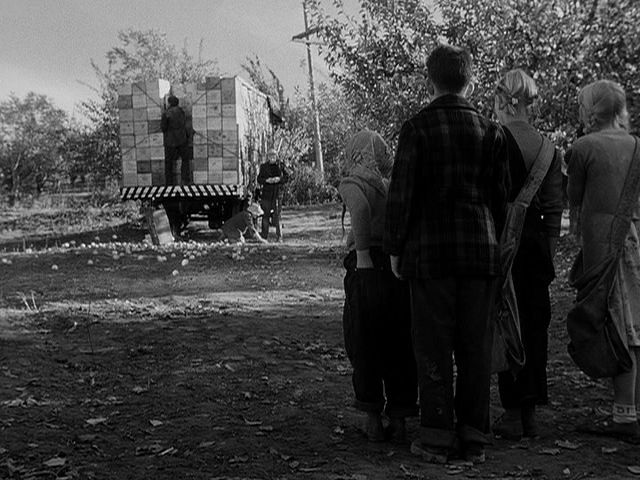
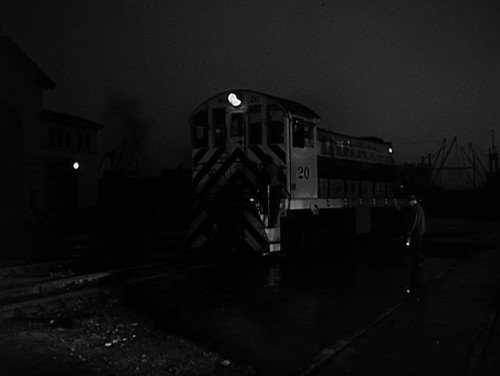
Kazan seems an unlikely director for the project—his penchant for heightened drama only displayed in the citizen's cries for justice, if only trumped-up justice. But, as produced by Darryl Zanuck (for whom story was everything), Kazan takes a docu-drama approach, taking it to the streets, as he would throughout his work in the '50's, emphasizing the grit, even in the well-scrubbed and groomed city-squares of Connecticut. And Kazan assembled a low-key group of character actors—Andrews, Cobb, Karl Malden, Sam Levene, Ed Begley, Kennedy—to underplay the drama. Only Jane Wyatt betrays any genteel theatricality. It ain't noir—too many foot-candles—and it's not cinema verite, as in the style of some of the Fox pot-boilers of this type. No, this one's set on "simmer," but it's a good preamble to the director's work as he transitioned from theater, outside into the real world.


+3.jpg)