Forewarned is Four-Armed
or
"Men are for Mars, Women, Curvaceous"
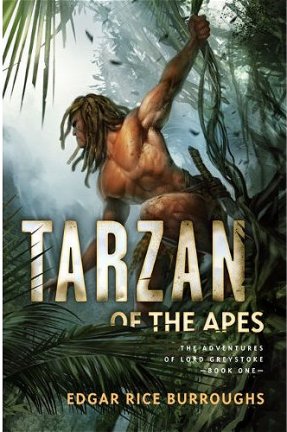
Edgar Rice Burroughs not only created Lord Greystoke (otherwise known as Tarzan of the Apes), but he created another hero who commuted between different worlds, that being John Carter, a Civil War vet, who managed to mentally displace himself from 19th Century Earth to Barsoom, as the natives called it, although we Earthers called it Mars.
The Carter books were solid pulp, but soaring adventures, with lusty Barsoomian princesses, warring political and tribal factions, including a race of 15 foot four armed insectoid inhabitants who were frequently at odds with the more humanoid Martians. They inspired all sorts of science fiction writers like Bradbury and Clarke (and scientists including Carl Sagan) and film-makers from Lucas and Spielberg to Cameron and any author whose hero leads a Walter Mitty fantasy existence on another continent, planet or Universe.
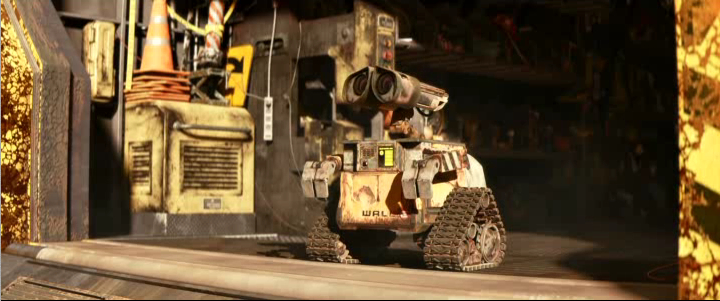
It's the 100th Anniversary of JC's creation, and it's about time that somebody made him take the astral projection from book-paper to celluloid...or pixels—not that there haven't been attempts over the years. The books have rarely been out of print and—probably inspired by the covers painted by Frank Frazetta and Boris Vallejo that neatly made real Burroughs' vivid descriptions—and something's been in the works for the last couple of decades. Now, finally, Disney took a chance with it—although they don't have a clue how to sell it—with director Andrew Stanton, one of Pixar's shining lights (directing both Finding Nemo and WALL·E).
And, hell, if they don't pull it off, making it work and seem fresh (if highly reverberent, as so many others have borrowed liberally from the series for years), while also recalling the straight-faced brio of biblical epics, combined with the cheese-factor of movie serials. It's pulpy, old-fashioned, and definitely of the "white-guy-saves-the-natives" school,* but it has fun with it, playing off the duality of practically everybody in the script, reflecting the "two worlds" concepts inherent in the series.** And why shouldn't Carter have an exploitable advantage over the Martians? The planet's lesser gravity allows him to bound like a flea across landscapes and from precipitous tower to precipitous tower (although one loses that concept when Carter is shown getting winded climbing up steep hills). And the Barsoomian concepts of ERB-dom are in full abundance, gathering details from the series—the white apes, the Therns (the duplicitous Gods of Mars), Carter's ways of dealing with passage between worlds (and covering up his disappearances on Earth), the participation of "Ned" Burroughs in the telling of the tales, and the environmental struggles of the dying Mars (although the canals of Mars are mostly gone, Stanton and co-screenwriters Mark Andrews and Michael Chabon, have created a gargantuan crawling city of Zodanga that sprawls across the planet's surface, leaving decimation in its wake.
Yes, it's pulpy. Sure, it's cheesy. But in the same way that any romance story is, (and Burroughs wrote romance novels for men), and this is boy-hokum space romance fantasy, without much logic to it, but enough momentum and emotion to keep so many of the quibbles at bay, and Stanton has shaped it in a fine, breezy style that kicks the story along at a good clip—check out the economy he uses to make note of Carter's indefatigable fighting instinct in the film's second sequence (the first is a rousing, dis-orientingly brusque Martian air battle) in trying to escape forced re-enlistment at the hands of his former Captain Powell (the now ubiquitous Bryan Cranston), then jumping from Western tropes (filmed in Monument Valley, of course) to Bibical epic trappings, to its own weird amalgamation of the two, with a bizarre twist on familiarity. Where the movie roars are in the sword fights and hand-to-hand battles that bring to life Frazetta's "berserker" illustrations, that push the envelope of what can be presented in a PG-13 rating.
It's a grand ride, energetically told, imaginatively realized, with a good cast of fine actors, committed to doing it all with a straight face, and selling the fantasy, without any betrayal of the mechanics that had to go into this thing (a tough job to do that has bested others in the last few years). I've read a few reviews by some critics that strike me as rather cranky about the film being derivative (in a reverse engineering way of looking at things), but, frankly, I don't think they saw the right movie. Kill me if I ever get that sophisticated I can't have fun at something done well. To this kid, who grew up reading the Barsoom books, (as Bradbury once wrote) Mars is Heaven.
John Carter (of Mars) is a great Saturday afternoon Matinee.
 |
| First edition depiction of John Carter and Dejah Thoris from the initial hardcover dust-jacket |
 |
| Frank Frazetta's iconic cover to "The Princess of Mars" The production design of John Carter owes a little bit to both. |
* It was, after all, written in 1912. What's Avatar's excuse?
** Even the titular Princess of Mars has a nick-name in the film. Carter calls her "Perfesser." Carter's Thark name is Dojahr Sojak, but also "Virginia," after a mis-communication in greetings from Tarkus.