Showing posts with label Kirk Douglas. Show all posts

Wednesday, September 25, 2013

The Big Sky

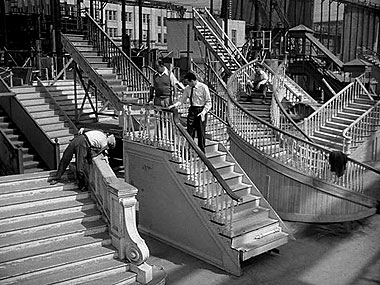
The Big Sky (Howard Hawks, 1952) A.B. Guthrie's novel about the exploration (and decimation) of the West by Eastern immigre's is considerably shortened by Hawks and Dudley Nichols, who start at the meeting of Jim Deakins (Kirk Douglas) and Boone Caudill (Dewey Martin) and their adventures of a keelboat going up the Missouri and leave it at that.  Nothing about how Boone's a little savage who ran away from home after nearly killing his father, nothing about the unpleasantness that would follow, or the results of Boone's bad temper.  No, this one's pretty much good times with some rough waters and bad rivals, and everybody gets along famously. It's vintage Hawks, but it ain't Guthrie.  In fact, Hawks eliminates the one character in Guthrie's trilogy ("The Big Sky", "The Way West", "Fair Land, Fair Land") who endure throughout—trapper and guide Dick Summers.

Re-writing is nothing new to Hawks (as a work habit, he'd re-write the next day's script the night before just to keep things fresh, sometimes abandoning the plot altogether if he thought it wasn't going in the right direction).  His great western, Red River, was completed four years previously, he followed it up with a musical remake of his own Ball of Fire with Danny Kaye, gone overseas with Cary Grant to make I Was a Male War Bride, then made his first foray into science fiction (but very much in the Hawks tradition of team-building) with The Thing (From Another World).  The Big Sky is different—the 50's would be something of an experimental phase for Hawks, going deeper into his subjects and philosophies than previously—in that cowboys and cattle aren't the prime motivation.  Fur trading is. And to do that, you don't go by horse, you go by boat and the challenges there are far different and maybe a bit more challenging than crossing the plains.   You go where the water goes and it's never a straight line and there are obstacles around every turn.


Guthrie's story is a bit like the Lewis and Clarke expedition (without the government funding), and both versions for page and film borrow the story of Sacagawea from the Corps of Discovery, whose presence (by coincidence) made acquiring ponies for the rugged trek across the Rocky Mountains from the Shoshones a foregone conclusion.  This came about as, unbeknownst to the Corps, Sacagawea had been stolen from the Shoshones as a child and her translating skills brought her face to face with the standing chief...who happened to be her brother.  In the same way, the character of "Teal Eye" (played by Elizabeth Threatt, in her only film) is brought back to her tribe to help in the fur negotiations.  She also serves as a point of rivalry between Dawkins and Caudill, but it all gets resolved to everybody's satisfaction.  


It fits into the Hawks template of disparate groups coming together for a single purpose: Hawkins finds Caudill, they're looking for Zeb Calloway (Arthur Hunnicutt, nominated for an Oscar for this performance, and he'd be playing, basically, the same role in Hawks' 67' Western El Dorado), who they meet in jail (problem solved, efficiently), then once Zeb is bailed out by the keel-boat Captain "Frenchy" (Steven Geray, and we don't know if he's related to "Frenchy" in To Have and Have Not), and the adventure meanders, like a river, with some tributaries involving a rival fur trading company, Deakins' ability to get hurt (and heal rapidly, apparently, and at one point, Hawks makes a comic episode out of amputating one of the character's fingers!).  He isn't nearly as concerned with ethnic authenticity as John Ford—he does use Ford's Hank Worden as a Shoshone guide as comic relief, but at least he's competent comic relief.


There have been a couple versions of this one floating around, and because it was done for RKO late in its life, and been passed from studio to studio, it's in fairly ragged shape.  Russell Harlan's black-and-white cinematography was nominated for an Oscar, but it's a little dim to see why, given the shape the film is in, even the "complete" version that TCM is running on.  It needs a major restoration, which is hard to come by if the film is in the second row seating of a director's Hall of Fame.  Perhaps one day, maybe, when someone mounts a Kirk Douglas retrospective, or decides to a DVD release of it, at all.


Wednesday, April 28, 2010

The Bad and the Beautiful

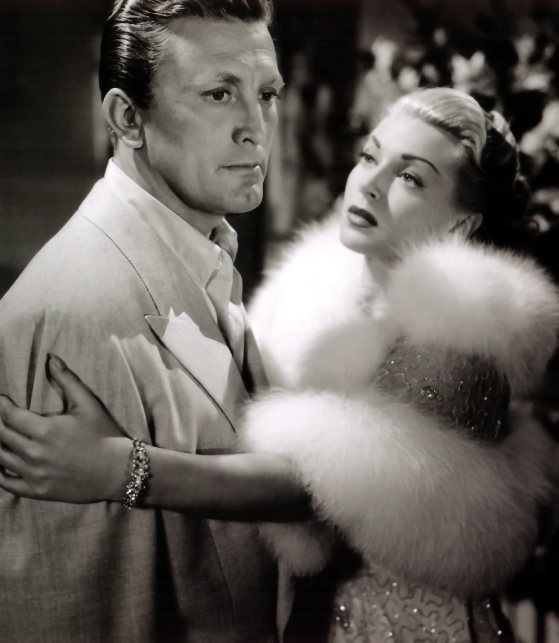
"The Bad and the Beautiful" (Vincente Minelli, 1952) Hollywood movies about Hollywood generally stink; the best ones (and they're usually by Howard Hawks) make their odd collections of professionals in a field of endeavor working toward a single goal act as a metaphor for a film-team. But, when Hollywood hits the nail on the head it's usually with a gilt sledge-hammer, giving off the air of bitterness and back-stabbing lit by klieg lights—as opposed to merely doing it behind the scenes. "The Bad and the Beautiful," produced by John Houseman, could be about many Hollywood inmates, one can see allusions to Houseman's old partner (and bitter enemy) Orson Welles here—the structure is basically that of "Citizen Kane," (also produced by Houseman) with the story told by the principals in multiple flash-backs. Louis B. Mayer (the former head of the studio that produced "The Bad and the Beautiful" seems familiar in the penny-pinching sanctimony of studio head Harry Pebbel (Walter Pidgeon), Irving Thalberg (who would be the model of F. Scott Fitzgerald's "The Last Tycoon") could be part of the personality of demon-producer Jonathan Shields (Kirk Douglas), but it's also a bit of Darryl F. Zanuck. You could drive yourself gossipy in this guessing game.

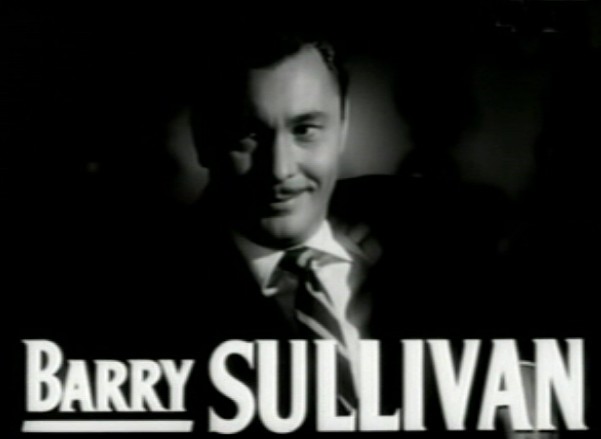
Three toilers in the Hollywood Valley—director Fred Amiel (Barry Sullivan), box-office sensation Georgia Lorrison (Lana Turner) and screen writer James Lee Bartlow (Dick Powell) are summoned to Shields Productions by studio head Pebbel. He wants to take them to task for avoiding the phone-calls of Shields, whom they've all had run-ins with. Shields is responsible for their success, but it has always come at a cost. Amiel had a dream-project taken from him by Shields, Lorrison was promoted and prepped for stardom by him, but rejected becoming romantically involved with her, and Bartlow still blames Shields for the death of his lusty wife (Gloria Grahame), while he and Shields were on a screen-writing retreat.

All of these stories are told in flashback sequences that recall the ones in "Kane" by the surviving partners and wives. But where the "Kane" stories interlock and enhance each other, the ones in "The Bad and the Beautiful" sir apart with little connective tissue between them. It plays like "The Three Faces of Jonathan Shields" as opposed to the stories being facets of the same character, building to a whole. In "Kane," the stories are all aspects of Kane's quest for love. In "Bad..." what unites them is that
Shields is a manipulative producer—one would think that would go without saying. Amiel's story hints that Shields has "Daddy" issues owing to his Father's resentment in Hollywood ("I'm going to take the name of Shields and ram it down their throats!"—you can hear Douglas saying that). There may be something of the "sins of the Father" storyline here, but even that is undercut by the film's ending, a contrivance that makes a mockery of everybody's motivations.

"The Bad and the Beautiful" won five Academy Awards: best Supporting Actress for
Grahame's fine work, and for the Black-and-White categories of Costuming, Art Direction and Cinematography (Robert Surtee's work is amazing in this), as well as a screenplay award for writer Charles Schnee (presumably in black and white, as well). Why this ad hominem pot-boiler would win Best Screenplay is beyond me.

But, that's me. "The Bad and the Beautiful" was one of the 2002 selections for inclusion in the
National Film Registry.

Saturday, February 28, 2009

Ace in the Hole

"Ace in the Hole" (Billy Wilder, 1951) Probably more familiar under its name-change-in-desperation "The Big Carnival" (which sounds happier and more fun–which it isn't) "Ace in the Hole" is Billy Wilder's most acid-tongued movie to date (and considering it was coming off the heels of "Sunset Boulevard," that's saying something).
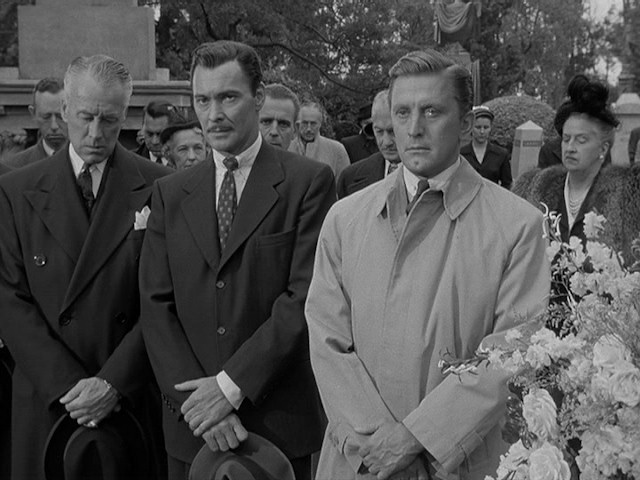
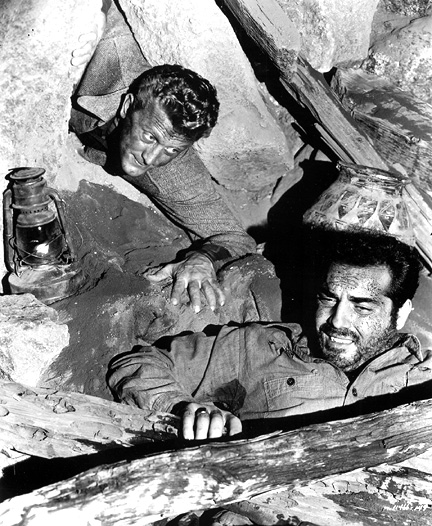
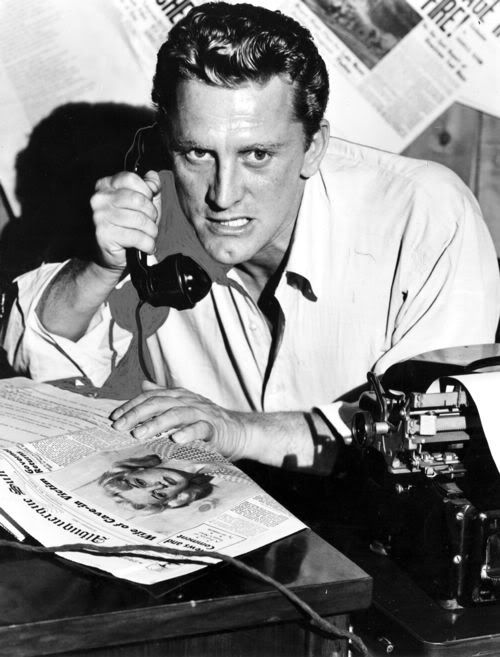
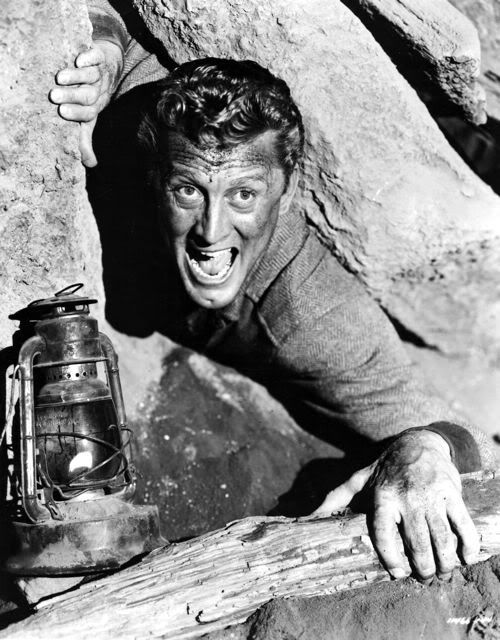
Charles Tatum (Kirk Douglas) rides into Albuquerque, New Mexico literally on the hook, and convinces the small-town newspaper to hire him. But after a year, Tatum feels trapped and is desperate for the Big Story that will get him back into The City Beat again. He stumbles onto a minor cave-in that has trapped Leo Minosa who was caught while looking for indian arrow-heads. Not a big deal to get him out, but it will take some work. But, as Tatum was on his way to cover a rattle-snake festival, the incident gives him a whiff of a potentially Big Story.

He should have stayed with the other rattle-snakes.


Working with the corrupt sheriff and
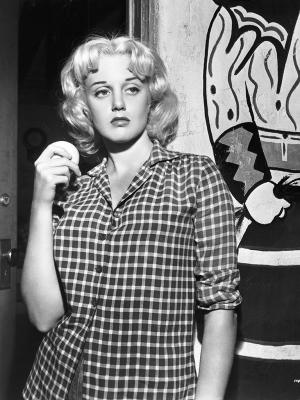
the bored-out-of-her-skull wife, Tatum prolongs the rescue, turning it into a major (and unnecessary) drilling operation that will keep the story alive for days. The reporter keeps his fingers on all aspects including access to other news-services, and pretty soon he's the Only Game in Town. No one associated with the rescue does anything without his say-so, lest they risk the promises Tatum's made.

Then the curious start showing up. Then the hopeful. Then the carnivorous. The Story becomes a vigil, and where there are crowds of people, comes the salesmen, and the site becomes "The Big Carnival" of Paramount's cheery alias.
Meanwhile, Leo is getting weaker and the pounding of the drills is slowly driving him crazy.

The screenplay, by Wilder,
Lesser Samuels and Walter Newman, has its ink mixed with venom (the most quoted line is from Minosa's wife (Jan Sterling): "I don't go to church. Kneeling bags my nylons."), but it's no worse than the cynical lines from Wilder's previous film, "Sunset Boulevard." The difference is Wilder's not looking at the easyily-satirized egotism of Hollywood, he's looking at us, and the American capacity to make a buck while wallowing in tragedy. "Ace in the Hole" is before its time, before the mawkishness and the trivial pursuit of the 24 hour news cycle made the trend easier to spot.

And there's one other thing: "Sunset Boulevard's" dispassionate cynic was
William Holden, "the golden boy," whose snide wise-cracks passed for intelligence. Here, he's Kirk Douglas, who is a more energetic performer, and so that constant cynicism is seen as more of a constant attack that just seems mean-spirited. And where Holden's self-loathing seemed somehow relaxed and noble, Douglas's is never less than actively self-destructive. It's a smarter, more satisfying performance that doesn't try to be likeable, or a wolf in sheep's clothing, but audiences found it repellant (as well they should!). They didn't want their movie-heroes (or anti-heroes) to be too unlikable. So, even though there is no redemption for this character, and no happy ending in sight, the crowds stayed home from "The Big Carnival."

That doesn't stop it from being the classic that it is, of Billy Wilder (who famously said "You're only as good as your best movie") in his prime.