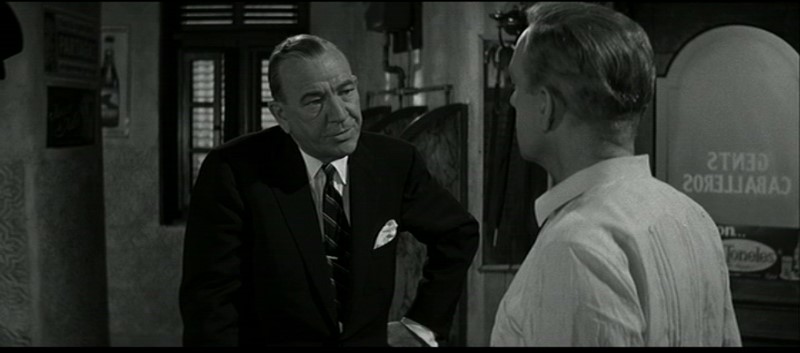
Our Man in Havana (Carol Reed, 1959) A fascinating serio-comic counter-point to author Graham Greene and Reed's post-war classic (made a decade previously) The Third Man. Reed's camera still swoops (courtesy of d.p. Oswald Morris), making sure that the Cinemascope frame is filled to the corners with detail, and the dark streets of Havana (filmed after the revolution and with the permission of Castro) at night, could be mistaken for post-war Vienna. The sun shines brighter, though, and so the internecine work of spies is done in the relative low-light of bars and brothels.
Greene's book was a cynical look at how Intelligence forces can show a distinct lack of intelligence when confronted with mis-information, but it is Reed's nifty idea to cast it with comedic actors, though not always playing for laughs. With such as Burl Ives, Noel Coward, Ralph Richardson, Ernie Kovacs (he plays a corrupt Cuban police official straight, but it is still funny) and Alec Guinness, it seems more a comedy of errors: British ex-pat Jim Wormold (Guinness) is scraping by a living selling vacuum cleaners in Havana, while his daughter (Jo Morrow) is developing a taste for the expensive horsey set—something that could be provided by Captain Segura (Kovacks), who has an eye for the blonde girl. Wormold has other plans for her, like an expensive Swiss boarding school. But where to get the money?
He is approached one day by Hawthorne (Coward, out of place in his dark suit and bowler hat in the mid-day sun of Havana) of the British secret service—or, as he is known, Agent 29500—to set up a bureau station for the service. For Wormold, it is extra cash, an all-expenses paid membership to the exclusive country club, and a more lavish life-style, all for keeping his daughter close. All the Service wants is results, which Wormold has trouble setting up—he is, after all, only a vaccuum cleaner salesman. Soon, he starts filing bogus reports, recruiting strangers as fellow agents (without their knowledge), building his station in importance to the delight of Hawthorne and his superior 'C' (Ralph Richardson).
However, becoming an important secret agent draws attention. He is soon assigned a secretary (Maureen O'Hara) by his superiors, wanting to build him up, and targeted for assassination by his enemies, wanting to shut him up. Doesn't matter if the information he's sending is all wrong; with so many resources at his command, he's sure to dig up something sooner or later. Scrutinized from both sides, the spy-game stops being so rewarding, and turns downright dangerous.
It's all played with a bit of a wink, with great comic actors under tight rein to let the material be funny without goosing it. Definitely worth seeing for the literate script, Reed's classic direction and the fine performances. John le Carré would later use the basic subject matter for his book (and subsequent John Boorman film) The Tailor of Panama.
Showing posts with label Noel Coward. Show all posts
Thursday, January 27, 2011
Our Man in Havana
Labels:
1959,
Alec Guinness,
Burl Ives,
Carol Reed,
Comedy,
Ernie Kovacks,
Maureen O'Hara,
Noel Coward,
O,
Ralph Richardson,
Spy
Saturday, June 7, 2008
The Italian Job (1969)
"The Italian Job" (Peter Collinson, 1969) The wife's fascination with Mini Coopers led to us to red-enveloping this, the decidedly
more enjoyable version of the story that turned morose when brought to the 21st Century. This version has its tongue firmly planted in its British cheek, and its feet cemented in the swinging 60's. Newly released convict Charlie Croker (Michael Caine) is given the chance to carry-out a brilliant plan--seize four million dollars in gold bullion in Italy. Along the way scriptwriter Troy Kennedy-Martin ("Edge of Darkness") and director Peter Collinson throw in a bit of wily commentary, a disdain for foreign cars (more expensive Italian cars are destroyed in this film for the sheer visceral fun of it, and an Aston Martin DB4 trashed in revenge), and the loopiest car-chase in cinema history, all fine and noble reasons to check out this cult favorite.
The film starts disarmingly with a title segment set to a crooning Matt Monro song (written by film composer Quincy Jones and lyricist Don Black) as a Lamborghini Miura is seen negotiating the hairpin turns of Italian Alps, just as you begin to appreciate the metaphor, the car enters a tunnel, a huge crash is heard, and the Miura is seen exiting the tunnel, wrapped around a bulldozer. Inside the car, the late Roger Breckerman (Rosanno Brazzi) who has been planning a job to steal the bullion sent from China to Turin as a proviso for Fiat to manufacture their cars there. The Mafia, getting wind of those plans, has killed Breckerman before the plan can be finalized, and to destroy the evidence the car is sent careening down the mountainside (the first of many such scenes).
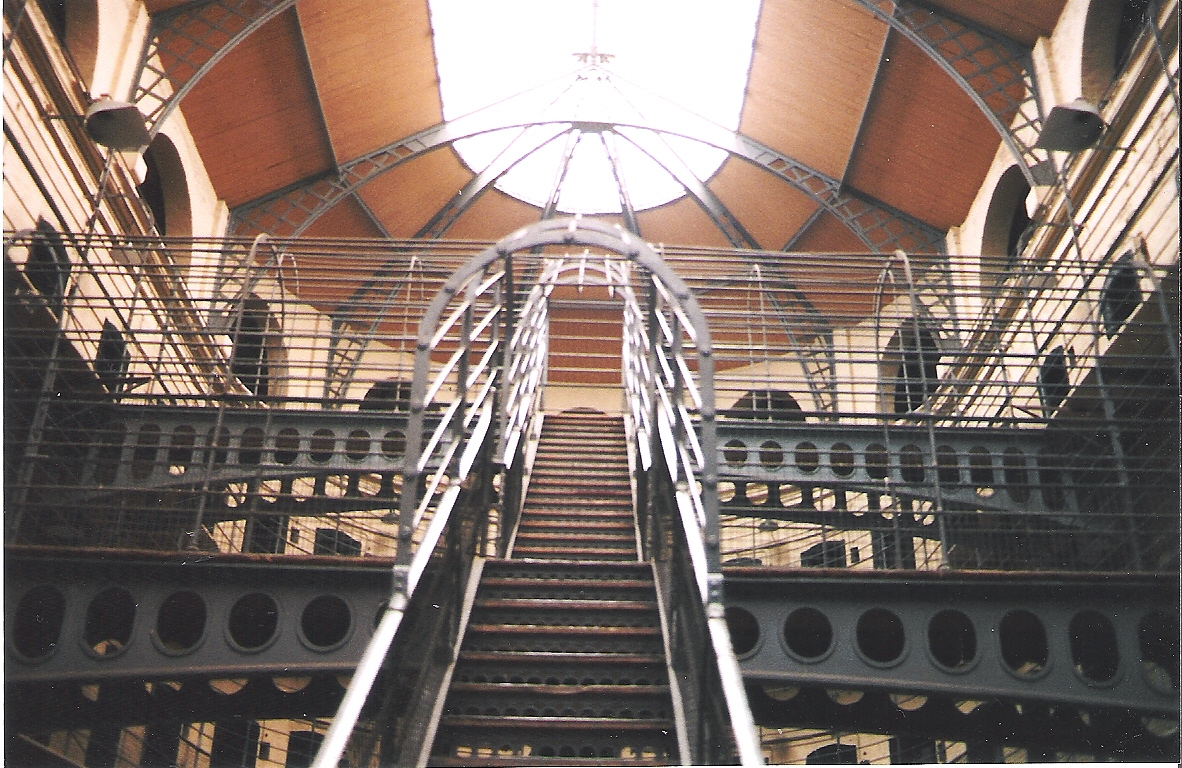
Breckerman's widow recruits Croker to do the job as revenge for his murder, and for financial backing he goes right to the top--Mr. Bridger (the martini-dry Sir Noel Coward), head of a British crime syndicate, which he runs from his prison cell, entirely compromising the warden and staff to his needs. With Bridger's stern approval, the team sets off for Italy with its odd assortment of vehicles to pull off this mission: impossible and prove the superiority of British auto-works craftsmanship over its Italian equivalent.
The job, itself, is absurd but satisfying, the stunts arranged by car-artiste Remy Julienne, the cast headed by Caine, including Benny Hill as a perverse computer expert (good match, that). It's a trifle, but an entertaining trifle, far more satisfying in the memory than in the actual playing (which isn't that bad). That's what makes a cult classic, especially in the self-preservation society.
more enjoyable version of the story that turned morose when brought to the 21st Century. This version has its tongue firmly planted in its British cheek, and its feet cemented in the swinging 60's. Newly released convict Charlie Croker (Michael Caine) is given the chance to carry-out a brilliant plan--seize four million dollars in gold bullion in Italy. Along the way scriptwriter Troy Kennedy-Martin ("Edge of Darkness") and director Peter Collinson throw in a bit of wily commentary, a disdain for foreign cars (more expensive Italian cars are destroyed in this film for the sheer visceral fun of it, and an Aston Martin DB4 trashed in revenge), and the loopiest car-chase in cinema history, all fine and noble reasons to check out this cult favorite.The film starts disarmingly with a title segment set to a crooning Matt Monro song (written by film composer Quincy Jones and lyricist Don Black) as a Lamborghini Miura is seen negotiating the hairpin turns of Italian Alps, just as you begin to appreciate the metaphor, the car enters a tunnel, a huge crash is heard, and the Miura is seen exiting the tunnel, wrapped around a bulldozer. Inside the car, the late Roger Breckerman (Rosanno Brazzi) who has been planning a job to steal the bullion sent from China to Turin as a proviso for Fiat to manufacture their cars there. The Mafia, getting wind of those plans, has killed Breckerman before the plan can be finalized, and to destroy the evidence the car is sent careening down the mountainside (the first of many such scenes).
Breckerman's widow recruits Croker to do the job as revenge for his murder, and for financial backing he goes right to the top--Mr. Bridger (the martini-dry Sir Noel Coward), head of a British crime syndicate, which he runs from his prison cell, entirely compromising the warden and staff to his needs. With Bridger's stern approval, the team sets off for Italy with its odd assortment of vehicles to pull off this mission: impossible and prove the superiority of British auto-works craftsmanship over its Italian equivalent.
The job, itself, is absurd but satisfying, the stunts arranged by car-artiste Remy Julienne, the cast headed by Caine, including Benny Hill as a perverse computer expert (good match, that). It's a trifle, but an entertaining trifle, far more satisfying in the memory than in the actual playing (which isn't that bad). That's what makes a cult classic, especially in the self-preservation society.
Labels:
1969,
I,
Michael Caine,
Noel Coward,
Peter Collinson,
The Italian Job
Subscribe to:
Posts (Atom)