Showing posts with label Tim Allen. Show all posts

Tuesday, June 5, 2012

Galaxy Quest

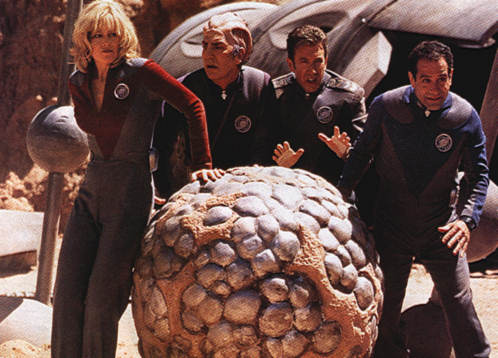
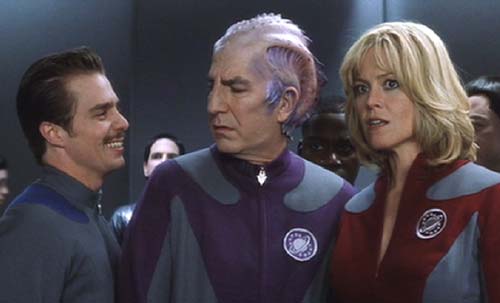
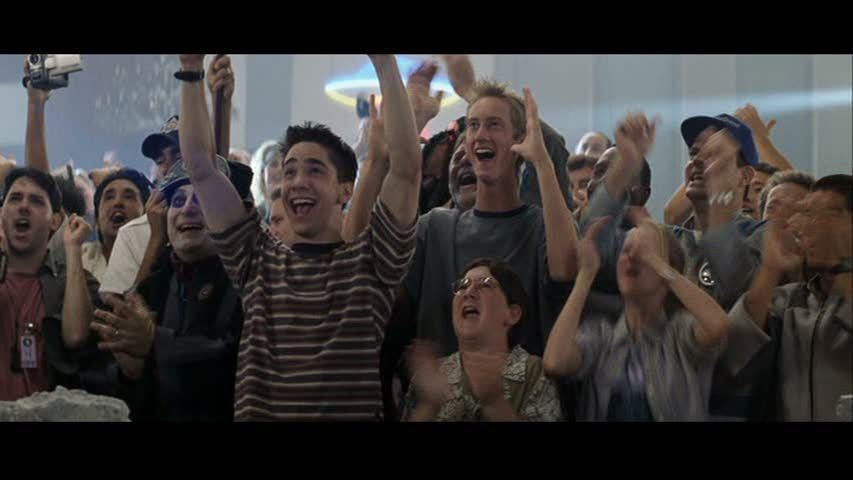
Galaxy Quest (Dean Parisot, 1999) Up until J.J. Abrams' re-boot, this was probably the best "Star Trek" film that Paramount never made.  Unfortunately, it wasn't "Star Trek" but a spoof of the phenomenon Paramount inherited from Desilu (and apparently didn't know what to do with—they were in between producing Insurrection and Nemesis, which effectively killed the movie series).  Still, it's an affectionate send-up with a fine cast and manages to even make one embrace the cliches of the original while at the same time making delicious fun of them.

At a sci-fi convention, the cast of a long-cancelled television series "Galaxy Quest" is going through the motions of meeting their fans, even though the show has been off the air for years, and the actors are having a difficult time finding other work due to "type-casting." They squabble, each remembering personal quirks and on-set peccadilloes, either jostling for the limelight or just "doing the gig," and by happenstance, find themselves portraying their characters in a real outer-space adventure, persuaded by desperately seeking aliens who have caught transmissions of the show as it zipped through space at light-speed, and not only liked what they saw...they bought it hook, line, and beridium sphere.

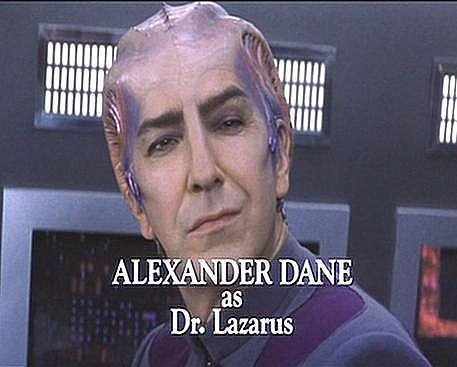
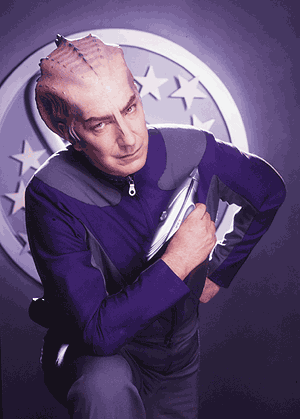
It's a fun conceit, combining the background stories of actors with the characters they're playing put into a situation where their attributes as actors inform their actions in a real-life approximation of the roles they play.  it stands to reason that the traits they embody to play the roles would come to the fore when reality sets in—it implies, of course, that they could do all this without "handlers," make-up assistants, or even (ya know...) decent writers and directors.  It's fun to imagine.  And the writers of the film have the "Star Trek" types down: the blow-hard lead actor (Tim Allen) who looks after himself until the chips are down; the second-in-command alien character—a fan-favorite—portrayed by an actor (Alan Rickman) who aspires to more prestigious roles and makes efforts to distance himself from his most popular one—until the role's inherent dignity and importance occurs to him; the actress (Sigourney Weaver, paralleling both Lt. Uhura and her "Ripley" character in Alien) trying to rise above the inherent sexism of her role, opening "hailing frequencies"; and the "also-ran's" (Tony Shalhoub and Sam Rockwell) who are stuck in their careers, forever typecast and unable to move on, bitterly watching their co-stars take better advantage.

There's also a tip of the hat to the faithful fans who start out as convention geeks, then play a pivotal role in the survival of the crew and their mission—and they don't even have to do it with a write-in campaign to the network.

Fiction becomes fact becomes fiction becomes fact; Galaxy Quest is an inter-dimensional trek on a Universe that's folded in on itself, through all the frontiers influenced by TOS and its progeny that explored new frontiers on a journey that seems on-going. It's also one of the best examples of a rare film genre that usually comes off as lame, childish, or patronizing—the science fiction comedy.


Friday, June 18, 2010

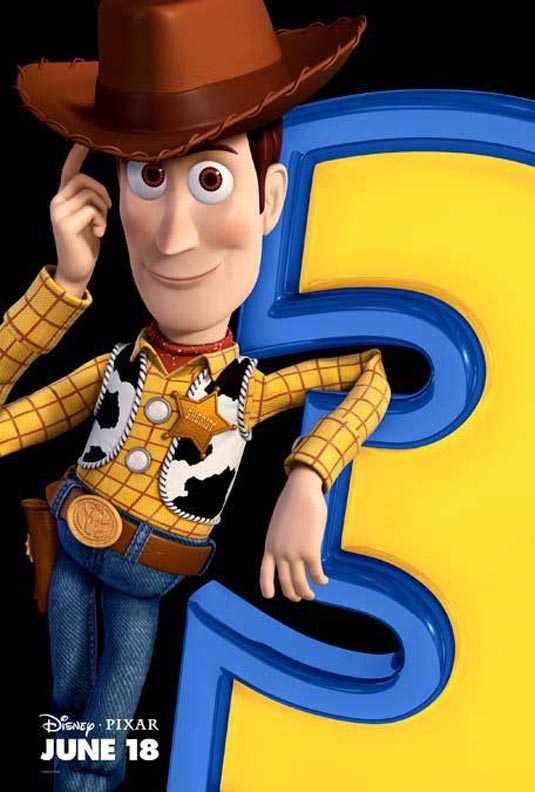
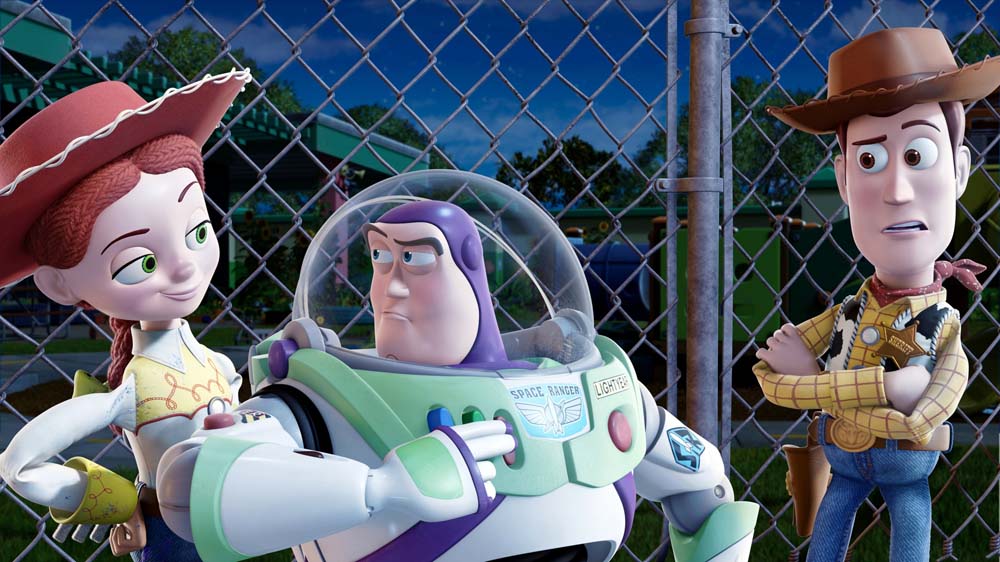
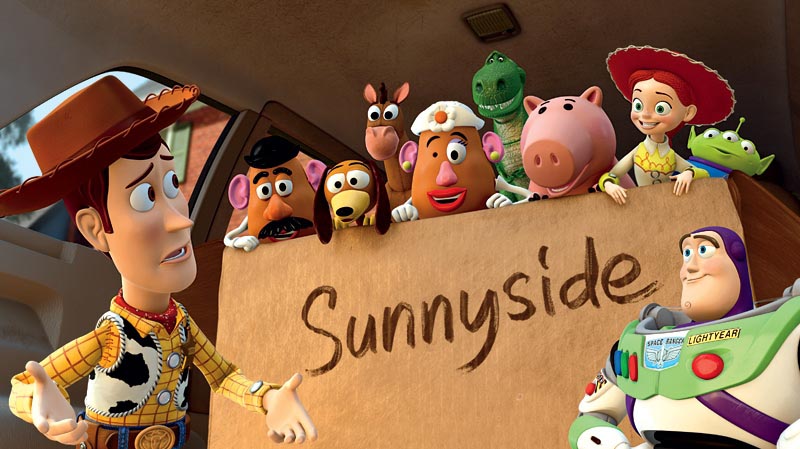
Toy Story 3

"And if You Can't Be with the One You Love, Honey..."

One has suspected a subtle sub-text in the "Toy Story" series—every Pixar film has evoked that feeling (which is why they tower over Dreamworks and every other animation supplier and make even their rivals' three-dimensional films seem more two-dimensional) since the first film premiered (what was it?) fifteen years ago.

"Toy Story 3" is no less rich in sub-text.

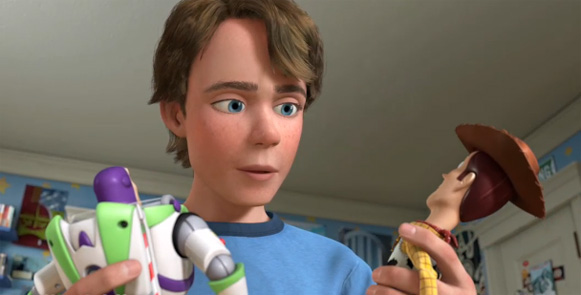
Sub-texts like the given that the toys have stayed the same, but their little owner Andy has grown up and is on his way to college by the time we hit "3;" First sub-text: Change or be passed over. Any one looking for a job in these troubled times has had to be confronted with their inadequacy in some department while they're winning the daily bread.  And like the toys of "Toy Story," time may be their enemy, staying consistent while the world evolves too quickly.

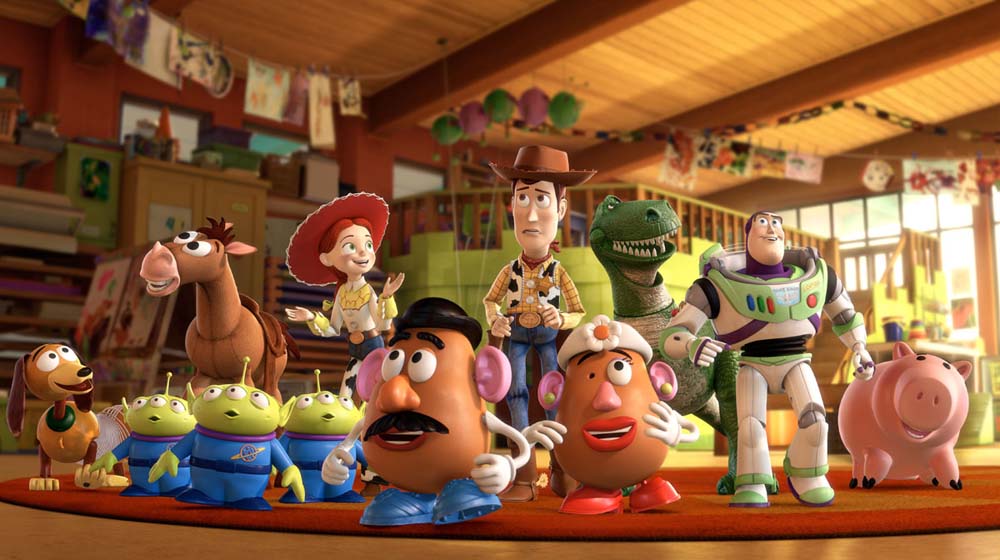
But, at the pace-making heart of the "Toy Story" movies has been one constant, and that is its contemplation of the nature of Love, which puts it in the same movie-case with such seminal works as "Vertigo" and "A.I."  In the first "Toy Story," cowboy-doll Woody (voiced by Tom Hanks) watched in horror as the affection of his beloved Andy was supplanted by the new space-age toy Buzz Lightyear (voiced by Tim Allen).  The stakes doubled in "Toy Story 2" when we witnessed the discarding of cow-girl Jessie (voiced by Joan Cusack) as her owner grew up and put away childish things (see the video below).  And we witnessed Woody turned from an object of play to a rarified objet collectionner, the very definition of a "trophy love."  "Toy Story 3" takes Jesse's plight and applies it to the entire toy corps, facing abandonment (the attic) and, worse, discarding (at the sidewalk on garbage day).  The toy soldiers take action and evacuate the premises first: "Once the garbage bags come out, the army men are the first to go" barks the commander (R. Lee Ermey) before para-sailing out of Andy's bedroom window.  The others are left to contemplate their fate. 

Play-time's over.*

There is one axiom I've held to my heart from the moment I first recognized its truth—I'm sure it originates elsewhere, but I first read it from thriller writer John D. MacDonald: "Love is not the opposite of Hate; love and hate are merely two sides of the same coin.  The opposite of love is indifference."

There are a lot of instances of indifference on display in "Toy Story 3" (though certainly not at the hands of the creative team behind it, who have filled it with pithy circumstance and finely-wrought detail in a cartoonish 3-D photo-realism**).  But, so is love, in the through-line from the first movie, first warbled in Randy Newman's opening song "You've Got a Friend in Me." It is the banding together of the community, standing stuffed shirt to plasticene shell through adversity, the toys' answer to "Can't We All Just Get Along?" All the movies have centered around the toys—diverse as they are—keeping the group together, and welcoming the new.  That reaches its dramatic climax here as the team locks hands as they face absolute destruction in a truly frightening version of Hell.

The forging of the community has been a theme running throughout the history of film (especially Westerns) since Edison, certainly John Ford, and we've all seen those films where the protagonist loses a family in order to gain another, sometimes not by choice.  Those bonds are infused with strength to take on all comers and all challenges, but the heart of that coming-together has always been the one unofficial but over-arching Commandment: Love thy Neighbor.

I mentioned putting away childish things earlier.  That's from The Bible (1 Corinthians 13), and looking over that verse again, I saw images spring up from "Toy Story 3"—"And though I bestow all my goods to feed the poor, and though I give my body to be burned, and have not love, it profiteth me nothing," particularly.  But especially its last devastating quality in its check-list of Love's qualities, which always makes me tear up a little when I contemplate it, and I contemplate love and loss.  For toys break, batteries fade, fabric burns and plastic will melt.  But Love "never faileth."

Love never dies.

To Infinity.

And Beyond.

"Toy Story 3 is a Full-Price Ticket."


* How many times have we said that, as adults, mourning the loss of childhood from adult responsibilities?

** But, man, you want to see Pixar push the envelope?  Check out the sophisticated opening short "Day & Night," a wordless combination of 2-D and 3-D, line animation and computer graphics, filled with rich imaginative ideas and a brilliant sound design.  The work of animator Teddy Newton, this little gem, puts him at the top of exciting animators to watch.

Saturday, August 15, 2009

Redbelt

"Redbelt" (David Mamet, 2008) One considers carefully before accusing David Mamet of writing a fairy tale.* But, considering the genre in which he's working—the sports film, which is almost always a glucose-encrusted, tears-of-joy-stained fantasy (aren't they, basically, "Cinderella stories?")—one also must admit that he's taken as much of the slop out of the form as he can. And if it strains credulity a bit, well...."you gotta sell a story."

Michael Terry (
Chiwetel Ejiofor) is an ex-military, mixed martial arts/self-defense instructor with an emphasis on ju-jitsu, running a small not prosperous training center in the land of make-believe, L.A. He's a good man doing good deeds, cloistering himself, looking to achieve his own personal best (like so many Mamet men). That he believes in honor, and the proper way ("There's always an escape") would appear to be a weakness. But incidents happen to break the hermitic seal of Terry's life and he soon finds that good deeds do not go unpunished. Encounters with an attorney with coping issues (Emily Mortimer), one of his students (Max Martini), a past-his-prime action star (Tim Allen) and his producer (Joe Mantegna) convolute to seemingly improve his life...but at a cost.

Money and legal issues force him to cross a line he'd never thought to cross—and as a result, he becomes a participant in an exhibition match with all its gloss, hyperbole, myth-making and BS. That the match is based on an anecdote that he casually mentions at a swank party, but rigged to take the chance out of it, only compounds his anger and humiliation at the corruption that he's taking part in, and he must find his own way out of a trap of his own devising. Of his own devising.

It must have been an interesting puzzle for Mamet: "How do I make my own version...my own version...of the most manipulative and phoney-baloney film genre out there and still make it 'Mametian?" And still make it "mean" something. The disciplines and the hierarchical nature of non-exhibition MMA that feed Terry are in direct contrast to the gladiator aspect of the money game, which in the Mamet tradition, is a rigged contest. Even rigged, both Golden Rules** are in play.

Mamet's films usually exhibit stillness, but here, action is used as exposition and Mamet the director fails to do anything but document the moves, and none too well, at that. Clarity is sacrificed for speed, and no matter how long Ejiofor has trained for those scenes—he's great in the role, by the way—his efforts are for naught due to Mamet's direction and cutting of them. The cast is uniformly excellent with Mamet stock company players
Ricky Jay and Joe Mantegna breezing through their roles. and Ejiofor making a superb protagonist, aided and abutted by Alice Braga as his practical wife. Tim Allen drains the comedy out of himself and is a bit of a revelation in his well-observed role as an actor coasting. You always knew there was a good actor inside the goof-ball and it's interesting to see him come out. Mamet's story-telling, casting and working with actors has never been in question. It's his use of the camera, now, that needs perfecting if he intends to pursue more action oriented films.

* It's not like he hasn't done that before. You could make a case that "The Untouchables" is so far from the reality of the Elliot Ness-Al Capone story that it's a blood-soaked fairy tale of revenge. But how much that was Mamet, and how much was director Brian DePalma, or the producers one can't say.

** 1. "Do Unto Others as They'd Do Unto You" 2. "The One With the Most Gold Makes the Rules"