Showing posts with label Alan Rickman. Show all posts

Tuesday, June 5, 2012

Galaxy Quest

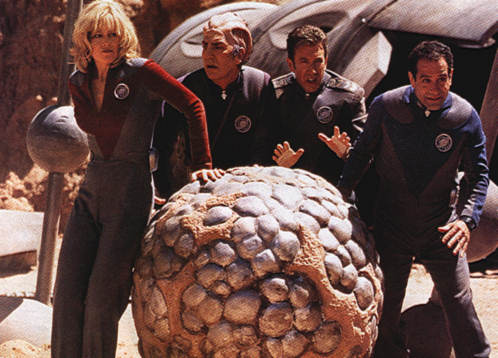
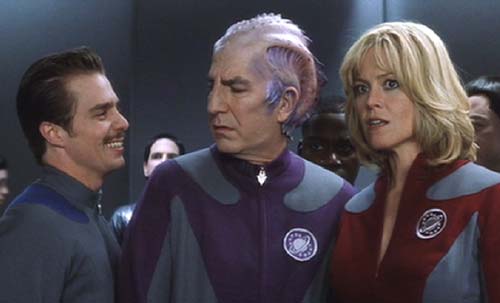
Galaxy Quest (Dean Parisot, 1999) Up until J.J. Abrams' re-boot, this was probably the best "Star Trek" film that Paramount never made.  Unfortunately, it wasn't "Star Trek" but a spoof of the phenomenon Paramount inherited from Desilu (and apparently didn't know what to do with—they were in between producing Insurrection and Nemesis, which effectively killed the movie series).  Still, it's an affectionate send-up with a fine cast and manages to even make one embrace the cliches of the original while at the same time making delicious fun of them.

At a sci-fi convention, the cast of a long-cancelled television series "Galaxy Quest" is going through the motions of meeting their fans, even though the show has been off the air for years, and the actors are having a difficult time finding other work due to "type-casting." They squabble, each remembering personal quirks and on-set peccadilloes, either jostling for the limelight or just "doing the gig," and by happenstance, find themselves portraying their characters in a real outer-space adventure, persuaded by desperately seeking aliens who have caught transmissions of the show as it zipped through space at light-speed, and not only liked what they saw...they bought it hook, line, and beridium sphere.

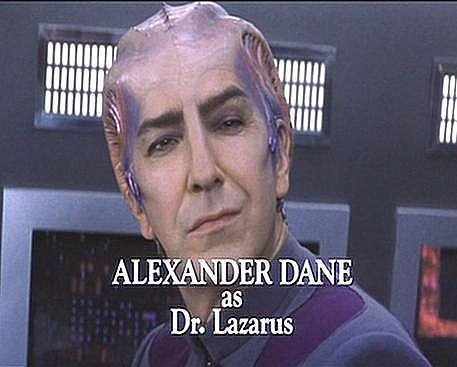
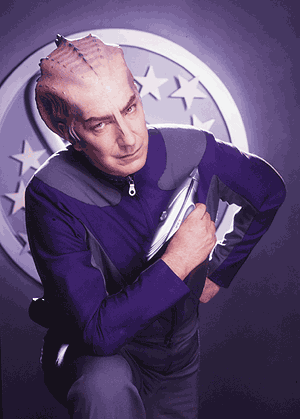
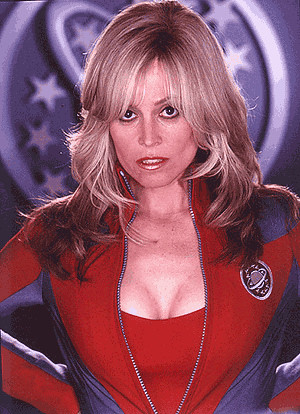
It's a fun conceit, combining the background stories of actors with the characters they're playing put into a situation where their attributes as actors inform their actions in a real-life approximation of the roles they play.  it stands to reason that the traits they embody to play the roles would come to the fore when reality sets in—it implies, of course, that they could do all this without "handlers," make-up assistants, or even (ya know...) decent writers and directors.  It's fun to imagine.  And the writers of the film have the "Star Trek" types down: the blow-hard lead actor (Tim Allen) who looks after himself until the chips are down; the second-in-command alien character—a fan-favorite—portrayed by an actor (Alan Rickman) who aspires to more prestigious roles and makes efforts to distance himself from his most popular one—until the role's inherent dignity and importance occurs to him; the actress (Sigourney Weaver, paralleling both Lt. Uhura and her "Ripley" character in Alien) trying to rise above the inherent sexism of her role, opening "hailing frequencies"; and the "also-ran's" (Tony Shalhoub and Sam Rockwell) who are stuck in their careers, forever typecast and unable to move on, bitterly watching their co-stars take better advantage.

There's also a tip of the hat to the faithful fans who start out as convention geeks, then play a pivotal role in the survival of the crew and their mission—and they don't even have to do it with a write-in campaign to the network.

Fiction becomes fact becomes fiction becomes fact; Galaxy Quest is an inter-dimensional trek on a Universe that's folded in on itself, through all the frontiers influenced by TOS and its progeny that explored new frontiers on a journey that seems on-going. It's also one of the best examples of a rare film genre that usually comes off as lame, childish, or patronizing—the science fiction comedy.


Thursday, February 23, 2012

Bottle Shock

Bottle Shock (Randall Miller, 2008) Miller has been making cheap, exploitation comedies (Class Act, Houseguest, The Sixth Man) for awhile now—alternating with some TV-directing work on shows with more on their mind ("Northern Exposure," "thirtysomething,") but Bottle Shock was made with his own money and he distributed it himself. One can imagine why: it's an intelligent, slightly loopy movie about pursuing your dreams despite being told (by the entire world) that you can't achieve them. It's also about wine— A sort of Rocky of the vineyards.  But, it's also a fictionalized version of true events.

The occurrence was a tectonic shift in the wine industry, which was monopolized in terms of quality by the French vintners of the Bordeaux region.  In 1976, a wine connoisuer and merchant Steven Spurrier, conducted a blind taste test between various products wine-producing areas.  It was assumed that the French would, of course, come out on top, but when labels were revealed, the clear winner of the competition were upstarts, from, frighteningly, California.  The wine-world was shocked (aghast!) that the center of the world vineyards became the neighborhood of Gallo (now owned, by the way, by Francis Coppola).

The facts are loose, and Spurrier has gone on record saying that he is less than thrilled with his portrayal—with sly, and, dare we say, dry alacrity—by Alan Rickman (personally, I'd be honored, but then I guess my taste is questionable) and with how the film tinkers with them, but Miller managed to make an okay film about grapes, waiting, sugar-chemistry, waiting, snobbery, waiting, and...obsession.

The main subject of the film (which might have spit in Spurrier's chardonnay) is Jim Barrett (played by Bill Pullman), a financial guru who has tired of dollars and sense to concentrate on nose and bouquet.  For the youth market, there are the required diversions of the chances-taking son (played by Chris Pine), who is not sure of following in his father's grape-stomping foot-steps, but is sure of making time with the UC Davis student (Rachael Taylor) who's decided to Summer working the fields...and playing them.  While wine-inspired lust simmers in the background, Pine's restless son manages to smuggle Dad's wine into the competition, a move the father staunchly disapproves of, despite being leveraged to the cork.

It's amiable, pleasant, with no harsh after-taste (despite the squabbling that was going on in the background of the film's making among the subjects and film-makers), and will more than satisfy any film-watcher's desire to see sun-dappled vineyards in long-shot.


Grin and Barrett

Tuesday, July 19, 2011

Harry Potter and the Deathly Hallows, Part 2

"Potter Familious"
or
"...Nox"

Finally. The last film in the "Harry Potter" adaptations. Given the way the series has been rather cagey with the details of the life-long death-struggle between Harry and "You-Know-Who," one hoped going in that "All Would Be Revealed" before "It All Ends."
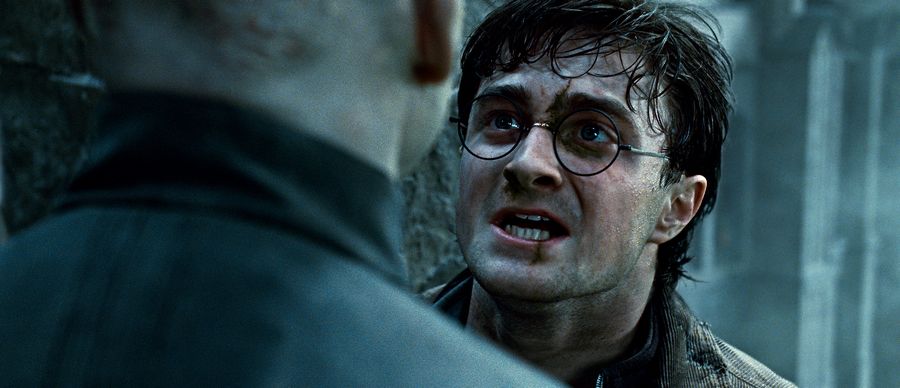
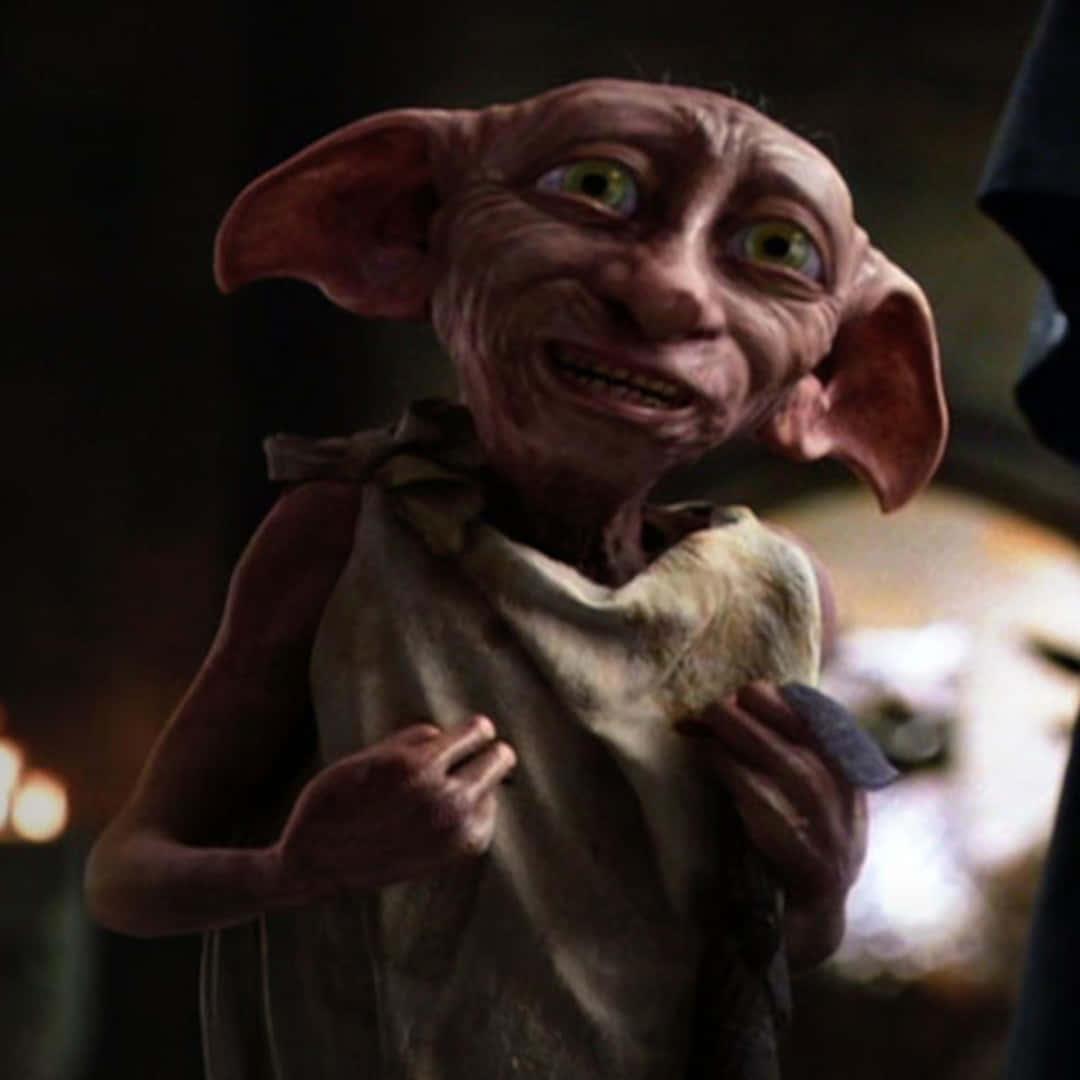
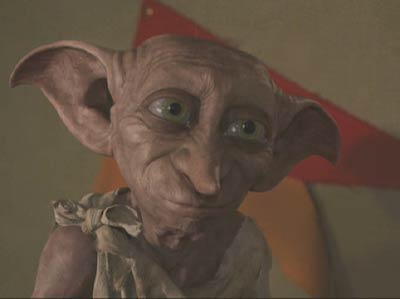
Fortunately, Harry Potter and the Deathly Hallows, Part 2 delivers on that promise and a good deal more.  It has been tough to get through these films enthusiastically.  I'm too old to be a die-hard fan, but I admired the cleverness of J.K. Rowling's writing (I still suspect she cribbed Neil Gaiman's Tim Hunter character from "The Books of Magic") Although I've seen them all, I had lost any real interest with Mike Newell's turn as director on No. 4 (the last of the "revolving directors" before settling on the uninspiring David Yates), the nadir of the series being the last one (which we'll just call Part 1) in which...nothing much happened.  In fact, that one was a good opportunity to do some back-filling and pay attention to some of the characters who'd been ignored the last few films.  Even that was squandered with all the attention paid to The Hogwarts Three (Harry, Hermione and Ron..."oh my") wandering around "getting lost" so as not to be found.  Besides that, the "magic" that Chris Columbus had started the series with away back in 2001—the delicious little magical details that tended to float through the frame not calling attention to themselves, the little character asides in the dialogue—had gone noticeably missing, and the increasing number of deaths of characters (that increased as the story got increasingly darker) seemed to happen in a way that is best described as "cold and unfeeling."  Oh, they'd be momentarily mourned (and off-screen demises we were merely informed about), but their deaths evoked no feeling in the audience (or this audience, anyway), and the one death that was supposed to resonate in Part 1 was of a character we hadn't seen since HP and the Chamber of Secrets, the second film.  Dobby, we hardly knew ye.

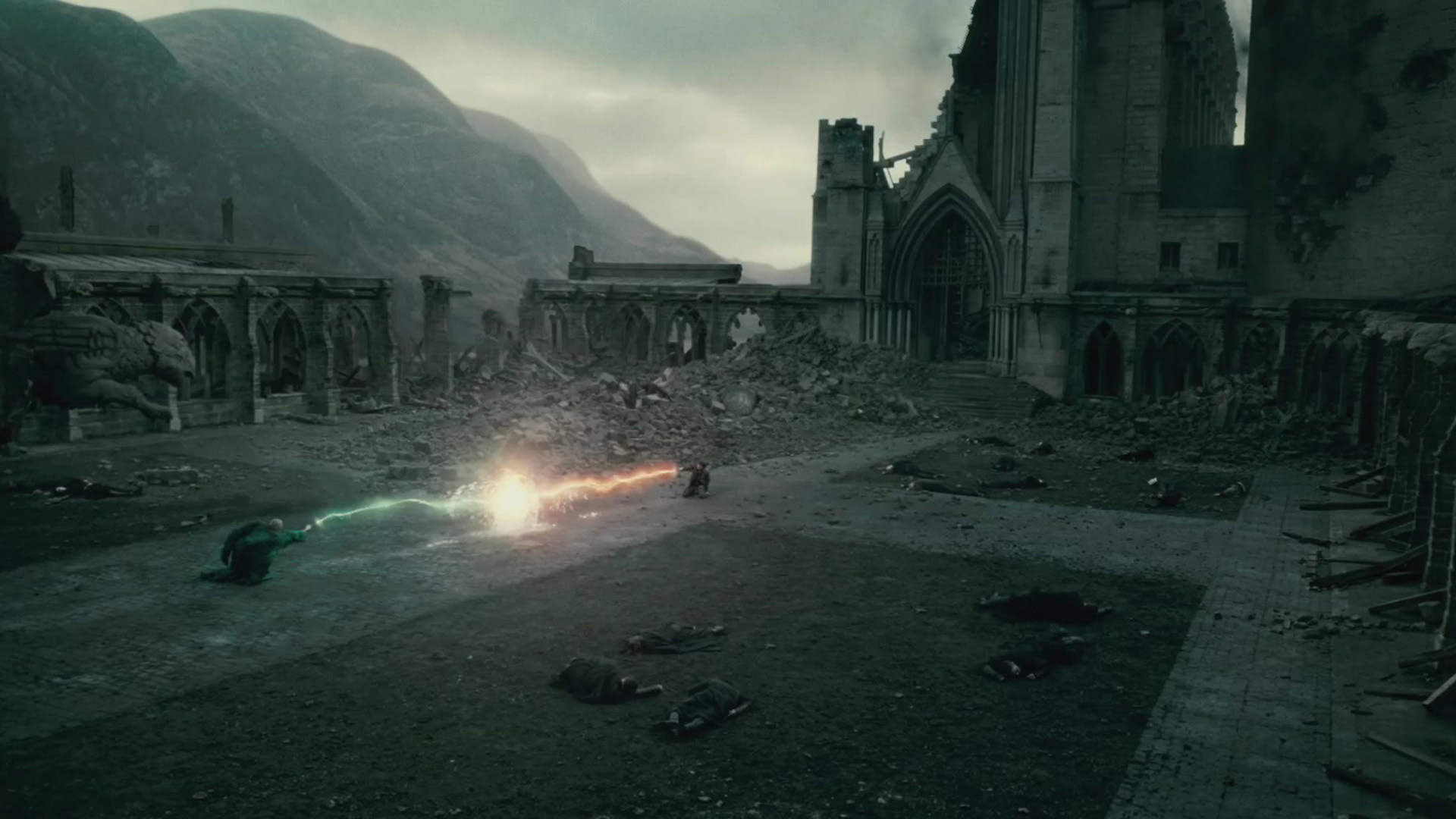
That problem still persists in Deathly Hallows, Part 2there are too many off-screen deaths and we're barely given time to register them—but at least this one is filled to bursting with events (in a lean running time of 2 hours 10 minutes) —that, given the message of the movie and the series (friends and family are important), runs a little off-message.  Part 2 picks up where Part 1 coda'd with Lord Voldemort (Ralph Fiennes) prying the Elder Wand from Dumbledore's cold dead hands.  Meanwhile, Potter and Co. have been seeking and destroying horcruxes, each of which contains a bit of Voldemort's soul, and only by destroying all of them can Harry hope to make The Dark Lord mortal and defeat himYates gets things going fairly quickly and doesn't let up the pace, save for some expository dialog at the beginning and some necessary breathing space between rounds in the Battle for Hogwarts (and it feels like a video game version of multi-tiered strategies).

But, there are creatures aplenty, a particularly amusing subterranean roller-coaster ride—I didn't see this in 3-D, but I'll bet it looks great—actors avoiding flying rubble (that Fiennes hasn't chewed on, anyway), lots of sparks and flames, and lots and lots of shots of people pointing sticks.  I found it quite satisfying, and particularly clever in how it wrapped up the sub-plots and filled in the gaps, a tribute to Rowling as well as the film-makers.  And the series did well in teaching life-lessons along the way, none more satisfying than the one here, which has been percolating, frustratingly, below the surface (and will be addressed in the inevitable "Now I've seen Everything" post about the series).

But, the best thing about the series is how it maintained the continuity throughout the entire run (with one of two minor exceptions—for instance Ciarán Hinds plays Aberforth Dumbledore in this one) with the same actors who started out in the roles.  None has payed off more than keeping Daniel Radcliffe, Emma Watson, and Rupert Grint in the three crucial roles.  To see these kids grow up and become fine actors (Radcliffe's reading of the line "It's mine" is particularly off-hand and nuanced) and replace the image of the kids in the minds eye as the definitive versions of the characters.  Take a bow, kids. Invest your money wisely.

Harry Potter and the Deathly Hallows, Part 2 is a Matinee.
 

Saturday, August 1, 2009

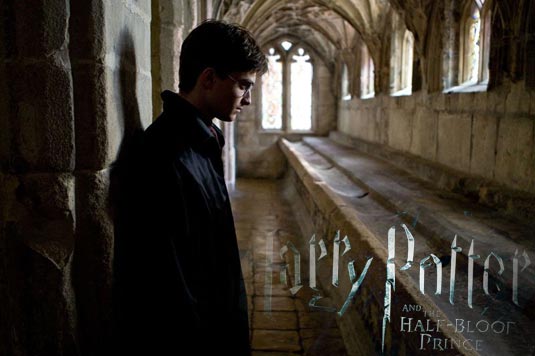
Harry Potter and the Half-Blood Prince

"Harry Potter and the Delay of the Inevitable"
or
"It Means It Was All a Waste. All of it!"


One must admit to getting weary of this series, now on its penultimate episode. At this point in the story, one should be quaking with anticipation for the concluding chapter (it'll be two, unfortunately), but instead one finds oneself, as previously, unmoved.

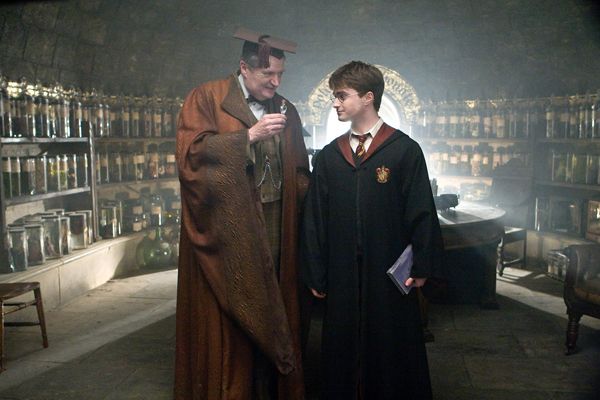
Whether this is a problem with being so faithful to the source material by J.K. Rowling (she does have to give her approval) for the author or the Faithful Readers, it's hard to say (although Alfonso Cuarón's "Prisoner of Azkaban," which magically took a meat-axe to that outing is still the best of the bunch). As in the last two "Potter's," a new character is introduced (Jim Broadbent as Professor Horace Slughorn...is this series going to end without Christopher Lee, Helen Mirren and Terence Stamp showing up?) and a few go missing (no Dobby, none of the past "guest-professors,") more of the love-life complications for the Big Three (Harry, Hermione and Ron—which one is beginning to realize Rowling set up from the first book), an incidental Quidditch match (which only served to show that the groundskeeping is starting to lack at Hogwarts), and the death of a Significant Character.*

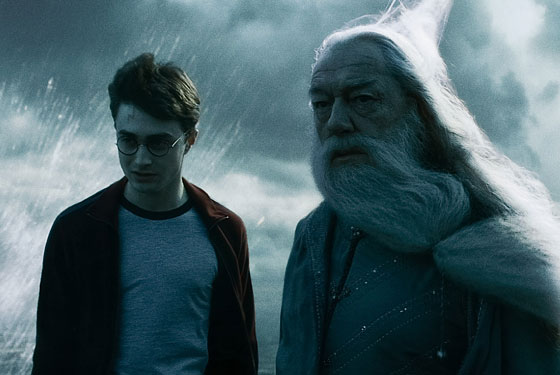
The series' inability to make you care about the passing of characters, when it's becoming more than apparent that the learning of death's inevitability is the major life-lesson in orphan Harry Potter's life (and that appreciating the magic that is there in living is the other), is a major stumbling block in the film series. It should be the spine of the films, and not merely by repetition. Having long since lost interest in the magic arcana of the Potter series (they add a love potion, with the usual sit-com results, and a "luck" potion—which Potter star Daniel Radcliffe embodies with a hilarious "slacker" slouch, nice choice, that), this deadly undercurrent is given short-shrift, no matter how dark the films become in subject matter or art direction.** That this all started with the boy-mage's parents' death and will end, as the targets strike closer and closer, to a predictable climax and dénouement is a sure thing. It's readily apparent that a "fix" is in, and one hopes that by cleaving the final book into two movies that the Potter franchise can find a way to make it interesting, film-wise, rather than just doubling profits. One hopes, despite the evidence of the "Half-Blood Prince."

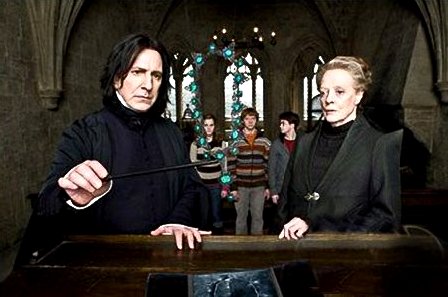
Still, there are a few things to acknowledge. By this time, the series is only too aware of its cliches (original scripter Steve Kloves is back) and pokes fun at them (Maggie Smith is given the best line: "Why is it when there's trouble, it's always you three?" and one of Radcliife's best lines is "Actually, sir, after all these years I kind of go with it" Indeed!), there are the usual neat little touches of legerdemain being ignored by the principals in the corners of frames, and say what you will about the series, look at the parade of actors who've traipsed through Hogwarts' revolving doors: Richard Harris and Michael Gambon, Dame Smith, Robbie Coltrane, David Thewlis, Timothy Spall, Julie Christie (!!), Emma Thompson and Kenneth Branagh, Brendan Gleeson, Gary Oldman, Miranda Richardson, Ralph Fiennes, Helena Bonham Carter (she's terrific in this one, and given more screen-time than the previous film), Broadbent, Imelda Staunton, John Cleese, Richard Griffiths, Fiona Shaw, Julie Walters, Jason Isaacs, Robert Hardy, John Hurt, Zoë Wanamaker, Ian Hart, and, best of all, Alan Rickman, whose Professor Snape continues to imply more and more while emoting less and less. These pictures become a notch more interesting every time he's on-screen.

One hopes that he's on-screen...a lot...in the next two.

"Harry Potter and the Half-Blood Prince" is a cable-watcher.

* At least this one is significant, the audience having spent more than fifteen minutes of screen-time with this one. The others—Cedric Diggory (pre-"Twilight" Robert Pattinson) and Sirius Black (Gary Oldman) barely registered as major tragedies, which they should be!

** There are seven special effects houses in the employ of "Half-Blood Prince"— not a lot for the current special effects extravaganzas—the most prominent of which is Industrial Light and Magic, which seems to be gearing its effects work more to the murky look of the WETA workshop, in the "Lord of the Rings" films.


Yesterday's Answers:


Tuesday, April 29, 2008

Perfume: The Story of a Murderer

"Perfume: The Story of a Murderer" (Tom Tykwer, 2006) Give the director of "Run, Lola, Run" a zillion dollar budget and a best-seller to adapt and you get this monstrous little curiosity, with a role for Dustin Hoffman, yet. Unfortunately, Twyker can't meet the film's biggest challenge-communicating the sense of smell and doing it delicately, of course. The director can do little more than ecstatic shots of Ben Whishaw's Jean-Baptiste Grenouille huffing and puffing and sniffing the air--actually the other way around. And one just can't buy the novel and film's biggest conceit--that the young amateur perfumer can sense parts per million like a super-bloodhound, hours, even days after the source has passed. It's an idea at odds with the visual of a Paris in squalor that Tykwer has (quite rightly, I'd bet) presented. Young Grenouille has this incredibly sensitive snoot in a town of open sewers, outdoor markets and the thousand natural scents, both beautiful and repugnant, including the perfumery used by the citizenry to cover it all up. It doesn't read that he'd be so olfactorily fine-tuned.

That's the major hurdle. The other is the coarse rankness of the material, where women--it's always women--are killed serially, covered in animal fat to immediately preserve their scent, then the fat is scraped off and reduced down to its basic (one would presume) pheromone, and collected as an eau de copse. The plot all comes down to a...boil...when Alan Rickman's protective father suspects his daughter is being stalked by the little stinker, and highs her to the hinterlands at full gallop. Despite his precautions Grenouille is able to track them on-foot despite the dughter's intoxicating scent being mixed with that of a sweating horse. This is where Tykwer's inability to sell the scent works to his advantage. You're not supposed to think about that in the absence of evidence.

There are other troubling aspects to it, but let's come right to the nitty of the gritty. "Perfume" is just another in a series of serial killer movies which (sorry) boils down women to objects with an aspect to be coveted and destroyed for. It's not unlike "House of Wax" (whichever version) or the skin-suits of "The Silence of the Lambs." Despite being gussied up with period detail, sophistication of technique and aspects of subject matter, "Perfume: The Story of a Murderer" is just another horror movie with pretensions of grandeur. Despite all the attempts to cover it up, you can't hide the basic stink.

Saturday, March 15, 2008

Love, Actually

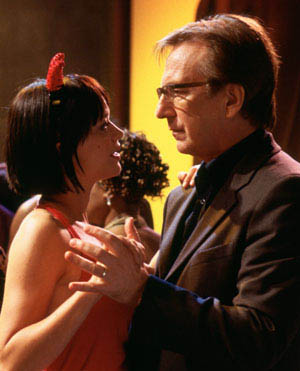
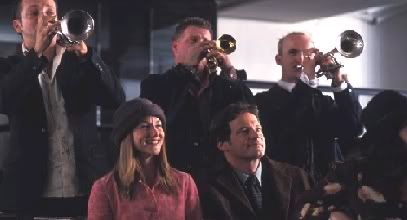
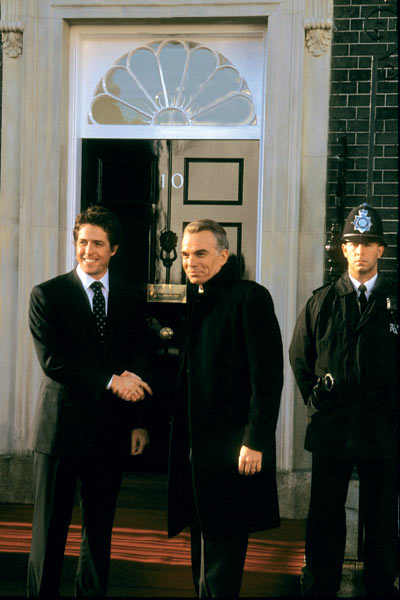
"Love Actually" (Richard Curtis, 2005) Curtis went from being the author of "Blackadder" and "Mr. Bean" to something of a Master of Chick-Movies after "Four Weddings and a Funeral" and "Notting Hill." "Love Actually" was his stretching of his formula to "Babel"/"Crash"-like proportions. It's just "La Ronde" but with more coincidences and slop-over of story that the result is soon you cease to care who knows who. As such, its tough to make a precise calculation of how many stories there are. There's the guy (Colin Firth) who after a break-up goes to Provence and falls in love with his Portugese housekeeper. He knows the couple who meet "cute" as lighting stand-ins for a porno film. There's the recent widower (Liam Neeson) whose son has a secret. He's friends with the wife (Emma Thompson) of an ad exec (Alan Rickman) and she happens to be the sister of the new Prime Minister (Hugh Grant) who has a crush on one of his staff, who happens to live next door to the secretary in love with the ad exec, whose employee (Laura Linney) has a not-so-secret crush on another ad-person, and that leaves out newleyweds Keira Knightly and Chiwetel Olojiofor, whose best man has a crush on...and on and on...England seems like a mighty small island, and everyone wants to get into everybody's else's knickers, literally or figuratively. It's surrounded by the story of a faded--make that acid-washed--rock-star (Bill Nighy, brilliant) staggering somewhere between Robert Palmer and Keith Richard, who has recorded a crappy Christmas version of "Love is All Around Me," which, for some reason, catches on. Plus, there are cameos by Billy Bob Thorton, Claudia Schiffer, Rowan Atkinson--basically anyone who wasn't needed on the sets of "The Lord of the Rings" or the "Harry Potter" films. The stories are happy, sad, contrived, bittersweet, tragic and occasionally prurient with quite a bit of gratudity. Neeson is as loose as he's ever been in a movie (he has the best line), matching Grant for light-comedy skills, Linney is charming and has the best laugh-out-loud moment, and its great to see Rickman and Thompson together again. It's a pleasant diversion, smartly written with the various stories achieving varying degrees of success.