Ciang Chee realizes her friends have no problems prostituting her. * Well, everybody but Madonna....  "Lust, Caution" aka "Se, jie" aka 色,戒 (Ang Lee, 2007) Despite its NC-17 rating, "Lust, Caution" is a spy thriller, not a sex film (the "NC" rating was created to separate films of merit that had explicit sexual content from the porn-dominated "X" rating, but it doesn't seem to have translated for mainstream audiences). A group of drama students in Japanese occupied Hong-Kong put on a patriotic play that raises donations for the resistance. But the play's director ("Typical director," says one of the actors, "he never listens to anyone else.") decides it's not enough to raise money—a relative of his has discovered his employer is a Chinese collaborator, and the student troupe in a surge of patriotism (and drunkeness) vow to assassinate the man, Mr. Yee (Tony Leung Chiu Wai). They set up an elaborate ruse insinuating two of the troupe as prominent business-people and over shopping trips and mah-jongg games befriend Mrs. Yee (Joan Chen). Before long, the smartest and most gifted of the actors, Chiang Chi (Wei Tang) has caught Yee's eye, and makes plans to set him up for the kill.
Despite spending hours at the movie theaters watchingIngrid Bergman and Cary Grant movies (Lee uses them specifically), she would have saved herself a lot of grief if she'd seen the only movie the two starred in together, Alfred Hitchcock's "Notorious" (1946)." Spying is probably the world's second oldest profession, seeing how inexorably linked it is with the first. In "Notorious," Bergman's floozy socialite is used by intelligence services to infiltrate a Nazi cell by playing on the affections of one of its leaders. She's a honey trap, using her target's weakness for her as a weapon. Her superiors (in all matters, save moral) are only too willing to let Bergman's character prostitute herself for their ends. And like Louis Calhern and his hypocritical "Notorious" cronies, the actors-playing-resisters are only too willing (while feeling somewhat guilty) to let Chiang Chi seduce Yee.
But this is where the drama is. "Lust, Caution" was attacked by some for its "plodding" pace, and its contained emotions, but it deals with masquerades and the subjugation of self for appearance, something that everybody* knows and buys into as a matter of course. For Lee, its another of his "repression" films, be it "Sense and Sensibility" or "Hulk" or "Brokeback Mountain" where the Id's fight is the prominent conflict on-screen.
As far as spies are concerned, this is the very well-plowed field that John le Carré has toiled in for years, where the loyalty of the heart betrays loyalty to duty or country. Depending what side of the Cold War you situate the tale it is a Triumph of the Will for good or bad.
So "Lust, Caution" slots in well with both the spy genre and Lee's ouvre, and one day, one hopes it might be re-discovered as a highlight of both lists.
Thursday, April 30, 2009
Lust, Caution





Wednesday, April 29, 2009
Point Blank
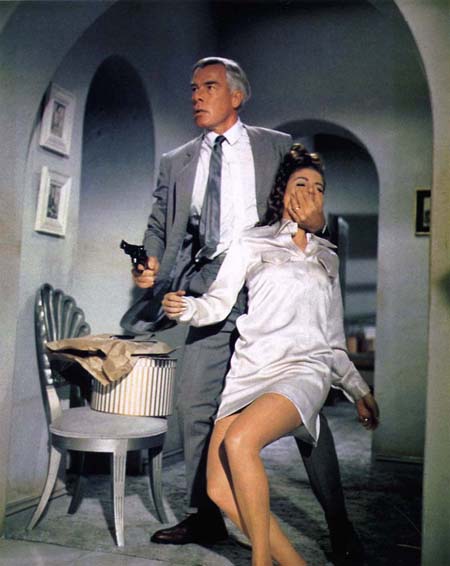
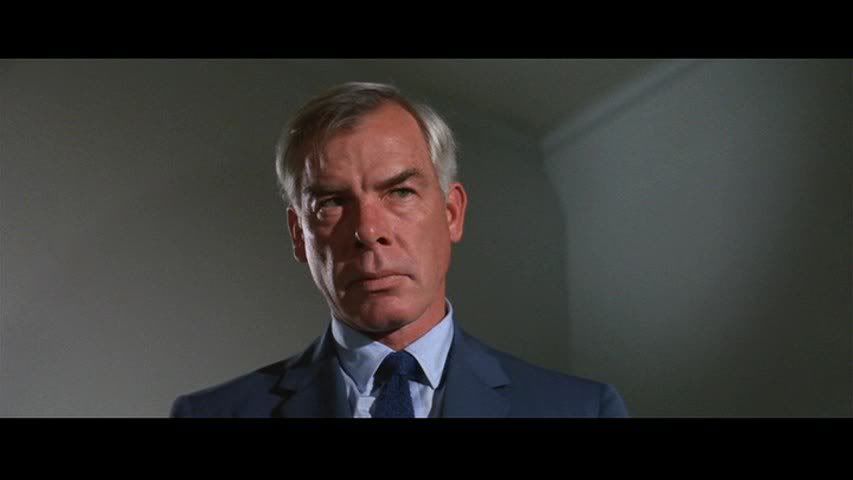
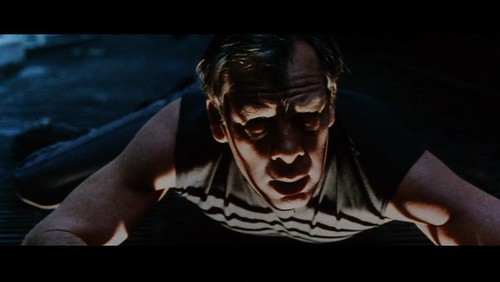
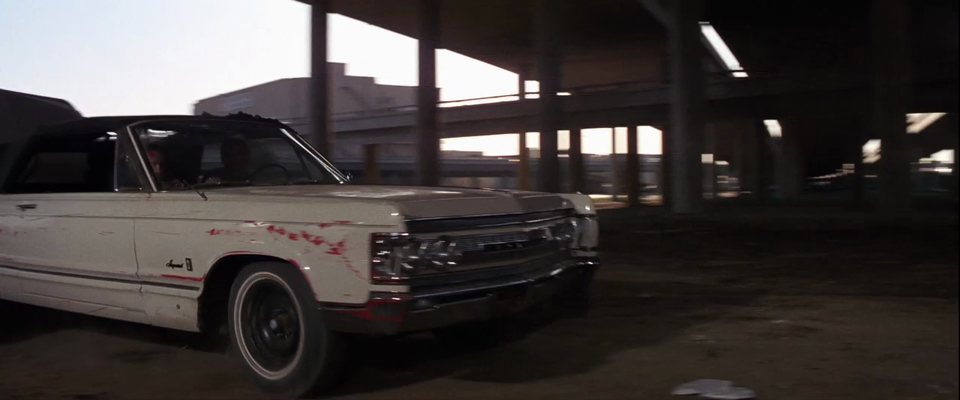
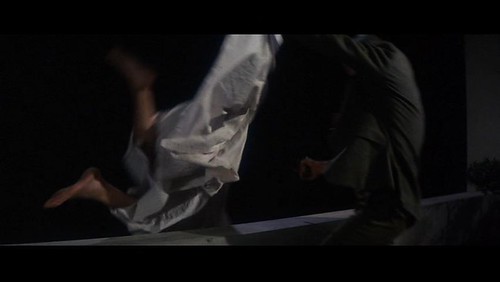
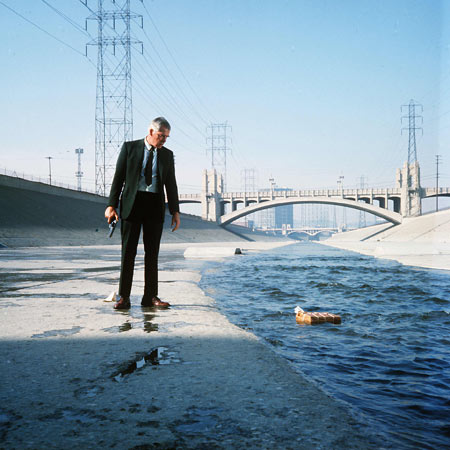
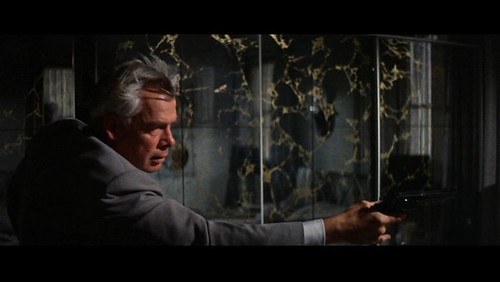
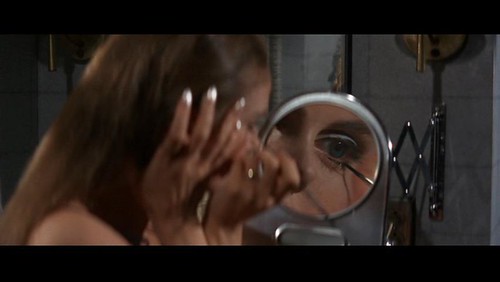
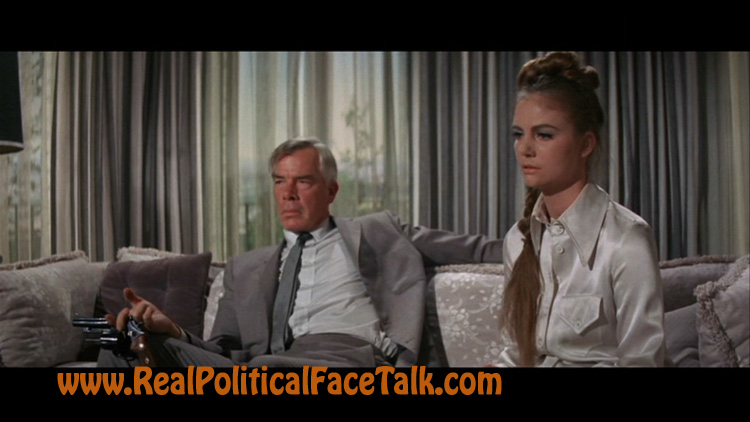
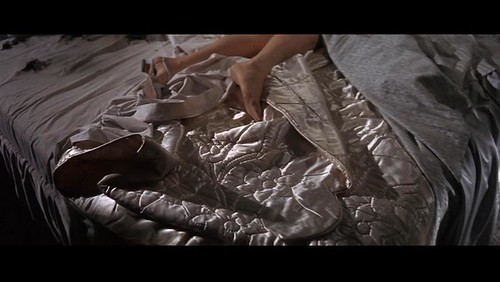
 "Point Blank" (John Boorman, 1967) Obtuse, non-committal, over-stylized noir that still makes you shake your head and say, "Nice to see somebody do something like this." Because Boorman in his psychedelic take on film noir tropes manages to shake loose a lot of the dust you don't see piled up in the dark. And makes a statement about why there might have been such a cultural tumult in that era.
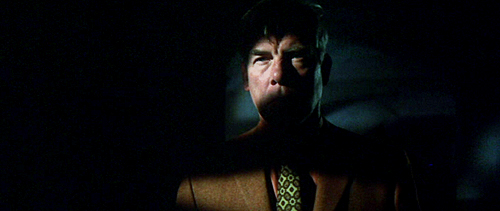
Where the punks and thugs and Mr. Big's in 40's-50's noir were lousy with personality, here they're face-less, charmless non-entities as bland and blank as the glass facades they hide behind. The only thing that makes them human is that they bleed, and that's where our hero strides in.
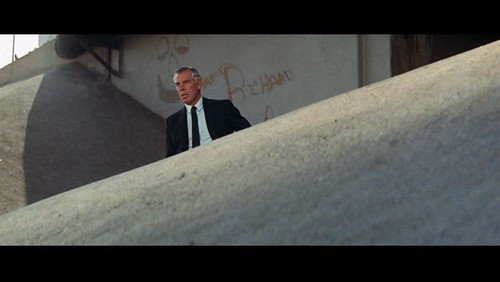
There's always gotta be something a little bit different about a noir hero, if only that there's a silver lining in his dark cloud. But the anti-hero of "Point Blank" is unlike any who've come before him. Walker (Lee Marvin) is the only name he goes by, even his no-good cheating wife (Sharon Acker) calls him that, and the one thing people say about him is they thought he was dead. Expressionless and seemingly impervious to pain,* he just could be, having been set up, cheated and shot—point blank—by his old pal Mace Reece (John Vernon in his film debut) during a drop-robbery at the abandoned Alcatraz prison, his walking with heavy tread the only thing keeping him corporeal. That and the need for vengeance. He's helped along the way by a shadowy presence (Keenan Wynn) whose non-specific organization "helps" Walker with his task. Not that Walker needs much help—usually he's the wrench in the works, insinuating his way into being noticed, making some vague threats and watching over (literally over) the mark's demise. Throw a bug in his sister-in-law's ear (Angie Dickinson), or a slimey underling (Michael Strong), wind them up and set them off on their little missions and sure enough, somebody will wind up dead.
So, what's going on here? Most noirs are mysteries, but there are no answers being requested here, just revenge. The only mystery has to do with the vast clockwork set in motion. Why the shreds of particulars and the over-abundance of style?** Is Walker an Avenging Angel and Wynn his Heavenly Host? Whenever Walker shows up to plant his plans the subjects are usually indulging in one of the Seven Deadlies: lust, sloth, greed, gluttony...
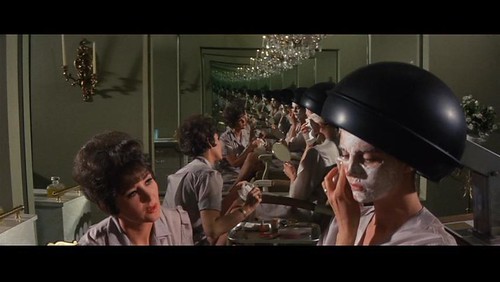
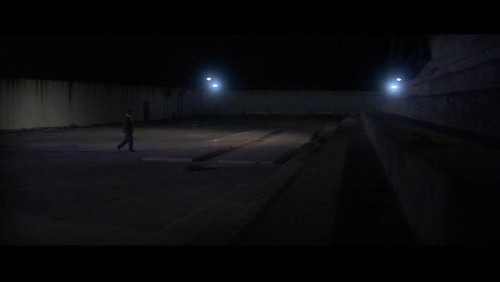
And visually, the film is a series of forced perspectives, Boorman shooting down long corridors and mirrored surfaces into black-centered tunnels and corners to unfathomable vanishing points leading inexorably to...where? Walker's path, mostly. We're locked onto Walker's perspective, however unreliable it may be. Rooms change. Bodies come and go, flashing back and forward. Events happen and then seem to vanish, leaving an empty space, a blank slate, like they've been scoured...purged. Is Boorman using the trangular form of the Renaissance painters and standing it on its ear, giving it inexorable depth. Speculation of this type is a long walk from the movie's source, Donald E. Westlake's "The Hunter." But, such is the influence of Boorman and screenwriters Alexander Jacobs, David Newhouse, and Rafe Newhouse, that one can't help go there, so impenetrable and full of questions is this movie.
Like being lost in the dark
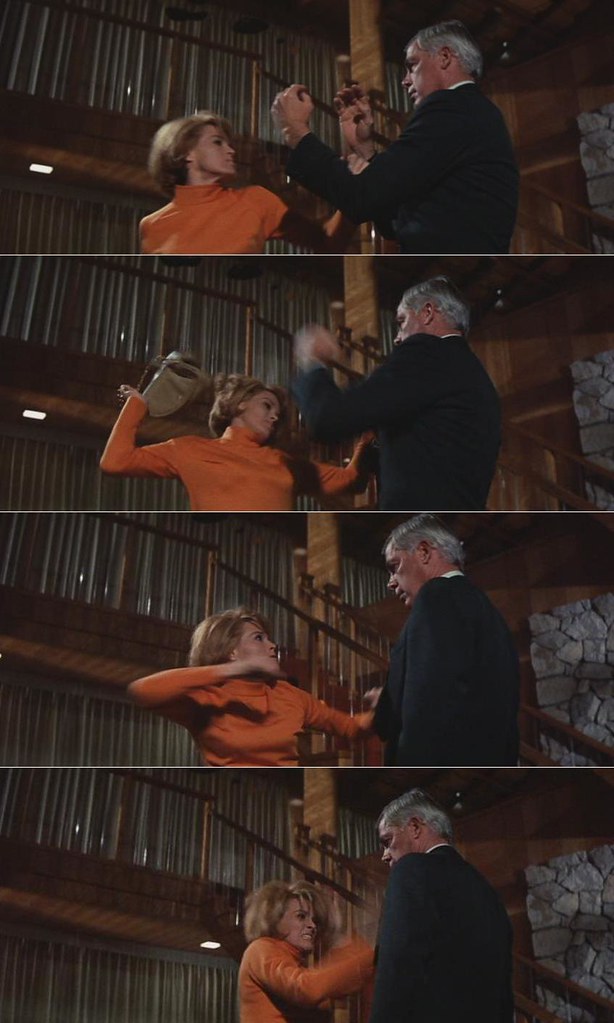
* At one point, Dickinson wails on him, not holding back, thumping his chest, slapping him, hard and clobbering him in the face with her metal-rimmed purse. He (and Marvin) just takes it. Later, she clobbers him with a pool cue, and it just makes him amorous.
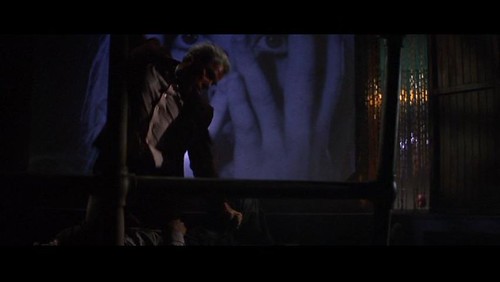
** In a nightclub called "The Movie House," over a screaming rhythm and blues song without words, Walker beats up a couple of thugs, the slide projection in the background showing a pretty actress reacting in distress. A little obvious, that, but fun.










Tuesday, April 28, 2009
The Little Foxes
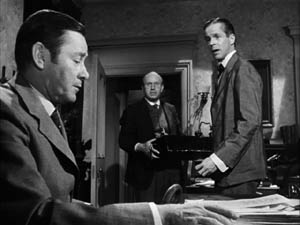
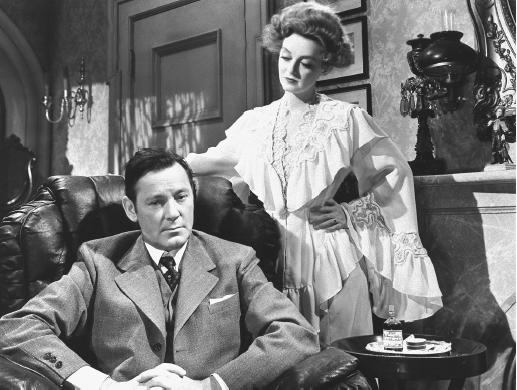
 "The Little Foxes" (William Wyler, 1941) This is a good one (and thanks go to MGM's "This TV" network for digging it up)-a "feel bad" play as only Lillian Hellman could cook it up (adapted by her for the screenplay and aided by Hellman cronies and Dorothy Parker), it is basically the play as staged in 1939, featuring the same cast with four notable exceptions: Teresa Wright (her first film) as ingenue Alexandra Giddens, Richard Carlson as a potential beau and a playing-field-evening "good" man, Herbert Marshall as the sickly father Horace Giddens, and as the bitch-mother from Hell, Bette Davis. She's the only female in the avaricious Hubbard clan in the turn of the century South, where every thought and relationship is geared towards more wealth and power. There is some good among the vipers but all subject to being poisoned by the venom--Aunt Birdie (Patricia Collinge), married for her land and now abused and alcoholic, daughter Alexandra who has managed to survive with a conscience, Horace, the weak, dying father who has escaped to save his life and whose fortune the plot revolves around, and the servants, symbols of the subjugation in which the Hubbards hold their world.
The scenes of Carlson and Wright are designed to bring a ray of hope to this clutch of venal graspers, and a way out for the vulnerable Alexandra, whose life could be ground in the gears of the Hubbards' plan, just as surely as if she was the cotton in the very mill they're trying to finance illegally. It brings more of a balance to the play where she and the saintly (but weak) Horace are the only trace of decency with power.
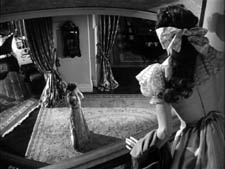
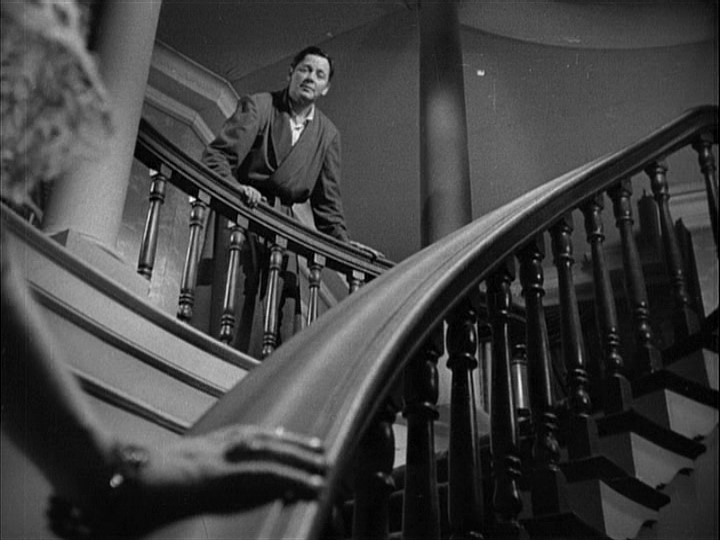
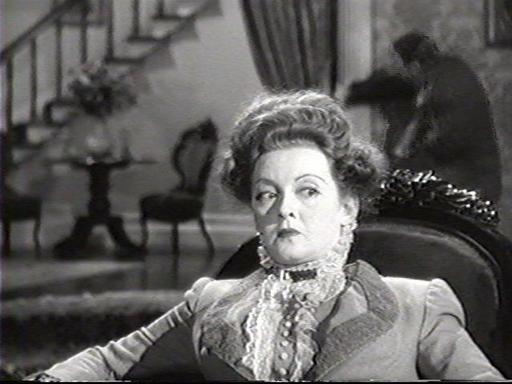
And the credits are staggering: Hellman would later scratch out preachy screeds, but she's at the heighth of her gifts here (with the levening of Parker, Arthur Kober, and Alan Campbell). William Wyler's direction is never, ever natural, but very inventively staged, and he's aided by one of the most innovative and creative of cinematographers Gregg Toland, the two men bringing out the best in each other (and the score is provided by Meredith Willson, creator of "The Music Man"). This would be the last collaboration between Wyler and his star of choice, Bette Davis—the two had a falling out during this film. Not that you can tell, Wyler is Davis' best co-conspirator, designing shots that evoke her mood and thinking. In a pivotal scene, he keeps Davis in close-up while dramatic events are happening behind her, her head swivelling in the exact opposite way from where the events are occurring, like she's watching with eyes in the back of her head. It's already an eerie, black-hearted scene, but Wyler keeps the focus on Davis' Regina Hubbard (literally, this is one shot where the background is out of focus) in her deliberate sins of omission, making the scene extremely theatrical, while exploiting the virtues of the cinema.
You don't hear about this movie much—it's barely mentioned at the official Wyler web-site. But it's a must-see, as a lesson in filming a play effectively, in a superb presentation, and with top-notch performances perfected on-stage and buffered for the screen.
_02.jpg)





_01.jpg)
_04.jpg)
Sunday, April 26, 2009
Don't Make a Scene: The Dark Knight
 The Story: The one sure thing about the last Oscars was Heath Ledger winning the statue for Best Supporting Actor. It was a fore-gone conclusion.
The cynics will say it's because the man died. But I'm absolutely sure he'd have won it if he'd been there to walk to the stage. There was too much "buzz" about Ledger. First, his performance in "Brokeback Mountain," but also word from the set that his "Joker" was "different." So different that it re-wrote the character from previous interpretations—the most notable being Jack Nicholson's bravura "take" on the role (previously thought to be "iconic"). But what no one suspected was that anybody hoping to play the role afterwards—was going to have pay homage to Ledger, while having to steer their own course. Now, no one can play this role without acknowledgement of what he did. In this portrayal, he went someplace else. Away from the comics, and the past, and away from Heath Ledger. He took it to a whole new plane.
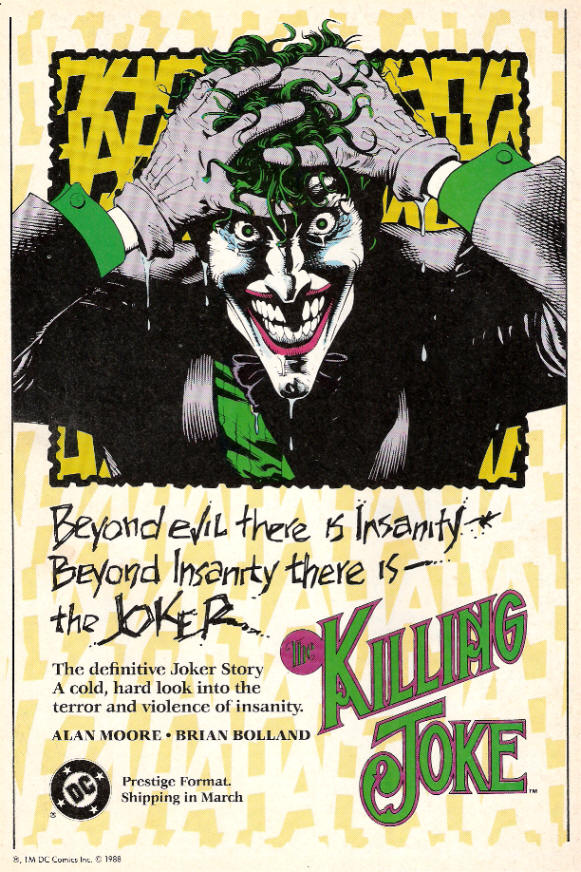


A viral internet campaign prepared The Faithful for the shock, and there was the usual hue and cry and whining about expectations and legacy. Nobody griped after the movie was released.
Nobody.
In the movie, we get glimpses of Ledger's strategies until this scene, but here we see his "Joker" in full-flower. He introduces himself with just the Joker Laugh. But it's not the standard bone-chilling laughter associated with the character. It's a parody, a dismissal of it—speaking the Ha's, the Ho's and Hee-Hee's (like he doesn't have to really do the schtick). Then, he pulls a magic trick that gets everybody's attention, and Ledger holds the screen for the rest of the movie in an odd, rhythm-less, whiny cadence,* eyes that shift on a dime, and a quick-silver unpredictability that is the character's real calling card. You just don't know what he's going to do next, but you know he's thinking about it and licking his lips in anticipation.**

This unfathomable quality keeps Ledger as the focal point for the film. It's Harvey Dent's story and how it impacts Bruce Wayne/Batman. The Joker's merely the pilot light sparking off near the gasoline drums. You can't take your eyes off of him, waiting for the worst to happen. He's the human equivalent of a car accident. ***
The Set-Up: How soon "The Dark Knight" begins after "Batman Begins" is a little tough to judge. BB ends with Lieutenant Gordon (Gary Oldman) telling Batman (Christian Bale) about the escalation of crime in Gothan City, how they're using weird get-ups and different methods, like a murdering bank-robber leaving a "Joker" playing card. "The Dark Knight" begins with one of those robberies of a mob-run bank. It seems the Gotham Police Department and the enterprising new District Attorney Harvey Dent (Aaron Eckhart) are also planning to confiscate the mobs' collective monies.**** So, the crime-groups of Gotham City hold a low-rent summit to discuss events and make plans. They're going to have to throw out the agenda. Someone's about to crash the share-holder's meeting.
Action!
The Chechen walks through a metal detector that whoops as he passes. he checks his weapon at the door, and proceeds to the waiting tables, where he sits next to Maroni and clasps his hand. Two mobsters bring in a tv and set it at the head of the tables.


 Maroni Thug: What the hell is this?
 Lau: As you're all aware, one of our deposits was stolen. A relatively small amount: 68 million.
 Chechen: Who's stoopid enough to steal from us?
 Maroni: Two-bit whack-job...
 Maroni:...wears a cheap purple suit and make-up. He's not the problem, he's a nobody. The problem is...our money being tracked by the cops.
 Lau: Thanks to Mr. Maroni's well-placed sources, we know the police have indeed identified out banks using marked bills, and are planning to seize your funds..today. And since the enthusiastic new D.A. has put all of my competitors out of business, I'm your only option.
Maroni: So what are you proposing?
Lau: Moving all your deposits to one secure location. Not a bank.
 Gambol: Where, then?
 Lau: No one can know but me.
 Lau: If the police should gain leverage over one of you...
 Lau: Everyone's money would be at stake.
 Chechen: What's stops them getting to you?
 Lau: I go to Hong Kong, far from Dent's jurisdiction. And the Chinese will not extradite one of their own.
Maroni: How soon can you move the money?
Lau: I already have.
 Lau: For obvious reasons, I couldn't wait for your permission. Rest assured, your money is...safe.
 The Joker: Ha. Ha. Ha. Ha. Ha. Ha. Ha.
 Joker: Ha. Ha. Ha. Ha. Ha. Ha. Ha.
 Joker: Ho. Hee. Hee.
 Joker: Ah-hah. Ah-Hoo. Hee. Hee. Ha.
 Joker: And I thought my jokes were bad.
 Gambol: Gimme one good reason why I shouldn't have my boy here pull your head off.
 Joker: How 'bout a magic trick?
 The Joker jabs a pencil into the card-table.
 Joker: I'm gonna make this pencil disappear.
 Gambol's body-man approaches The Joker, who puts him in an arm-lock and slams his head into the table...hard.


 Joker: Tah-dah!
 Joker: It's...bah...it's gone!
 Joker: Oh, and by the way, the suit—it wasn't cheap.
 Joker: You ought to know, you bought it.
Gambol gets up, angry.
 Chechen: Sit!
 Chechen: I want to hear proposition.


 Joker: Let's wind the clocks back a year.
 Joker: These cops and lawyers wouldn't dare cross any of you. I mean, what happened?
 Joker: Did...did your balls drop off ? Hm? You see, a guy...like me...
 Gambol: Freak.
Mobster: Damn right.
 Joker: ...guy like me—
 Joker: —Look, listen. I know why you choose to have your little..
 (cough)
 Joker: ...group-therapy sessions in broad daylight.
 Joker: I know why you're afraid to go out at night.
 Joker: The Bat-man.

 Joker: See, Batman has shown Gotham your true colors, unfortunately. Dent...
 Joker:...he's just the beginning. And a...as for the television's so-called plan?
 Joker: Batman has no jurisdiction. He'll find him and make him squeal.
 Joker: I know the squealers when I see them.
 Lau reaches to turn off his transmitter...
Joker: And....
His picture fades to black.

 Chechen: What do you propose?
 Joker: It's simple, really. We kill the Batman.
 The hoods laugh. Gambol seethes.
 Maroni: If it's so simple, why haven't you done it already?
 Joker: If you're good at something, never do it for free.
 Chechen: How much you want?
 Joker: Uh...half.
 Mobsters laugh
 Gambol: You're crazy!
 Joker: I'm not...
 Joker: ...No, I'm no...t.


 Joker: If we don't deal with this now...
 Joker: ...little Gambol here...
 Joker:...won't be able to get a nickel for his grandma.
 Gambol slams the table, and gets to his feet.
Gambol: Enough from the clown!
 The Joker stands and opens his coat, revealing several hand-grenades attached to the lining, and his thumb looped through a pin.
Joker: A-tah-tah-tah! Let's not blow....


 Mobsters: Shit!
 Joker: ...this out of proportion.
 Gambol: You think you can steal from us and just walk away?
 Joker: Yee-ah.
 Gambol: I'm puttin' the word out!
 Gambol: Five hundred grand for this clown dead! A million alive!
 Gambol: So I can teach him some manners first.
 Joker: Alright, so listen...
 Joker: ...Why don't you give me a call...
.
 Joker:...when you start taking things a little more seriously.
 Joker: Here's my card.
 F-nap!
 Joker: Hm-hm.
 He kicks the door open and disappears.

"The Dark Knight"
Words by Christopher Nolan, Jonathan Nolan and David S. Goyer
Pictures by Wally Pfister and Christopher Nolan.
The Dark Knight is available on DVD from Warners Home Video.
* Matching it, composer Hans Zimmer and his associates worked over-time trying to come up with a musical equivalent of a tuneless "Joker" theme—more like itching powder or fingernails-on-a-blackboard for his accompaniment, rather than music.
** Part of the creepiness is that he is always licking the scars that crack the sides of his mouth to such a degree that I began to think of him as being a junk-yard dog (which were reinforced by the shot of the Joker driving away from a crime-scene with his head sticking out the window of the car, and his late admission: "I'm like a dog chasing a car—I wouldn't know what to do if I caught one!").
*** But, whatever it is, such is the power of this performance, my wife cannot watch this movie, so creeped out is she by Ledger in this role. She's had lots of opportunities to watch it, but can't get past this scene. She loved "Batman Begins" and really wanted to see "The Dark Knight," but can't when confronted with this...creature....
**** For the sake of brevity (attempting to maintain a shred of it) and clarity (which may be the biggest flaw in Christopher Nolan's direction), I've eliminated this scene's cut-away's to the GCPD police action on the mob-banks—only to find them empty. They only reinforce what is being said in the dialogue, and this is long enough as it is! However, that Nolan cuts away to do so (when it isn't necessary) exposes his frenetic cutting style—which greatly aids him in bringing some photo-realism to the larger-than-life comic-book action—but also shows that Nolan's biggest directing trick in his bag...is obfuscation. And that's the opposite of good story-telling.