Or, "Fangs for the Memories"
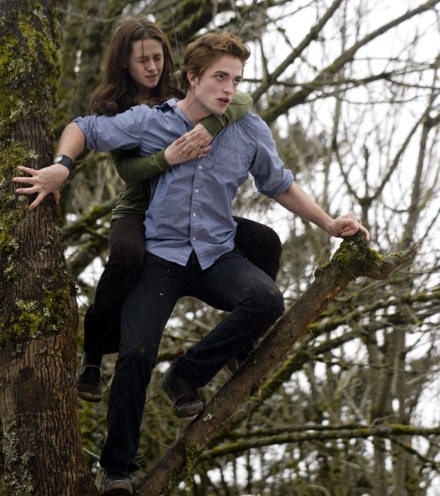
Bella Swan (Kristen Stewart) may be the palest student ever to transfer to Forks High School from Arizona. For some reason her inability to maintain a tan is given a pass by her class-mates (who all try a bit too hard acting like fun-loving "with-it" teens-in-the-woods), but the constant topic of conversation are the equally pale Cullen family.
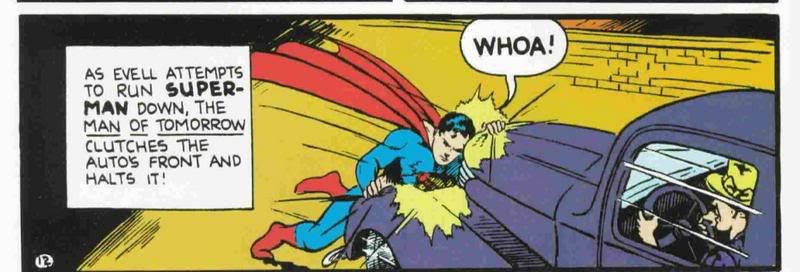
The Cullens keep to their ruby-lipped, paler-than-pale selves. They don't mingle and are a clique unto themselves. When the weather is good (rare in Forks, Washington out there on the Olympic Peninsula) the Cullens don't show up for school, but instead "go camping," as the story goes. Bella, a natural klutz physically and socially, is drawn to the unattached Cullen, Edward (Robert Pattinson). And why wouldn't she be? Like the rest of the Cullens he always appears to be walking in an undercranked slo-mo dream state, the chiseled delicate face of a Orlando Bloom/Johnny Depp/Jude Law, stops careening vans like Superman, growls like Elvis, and has the hair, neuroses and doomed bad-boy presence of James Dean, and perfect skin that glows translucently in the sun-light like diamonds . He seems particularly drawn to her, too. He can't eat, can't sleep, and has a lean and hungry look all the time.
It might be love, but maybe it's the vampirism.
It must be nice to be Stephanie Meyer right now. She's making a ton of dough off of recycled ideas and the cross...uh, sorry...combining of similar genres to create the biggest literary sensation since....well, since "Harry Potter" claimed to be literary. The "Twilight" series mixes equal parts Gothic Romance, standard Romance novel tropes and vampires and comes up with "Dark Shadows." Except Dan Curtis came up with that idea in the 1960's, so toss in a healthy dose of Judy Blume, and you produce what 'tweenettes have been swooning over the past couple years.
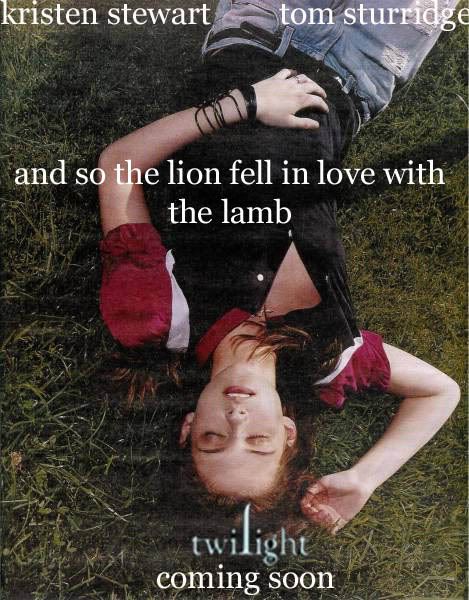
Now, here comes "Twilight," the movie, and like the "Harry Potter" films it distills the essence of the plot without communicating what makes both of those series fun reads in the first place. Instead, everything comes across just a bit cheesily dramatic: Edward is all lowered gaze and wolfish teeth, and Bella (the name clues you in that Meyer is being a bit playful with her writing) is all heaving commitment. Edward's self-loathing for his disease puts up a barrier that confuses and messes with Bella's head (the only mind that Edward can't read), and his affliction just attracts her all the more. Which is bad for Edward because he and the other Cullens subsist on only animal, not human, blood (which he says is like humans on a steady diet of tofu: sufficient, but not very satisfying--a nice touch, that), and Bella is a constant temptation. "You're like my form of heroin," he says to her. And for all the romantic hooey of "the lion falling in love with the lamb," it feels a bit more like falling in love with a T-bone steak.
Yeah, well, I love chocolate, but not enough to marry it.
Remember, back when I wrote about "Dracula," and said that it was a metaphor for raw hetero-sexuality? Here, it's spelled out in big block letters Barbara Cartland could read with her lowest level bejewelled spec's: a vampire's blood-lust is just lust with everybody's formal-wear on. And penetration is penetration. Edward is the good boy with manners enough not to soil his lady-love ("killing" her for real, not just her reputation), while Bella is the willing maid panting for "it" (Kristen Stewart basically fulfilled that same role in "Into the Wild"). In one particularly heaving bedroom scene, they kiss to test how far they can restrain themselves (him to chomp on her, she to have sex with him) and just when things get a little out of control, he heaves himself against the opposite wall--like he was spring-loaded, or something.
That scene, and a lot of others, boast some of the most poorly done practical effects work done since Clark Kent's "skimming" run in the original "Superman" movie. We're in the post CGI-realm, folks, things could look a lot better than the FX one would expect on "Smallville."
That's another issue: Director Catherine Hardwicke makes "Twilight" looks cheap. I've seen Billy Burke ("Fracture")before, and Elizabeth Reaser (she was wonderful in "Sweet Land"), but they're the only recognizable faces in the film, and the movie seems to have a film of murk all over it. As they filmed it in the Northwest--Oregon substituting for Washington (nice work, again, Washington Film Board!)--it might be fog getting under the lens. These books are making ga-zillions of dollars, you'd think they'd throw some money at the adaptations.
It takes the film a bit to get going, because Bella has to do research to discover what vampires are--seemingly being out of touch with culture her entire life--but it does spring to life in a decidedly unexpected way: when the two kids have to meet the families. Edward turns a bit paler meeting Bella's cop-dad, and the joke about the Cullens having Bella over for dinner is nicely mined for uncomfortable laughs. "Bella, you're about to go to a house full of vampires, and the only thing you're worried about is making a good impression?" is the best line in the film. Then, it all goes completely south with a vampire baseball game (seriously) and a tedious version of "The Most Dangerous Game" with a trio of "bad" vampires, who are evidently playing for another team. At that point, everyone stops thinking and starts doing stupid things when there is so much at...stake.

But just when one thinks there's not enough blood in the genre that hasn't already been regurgitated along comes this modest film from half-a-world away that covers a lot of the same unconsecrated earth as "Twilight' but gives it a poignant spin.
"Let the Right One In" (aka "Låt den rätte komma in") introduces us to Oskar (Kåre Hedebrant), a child of divorced parents living in an apartment block in a Stockholm suburb in 1982. When first seen, one could mistake him for a Renfield-type, babbling to an unseen person to "squeal like a pig" while brandishing a knife. He watches from his window as a car pulls up in the middle of the night, and a man and a girl get out and move in to the apartment next door. Cardboard is put up in the windows and things go quiet.
Then, strange ritualistic murders begin happening around town, and Oskar's fellow students are warned to beware of strangers in the night walking home from school. Oskar has his own problems with an unholy trinity of bullies that regularly taunt him--they're the reasons for his revenge fantasies played out in the safety of his own home. About the same time, he makes the acquaintance of a pale girl named Eli (the excellent Lina Leandersson), who's about his age..."more or less," she says. When she learns of his bully troubles, her answer is simple: "Oskar, hit back. Hit them harder than you dare. Then they'll stop." Eli gives him the courage to do just that, and he begins to take weight-lifting classes.
Eli has her own problems: her benefactor and procurer has begun to make mistakes and the towns-people are getting suspicious, as the attacks become more random and more vicious. Eli and Oskar grow closer, deciding to go "steady," as events threaten to tear them apart.
"Let the Right One In" may sound sweet, but the savagery of the attacks is anything but—director Tomas Alfredson stages them swiftly and suddenly, and they can catch the audience by surprise. Plus, some of the happenings have a giddy violence that may produce uncomfortable giggles along with the chill up the spine (not unlike those of the excellent, though little seen, "Exorcist III"). There is visceral, grisly horror in the story of the both supernatural and all-too-human varieties. The vampires of "Twilight" are ethereally pretty in the sunlight of the Northwest. In the similar light of Sweden, the results are decidedly different and more spontaneous. To say more would rob the film of its twisted charm, something that can't be said for the cob-webbed cliches of "Twilight." That an American remake is in the works is news that can be regarded with its own brand of horror.
May it never see the light of day.
"Twilight" is a Cable-Watcher.
"Let the Right One In" is a Matinee.
 My Life as a Dog (aka "Mitt Liv Som Hund") (Lasse Hallström, 1985) Ingemar (Anton Glanzelius) is having a tough time being a kid (as they all do, until they learn they're a grown-up). Curious, precocious (and, as they say in Airplane!, has a severe drinking problem), he's surrounded by adults who know more than he does, but seem to not know how to enjoy it. His older brother is a bullying creep, his Mom (Anki Lidén) has TB and can't handle her two kids. Dad's half a world away, absent. All he can do is go through life with his dog, Sickan, and his schoolmates. Life is routine enough to control (barely) but once Mom gets sent off to a sanatorium, he gets shipped off to his Uncles.' One's officious and no fun at all. The other works in a glass factory amongst a collection of misfits. Much more fun. There's his Uncle perpetually building or repairing, the grandfather who likes to be read to from lingerie catalogues, the acrobat who's a little crazy, the sculptor who specializes in erotic glass (which the foreman habitually shatters), and the plant hottie, who everyone has designs on.


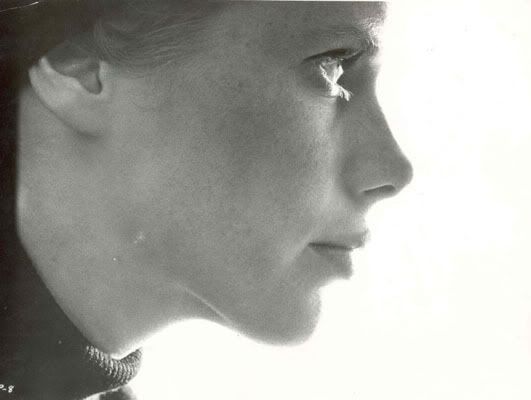
 approach Malle takes with "The Fires Within," Bergman takes a totally different tack--he lets you know right from the start that "Persona" is only a movie, not reality at all (and as an ex-projectionist, my sympathy to the fellow who has to show it Saturday night!). It is another Bergman film dealing with the supernatural. But for Bergman the supernatural does not come from beyond, it exists within us, within our personalities.