Recycled Material From the Grave or "I Can Fix This..."
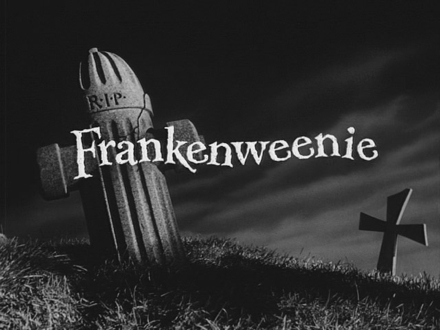
Really, it's a little soon for Tim Burton to be re-making one of his own films—albeit his first live-action short for Disney. One worries that maybe he's run out of ideas, or that he's simply doing what he's always done—take a property and combine it with that goofy blend of the kinky and ghoulish that he has made his own...it's just that this time the property is his...and he's already made it his own once. Maybe, he looked at this product of his younger self with limited resources and thought "I can do better. I can do more." Or along the lines of young Victor Frankenstein, he looked at it his earlier creation and vowed "I can fix this." At the time of the live-action short, Disney looked at the product of their young animator...and promptly dumped it...only acknowledging it when Burton became an A-list director (with some studio hesitancy) with the first "Batman" film.*Now, Disney is crowing about its brand new Burton movie, and one can only imagine the wry smile that must produce for the director. It was natural for Disney to want an expansion—they owned the property—and although this new version ofFrankenweeniehas a lot of (dare I say) re-animation of material, it did give Burton a chance to give it a little more depth and play around without the inhibitions of live action. I say inhibitions rather than limitations because the differences are exhibited in a weird and rather contrary way, given that the film is done with puppet figures: emotion. The character of Sparky exhibits a far greater depth of moods than a trained pit-bull terrier could exhibit in live action, not only in its darker moments, but especially in moments of joy—the animation of the dog running elicits fond feelings immediately, as the puppet is rarely touching the ground in motion, not unlike Charles Schulz's "Peanuts" kidswho hover over the ground in transit. And although the human figures are Burton cyphers (resembling the human character designs of his first film Vincent) they are still soulful, their eyes expressing more emotions than their faces will betray. Given that the subject matter is about a mad scientist of a little boy who runs the parallel path of his literary namesake to re-animate his beloved dog, killed in a traffic mishap, there's a lot of room for high emotion there, and far more than in the motivations of the original story. But, Burton takes it further and makes it more than about young Victor. Taking pages from The Nightmare Before Christmas and Batman Returns, he stages the denouement at a city festival that brings all parties together in one spot, the communal experience gone awry. Seems that Victor's work has attracted a lot of attention among his classmates, and as there's a science fair going on, all the kid's are doing the same thing—literally, the same thing, bringing to life their dead pets with very mixed results, and providing Burton a chance to explore other species of monster movies (and recreating scenes from them) than just the one, paying tribute to each, just as he does by including a scene from friend Christopher Lee's turn as "Dracula." Like Victor's experiment, this is a labor of love as Burton—just as with the earlier short—resurrects the movies he loved as a kid, long-buried memories that never really leave, and have influenced Burton throughout his career. It's a fun, resonant electrification of his earlier work, with just enough fresh in it to make it worth the effort and bring it back to new life in leeched black-and-white (which Burton always manages to make look sumptuous). Now, if only we could see something wholly new and original from him, that would be some experiment.
The original Frankenweenie
Brad Bird's "Family Dog" (based on animation designs by Tim Burton)
* It did find it's way to Paul Reubens who'd been trying to find a suitable director to collaborate on his long-in-the planning Pee-Wee Herman movie he'd been dreaming about. Frankenweenie convinced him to contact Burton.
"Dark Shadows" has been a cult favorite for Baby-Boomers for 40 years (ouch!), long before it was fashionable to have vampires as fodder for young adults. The ABC soap opera ran for several seasons of afternoons replacing the standard plot-lines of cheating spouses and long-lost family secrets with long-buried family relatives and a full range of gothic ghoulery that plundered every horror story in the crypt-library, including vampires, werewolves, Frankenstein-ish monsters, time-travel, parallel dimensions and ghost stories.
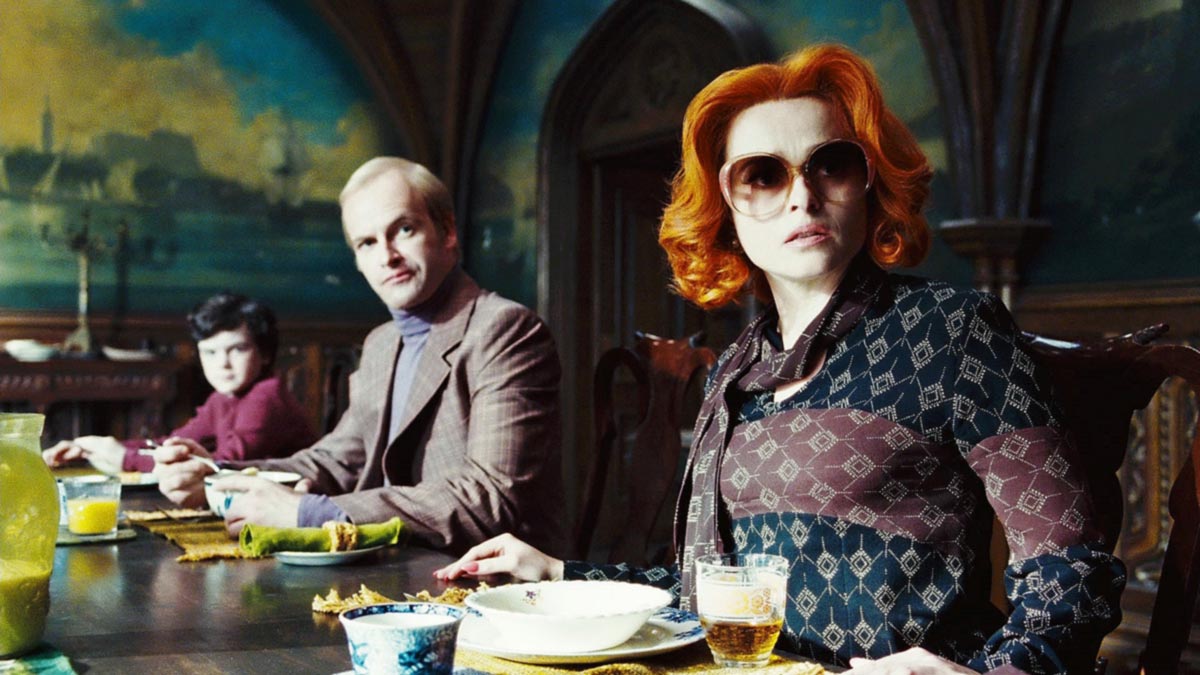
It was a TV habit of mine when I was a kid, timed perfectly to be the after-school tonic for a parochial school education, an occult chaser for the catechism, all those crucifixes I was surrounded by during the day being used for other purposes. It was also a fixation for Tim Burton and Johnny Depp, Burton digging the horror genre and Depp grooving on the character of Barnabas Collins (played by the late—or is he?—Jonathan Frid, who puts in a very brief cameo here along with a couple of other cast-mates), the reluctant vampire who pursued hearts, rather than the blood that pumped through them. The result of their dual obsessions is this version ofDark Shadows, produced by Depp, directed by Burton.
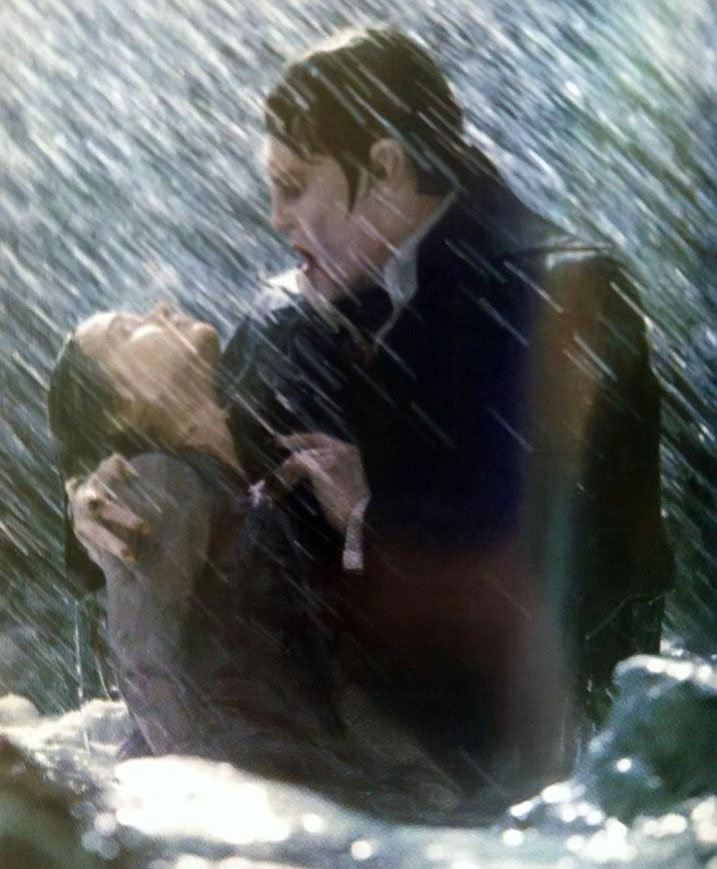
Depp and Burton get it right at the beginning: Barnabas learns his fate.
The worst-laid plans of mages and men...Eternity is cut short around 1972 as the construction of a new McDonald's in Collinswood unearths Barnabas and he lays waste to a construction crew (who must have been getting overtime working at night!) with an explanatory "You have no idea how thirsty I am!"
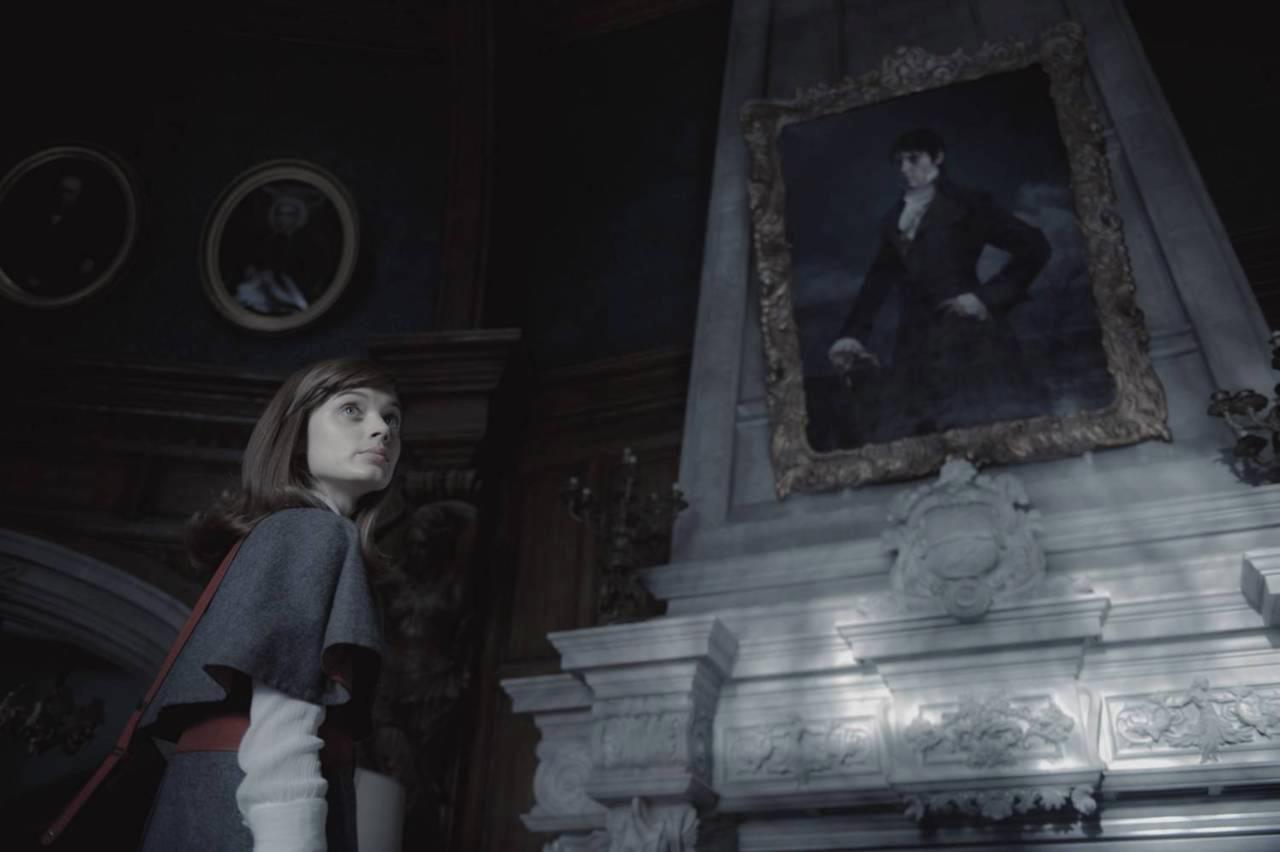
On a parallel course, Maggie Evans (Bella Heathcote, the latest in a long line of Burton ingenues with thin necks topped by big heads with huge eyes and "big" hair) is on a train to Collinswood where she has applied for a job as a governess to young David Collins (Gulliver McGrath), who is having psychological issues from the disappearance of his mother at sea. Abruptly, she decides to change her name to Victoria Winters, indicating a past she wants to run away from, as The Moody Blues tune "Knights in White Satin" burbles over the soundtrack. Hey, Burton may be onto something here. The combining of '70's kitsch and some of its more mordant songs with the gothic mood of "Dark Shadows" works well, setting the tone of the series and the morbid fascination my generation had with it. Can "Don't Fear the Reaper" be far behind?
Then, things get a little weird. She's picked up by a VW van of hippies, and there's some stoned comedy about how they're so wasted, and Vicky is cool, man, and it's easy laughs and you wish it was more clever. It becomes apparent quickly that Burton will be playing this for laughs, which is fine (he always does to a certain extent), but the original material is already so melodramatic and over-the-top that the humor undercuts the effectiveness of what drama there is that ekes through the dramatic stares and the vamping poses. "Dark Shadows" was always "camp" entertainment in the broad sense, but to broaden it even further nullifies whatever chills and thrills can be drained from it. This is why Frid's performance on the show was such an anchor for it—he played it absolutely straight, and in fact, ramrod-stiff; you didn't make fun of Barnabas for fear of his wrath—or his breaking down in tears.
It looks great. Burton's films always do, with a superb design sense and his knack for picking terrific, seemingly impossible angles to shoot from. But, like a lot of Burton films, it tends to fall apart in story, snatching hasty explanations and deus ex machina to get out of trouble, or to provide the director with a bizarre concept that may seem right in retrospective sub-context, but that comes out of nowhere, randomly and jarringly. One has to stop, back-track, only to realize that, no, this has never been mentioned before, and why now?
One suspects it's a whim, a passing "wouldn't-it-be-crazy-if" thought passed between Depp and Burton as they geek out, rocking in their corners, internal logic no longer mattering as much as a superficial entertaining notion. As such, Dark Shadows accomplished their goals. Yeah, it's entertaining, but highly insubstantial, a mere spirit of a movie.
Dark Shadows is a Rental.
The first Dark Shadows movie (left) and the original Barnabas Collins, Jonathan Frid
* This also sets up a series of sight-gags that are somewhat clever, as Barnabas never seems to be able to find appropriate sleeping arrangements at Collinwood.
Tim Burton's new film, Dark Shadows (a version of the 1960's ABC Gothic soap opera pureed through the Burton Blender) opens today—we'll review it next week. Here's an updated version of our look at his career.
Odd Man Out
At a time when most movies seem to be mass-produced and distributed by cookie-cutter, their scripts doctored by graduates from script-writing seminars, the direction, when its not borrowed from other movies, easily adaptable to television configurations and paced to allow for periodic product placement, bursts of adrenaline-pumping action and the easy insertion of commercial breaks, it's refreshing to see at least one director break out of the formula and make movies his own way--even if that way tends to show off a single persistence of vision and a recycling of themes. Tim Burton started out as an animator for Disney who "didn't quite fit in"--one of those "special projects" kind of workers who is kept in the background, lest he scare the stock-holders. But his talent was too intense to be hidden for long, and his work gave him access to projects of greater scope and personal expression. Though his vision is a dark one, he has managed to apply it to a variety of projects, remaining true to that vision without doing too much damage to the properties it is applied to, and even finding some light along the way.
Vincent(1982)Back when he was a nerdy little animator for Disney, Burton made this quirky Gorey-influenced stop-motion animation about a little boy named Vincent Malloy who, living a fairly normal suburban life, lingers in the dark of his bedroom, thinking himself to be like Vincent Price in the movies--obsessed with the gloomy side of life, a mad scientist with dark thoughts of Poe, and a lost wife prematurely buried. Vincent is seven, and hilariously, dramatically dark. The whole thing was narrated by Price himself. You look at the design of Vincent and after you get over the astonishing way it looks and the sophistication of the mix of stop-motion and traditional animation, you start to see that little Vincent resembles Tim Burton and the themes of Vincent are themes that will re-occur in Burton's films again and again. It's a fascinating short subject for its own merits and what it portends for the future.
Frankenweenie (1984)Burton's first live-action short starred Daniel Stern, Barrett Oliverand Shelley Duvall (plus cameo's by director Paul Bartel and Sofia Coppola), and told the story of young Victor Frankenstein, child of the L.A. suburbs, who brings his run-over dog, "Sparky," back to life with electricity. One big sick joke, but hilarious in its details, and ultimate good will. Made on a shoe-string, it nevertheless looks really good, with lovingly detailed black and white photography, and sets with the look of such future films as The Nightmare Before Christmas and Beetlejuice (in their own way paying tribute to the Universal monster movies of the past) including a climax set in a gloomy miniature golf-course, where Sparky runs and hides from a surly mob in the inevitable windmill. From doing five minute animations to making a sustained, consistently entertaining thirty minute short subject is quite a creative leap, so it shouldn't come as too much of a surprise that Burton could make a full-length feature. "Groundlings" member Paul Reubens saw Frankenweenie, and immediately championed Burton to direct the feature debut of a character he'd created and debuted on an HBO special. The script had been in the works for years. All it needed was a director keyed in to bottle-adolescent world that Reubens envisioned. The resulting collaboration made quite an impact...
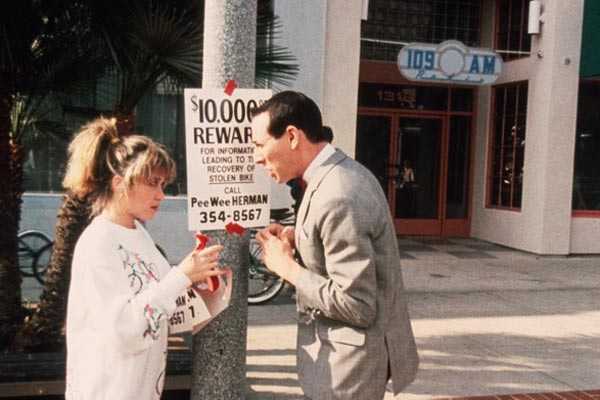
Pee-wee's Big Adventure(1985) Burton was especially tuned into the boy-thing world of Pee-wee Herman, and he and Reubens successfully took the character out of its television-show set and into what could pass for the real world, though from a six year old's perspective, filled with hobby shops and tourist attractions separated by wide open spaces. Burton starts with a cartoony delight--while Danny Elfman's Nino Rota-ish score thumps in the background, Pee-wee's mechanico-house wakes him up and makes breakfast--a clockwork by-the-gears day, until his most precious possession--his bike--is stolen, and like Ethan Edwards in The Searchers, he must go on a cross-country odyssey of obsession to find it. Burton keeps the energy and the inventiveness up until the 3/4 mark when a budget-saving chase through a movie-studio brings the thing to a creative stand-still, but still one has to admire the fact that he could keep the thing interesting for that long--especially considering that a little Pee-wee goes a long way, and he's at his most effective in ADD-timed short doses. A final face-saving coda in a drive-in saves the day and ends the film on a hilarious and sublime grace-note. All in all, a fine balancing act that proved that Burton could pull off a major motion picture without benefit of training wheels.
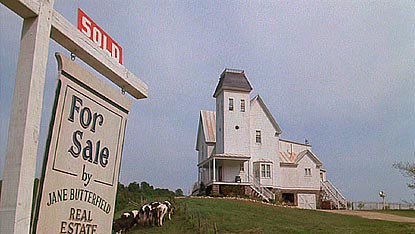
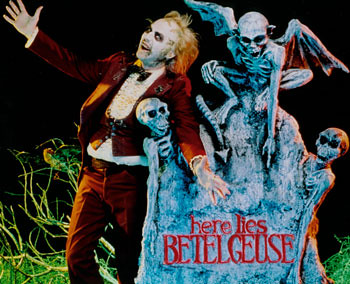
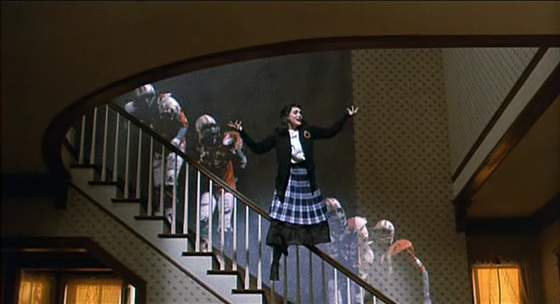
BeetleJuice(1988)After the success of Pee-wee, Tim Burton stepped back, took a breather, and contemplated his next step--he did some directing for television, but then launched back into film with this bizarre script. As weird as Pee-wee's Big Adventure was, it doesn't hold a candle to this odd little necro-comedy about a loving couple who finds their dream home, and then are tragically killed in bizarre circumstances. But instead of heading for the after-life they maintain a very happy existence in their house's attic, scaring off the real-estate agents and potential buyers who want to take it over. Frustratingly, their efforts don't perturb a yuppie couple and their goth daughter, but only encourages them (and its made believable as they're played by Jeffrey Jones and Catherine O'Hara). So, the After-Lifers turn to the annoying help of a spirit named Beetlejuice, who is not exactly what he seems and not exactly doing what he claims. A great cast manages to stay on top of a script that plays by its own rules. Geena Davis and Alec Baldwin are the dead couple. Jeffrey Jones and Catherine O'Hara as the live ones, and a new kid named Winona Ryder plays the daughter with death on her mind. Then, there's Michael Keaton as the title character. Burton has always been attracted to actors with a, shall we say, unique way of approaching roles, and Keaton is given a lot of lee-way to create his poltergeist. It reminds one of just how great a talent Keaton can be when not hemmed in and given his head, shrunken or not. Plus, there are cameos by Dick Cavett and Robert Goulet, and Danny Elfman's music puts a dirge-like spin on calypso music. As long as one isn't being too picky about continuity and story-logic, its a slickly sick little movie with a lot of heart.
Tim Burton and Danny Elfman in studio around the time of Batman
Batman (1989)Despite its overwhelming financial success this was probably a career mis-step, but Burton's design sensibility is one of the highlights of making "Batman" a legitimate live-action hero (especially considering the last person in the role was TV's Adam West). Everything about this adaptation was controversial to the fan-boys who didn't want the character to be turned back into a joke. Well, maybe not a joke, but Burton certainly wanted to explore the twisted side of somebody with a lot of dough who likes to beat up people. And the biggest controversy was casting Keaton again, as Bruce Wayne and Batman. Twerpy little Keaton...as Batman? Actually, it made perfect sense...to twerpy little Burton. Arnold Schwarzenegger didn't have to dress up as a bat to scare people. But a couch-candidate like Keaton's Wayne? Who better? The script keeps it lean and mean--no Robin, but plenty of toys and a certain kind of fairy-tale spin to the whole proceedings with the chief ogre falling to Jack Nicholson's movie-stealing turn as The Joker. Kim Basingerserved the role as damsel-in-distress, but, really it could have been anybody, and the movie was top-heavy with odd casting--Pat Hingle as Commissioner Gordon, Billy Dee Williams as the future Two-Face, Jack Palance as a mob boss, and Hammer Studios veteran Michael Gough as an elderly avuncular Alfred. One thing bothers this Bat-purist--Batman kills. It's the same kind of life-taking one sees in the Bond films--anonymous henchmen get caught up in the fireballs of explosions--but here The Bat sends a remote-control Batmobile to drop a couple of factory-destroying explosives to do the dirty work knowing full well there are people inside. But moral quibbles and source inequities aside, it made jillions, and Burton could have directed the phone-book next. But he chose something far quirkier...and personal.
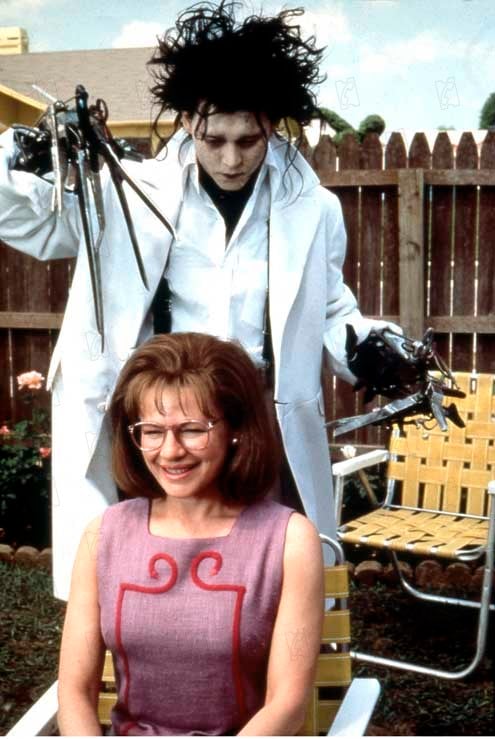
Edward Scissorhands(1990)This one probably had the studios scratching their heads wondering if there was something they didn't know. 20th Century Fox took a chance on this product from the super-hot new director, and, incredibly, it did extremely well at the box-office, making the folks at Fox think that audiences were coming to see a "Tim Burton" movie no matter the subject matter. But, when you get down to the marrow of Edward it's a gothic fairy tale that resonates like a bed-time story. Young Edward is left abandoned and incomplete when his inventor (Vincent Price again--his last role) dies, and is dropped into a suburbia where he can look but can't touch. Seem a little obvious and cloying? Not with Burton darkening it up, and a superb cast of Alan Arkin --he and Burton seem made for each other, but have only done this one film--Dianne Wiest, Price, Winona Ryder (again), and an incredibly contained performance by Johnny Depp, who seemed to be channeling silent movie performances as Edward (though one look at his black rat's nest hair and you suspect that it's another Burton hero based on Burton). Only a vindictive scissor-skewering late in the proceedings seems out of place and severe for the tale, but one can see the purpose behind it and the origins that influenced it. And Burton uses its consequences to cap the whole thing with an astonishing visual tag that is sad and beautiful and magical simultaneously. He would pull that off again. But first, he'd have to return to old haunts...
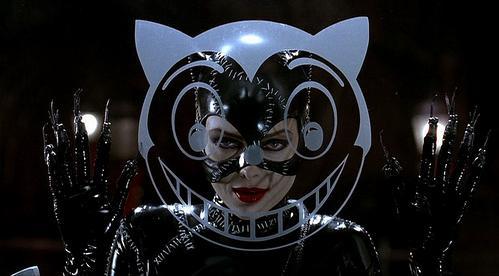
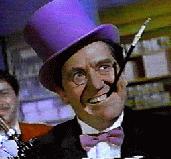
Batman Returns(1992)With the successes of Beetlejuice, Batman, and Edward Scissorhands behind him. Burton probably felt he could do no wrong. And, indeed, he had much more creative control over Batman Returns than the previous one--the executive producers were off mis-managing Sony Pictures, he had his choice of screenwriters, and he got to pick his villains--going with a trio of animal avatars: the bat, the cat and the penguin. Casting? No problem. Danny DeVito was just the right size and demeanor for Oswald Cobblepot, and Michelle Pfeiffer camped it up (replacing a pregnant Annette Bening) as The Catwoman ("Hear me roar"). The movie made a lot of money, but upset a lot of children, and their parents, and a lot of studio execs who took angry phone-calls from the merchandisers who attached their products to a pretty ghastly exercise. But what'd they expect? Burton took The Penguin character and re-imagined him away from Burgess Meredith's pfaw-Roosevelt, and turned him into a...freakish penguin-man, with flippers for hands, jagged yellow teeth, and what appeared to be black bile spewing from his mouth. The Catwoman was a split-personality (not unlike Batman, Burton pointed out) who was more feminist statement than character. And aesthetically, it seemed like the movie was just a string of one-liners and ironies as opposed to being a solid screenplay. The film did good box-office (though not as good as the first) and amidst all the outcry Burton was relieved of his Bat-duties (he exec'd the next one in name only) and moved on, reputation a bit sullied.
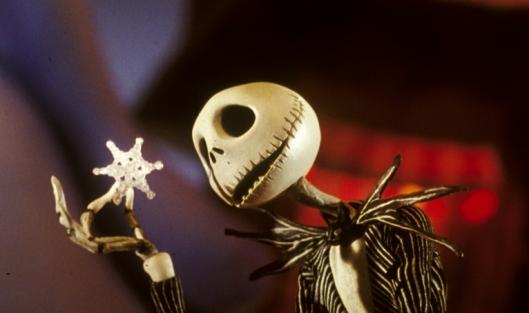
Tim Burton's 'The Nightmare Before Christmas'"(1993)Part of the DNA of Tim Burton's creative process is a deep-rooted nostalgia for the past, of which this film is a prime example. Begun as a Disney-project along the lines of the Rankin-Bass Holiday specials he loved as a child, Burton, flush with success, went back to Disney to resurrect this sublimely weird musical by way of 'The Addams Family" as Jack Skellington, first citizen of Halloween-town discovers another Holiday town (very reminiscent of Chuck Jones' "Whoville" from "How the Grinch Stole Christmas.") themed around Christmas. It is one of the most fully realized of Burton-visions, despite the fact that it's one of his least "hands-on" movies. Longtime collaborator Danny Elfman created the tent-pole songs that advance the story, and animator Henry Selik directed the arduous day-to-day work of putting the 88 minute piece together one...frame...at...a...time. It's an amazing film, made with old movie-making techniques at the dawn of CGI. It is never less than accomplished or assured and delightfully awash with great ideas, sick, twisted and even sweet.
There's been speculation that Depp again is playing Burton, this time dealing with Hollywood stuff-shirts who don't understand him, and that might be an interesting sub-text, but as Burton's first out and out horror film, the film is a bit graceless and heavy-handed. Oh, Hammer could be that, all right, but there seemed to be a bit more glee to the proceedings than Burton is able to dredge up. If he was going for more comedy, as was the supposed intention, he failed...and miserably. But the film made money.
Planet of the Apes(2001)A lot of press junketry was generated about this not being a "remake" so much as a "re-imagining." That was correct. It is in no way a remake. More's the pity. The original was a shaggy-dog story about reverse Darwinism and the superiority of Man (not). In seeking to improve it, the maniacs blew it up! This---this is a horrid mess. Terrible, nearly incomprehensible plot, and it's not even much fun. The original (with its script by Rod Serling and Michael Wilson) spun a liberal message of man's enlightened superiority to the thuggish, xenophobic nature of the resident monkeys only to have its hero's ideals smashed into his self-satisfied face with one of the most memorable switcheroo's in film history. This one doesn't have the sociological compare-and-contrast in mind, or any of the earlier film's satirical intent (as obvious as it was). It just wants to get to the monkeys asap, with a lot of action. Not very lofty. But you gotta admit--they got the apes right. It's a make-up and costuming triumph and occasionally looks great, especially to see a full-on battle with the apes charging, running on all four hands. But special effects do not a movie make, and despite a pretty good cast (Mark Wahlburg is lost, but Helena Bonham Carter, Michael Clarke Duncan, Paul Giamatti--whose face still seems to come through the orangutan make-up--and especially Tim Roth, all do wonders with their ape roles. And for sentimentalists, Charlton Heston Returns to the Planet of the Apes in a cameo--as an ape. There's a limp attempt at a simianly similar surprise ending--that couldn't be dumber...or more derivative ("Hmmm. What landmark can we screw up this picture?")
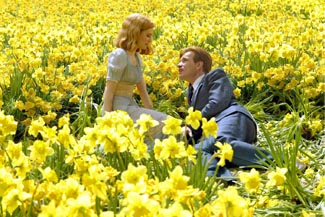
Big Fish(2003) One wants to say that Burton's wondrous adaptation of Daniel Wallace's novel raked in the dough, but it didn't, owing to a "Perfect Storm" of movie-going public indifference. Now there's a pity. This should have brought to Burton an entirely new audience wary or wearied of his wicked nightmare movies. Their loss. It's pretty amazing to see the Burton imagination take on a fairly straight "tall tale." Based around a son's coming to terms with the bullshit of his braggart father, Burton goes to town on the story-telling aspects of the flash-backs, and finishes on a sublime coda, that requires something the son is finally able to achieve--a leap of faith. It didn't bring in general audiences, weirded out by Burton's earlier films, and his Goth fans stayed away, feeling he'd compromised. I felt it was Burton's best work--a labor of love about love backed by some of Danny Elfman's finest music. Credit goes to Billy Crudup, Helena Bonham Carter (now Burton's girl-friend and member of his stock-company), Steve Buscemi, but also Jessica Lange and Alison Lohman and Albert Finney and Ewan MacGregor playing older and younger versions of their characters. there are some pacing issues, but, quibbles and Burton-aficionado's aside, it's a good stretch for Burton and shows that, despite his recurring themes and devices, he's not a one-trick pony.
Tim Burton's vision of "Love at First Sight" in Big Fish
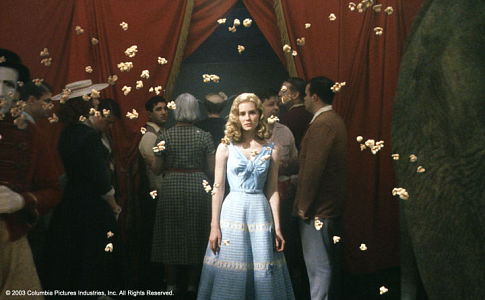
Alison Lohman from across the room amidst a suspended explosion of circus pop-corn
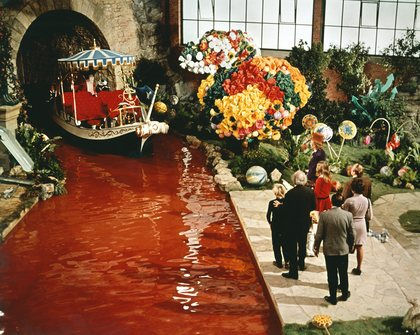
Alice in Wonderland (2010) A sequel of sorts to the original "Alice" tale. Now, Alice (Mia Wasikowski) is sort of grown up, 19 and about to be arranged into a marriage. She's marginalized, sexualized, then miniaturized, recognized, and scandalized. The only thing left is for her to me militarized, which Burton embraces turning Alice into an armored warrior in the midst of a Lord of the Rings-ish battle finale between The White Queen (Anne Hathaway) and the red Queen (Helena Bonham Carter), all done to Danny Elfman's rigorous martial score with a choir chanting "Alice...Oh, Alice." Okay, female empowerment, I get it. Johnny Depp's presence means that more is done with The Mad Hatter than is necessary, including placing him in the forefront of the fight. It's extruded and expanded from "The Jabberwock Poem," turning a thing of nonsense into a doom-laden prophecy. Sometimes, though, silliness should be left as silliness, as the results are less than brillig.
But it looks amazing (did I mention everyone is "digitized," too?) with designs based on the original illustrations filtered through the Burton sensibility. It's an impressive display of the director's imagination done in pastel colors, and still dark but considerably brighter than normal, but still twisted. And probably too scary for the kids it was designed for. There are pieces of brilliance here, but the effect is less than magical as manufactured. The details are brilliant, but the overall disappoints. ----------------------------------------------------------------------------------------------------
So, what's next? Well, though accomplished, the necrotic nut doesn't fall too far from the tree. Will it be a disguised Burton self-portrait, a tale of an odd-ball's revenge, or a project resurrected from the loves of his youth? Hard to say. Burton hasn't fully matured out of his "boy" phase the way Steven Spielberg has. But, besides Dark Shadows (wherein an 18th Century vampire looks in on the bizarre lives of 1970's "straights" and finds them oddly strange...Hmmm. Sounds like all three) on the docket are a new stop-motion animation version of Frankenweenie, (although it might be a bit early for Burton to be repeating himself so directly) and a rumored one of of "The Addams Family." Then there's talk of Burton directing a Broadway musical version of "Batman." (Although talk of that has simmered down since the costly Broadway debut of"Spider-man.") Anyway, one shouldn't express surprise, dismay, or shock at the mention of a new Tim Burton project. But after seeing what he did with Big Fish, one wishes he might stray from his core geek-loves and stretch a bit. More often than he doesn't, he manages to bring out the best in the material (even if its wanting) while making each one his own.


-picture-MOV_ba180900_b.jpg)